U.S. employers should reassess their existing policies on workplace drug use and testing and disability accommodation decision-making for Federal Drug Administration (“FDA”)-approved and state licensed medical use of marijuana in response to Drug Enforcement Agency (“DEA”) rescheduling orders under the Controlled Substances Act (“CSA”) implemented last April while closely monitoring for DEA action on a DEA proposal to reclassify marijuana from a Schedule I to a Schedule III substance under the CSA. The proposed marijuana rescheduling would significantly affect the consequences of marijuana use by individuals in the United States, including the testing and consequences of marijuana use under Department of Transportation (“DOT”) and other federal drug testing mandates.
Where the Rescheduling Stands Today
The recently completed ALJ hearing traces back to a Notice of Proposed Rulemaking published May 21, 2024, proposing to move marijuana from Schedule I to Schedule III of the CSA. After more than a year of procedural DEA delay holding hearings or taking other material action on the proposed rule, President Trump’s December 18, 2025 executive order directed the Attorney General to expedite completion of the rulemaking. In response, on April 23–24, 2026, Acting Attorney General Todd Blanche issued a final order that:
immediately moved FDA-approved marijuana drug products into Schedule III;
immediately moved marijuana subject to a qualifying state medical marijuana license into Schedule III; and
That broader hearing opened June 29, 2026 at DEA headquarters in Arlington, Virginia, before Chief ALJ Derek C. Julius, ran (with a recess for the July 4th holiday period) through mid-July, and formally concluded on July 15, 2026 following closing presentations from a group of participating states. See DEA press release; Notice of Hearing, 91 Fed. Reg. 22777 (Apr. 28, 2026). Because DEA and DOJ are the proponents of the rule, the hearing’s structure permitted testimony only from designated participants opposing rescheduling — including Smart Approaches to Marijuana (SAM), the National Drug & Alcohol Screening Association, and the States of Nebraska, Idaho, Indiana, Louisiana, and Tennessee (through its Bureau of Investigation), among others. Pro-reform organizations including NORML sought and were denied participant status. ALJ Julius also ordered that the hearing would not be televised, livestreamed, or otherwise broadcast, limiting observation to in-person attendance.
As if this ambiguity isn’t enough, the Acting Attorney General’s April 2026 final order reclassifying to Schedule III FDA-approved and state licensed marijuana now faces legal challenges such as the one brought by Smart Approaches to Marijuana and the National Drug & Alcohol Screening Association, seeSAM Inc., et al. v. U.S. Department of Justice, et al., No. 26-1106 (D.C. Cir., petition filed May 4, 2026), and another brought by the Attorneys General of Indiana and Nebraska, seeNebraska, et al. v. U.S. Department of Justice, et al., No. 26-1130 (D.C. Cir., petition filed May 22, 2026). While the fate of these consolidated challenges awaits resolution by the U.S. Court of Appeals for the D.C. Circuit, employers and health plans must deal with the currently effective policy change that, for now, has made a Schedule I drug FDAA-approved medical and state-licensed marijuana.
Pending the resolution of challenges to the currently effective change of FDA-approved medical and state licensed marijuana and DEA action on its broader rescheduling proposal, however, employers and plan sponsors should review their existing marijuana use and testing policies for the already effective FDA approval of FDA-approved marijuana drug products and marijuana subject to a qualifying state medical marijuana license that took effect under the final rescheduling orders issued by Acting Attorney General Todd Blanche on April 23–24, while continuing to monitor the Federal Register and other FDA and Congressional comments and actions signaling when and the likely direction the FDA intends to take on the broader proposal to reschedule marijuana generally from Schedule I to Schedule III.
What Already Changed — Independent of the Proposed DEA Rescheduling Rule Change
It is important for compliance purposes to separate what is already final from what remains pending:
Already in effect (April 2026 Final Order)
FDA-approved marijuana-containing drug products are in Schedule III.
Marijuana handled under a qualifying state medical marijuana license is in Schedule III, with a new expedited DEA registration pathway for state licensees.
State-licensed medical marijuana businesses are relieved of the Internal Revenue Code § 280E deduction disallowance, which applies only to Schedule I and II trafficking.
Recreational/adult-use marijuana, unlicensed marijuana, and synthetically derived THC remain in Schedule I and are unaffected by the April order.
Still pending (record closed; awaiting ALJ recommendation and DEA final decision)
Whether marijuana as a category — including adult-use/recreational marijuana not tied to an FDA-approved product or state medical license — moves to Schedule III.
The government has been explicit throughout that this proceeding is not about legalizing recreational use; it concerns whether marijuana has a “currently accepted medical use” sufficient to satisfy the CSA’s scheduling criteria.
Post-hearing briefs are due August 17, 2026; the ALJ’s recommendation and DEA’s final decision will follow on an unannounced timeline.
Why This Matters for Employers — and Why It Doesn’t Change as Much as Headlines Suggest
A move from Schedule I to Schedule III would be historically significant, but it would not legalize recreational marijuana use, and it would not, by itself, require employers to change drug-free workplace policies. Marijuana would remain a controlled substance requiring a valid prescription for lawful use under federal law; unauthorized possession or use would remain a federal offense. HR and employment counsel should calibrate client and internal expectations accordingly while continuing to monitor the following areas:
Drug testing and drug-free workplace policies
The scheduling change could impact your current workplace drug use and drug testing policies by expanding legally permitted use and requiring the collection of added documentation for those claiming permitted use. Employers, insurers and others concerned about impairment by workers consuming marijuana in accordance with its new scheduling will need to consider the need for and advisability of adopting policies tailored to their concerns and ensuring their testing and other administrative practices meet applicable legal requirements.
For purposes of this analysis, the changes adopted last April can make medicinal use in accordance with FDA-approved or state-licensed uses legal in the applicable workplace jurisdiction. However, the proposed schedule III classification would not convert a positive marijuana test into evidence of lawful drug use in the ordinary case, since off-label recreational use would remain unauthorized under federal law absent a valid prescription.
Employers should nonetheless review testing panels, medical review officer (MRO) protocols, and policy language for currency, and confirm policies still align with applicable state law, which increasingly diverges from federal scheduling on off-duty use protections.
DOT and other safety-sensitive/federally regulated testing
The recently adopted and additional proposed rescheduling of marijuana to a Schedule III classification are unlikely to change U.S. Department of Transportation drug testing requirements, as its 49 C.F.R. Part 40 rules operate independently of CSA scheduling. DOT has previously confirmed that rescheduling marijuana would not, by itself, change safety-sensitive testing requirements. Employers with DOT-covered or other federally regulated safety-sensitive positions should watch for any DOT or agency-specific guidance issued in response to a final rescheduling decision. Nevertheless, the rescheduling likely foreseeably could encourage even broader unauthorized use by employees or others reading the rescheduling as eliminating prohibitions, reflecting a further decline in enforcement, or both.
ADA and disability-related considerations
The recent DEA rescheduling of FDA-approved use of medicinal marijuana to a Schedule I drug classification will expand legally available options for medicinal marijuana use by employees in accordance with appropriately prescribed and used medicinal marijuana. Also, forty states now authorize medical marijuana under state law, many with employment protections for off-duty medical use that already operate independently of federal scheduling. Federal rescheduling will not harmonize this patchwork, and multistate employers should continue maintaining state-by-state policy matrices rather than assuming a federal fix is coming.
These changes can create new Americans with Disabilities Act (“ADA”) implijcations by, among other things:
Requiring employers to consider requests for accommodation of medically prescribed marijuana by broadening the availability and medicinal use of FDA-approved and state-licensed medicinal marijuana. Rescheduling does not change the ADA’s treatment of current illegal drug use as outside the definition of a protected disability while such use continues.
Requiring employers to consider the convergence between ADA’s mental/psychological impairment prong and MHPAEA parity classification issues when designing substance use disorder treatment benefits — a distinct analysis from current-use accommodation questions, and one worth continuing to track alongside this rulemaking.
Health and welfare plan sponsors and fiduciaries
The reclassification of FDA-approved medicinal marijuana also can create new design questions for health and disability benefit plan sponsors and claims and appeals health challenges for health and disability plan fiduciaries. For instance,
Health, AD&D, disability, life and other benefit plan sponsors and fiduciaries should recognize that the rescheduling adopted last April expands the legally allowed prescription and use of marijuana.
While Schedule III status does not itself create a coverage mandate, the approval could affect how FDA-approved uses are treated by removing exclusions or rules that previously denied coverage based on their more restricted DEA Schedule III status. While formulary and coverage decisions for any FDA-approved cannabinoid product remain a plan design and medical-necessity determination for the plan sponsor and its PBM or other fiduciaries, previously relied upon exclusions may no longer operate in the same way to restrict coverage.
Plan sponsors, their prescription benefit managers, insurers and other service providers should reevaluate current formularies and coverage provisions and exclusions for MHPAEA and other implications. They also should watch the FDA approval pipeline for cannabinoid drug products for potential formulary impact, should evaluate the need for changes in coverage or benefit exclusions and added fiduciary or other risks relating to benefit coverage and limitations potentially impacted by marijuana use. Health, disability, accident and dismemberment, and life insurance plan fiduciaries and insurers should use care to consider prudently the potential implications of rescheduling on any claims or appeals including special concerns and considerations likely to arise with respect to health benefits impacted byh MHPAEA. Fiduciaries should use care to coordinate any MHPAEA comparative analysis work touching substance use disorder benefits with counsel already tracking that parity exposure.
Cannabis-industry and cannabis-adjacent employers
State-licensed medical marijuana operators already qualify for § 280E relief under the April 2026 order; HR and finance functions at these employers should confirm payroll tax treatment reflects the change and monitor the expedited DEA registration pathway for state licensees.
Recommended Action Items
For HR and Employment Counsel
Review (but do not overhaul) drug-testing and drug-free workplace policies now; hold substantive revisions pending a final DEA decision, which — with post-hearing briefs not even due until August 17 — remains months away at minimum.
Confirm state-law policy variations are current, independent of the federal rescheduling timeline.
Flag DOT-covered positions for a separate compliance check once DOT issues any post-rulemaking guidance.
For Health, AD&D, Disability and & Other Welfare Plan Sponsors and Fiduciaries
Task PBM and plan counsel with monitoring FDA’s cannabinoid drug approval pipeline for formulary implications.
Coordinate substance use disorder benefit design review with pending MHPAEA comparative analysis obligations.
For General Counsel and Risk Management
Track the consolidated D.C. Circuit challenges to the April 2026 Final Order alongside the ALJ’s post-hearing process; a reversal on appeal could unwind the medical/state-licensed rescheduling already in effect.
Maintain rescheduling-tracking analysis as privileged work product where prepared to inform litigation or enforcement-risk posture.
For State-Licensed Medical Marijuana Employers
Confirm § 280E tax treatment has been updated and pursue the expedited DEA registration pathway using existing state licensure as supporting evidence.
Stay Tuned and Share Your Input
While the DEA’s proposed rescheduling is a self-initiated proposal, the ALJ’s post-hearing recommendation and what action, if any, the DEA ultimately will take on its proposal to reschedule marijuana more broadly remain uncertain. Although the DEA hearing on the proposed ruling is complete, communications to the DEA and Congress still offer opportunities to influence the direction and outcome of these decisions. Concerned employers and others should consider communicating any input or concerns to the DEA and Congress promptly to ensure their input receives consideration. Meanwhile, employers, health and disability plans and other interested parties should reevaluate their policies in response to the already adopted rescheduling as they monitor for future developments.
For Help or More Information
The author of this update, Cynthia Marcotte Stamer is an attorney Board Certified in Labor and Employment Law by the Texas Board of Legal Specialization with decades of experience advising and assisting health industry and other employers to design, audit, and defend their employment and other risk management and compliance practices, including conducting audits and investigations, designing and updating compliance and risk management programs, responding to government investigations, conducting transaction, governance, and other due diligence, and assisting with other legal and operational compliance and risk management and legislative and regulatory affairs. She is available to assist your organization in assessing the impact of these developments and navigating the compliance and strategic steps that follow. For more information about these concerns or Ms. Stamer, contact Ms. Stamer via e-mail or via telephone at (214) 452 -8297.
About the Author
Cynthia Marcotte Stamer is an American College of Employee Benefits Counsel and a Martindale-Hubble “AV-Preeminent” (Top 1%) attorney and advisor board certified in labor and employment law by the Texas Board of Legal Specialization peer peer celebrated as “Top Rated Lawyer” and “LEGAL LEADER™ “Top Rated Lawyer” and “Best Lawyer” for her work in ERISA & Employee Benefits Law, Health Care Law, Labor and Employment Law, and Business and Commercial Law.
Nationally recognized for her decades of leading-edge workforce, health and other employee benefits and insurance, compensation, regulatory affairs and compliance, and other management work, public policy leadership and advocacy, coaching, teachings, and publications, she is the publisher of Solutions Law Press, Inc.® practitioner-focused compliance publications for employers, plan sponsors, HR professionals, health care, insurance, technology and data industry leaders, and legal counsel and risk management advisors.
Along with these activities, Ms. Stamer also has earned national recognition for her authorship of thousands of highly regarded works, presentations as a knowledgeable speaker, testimony and other input of regulators and legislators, and media interviews on health and other benefits, human resources and other workforce, health care, insurance, data privacy and security and other related concerns.
For more information about Ms. Stamer, engaging her services or to speak, her work, credentials, experience and involvements, or other matters, see the About the Author page, her website at www.cynthiastamer.com, or contact Ms. Stamer via telephone at (214) 452-8297 or via e-mail here.
Employers that adopted or are evaluating mandatory vaccination, testing, or other health-and-safety conditions of employment should take note of the implications of the Supreme Court’s June 1, 2026 decision to deny certification of a Ninth Circuit ruling that narrows the federal claims workers can bring to challenge vaccination requirements.
Because a denial of certiorari is not a ruling on the merits and sets no nationwide precedent, the practical effect is limited but meaningful: within the Ninth Circuit, the appellate decision stands as controlling authority foreclosing the federal theories the workers advanced. The decision is a useful roadmap of the federal claims that do not lie against employers and government officials who impose vaccination requirements—and, by contrast, a reminder of the claims that may still remain available under other laws.
Background
On August 20, 2021, then-Governor Jay Inslee issued Proclamation 21-14, which, absent an approved exemption, required covered Washington health care workers to be vaccinated against COVID-19. The nonprofit health care system PeaceHealth adopted a corresponding policy, and it terminated employees who refused to comply. Aila Curtis and more than 80 other former at-will employees sued PeaceHealth and the Governor for damages, asserting a wide range of statutory, treaty, regulatory, contractual, and constitutional theories. As the Ninth Circuit summarized, the plaintiffs contended the only vaccine available before the deadline was an “investigational” product authorized only for emergency use, and that they were not adequately informed of an option to refuse it. The U.S. District Court for the Western District of Washington dismissed all claims, and the Ninth Circuit affirmed. See Curtis v. Inslee, No. 24-1869 (9th Cir. Oct. 6, 2025).
No Federal Statutory or “Informed Consent” Right Enforceable Under Section 1983
The court first held that none of the plaintiffs’ statutory and non-constitutional sources created a “specific and definite” right enforceable through 42 U.S.C. § 1983. Central to the workers’ case was the “right to refuse” theory premised on the emergency use authorization provision of the Food, Drug, and Cosmetic Act, 21 U.S.C. § 360bbb-3, which directs that recipients of an emergency-use product be informed of “the option to accept or refuse administration.” The Ninth Circuit explained that Congress confined enforcement of the Act to public actions brought in the name of the United States under 21 U.S.C. § 337(a), and that courts may not judicially create an implied private right of action. The statute therefore confers no privately enforceable right under Section 1983.
The court rejected the remaining non-constitutional sources on the same rationale—none supplied rights-creating language enforceable by these plaintiffs:
The Public Readiness and Emergency Preparedness (PREP) Act, 42 U.S.C. § 247d-6, which at most imposes an educational obligation on a federal agency rather than on the employer or the State;
10 U.S.C. § 980 (restricting use of Department of Defense funds for human-subject research), a spending-power provision “especially unlikely” to confer an enforceable right;
Article VII of the International Covenant on Civil and Political Rights, which the United States ratified as non-self-executing and which Congress has not implemented;
45 C.F.R. Part 46 (the “Common Rule” on human-subjects research), the Belmont Report, the Federal Wide Assurance agreement, the CDC COVID-19 Vaccination Program Provider Agreement, and the FDA Emergency Use Authorization letters—none of which create privately enforceable rights, and none of which make these employees third-party beneficiaries. As the court observed, the plaintiffs were “vaccine refusers” rather than the “vaccine recipients” who might benefit from such agreements.
Constitutional Claims Foreclosed by Longstanding Vaccination Precedent
Turning to the constitutional theories, the court held that neither the Spending Clause nor the Supremacy Clause supplied a freestanding Section 1983 right. It then rejected the Fourteenth Amendment claims:
Procedural due process. The plaintiffs’ at-will employment was not a constitutionally protected property interest, and the proclamation’s notice and individualized religious and medical exemption process supplied any process due.
Equal protection. Because the workers did not constitute a suspect class, the mandate needed only survive rational-basis review—which it readily did. The court invoked the Supreme Court’s recognition of the public-health rationale for health care worker vaccination requirements in Biden v. Missouri, 595 U.S. 87 (2022).
State-Law Claims Were Left for the State Courts
Employers should not read the decision as resolving every claim. The Ninth Circuit affirmed dismissal of the state-law claims against the Governor, but it upheld the district court’s discretionary decision to decline supplemental jurisdiction over the remaining state-law contract and tort claims against PeaceHealth under 28 U.S.C. § 1367(c). The court expressly did not decide whether those state-law claims state a claim; it left the merits to the Washington state courts. The federal ruling thus disposes of the federal theories without insulating employers from potential state-law exposure.
What the Cert Denial Does—and Does Not—Mean for Employers
While the Supreme Court’s refusal to review the Ninth Circuit decision in Curtis v. Islee decision for now leaves in place that Court’s ruling that employees don’t havec a federal statutory or informed consent right to challenge vaccination requirements under Section 1983, employers also should keep in mind that these rulings do not mean that vaccination or other health-and-safety mandates are immune from challenge. Rather, Curtis and the now-final disposition confirm that the most commonly asserted federal theories—an implied “right to refuse” under the EUA statute, the PREP Act, and substantive due process—generally do not provide workers a damages remedy against employers or officials for vaccination requirements, at least in the Ninth Circuit. Employers nonetheless should keep the following in mind:
Future Supreme Court Decision Could Reach a Different Conclusion. Employers should keep in mind that the Supreme Court’s current decision denying certification does not guarantee it will not take up another case in the future that could reject or qualify the precedent set by the Ninth Circuit. In addition to the continued need to manage these and other potential exposures arising from the establishment and enforcement of vaccination requirements on non-Section 1983 grounds, employers also should use care to avoid engaging in conduct that could create facts that employees might rely upon to charge their employer with retaliation for the employee’s good faith exercise of rights that the employee believed she or he possessed.
Other laws still apply. This decision addresses Section 1983, constitutional, and EUA-based theories. It does not displace obligations or exposure under Title VII religious-accommodation and the Americans With Disabilities Act disability-accommodation requirements, the Family and Medical Leave Act and state and local leave laws, state and local civil rights and other laws, or collective bargaining or other contractual requirements. Mandate-related litigation increasingly proceeds on accommodation and contract theories rather than the theories rejected here.
Document the exemption and accommodation process. The court emphasized that the proclamation provided notice and an “individualized” religious and medical exemption process. Employers that maintain clear notice, a documented individualized interactive process, and consistent administration are better positioned to defend both constitutional and accommodation challenges.
Mind jurisdictional differences. A denial of certiorari leaves circuit law in place without creating a uniform national rule. Multistate employers should confirm how the controlling circuit and applicable state law treat these theories before relying on any single decision.
Preserve the public-health record. Rational-basis review turns on what decisionmakers could rationally conclude. Employers adopting health-and-safety requirements should document the legitimate business and safety rationale supporting the requirement at the time it is adopted.
Considering these and other risks, employers using or responding to challenges to employee or service provider vaccination requirements should seek assistance of experience legal counsel in designing and administering those policies to minimize discrimination and retaliation liability risks.
For Help or More Information
The author of this update, Cynthia Marcotte Stamer is an attorney Board Certified in Labor and Employment Law by the Texas Board of Legal Specialization with decades of experience advising and assisting health industry and other employers to design, audit, and defend their employment and other risk management and compliance practices, including conducting audits and investigations, designing and updating compliance and risk management programs, responding to government investigations, conducting transaction, governance, and other due diligence, and assisting with other legal and operational compliance and risk management and legislative and regulatory affairs. She is available to assist your organization in assessing the impact of these developments and navigating the compliance and strategic steps that follow. For more information about these concerns or Ms. Stamer, contact Ms. Stamer via e-mail or via telephone at (214) 452 -8297.
About the Author
Cynthia Marcotte Stamer is an American College of Employee Benefits Counsel and a Martindale-Hubble “AV-Preeminent” (Top 1%) attorney and advisor board certified in labor and employment law by the Texas Board of Legal Specialization peer peer celebrated as “Top Rated Lawyer” and “LEGAL LEADER™ “Top Rated Lawyer” and “Best Lawyer” for her work in ERISA & Employee Benefits Law, Health Care Law, Labor and Employment Law, and Business and Commercial Law.
Nationally recognised for her decades of leading edge workforce, health and other employee benefits and insurance, compensation, regulatory affairs and compliance, and other human resources and other management work, public policy leadership and advocacy, coaching, teachings, and publications, Ms. Stamer’s work throughout her career has focused heavily on working with health care and managed care, health and other employee benefit plan, insurance and financial services and other public and private highly regulated and performance dependent organizations and their technology, data, and other service providers and advisors domestically and internationally with legal and operational compliance and risk management, performance and workforce management, regulatory and public policy and other legal and operational concerns. As a a key focus of this work, she has continuously and extensively worked with domestic and international health plans, their sponsors, fiduciaries, administrators, and insurers; managed care and insurance organizations on workforce and performance management, employee benefits, compensation, regulatory and operational compliance, and other related concerns.
Her experience includes more than 35 years of leading edge work experience helping health care systems and organizations, group and individual health care providers, government contractors and other performance dependent employers; health plans and insurers, and a broad range of other businesses design and administer workforce, compensation and benefits, compliance and risk management and other practices and policies, and operate and defend organizations and practices to prevent, investigate, manage and resolve performance and behavior; manage civil rights, discrimination and accommodation, and other regulatory, contractual and other compliance responsibilities and risks; vendors and suppliers; conducting and defending investigations, audits, investigations, and other actions; crisis preparedness and response; to establish, administer and defend workforce and staffing, quality, and other compliance, risk management and operational practices, policies and actions; comply with requirements; investigate and respond to Department of Insurance, Board of Medicine, Health, Nursing, Pharmacy, Chiropractic, trucking, alcohol and firearm, and other licensing agencies, Department of Aging & Disability, FDA, Drug Enforcement Agency, OCR Privacy and Civil Rights, Department of Labor, IRS, HHS, DOD, FTC, SEC, CDC and other public health, Department of Justice and state attorneys’ general and other federal and state agencies; JCHO and other accreditation and quality organizations; private litigation and other federal and state health care industry actions: regulatory and public policy advocacy; training and discipline; enforcement; and other strategic and operational concerns.
Former lead advisor to the Government of Bolivia on its Social Security Privatization reform, Ms. Stamer also has extensive international, federal and state legislative and regulatory affairs experience on federal, state and international workforce, employee benefits, healthcare, education, insurance, data privacy and security, antitrust, and other regulations and reforms.
In addition, Ms. Stamer also is widely celebrated for her leadership in the American Bar Association (“ABA”) and a multitude of other policy, professional, civic, educational, community and other organizations. Ms. Stamer currently or previously served as the the American Bar Association (“ABA”) Joint Committee on Employee Benefits (“JCEB”) leadership council, Scribe leading the Department of Health and Human Services annual agency meeting and a representative to other annual agency meetings, speaker, author and faculty; the ABA International Section International Employment Law Committee and International Life Sciences Committee Chair; the ABA Tort Trial and Insurance Practice Section Medicine and Law Committee Chair, SCOPE member, and Employee Benefits and Worker’s Compensation Committees Vice Chair; the ABA Health Law Section Managed Care & Insurance Interest Group Chair and Risk Management Interest Group Vice Chair; the ABA RPTE Employee Benefits & Other Compensation Group Chair and Welfare Benefit, Fiduciary Responsibility, and Plan Terminations and Transactions Committees Chair; the North Texas Health Care Compliance Professionals Association Vice President and Executive Director; a Southwest Benefits Association Board Member, Treasurer and Continuing Education Committee Chair; a SHRM Consultants National and Region IV Board Chair; a WEB National Board Member and Dallas Chapter President; the National Kidney Foundation of North Texas Board Member and Compliance Chair; the Richardson Development Center (now Warren Center) for Children Early Childhood Intervention Agency Board President; a North Texas United Way Long Range Planning Committee Member; and in many other leadership roles in a broad range of other professional and civic organizations.
Along with these activities, Ms. Stamer also has earned national recognition for her authorship of thousands of highly regarded works, presentations as a knowledgeable speaker, testimony and other input of regulators and legislators, and media interviews on health and other benefits, human resources and other workforce, health care, insurance, data privacy and security and other related concerns.
For more information about Ms. Stamer or her health industry and other experience and involvements, see www.cynthiastamer.com or contact Ms. Stamer via telephone at (214) 452-8297 or via e-mail here.
Human resources and other business leaders, using or allowing workforce members to CHAT-GPT or other artificial intelligence (“AI”) tools to research, make decisions or to support other activities should ensure that their organizations and their teams understand and manage the resulting evidentiary consequences and responsibilities these activities create.
In today’s AI age, Human Resources directors and other business leaders in increasingly are encouraged to turn to AI tools for a quick understanding of the law, drafting of documents, and a host of other human relations and business functions traditionally performed with the assistance of legal counsel. Although AI tools can be valuable under the right situations and properly used, the use of AI tools, along side of or as a substitute for legal advice obtained within the scope of attorney client privilege can carry a number of inherent risks and challenges. Human Resources and other leaders and their organization should carefully evaluate and manage these consequences before using AI.
AI Searches May Be And Create Evidence
AI prompts, outputs, and related metadata often qualify as discoverable electronically stored information (“ESI”) in litigation, regulatory audits, and enforcement proceedings.
Under the Federal Rules of Civil Procedure, discoverable information includes electronically stored information (ESI”) relevant to claims or defenses. See Fed. R. Civ. P. 26(b)(1); 34(a)(1)(A). Once litigation is reasonably anticipated, organizations must preserve relevant ESI under Federal Rules of Civil Procedure. See e.g.,Hoffer v. Tellone, 128 F.4th 433 (2d Cir. 2025).
AI searches and other interactions and the information and other outputs they produce generally qualify as ESI for purposes of the Federal Rules of Civil Procedure, Federal Rules of Evidence, (hereafter collectively the “Federal Rules”) and comparable federal and state litigation procedural rules.
Likewise, federal and state regulatory and enforcement agencies tend to consider AI and other ESI evidence covered by document retention and discovery rules.
Where applicable, these Federal Rules and agency rules generally include AI and other ESI evidence organizations must preserve, identify, and subject to discovery or other production like traditional evidence in litigation and agency audits and investigations.
ESI evidence generally includes any data stored in electronic form—such as emails, texts, spreadsheets, social media, and Internet of Things (“IoT”) data. As broadly construed by the courts, courts already long have admitted:
Internet search histories;
Internal chats and Slack messages;
Draft documents; and
Deleted files.
AI searches are simply the next evolution of this evidence category. AI records and information considered ESI can include;
AI prompt histories;
Generated outputs;
Embedded AI-assisted drafts;
Platform logs (if accessible); and
Other records.
Organizations that fail to fulfill requirements for AI or other ESI early identification, data authentication and other requirements of Federal Rule of Evidence 902, the requirements of Federal Rule of Civil Procedure 37(e) regarding lost evidence, or other applicable requirements to preserve and produce ESI may result in sanctions, adverse inferences, and penalties under the Federal Rules. Similarly, organizations may incur evidentiary sanctions, regulator penalties, and other adverse consequences for failing to identify, retain and produce ESI from AI or other sources in government audits and investigations. Common sanctions include:
Monetary sanctions;
Evidence preclusion;
Adverse inference jury instructions; and
Other authorized sanctions.
See, e.g., Jones v. Riot Hosp. Grp. LLC, 95 F.4th 730 (9th Cir. 2024) (affirming dismissal as sanction for intentional destruction of ESI); Maziar v. City of Atlanta, No. 1:21-cv-02172, 2024 WL 197561 (N.D. Ga. June 10, 2024) (denying summary judgment and awarding fees based on loss of text messages); McBride v. Moore, No. 2:23-cv-02904, 2024 WL 1136429 (C.D. Cal. Feb. 23, 2024) (denying sanctions where ESI not shown lost or duty not triggered). Gregory v. State of Montana, No. 22-____ (9th Cir. 2024) (reversing sanctions imposed outside Rule 37(e); emphasizing Rule 37(e) as exclusive remedy for ESI spoliation); DR Distribs., LLC v. 21 Century Smoking, Inc., 513 F. Supp. 3d 839 (N.D. Ill. 2021) (recognizing financial prejudice from spoliation and awarding fees); Bistrian v. Levi, 448 F. Supp. 3d 454 (E.D. Pa. 2020) (Rule 37(e) provides exclusive framework for ESI spoliation); Fast v. GoDaddy.com LLC, 340 F.R.D. 326 (D. Ariz. 2022) (failure to preserve mobile device data warranted sanctions).
These and other related cases alert organizations that AI and other modern data sources are squarely within ESI. Courts treat AI, texts, mobile data, and app-based communications as discoverable ESI.
The precedent reflects that the best opportunity to position your organization to show the reasonability of the actions taken is through the existence and enforcement of policies before and during the use of the AI tool.ESI preservation obligations depend on foreseeability, control, and access to data. When deciding the consequences of the unavailability or failure to produce ESI, the determination regarding failure to take “reasonable steps” is fact-intensive. Of course, the failure to retain the documentation will be particularly likely to be found unreasonable where the party was under a statutory, regulatory, ethical, contractual, or other pre-existing obligation to preserve the evidence.
Also, courts require proof of intent to deprive before imposing the most severe adverse inference or dismissal sanctions, a lack of proof of intent to deprive the request requesting party of evidence does not mean there will not be consequences for the non-producing party. Negligent failure to retain and produce ESI and other evidence still carries consequences. Even without bad faith, courts may impose curative measures, fees, or evidentiary limitations.
Among other things, organizations should be prepared to routine and produce documentation and data obtained, utilized, or otherwise interacting with AI tools and it’s associated meta-data and other components to respond to litigation and regulatory request for a broad range of data and information. Optimally the data captured and retained should include, but it’s not necessarily limited to:
AI usage policies;
Employee and other agent AI interaction records;
Evidence of AI and other relevant governance and training; and
Data protection controls.
Consequently, failure to govern, identify, preserve and produce AI-generated and AI-assisted records appropriately can expose organizations to spoliation sanctions, adverse inference instructions, regulatory penalties, loss of privilege protections, and expanded liability exposure.
In recognition of the possibility that AI tool interactions may give rise to obligations to retain and produce ESI evidence created as a consequence of that interaction, or organization should work with legal counsel to develop an administer appropriate practices to monitor, identify, retain, manage, and where necessary produce this ESI evidence.
AI Tools Create Evidence
Beyond considering and meeting documentation and other evidently protection, preservation, and production responsibilities, organizations and their human resources and other leaders need to recognize that the use of the tool itself and its outputs creates evidence that may give rise to legal opportunities, risks, and obligations for the organization.
Organizations should keep in mind that the use of AI tools creates legal evidently risks because AI tools typically generate synthesized responses (not just links) that often incorporate user inputs into outputs that may reflect user intent, knowledge, biases and opinions, and decision-making. This often makes AI interactions particularly valuable evidence for:
Intent (e.g., “how to terminate employee without legal risk”) Knowledge (awareness of compliance obligations) State of mind (deliberate vs. negligent conduct);
Knowledge (awareness of compliance obligations);
State of mind (intentional, willful, or deliberate vs. negligent conduct)
The potential risks of this and other evidence is heightened by the fact that the evidence created may arise not only from the actions taken by the user of the AI tool, but also may be inherently built into the design of the AI tool itself or the databases or other reference materials that it accesses, not all of which may be transparent to the user or the organization that employs the user. These risks are further heightened when the AI tool use is not conducted internally within the organization by its employee, but rather is a tool utilized by a consultant or other third-party provider conducting activities of a sensitive nature on behalf of the organization, such as a recruiting company, investigation, company, or other service provider.
These unique characteristics of AI make it advisable that organizations recognize and manage potentially heightened exposures that employee or other agent use AI tools can produce for the organization in a wide range of sensitive areas.
Examples of queries that can become “smoking gun” evidence include but are not limited to:
In employment or other workforce administration searches, AI queries such as “How to terminate employee with medical condition,” ‘How to avoid claims when, terminating older, disabled, complaining, injured or other employee with protected status, or the like can be evidence of discriminatory or other adverse intent;” or “How to beat a union organizing campaign;”
Compliance & Regulatory searches such as “How to structure payments to avoid reporting requirements,” “HIPAA penalties for disclosure; searches about compliance or looking for compliance loophole; searches where company researched sanctions for noncompliance in areas involved in litigation or enforcement; or searches on risk management that could be evidence the organization saw but chose not to follow rules or standards or otherwise looked for or acted to circumvent compliance or disregarded interpretations less favorable to chosen challenged course of action;
Litigation or Other Defense Strategy searches or tools such as “How to defeat a whistleblower claim,” “Ways to minimize damages in lawsuit” “Protecting your assets from IRS or in bankruptcy,” “How to conceal” or How to hide” orthe like can harm the organization’s interest by showing adverse intent, willfulness, or other motive or state of mind;
Litigation case law, enforcement, argument drafting, or other actions that could reveal or provide insight on sensitive litigation strategies or their strengths or weaknesses;
Financial & Tax searches such as “Aggressive tax strategies unlikely to be audited,” or “contract terms to reclassify employee to contractor,” “Structure transaction to avoid disclosure” or the like; and
Other searches or tool uses that could reflect improper, intent, or document improper activities, such as how to hide evidence, how to create a bomb, how to poison somebody or that creates a record of conduct such as edits to revise data or documentation in reports or records, where the changes are tracked and retained.
Given these other risks, organizations should carefully consider and manage these and other risks when deciding whether, when, how and what AI tools their organizations allow their people to use, who gets to use what tools, designate and train those authorized to use these tools appropriately, and design and implement appropriate tools to track, capture, retain and manage these records of AI use and their implications. Optimally, the planning should identify and work to manage the creation and preservation of evidence and related AI ESI required or otherwise helpful to meet, applicable, regulatory, contractual, statutory, or other requirements in a manner that minimizes the creation of evidence that could call into question the compliance or other appropriateness of the organizations actors.
Privilege and Confidentiality Risks
Asking AI tools to answer legal questions or provide guidance in legal advice obtained within the scope of attorney. Client privilege also can enhance the exposure for the organization and it’s actors because of the implications of that Youts on the availability of attorney-client privilege for the activities and information obtained. Using AI tools and output also can have implications on the ability of an organization to protect legal advice and work product developed and shared within the scope of attorney privileges from discovery in judicial or regulatory actions. Organizations need to recognize risk to the confidentiality of legal advice or work product that entering sensitive legal questions or information into public AI tools not specifically designed and used outside the scope of the attorney-client relationship to avoid creating problematic evidence, disclosing discussions or work product that otherwise might qualify for protect against discovery in litigation or agency proceedings under the attorney-client privilege or attorney work product rules, or both.
Searches conducted by organization employees, consultants, or other agents or representatives about the law, strategies, or legal risks and consequences without or outside the scope of an attorney-client relationship generally can be discovered and used as evidence. Consequently, organizations should regulate the use by officers, directors, compliance officers, human resources directors, consultants, non-legal investigators and auditors and others of AI tools, internet or other searches to investigate the law or legal strategies independent of or outside the scope of attorney-client privilege.
Particularly risky scenarios include:
In-house counsel, Human Resources, risk management or compliance staff using public AI tools;
Consultants, contractors, and other vendors use of AI in performing tasks or tools;
Embedded AI in software or other tools; or
Uploading contracts, PHI, or proprietary data into AI systems.
Additionally, organizations and others communicating or working with legal counsel on behalf of the organization within the scope of attorney-client privilege to design strategies or investigate or defend actions generally should not use AI tools to conduct their own legal research or analysis without authorization and direction of the legal counsel to avoid forfeiting attorney-client privilege and work product protections.
If the required confidentiality is preserved, the attorney-client privilege and work product privileges rules can protect confidential communications between a client and its attorney and work product prepared for risk management, defense or other purposes of the legal engagement against disclosure in litigation or other proceedings in many circumstances. However these protections are lost if the communication or work product is disclosed to or discussed with third parties outside the attorney-client relationship. Entering factual information, conducting legal searches, or using AI tools outside the attorney-client relationship, not specifically designed to preserve confidentiality, or both to draft or evaluate legal documents, research, drafts, or strategies generally is considered a third party disclosure that can waiver or undermine the privilege for the specific information input to the AI tool as well as potentially related communications or work product.
For these and other reasons, organizations and individuals generally should resist the temptation to use AI tools to evaluate legal strategies, advice or work product.
Trade Secret, HIPAA and Other Data Privacy and Use Exposures
Human Resources and other leaders also must keep in mind their organization’s responsibilities to respect other organizations, intellectual property, to safeguard the confidentiality and security of data, and their organization’s need to protect its own intellectual property.
AI tool enthusiasts promote AI tools as substitutes for legal advice and other paid services. While asking AI to write a “free” policy or contract may seem a great way to save legal or other consulting, licensing or other costs, human resources and other leaders and their organizations must keep in mind that not all data, information and resources obtained through a ChatGPT or other AI search is shareware. Most nongovernmental data bases, contractual firms, tools, templates and other materials accessed through AI searches are or incorporate materials owned or subject to copyrights or other intellectual property protections of third parties. Unlicensed use of these resources can expose their organizations to copyright and other intellectual property infringement liability.
Furthermore, human resources and other executives choosing to use materials drafted using AI tools or otherwise acquired off of the Internet or other sources without legal advice to recognize that acquired materials and resources may not be currently compliant, appropriately tailored to their use, or contain other deficiencies for utilization in their organizations. These deficiencies can arise from a number of sources. For one thing, the queries input by the user may not be sufficiently tailored to adequately represent all of the material considerations necessary to tailor he organizations, questions, and the AI response to the needs of the organization. Also, because AI databases often times include a broad range of historical data, AI responses may rely upon outdated, legal or operational presumptions incorporated into these historical policies when they no longer are appropriate for use in your organization. Additionally, the response of AI may draw from a wide range of sources, including many of which may be sample policies not drafted by qualified individuals with adequate expertise to fully understand the legal and operational implications of the policy and properly draft a policy appropriate for use in the organization, acquiring the form or materials off of the Internet.
Beyond suitability of the information where tool obtained through the AI search itself, unlicensed use of the response, may expose your organization to liability for violating other organizations or authors, intellectual property rights. AI searches can and often do access and incorporate data and other resources protected by third party copyright,trade secrets, HIPAA or other confidentiality, or other safeguards. Accordingly, accessing or using data bases, sample language or forms, or other materials without proper licensing or attribution may trigger liability to individuals and organizations for breaches of these intellectual property rights.
A separate concern arising from the use of AI tools in HR and other business operations to evaluate, formate or otherwise process sensitive data also creates potentially serious risks when theof these tools involves allowing the AI tool to access or uploading the confidential or other sensitive information into the tool. Human resources and other leaders must exercise care not to share inappropriately and to help their organizations use policies and processes to prevent their people’s use of AI tools to avoid violating statutory, regulatory or contractual confidentiality requirements, compromising confidential information, their own or business partner’s trade secrets, proprietary information and other intellectual property, or both.
Furthermore, uploading or sharing trade secrets, Health Insurance Portability and Accountability (“HIPAA”) protected health information, confidential employee, tax or other regulated information, trade secrets or other confidential or sensitive data into AI tools or searches without proper controls may itself breach of HIPAA, trade secret, federal or state privacy laws (e.g., biometric, consumer data laws) or other statutory, regulatory, ethical or contractual data privacy or confidentiality obligations. Additionally, allowing AI tools to access and interact with electronic data or systems frequently triggers data and systems security obligations under HIPAA, the Fair and Accurate Credit Transactions Act, Equal Employment Opportunity and other Human Resources and benefits data, electronic crimes, federal and state government contract, and a broad range of international, federal and state cybersecurity laws and regulations, and other government and private contractual and program participation, statutes, and regulations.
Given these concerns, organizations should avoid using AI tools that require uploading customer, financial, sales, or other data or information that the organization considers its own trade secrets or proprietary information into AI data bases or tools that do not adequately safeguard the ownership and confidentiality of that information.
AI Tool Hallucinations and Other Output Deficiency Risks
AI tools and the output they produce are not always reliable. Among other things, certain AI tools are known to:
Lack the ability to distinguish between more and less credible information sources;
Create plausible-sounding but entirely fabricated facts, news articles, legal authorities, or academic citations;
Create biased, false, incomplete, or inaccurate responses when models lack complete training data, are subjected to biased data, have limited context, ir under other circumstances;
Create false positives such as I dentifying a threat (e.g., in fraud detection) that is not actually present.
Fail to detect a real threat (e.g., in medical imagery) or report other false positives;
Fabricate non-existent, fake information or other incorrect or inaccurate information; and
Engage in hallucinations or other errors
The quality of the response, at best, often varies based on the quality and precision of the question asked. Lack of experience and careful structuring of the questions and inquiries made, lack of specialized knowledge necessary to structure the inquiry to be tailored to the specific needs at hand, and other limitations and concerns about the searches can undermine the accuracy, completeness and relevance of the AI tools output. Accordingly, response obtained by AI tools, often are unreliable and must be validated by a person experienced and skilled. The validation process should be conducted in such a matter that it preserves evidence that changes and responses are made based on thoughtful and reasonable determinations that the evidence obtained was not applicable or reliable, to minimize susceptibility to claims that decisions and actions were cherry picking based on improper intent rather than appropriate quality assurance processes. Organizations allowing the use of the tools and the individuals utilizing them need to understand and appropriately manage the very operational, legal in other risks of these deficiencies and error errors when utilizing AI tools.
Adopt And Enforce AI Policies To Manage AI Tool Use Responsibilities and Risks
Considering these and other responsibilities, human resources and other leaders and their organizations should use care to decide when, how, why, and by whom it allows AI tools to be used in or on behalf of its organization and provide appropriate steps to manage those uses in the resulting ESI to fill its legal obligations and manage its legal and operational risks. Because this process of itself could be evidence impacting, the organizations, legal exposures, organizations generally should work with qualified legal counsel within the scope of attorney-client privilege to work define and enforce policies and practices, to promote the organization’s legal and operational interests and manage the resulting legal obligations.
The author of this update, Cynthia Marcotte Stamer has decades of experience advising and representing governmental and private entities, AI and other technology, workforce and other legal and operational compliance, risk management and other operational and enforcement matters. If you have questions or need advice or help evaluating or addressing these or other compliance, risk management, or other concerns, contact her.
For More Information
We hope this update is helpful. For more information about these or other legal, contractual or operational compliance or risk management, please contact the author Cynthia Marcotte Stamer via e-mail or via telephone at (214) 452-8297.
Recognized by her peers as a Martindale-Hubble “AV-Preeminent” (Top 1%) and “Top Rated Lawyer” with special recognition LexisNexis® Martindale-Hubbell® as “LEGAL LEADER™ Texas Top Rated Lawyer” in Health Care Law and Labor and Employment Law; as among the “Best Lawyers In Dallas” for her work in the fields of “Labor & Employment,” “Tax: ERISA & Employee Benefits,” “Health Care” and “Business and Commercial Law” by D Magazine, Cynthia Marcotte Stamer is a practicing attorney board certified in labor and employment law by the Texas Board of Legal Specialization and management consultant, author, public policy advocate and lecturer widely known for her more than 35 years of health industry and other management work, public policy leadership and advocacy, coaching, teachings, and publications including leading edge work on workforce and other risk management and compliance.
Ms. Stamer’s work throughout her career has focused heavily on working with businesses domestically and internationally on employment, benefits, technology, data confidentiality, privacy, and security, and other Federal Sentencing Guidelines and other workforce management, regulatory and public policy and other legal and operational concerns.
Author of many highly regarded compliance, training and other resources on these and other operations, risk management, compliance and government affairs concerns, Ms. Stamer is widely recognized for her thought leadership and advocacy on these matters.
In addition, Ms. Stamer currently or previously served as the American Bar Association (“ABA”) Joint Committee on Employee Benefits OCR annual agency scribe and a Council Representative, International Section International Employment Law Committee Chair and International Life Sciences and Health Committee Chair, ABA TIPS Medicine and Law Committee Chair, ABA Health Law Section Managed Care & Insurance Interest Group Chair, former Vice President and Executive Director of the North Texas Health Care Compliance Professionals Association, past Board President of Richardson Development Center (now Warren Center) for Children Early Childhood Intervention Agency, past North Texas United Way Long Range Planning Committee Member, and past Board Member and Compliance Chair of the National Kidney Foundation of North Texas, and a host of other professional and civic leadership roles. She is a Fellow in the American College of Employee Benefit Counsel, the American Bar Foundation and the Texas Bar Foundation, Ms. Stamer also shares her extensive publications and thought leadership as well as leadership involvement in a broad range of other professional and civic organizations.
For more information about Ms. Stamer or her health industry and other experience and involvements, see www.cynthiastamer.com or contact Ms. Stamer via telephone at (214) 452-8297 or via e-mail here.
About Solutions Law Press™
Solutions Law Press™ provides health care, human resources and employee benefit and other business risk management, legal compliance, management effectiveness and other coaching, tools and other resources, training and education on health care, leadership, governance, human resources, employee benefits, data security and privacy, insurance, and other key compliance, risk management, internal controls and operational concerns. If you find this of interest, you also be interested reviewing some of our other Solutions Law Press™ resources.
If you or someone else you know would like to receive future updates about developments on these and other concerns, please be sure that we have your current contact information including your preferred e-mail by creating your profile here.
NOTICE: These statements and materials are for general information and purposes only. They do not establish an attorney-client relationship, are not legal advice or an offer or commitment to provide legal advice, and do not serve as a substitute for legal advice. Readers are urged to engage competent legal counsel for consultation and representation considering the specific facts and circumstances presented in their unique circumstance at the particular time. No comment or statement in this publication is to be construed as legal advice or admission. The author reserves the right to qualify or retract any of these statements at any time. Likewise, the content is not tailored to any particular situation and does not necessarily address all relevant issues. Because the law constantly and often evolves, subsequent developments that could impact the currency and completeness of this discussion are likely. The author and Solutions Law Press, Inc. disclaim and have no responsibility to provide any update or otherwise notify anyone of any fact or law specific nuance, change, limitation, or other condition that might affect the suitability of reliance upon these materials or information otherwise conveyed in connection with this program. Readers may not rely upon, are solely responsible for, and assume the risk and all liabilities resulting from their use of this publication.
Circular 230 Compliance. The following disclaimer is included to ensure that we comply with U.S. Treasury Department Regulations. Any statements contained herein are not intended or written by the writer to be used, and nothing contained herein can be used by you or any other person, for the purpose of (1) avoiding penalties that may be imposed under federal tax law, or (2) promoting, marketing or recommending to another party any tax-related transaction or matter addressed herein.
Employers of workers in positions requiring state licensure or certification should review new Department of Justice guidance about recent updates to the Servicemembers Civil Relief Act (SCRA) that make it easier for service members and spouses to meet state licensing requirements when relocated due to military orders. The rules make it easier for these military connected professionals to meet state licensing or certification requirements and organizations to hire relocating service members and their spouses to fill positions nurses, doctors, pharmacists, legal, insurance, education and other positions requiring licensure or certification under state law.
The Justice Department recently sent States a letter reminding them to evaluate their licensing practices for compliance with the December 23, 2024, SCRA amendments.
The amended SCRA rules now require all states to recognize as valid a medical or other professional license or certification of a service member or spouse of a service member when the servicemember or service member’s spouse:
Has a covered license;
Moves to another State due to military orders; and
Submits an application to the licensing authority of the new State.
The term ‘covered license’ means a professional license that, with respect to a scope of practice:
Is in good standing with the licensing authority that issued such license;
Has not been revoked or had discipline imposed by any State;
Does not have an investigation relating to unprofessional conduct pending in any State relating to it; and
Has not been voluntarily surrendered while under investigation for unprofessional conduct in any State.”
The application requirement is met by a submission by a servicemember or spouse to the new licensing authority that includes the following:
Proof of military orders;
If the applicant is the spouse of a servicemember, a copy of the marriage certificate;
A notarized affidavit affirming, under the penalty of law, that (A) the applicant is the person described and identified in the application; (B) all statements made in the application are true and correct and complete; (C) the applicant has read and understands the requirements to receive a license, and the scope of practice, of the State of the licensing authority; (D) the applicant certifies that the applicant meets and shall comply with requirements described in subparagraph (C); and (E) the applicant is in good standing in all States in which the applicant holds or has helda license.”
Under the updated law, a letter or any written communication from the servicemember’s commanding officer indicating a change in the servicemember’s duty status satisfies the requirement for proof of military orders (including orders for separation or retirement).
The new portability rules expedite the ability of health care and other organizations wishing to hire relocating service members or their spouses to clear health care or other licensing requirements.
If you have questions about this or other health care concerns, contact the author.
More Information
We hope this update is helpful. For more information about the or other health or other employee benefits, human resources, or health care developments, please contact the author Cynthia Marcotte Stamer via e-mail or via telephone at (214) 452 -8297.
Cynthia Marcotte Stamer is a Martindale-Hubble AV-Preeminent (highest/top 1%) practicing attorney recognized as a “Top Woman Lawyer,” “Top Rated Lawyer,” and “LEGAL LEADER™” in Health Care Law and Labor and Employment Law; among the “Best Lawyers In Dallas” in “Labor & Employment,” “Tax: ERISA & Employee Benefits,” “Health Care” and “Business and Commercial Law recognized for her experience, scholarship, thought leadership and advocacy on health and other employee benefits, insurance, healthcare, workforce, HIPAA and other data and technology and other compliance in connection with her work with health care and life sciences, employee benefits, insurance, education, technology and other highly regulated and performance-dependent clients.
Board certified in labor and employment law by the Texas Board of Legal Specialization and a Fellow in the American College of Employee Benefits Counsel, Ms. Stamer is nationally recognized for her decades of leading edge experience on the design, sponsorship, administration and defense of health and other employee benefit, workforce, insurance, healthcare , data and technology and other operations to promote legal and operational compliance, reduce regulatory and other liability and promote other operational goals.
Along with her decades of legal and strategic consulting experience, Ms. Stamer also contributes her leadership and experience to many professional, civic and community organizations. She currently serves as Co-Chair of the ABA Real Property Trusts and Estates (“RPTE”) Section Welfare Plan Committee, Co-Chair of the ABA International Section International Employment Law Committee and its Annual Meeting Program Planning Committee, Chair Emeritus and Vice Chair of the ABA Tort Trial and Insurance (“TIPS”) Section Medicine and Law Committee, and Chair of the ABA Intellectual Property Section Law Practice Management Committee. She also has served as Scribe for the Joint Committee on Employee Benefits (“JCEB”) annual agency meetings with the Department of Health and Human Services and JCEB Council Representative, International Section Life Sciences Committee Chair, RPTE Section Employee Benefits Group Chair and a Substantive Groups Committee Member, Health Law Section Managed Care & Insurance Interest Group Chair, as TIPS Section Medicine and Law Committee Chair and Employee Benefits Committee and Workers Compensation Committee Vice Chair, Tax Section Fringe Benefit Committee Chair, and in various other ABA leadership capacities. Ms. Stamer also is a former Southwest Benefits Association Board Member and Continuing Education Chair, SHRM National Consultant Board Chair and Region IV Chair, Dallas Bar Association Employee Benefits Committee Chair, former Texas Association of Business State, Regional and Dallas Chapter Chair, a founding board member and Past President of the Alliance for Healthcare Excellence, as well as in the leadership of many other professional, civic and community organizations. She also is recognized for her contributions to strengthening health care policy and charitable and community service resolving health care challenges performed under PROJECT COPE Coalition For Patient Empowerment initiative and many other pro bono service involvements locally, nationally and internationally.
Ms. Stamer is the author of many highly regarded works published by leading professional and business publishers, the ABA, the American Health Lawyers Association, and others. Ms. Stamer also frequently speaks and serves on the faculty and steering committee for many ABA and other professional and industry conferences and conducts leadership and industry training for a wide range of organizations.
For more information about Ms. Stamer or her health industry and other experience and involvements, see http://www.cynthiastamer.com or contact Ms. Stamer via telephone at (214) 452-8297 or via e-mail here.
About Solutions Law Press™
Solutions Law Press™ provides health care, insurance, human resources and employee benefit, data and technology, regulatory and operational performance, and other business risk management, legal compliance, management effectiveness and other coaching, tools and other resources, training and education. These include extensive resources on leadership, governance, human resources, employee benefits, data security and privacy, insurance, health care and other key compliance, risk management, internal controls and operational concerns. If you find this of interest, you also be interested reviewing some of our other Solutions Law Press™ resources or training.
If you or someone else you know would like to receive future updates about developments on these and other concerns, please be sure that we have your current contact information including your preferred e-mail by creating your profile here.
NOTICE: These statements and materials are for general information and purposes only. They do not establish an attorney-client relationship, are not legal advice or an offer or commitment to provide legal advice, and do not serve as a substitute for legal advice. Readers are urged to engage competent legal counsel for consultation and representation considering the specific facts and circumstances presented in their unique circumstances at the particular time. No comment or statement in this publication is to be construed as legal advice or admission. Solutions Law Press and its authors reserve the right to qualify or retract any of these statements at any time. Likewise, the content is not tailored to any particular situation and does not necessarily address all relevant issues. Because the law constantly and often evolves, subsequent developments that could impact the currency and completeness of this discussion are likely. Solutions Law Press and its authors disclaim and have no responsibility to provide any update or otherwise notify anyone of any fact or law-specific nuance, change, limitation, or other condition that might affect the suitability of reliance upon these materials or information otherwise conveyed in connection with this program. Readers may not rely upon, are solely responsible for, and assume the risk and all liabilities resulting from their use of this publication.
Circular 230 Compliance. The following disclaimer is included to ensure that we comply with U.S. Treasury Department Regulations. Any statements contained herein are not intended or written by the writer to be used, and nothing contained herein can be used by you or any other person, for the purpose of (1) avoiding penalties that may be imposed under federal tax law, or (2) promoting, marketing or recommending to another party any tax-related transaction or matter addressed herein.
Solutions Law Press Publisher and author Cynthia Marcotte Stamer will moderate a program on “Workforce Termination & Severance Around The World” at the American Bar Association (“ABA”) International Law Section 2025 Annual Conference in New York.
Countries’ laws differ for individual and mass employment terminations. During the program, labor and employment lawyers Sandra McCandless, Donald C. Dowling, and Michael Green will examine countries’ laws on termination and severance rights, responsibilities and practices, examine common issues arising when employers terminate in country and ex-patriate workers outside their home countries, and share practical insights and experiences to budget, manage and defend worker separations to minimize legal, operational and liabilities and disruptions in the United States, India, China, Latin America and other regions of the World.
Focusing on the theme Adapting to Today’s International Legal Challenges: A New Era?” the ABA expects more than 600 participants from more than 30 countries around the world to attend the Conference, which runs from from April 28 -May 1, 2025. The Conference will feature a multitude of programs focusing on a wide range of timely international law and policy issues.
Along with the “Workforce Termination & Severance Around The World program that Ms. Stamer is moderating, the International Employment Law Committee Co-Chaired by Ms. Stamer and Nadia Moynihan also is hosting two other programs during the Conference:
Global Outsourcing Strategies: Managing Legal and Operational Risks of Offshore Workers & Services;
AI at Work: Navigating Bias, Diversity, and Legal Boundaries in the Workplace.
Check out the full agenda, registration (including single day rates) and other details of the Conference here.
An management and regulatory affairs attorney Board-Certified in Labor and Employment Law by the Texas Board of Legal Specialization and American College of Employee Benefits Counsel Fellow, Ms. Stamer’s workforce and other management work, public policy leadership and advocacy, coaching, teachings, scholarship and thought leadership on helping organizations and leaders about manage their internal and external workforce, employee benefits and compensation, regulatory compliance and governmental affairs and other legal and operational practices and risk have earned her recognition as a Fellow in the American College of Employee Benefits Counsel, a “Top Woman Lawyer,” “Top Rated Lawyer,” and “LEGAL LEADER™” in Labor and Employment Law and Health Care Law; a “Best Lawyers” in “Labor & Employment,” “Tax: ERISA & Employee Benefits,” “Health Care” and “Business and Commercial Law” and numerous other honors.
For more than 35 years, Ms. Stamer’s work has advised businesses and business leaders about enhancing the effectiveness and defensibility of their operations using employment and other workforce and services management, employee benefits, compensation, performance management, contracting, Federal Sentencing Guideline and other compliance and risk management, investigations, and other legal and operational tools and solutions. While helping businesses define and manage the conduct and performance of their employees, contractors and vendors, she also assists employers and others with compliance with federal and state equal employment, compensation, health and other employee benefits, workplace safety, leave, employment tax, and other labor and employment, privacy and data security, and other laws: advises and assists management to monitor and reengineer workforce, employee benefits, compensation, safety and other policies and practices in response to regulatory, business, economic, and other developments; advises and defends businesses against labor and employment, employee benefit, wage and hour and other compensation, employment tax, fraud, Federal Sentencing Guideline and other regulatory compliance by the Department of Labor agencies, Department of Justice, Securities and Exchange Commission, Federal Trade Commission, Department of Justice, Office of Federal Contracts and Compliance, and other federal agencies; state Departments of Labor and other federal agencies; state workforce and labor, safety, workers’ compensation and other agencies; and employees, contractors, employee benefit plan participants and vendors, and others.
A former lead consultant to the Government of Bolivia on its social security privatization policy with decades of domestic and international government affairs and public policy experience, Ms. Stamer also has extensive experience providing advice to organizations, Congress and state legislators, federal and state regulators, and others about workforce, education, employee benefits, safety, health, insurance and other public policy concerns.
A prolific author and highly sought out thoughtleader, Ms. Stamer also speaks, coaches management and publishes extensively on these and other related matters.
For additional information about Ms. Stamer and her experience or to access other publications by Ms. Stamer see here or contact Ms. Stamer directly via email.
About Solutions Law Press™
Solutions Law Press™ provides health care, insurance, human resources and employee benefit, data and technology, regulatory and operational performance, and other business risk management, legal compliance, management effectiveness and other coaching, tools and other resources, training and education. These include extensive resources on leadership, governance, human resources, employee benefits, data security and privacy, insurance, health care and other key compliance, risk management, internal controls and operational concerns. If you find this of interest, you also be interested reviewing some of our other Solutions Law Press™ resources or training.
If you or someone else you know would like to receive future updates about developments on these and other concerns, please be sure that we have your current contact information including your preferred e-mail by creating your profile here.
NOTICE: These statements and materials are for general information and purposes only. They do not establish an attorney-client relationship, are not legal advice or an offer or commitment to provide legal advice, and do not serve as a substitute for legal advice. Readers are urged to engage competent legal counsel for consultation and representation considering the specific facts and circumstances presented in their unique circumstances at the particular time. No comment or statement in this publication is to be construed as legal advice or admission. Solutions Law Press and its authors reserve the right to qualify or retract any of these statements at any time. Likewise, the content is not tailored to any particular situation and does not necessarily address all relevant issues. Because the law constantly and often evolves, subsequent developments that could impact the currency and completeness of this discussion are likely. Solutions Law Press and its authors disclaim and have no responsibility to provide any update or otherwise notify anyone of any fact or law-specific nuance, change, limitation, or other condition that might affect the suitability of reliance upon these materials or information otherwise conveyed in connection with this program. Readers may not rely upon, are solely responsible for, and assume the risk and all liabilities resulting from their use of this publication.
Circular 230 Compliance. The following disclaimer is included to ensure that we comply with U.S. Treasury Department Regulations. Any statements contained herein are not intended or written by the writer to be used, and nothing contained herein can be used by you or any other person, for the purpose of (1) avoiding penalties that may be imposed under federal tax law, or (2) promoting, marketing or recommending to another party any tax-related transaction or matter addressed herein.
A U.S. Department of Labor Occupational Safety & Health Administration (“OSHA”) proposed rule released August 29 will broaden the range of individuals that can act as third party representatives of employees in an OSHA investigation.
The Worker Walkaround Representative Designation Process Proposed Rule released August 30, 2023 won’t change existing regulations that give OSHA compliance officers the authority to determine if an individual is authorized by employees and to prevent someone from participating in the walkaround inspection if their conduct interferes with a fair and orderly inspection, or to limit participation to protect employer trade secrets.
However, the proposed regulations will clarify third-party representatives allowed to accompany OSHA compliance officers during physical workplace inspections are not limited to industrial hygienists or safety engineer. Rather the prosper rule would also allow an employee to be accompanied by another employee, or non-employee third party if the compliance officer determines the third party is reasonably necessary to conduct an effective and thorough inspection.
Examples in the proposed rule suggest a third-party representatives may be reasonably necessary because it has skills, knowledge or experience that may help inform the compliance officer’s inspection. Such as experience with particular hazards, workplace conditions or language skills that can improve communications between OSHA representatives and workers.
OSHA is seeking public comment on the criteria and degree of deference OSHA should give to employees’ choice of representative in determining whether a third party can participate in an inspection and other aspects of the proposed rule.
If you or someone else you know would like to receive future updates about developments on these and other concerns, please be sure that we have your current contact information including your preferred e-mail by creating your profile here.
About Solutions Law Press, Inc.™
Solutions Law Press, Inc.™ provides human resources and employee benefit and other business risk management, legal compliance, management effectiveness and other coaching, tools and other resources, training and education on leadership, governance, human resources, employee benefits, data security and privacy, insurance, health care and other key compliance, risk management, internal controls and operational concerns. If you find this of interest, you also may be interested in reviewing some of our other Solutions Law Press, Inc.™ resources available here such as:
If you or someone else you know would like to receive future updates about developments on these and other concerns, please be sure that we have your current contact information including your preferred e-mail by creating your profile here.
Circular 230 Compliance. The following disclaimer is included to ensure that we comply with U.S. Treasury Department Regulations. Any statements contained herein are not intended or written by the writer to be used, and nothing contained herein can be used by you or any other person, for the purpose of (1) avoiding penalties that may be imposed under federal tax law, or (2) promoting, marketing or recommending to another party any tax-related transaction or matter addressed herein.
The Occupational Health and Safety Administration (“OSHA”) is changing its requirements for reporting occupational injury data electronically. Under OSHA’s new OSHA Improve Tracking of Workplace Injuries and Illnesses Final Rule (“New Electronic Reporting Rule”) published July 21, 2023. OSHA is updating both its electronic reporting requirements and the Appendix used to determine the employers required to electronically report OSHA injury data. Consequently, employers will need to reevaluate their status for purposes of determining if the electronic reporting requirements apply as well as what electronic filing responsibilities, if any, apply to their organizations.
OSHA Injury Tracking & Electronic Reporting Through December 31, 2023
Currently, 29 CFR part 1904 (“Basic Tracking Rule”) requires employers with more than 10 employees in most industries to keep records of occupational injuries and illnesses at their establishments using three forms or their equivalent:
OSHA Form 300, the Log of Work-Related Injuries and Illnesses, which includes information about the employee’s name, job title, date of the injury or illness, where the injury or illness occurred, description of the injury or illness (e.g., body part affected), and the outcome of the injury or illness (e.g., death, days away from work, job transfer or restriction);
OSHA Form 301, the Injury and Illness Incident Report, which includes the employee’s name and address, date of birth, date hired, and gender and the name and address of the health care professional that treated the employee, as well as more detailed information about where and how the injury or illness occurred; and
OSHA Form 300A, the Annual Summary of Work-Related Injuries and Illnesses, containing general information about an employer’s workplace, such as the average number of employees and total number of hours worked by all employees during the calendar year. It does not contain information about individual employees. Employers are required to prepare this form at the end of each year and post the form in a visible location in the workplace from February 1 to April 30 of the year following the year covered by the form.
In addition to the Basic Tracking Rule, Section 1904.41 of the OSHA regulations currently requires electronic reporting of certain injury and illness data to OSHA by two groups once a year:
Establishments with 250 or more employees in industries required to routinely keep OSHA injury and illness records must electronically submit information from the Form 300A summary to OSHA once a year; and
Establishments with 20-249 employees in industries listed on appendix A of part 1904 subpart E to the regulation (“high hazard employers”) must electronically submit information from their Form 300A summary to OSHA once a year.
The New OSHA Electronic Reporting Rule modifies these electronic reporting requirements beginning January 1, 2024 while leaving the Basic Tracking Rule unchanged.
New OSHA Electronic Reporting Rules After December 31, 2023
Beginning in January, 2024, the New Electronic Reporting Rule will require three groups of establishments to electronically submit information from their injury and illness recordkeeping forms to OSHA once a year as follows:
High hazard employer establishments with 20-249 employees will continue to be required to electronically submit information from their Form 300A annual summary to OSHA once a year; and
Establishments with 250 or more employees in industries that are required to routinely keep OSHA injury and illness records will continue to be required to electronically submit information from the Form 300A to OSHA once a year; and
High hazard employers will be newly required to electronically submit information from their OSHA Forms 300 and 301 to OSHA once a year.
As OSHA will update the NAICS codes in appendix A to subpart E used to determine if an employer is a high hazard employer in connection with its implementation of these new rules, employers will need to reevaluate whether their organizations are considered high hazard employers under the updated appendix A to determine what electronic reporting obligations, if any, their organization must meet. Employers required to report electronically should expect that in addition to other required information, OSHA now will require organizations to identify their organization by name when filing their electronic reports and that OSHA plans to report collected establishment-specific, case-specific injury and illness information online with worker identifying and certain other information suppressed. OSHA believes that the expanded public access to establishment-specific, case-specific injury and illness data will promote workplace safety by helping OSHA with enforcement and allow employers, employees, potential employees, employee representatives, customers, potential customers, researchers, and the general public to make more informed decisions about workplace safety and health at a given establishment.
To avoid exposure for violating applicable OSHA electronic reporting or other requirements, all employers should evaluate their status under the New Electronic Reporting Rule and if applicable, begin preparing to comply with any applicable data collection and reporting requirements.
More Information
We hope this update is helpful. For more information about these or other health or other legal, management, or public policy developments, please contact the author Cynthia Marcotte Stamer via e-mail or via telephone at (214) 452 -8297.
Solutions Law Press, Inc. invites you to receive future updates by registering on our Solutions Law Press, Inc. Website and participating and contributing to the discussions in our Solutions Law Press, Inc. LinkedIn SLP Health Care Risk Management & Operations Group, HR & Benefits Update Compliance Group, and/or Coalition for Responsible Health Care Policy.
About the Author
Recognized by her peers as a Martindale-Hubble “AV-Preeminent” (Top 1%) and “Top Rated Lawyer” with special recognition LexisNexis® Martindale-Hubbell® as “LEGAL LEADER™ Texas Top Rated Lawyer” in Health Care Law and Labor and Employment Law; as among the “Best Lawyers In Dallas” for her work in the fields of “Labor & Employment,” “Tax: ERISA & Employee Benefits,” “Health Care” and “Business and Commercial Law” by D Magazine, Cynthia Marcotte Stamer is a practicing attorney board certified in labor and employment law by the Texas Board of Legal Specialization and management consultant, author, public policy advocate and lecturer widely known for 35+ years of health industry and other management work, public policy leadership and advocacy, coaching, teachings, and publications. As a significant part of her work, Ms. Stamer has worked extensively domestically and internationally with business, government, and community leaders to prepare for and deal with pregnancy, disability, and other discrimination, leave, health and safety, and other workforce, employee benefit, health care and other operations planning, preparedness and response for more than 35 years. As a part of this work, she regularly advises businesses and government leaders on an on-demand and ongoing basis about the preparation of workforce, health care, and other business and government policies and practices to deal with management in a wide range of contexts ranging from day-to-day operations, through times of crisis or change, and in response to complaints, investigations and enforcement.
Author of a multitude of other highly regarded publications and presentations on MHPAEA and other health and other benefits, workforce, compliance, workers’ compensation and occupational disease, business disaster and distress, and many other topics, Ms. Stamer has worked with health plans, employers, insurers, government leaders and others on these and other health benefit, workforce and performance and other operational and tactical concerns throughout her adult life.
A former lead advisor to the Government of Bolivia on its pension privatization project, Ms. Stamer also has worked domestically and internationally as an advisor to business, community, and government leaders on health, severance, disability, pension, and other workforce, health care and other reform, as well as regularly advises and defends organizations about the design, administration, and defense of their organization’s workforce, employee benefit and compensation, safety, discipline, and other management practices and actions.
Board Certified in Labor and Employment Law By the Texas Board of Legal Specialization, Scribe for the ABA JCEB Annual Agency Meeting with OCR, Chair-Elect of the ABA TIPS Medicine and Law Committee, Chair of the ABA International Section Life Sciences Committee, and Past Group Chair and current Welfare Plan Committee Chair of the ABA RPTE Employee Benefits & Other Compensation Group, former Vice President and Executive Director of the North Texas Health Care Compliance Professionals Association, past Board President of Richardson Development Center (now Warren Center) for Children Early Childhood Intervention Agency, past North Texas United Way Long Range Planning Committee Member, and past Board Member and Compliance Chair of the National Kidney Foundation of North Texas, and a Fellow in the American College of Employee Benefit Counsel, the American Bar Foundation and the Texas Bar Foundation, Ms. Stamer also shares her extensive publications and thought leadership as well as leadership involvement in a broad range of other professional and civic organizations. For more information about Ms. Stamer or her health industry and other experience and involvements, see www.cynthiastamer.com or contact Ms. Stamer via telephone at (214) 452-8297 or via e-mail here.
About Solutions Law Press, Inc.™
Solutions Law Press, Inc.™ provides human resources and employee benefit and other business risk management, legal compliance, management effectiveness and other coaching, tools and other resources, training, and education on leadership, governance, human resources, employee benefits, data security and privacy, insurance, health care and other key compliance, risk management, internal controls, and operational concerns. If you find this of interest, you also be interested in reviewing some of our other Solutions Law Press, Inc.™ resources available here such as:
If you or someone else you know would like to receive future updates about developments on these and other concerns, please be sure that we have your current contact information including your preferred e-mail by creating your profile here.
Circular 230 Compliance. The following disclaimer is included to ensure that we comply with U.S. Treasury Department Regulations. Any statements contained herein are not intended or written by the writer to be used, and nothing contained herein can be used by you or any other person, for the purpose of (1) avoiding penalties that may be imposed under federal tax law, or (2) promoting, marketing or recommending to another party any tax-related transaction or matter addressed herein.
Out-of-state employers, insurers, employee benefit plan vendors, and other businesses registered to do business in Pennsylvania, Georgia, Iowa, Kansas, Minnesota, or another state that requires that out-of-state businesses consent to jurisdiction as a condition of their registration to do business in the state face a heightened risk of getting hauled into court in the consent to jurisdiction state following last month’s Supreme Court decision in Mallory v. Norfolk Southern Railway Company, 600 U. S. ____ (2023) even if none of the events giving rise to the lawsuit took place in that state.
The Mallory ruling arose from a state lawsuit filed in Pennsylvania state court seeking damages by Robert Mallory (“Mallory”) to recover damages for cancer the argued was caused by the negligence of his former employer, Norfolk Southern Railroad (“Norfolk”) pursuant to the Federal Employers’ Liability Act workers’ compensation scheme that permits railroad employees to sue for injuries caused by employer negligence. Mallory filed the suit in Pennsylvania, a jurisdiction with no real connection to the claims but noted for its favorability to plaintiffs even though he never worked for Norfolk in Pennsylvania. Mallory only worked for Norfolk in Ohio and Virginia, was a Virginia resident at the time of the suit, and only briefly lived in Pennsylvania after leaving Norfolk’s employment before returning to live in Virginia. Given the lack of connection of Pennsylvania to the parties and events giving rise to the claim, Virginia-based Norfolk Southern moved for the dismissal of the Pennsylvania lawsuit for lack of the requisite “substantial minimum contacts” generally required to support personal jurisdiction.
While courts generally recognize and enforce contractual agreements by a party to consent to jurisdiction, mere registration of an out-of-state business to do business in a state historically has not been recognized as creating the necessary “substantial minimum contacts” that the Due Process clause of the United States Constitution generally requires exist to provide the general personal jurisdiction that must exist for a state court to possess jurisdiction to decide a lawsuit over the out-of-state business under the Supreme Court precedent first articulated in International Shoe Co. v. Washington, 326 U. S. 310 (1945)
Because Pennsylvania is one of five states that currently requires all out-of-state businesses registering to do business in the State to consent to be sued in the state as a condition of registration, however, Mallory argued and the Supreme Court agreed in Mallory that Norfolk waived its ability to object to personal jurisdiction when it registered to do business in the Commonwealth.
In Mallory, the Supreme Court Majority ruled that any corporation registered to do business in a state which requires out-of-state businesses to consent to general personal jurisdiction waives its right to assert a Due Process challenge to jurisdiction in that state. Accordingly, businesses registering to do business in a consent-to-jurisdiction registration state should anticipate that their mere registration with the state likely subjects the business to the jurisdiction of courts in that state even if the business has not entered into a contractual agreement to submit to that state’s jurisdiction or otherwise engage in other actions establishing the required substantial minimum contacts to satisfy the International Shoe Due Process standards even if none of the events underlying the lawsuit took place in that state.
Given the Supreme Court’s Mallory decision, businesses should take into account the potential risks of being subjected to out-of-state litigation and regulation anytime the business expands operations into, registers to do business as an out-of-state business or signs an agreement consenting to jurisdiction into a state other than their primary place of business. As evidenced by Mallory, businesses generally should consider and take steps to manage the risks of allowing the creation of jurisdiction against their business in states other than the primary location in which the business operates. Businesses subject to jurisdiction in a state generally become subject to laws, regulations, and lawsuits in that state. Aside from added obligations and costs associated with being subject to the laws of another state and conducting litigation in an unfamiliar state, businesses subject to the jurisdiction of laws in courts in multiple states open the door for opposing parties to strengthen their position by foreign shopping. Like Mallory, disgruntled current or former employees, plan members, or other opposing parties in disputes may choose to file their lawsuit in the state with the laws, rules, or precedent most favorable to their position even where the dispute does not arise out of events occurring in the chosen state. Along with assessing when their organization may be subject to liability in other states, businesses should review their insurance coverage and applications to ensure that their insurance and other risk management arrangements take into account the added risks and liabilities that could arise from the additional state law jurisdiction. Consequently, businesses choosing to operate, to register to do business in a consent-to-jurisdiction state, or contractually to agree to submit to jurisdiction in any states should be prepared for the possibility that their organization could subject themselves to regulations, lawsuits, investigations and enforcement actions in that state.
More Information
We hope this update is helpful. For more information about these or other health or other legal, management, or public policy developments, please contact the author Cynthia Marcotte Stamer via e-mail or via telephone at (214) 452 -8297.
Solutions Law Press, Inc. invites you to receive future updates by registering on our Solutions Law Press, Inc. Website and participating and contributing to the discussions in our Solutions Law Press, Inc. LinkedIn SLP Health Care Risk Management & Operations Group, HR & Benefits Update Compliance Group, and/or Coalition for Responsible Health Care Policy.
About the Author
Recognized by her peers as a Martindale-Hubble “AV-Preeminent” (Top 1%) and “Top Rated Lawyer” with special recognition LexisNexis® Martindale-Hubbell® as “LEGAL LEADER™ Texas Top Rated Lawyer” in Health Care Law and Labor and Employment Law; as among the “Best Lawyers In Dallas” for her work in the fields of “Labor & Employment,” “Tax: ERISA & Employee Benefits,” “Health Care” and “Business and Commercial Law” by D Magazine, Cynthia Marcotte Stamer is a practicing attorney board certified in labor and employment law by the Texas Board of Legal Specialization and management consultant, author, public policy advocate and lecturer widely known for 35+ years of health industry and other management work, public policy leadership and advocacy, coaching, teachings, and publications. As a significant part of her work, Ms. Stamer has worked extensively domestically and internationally with business, government, and community leaders to prepare for and deal with pregnancy, disability, and other discrimination, leave, health and safety, and other workforce, employee benefit, health care and other operations planning, preparedness and response for more than 35 years. As a part of this work, she regularly advises businesses and government leaders on an on-demand and ongoing basis about the preparation of workforce, health care, and other business and government policies and practices to deal with management in a wide range of contexts ranging from day-to-day operations, through times of crisis or change, and in response to complaints, investigations and enforcement.
Author of a multitude of other highly regarded publications and presentations on MHPAEA and other health and other benefits, workforce, compliance, workers’ compensation and occupational disease, business disaster and distress, and many other topics, Ms. Stamer has worked with health plans, employers, insurers, government leaders and others on these and other health benefit, workforce and performance and other operational and tactical concerns throughout her adult life.
A former lead advisor to the Government of Bolivia on its pension privatization project, Ms. Stamer also has worked domestically and internationally as an advisor to business, community, and government leaders on health, severance, disability, pension, and other workforce, health care and other reform, as well as regularly advises and defends organizations about the design, administration, and defense of their organization’s workforce, employee benefit and compensation, safety, discipline, and other management practices and actions.
Board Certified in Labor and Employment Law By the Texas Board of Legal Specialization, Scribe for the ABA JCEB Annual Agency Meeting with OCR, Chair-Elect of the ABA TIPS Medicine and Law Committee, Chair of the ABA International Section Life Sciences Committee, and Past Group Chair and current Welfare Plan Committee Chair of the ABA RPTE Employee Benefits & Other Compensation Group, former Vice President and Executive Director of the North Texas Health Care Compliance Professionals Association, past Board President of Richardson Development Center (now Warren Center) for Children Early Childhood Intervention Agency, past North Texas United Way Long Range Planning Committee Member, and past Board Member and Compliance Chair of the National Kidney Foundation of North Texas, and a Fellow in the American College of Employee Benefit Counsel, the American Bar Foundation and the Texas Bar Foundation, Ms. Stamer also shares her extensive publications and thought leadership as well as leadership involvement in a broad range of other professional and civic organizations. For more information about Ms. Stamer or her health industry and other experience and involvements, see www.cynthiastamer.com or contact Ms. Stamer via telephone at (214) 452-8297 or via e-mail here.
About Solutions Law Press, Inc.™
Solutions Law Press, Inc.™ provides human resources and employee benefit and other business risk management, legal compliance, management effectiveness and other coaching, tools and other resources, training, and education on leadership, governance, human resources, employee benefits, data security and privacy, insurance, health care and other key compliance, risk management, internal controls, and operational concerns. If you find this of interest, you also be interested in reviewing some of our other Solutions Law Press, Inc.™ resources available here such as:
If you or someone else you know would like to receive future updates about developments on these and other concerns, please be sure that we have your current contact information including your preferred e-mail by creating your profile here.
Circular 230 Compliance. The following disclaimer is included to ensure that we comply with U.S. Treasury Department Regulations. Any statements contained herein are not intended or written by the writer to be used, and nothing contained herein can be used by you or any other person, for the purpose of (1) avoiding penalties that may be imposed under federal tax law, or (2) promoting, marketing or recommending to another party any tax-related transaction or matter addressed herein.
The U.S. Citizenship and Immigration Services (“ICE”) issued policy guidance clarifying the validity period of employment authorization for F-1 nonimmigrant students experiencing severe economic hardship due to emergent circumstances (also known as special student relief (SSR)) who are work authorized under the SSR provisions of 8 CFR. Business leaders should note the update both to recognize the students’ expanded eligibility to work to avoid improper discrimination against foreign student applicants and as prospects for worker hires.
The policy update to the USCIS Policy Manual clarifies that in cases of severe economic hardship due to emergent circumstances, ICE may grant off-campus SSR employment authorization to an F-1 nonimmigrant student for the duration of the Federal Register notice validity period, which is typically 18-months. However this employment authorization may not extend past the student’s academic program end date..
Emergent circumstances are events that affect F-1 nonimmigrant students from a particular region and create severe economic hardship. These events may include, but are not limited to, natural disasters, financial crises, and military conflicts.
This policy update will be effective when published and will apply to all pending and future applications for SSR employment authorization.
More Information
We hope this update is helpful. For more information about the these or other workforce or other legal, management or public policy developments, please contact the author Cynthia Marcotte Stamer via e-mail or via telephone at (214) 452 -8297.
Recognized by her peers as a Martindale-Hubble “AV-Preeminent” (Top 1%) and “Top Rated Lawyer” with special recognition LexisNexis® Martindale-Hubbell® as “LEGAL LEADER™ Texas Top Rated Lawyer” in Health Care Law and Labor and Employment Law; as among the “Best Lawyers In Dallas” for her work in the fields of “Labor & Employment,” “Tax: ERISA & Employee Benefits,” “Health Care” and “Business and Commercial Law” by D Magazine, Cynthia Marcotte Stamer is a practicing attorney board certified in labor and employment law by the Texas Board of Legal Specialization and management consultant, author, public policy advocate and lecturer widely known for 35+ years of workforce and other management work, public policy leadership and advocacy, coaching, teachings, scholarship and thought leadership.
A Fellow in the American College of Employee Benefit Counsel, Vice Chair of the American Bar Association (“ABA”) International Section Life Sciences and Health Committee, Past Chair of the ABA Managed Care & Insurance Interest Group, Scribe for the ABA JCEB Annual Agency Meeting with HHS-OCR, past chair of the ABA RPTE Employee Benefits & Other Compensation Group and current co-Chair of its Welfare Benefit Committee, Ms. Stamer’s work throughout her 35 year career has focused heavily on working with health care and managed care, health and other employee benefit plan, insurance and financial services and other public and private organizations and their technology, data, and other service providers and advisors domestically and internationally with legal and operational compliance and risk management, performance and workforce management, regulatory and public policy and other legal and operational concerns. As an ongoing component of this work, she regularly advises, represents and defends businesses on FLSA and other wage and. Our, compensation, benefits, worker classification and other workforce concerns and has published and spoken extensively on these concerns.
Ms. Stamer also is widely recognized for her decades of pragmatic, leading edge work, scholarship and thought leadership on workforce, compensation, and other operations, risk management, compliance and regulatory and public affairs concerns.
For more information about Ms. Stamer or her health industry and other experience and involvements, see www.cynthiastamer.com or contact Ms. Stamer via telephone at (214) 452-8297 or via e-mail here.
About Solutions Law Press, Inc.™
Solutions Law Press, Inc.™ provides human resources and employee benefit and other business risk management, legal compliance, management effectiveness and other coaching, tools and other resources, training and education on leadership, governance, human resources, employee benefits, data security and privacy, insurance, health care and other key compliance, risk management, internal controls and operational concerns. If you find this of interest, you also be interested reviewing some of our other Solutions Law Press, Inc.™ resources available here.
IMPORTANT NOTICE ABOUT THIS COMMUNICATION
If you or someone else you know would like to receive future updates about developments on these and other concerns, please be sure that we have your current contact information including your preferred e-mail by creating your profile here.
NOTICE: These statements and materials are for general informational and purposes only. They do not establish an attorney-client relationship, are not legal advice or an offer or commitment to provide legal advice, and do not serve as a substitute for legal advice. Readers are urged to engage competent legal counsel for consultation and representation in light of the specific facts and circumstances presented in their unique circumstance at any particular time. No comment or statement in this publication is to be construed as legal advice or an admission. The author and Solutions Law Press, Inc.™ reserve the right to qualify or retract any of these statements at any time. Likewise, the content is not tailored to any particular situation and does not necessarily address all relevant issues. Because the law is rapidly evolving and rapidly evolving rules makes it highly likely that subsequent developments could impact the currency and completeness of this discussion. The author and Solutions Law Press, Inc.™ disclaim, and have no responsibility to provide any update or otherwise notify anyone any such change, limitation, or other condition that might affect the suitability of reliance upon these materials or information otherwise conveyed in connection with this program. Readers may not rely upon, are solely responsible for, and assume the risk and all liabilities resulting from their use of this publication. Readers acknowledge and agree to the conditions of this Notice as a condition of their access of this publication.
Circular 230 Compliance. The following disclaimer is included to ensure that we comply with U.S. Treasury Department Regulations. Any statements contained herein are not intended or written by the writer to be used, and nothing contained herein can be used by you or any other person, for the purpose of (1) avoiding penalties that may be imposed under federal tax law, or (2) promoting, marketing or recommending to another party any tax-related transaction or matter addressed herein.
Travis Nicholson is taking over as the new Dallas District Director of the Equal Employment Opportunity Commission (“EEOC”). The EEOC announced Nicholson’s appointment to head up the Dallas District on August 30,2022.
As Director of the Dallas District Nicholson will oversee and manage the EEOC’s work in more than 200 counties in north, central, and west Texas, including the district office and its approximately 100 employees. He will also supervise the EEOC’s work with several of the agency’s state and local Fair Employment Practices Agencies that work with the EEOC on employment discrimination in Texas. A former compliance officer with the U.S. Department of Labor Office of Federal Contract Compliance Programs U.S. Army veteran, Nicholson began his career with the EEOC in 2009 as a bilingual investigator in its Detroit Field Office, investigating charges, including systemic and class matters, and conducting outreach to underserved communities and in line with the agency’s Youth at Work initiative. He then served as the Charlotte District Office’s outreach and education coordinator and a program analyst in the Office of Field Programs before becoming Houston’s deputy director in 2017. As the deputy district director in Houston, Nicholson was responsible for day-to-day operations and led process improvements and efficiencies in charge management, systemic investigations, and legal enforcement interaction
More Information
We hope this update is helpful. For more information about these or other health or other legal, management or public policy developments, please contact the author Cynthia Marcotte Stamer via e-mail or via telephone at (214) 452 -8297.
Board Certified in Labor and Employment Law by the Texas Board of Legal Specialization, a Fellow in the American College of Employee Benefits Counsel repeatedly recognized by her peers as a Martindale-Hubble “AV-Preeminent” (Top 1%) and “Top Rated Lawyer” by LexisNexis® Martindale-Hubbell® as “LEGAL LEADER™ Texas Top Rated Lawyer” in Health Care Law and Labor and Employment Law and among the “Best Lawyers In Dallas” in “Labor & Employment,” “Tax: ERISA & Employee Benefits,” “Health Care” and “Business and Commercial Law” by D Magazine, Cynthia Marcotte Stamer is a practicing attorney and management consultant, author, public policy advocate and lecturer widely known for 30+ years of advising, representing and defending domestic and international public, closely held and government organizations on workforce, employee benefits, internal controls and governance, and other risk management, compliance and government relations concerns as well as her coaching, scholarship, training and legislative and public affairs advocacy on these and related areas.
Ms. Stamer helps health industry and other organizations and their management manage. Ms. Stamer’s legal and management consulting work throughout her nearly 30+ year career has focused on helping organizations and their management use the law and process to manage people, process, compliance, operations and risk. Highly valued for her rare ability to find pragmatic client-centric solutions by combining her detailed legal and operational knowledge and experience with her talent for creative problem-solving, Ms. Stamer helps public and private, domestic and international businesses, governments, and other organizations and their leaders manage their employees, vendors and suppliers, and other workforce members, customers and other’ performance, compliance, compensation and benefits, operations, risks and liabilities, as well as to prevent, stabilize and cleanup workforce and other legal and operational crises large and small that arise in the course of operations.
Ms. Stamer works with businesses and their management, employee benefit plans, governments and other organizations deal with all aspects of human resources and workforce management operations and compliance. She supports her clients both on a real time, “on demand” basis and with longer term basis to deal with daily performance management and operations, emerging crises, strategic planning, process improvement and change management, investigations, defending litigation, audits, investigations or other enforcement challenges, government affairs and public policy. Well known for her extensive work with health care, insurance and other highly regulated entities on corporate compliance, internal controls and risk management, her clients range from highly regulated entities like employers, contractors and their employee benefit plans, their sponsors, management, administrators, insurers, fiduciaries and advisors, technology and data service providers, health care, managed care and insurance, financial services, government contractors and government entities, as well as retail, manufacturing, construction, consulting and a host of other domestic and international businesses of all types and sizes. Common engagements include internal and external workforce hiring, management, training, performance management, compliance and administration, discipline and termination, and other aspects of workforce management including employment and outsourced services contracting and enforcement, sentencing guidelines and other compliance plan, policy and program development, administration, and defense, performance management, wage and hour and other compensation and benefits, reengineering and other change management, internal controls, compliance and risk management, communications and training, worker classification, tax and payroll, investigations, crisis preparedness and response, government relations, safety, government contracting and audits, litigation and other enforcement, and other concerns. She also represents and defends clients in investigations, audits, enforcement actions and other dealings with the the Department of Labor, IRS, HHS, DOD, FTC, SEC, CDC and other public health, Department of Justice and a multitude of federal, state, and locate agencies, state attorneys’ general and other federal and state agencies, public and private credentialing, licensing and accreditation bodies, as well as conducts and counsels clients on private litigation, employment and other services disputes, regulatory and public policy advocacy, training and discipline, enforcement and other strategic and operational concerns.
Ms. Stamer uses her deep and highly specialized health, insurance, labor and employment and other knowledge and experience to help employers and other employee benefit plan sponsors; health, pension and other employee benefit plans, their fiduciaries, administrators and service providers, insurers, and others design legally compliant, effective compensation, health and other welfare benefit and insurance, severance, pension and deferred compensation, private exchanges, cafeteria plan and other employee benefit, fringe benefit, salary and hourly compensation, bonus and other incentive compensation and related programs, products and arrangements. She is particularly recognized for her leading edge work, thought leadership and knowledgeable advice and representation on the design, documentation, administration, regulation and defense of a diverse range of self-insured and insured health and welfare benefit plans including private exchange and other health benefit choices, health care reimbursement and other “defined contribution” limited benefit, 24-hour and other occupational and non-occupational injury and accident, expat and medical tourism, onsite medical, wellness and other medical plans and insurance benefit programs as well as a diverse range of other qualified and nonqualified retirement and deferred compensation, severance and other employee benefits and compensation, insurance and savings plans, programs, products, services and activities. As a key element of this work, Ms. Stamer works closely with employer and other plan sponsors, insurance and financial services companies, plan fiduciaries, administrators, and vendors and others to design, administer and defend effective legally defensible employee benefits and compensation practices, programs, products and technology. She also continuously helps employers, insurers, administrative and other service providers, their officers, directors and others to manage fiduciary and other risks of sponsorship or involvement with these and other benefit and compensation arrangements and to defend and mitigate liability and other risks from benefit and liability claims including fiduciary, benefit and other claims, audits, and litigation brought by the Labor Department, IRS, HHS, participants and beneficiaries, service providers, and others. She also assists debtors, creditors, bankruptcy trustees and others assess, manage and resolve labor and employment, employee benefits and insurance, payroll and other compensation related concerns arising from reductions in force or other terminations, mergers, acquisitions, bankruptcies and other business transactions including extensive experience with multiple, high-profile large scale bankruptcies resulting in ERISA, tax, corporate and securities and other litigation or enforcement actions.
Ms. Stamer also is deeply involved in helping to influence workforce, health care, pension, social security, insurance and other policies critical to the workforce, benefits, and compensation practices and other key aspects of a broad range of businesses and their operations. She both helps her clients respond to and resolve emerging regulations and laws, government investigations and enforcement actions and helps them shape the rules through dealings with Congress and other legislatures, regulators and government officials domestically and internationally. A former lead consultant to the Government of Bolivia on its Social Security reform law and most recognized for her leadership on U.S. health and pension, wage and hour, tax, education and immigration policy reform, Ms. Stamer works with U.S. and foreign businesses, governments, trade associations, and others on workforce, social security and severance, health care, immigration, privacy and data security, tax, ethics and other laws and regulations. Founder and Executive Director of the Coalition for Responsible Healthcare Policy and its PROJECT COPE: the Coalition on Patient Empowerment and a Fellow in the American Bar Foundation and State Bar of Texas, Ms. Stamer annually leads the Joint Committee on Employee Benefits (JCEB) HHS Office of Civil Rights agency meeting and other JCEB agency meetings. She also works as a policy advisor and advocate to many business, professional and civic organizations.
Author of the thousands of publications and workshops these and other employment, employee benefits, health care, insurance, workforce and other management matters, Ms. Stamer also is a highly sought out speaker and industry thought leader known for empowering audiences and readers. Ms. Stamer’s insights on employee benefits, insurance, health care and workforce matters in Atlantic Information Services, The Bureau of National Affairs (BNA), InsuranceThoughtLeaders.com, Benefits Magazine, Employee Benefit News, Texas CEO Magazine, HealthLeaders, Modern Healthcare, Business Insurance, Employee Benefits News, World At Work, Benefits Magazine, the Wall Street Journal, the Dallas Morning News, the Dallas Business Journal, the Houston Business Journal, and many other publications. She also has served as an Editorial Advisory Board Member for human resources, employee benefit and other management focused publications of BNA, HR.com, Employee Benefit News, InsuranceThoughtLeadership.com and many other prominent publications. Ms. Stamer also regularly serves on the faculty and planning committees for symposia of LexisNexis, the American Bar Association, ALIABA, the Society of Employee Benefits Administrators, the American Law Institute, ISSA, HIMMs, and many other prominent educational and training organizations and conducts training and speaks on these and other management, compliance and public policy concerns.
Ms. Stamer also shares her leadership through her extensive involvement in many professional, community and civic organizations. Currently, she serves as Scribe for the ABA JCEB Annual Agency Meeting with HHS-OCR and a representative for its Annual Agency Meeting with the EEOC, Chair of the ABA Intellectual Property Section Law Practice Management Committee, Vice Chair of the ABA International Section Life Sciences Committee, Chair-Elect of the ABA Tort & Insurance Section (TIPS) Medicine and Law Committee, RPTE Section Employee Benefits Committee Welfare Plan Chair, and in various other projects and capacities. She also previously has served as an ABA Joint Committee on Employee Benefits Council Representative, Chair of the ABA Health Law Section Managed Care & Insurance Interest Group and the ABA RPTE Employee Benefits & Other Compensation Group, the Society for Human Resources Management Region IV Board Chair and National Consultant’s Board Member; am Editorial Advisory Board Member and author for HR.com, Insurance ThoughtLeaders, BNA CD-Rolm, and Employee Benefits News; the Alliance for Healthcare Excellence Board President, Vice President and Executive Director of the North Texas Health Care Compliance Professionals Association, Board President of Richardson Development Center (now Warren Center) for Children Early Childhood Intervention Agency, on the North Texas United Way Long Range Planning Committee Member, as a Board Member and Compliance Chair of the National Kidney Foundation of North Texas and many others.
Ms. Stamer also shares her extensive publications and thought leadership as well as leadership involvement in a broad range of other professional and civic organizations. These include hundreds of highly regarded articles and workshops on health and other benefits, workforce, health care and insurance concerns.
For more information about these requirements, Ms. Stamer or her experience and involvements, see www.cynthiastamer.com or contact Ms. Stamer via telephone at (214) 452-8297 or via e-mail here.
About Solutions Law Press, Inc.™
Solutions Law Press, Inc.™ provides human resources and employee benefit and other business risk management, legal compliance, management effectiveness and other coaching, tools and other resources, training and education on leadership, governance, human resources, employee benefits, data security and privacy, insurance, health care and other key compliance, risk management, internal controls and operational concerns. If you find this of interest, you also be interested reviewing some of our other Solutions Law Press, Inc.™ resources available here.
IMPORTANT NOTICE ABOUT THIS COMMUNICATION
If you or someone else you know would like to receive future updates about developments on these and other concerns, please be sure that we have your current contact information including your preferred e-mail by creating your profile here.
NOTICE: These statements and materials are for general informational and purposes only. They do not establish an attorney-client relationship, are not legal advice or an offer or commitment to provide legal advice, and do not serve as a substitute for legal advice. Readers are urged to engage competent legal counsel for consultation and representation in light of the specific facts and circumstances presented in their unique circumstance at any particular time. No comment or statement in this publication is to be construed as legal advice or an admission. The author and Solutions Law Press, Inc.™ reserve the right to qualify or retract any of these statements at any time. Likewise, the content is not tailored to any particular situation and does not necessarily address all relevant issues. Because the law is rapidly evolving and rapidly evolving rules makes it highly likely that subsequent developments could impact the currency and completeness of this discussion. The author and Solutions Law Press, Inc.™ disclaim, and have no responsibility to provide any update or otherwise notify anyone any such change, limitation, or other condition that might affect the suitability of reliance upon these materials or information otherwise conveyed in connection with this program. Readers may not rely upon, are solely responsible for, and assume the risk and all liabilities resulting from their use of this publication. Readers acknowledge and agree to the conditions of this Notice as a condition of their access of this publication. Circular 230 Compliance. The following disclaimer is included to ensure that we comply with U.S. Treasury Department Regulations. Any statements contained herein are not intended or written by the writer to be used, and nothing contained herein can be used by you or any other person, for the purpose of (1) avoiding penalties that may be imposed under federal tax law, or (2) promoting, marketing or recommending to another party any tax-related transaction or matter addressed herein.
The U.S. Department of Justice along with the Minnesota and New York Attorneys General (collectively “Justice Department”) have filed a civil antitrust lawsuit to stop UnitedHealth Group Incorporated (“United”) from acquiring Change Healthcare Inc. (“Change”) on February 24, 2022 in an announced $13 billion transaction that the Justice Department claims will harm self-insured employer health plan innovation and competition in the commercial health insurance market. The suit is the latest in a series of Justice Department suits that seek to prevent continued consolidation of the health industry giants following decades of industry consolidation.
United, headquartered in Minnetonka, Minnesota, is an integrated health care enterprise that includes, among other subsidiaries, UnitedHealthcare, the largest health insurer in the United States; Optum Health, a large network of health care providers located throughout the country; OptumRx, a large pharmacy benefit manager; and OptumInsight, a health care technology business. United’s revenues were $288 billion in 2021.
Change Healthcare Inc. headquartered in Nashville, Tennessee, is a leading independent health care technology company providing health care analytics, software, services and data to health care providers, health insurers and other software and services firms in the health care industry. Today, Change markets itself as a partner to a wide variety of other health care ecosystem organizations including United’s major health insurance competitors as providing vital software and services need for innovation and problem solving. These services include electronic data interchange (EDI) clearinghouse services, which transmit claims and payment information between insurers and providers, and first-pass claims editing solutions, which review claims under the health insurer’s policies and relevant treatment protocols. Change’s revenues were $3.4 billion in 2021.
In the civil antitrust complaint filed in the U.S. District Court for the District of Columbia on February 24, 2022, the Justice Department charges United’s acquisition of this neutral player would allow United to tilt the playing field in its favor, harming current competition and allowing United to control and distort the course of innovation in this industry for the foreseeable future.
Among other things, the Justice Department alleges allowing United to eliminate a significant independent and innovative competitor firm by acquiring Change will undermine competition in the commercial health insurance market, stifle innovation in the employer health insurance markets and suppress competition in the market for a vital technology used by health insurers to process health insurance claims and reduce health care costs by giving United control of a critical data highway through which about half of all Americans’ health insurance claims pass each year.
As alleged in the complaint, the proposed transaction would give United, a massive company that owns the largest health insurer in the United States, access to a vast amount of its rival health insurers’ competitively sensitive information. Post-acquisition, United would be able to use its rivals’ information to gain an unfair advantage and harm competition in health insurance markets. The Justice Department also claims the proposed transaction would eliminate United’s only major rival for first-pass claims editing technology — a critical product used to efficiently process health insurance claims and save health insurers billions of dollars each year — and give United a monopoly share in the market.
A Justice Department press release about the lawsuit quotes Principal Deputy Assistant Attorney General Doha Mekki of the Justice Department’s Antitrust Division as saying, “Unless the deal is blocked, United stands to see and potentially use its health insurance rivals’ competitively sensitive information for its own business purposes and control these competitors’ access to innovations in vital health care technology. The department’s lawsuit makes clear that we will not hesitate to challenge transactions that harm competition by placing so much control of data and innovation in the hands of a single firm.”
The suit is the latest in a series of civil antitrust lawsuits challenging proposed mergers or acquisitions of between health insurance industry giants as anticompetitive in recent years. Stay tuned for more details.
More Information
We hope this update is helpful. For more information about these or other health or other legal, management or public policy developments, please contact the author Cynthia Marcotte Stamer via e-mail or via telephone at (214) 452 -8297.
Recognized by her peers as a Martindale-Hubble “AV-Preeminent” (Top 1%) and “Top Rated Lawyer” with special recognition LexisNexis® Martindale-Hubbell® as “LEGAL LEADER™ Texas Top Rated Lawyer” in Health Care Law and Labor and Employment Law; as among the “Best Lawyers In Dallas” for her work in the fields of “Labor & Employment,” “Tax: ERISA & Employee Benefits,” “Health Care” and “Business and Commercial Law” by D Magazine, Cynthia Marcotte Stamer is a practicing attorney board certified in labor and employment law by the Texas Board of Legal Specialization and management consultant, author, public policy advocate and lecturer widely known for 30+ years of health industry and other management work, public policy leadership and advocacy, coaching, teachings, and publications. As a significant part of her work, Ms. Stamer has worked extensively on pandemic, business and other crisis planning, preparedness and response for more than 30 years.
Scribe for the ABA JCEB Annual Agency Meeting with HHS-OCR, Vice Chair of the ABA International Section Life Sciences Committee, past Chair of the ABA Health Law Section Managed Care & Insurance Interest Group and the ABA RPTE Employee Benefits & Other Compensation Group, Ms. Stamer is most widely recognized for her decades of pragmatic, leading edge work, scholarship and thought leadership on health and other privacy and data security and other health industry legal, public policy and operational concerns. Ms. Stamer’s work throughout her 30 plus year career has focused heavily on working with health care and managed care, health and other employee benefit plan, insurance and financial services and other public and private organizations and their technology, data, and other service providers and advisors domestically and internationally with legal and operational compliance and risk management, performance and workforce management, regulatory and public policy and other legal and operational concerns. As a part of this work, she has continuously and extensively worked with domestic and international health plans, their sponsors, fiduciaries, administrators, and insurers; managed care and insurance organizations; hospitals, health care systems, clinics, skilled nursing, long term care, rehabilitation and other health care providers and facilities; medical staff, accreditation, peer review and quality committees and organizations; billing, utilization management, management services organizations, group purchasing organizations; pharmaceutical, pharmacy, and prescription benefit management and organizations; consultants; investors; EHR, claims, payroll and other technology, billing and reimbursement and other services and product vendors; products and solutions consultants and developers; investors; managed care organizations, self-insured health and other employee benefit plans, their sponsors, fiduciaries, administrators and service providers, insurers and other payers, health industry advocacy and other service providers and groups and other health and managed care industry clients as well as federal and state legislative, regulatory, investigatory and enforcement bodies and agencies.
This involvement encompasses helping health care systems and organizations, group and individual health care providers, health plans and insurers, health IT, life sciences and other health industry clients prevent, investigate, manage and resolve sexual assault, abuse, harassment and other organizational, provider and employee misconduct and other performance and behavior; manage Section 1557, Civil Rights Act and other discrimination and accommodation, and other regulatory, contractual and other compliance; vendors and suppliers; contracting and other terms of participation, medical billing, reimbursement, claims administration and coordination, Medicare, Medicaid, CHIP, Medicare/Medicaid Advantage, ERISA and other payers and other provider-payer relations, contracting, compliance and enforcement; Form 990 and other nonprofit and tax-exemption; fundraising, investors, joint venture, and other business partners; quality and other performance measurement, management, discipline and reporting; physician and other workforce recruiting, performance management, peer review and other investigations and discipline, wage and hour, payroll, gain-sharing and other pay-for performance and other compensation, training, outsourcing and other human resources and workforce matters; board, medical staff and other governance; strategic planning, process and quality improvement; meaningful use, EHR, HIPAA and other technology, data security and breach and other health IT and data; STARK, ant kickback, insurance, and other fraud prevention, investigation, defense and enforcement; audits, investigations, and enforcement actions; trade secrets and other intellectual property; crisis preparedness and response; internal, government and third-party licensure, credentialing, accreditation, HCQIA and other peer review and quality reporting, audits, investigations, enforcement and defense; patient relations and care; internal controls and regulatory compliance; payer-provider, provider-provider, vendor, patient, governmental and community relations; facilities, practice, products and other sales, mergers, acquisitions and other business and commercial transactions; government procurement and contracting; grants; tax-exemption and not-for-profit; privacy and data security; training; risk and change management; regulatory affairs and public policy; process, product and service improvement, development and innovation, and other legal and operational compliance and risk management, government and regulatory affairs and operations concerns. to establish, administer and defend workforce and staffing, quality, and other compliance, risk management and operational practices, policies and actions; comply with requirements; investigate and respond to Board of Medicine, Health, Nursing, Pharmacy, Chiropractic, and other licensing agencies, Department of Aging & Disability, FDA, Drug Enforcement Agency, OCR Privacy and Civil Rights, Department of Labor, IRS, HHS, DOD, FTC, SEC, CDC and other public health, Department of Justice and state attorneys’ general and other federal and state agencies; JCHO and other accreditation and quality organizations; private litigation and other federal and state health care industry actions: regulatory and public policy advocacy; training and discipline; enforcement; and other strategic and operational concerns.
The American Bar Association (ABA) International Section Life Sciences Committee Vice Chair, a Scribe for the ABA Joint Committee on Employee Benefits (JCEB) Annual OCR Agency Meeting and a former Council Representative, Past Chair of the ABA Managed Care & Insurance Interest Group, former Vice President and Executive Director of the North Texas Health Care Compliance Professionals Association, past Board President of Richardson Development Center (now Warren Center) for Children Early Childhood Intervention Agency, past North Texas United Way Long Range Planning Committee Member, and past Board Member and Compliance Chair of the National Kidney Foundation of North Texas, and a Fellow in the American College of Employee Benefit Counsel, the American Bar Foundation and the Texas Bar Foundation, Ms. Stamer also shares her extensive publications and thought leadership as well as leadership involvement in a broad range of other professional and civic organizations. These include hundreds of highly regarded articles and workshops on health and other benefits, workforce, health care and insurance concerns.
For more information about these requirements, Ms. Stamer or her experience and involvements, see www.cynthiastamer.com or contact Ms. Stamer via telephone at (214) 452-8297 or via e-mail here.
About Solutions Law Press, Inc.™
Solutions Law Press, Inc.™ provides human resources and employee benefit and other business risk management, legal compliance, management effectiveness and other coaching, tools and other resources, training and education on leadership, governance, human resources, employee benefits, data security and privacy, insurance, health care and other key compliance, risk management, internal controls and operational concerns. If you find this of interest, you also be interested reviewing some of our other Solutions Law Press, Inc.™ resources available here.
IMPORTANT NOTICE ABOUT THIS COMMUNICATION
If you or someone else you know would like to receive future updates about developments on these and other concerns, please be sure that we have your current contact information including your preferred e-mail by creating your profile here.
NOTICE: These statements and materials are for general informational and purposes only. They do not establish an attorney-client relationship, are not legal advice or an offer or commitment to provide legal advice, and do not serve as a substitute for legal advice. Readers are urged to engage competent legal counsel for consultation and representation in light of the specific facts and circumstances presented in their unique circumstance at any particular time. No comment or statement in this publication is to be construed as legal advice or an admission. The author and Solutions Law Press, Inc.™ reserve the right to qualify or retract any of these statements at any time. Likewise, the content is not tailored to any particular situation and does not necessarily address all relevant issues. Because the law is rapidly evolving and rapidly evolving rules makes it highly likely that subsequent developments could impact the currency and completeness of this discussion. The author and Solutions Law Press, Inc.™ disclaim, and have no responsibility to provide any update or otherwise notify anyone any such change, limitation, or other condition that might affect the suitability of reliance upon these materials or information otherwise conveyed in connection with this program. Readers may not rely upon, are solely responsible for, and assume the risk and all liabilities resulting from their use of this publication. Readers acknowledge and agree to the conditions of this Notice as a condition of their access of this publication. Circular 230 Compliance. The following disclaimer is included to ensure that we comply with U.S. Treasury Department Regulations. Any statements contained herein are not intended or written by the writer to be used, and nothing contained herein can be used by you or any other person, for the purpose of (1) avoiding penalties that may be imposed under federal tax law, or (2) promoting, marketing or recommending to another party any tax-related transaction or matter addressed herein.
The Occupational Safety & Health Administration (“OSHA”) has suspended implementation and enforcement of COVID-19 Vaccination and Testing Emergency Temporary Standard(“Rule”) in response to the November 12, 2021 5th Circuit Court of Appeals order staying implementation of the Rule – for now. While the action delays the deadline for covered employers to comply with the Rule, employers still remain exposed to other COVID-related discrimination, retaliation, safety and other claims.
Last week, the 5th Circuit ordered that OSHA “take no steps to implement or enforce” the ETS “until further court order.” The Rule also faces challenges in several other Circuit Courts of Appeals. Ultimately, the Supreme Court is expected to decide the fate of the Rule.
While OSHA remains confident in its authority to protect workers in emergencies, OSHA has suspended activities related to the implementation and enforcement of the ETS pending future developments in the litigation.
Pending final resolution of court challenges to the Rule, the 5th Circuit stay temporarily puts on hold the Rule OSHA published November 5, 2021, which generally requires employers with at least 100 employees to adopt and enforce COVID-19 vaccination or alternative testing and masking requirements for all employees in their workplaces by December 4, 2021.
Regardless of the ultimate outcome of challenges to the OSHA Rule, employees face significant risk negotiating vaccine and other COVID-19 safety policies from employee discrimination, retaliation and safety challenges and inquiries. The suspension adds more uncertainty and controversy to employers struggling to develop and administer Covid-19 vaccination and other safety policies around often conflicting federal and state rules in a highly charged political and litigious environment fraught with discrimination and retaliation claims risks fueled to new heights by new OSHA and EEOC retaliation guidance published last week.
Aside from OSHA’s announced confidence that the 5th Circuit’s temporary stay will be removed as litigation over the Rule progresses, the 5th Circuit order technically does not stop implementation of OSHA’s separate emergency temporary standard requiring vaccination for health care workers or new rules adding COVID-19 vaccination requirements as conditions of program participation for government contractors and Medicare participating health care providers.
Regardless of the outcome of the 5th Circuit ordered stay, the uncertainty created from differences among these federal and state rules and the 5th Circuit ordered stay provides tinder for retaliation claims against employers regardless of how the business chooses to respond to the stay.
Even if the mandates are enjoined are inapplicable to an organization, opposition to compliance, questions, expressions of concern, and other activity can support retaliation claims. That means retaliation and interference claims present as big or bigger threat as the rules themselves and last beyond the reach and validity of the rules.
Facing peril from all sides, employers must tread carefully in developing and administering their workplace COVID-19 vaccination and other safety policies to manage the exposures created from the resulting Catch-22 legal and political environment. Employees of course must will monitor the litigation and other regulatory developments. At the same time, employers should use when dealing with worker and other inquiries, expressions of concern and other dealings with employees and applicants regarding COVID-19 SAFETY, leave, accommodation and other concerns as well as to document carefully and preserve other evidence necessary to support performance and other business justified employment actions against potential retaliation or discrimination challenges.
More Information
The author of this update, employment lawyer Cynthia Marcotte Stamer, conducted a briefing on these and other federal COVID-19 vaccination and other workforce requirements as a panelist on the “COVID-19 Vaccination Mandates & Incentives” virtual seminar the American Bar Association Joint Committee on Employee Benefits hosted on November 12, 2021. To purchase a recording of the program, see here. For information about obtaining Ms. Stamer’s slides, email here.
Solutions Law Press, Inc. also invites you to receive future updates by registering here and participating and contributing to the discussions in our Solutions Law Press, Inc. LinkedIn SLP Health Care Risk Management & Operations Group, HR & Benefits Update Compliance Group, and/or Coalition for Responsible Health Care Policy. If you or someone else you know would like to receive future updates about developments on these and other concerns, please be sure that we have your current contact information including your preferred e-mail by creating your profile here. For specific information about the these or other legal, management or public policy developments, please contact the author Cynthia Marcotte Stamer via e-mail or via telephone at (214) 452 -8297.
About the Author
For help developing, administering or defending your organization’s COVID-19 Mandatory Vaccine Policy or other workforce, employee benefits, compensation or compliance practices, contact the author. Recognized by her peers as a Martindale-Hubble “AV-Preeminent” (Top 1%) and “Top Rated Lawyer” with special recognition LexisNexis® Martindale-Hubbell® as “LEGAL LEADER™ Texas Top Rated Lawyer” in Health Care Law and Labor and Employment Law; as among the “Best Lawyers In Dallas” for her work in the fields of “Labor & Employment,” “Tax: ERISA & Employee Benefits,” “Health Care” and “Business and Commercial Law” by D Magazine, Cynthia Marcotte Stamer is a practicing attorney board certified in labor and employment law by the Texas Board of Legal Specialization and management consultant, author, public policy advocate and lecturer widely known for 30+ years working as an on demand, special project, consulting, general counsel or other basis with domestic and international business, charitable, community and government organizations of all types, sizes and industries and their leaders on labor and employment and other workforce compliance, performance management, internal controls and governance, compensation and benefits, regulatory compliance, investigations and audits, change management and restructuring, disaster preparedness and response and other operational, risk management and tactical concerns.
For more information about these concerns or Ms. Stamer’s work, experience, involvements, other publications, or programs, see www.cynthiastamer.com, on Facebook, on LinkedIn or Twitter or e-mail here.
About Solutions Law Press, Inc.™
Solutions Law Press, Inc.™ provides human resources and employee benefit and other business risk management, legal compliance, management effectiveness and other coaching, tools and other resources, training and education on leadership, governance, human resources, employee benefits, data security and privacy, insurance, health care and other key compliance, risk management, internal controls and operational concerns.
Employer-based health plans, health insurance issuers, and other group health plans should begin preparing to report prescription drug and health coverage costs data for prescription drugs covered by their programs after December 31, 2021 required by an interim final rule with request for comments issued by the Departments of Health and Human Services (HHS), Labor, the Treasury (collectively, the Departments), and the Office of Personnel Management today. Since the new rule requires covered plans and insurers to report data for prescription expenditures in 2020 and 2021 by December 27, 2022 and annually thereafter, covered plans and insurers will want complete the necessary arrangements to collect the data as soon as possible to minimize the cost and burdens of collecting and preparing the reports required at the end of the year.
The rule requires health plans, health insurance issuers offering group or individual health insurance coverage, and health benefits plans offered to federal employees to submit key data to the Departments, which will work through the HHS Assistant Secretary for Planning and Evaluation (ASPE) to publish a report on prescription drug pricing trends and rebates, as well as their impact on premiums and consumers’ out-of-pocket costs.
The interim final rule also requires plans and health insurers to provide the Departments with an annual overview of their top 50 drugs across key areas of concern annually, including:
General information regarding the plan or coverage;
Enrollment and premium information, including average monthly premiums paid by employees versus employers;
Total health care spending, broken down by type of cost (hospital care; primary care; specialty care; prescription drugs; and other medical costs, including wellness services), including prescription drug spending by enrollees versus employers and issuers;
The 50 most frequently dispensed brand prescription drugs;
The 50 costliest prescription drugs by total annual spending;
The 50 prescription drugs with the greatest increase in plan or coverage expenditures from the previous year;
Prescription drug rebates, fees, and other remuneration paid by drug manufacturers to the plan or issuer in each therapeutic class of drugs, as well as for each of the 25 drugs that yielded the highest amount of rebates; and
The impact of prescription drug rebates, fees, and other remuneration on premiums and out-of-pocket costs.
The rule provides that plan sponsors, issuers, and FEHB carriers generally will be required to submit this information aggregated at the state/market level, rather than separately for each plan. To ensure that the Departments and Office of Personnel Management are able to conduct meaningful data analysis and identify prescription drug trends, the rule also provides uniform standards and definitions, including for identifying prescription drugs regardless of the dosage strength, package size, or mode of delivery.
A CMS fact sheet published along with the rule Shares more details about how data will be collected and analyzed and other information on the data submission requirements.
The new data submission requirements will apply starting with data from the 2020 calendar year. However, the Departments are deferring enforcement of the new requirements until December 27, 2022, to give regulated entities time to come into compliance. This means the required information for 2020 and 2021 is due by December 27, 2022, although it may be submitted sooner.
The extended deadline for reporting is the result of an exercise of discretion by the Departments. Technically, the CAA requires plans and issuers to begin submitting the required information to the Departments by December 27, 2021, and to submit this information by June 1 of each year thereafter. However, the Departments are exercising discretion to provide temporary deferral of enforcement with regard to the December 27, 2021 and June 1, 2022 deadlines. Consequently, the Departments say they will not initiate enforcement action against a plan or issuer that submits the required information for 2020 and 2021 by December 27, 2022. OPM also will allow its FEHB carriers to report information for 2020 and 2021 by December 27, 2022.
The Departments anticipate releasing their first report in June 2023 and biennially thereafter.
Along with publishing the rules, the Department invited public comments on its provisions. Comments on this IFC are due at 5 p.m. on January 24, 2022.
The Departments say additional information on prescription drug rebates, fees, and other remunerations paid by drug manufacturers to plans, issuers, and pharmacy benefit managers—including the top 25 drugs generating the highest rebate amounts—will help the Departments understand and report on prescription drug costs, and how they fluctuate over time.
In addition to preparing to meet the requirements in today’s rules, plans and insurers also need to prepare to comply with two earlier interim final rules (published on July 13, 2021and October 7, 2021, respectively) and a notice of proposed rulemaking (published on September 16, 2021).
More Information
We hope this update is helpful. For more information about these or other health or other legal, management or public policy developments, please contact the author Cynthia Marcotte Stamer via e-mail or via telephone at (214) 452 -8297.
Recognized by her peers as a Martindale-Hubble “AV-Preeminent” (Top 1%) and “Top Rated Lawyer” with special recognition LexisNexis® Martindale-Hubbell® as “LEGAL LEADER™ Texas Top Rated Lawyer” in Health Care Law and Labor and Employment Law; as among the “Best Lawyers In Dallas” for her work in the fields of “Labor & Employment,” “Tax: ERISA & Employee Benefits,” “Health Care” and “Business and Commercial Law” by D Magazine, Cynthia Marcotte Stamer is a practicing attorney board certified in labor and employment law by the Texas Board of Legal Specialization and management consultant, author, public policy advocate and lecturer widely known for 30+ years of health industry and other management work, public policy leadership and advocacy, coaching, teachings, and publications. As a significant part of her work, Ms. Stamer has worked extensively on pandemic, business and other crisis planning, preparedness and response for more than 30 years.
Scribe for the ABA JCEB Annual Agency Meeting with HHS-OCR, Vice Chair of the ABA International Section Life Sciences Committee, past Chair of the ABA Health Law Section Managed Care & Insurance Interest Group and the ABA RPTE Employee Benefits & Other Compensation Group, Ms. Stamer is most widely recognized for her decades of pragmatic, leading edge work, scholarship and thought leadership on health and other privacy and data security and other health industry legal, public policy and operational concerns. Ms. Stamer’s work throughout her 30 plus year career has focused heavily on working with health care and managed care, health and other employee benefit plan, insurance and financial services and other public and private organizations and their technology, data, and other service providers and advisors domestically and internationally with legal and operational compliance and risk management, performance and workforce management, regulatory and public policy and other legal and operational concerns. As a part of this work, she has continuously and extensively worked with domestic and international health plans, their sponsors, fiduciaries, administrators, and insurers; managed care and insurance organizations; hospitals, health care systems, clinics, skilled nursing, long term care, rehabilitation and other health care providers and facilities; medical staff, accreditation, peer review and quality committees and organizations; billing, utilization management, management services organizations, group purchasing organizations; pharmaceutical, pharmacy, and prescription benefit management and organizations; consultants; investors; EHR, claims, payroll and other technology, billing and reimbursement and other services and product vendors; products and solutions consultants and developers; investors; managed care organizations, self-insured health and other employee benefit plans, their sponsors, fiduciaries, administrators and service providers, insurers and other payers, health industry advocacy and other service providers and groups and other health and managed care industry clients as well as federal and state legislative, regulatory, investigatory and enforcement bodies and agencies.
This involvement encompasses helping health care systems and organizations, group and individual health care providers, health plans and insurers, health IT, life sciences and other health industry clients prevent, investigate, manage and resolve sexual assault, abuse, harassment and other organizational, provider and employee misconduct and other performance and behavior; manage Section 1557, Civil Rights Act and other discrimination and accommodation, and other regulatory, contractual and other compliance; vendors and suppliers; contracting and other terms of participation, medical billing, reimbursement, claims administration and coordination, Medicare, Medicaid, CHIP, Medicare/Medicaid Advantage, ERISA and other payers and other provider-payer relations, contracting, compliance and enforcement; Form 990 and other nonprofit and tax-exemption; fundraising, investors, joint venture, and other business partners; quality and other performance measurement, management, discipline and reporting; physician and other workforce recruiting, performance management, peer review and other investigations and discipline, wage and hour, payroll, gain-sharing and other pay-for performance and other compensation, training, outsourcing and other human resources and workforce matters; board, medical staff and other governance; strategic planning, process and quality improvement; meaningful use, EHR, HIPAA and other technology, data security and breach and other health IT and data; STARK, ant kickback, insurance, and other fraud prevention, investigation, defense and enforcement; audits, investigations, and enforcement actions; trade secrets and other intellectual property; crisis preparedness and response; internal, government and third-party licensure, credentialing, accreditation, HCQIA and other peer review and quality reporting, audits, investigations, enforcement and defense; patient relations and care; internal controls and regulatory compliance; payer-provider, provider-provider, vendor, patient, governmental and community relations; facilities, practice, products and other sales, mergers, acquisitions and other business and commercial transactions; government procurement and contracting; grants; tax-exemption and not-for-profit; privacy and data security; training; risk and change management; regulatory affairs and public policy; process, product and service improvement, development and innovation, and other legal and operational compliance and risk management, government and regulatory affairs and operations concerns. to establish, administer and defend workforce and staffing, quality, and other compliance, risk management and operational practices, policies and actions; comply with requirements; investigate and respond to Board of Medicine, Health, Nursing, Pharmacy, Chiropractic, and other licensing agencies, Department of Aging & Disability, FDA, Drug Enforcement Agency, OCR Privacy and Civil Rights, Department of Labor, IRS, HHS, DOD, FTC, SEC, CDC and other public health, Department of Justice and state attorneys’ general and other federal and state agencies; JCHO and other accreditation and quality organizations; private litigation and other federal and state health care industry actions: regulatory and public policy advocacy; training and discipline; enforcement; and other strategic and operational concerns.
The American Bar Association (ABA) International Section Life Sciences Committee Vice Chair, a Scribe for the ABA Joint Committee on Employee Benefits (JCEB) Annual OCR Agency Meeting and a former Council Representative, Past Chair of the ABA Managed Care & Insurance Interest Group, former Vice President and Executive Director of the North Texas Health Care Compliance Professionals Association, past Board President of Richardson Development Center (now Warren Center) for Children Early Childhood Intervention Agency, past North Texas United Way Long Range Planning Committee Member, and past Board Member and Compliance Chair of the National Kidney Foundation of North Texas, and a Fellow in the American College of Employee Benefit Counsel, the American Bar Foundation and the Texas Bar Foundation, Ms. Stamer also shares her extensive publications and thought leadership as well as leadership involvement in a broad range of other professional and civic organizations. These include hundreds of highly regarded articles and workshops on health and other benefits, workforce, health care and insurance concerns.
For more information about these requirements, Ms. Stamer or her experience and involvements, see www.cynthiastamer.com or contact Ms. Stamer via telephone at (214) 452-8297 or via e-mail here.
About Solutions Law Press, Inc.™
Solutions Law Press, Inc.™ provides human resources and employee benefit and other business risk management, legal compliance, management effectiveness and other coaching, tools and other resources, training and education on leadership, governance, human resources, employee benefits, data security and privacy, insurance, health care and other key compliance, risk management, internal controls and operational concerns. If you find this of interest, you also be interested reviewing some of our other Solutions Law Press, Inc.™ resources available here.
IMPORTANT NOTICE ABOUT THIS COMMUNICATION
If you or someone else you know would like to receive future updates about developments on these and other concerns, please be sure that we have your current contact information including your preferred e-mail by creating your profile here.
NOTICE: These statements and materials are for general informational and purposes only. They do not establish an attorney-client relationship, are not legal advice or an offer or commitment to provide legal advice, and do not serve as a substitute for legal advice. Readers are urged to engage competent legal counsel for consultation and representation in light of the specific facts and circumstances presented in their unique circumstance at any particular time. No comment or statement in this publication is to be construed as legal advice or an admission. The author and Solutions Law Press, Inc.™ reserve the right to qualify or retract any of these statements at any time. Likewise, the content is not tailored to any particular situation and does not necessarily address all relevant issues. Because the law is rapidly evolving and rapidly evolving rules makes it highly likely that subsequent developments could impact the currency and completeness of this discussion. The author and Solutions Law Press, Inc.™ disclaim, and have no responsibility to provide any update or otherwise notify anyone any such change, limitation, or other condition that might affect the suitability of reliance upon these materials or information otherwise conveyed in connection with this program. Readers may not rely upon, are solely responsible for, and assume the risk and all liabilities resulting from their use of this publication. Readers acknowledge and agree to the conditions of this Notice as a condition of their access of this publication. Circular 230 Compliance. The following disclaimer is included to ensure that we comply with U.S. Treasury Department Regulations. Any statements contained herein are not intended or written by the writer to be used, and nothing contained herein can be used by you or any other person, for the purpose of (1) avoiding penalties that may be imposed under federal tax law, or (2) promoting, marketing or recommending to another party any tax-related transaction or matter addressed herein.
The Biden- Harris Administration today announced it will require a multitude of US employees to adopt and enforce workplace COVID-19 vaccination mandates for their workers.
The mandate requirement generally will apply to all federal workers, government contractors and subcontractors, health care workers of facilities participating in Medicare or Medicaid And any employer with more than 100 employees.All Medicare and Medicaid certified health care facilities, and a broad range of other employers must prepare to meet impending new federal COVID-19 vaccine mandates announced by the Biden-Harris Administration today.
According to today’s announcements all healthcare facilities participating in Medicare or Medicaid, Federal government employees, federal government contractors or subcontractors and any business employing 100 or more employees will be required to ensure all staff are vaccinated against COVID-19.
The Biden-Harris Administration says the new health industry COVID-19 vaccine will be implemented through emergency regulations to be issued in October.
According to today’s announcement, the Centers for Medicare & Medicaid Service (“CMS”) in collaboration with the Centers for Disease Control (“CDC”) will issue an Interim Final Rule with Comment Period for health care providers in October that will apply vaccine mandates hospitals, dialysis facilities, ambulatory surgical settings, nursing homes and home health agencies, among others, as a condition for participating in the Medicare and Medicaid programs. This announcement expends the healthcare industry mandate beyond it’s originally planned applicability to nursing homes when announced last month.
In addition to the health industry mandate, the Biden-Harris Administration also announcementI it would impose new vaccine mandates for all federal government workers, government contractors and subcontractors, and all employers employing more than 100 employees.
In it’s announcement of the impending vaccination requirements, CDC urged health care facilities to prepare now to meet the new mandate in October. CMS expects certified Medicare and Medicaid facilities to act in the best interest of patients and staff by complying with new COVID-19 vaccination requirements.
The Administration is urging covered workers not currently vaccinated to begin the vaccination process immediately and facilities and employers to use all available resources to support employee vaccinations, including employee education and clinics, as they work to meet new federal requirements.
Beyond potential federal program participation losses, the new vaccine mandates likely adds vaccination to the list of safety safeguards that employers can expect to be required to enforce as part of the occupational safety rules of the Occupational Safety and Health Administration (“OSHA”).
While legal challenges to the mandate requirements are likely, most business andw that have not already adopted vaccine mandates are expected to adopt these mandates rather than face business losses and other sanctions.
Businesses that were supportive of mandates but fearful of the burdens of administering required accommodations under the Americans with Disabilities Act (”ADA”) or other civil rights laws are likely to welcome the Administration‘s new position. Unlike voluntary mandates, the ADA accommodation requirements do not apply to vaccination requirements required by law.
The new mandates also mean that businesses generally need to be concerned about potential OSHA exposure for failing to implement or enforce the mandates. OSHA already is sanctioning employers for violating COVID-19 related OSHA requirements. For instance, OSHA nailed Lakewood Resource and Referral Center Inc., dba Center for Education Medicine and Dentistry (CHEMED) with heavy fines for allegedly violating applicable COVID-19 safety guidelines in January, 2021.
In a July 23, 2021 citation letter, OSH proposes to fine CHEMED $273,064.00 for willfully violating OSHA by not providing a medical evaluation to determine each employee’s ability to use a N95 respirator, before the employee was fit tested or required to use the respirator in the workplace to protect against SARS-CoV-2 virus while testing suspected COVID-19 individuals.
In addition to the proposed fine, the citation also orders CHEMED to take a series of corrective actions and to post notices in the workplace informing workers of the violation.
Along with the CHEMED citation, OSH also cited a staffing agency contracted to provide nursing staffing to CHEMED, Homecare Therapies for also failing to conduct medical evaluations and fit tests. It received two violations and a proposed fine of $13,653.
In the face of these potential consequences, most covered health care facilities and other employers impacted by the mandate are likely to implement mandates unless and until these requirements are struct down by the courts or withdrawn.
Assuming the Administration follows appropriate procedures to adopt the rules, most legal commentators do not expect the legal challenges opposing the mandate orders to be successful in the courts particularly after the Supreme Court refused to overturn or hear arguments for overturning a unanimous decision of a three-judge panel of the United States Court of Appeals for the Seventh Circuit in Klassen v. Trustees of Indiana University that refused to enjoin a vaccine mandate imposed by Indiana University as a condition of student or staff in person participation in classes or other activities.
While most healthcare and other covered businesses are not expected to challenge the rules, compliance us likely to trigger backlash from some unvaccinated workers strongly opposed to becoming vaccinated. Employers may find that some employees will resign their employment or take other tactics to avoid becoming vaccinated. Even those who elect to become vaccinated to retain their employment are likely to express opposition and dissatisfaction that could create liability exposures for the employers if it becomes a basis for retaliation claim.
Employers in Texas and certain other states that have adopted rules restricting or prohibiting vaccine, mask or other mandates also may face challenges based on the state rules.
In light of these and other uncertainties and challenges, Healthcare and Other or Employers generally should seek legal advice and assistance from legal counsel experienced with the relevant health care, labor and employment, privacy and other concerns.
More Information
This article is republished by permission of the author, Cynthia Marcotte Stamer. To review the original work, see here.
Solutions Law Press, Inc. invites you to receive future updates by registering here and participating and contributing to the discussions in our Solutions Law Press, Inc. LinkedIn SLP Health Care Risk Management & Operations Group, HR & Benefits Update Compliance Group, and/or Coalition for Responsible Health Care Policy. If you or someone else you know would like to receive future updates about developments on these and other concerns, please be sure that we have your current contact information including your preferred e-mail by creating your profile here. For specific information about the these or other legal, management or public policy developments, please contact the author Cynthia Marcotte Stamer via e-mail or via telephone at (214) 452 -8297.
About the Author
Recognized by her peers as a Martindale-Hubble “AV-Preeminent” (Top 1%) and “Top Rated Lawyer” with special recognition LexisNexis® Martindale-Hubbell® as “LEGAL LEADER™ Texas Top Rated Lawyer” in Health Care Law and Labor and Employment Law; as among the “Best Lawyers In Dallas” for her work in the fields of “Labor & Employment,” “Tax: ERISA & Employee Benefits,” “Health Care” and “Business and Commercial Law” by D Magazine, Cynthia Marcotte Stamer is a practicing attorney board certified in labor and employment law by the Texas Board of Legal Specialization and management consultant, author, public policy advocate and lecturer widely known for 30+ years working as an on demand, special project, consulting, general counsel or other basis with domestic and international business, charitable, community and government organizations of all types, sizes and industries and their leaders on labor and employment and other workforce compliance, performance management, internal controls and governance, compensation and benefits, regulatory compliance, investigations and audits, change management and restructuring, disaster preparedness and response and other operational, risk management and tactical concerns.
Most widely recognized for her work with health care, life sciences, insurance and data and technology organizations, she also has worked extensively with health plan and insurance, employee benefits, financial, transportation, manufacturing, energy, real estate, accounting and other services, public and private academic and other education, hospitality, charitable, civic and other business, government and community organizations. and their leaders.
Ms. Stamer has extensive experience advising, representing, defending, and training domestic and international public and private business, charitable, community and governmental organizations and their leaders, employers, employee benefit plans, their fiduciaries and service providers, insurers, and others has published and spoken extensively on these concerns. As part of these involvements, she has worked, published and spoken extensively on these and other human resources, employee benefits, compensation, worker classification and other workforce and other services; insurance; health care; workers’ compensation and occupational disease; business reengineering, disaster and distress; and many other performance, risk management, compliance, public policy and regulatory affairs, and other operational concerns.
A former lead advisor to the Government of Bolivia on its pension project, Ms. Stamer also has worked internationally and domestically as an advisor to business, community and government leaders on these and other legislative, regulatory and other legislative and regulatory design, drafting, interpretation and enforcement, as well as regularly advises and represents organizations on the design, administration and defense of workforce, employee benefit and compensation, safety, discipline, reengineering, regulatory and operational compliance and other management practices and actions.
Ms. Stamer also serves in leadership of a broad range of professional and civic organizations and provides insights and thought leadership through her extensive publications, public speaking and volunteer service with a diverse range of organizations including as Chair of the American Bar Association (“ABA”) Intellectual Property Section Law Practice Management Committee, Vice Chair of the International Section Life Sciences and Health Committee, Past ABA RPTE Employee Benefits & Other Compensation Group Chair and Council Representative and current Welfare Benefit Committee Co-Chair, Past Chair of the ABA Managed Care & Insurance Interest Group, past Region IV Chair and national Society of Human Resources Management Consultant Forum Board Member, past Texas Association of Business BACPAC Chair, Regional Chair and Dallas Chapter Chair, former Vice President and Executive Director of the North Texas Health Care Compliance Professionals Association, past Board President of Richardson Development Center (now Warren Center) for Children Early Childhood Intervention Agency, past North Texas United Way Long Range Planning Committee Member, past Board Member and Compliance Chair of the National Kidney Foundation of North Texas, a Fellow in the American College of Employee Benefit Counsel, the American Bar Foundation and the Texas Bar Foundation and many others.
For more information about these concerns or Ms. Stamer’s work, experience, involvements, other publications, or programs, see www.cynthiastamer.com, on Facebook, on LinkedIn or Twitter or e-mail here.
About Solutions Law Press, Inc.™
Solutions Law Press, Inc.™ provides human resources and employee benefit and other business risk management, legal compliance, management effectiveness and other coaching, tools and other resources, training and education on leadership, governance, human resources, employee benefits, data security and privacy, insurance, health care and other key compliance, risk management, internal controls and operational concerns.
A law firm is the latest employer nailed for Fair Labor Standards Act (“FLSA”) overtime violations by the US Department of Labor Wage and Hour Division (“DOL”).
Following an investigation and federal court order, the U.S. Department of Labor recovered $26,496 in back wages and liquidated damages from the Auburn, Alabama based Slocumb Law Firm LLC for failing to pay overtime to 42 workers.
Investigators also determined Slocumb failed to keep accurate records of hours worked for workers paid on a salary basis who the DOL found we’re not exempt under the FLSA.
In December 2020, the U.S. District Court for the Middle District of Alabama Eastern Division issued a default judgment, affirming the DOL’s findings that the personal injury law firm and owner Michael W. Slocumb failed to pay the workers overtime when they worked more than 40 hours in a workweek.
The court ordered the firm and its owner to pay $13,248 in back wages and an equal amount in liquidated damages.
Slocumb originally filed a motion to set aside the judgement but later withdrew it. The DOL then sent a demand letter requiring payment for the wages that the workers were legally owed.
The action illustrates both the widespread misunderstanding of many law firm and other employers of the rules regarding the treatment of employees as salaried, exempt from FLSA minimum wage, overtime and record keeping requirements and the DOL’s readiness to enforce those rules.
Misunderstandings about when workers are classified as employees versus contractors, exempt versus non-exempt, and regarding the appropriate tracking, counting, and reporting of hours work are recurrent grounds for frequent DOL and private litigant recoveries. Many employers fail to recognize The significance of special FLSA rules for characterization of workers as employees and the narrowness of the rules for treating employees as exempt and eligible for payment on a salary rather than hourly basis. These mistakes also create a heightened risk that the employer will failed to track necessary Information to defend against employee or DOL hours of work claims and and trigger additional liability for failing to comply with FLSA rules forreporting of hours work. These misperceptions also often lead misinformed employers to take actions that provide a basis for retaliation claims. DOL and private litigant leverage these mistakes to achieve their recoveries.
Enforcement by the DOL and private litigants is common.
DOL views FLSA enforcement as a key priority. “Employers must pay employees all the wages they’ve legally earned, including overtime when they work over 40 in a workweek,” said Wage and Hour Division District Director Kenneth Stripling in Birmingham, Alabama in announcing the recovery. “The Wage and Hour Division will use every avenue, including the courts, to protect workers’ rights and ensure they receive the wages they are lawfully owed. Employers should contact the agency and speak with a Wage and Hour professional to avoid these violations and ensure compliance with federal wage laws.”
Employers found in violation of these rules in DOL enforcement actions face actual damages, interest, civil monetary penalties, enforcement costs, and in the case of willful violations, even potential criminal sanctions.
Generous recoveries also makes private enforcement very attractive to employees and plaintiffs’ counsel. Private litigants can recover actual damages plus double damages, interest, attorneys fees and other costs of enforcement. The availability of these extraordinary damages and recoveries makes these highly popular cases to many plaintiffs attorneys.
Along with FLSA claims, these violations also can trigger state wage an hour, payday act and other liabilities.
DOL and private litigant leverage these mistakes to achieve their recoveries. Aside from avoiding potentially costly mistakes, critically reviewing and documenting the basis of characterization of workers as employees versus contractors and exempt versus non-exempt can minimize the risk that violations will be found willful.
Because these audits often uncover violations or lead to sensitive conversations about the classification and payment of workers under the FLSA and other laws, employers and their leaders generally should arrange for this analysis to be conducted within the scope of attorney client privilege under the direction of a lawyer experienced in FLSA and other employment law compliance.
Additionally, employers should keep in mind that improperly handled employee questions or statements of concern about potential FLSA and other related requirements could create retaliation or whistleblower risks. Accordingly, employers should use care to investigate and respond carefully to these concerns and in handling subsequent discipline or other employment decisions involving workers raising them.
More Information
Solutions Law Press, Inc. invites you to receive future updates by registering here and participating and contributing to the discussions in our Solutions Law Press, Inc. LinkedIn SLP Health Care Risk Management & Operations Group, HR & Benefits Update Compliance Group, and/or Coalition for Responsible Health Care Policy. If you or someone else you know would like to receive future updates about developments on these and other concerns, please be sure that we have your current contact information including your preferred e-mail by creating your profile here. For specific information about the these or other legal, management or public policy developments, please contact the author Cynthia Marcotte Stamer via e-mail or via telephone at (214) 452 -8297.
About the Author
Recognized by her peers as a Martindale-Hubble “AV-Preeminent” (Top 1%) and “Top Rated Lawyer” with special recognition LexisNexis® Martindale-Hubbell® as “LEGAL LEADER™ Texas Top Rated Lawyer” in Health Care Law and Labor and Employment Law; as among the “Best Lawyers In Dallas” for her work in the fields of “Labor & Employment,” “Tax: ERISA & Employee Benefits,” “Health Care” and “Business and Commercial Law” by D Magazine, Cynthia Marcotte Stamer is a practicing attorney board certified in labor and employment law by the Texas Board of Legal Specialization and management consultant, author, public policy advocate and lecturer widely known for 30+ years working as an on demand, special project, consulting, general counsel or other basis with domestic and international business, charitable, community and government organizations of all types, sizes and industries and their leaders on labor and employment and other workforce compliance, performance management, internal controls and governance, compensation and benefits, regulatory compliance, investigations and audits, change management and restructuring, disaster preparedness and response and other operational, risk management and tactical concerns.
For more information about these concerns or Ms. Stamer’s work, experience, involvements, other publications, or programs, see www.cynthiastamer.com, on Facebook, on LinkedIn or Twitter or e-mail here.
About Solutions Law Press, Inc.™
Solutions Law Press, Inc.™ provides human resources and employee benefit and other business risk management, legal compliance, management effectiveness and other coaching, tools and other resources, training and education on leadership, governance, human resources, employee benefits, data security and privacy, insurance, health care and other key compliance, risk management, internal controls and operational concerns.
U.S businesses will face sharply increased wage costs if Senate Democrats succeed in their plan to pass as soon as this week the American Rescue Plan Act of 2021(the “Act”) passed by the House of Representatives on Friday, February 24, 2021.
One of many provisions impacting employers and their employee benefit plans in the Act that Congressional Democrats are pushing through as a COVID-19 relief package, Section 2101 of the Act amends the Fair Labor Standards Act of 1938 (“FLSA”) to increase immediately upon enactment the federal minimum wage employers covered by the FLSA must pay to most non-exempt employees (“regular rate”) by $2.25 per hour from the current rate of $7.25 to $9.50 per hour, then provides for additional annual increases the gradual increase of the federal minimum wage that will raise the regular rate to $15.00 per hour over the next four years. Beginning in 2026, the Act also provides for annual increases in the regular rate based on the median hourly wage of all employees as determined by the Bureau of Labor Statistics rounded up to the nearest multiple of $0.05. This means the regular minimum wage employers must pay most hourly employees would more than double by 2025 and continue to increase thereafter.
In addition, the Act also phases out current rules allowing employers to pay tipped employees, new employees under age 20 and handicapped employees less than the regular minimum wage over the next five years and raises the minimum wage the FLSA allows employers to pay those employees gradually over the intervening period, with the initial increases slated to take effect upon enactment.
As Senate Majority Leader Chuck Schumer has announced plans to bring the Act before the Senate for a vote as early as this week and President Biden committed to promptly sign the Act that is the centerpiece of the Democrats latest COVID-19 relief package, businesses are likely to feel the impact of the increased minimum wage and other mandates within days if not by month’s end.
These amendments will directly and immediately increase labor costs for non-exempt workers as well as employee benefit and fringe benefit costs and obligations tied to compensation or based on FLSA classifications. Other Biden-Harris Administration policies expanding the scope of the FLSA and other federal laws through revisions and enforcement of rules for characterizing workers as employees rather than independent contractors and enforcing expansive joint employer liability rules as well as other announced or expected Biden-Harris Administration proworker regulatory and enforcement changes almost certainly will expand the reach and implications of these changes. The Biden-Harris Administration’s January 20, 2021 Memorandum on Regulatory Freeze Pending Review suspended the implementation of the Trump Administration led Labor Department’s Final Rule: Independent Contractor Status under the Fair Labor Standards Act slated to take effect on March 8, 2021, which sought to restore and clarify historical more employer friendly policies for distinguishing employee versus independent contractor relationships for purposes of the FLSA, the WHD’s withdrawal of previously issued Trump Administration era opinions that applied that Administration’s more expansive view of independent contractor status, and WHD’s issuance of new opinions articulating and apply applying significantly narrower definitions of independent contractor and broader definitions of employees.
Based on the agenda announced by the Biden-Harris Administration, businesses also should expect the Biden-Harris Administration and private plaintiffs to use these more employee friendly interpretation and enforcement policies to attack employer characterizations of workers as contractors to justify nonpayment of minimum wage and overtime to those workers. Along with being forced to pay unpaid wages and overtime with interest, businesses unsuccessful in defending their worker classification characterizations can expect to face liquidated damage awards to private litigants equal to two times the amount of the back pay liability or in the case of WHD enforcement for repeated or willful violations, civil monetary penalties.
In assessing and managing these risks, businesses should evaluate their potential joint employer exposure to liability for unpaid minimum wage and overtime violations by other businesses providing labor or other services as the Biden-Harris Administration also is expected to seek to apply the much more expansive interpretation of joint employment applied during the Obama Administration abandoned during the Trump Administration.
These misclassification mistakes can be particularly costly. FLSA liabilities arising from misclassification of workers as independent contractors carry significant risk both because businesses often fail to pay required minimum wages or overtime as well as don’t keep required time records. The Biden-Harris Administration has made clear that it plans to move quickly to reimplement the regulatory and enforcement practices used during the Obama Administration to aggressively challenge employers’ characterization of workers as exempt from the FLSA’s minimum wage and overtime rules as independent contractors.
Considering these developments, all U.S. businesses and business leaders are well-advised both to begin preparing to comply with anticipated increases in federal minimum wage rates, as well as well as assess and take appropriate steps to mitigate their exposure to anticipated aggressive efforts to reclassify service providers considered to perform work as independent contractors, as contractors or employees of subcontractors or other businesses or both.
More Information
The FLSA reforms are only one of a number of provisions of the Act impacting employers and their employee benefit plans. For more a more comprehensive discussion of the FLSA amendments included in the Act, see here.
Solutions Law Press, Inc. also invites you receive future updates by registering here and participating and contributing to the discussions in our Solutions Law Press, Inc. LinkedIn SLP Health Care Risk Management & Operations Group, HR & Benefits Update Compliance Group, and/or Coalition for Responsible Health Care Policy. If you or someone else you know would like to receive future updates about developments on these and other concerns, please be sure that we have your current contact information including your preferred e-mail by creating your profile here. For specific information about the these or other legal, management or public policy developments, please contact the author Cynthia Marcotte Stamer via e-mail or via telephone at (214) 452 -8297.
About the Author
Recognized by her peers as a Martindale-Hubble “AV-Preeminent” (Top 1%) and “Top Rated Lawyer” with special recognition LexisNexis® Martindale-Hubbell® as “LEGAL LEADER™ Texas Top Rated Lawyer” in Health Care Law and Labor and Employment Law; as among the “Best Lawyers In Dallas” for her work in the fields of “Labor & Employment,” “Tax: ERISA & Employee Benefits,” “Health Care” and “Business and Commercial Law” by D Magazine, Cynthia Marcotte Stamer is a practicing attorney board certified in labor and employment law by the Texas Board of Legal Specialization and management consultant, author, public policy advocate and lecturer widely known for 30+ years working as an on demand, special project, consulting, general counsel or other basis with domestic and international business, charitable, community and government organizations of all types, sizes and industries and their leaders on labor and employment and other workforce compliance, performance management, internal controls and governance, compensation and benefits, regulatory compliance, investigations and audits, change management and restructuring, disaster preparedness and response and other operational, risk management and tactical concerns.
Most widely recognized for her work with workforce, health care, life sciences, insurance and data and technology organizations, she also has worked extensively with health plan and insurance, employee benefits, financial, transportation, manufacturing, energy, real estate, accounting and other services, public and private academic and other education, hospitality, charitable, civic and other business, government and community organizations. and their leaders.
Ms. Stamer has extensive experience advising, representing, defending and training domestic and international public and private business, charitable, community and governmental organizations and their leaders, employee benefit plans, their fiduciaries and service providers, insurers, and others has published and spoken extensively on these concerns. As part of these involvements, she has worked, published and spoken extensively on these and other federal and state wage and hour and other compensation, discrimination, performance management, and other related human resources, employee benefits and other workforce and services; insurance; workers’ compensation and occupational disease; business reengineering, disaster and distress; and many other risk management, compliance, public policy and performance concerns.
A former lead advisor to the Government of Bolivia on its pension project, Ms. Stamer also has worked internationally and domestically as an advisor to business, community and government leaders on these and other legislative, regulatory and other legislative and regulatory design, drafting, interpretation and enforcement, as well as regularly advises and represents organizations on the design, administration and defense of workforce, employee benefit and compensation, safety, discipline, reengineering, regulatory and operational compliance and other management practices and actions.
Ms. Stamer also serves in leadership of a broad range of professional and civic organizations and provides insights and thought leadership through her extensive publications, public speaking and volunteer service with a diverse range of organizations including as Chair of the American Bar Association (“ABA”) Intellectual Property Section Law Practice Management Committee, Vice Chair of the International Section Life Sciences and Health Committee, Past ABA RPTE Employee Benefits & Other Compensation Group Chair and Council Representative and current Welfare Benefit Committee Co-Chair, Past Chair of the ABA Managed Care & Insurance Interest Group, past Region IV Chair and national Society of Human Resources Management Consultant Forum Board Member, past Texas Association of Business BACPAC Chair, Regional Chair and Dallas Chapter Chair, former Vice President and Executive Director of the North Texas Health Care Compliance Professionals Association, past Board President of Richardson Development Center (now Warren Center) for Children Early Childhood Intervention Agency, past North Texas United Way Long Range Planning Committee Member, past Board Member and Compliance Chair of the National Kidney Foundation of North Texas, a Fellow in the American College of Employee Benefit Counsel, the American Bar Foundation and the Texas Bar Foundation and many others.
For more information about these concerns or Ms. Stamer’s work, experience, involvements, other publications, or programs, see www.cynthiastamer.com or contact Ms. Stamer via e-mail here.
About Solutions Law Press, Inc.™
Solutions Law Press, Inc.™ provides human resources and employee benefit and other business risk management, legal compliance, management effectiveness and other coaching, tools and other resources, training and education on leadership, governance, human resources, employee benefits, data security and privacy, insurance, health care and other key compliance, risk management, internal controls and operational concerns.
Solutions Law Press, Inc.™ invites employers, employee benefit plan fiduciaries and vendors and other impacted business leaders participate in a complimentary briefing on the employer and employee benefit requirements of the H.R. 6379, Take Responsibility for Workers and Families Act as approved by the Ways & Means Committee as of February 12, 2021. The live Zoom briefing now will begin at 9:00 a.m. Central Time on Thursday, February 18, 2021 to avoid potential weather-related power and other disruptions associated with winter storms at its originally scheduled presentation time on Monday, February 15.
Employers and employee benefit plan fiduciaries and vendors should get up to speed on a new mandate to subsidize health coverage continuation and other requirements of the Act that the House Ways & Means Committee voted on February 11, 2021 to include in the lasted COVID-19 relief package the Democrat Majority plans to fast track through Congress. By the end of February if not before, Congress is expected to pass a final COVID-19 relief package including these employer and employee benefit plan mandates in substantially the same form as approved by the Ways and Means Committee. As these provisions will require quick action by employers and plans, employers, employee benefit plans, their fiduciaries and plan vendors should begin preparing now to comply with the anticipated new requirements
Registration & Program Details
Solutions Law Press, Inc. will host the 30-minute Zoom briefing beginning at 9:00 a.m. Central Time on Thursday, February 18, 2021 on the current provisions of the Act. The briefing will be conducted attorney Cynthia Marcotte Stamer. Participation is complimentary, but space is limited. Accordingly, registration is required and registration and participation will be granted on a first come, first serve basis here.
About Presenter Cynthia Marcotte Stamer
A Fellow in the American College of Employee Benefits Counsel, Board Certified in Labor and Employment Law by the Texas Board of Legal Specialization and recognized by her peers as a Martindale-Hubble “AV-Preeminent” (Top 1%) and “Top Rated Lawyer” with special recognition LexisNexis® Martindale-Hubbell® as “LEGAL LEADER™ Texas Top Rated Lawyer” in Health Care Law and Labor and Employment Law; as among the “Best Lawyers In Dallas” for her work in the fields of “Labor & Employment,” “Tax: ERISA & Employee Benefits,” “Health Care” and “Business and Commercial Law” by D Magazine, Cynthia Marcotte Stamer is a practicing attorney, 30+ years working as an on demand, special project, consulting, general counsel or other basis with domestic and international business, employee benefit plan, health care, insurance, financial service, charitable, community and government organizations of all types, sizes and industries and their leaders on labor and employment and other workforce, employee benefits and compensation, performance management, internal controls, governance, regulatory and operational compliance, investigations and audits, change management and restructuring, disaster preparedness and response and other operational, risk management and tactical concerns. Best known for her leading edge work and thought leadership on workforce management and reengineering and health and other employee benefits concerns, Ms. Stamer regularly advises and represents organizations on the design, administration and defense of workforce, employee benefit and compensation, safety, discipline, reengineering, regulatory and operational compliance and other management practices and actions. Along with advising and representing management organizations, Ms. Stamer also has worked continuously throughout her career internationally and domestically as an advisor to business, community and government leaders on health care, savings and retirement, workforce, and other legislative and regulatory design, drafting, interpretation, enforcement and other domestic and international public policy.
Ms. Stamer also serves in leadership of a broad range of professional and civic organizations and provides insights and thought leadership through her extensive publications, public speaking and volunteer service with a diverse range of organizations including as Chair of the American Bar Association (“ABA”) Intellectual Property Section Law Practice Management Committee, Vice Chair of the International Section Life Sciences and Health Committee, Past ABA RPTE Employee Benefits & Other Compensation Group Chair and Council Representative and current Welfare Benefit Committee Co-Chair, Past Chair of the ABA Managed Care & Insurance Interest Group, past Region IV Chair and national Society of Human Resources Management Consultant Forum Board Member, past Texas Association of Business BACPAC Chair, Regional Chair and Dallas Chapter Chair, former Vice President and Executive Director of the North Texas Health Care Compliance Professionals Association, past Board President of Richardson Development Center (now Warren Center) for Children Early Childhood Intervention Agency, past North Texas United Way Long Range Planning Committee Member, past Board Member and Compliance Chair of the National Kidney Foundation of North Texas, a Fellow in the American College of Employee Benefit Counsel, the American Bar Foundation and the Texas Bar Foundation and many others.
For more information about these concerns or Ms. Stamer’s work, experience, involvements, other publications, or programs, see www.cynthiastamer.com or contact Ms. Stamer via e-mailhere.
About Solutions Law Press, Inc.™
Solutions Law Press, Inc.™ provides human resources and employee benefit and other business risk management, legal compliance, management effectiveness and other coaching, tools and other resources, training and education on leadership, governance, human resources, employee benefits, data security and privacy, insurance, health care and other key compliance, risk management, internal controls and operational concerns.
The U.S. Department of Labor has announced $80.6 million in apprenticeship expansion grants to 42 states and territories that will help create opportunities in new and traditional fields for more Americans to get the skills they need for family-sustaining jobs. Apprenticeship training can be a valuable opportunity for employers to recruit and retain qualified workers and workers to develop new skills. Get more details here.
For More Information
We hope this update is helpful. For more information about this or other labor and employment developments, please contact the author Cynthia Marcotte Stamer via e-mail or via telephone at (214) 452 -8297.
Solutions Law Press, Inc. invites you receive future updates by registering on our Solutions Law Press, Inc. Website and participating and contributing to the discussions in our Solutions Law Press, Inc. LinkedIn SLP Health Care Risk Management & Operations Group, HR & Benefits Update Compliance Group, and/or Coalition for Responsible Health Care Policy.
About the Author
Recognized by her peers as a Martindale-Hubble “AV-Preeminent” (Top 1%) and “Top Rated Lawyer” with special recognition LexisNexis® Martindale-Hubbell® as “LEGAL LEADER™ Texas Top Rated Lawyer” in Law and Labor and Employment Law and Health Care; as among the “Best Lawyers In Dallas” for her work in the fields of “Labor & Employment,” “Tax: ERISA & Employee Benefits,” “Health Care” and “Business and Commercial Law” by D Magazine, and a Fellow in the American College of Employee Benefit Counsel, the American Bar Foundation and the Texas Bar Foundation, Cynthia Marcotte Stamer is a practicing attorney board certified in labor and employment law by the Texas Board of Legal Specialization and management consultant, author, public policy advocate and lecturer widely known for 30+ years of health industry and other management work, public policy leadership and advocacy, coaching, teachings, and publications.
Ms. Stamer also is widely recognized for her scholarship, coaching, legislative and regulatory advocacy, leadership and mentorship on wage and hour, worker classification and a diverse range of other labor and employment, employee benefits, health and safety, education, performance management, privacy and data security, leadership and governance, and other management concerns within the American Bar Association (ABA), the International Information Security Association, the Southwest Benefits Association, and a variety of other international, national and local professional, business and civic organizations including highly regarded works on worker reclassification and joint employment liability under the FLSA and other laws published by the Bureau of National Affairs and others. Examples of these involvements include her service as the ABA Intellectual Property Law Section Law Practice Management Committee; the ABA International Section Life Sciences and Health Committee Vice Chair-Policy; a Scribe for the ABA Joint Committee on Employee Benefits (JCEB) Annual OCR Agency Meeting and a former JCEB Council Representative and Marketing Chair; Past Chair of the ABA RPTE Employee Benefits and Other Compensation Group and Vice Chair of its Law Practice Management Committee; Past Chair of the ABA Managed Care & Insurance Interest Group; former Vice President and Executive Director of the North Texas Health Care Compliance Professionals Association, past Southwest Benefits Association Board member; past Texas Association of Business State Board Member, BACPAC Committee Meeting, Regional and Dallas Chapter Chair; past Dallas Bar Association Employee Benefits Committee Executive Committee; former SHRM Region IV Chair and National Consultants Forum Board Member; for WEB Network of Benefit Professionals National Board Member and Dallas Chapter Chair; former Dallas World Affairs Council Board Member; founding Board Member, past President and Patient Empowerment and Health Care Heroes founder for the Alliance for Health Care Excellence; former Gulf States TEGE Council Exempt Organizations Coordinator and Board member; past Board President of Richardson Development Center (now Warren Center) for Children Early Childhood Intervention Agency, past North Texas United Way Long Range Planning Committee Member, and past Board Member and Compliance Chair of the National Kidney Foundation of North Texas, and involvement in a broad range of other professional and civic organizations. For more information about Ms. Stamer or her health industry and other experience and involvements, see http://www.cynthiastamer.com or contact Ms. Stamer via telephone at (214) 452-8297 or via e-mail here.
About Solutions Law Press, Inc.™
Solutions Law Press, Inc.™ provides human resources and employee benefit and other business risk management, legal compliance, management effectiveness and other coaching, tools and other resources, training and education on leadership, governance, human resources, employee benefits, data security and privacy, insurance, health care and other key compliance, risk management, internal controls and operational concerns. If you find this of interest, you also be interested reviewing some of our other Solutions Law Press, Inc.™ resources.
If you or someone else you know would like to receive future updates about developments on these and other concerns, please be sure that we have your current contact information including your preferred e-mail by creating your profile here.
NOTICE: These statements and materials are for general informational and purposes only. They do not establish an attorney-client relationship, are not legal advice or an offer or commitment to provide legal advice, and do not serve as a substitute for legal advice. Readers are urged to engage competent legal counsel for consultation and representation in light of the specific facts and circumstances presented in their unique circumstance at any particular time. No comment or statement in this publication is to be construed as legal advice or an admission. The author reserves the right to qualify or retract any of these statements at any time. Likewise, the content is not tailored to any particular situation and does not necessarily address all relevant issues. Because the law is rapidly evolving and rapidly evolving rules makes it highly likely that subsequent developments could impact the currency and completeness of this discussion. The author and Solutions Law Press, Inc. disclaim, and have no responsibility to provide any update or otherwise notify anyone any such change, limitation, or other condition that might affect the suitability of reliance upon these materials or information otherwise conveyed in connection with this program. Readers may not rely upon, are solely responsible for, and assume the risk and all liabilities resulting from their use of this publication.
Circular 230 Compliance. The following disclaimer is included to ensure that we comply with U.S. Treasury Department Regulations. Any statements contained herein are not intended or written by the writer to be used, and nothing contained herein can be used by you or any other person, for the purpose of (1) avoiding penalties that may be imposed under federal tax law, or (2) promoting, marketing or recommending to another party any tax-related transaction or matter addressed herein.
Earlier this week, the Internal Revenue Service (“IRS”) announced that employee benefit plan participants that already took a required minimum distribution (RMD) in 2020 from certain retirement accounts now has the opportunity through August 31, 2020 to roll those funds back into a retirement account following the Coronavirus Aid, Relief, and Economic Security (CARES) Act RMD waiver for 2020. The announcement of this relief covers one of a long and growing list of special tax and other COVID-19 responsive special rules and requirements that may change requirements, provide special relief or both for businesses and individuals that every business leader and individual should carefully monitor and respond to appropriately.
Retirement Plan Rollover Relief
On July 23, 2020, the IRS announced its extension of the 60-day rollover period for any RMDs already taken this year to August 31, 2020 to give taxpayers time to take advantage of this opportunity in Notice 2020-51 (PDF). The Notice also answers questions regarding the waiver of RMDs for 2020 under the Coronavirus Aid, Relief, and Economic Security Act, known as the CARES Act.
The CARES Act enabled any taxpayer with an RMD due in 2020 from a defined-contribution retirement plan, including a 401(k) or 403(b) plan, or an IRA, to skip those RMDs this year. This includes anyone who turned age 70 1/2 in 2019 and would have had to take the first RMD by April 1, 2020. This waiver does not apply to defined-benefit plans.
In addition to the rollover opportunity, an IRA owner or beneficiary who has already received a distribution from an IRA of an amount that would have been an RMD in 2020 can repay the distribution to the IRA by August 31, 2020. The notice provides that this repayment is not subject to the one rollover per 12-month period limitation and the restriction on rollovers for inherited IRAs.
The notice provides two sample amendments that employers may adopt to give plan participants and beneficiaries whose RMDs are waived a choice as to whether or not to receive the waived RMD.
Other COVID-19 Tax Rules & Relief
The guidance and relief in Notice 2020-51 highlights only one of a long list of special COVID-19 associated tax rules and relief that could apply to a business, its employees or employee benefit plan participants or both including the following:
Along with these tax rules, businesses and their employees also may be impacted by a broad range of special federal and state labor and employment and other rules adopted in response to the continuing COVID-19 health care emergency and its fallout. Businesses and their leaders should carefully review and monitor these and other COVID-19 specific rules to ensure that their businesses don’t trigger unanticipated liability by failing to meet critical requirements or to ensure that they take full advantage of all available relief.
More Information
We hope this update is helpful. For more information about the these or other health or other legal, management or public policy developments, please contact the author Cynthia Marcotte Stamer via e-mail or via telephone at (214) 452 -8297.
Recognized by her peers as a Martindale-Hubble “AV-Preeminent” (Top 1%) and “Top Rated Lawyer” with special recognition LexisNexis® Martindale-Hubbell® as “LEGAL LEADER™ Texas Top Rated Lawyer” in Health Care Law and Labor and Employment Law; as among the “Best Lawyers In Dallas” for her work in the fields of “Labor & Employment,” “Tax: ERISA & Employee Benefits,” “Health Care” and “Business and Commercial Law” by D Magazine, Cynthia Marcotte Stamer is a practicing attorney board certified in labor and employment law by the Texas Board of Legal Specialization and management consultant, author, public policy advocate and lecturer widely known for 30+ years legal and operational management work, coaching, public policy and regulatory affairs leadership and advocacy, training and public speaking and publications. As a significant part of her work, Ms. Stamer has worked extensively domestically and internationally on an demand, special project and ongoing basis with health industry, health plan and insurance and other businesses of all types, government and community organizations and their leaders, spoken and published extensively on workforce and other services, compensation and benefits, and related tax; insurance; workers’ compensation and occupational disease; business reengineering, disaster and distress; and many other management concerns.
Board Certified in Labor and Employment Law By the Texas Board of Legal Specialization, Scribe for the ABA JCEB Annual Agency Meeting with OCR, Vice Chair of the ABA International Section Life Sciences Committee, and the ABA RPTE Employee Benefits & Other Compensation Group and a former Council Representative, Past Chair of the ABA Managed Care & Insurance Interest Group, former Vice President and Executive Director of the North Texas Health Care Compliance Professionals Association, past Board President of Richardson Development Center (now Warren Center) for Children Early Childhood Intervention Agency, past North Texas United Way Long Range Planning Committee Member, and past Board Member and Compliance Chair of the National Kidney Foundation of North Texas, and a Fellow in the American College of Employee Benefit Counsel, the American Bar Foundation and the Texas Bar Foundation, Ms. Stamer has extensive experience advising, representing, defending and training health care providers, health plans and insurers, employers, community organizations and others about HIPAA and other privacy concerns and has published and spoken extensively on these concerns.
Her involvement with HIPAA and other privacy and data concerns has taken place as part of her more than 30 years involvement working with with public and private health industry, health insurance and other employers and organizations of all sizes, employee benefit plans, insurance and financial services, health industry and a broad range of public and private domestic and international business, community and government organizations and leaders on pandemic and other health and safety, workforce and performance preparedness, risks and change management, disaster preparedness and response and other operational and tactical concerns throughout her adult life. A former lead advisor to the Government of Bolivia on its pension project, Ms. Stamer also has worked internationally and domestically as an advisor to business, community and government leaders on crisis preparedness and response, privacy and data security, workforce, health care and other policy and enforcement, as well as regularly advises and defends organizations about the design, administration and defense of their organizations workforce, employee benefit and compensation, safety, discipline and other management practices and actions.
Ms. Stamer also serves in leadership of a broad range of professional and civic organizations and shares insights and thought leadership through her extensive publications and public speaking. For more information about Ms. Stamer or her health industry and other experience and involvements, see www.cynthiastamer.com or contact Ms. Stamer via telephone at (214) 452-8297 or via e-mail here.
About Solutions Law Press, Inc.™
Solutions Law Press, Inc.™ provides human resources and employee benefit and other business risk management, legal compliance, management effectiveness and other coaching, tools and other resources, training and education on leadership, governance, human resources, employee benefits, data security and privacy, insurance, health care and other key compliance, risk management, internal controls and operational concerns. If you find this of interest, you also be interested reviewing some of our other Solutions Law Press, Inc.™ resources available here such as:
While most COVID-19 test results won’t draw the widespread coverage and public interest that Elliott’s diagnosis did, businesses generally and health care providers, health plans, health care clearinghouses specifically need to recognize that coverage of the Elliott outrage will heighten awareness and therefore their need to properly handle and protect COVID-19 or other infectious disease and other testing, diagnosis, treatment and other medical and disability information collected or encountered in the course of their operation through the current COVID-19 health care emergency and otherwise in their own organizations.
ADA Responsibilities of Employers In Handling Medical Information
Protecting COVID-19 testing and other medical information isn’t just a concern for covered entities and their business associates, however. Businesses that are not covered entities also generally should use care in their collection, use, protection and disclosure of COVID-19 testing and other medical information to mitigate their potential liability under the disability discrimination requirements of the ADA, the Rehabilitation Act and other laws. For instance, along with prohibiting employers covered by the ADA from discriminating against qualified individuals with disabilities and requiring those employers to provide reasonable accommodations to such employees, the ADA also regulates the ability of covered employers to perform or require medical testing and imposes specific medical confidentiality requirements on all covered employers. See e.g., What You Should Know About COVID-19 and the ADA, the Rehabilitation Act, and Other EEO Laws.
The ADA’s medical confidentiality requirements dictate that covered employers maintain medical information and records about employees and applicants in separate, confidential files. Covered employers are responsible for maintaining the confidentiality of medical information and records and cannot disclose it without authorization from the subject employee except under the specific conditions allowed by the ADA.
EEOC guidance provided in its publication entitled Pandemic Preparedness in the Workplace and the Americans With Disabilities Act as updated as of March 19, 2020 emphasizes that covered employers remain accountable for complying with the requirements of the ADA and Rehabilitation Act during the current COVID-19 health care emergency and other pandemics.
While the EEOC Technical Assistance Questions and Answers in its publication What You Should Know About COVID-19 and the ADA, the Rehabilitation Act, and Other EEO Laws
Technical Assistance Questions and Answers as updated on June 11, 2020 recognizes temperature checks and certain other COVID-19 inquiries to screen for COVID-19 exposure or infection might be permitted under the safety exception to the ADA during the current COVID-19 health care emergency, that and other EEOC guidance makes clear that covered employers remain responsible for ensuring that the ADA medical confidentiality requirements are met with regarding to testing and related medical information. As a result, all ADA-covered employers generally and health care employers specifically are urged to use care both in the administration and collection of information regarding COVID-19 testing and diagnosis, and the protection of the confidentiality of COVID-19 and other medical information and records collected in the course of administering employment, safety, medical leave or other absence or other operations throughout the COVID-19 health care emergency.
Added HIPAA & Texas HIPAA Concerns For Health Plans & Other HIPAA Covered Entities
Assuming that the disclosure of Elliott’s information is traced to a testing provider, laboratory or other health care provider, health plan or insurer, health care clearing house subject to HIPAA (“covered entity”), a service provider acting as a business associate to a covered entity, or a member of their workforce, the unauthorized release of Elliott’s test results, that he underwent the testing, or other medical information, Elliott’s complaint about a possible HIPAA violation could be well-founded as both HIPAA and the somewhat broader provisions of the Texas Medical Privacy Act (“Tex-HIPAA”) (hereafter collectively the “HIPAA Laws”) both generally prohibit unauthorized disclosure of protected medical information such as his COVID-19 test or test results to the media.
The COVID-19 test results and of “individually identifiable personal health information” about Elliott and his encounter created, used, access or disclosed by the testing facility or other health care provider, a health plan, health care clearinghouse (“covered entity”) or a member of its workforce or a subcontractor acting as a business associated qualify as “protected health information subject to HIPAA’s privacy, security, breach and privacy rights protections of HIPAA and Tex-HIPAA.
The HIPAA and Tex-HIPAA prohibition against unauthorized disclosure of protected health information to the media stem from the HIPAA Laws’ broader requirement that covered entities and business associates affirmatively safeguard protected health information against unauthorized use, access or disclosure and sweeping prohibition against their disclosing or allowing the disclosure of protected health information without a HIPAA-compliant authorization except under the narrow and specifically delineated exceptions identified in the rule, none of which appear relevant to the media disclosure objected to by Elliott from the currently available public information.
Both HIPAA Laws expressly prohibit unauthorized disclosure of protected health information by covered entities or their business associates except under the specifically detailed conditions specified in one or more exceptions to this general rule. Assuming all relevant conditions to qualify for the exception are met, HIPAA does allow covered entities and business associates treatment, payment, operations, public health activities or another situation meeting all applicable requirements of an express exception to the HIPAA prohibition against disclosure.
The federal agency primarily responsible for the implementation and enforcement of HIPAA, the Department of Health & Human Services Office of Civil Rights (“OCR”) regulatory guidance and enforcement history clearly communicates OCR’s view that covered entities or business associates violate HIPAA by disclosing protected health information to the media or other third parties without first obtaining a HIPAA-compliant authorization from the subject of the information except under the specific circumstances described in an applicable Privacy Rule exception.
In its May 5, 2020 Guidance on Covered Health Care Providers and Restrictions on Media Access to Protected Health Information about Individuals in Their Facilities (“5/5 Guidance”), for instance, OCR specifically reminded HIPAA covered health care providers that the HIPAA Privacy Rule does not permit them to give media and film crews access to protected health information including access to facilities where patients’ protected health information will be accessible without the patients’ prior authorization. has made clear that testing facilities and other health care providers generally remain accountable for complying with the HIPAA Privacy Rule that prohibits unauthorized use, access or disclosure of test results and other protected health information except as specifically allowed in the applicable HIPAA Law.
The 5/5 Guidance specifically states, “The COVID-19 public health emergency does not alter the HIPAA Privacy Rule’s existing restrictions on disclosures of protected health information (PHI) to the media.’ Additionally, it states confirmed that even during the current COVID-19 public health emergency, covered health care providers remain required to obtain a valid HIPAA authorization from each patient whose PHI will be accessible to the media before the media is given access to that PHI. In this regard, the 5/5 Guidance states, As explained in prior guidance,1 HIPAA does not permit covered health care providers to give the media, including film crews, access to any areas of their facilities where patients’ PHI will be accessible in any form (e.g., written, electronic, oral, or other visual or audio form), without first obtaining a written HIPAA authorization from each patient whose PHI would be accessible to the media. 2 Additionally, covered health care providers may not require a patient to sign a HIPAA authorization as a condition of receiving treatment. The guidance clarifies that masking or obscuring patients’ faces or identifying information before broadcasting a recording of a patient is not sufficient, as a valid HIPAA authorization is still required before giving the media such access. Additionally, the guidance describes reasonable safeguards that should be used to protect the privacy of patients whenever the media is granted access to facilities.
OCR’s positions on disclosures to the media in the 5/5 Guidance reaffirm OCR’s longstanding interpretation and enforcement of HIPAA as prohibiting disclosures of PHI and media access to areas where patients or their protected health information might be visible or accessible is long standing.
In June, 2013, for instance, OCR sent a clear message to covered entities and business associates not to make unconsented disclosures of protected health information to or allow media access to areas where patients or their protected health information could be accessed or observed when it required Shasta Regional Medical Center (SRMC) to pay $275,000 to resolve OCR HIPAA charges stemming from SRMC’s unauthorized disclosure of protected health information to multiple media outlets as part of a public relations effort to mitigate damage from fraud and misconduct allegations made against it by the patient. See HIPAA Sanctions Triggered From Covered Entity Statements To Media, Workforce.
OCR subsequently reinforced its warning to covered entities and business associates about unauthorized disclosures of protected health information in a 2016 Frequently Asked Question (Media FAQ) that discussed covered entities HIPAA responsibilities when dealing with the media. The Media FAQ was issued in conjunction with OCR’s collection of its $2.2 million settlement with New York-Presbyterian Hospital and a series of other settlements totaling $999,000 from three other health care providers accused of violating HIPAA by allowing media personnel into treatment or other areas where patients or patient protected health information was accessible without first obtaining a HIPAA compliant written authorization from each patient or other subject present or whose protected health information otherwise would be accessible to the media. See $999K Price Hospitals Pay To Settle HIPAA Privacy Charges From Allowing ABC To Film Patients Without Authorization.
In the Media FAQ, OCR stated HIPAA required covered entities to obtain prior written authorization before disclosing protected health information to the media or allowing media to film or access exam rooms or other areas where patients or protected health information could be observed or accessed. The Media FAQ also stated that masking or blurring the identity of the patient or their specific information was not an adequate substitute for written authorization and that covered entities also were responsible for ensuring that reasonable safeguards were in place to protect against impermissible disclosures or to limit incidental disclosures of other PHI in areas where media is allowed access where prior authorization has not been obtained. While stressing the importance of compliance with these requirements, however, the Media FAQ clarified that the HIPAA Privacy Rule does not require health care providers to prevent members of the media from entering areas of their facilities that are otherwise generally accessible to the public like public waiting areas or areas where the public enters or exits the facility In addition, the Media FAQ states a health care provider or other Covered Entity also highlighted certain other limited circumstances where HIPAA might allow limited disclosure of protected health information to the media in accordance with specific provisions of the Privacy Rule about an incapacitated patient when in the patient’s best interest; or disclose a patient’s location in the facility and condition in general terms that do not communicate specific medical information about the individual to the media or any other person any person where the individual has not objected to his information being included in the facility directory and the media representative or other person asks for the individual by name.
In the intervening years, OCR periodically has issued additional reminders to covered entities about HIPAA’s general prohibition against unconsented disclosures to the media as well as sanctioned harshly various covered entities for violating these prohibitions. In 2017, OCR required the largest not-for-profit health system in Southeast Texas, Memorial Hermann Health System (MHHS), to pay OCR $2.4 million to settle charges it violated HIPAA by issuing a press release to the media that shared the name and other protected health information about a patient suspected of using a fraudulent insurance card to obtain care at a clinic without the patient’s prior HIPAA-compliant authorization. While OCR concluded a report made MHHS made to law enforcement about the patient was allowable under the Privacy Rule, OCR found MHHS violated the Privacy Rule by issuing the press release disclosing the patient’s name and other PHI without authorization from the patient and also by failing to timely document the sanctioning of its workforce members for impermissibly disclosing the patient’s information. See $2.4M HIPAA Settlement Warns Providers About Media Disclosures Of PHI.
Minimize Exposures By Preventing Unauthorized Media & Other Disclosures
Even without Mr. Elliott’s outrage heightening awareness about HIPAA’s prohibitions against unauthorized disclosures of protected health information to the media, the recent warning about HIPAA’s restrictions on media disclosure and access to protected health information and patient treatment areas in OCR’s 5/5 Guidance alone should serve as a strong incentive for covered entities and business associate promptly to reverify that the adequacy of their current policies, practices and training to prevent inappropriate media disclosures of protected health information and otherwise defend their compliance with OCR’s interpretation of HIPAA’s requirements for dealing with the media. Predictable heightened patient and public awareness and expectations about these and other HIPAA responsibilities fueled by the widespread media coverage of Mr. Elliott’s COVID-19 test results and his outrage about the unauthorized disclosure of his test results makes it more important than ever that health care providers and other covered entities and business associates take steps to prepare to respond to foreseeable complaints and questions by other patients, their families and others.
As part of these efforts, most covered entities and business associates may want to consider, at minimum, reconfirming the adequacy and understanding of their current media and other disclosure policies and practices, as well as sending strategic communications to their business associates and members of their workforce reminding them of the covered entity’s policies regarding media access and disclosures.
As part of these activities, covered entities should consider conducting a well-documented assessment of their current policies, practices and workforce training on disclosure of information to the media and other parties generally, as well as policies on allowing media or other parties to enter, film, photograph or record within their facilities or otherwise disclosing or allowing media access to their facilities. Along with these efforts, most covered entities also may want to consider also reminding workforce members that their patient privacy responsibilities also requires that they not share or discuss patient protected health information, film, photograph, or otherwise record, patients or areas where patients or patient protected health information is or might be present without prior written consent of the patient and the consent of their organization.
Since covered entities and members of their workforce also are likely to be subject to other statutory, ethical, contractual or other privacy or confidentiality requirements beyond those imposed by the HIPAA Laws such as medical confidentiality duties applicable to physicians and other health care providers under medical ethics, professional licensure or other similar rules, contractual responsibilities, as well as common law or statutory privacy, theft of likeness or other statutory or common law tort claims and exposures. Covered entities and business associates generally should consider whether other steps are advisable to manage these exposures along with managing their HIPAA Law compliance.
Given the high incidence of COVID-19 exposure and infection within their workplace, covered entities, business associates and other employers should use care fulfill their HIPAA Law relevant employment law confidentiality responsibilities when dealing with testing or other medical information about employees. In this respect, along with any HIPAA Law obligations that a covered entity or business associate has in handling medical information about a patient who also is an employee or family member of an employee, covered entities also should use care to ensure that medical confidentiality requirements of the Americans With Disabilities Act (“ADA”) and other applicable employment laws are met.
Since this analysis and review in most cases will result in the uncovering or discussion of potentially legally or politically sensitive information, Covered Entities should consider consulting with or engaging experienced legal counsel for assistance in structuring and executing these activities to maximize their ability to claim attorney-client privilege or other evidentiary protections against discovery or disclosure of certain aspects of these activities.
Finally, covered entities should keep in mind that HIPAA and other medical privacy compliance and risk management is an ongoing process requiring constant awareness and diligence. Consequently, covered entities and business associates also should use care both to monitor OCR and other regulatory and enforcement developments as well as exercise ongoing vigilance to monitor and maintain compliance within their organizations.
More Information
We hope this update is helpful. For more information about the these or other health or other legal, management or public policy developments, please contact the author Cynthia Marcotte Stamer via e-mail or via telephone at (214) 452 -8297.
Recognized by her peers as a Martindale-Hubble “AV-Preeminent” (Top 1%) and “Top Rated Lawyer” with special recognition LexisNexis® Martindale-Hubbell® as “LEGAL LEADER™ Texas Top Rated Lawyer” in Health Care Law and Labor and Employment Law; as among the “Best Lawyers In Dallas” for her work in the fields of “Labor & Employment,” “Tax: ERISA & Employee Benefits,” “Health Care” and “Business and Commercial Law” by D Magazine, Cynthia Marcotte Stamer is a practicing attorney board certified in labor and employment law by the Texas Board of Legal Specialization and management consultant, author, public policy advocate and lecturer widely known for 30+ years legal and operational management work, coaching, public policy and regulatory affairs leadership and advocacy, training and public speaking and publications. As a significant part of her work, Ms. Stamer has worked extensively domestically and internationally on an demand, special project and ongoing basis with health industry, health plan and insurance and other business, government and community organizations and their leaders, spoken and published extensively on HIPAA and other privacy and data security concerns, as well as other health care and health benefits; human resources, employee benefits and other workforce and services; insurance; workers’ compensation and occupational disease; business reengineering, disaster and distress; and many other management concerns.
Board Certified in Labor and Employment Law By the Texas Board of Legal Specialization, Scribe for the ABA JCEB Annual Agency Meeting with OCR, Vice Chair of the ABA International Section Life Sciences Committee, and the ABA RPTE Employee Benefits & Other Compensation Group and a former Council Representative, Past Chair of the ABA Managed Care & Insurance Interest Group, former Vice President and Executive Director of the North Texas Health Care Compliance Professionals Association, past Board President of Richardson Development Center (now Warren Center) for Children Early Childhood Intervention Agency, past North Texas United Way Long Range Planning Committee Member, and past Board Member and Compliance Chair of the National Kidney Foundation of North Texas, and a Fellow in the American College of Employee Benefit Counsel, the American Bar Foundation and the Texas Bar Foundation, Ms. Stamer has extensive experience advising, representing, defending and training health care providers, health plans and insurers, employers, community organizations and others about HIPAA and other privacy concerns and has published and spoken extensively on these concerns.
Her involvement with HIPAA and other privacy and data concerns has taken place as part of her more than 30 years involvement working with with public and private health industry, health insurance and other employers and organizations of all sizes, employee benefit plans, insurance and financial services, health industry and a broad range of public and private domestic and international business, community and government organizations and leaders on pandemic and other health and safety, workforce and performance preparedness, risks and change management, disaster preparedness and response and other operational and tactical concerns throughout her adult life. A former lead advisor to the Government of Bolivia on its pension project, Ms. Stamer also has worked internationally and domestically as an advisor to business, community and government leaders on crisis preparedness and response, privacy and data security, workforce, health care and other policy and enforcement, as well as regularly advises and defends organizations about the design, administration and defense of their organizations workforce, employee benefit and compensation, safety, discipline and other management practices and actions.
Ms. Stamer also serves in leadership of a broad range of professional and civic organizations and shares insights and thought leadership through her extensive publications and public speaking. For more information about Ms. Stamer or her health industry and other experience and involvements, see www.cynthiastamer.com or contact Ms. Stamer via telephone at (214) 452-8297 or via e-mail here.
About Solutions Law Press, Inc.™
Solutions Law Press, Inc.™ provides human resources and employee benefit and other business risk management, legal compliance, management effectiveness and other coaching, tools and other resources, training and education on leadership, governance, human resources, employee benefits, data security and privacy, insurance, health care and other key compliance, risk management, internal controls and operational concerns. If you find this of interest, you also be interested reviewing some of our other Solutions Law Press, Inc.™ resources available here such as:
No business wants to get hit with a bill or judgement for unpaid overtime or other wages and penalties under the Fair Labor Standards Act (“FLSA”). It’s even worse when the order to pay is for back pay another business owed but didn’t pay. New FLSA joint employer regulations released today update the rules about when your business could get stuck paying another business’ backpay. That’s why all U.S. employers should re-evaluate their potential minimum wage, overtime, recordkeeping and other Fair Labor Standards Acts (“FLSA”) liability exposure from work performed by workers employed by subcontractors or contractors, staffing, leasing, manpower and workforce and other separate business entities in light of the new Final Rule: Joint Employer Status under the Fair Labor Standards Act (“Final Rule”) on determining joint employer status under the FLSA released by the Department of Labor Wage and Hour Division (“Labor Department”). The Labor Department released a copy of the Final Rule to the public today today (January 13, 2020) in anticipation of its scheduled official publication in the Federal Register on January 16, 2019.
Joint Employer Liability Long Standing FLSA Risk
Many businesses and their management are unaware that if their business meets the definition of a “joint employer” for purposes of the FLSA, their businesses could be required to pay unpaid wages and penalties another business owes for failing to pay minimum wage or overtime or other FLSA violations. even though their business never directly employed those workers. This is because the FLSA also makes business that are “joint employers” as defined for purposes of the FLSA jointly and severally liable with the direct employer for proper payment of wages and other compliance with the FLSA. The FLSA requires covered employers to pay their employees at least the federal minimum wage for every hour worked and overtime for every hour worked over 40 in a workweek. To be liable for paying minimum wage or overtime, an individual or entity must be an “employer,” which the FLSA defines in Section 3(d) to include “any person acting directly or indirectly in the interest of an employer in relation to an employee[.]” Under the FLSA, an employee may have—in addition to his or her employer—one or more joint employers. A joint employer is any additional “person” (i.e., an individual or entity) who is jointly and severally liable with the employer for the employee’s wages under the applicable Labor Department regulations.
While both the Labor Department and private litigants have used the joint employer rules and precedent to nail businesses for other employer’s wage and hour liability frequently for the past sixty plus years, Obama Administration changes in the Labor Department’s interpretation and enforcement of the joint employer rule have significantly broadened the scope of relationships found to constitute joint employment to include a broad range of subcontractor and other business relationships not historically recognized as triggering joint employer liability. Historically, joint employer determinations were reached by applying highly subjective, fact specific analysis heavily reliant upon decades of court decisions which required some evidence that the alleged joint employer possessed or exercised some control over the employees to support the finding of joint employment. Under these historical tests, mere benefit from work performed by individuals employed by another employer did not establish a presumption, much less proof of joint employment.
During the Obama Administration, however, the Department of Labor both stepped up its efforts to identify and enforce these joint employer provisions and concurrently without formally issuing new regulations adopted interpretive and enforcement guidelines for finding joint employer status that that significantly broadened the employment relationships that the Labor Department treated as joint employers in a manner that presumed the existence of a joint employment relationship whenever the alleged joint employer benefitted from the performance of work even when the facts showed little or any evidence that the alleged joint employer possessed or exercised any control over the employee or the details of his work. As a consequences, construction and other businesses uses contractors, health care organizations, and a host of other entities were surprised to be nailed with wage and hour liabilities arising from work performed by subcontractors, contractors, and other businesses including overtime liability attributable to work performed for the benefit of other customers of the employer.
Final Joint Employer Rule Changes Rules Effective March 16, 2020
Prompted by the Trump Administration’s broader effort to roll back these and other Obama Era pro-labor rulemaking and enforcement, the new Final Rule seeks to restore and reaffirm the requirement of evidence of the possession of authority or exercise of some traditional employer control by the alleged joint employer. Scheduled to take effect on March 16, 2020, the new Final Rule will continue to recognize two potential scenarios where an employee may have one or more joint employers based on a highly subjective analysis of the factual realities of an alleged joint employer with another business or businesses under two scenarios:
The employee has an employer who suffers, permits, or otherwise employs the employee to work, but another individual or entity simultaneously benefits from that work (“Scenario One”); versus
One employer employs an employee for one set of hours in a workweek, and another employer employs the same employee for a separate set of hours in the same workweek (“Scenario Two”).
The Final Rule modifies and clarifies the Labor Department’s historical joint employer rule as it relates to the determination of joint employment status in Scenario One situations but leaves substantially unchanged its existing rules on joint employer determinations in Scenario Two situations.
Finally, the Final Rule provides several examples of how the Department’s joint employer guidance should be applied in various factual circumstances
Final Rule Modifications To Existing Rules On Joint Employment in Scenario One Situations
Under the Final Rule in a Scenario One situation under which an employee performs work for the employer that simultaneously benefits another individual or entity, the Final Rule adopts a four-factor balancing test to determine whether the potential joint employer is directly or indirectly controlling the employee, assessing whether the potential joint employer:
hires or fires the employee;
supervises and controls the employee’s work schedule or conditions of employment to a substantial degree;
determines the employee’s rate and method of payment; and
maintains the employee’s employment records.
Businesses should keep in mind that proof of the exercise of exercise direct control over these details of employment of an employee is not required for a finding of joint employment. Indirect exercise of control is sufficient. Examples of indirect exercise of control recognized in the Final Regulations as supporting joint employer liability include control over an employee through mandatory directions to another employer that directly control the employee. However, indirect control does not include the direct employer’s voluntary decision to accommodate the potential joint employer’s request, recommendation, or suggestion. Similarly, acts that incidentally impact the employee do not indicate joint employer status. For example, a restaurant could request lower fees from its cleaning contractor, which, if agreed to, could impact the wages of the cleaning contractor’s employees. However, this request would not constitute an exercise of indirect control over the employee’s rate of payment.
Like under the prior rules and standards, whether a person is a joint employer under the new standards established in the Final Rule will continue to depend upon all the facts in a particular case, and the appropriate weight to give each factor will vary depending on the circumstances. Moreover, all of these factors need not be present for joint employment to exist. However, the Final Rule states the potential joint employer’s maintenance of the employee’s employment records alone will not lead to a finding of joint employer status. For purposes of its provisions, the Final Rule defines the “employment records” referred to in the fourth factor to mean only those records, such as payroll records, that reflect, relate to, or otherwise record information pertaining to the hiring or firing, supervision and control of the work schedules or conditions of employment, or determining the rate and method of payment of the employee.
Additionally, the Final Rule also notes that additional factors may also be relevant in determining whether another person is a joint employer in this situation, but only when they show whether the potential joint employer is exercising significant control over the terms and conditions of the employee’s work.
The Final Rule also identifies factors that are not relevant to the determination of FLSA joint employer status. For example, the Final Rule specifies that whether the employee is economically dependent on the potential joint employer, including factors traditionally used to establish whether a particular worker is a bona fide independent contractor (e.g., the worker’s opportunity for profit or loss, their investment in equipment and materials, etc.), are not relevant to determine joint employer liability. Economic dependence was an evidentiary factor promoted as evidence of joint employment in several Obama Administration era enforcement actions.
The Final Rule also identifies certain other factors that do not make joint employer status more or less likely under the Act which had been relied upon by the Labor Department under the Obama Administration era interpretation of the FLSA, including:
operating as a franchisor or entering into a brand and supply agreement, or using a similar business model;
the potential joint employer’s contractual agreements with the employer requiring the employer to comply with its legal obligations or to meet certain standards to protect the health or safety of its employees or the public;
the potential joint employer’s contractual agreements with the employer requiring quality control standards to ensure the consistent quality of the work product, brand, or business reputation; and
the potential joint employer’s practice of providing the employer with a sample employee handbook, or other forms, allowing the employer to operate a business on its premises (including “store within a store” arrangements), offering an association health plan or association retirement plan to the employer or participating in such a plan with the employer, jointly participating in an apprenticeship program with the employer, or any other similar business practice.
Additionally, the Final Rule makes clear that a finding of joint employer status in Scenario One situations must be based on an actual exercise of control by the alleged joint employer. In this respect, the Final Rule provides that although an individual or entity’s power, ability, or reserved contractual right to exercise control relating to one or more of the factors may be relevant in determining whether they are an FLSA joint employer, such power, ability, or reserved contractual rights are not in themselves sufficient to establish FLSA joint employer status without some actual exercise of control.
Final Rule Retains Existing Rules On Joint Employment In Scenario Two Situations
The Final Rule did not make any substantive changes to the standard for determining joint employer liability in Scenario Two situations. If the employers are acting independently of each other and are disassociated with respect to the employment of the employee, the Final Rule continues to provide that each employer may disregard all work performed by the employee for the other employer in determining its liability under the FLSA. However, if the factual realities show that the employers are sufficiently associated with respect to the employment of the employee, the Final Rule continues to state that the two businesses are joint employers and must aggregate the hours worked for each for purposes of determining if they are in compliance.
For purposes of the Scenario Two analysis, the Final Rule provides that employers generally will be sufficiently associated if there is an arrangement between them to share the employee’s services, the employer is acting directly or indirectly in the interest of the other employer in relation to the employee, or they share control of the employee, directly or indirectly, by reason of the fact that one employer controls, is controlled by, or is under common control with the other employer. Employers using manpower, staffing, employee leasing or other shared or part time workforces should keep in mind that a finding that their business is a joint employer with the supplier of the workers can result in liability for their business associated both for hours of work performed for the benefit of their business as well as any work the employee worked for another client of the supplier business. As these shared workforces often perform work for several competitors, ironically this often means that a joint employer often ends up payment overtime liability attributable to unpaid overtime or other wages performed for a competitor business or businesses that also are clients of the same partial workforce supplier.
Businesses Should Act To Assess & Mitigate Joint Employer & Other FLSA Liability
The Labor Departments that its adoption of the revisions to the joint employer rule made by the Final Rule will add greater certainty regarding what business practices may result in joint employer status: and promote greater uniformity among court decisions by providing a clearer interpretation of FLSA joint employer status. While the clarifications may help businesses to better predict certain relationships and arrangements that carry a higher risk of joint employer liability exposure, businesses must keep in mind that joint employer determinations under the Final Rule will continue to turn on highly subjective analysis of facts and circumstances that existing precedent suggests often finds the requisite evidence to find a joint employer relationship in many circumstances surprising to many business owners even taking into account the modifications made by the Final Rule, For this reason, virtually all businesses generally will want to critically evaluate their existing and prospective relationships for potential joint employer liability under the FLSA in light of the Final Regulations.
Businesses should look to the guidance in the new Final Rule initially to evaluate whether their existing or prospective relationships meet, or could be restructured to meet all of the requisites to avoid or reduce the risk of findings of joint employer status. When possible, businesses should seek to structure their contractual relationships and business dealings with other businesses to fit as closely as possible with those arrangements that the new Final Regulations identify as not constituting joint employer relationships in form and operation. When engaging in these efforts, businesses need to look beyond their contractual agreements to examine the factual realities of their relationships with other businesses realistically based upon a clear understanding of the historical precedent to avoid mischaracterizing their relationships and their associated risks. For added protection, businesses also should consider seeking contractual representations of compliance, coupled with requirements that other businesses whose employment practices could create joint employment risk provide records and other documentation needed to verify compliance and defend against potential joint employer liability claims.
Concurrently, businesses looking at FLSA joint employer liability risk management also should keep in mind that the new Final Rule only addresses joint employer determinations under the FLSA. This Final Rule does not address “joint employer” status or other characterizations of relationships under other federal employment laws, such as the National Labor Relations Act (NLRA), the Employee Retirement Income Security Act of 1974 (ERISA), the Migrant and Seasonal Agricultural Worker Protection Act, Title VII of the Civil Rights Act, state labor, tax, unemployment, workers’ compensation or other laws, which often apply different standards for finding joint employment or other imputed liability of businesses other than the direct or nominal employer. While different rules apply for those laws, government agencies and private litigants also increasingly successfully assert joint employer or other theories to impute liability to businesses that are not the nominal employer of workers protected by these laws. To effectively plan for a control their broader joint employer risk, most businesses benefit from looking at their exposure holistically taking into account the potential characterization and liabilities under all of these rules concurrently.
Before beginning these assessments, businesses and their leaders are encouraged to engage an attorney experienced in FLSA and other joint employer and other worker classification laws in light of the legally sensitive evidence and discussions inherently involved in this process. Conducting this analysis within the scope of attorney-client privilege helps protector limit the discoverability of sensitive discussions and work product in the event of a Labor Department investigation or litigation.
For More Information
We hope this update is helpful. For more information about this or other labor and employment developments, please contact the author Cynthia Marcotte Stamer via e-mail or via telephone at (214) 452 -8297.
Recognized by her peers as a Martindale-Hubble “AV-Preeminent” (Top 1%) and “Top Rated Lawyer” with special recognition LexisNexis® Martindale-Hubbell® as “LEGAL LEADER™ Texas Top Rated Lawyer” in Law and Labor and Employment Law and Health Care; as among the “Best Lawyers In Dallas” for her work in the fields of “Labor & Employment,” “Tax: ERISA & Employee Benefits,” “Health Care” and “Business and Commercial Law” by D Magazine, and a Fellow in the American College of Employee Benefit Counsel, the American Bar Foundation and the Texas Bar Foundation, Cynthia Marcotte Stamer is a practicing attorney board certified in labor and employment law by the Texas Board of Legal Specialization and management consultant, author, public policy advocate and lecturer widely known for 30+ years of health industry and other management work, public policy leadership and advocacy, coaching, teachings, and publications.
Ms. Stamer’s work throughout her 30 plus year career has focused heavily on working with health care and managed care, health and other employee benefit plan, insurance and financial services, construction, manufacturing, staffing and workforce and other public and private organizations and their technology, data, and other service providers and advisors domestically and internationally with legal and operational compliance and risk management, performance and workforce management, regulatory and public policy and other legal and operational concerns. As a part of this work, she has continuously and extensively worked with domestic and international employer and other management, employee benefit and other clients to assess, manage and defend joint employer and other worker classifications and practices under the FLSA and other federal and state laws including both advising and and assisting employers to minimize joint employer and other FLSA liability and defending a multitude of employers against joint employer and other FLSA and other worker classification liability. She also has been heavily involved in advocating for the Trump Administration’s restoration of more historical principles for determining and enforcing joint employer liability over the past several years.
Author of hundreds of highly regarded books, articles and other publications, Ms. Stamer also is widely recognized for her scholarship, coaching, legislative and regulatory advocacy, leadership and mentorship on wage and hour, worker classification and a diverse range of other labor and employment, employee benefits, health and safety, education, performance management, privacy and data security, leadership and governance, and other management concerns within the American Bar Association (ABA), the International Information Security Association, the Southwest Benefits Association, and a variety of other international, national and local professional, business and civic organizations including highly regarded works on worker reclassification and joint employment liability under the FLSA and other laws published by the Bureau of National Affairs and others. Examples of these involvements include her service as the ABA Intellectual Property Law Section Law Practice Management Committee; the ABA International Section Life Sciences and Health Committee Vice Chair-Policy; a Scribe for the ABA Joint Committee on Employee Benefits (JCEB) Annual OCR Agency Meeting and a former JCEB Council Representative and Marketing Chair; Past Chair of the ABA RPTE Employee Benefits and Other Compensation Group and Vice Chair of its Law Practice Management Committee; Past Chair of the ABA Managed Care & Insurance Interest Group; former Vice President and Executive Director of the North Texas Health Care Compliance Professionals Association, past Southwest Benefits Association Board member; past Texas Association of Business State Board Member, BACPAC Committee Meeting, Regional and Dallas Chapter Chair; past Dallas Bar Association Employee Benefits Committee Executive Committee; former SHRM Region IV Chair and National Consultants Forum Board Member; for WEB Network of Benefit Professionals National Board Member and Dallas Chapter Chair; former Dallas World Affairs Council Board Member; founding Board Member, past President and Patient Empowerment and Health Care Heroes founder for the Alliance for Health Care Excellence; former Gulf States TEGE Council Exempt Organizations Coordinator and Board member; past Board President of Richardson Development Center (now Warren Center) for Children Early Childhood Intervention Agency, past North Texas United Way Long Range Planning Committee Member, and past Board Member and Compliance Chair of the National Kidney Foundation of North Texas, and involvement in a broad range of other professional and civic organizations. For more information about Ms. Stamer or her health industry and other experience and involvements, see www.cynthiastamer.com or contact Ms. Stamer via telephone at (214) 452-8297 or via e-mail here.
About Solutions Law Press, Inc.™
Solutions Law Press, Inc.™ provides human resources and employee benefit and other business risk management, legal compliance, management effectiveness and other coaching, tools and other resources, training and education on leadership, governance, human resources, employee benefits, data security and privacy, insurance, health care and other key compliance, risk management, internal controls and operational concerns. If you find this of interest, you also be interested reviewing some of our other Solutions Law Press, Inc.™ resources available here such as:
If you or someone else you know would like to receive future updates about developments on these and other concerns, please be sure that we have your current contact information including your preferred e-mail by creating your profile here.
NOTICE: These statements and materials are for general informational and purposes only. They do not establish an attorney-client relationship, are not legal advice or an offer or commitment to provide legal advice, and do not serve as a substitute for legal advice. Readers are urged to engage competent legal counsel for consultation and representation in light of the specific facts and circumstances presented in their unique circumstance at any particular time. No comment or statement in this publication is to be construed as legal advice or an admission. The author reserves the right to qualify or retract any of these statements at any time. Likewise, the content is not tailored to any particular situation and does not necessarily address all relevant issues. Because the law is rapidly evolving and rapidly evolving rules makes it highly likely that subsequent developments could impact the currency and completeness of this discussion. The author and Solutions Law Press, Inc. disclaim, and have no responsibility to provide any update or otherwise notify anyone any such change, limitation, or other condition that might affect the suitability of reliance upon these materials or information otherwise conveyed in connection with this program. Readers may not rely upon, are solely responsible for, and assume the risk and all liabilities resulting from their use of this publication.
Circular 230 Compliance. The following disclaimer is included to ensure that we comply with U.S. Treasury Department Regulations. Any statements contained herein are not intended or written by the writer to be used, and nothing contained herein can be used by you or any other person, for the purpose of (1) avoiding penalties that may be imposed under federal tax law, or (2) promoting, marketing or recommending to another party any tax-related transaction or matter addressed herein.
In Valley Hospital Medical Center, Inc. d/b/a Valley Hospital Medical Center, 368 NLRB No. 139 (2019), issued today, the National Labor Relations Board overruled 2015 changes governing dues checkoff obligations when a collective bargaining agreement ends implemented during the Obama Presidency when Obama appointees dominated the Board. Today’s decision overturns the pro-labor Lincoln Lutheran of Racine, 362 NLRB 1655 (2015) ruling issued by the Board when it was dominated by a Democrat majority appointed by President Barak Obama as part of his aggressively pro-union agenda.
The decision restores the previously long-standing precedent established and in place since the Board’s 1962 decision in Bethlehem Steel, 136 NLRB 1500 (1962). Under today’s decision, the Board Majority made up by Republican appointees Chairman John F. Ring and Members Marvin Kaplan and William Emanuel held that an employer’s statutory obligation to check off union dues ends upon expiration of the collective-bargaining agreement containing the checkoff provision. The majority found that dues checkoff provisions belong in the limited category of mandatory-bargaining subjects that are exclusively created by the contract and are enforceable through Section 8(a)(5) of the National Labor Relations Act only for the duration of the contractual obligation created by the parties. In the majority’s view, there is no independent statutory obligation to check off and remit employees’ union dues after the expiration of the collective-bargaining agreement even where the contract does not contain a union-security provision. Board Member Lauren McFerran dissented.
Today’s decision overturns a pro-labor ruling entered by the Obama-appointee dominated Board. which expanded the power of unions to compel workers to continue to pay union dues even after expiration of the collective bargaining agreement. It is one in a series of recent actions taken or proposed by the Board in recent months to restore the balance between management and labor upset during the Obama President when the Board was dominated by his nominees.
For More Information
We hope this update is helpful. For more information about this or other labor and employment developments, please contact the author Cynthia Marcotte Stamer via e-mail or via telephone at (214) 452 -8297.
Recognized by her peers as a Martindale-Hubble “AV-Preeminent” (Top 1%) and “Top Rated Lawyer” with special recognition LexisNexis® Martindale-Hubbell® as “LEGAL LEADER™ Texas Top Rated Lawyer” in Law and Labor and Employment Law and Health Care; as among the “Best Lawyers In Dallas” for her work in the fields of “Labor & Employment,” “Tax: ERISA & Employee Benefits,” “Health Care” and “Business and Commercial Law” by D Magazine, and a Fellow in the American College of Employee Benefit Counsel, the American Bar Foundation and the Texas Bar Foundation, Cynthia Marcotte Stamer is a practicing attorney board certified in labor and employment law by the Texas Board of Legal Specialization and management consultant, author, public policy advocate and lecturer widely known for 30+ years of health industry and other management work, public policy leadership and advocacy, coaching, teachings, and publications.
Ms. Stamer’s work throughout her 30 plus year career has focused heavily on working with health care and managed care, health and other employee benefit plan, insurance and financial services and other public and private organizations and their technology, data, and other service providers and advisors domestically and internationally with legal and operational compliance and risk management, performance and workforce management, regulatory and public policy and other legal and operational concerns. As a part of this work, she has continuously and extensively worked with domestic and international employer and other management clients including hospitals, health care systems and other health care organizations, management services organizations, group purchasing organizations; creditors, debtors, bankruptcy trustees and other change organizations; consultants; investors; payroll and other technology and other services and product vendors; products and solutions consultants and developers; self-insured health and other employee benefit plans, their sponsors, fiduciaries, administrators and service providers, insurers and other insurance and risk management clients; as well as federal and state legislative, regulatory, investigatory and enforcement bodies and agencies.
Author of hundreds of highly regarded books, articles and other publications, Ms. Stamer also is widely recognized for her scholarship, coaching, legislative and regulatory advocacy, leadership and mentorship on labor and employment, employee benefits, health and safety, education, performance management, privacy and data security, leadership and governance, and other management concerns within the American Bar Association (ABA), the International Information Security Association, the Southwest Benefits Association, and a variety of other international, national and local professional, business and civic organizations. Examples of these involvements include her service as the ABA Intellectual Property Law Section Law Practice Management Committee; the ABA International Section Life Sciences and Health Committee Vice Chair-Policy; a Scribe for the ABA Joint Committee on Employee Benefits (JCEB) Annual OCR Agency Meeting and a former JCEB Council Representative and Marketing Chair; Past Chair of the ABA RPTE Employee Benefits and Other Compensation Group and Vice Chair of its Law Practice Management Committee; Past Chair of the ABA Managed Care & Insurance Interest Group; former Vice President and Executive Director of the North Texas Health Care Compliance Professionals Association, past Southwest Benefits Association Board member; past Texas Association of Business State Board Member, BACPAC Committee Meeting, Regional and Dallas Chapter Chair; past Dallas Bar Association Employee Benefits Committee Executive Committee; former SHRM Region IV Chair and National Consultants Forum Board Member; for WEB Network of Benefit Professionals National Board Member and Dallas Chapter Chair; former Dallas World Affairs Council Board Member; founding Board Member, past President and Patient Empowerment and Health Care Heroes founder for the Alliance for Health Care Excellence; former Gulf States TEGE Council Exempt Organizations Coordinator and Board member; past Board President of Richardson Development Center (now Warren Center) for Children Early Childhood Intervention Agency, past North Texas United Way Long Range Planning Committee Member, and past Board Member and Compliance Chair of the National Kidney Foundation of North Texas, and involvement in a broad range of other professional and civic organizations. For more information about Ms. Stamer or her health industry and other experience and involvements, see www.cynthiastamer.com or contact Ms. Stamer via telephone at (214) 452-8297 or via e-mail here.
About Solutions Law Press, Inc.™
Solutions Law Press, Inc.™ provides human resources and employee benefit and other business risk management, legal compliance, management effectiveness and other coaching, tools and other resources, training and education on leadership, governance, human resources, employee benefits, data security and privacy, insurance, health care and other key compliance, risk management, internal controls and operational concerns. If you find this of interest, you also be interested reviewing some of our other Solutions Law Press, Inc.™ resources available here such as:
If you or someone else you know would like to receive future updates about developments on these and other concerns, please be sure that we have your current contact information including your preferred e-mail by creating your profile here.
NOTICE: These statements and materials are for general informational and purposes only. They do not establish an attorney-client relationship, are not legal advice or an offer or commitment to provide legal advice, and do not serve as a substitute for legal advice. Readers are urged to engage competent legal counsel for consultation and representation in light of the specific facts and circumstances presented in their unique circumstance at any particular time. No comment or statement in this publication is to be construed as legal advice or an admission. The author reserves the right to qualify or retract any of these statements at any time. Likewise, the content is not tailored to any particular situation and does not necessarily address all relevant issues. Because the law is rapidly evolving and rapidly evolving rules makes it highly likely that subsequent developments could impact the currency and completeness of this discussion. The author and Solutions Law Press, Inc. disclaim, and have no responsibility to provide any update or otherwise notify anyone any such change, limitation, or other condition that might affect the suitability of reliance upon these materials or information otherwise conveyed in connection with this program. Readers may not rely upon, are solely responsible for, and assume the risk and all liabilities resulting from their use of this publication.
Circular 230 Compliance. The following disclaimer is included to ensure that we comply with U.S. Treasury Department Regulations. Any statements contained herein are not intended or written by the writer to be used, and nothing contained herein can be used by you or any other person, for the purpose of (1) avoiding penalties that may be imposed under federal tax law, or (2) promoting, marketing or recommending to another party any tax-related transaction or matter addressed herein.
Lanier Technical College, a unit of the Technical College System of Georgia, will pay $53,000 in back pay and compensatory damages and revise its policies and procedures to settle a Justice Department lawsuit alleging the College violated the Americans with Disabilities Act (ADA) by terminating along-time College employee based on her multiple sclerosis filed in the Northern District Of Georgia on November 4, 2019. In addition to this disability discrimination allegation, the Justice Department complaint also alleges the removed the employee from the teaching schedule for an entire school semester, thus reducing her hours and pay to zero, due to her multiple sclerosis after the employee took three days of sick leave one summer. The lawsuit and its settlement reminds academic health care and other public and private employers about the need to use appropriate care to avoid inappropriate discrimination against individuals with disabilities in employment and other operations.
The College had employed the terminated employee as a part-time emergency medical technician (EMT) lab assistant for over three years before the events prompting the lawsuit took place. The essential functions of her job involved assisting instructors in the classroom and in the lab, and perform “check offs” to authorize and certify that the students mastered particular technical competencies (e.g., properly taking blood pressure, starting a patient’s I.V., assessing a patient’s vital signs). In addition to her employment with the College, the former employee also worked as a paramedic for an unrelated employer. She continued to work as a full-time paramedic for nearly three years after the College terminated her employment as a part-time lab assistant.
Less than a year into her employment at the College, the former employee was diagnosed with multiple sclerosis (MS) in 2010. Shortly after her diagnosis the former employee notified among others, notified the Director of the Lanier Paramedicine Technology (PMT) Department, Sam Stone, of her condition and Mr. Stone subsequently discussed her MS and treatment with her over the course of her employment with the College. According to the Justice Department complaint, the former employee did not require any reasonable accommodations for her disability, remained qualified to perform the essential functions of the part-time lab assistant job, and did so successfully until College discharged her or otherwise altered her compensation, terms, conditions, or privileges of employment.
In 2012, the former employee assisted with classes and labs taught by Instructor Andy Booth. Instructor Booth managed the work schedule for all the part-time EMT lab assistants who assisted with his classes, including that of the former employee. This included the ability to remove lab assistants from any shifts they requested. Director Stone then completed a final review of the semester and approved the schedule and any changes to it.
During the summer of 2012, the former employee had to miss her assigned workdays on two or three occasions due to her MS and its treatment. She also was on disability leave from her paramedic job for a period during that summer, returning to work full-time in early August. Following these absences, Instructor Booth on August 30, 2012 sent an email to lab assistants, including the former employee requesting that lab assistants sign up for open shifts on the work schedule, as he was “still short on help.” The schedule with available shifts was posted for September through December 2012. The former employee signed up for seven or eight four-hour shifts over the course of the fall semester that same day and emailed Instructor Booth the evening of August 30 to inform him of this. In her email, she indicated that she was no longer on disability leave from her other job.
Two weeks later, on September 12, 2012, the College removed the former employee from the work schedule for the entire fall semester schedule on the written instructions of Instructor Booth with the approval of Director Stone. Instructor Booth’s September 12 email instructions to his assistant provided a link to the online work schedule for the lab assistants and stated: “Any day you see [the former employee], just take her off.” Director Stone was copied on this email. That same day, Director Stone replied to Instructor Booth’s email, stating that he had reviewed all of the dates up to December and approved the schedule. The College knew that, by removing the former employee from the schedule, it was terminating her employment with Lanier.
When the former employee realized that someone removed her from the schedule for the entire semester, she contacted Instructor Booth. He told the former employee, by text message, that it was Director Stone’s decision and that Director Stone wanted to give the former employee “some time to heal.” Instructor Booth also stated that Director Stone seemed upset about the former employee missing a few days in the summer due to her MS. Instructor Booth then directed the former employee to speak to Director Stone. He did not offer to reinstate her for any of the days she signed up for or for any future dates.
Thereafter, on September 26, 2012, the former employee contacted Director Stone by email. After telling Director Stone i her email that Instructor Booth said Director Stone was managing the schedule and had wanted to give her “some time to heal,” she reassured him that she appreciated his concern but that she felt she was “OK.” When Director Stone responded on September 23, he confirmed the correctness of Director Stone’s email and also confirmed that he was concerned with the former employee’s health. He offered to discuss these concerns further with her in private. He did not offer to reinstate her for any of the days she signed up for or for any future dates.
Later that day, the former employee called Director Stone. On the call, Director Stone expressed concern about legal and liability issues and whether the former employee was fit to work because of her MS. He said that he, as the Department Director, had to be concerned about her health and medical issues, because a student could challenge a grade on the basis that her MS made her unfit to evaluate students. Director Stone also referenced a couple days that the former employee missed work due to her MS during the summer, and stated that she was less reliable than other lab assistants were at that point. He did not offer to reinstate her for any of the days she signed up for or for any future dates.
Approximately six months later, College removed the former employee from the payroll and changed her payroll status to “terminated.”
On September 26, 2012, the former employee filed a timely charge of discrimination with the United States Equal Employment Opportunity Commission (EEOC), alleging that College terminated her because of her disability in violation of the ADA. The Justice Department filed the lawsuit after the EEOC referred the former employee’s complaint to it.
Title I of the ADA prohibits covered entities including the College from discriminating against a qualified individual on the basis of disability in regard to job application procedures, the hiring, advancement, or discharge of employees, employee compensation, job training, and other terms, conditions, and privileges of employment. 42 U.S.C. § 12112(a); 29 C.F.R. § 1630.4.
The Justice Department complaint against the College charged that the College violated the ADA by discriminating against her on the basis of her disability by:
Removing her from the lab assistant work schedule for a semester and reducing her work hours and compensation to zero; and
Terminating her on the basis of her disability
As a consequence of these discriminatory actions, the complaint charged the former employee suffered lost earnings, benefits and job advancement opportunities, as well as substantial emotional distress, pain and suffering and other nonpecuniary losses. The complaint asked the District Court to redress these injuries by:
Declaring the College in violation of the Title I of the ADA and its accompanying regulation;
Enjoining the College and its agents, employees, successors, and all persons in active concert or participation with it, from engaging in discriminatory employment policies and practices that violate Title I of the ADA;
Requiring the College to modify its policies, practices, and procedures as necessary to bring its employment practices into compliance with Title I of the ADA and its implementing regulation;
Ordering the College to train its supervisors and human resource staff regarding the requirements of Title I of the ADA; and
Awarding the former employee back pay with interest; the value of any lost benefits with interest; and compensatory damages, including damages for emotional distress, for injuries suffered as a result of Defendant’s failure to comply with the requirements of the ADA;
Under the settlement agreement announced November 7, 2019 by the Justice Department, the College must pay the former employee $53,000 in back pay and compensatory damages, revise its policies and training staff on the ADA to ensure compliance with the ADA, train staff on the ADA, and report to the Justice Department on implementation of the settlement agreement.
Reaching this settlement allowed the College to eliminate its exposure to potentially much greater liability. In addition to actual lost compensation and benefit damages, a loss at trial could have resulted in a jury award that also ordered the College to pay attorneys’ fees and other costs, interest and exemplary damages of up to $300,000.
For More Information
We hope this update is helpful. For more information about employment discrimination or other labor and employment, compensation, benefits or other related management and compliance concerns or developments, please contact the author Cynthia Marcotte Stamer via e-mail or via telephone at (214) 452 -8297.
Solutions Law Press, Inc. invites you receive future updates and join discussions about these and other human resources, health and other employee benefit and patient empowerment concerns by participating and contributing to the discussions in our Solutions Law Press HR & Benefits Update Compliance Update Group and registering for updates on our Solutions Law Press Website..
About the Author
Recognized by her peers as a Martindale-Hubble “AV-Preeminent” (Top 1%) and “Top Rated Lawyer” with special recognition LexisNexis® Martindale-Hubbell® as “LEGAL LEADER™ Texas Top Rated Lawyer” in Health Care Law and Labor and Employment Law; as among the “Best Lawyers In Dallas” for her work in the fields of “Labor & Employment,” “Tax: ERISA & Employee Benefits,” “Health Care” and “Business and Commercial Law” by D Magazine, Cynthia Marcotte Stamer is a practicing attorney board certified in labor and employment law by the Texas Board of Legal Specialization and management consultant, author, public policy advocate and lecturer widely known for 30+ years of management focused employment, health care, employee benefit and insurance, workforce and other management work, public policy leadership and advocacy, coaching, teachings, and publications including extensive work with businesses on compliance, risk management and defense.
Author of numerous highly regarding publications on disability and other discrimination and other employment, employee benefit, compensation, regulatory compliance and internal controls and other management concerns affecting health care, education, insurance, housing and other operations, Ms. Stamer’s clients include health care, insurance and financial services, educational and other employer and services organizations; employer, union, association, government and other insured and self-insured health and other employee benefit plan sponsors, benefit plans, fiduciaries, administrators, and other plan vendors; domestic and international public and private health care, education and other community service and care organizations; managed care organizations; insurers, third-party administrative services organizations and other payer organizations; and other private and government organizations and their management leaders. In addition to her legal and management operations work. Ms. Stamer’s experience includes 30 plus years’ of legislative and regulatory policy advocacy and drafting, design, compliance and enforcement including testifying to the EBSA Advisory Council on Employee Welfare and Pension Benefit Plans in on the effectiveness of employee benefit plan disclosures during 2017 hearings on on reducing the burdens and increasing the effectiveness of ERISA mandated disclosures as well as advice, representation, advocacy and testimony to and before and other work with various foreign governments, Congress, state legislatures, and a multitude of federal, state and local agencies.
Throughout her 30 plus year career, Ms. Stamer has continuously worked with these and other management clients to design, implement, document, administer and defend hiring, performance management, compensation, promotion, demotion, discipline, reduction in force and other workforce, employee benefit, insurance and risk management, health and safety, and other programs, products and solutions, and practices; establish and administer compliance and risk management policies; manage labor-management relations, comply with requirements, investigate and respond to government, accreditation and quality organizations, regulatory and contractual audits, private litigation and other federal and state reviews, investigations and enforcement actions; evaluate and influence legislative and regulatory reforms and other regulatory and public policy advocacy; prepare and present training and discipline; handle workforce and related change management associated with mergers, acquisitions, reductions in force, re-engineering, and other change management; and a host of other workforce related concerns. Ms. Stamer’s experience in these matters includes supporting these organizations and their leaders on both a real-time, “on demand” basis with crisis preparedness, intervention and response as well as consulting and representing clients on ongoing compliance and risk management; plan and program design; vendor and employee credentialing, selection, contracting, performance management and other dealings; strategic planning; policy, program, product and services development and innovation; mergers, acquisitions, bankruptcy and other crisis and change management; management, and other opportunities and challenges arising in the course of workforce and other operations management to improve performance while managing workforce, compensation and benefits and other legal and operational liability and performance.
A Fellow in the American College of Employee Benefit Counsel and Past Chair of both the ABA Managed Care & Insurance Interest Group and it’s RPTE Employee Benefits and Other Compensation Group, Ms. Stamer also has leading edge experience in health benefit, health care, health, financial and other plan, program and process design, administration, documentation, contracting, risk management, compliance and related process and systems development, policy and operations; training; legislative and regulatory affairs, and other legal and operational concerns.
A former lead consultant to the Government of Bolivia on its Pension Privatization Project with extensive domestic and international public policy concerns in pensions, healthcare, workforce, immigration, tax, education and other areas, Ms. Stamer has been extensively involved in U.S. federal, state and local health care and other legislative and regulatory reform impacting these concerns throughout her career. Her public policy and regulatory affairs experience encompasses advising and representing domestic and multinational private sector health, insurance, employee benefit, employer, staffing and other outsourced service providers, and other clients in dealings with Congress, state legislatures, and federal, state and local regulators and government entities, as well as providing advice and input to U.S. and foreign government leaders on these and other policy concerns.
Author of leading works on a multitude of labor and employment, compensation and benefits, internal controls and compliance, and risk management matters and a Fellow in the American College of Employee Benefit Counsel, the American Bar Foundation and the Texas Bar Foundation, Ms. Stamer also shares her thought leadership, experience and advocacy on these and other related concerns by her service in the leadership of the Solutions Law Press, Inc. Coalition for Responsible Health Policy, its PROJECT COPE: Coalition on Patient Empowerment, and a broad range of other professional and civic organizations including North Texas Healthcare Compliance Association, a founding Board Member and past President of the Alliance for Healthcare Excellence, past Board Member and Board Compliance Committee Chair for the National Kidney Foundation of North Texas; former Board President of the early childhood development intervention agency, The Richardson Development Center for Children (now Warren Center For Children); current Vice Chair of the ABA Tort & Insurance Practice Section Employee Benefits Committee, current Vice Chair of Policy for the Life Sciences Committee of the ABA International Section, Past Chair of the ABA Health Law Section Managed Care & Insurance Section, a current Defined Contribution Plan Committee Co-Chair, former Group Chair and Co-Chair of the ABA RPTE Section Employee Benefits Group, past Representative and chair of various committees of ABA Joint Committee on Employee Benefits; an ABA Health Law Coordinating Council representative, former Coordinator and a Vice-Chair of the Gulf Coast TEGE Council TE Division, past Chair of the Dallas Bar Association Employee Benefits & Executive Compensation Committee, a former member of the Board of Directors of the Southwest Benefits Association and others.
For more information about Ms. Stamer or her work, services, experience and involvements, see here or contact Ms. Stamer via telephone at (214) 452-8297 or via e-mail here.
About Solutions Law Press, Inc.™
Solutions Law Press, Inc.™ provides human resources and employee benefit and other business risk management, legal compliance, management effectiveness and other coaching, tools and other resources, training and education on leadership, governance, human resources, employee benefits, data security and privacy, insurance, health care and other key compliance, risk management, internal controls and operational concerns. If you find this of interest, you also be interested reviewing some of our other Solutions Law Press, Inc.™ resources here.
If you or someone else you know would like to receive future updates about developments on these and other concerns, please be sure that we have your current contact information including your preferred e-mail by creating your profile here. We also invite you to join the discussion of these and other human resources, health and other employee benefit and patient empowerment concerns by participating and contributing to the discussions in our Health Plan Compliance Group or COPE: Coalition On Patient Empowerment Groupon LinkedIn or Project COPE: Coalition on Patient Empowerment Facebook Page.
NOTICE: These statements and materials are for general informational and purposes only. They do not establish an attorney-client relationship, are not legal advice or an offer or commitment to provide legal advice, and do not serve as a substitute for legal advice. Readers are urged to engage competent legal counsel for consultation and representation in light of the specific facts and circumstances presented in their unique circumstance at any particular time. No comment or statement in this publication is to be construed as legal advice or an admission and its content is not tailored to any particular situation and does not necessarily address all relevant issues. Because the law is rapidly evolving and rapidly evolving rules makes it highly likely that subsequent developments could impact the currency and completeness of this discussion.otherwise notify any participant of any such change, limitation, or other condition that might affect the suitability of reliance upon these materials or information otherwise conveyed in connection with this program. Readers may not rely upon, are solely responsible for, and assume the risk and all liabilities resulting from their use of this publication.
Circular 230 Compliance. The following disclaimer is included to ensure that we comply with U.S. Treasury Department Regulations. Any statements contained herein are not intended or written by the writer to be used, and nothing contained herein can be used by you or any other person, for the purpose of (1) avoiding penalties that may be imposed under federal tax law, or (2) promoting, marketing or recommending to another party any tax-related transaction or matter addressed herein.
Business owners and operators and the business’ tax, accounting and other service providers increasingly risk criminal prosecution when involved with a business caught shirking its obligations under the Internal Revenue Code (the “Code”) to report wages and withhold and pay federal income tax and employees’ share of social security and Medicare taxes (collectively known as “FICA taxes”) from employees’ wages and to pay the employer’s share of FICA taxes in addition to the substantial civil tax penalties that the business faces for these actions.
While various Internal Revenue Service (“IRS”) educational and enforcement initiatives across the past decade have expanded awareness among business leaders and their accounting and tax advisors more aware of the the potentially significant civil tax penalties risks aggressive employment tax practices can create for the business, many business owners and operators, and the tax, accounting and payroll service providers often overlook or fail to take seriously their potential personal exposure to civil and increasingly, even criminal liability that can arise from management, consulting or other involvement with businesses engaged in aggressive employment tax practices under the Code. With the Justice Department now increasingly using criminal prosecution of individuals as well as businesses involved in employment tax evasion a key weapon in its effort to combat the “substantial problem” of employment tax fraud, however, business owners, operators, tax counsel, accounting, payroll, staffing and others increasingly must exercise care to avoid subjecting themselves to criminal prosecution and other personal liability when dealing with businesses engaged in aggressive employment tax practices.
Employment Tax Compliance Now High Enforcement Priority
Business noncompliance with their employment tax obligations is a widespread and persistent problem in the United States for a multitude of reasons, not the least of which is budgetary. Employment taxes on employee wages represent nearly 70% of all revenue collected by the IRS and, as of June 30, 2016, more than $59.4 billion of tax reported on Employer’s Quarterly Federal Tax Returns (Forms 941) remained unpaid. When last measured prior to the Justice Department’s kickoff of its current enforcement initiative in 2018, uncollected employment tax violations represented more than $91 billion of the gross Tax Gap and, after collection efforts, $79 billion of the net Tax Gap in the U.S. See Employment Tax Enforcement.
Aside from the budgetary concerns created by the widespread business noncompliance with employment tax responsibilities, the Justice Department considers nonpayment of employment taxes a serious crime. According to its Employment Tax Enforcement page states, “When employers willfully fail to collect, account for and deposit with the IRS employment tax due, they are stealing from their employees and ultimately, the United States Treasury. In addition, employers who willfully fail to comply with their obligations and unlawfully line their own pockets with amounts withheld are gaining an unfair advantage over their honest competitors.”
To stem employment tax violations and encourage greater business compliance with these requirements, the IRS and Justice Department are using a variety of taxpayer outreach, voluntary compliance resolution, and civil and criminal enforcement tools. Along with ongoing educational outreach, for instance, the IRS tries to encourage businesses to voluntarily clean up outstanding employment tax compliance issues by making available various voluntary resolution programs. For instance, the IRS Voluntary Closing Agreement Process – Employment Tax (VCAP – ET) program offers an administrative process businesses not currently under audit may use to “permanently and conclusively” resolve outstanding IRS employment tax liabilities not involving worker classification while its Voluntary Classification Settlement Program (VCSP) for businesses not under audit and Classification Settlement Program for businesses under examination offer options for businesses may use to resolve worker classification associated employment tax liabilities.
Employment Tax Prosecution Rising
Coupled with efforts to obtain greater voluntary compliance through these voluntary resolution programs, however, the IRS and Justice Department Tax Division increasingly partner to investigate and prosecute aggressively businesses and their owners, operators and tax and other service providers for employment tax violations. As the agency responsible for conducting the civil and criminal prosecutions necessary to enforce these rules, the Justice Department brings both civil suits and criminal prosecutions against both businesses and the owners, operators and others that participate or assist businesses to willfully violate the Code’s employment tax rules. While in the past, IRS and Justice Department employment tax enforcement generally focused on high dollar employment tax fraud cases, since making employment tax fraud enforcement a priority in May 2018, the IRS and Justice Department no longer place a dollar threshold on the amount of unpaid employment taxes that could trigger more severe enforcement action. Since this change, Justice Department civil and criminal employment tax fraud prosecutions and convictions have risen significantly, resulting in the Justice Department achieving a long and growing list of civil money judgements to recover unpaid taxes, interest and penalties, permanent injunctions and criminal convictions against businesses and individuals involved in employment tax fraud over the past year.
On the civil front, the Justice Department brings litigation on behalf of the United States to enforce the IRS’ authority to collect unpaid taxes and penalties and pursues permanent injunctions against businesses, payroll and tax advisors and others for violating the Code’s employment tax requirements.
Criminal Employment Tax Fraud Prosecutions & Convictions Show Justice Department Ready To Nail Businesses & Individuals Cheating On Employment Taxes
While these and other civil enforcement successes are powerful tools in the arsenal of the Justice Department and IRS employment tax enforcement efforts, however, it is the Justice Department’s growing prosecution and success in securing criminal convictions resulting in prison sentences against business owners and operators, tax advisors and others for employment tax fraud that most clearly demonstrates the Justice Department’s announced commitment to employment tax fraud enforcement has real teeth. Over the past year, the Justice Department as racked up an impressive and growing number of federal grand jury criminal tax fraud indictments, convictions and sentences, many of which include prison sentences ordered against business owners, operators, advisors and other individuals convicted of employment tax fraud. See e.g., North Carolina Office Manager Sentenced to Prison for Employment Tax Fraud; see also Recent Criminal Employment Enforcement News.
The criminal employment tax prosecution actions reported by the Justice Department during the just ended month of October 2019 are typical of this prosecutorial trend over the past year. Among others, during October the Justice Department Tax Division announced its employment tax enforcement efforts resulting in it securing separate federal grand jury criminal indictments against staffing business operators in New York and North Carolina.
October Criminal Employment Tax Indictments
On October 24, for instance, the Justice Department announced that a New York grand jury had issued criminal tax indictments against the owner/operator of a Long Island City, New York temporary employment staffing businesses including PTP Staffing Associates Inc. (PTP), and PPS Associates Inc. (PPS). The indictments charge that as the alleged sole owner of PTP and PPS, Heppenheimer was required to collect, account for, and pay to the IRS federal employment taxes withheld from the wages of PTP and PPS employees, but from 2013 through 2017, failed to report more than $270,000 in employment taxes to the IRS. If convicted, Heppenheimer faces a statutory maximum sentence of five years imprisonment for each count charged, plus substantial monetary penalties, supervised release, and restitution. Owner of New York City Temporary Staffing Firms Indicted for Employment Tax Fraud
Mere days later, the Justice Department also announced that a North Carolina federal grand jury had indicted Rebecca Adams and her daughter Elizabeth Wood with conspiring to defraud the United States government by withholding taxes from employees’ paychecks and failing to pay those taxes over to the Internal Revenue Service (IRS). See e.g., Owners of Greensboro Temporary Staffing Firms Indicted for Employment Tax Fraud. The indictment alleges Adams and Wood created Forms W-2 for the staffing business employees but failed to file these forms with the government as required. Instead of paying the taxes withheld from employees, the indictment alleges that Adams and Wood used the funds to pay for personal expenses, such as a personal maid, personal landscaping services, and pet spa services. The staffing business allegedly changed names twice, even though it did not otherwise change its actual business operations. Adams was also charged with tax evasion based on her allegedly evading payment of more than $400,000 in previously assessed employment taxes and penalties to the IRS. If convicted, both defendants face significant punishment. If convicted on these charges both Adam and Woods can expect their punishment will include prison time. Adams and Wood each face a statutory maximum sentence of five years in prison for each charge of conspiracy, employment tax fraud, and tax evasion, plus probation and monetary penalties.
October Criminal Employment Tax Convictions
Along with securing these new criminal tax indictments, the Justice Department also was successful in obtaining new criminal tax convictions against business owners in West Virginia and Florida for employment tax violations.
On October 21, two West Virginian business owners plead guilty today to conspiring to defraud the United States regarding their employment taxes and individual income taxes in a Federal District Court in West Virginia. According to court documents, Russell and Karen Rucker, a married couple, operated Rucker, Billups and Fowler Inc. (RBF), an insurance agency located in Huntington, West Virginia. Russell Rucker was the president of RBF and since approximately late 2013, Karen Rucker served as a financial officer. Between September 2015 and September 2018, the Ruckers withheld approximately $143,226 in payroll taxes from the wages of RBF’s employees, which they did not pay over to the IRS. Instead, the Justice Department charged the Ruckers diverted portions of the withheld funds for their own personal benefit. For instance, from 2014 through 2016 the Ruckers continued to pay themselves over $500,000 in salary. The Justice Department also charges that in response to IRS collection efforts in an attempt to conceal funds from the IRS, the Ruckers deposited money into the bank account of another individual, attempted to evade IRS levies by using a series of bank accounts that they did not disclose to the IRS, and by paying their mortgage and many other bills in cash. The Justice Department also claims the Ruckers also attempted to evade payment of $114,911 of Russell Rucker’s 2001, 2002, and 2005 individual income taxes by disguising paychecks issued to Russell Rucker as non-taxable “note proceeds and failed to file their individual income tax returns and RBF’s corporate returns for 2014 through 2017. The Justice Department valued the intended tax loss caused to the IRS by their conduct is more than $250,000. Currently awaiting sentencing scheduled on January 27, 2020, the Ruckers each face a statutory maximum sentence of five years in prison as well as monetary penalties, a period of supervised release, and restitution. See West Virginian Business Owners Plead Guilty to Failing to Pay Employment Taxes and Individual Income Taxes.
Less than a week later, the Justice Department achieved another prosecutorial success when Miami, Florida business owner Ricardo Betancourt plead guilty on October 29 to causing the multiple parcel delivery businesses he owned and operated in South Florida to fail to pay over employment taxes. According to the Justice Department, Betancourt’s multiple South Florida parcel delivery businesses earned gross revenues of more than $100 million and employed hundreds of employees. Betancourt as the owner and operator of these businesses was responsible for ensuring the businesses collected and paid over to the IRS the employment taxes withheld from employees’ paychecks. The Justice Department charged that Betancourt withheld payroll taxes from his employees, but deliberately failed to pay over those withholdings and other associated taxes to the IRS. The Justice Department claimed that in 2013 and 2014, Betancourt did not pay over approximately 97 percent of the federal employment taxes he withheld from his employees. In 2015 and 2016, Betancourt did not pay over any of the federal employment taxes he withheld from his employees. For the quarter ending December 2016, Betancourt admitted that he failed to truthfully account for and pay over payroll taxes of approximately $727,478. In his sentencing currently scheduled for February 12, 2020, Betancourt faces a statutory maximum sentence of five years in prison as well as a period of supervised release, restitution, and monetary penalties. See Miami Business Owner Pleads Guilty to Employment Tax Fraud.
October Criminal Employment Tax Prison Sentencings
The prison sentences imposed during October against individuals convicted of employment tax fraud also show business owners, operators and others criminally convicted on employment tax related tax evasion and tax fraud charges should expect to serve time in prison. Take the sentencing of Gail Cooper, who was sentenced for the employment tax crimes she committed as owner of a commercial and residential glass installation company, Greenville Architectural Glass (GAG). According to the Justice Department, as the owner of GAG responsible for GAG’s finances, Cooper was legally responsible for ensuring that GAG properly withheld and paid over to the IRS federal income, Social Security and Medicare taxes on the wages GAG paid to its employees during the years 2013 through 2015. Cooper was also required to file quarterly employment tax returns with the IRS. Although Cooper caused GAG to withhold taxes from employees’ wages, the Justice Department shared she neither filed the required quarterly returns for the first quarter of 2013 through the second quarter of 2015, nor paid the withheld amounts over to the IRS. Cooper also failed to pay over to the IRS unemployment taxes. In all, Cooper caused more than $280,000 in payroll taxes not to be paid. Furthermore, the Justice Department also charged Cooper filed false individual income tax returns for 2008, 2009, and 2010, on which she understated GAG’s gross receipts and overstated its expenses. Cooper caused GAG’s bookkeeper to manipulate and delete entries in the company’s accounting records. Specifically, she directed the bookkeeper to delete invoices from the software after GAG received payment from a client to make it appear as if GAG had not received the payment. Cooper also paid personal expenses with business funds, including utility bills for her residence and rental properties, and caused these to be classified as business expenses. After filing fraudulent returns for 2008-2010, Cooper did not file any individual income tax returns for the next several years. In total, the Justice Department charged Cooper’s conduct caused a tax loss of $587,516 to the United States. As punishment for these criminal convictions, U.S. District Judge Thomas M. Rose on October 29th ordered Cooper to serve 14 months in prison, two years of supervised release and pay restitution to the IRS in the amount of $659,262.39. Ohio Glass Company Owner Sentenced to Prison For Not Paying Employment Taxes.
That same day, Justice Department Tax Division prosecutors also obtained a 24-month prison sentence against a Tulsa, Oklahoma computer software development company owner for his criminal conviction on failing to account for and pay over employment taxes withheld from his employees’ wages. According to documents and information provided to the Court, as the owner and operator of Tulsa-based Zealcon Corporation, Earnest J. Grayson Jr. was responsible for withholding, and paying over to the IRS payroll taxes on the wages paid to Zealcon employees. For the period January 2014 through June of 2016, Justice Department prosecutors showed Grayson caused a tax loss of approximately $1 million by intentionally not paying to the IRS income and social security taxes withheld from Zealcon employees’ wages and the employer portion of social security taxes due from Zealcon on those wages. As punishment for these crimes, Grayson was sentenced to serve a 24 month prison sentence, ordered to pay restitution to the IRS in the amount of $904,091, and to serve three years of supervised release. Owner of Tulsa Software Company Sentenced to Prison for Employment Tax Fraud.
With the Justice Department promising to continue to pursue ongoing enforcement effort, businesses, individuals with ownership or management authority over the collection and payment of employment taxes, and their tax, accounting, payroll, staffing and other service providers need to use care to avoid exposing themselves to liability when advising, assisting or dealing with a business engaged in aggressively classifying workers as contractors rather than employees, or otherwise failing to properly track, account for, report and pay over income tax and employment taxes properly.
When evaluate these potential risks, businesses and business leaders responsible for income and employment tax withholding, reporting and payment and those negotiating, reviewing or engaging in transactions with them should be particularly careful when participating in arrangements that the IRS might consider employment tax fraud schemes such as:
“Pyramiding” of employment taxes, which the IRS views as a fraudulent practice where a business withholds taxes from its employees but intentionally fails to remit them to the IRS. Businesses involved in pyramiding frequently file for bankruptcy to discharge the liabilities accrued and then start a new business under a different name and begin a new scheme.
Abusive employee leasing arrangements where the business contracts with outside businesses to handle all administrative, personnel, and payroll concerns for employees where the leasing entity fails to properly report wages and withhold and payover income or employment taxes to the IRS. The IRS and other agencies often pursue tax collection and other enforcement actions against businesses that have used leasing or other staffing businesses when the leasing or staffing company fails to properly report, withhold or pay over income and employment taxes to the IRS.
Paying workers in whole or partially, in cash without properly accounting for, withholding and paying income or employment taxes due on a worker’s wages where the facts and circumstances indicated the worker qualified as a common law employee of the business; or
Filing false payroll tax returns understating the amount of wages on which taxes are owed, or failing to file employment tax returns to evade employment or other taxes.
When evaluating the adequacy of employment tax compliance, proper worker classification is a critical starting point. Business owners, operators and others in the scope of employment tax liability risk should scrutinize the defensibility of how a business classifies those performing services or other work as employees versus independent contractors, employees or contractors of another business or in some other status and document the evidence supporting these characterization and other compliance efforts.
When performing these activities, business owners and operators are encouraged to resist the urge to assume that they can rely upon the contractual or labels of workers as contractors or employed by a staffing, leasing or other service provider to avoid characterization and resulting liability for employment and income tax obligations as the employer of workers. Under the Code the defensibility of these characterizations of workers generally is determined based on whether the facts and circumstances reflect that the business in operation possessed the requisite control to qualify as a common law employer with little or no deference to how the parties have labeled the arrangement or the historical duration of the practices within the organization or its respective industry. Rather, the analysis must focus on evaluating these and other potentially suspect arrangements to realistically assess the likelihood that the IRS or Justice Department could challenge the business’ employment tax practices as willful or other violations of the Code’s employment tax requirements. Wise individuals and businesses operating or dealing with businesses involved in arrangements or practices identified as potentially suspect by the IRS and Justice Department also should pursue contractual, audit and other operational safeguards to document their efforts to require, enforce and monitor compliance and to capture and retain records and other evidence that would be helpful to defend the business’ or their own action in the event the IRS or Justice Department audits or initiates enforcement action with respect to the arrangements in the future.
Tax preparers, tax and other attorneys, accountants and others that participating in operations, preparation of returns, transactions or other activities also should be sensitive to special ethical and legal requirements and standards that can attach to advice or involvement in operations, transactions or providing advice or representation potentially involving practices that might raise employment tax fraud or other employment tax withholding and payment, wage reporting, or related employment tax concerns might arise. See, e.g., IRS Circular 230. Along side of the Justice Department’s civil and criminal employment tax enforcement, tax practitioners, tax preparers, and other third parties expose themselves to discipline for failing to properly report, pay and file employment tax or other returns or other violations of professional standards of tax practice when giving advice or other engaging in other activities adhere to professional standards and follow the law.
Additionally, tax and other professionals are reminded that tax return preparer fraud is one of the IRS’ Dirty Dozen Tax Scams. In the past decade, the Tax Division has obtained injunctions against hundreds of unscrupulous tax preparers. Information about these cases is available on the Justice Department website.
Leaders, legal and other advisors, and service providers of businesses involved in these arrangements generally should use care to critically evaluate these should react to the growing enforcement risks and acting to mitigate their own and their organization’s potential exposure to criminal or civil tax or other enforcement. These efforts should start by assessing realistically the likely defensibility of their arrangements and risks of liabily from their own or other associated businesses employment tax or worker classification practices in the event of a challenge based on a realistic assessment of the real acts and circumstances within the scope of attorney-client priviledge as well as seek contractual, audit and other operational safeguards to require and document compliance and to capture and retain records and other evidence that the business might need to defend itself against a future audit or enforcement action associated with these suspect arrangements.
Businesses leaders, advisors and service providers also should keep in mind that aggressive worker classification and employment tax practices generally also extend to a business’ other relationships with workers and service providers such as minimum wage, over time, recordkeeping and other wage and hour; I-9 eligibility to work verification, occupational heath and safety, workers’ compensation, employment discrimination and other worker associated legal obligations also currently subject to heavy worker misclassification and other enforcement. As a consequence, businesses, legal counsel, accounting and other service providers should recognize the need for a holistic review and assessment of risk and planning to manage these risks, as well as the need to use care to safeguard attorney-client privilege and avoid unprotected discussion of sensitive facts and analysis outside the scope of attorney-client privilege with other parties without prior approval of their legal counsel.
For More Information
We hope this update is helpful. For more information about worker classification and employment tax compliance and enforcement or other labor and employment developments, please contact the author Cynthia Marcotte Stamer via e-mail or via telephone at (214) 452 -8297.
Solutions Law Press, Inc. invites you receive future updates and join discussions about these and other human resources, health and other employee benefit and patient empowerment concerns by participating and contributing to the discussions in our Solutions Law Press HR & Benefits Update Compliance Update Group and registering for updates on our Solutions Law Press Website.
About the Author
Cynthia Marcotte Stamer is a practicing attorney board certified in labor and employment law by the Texas Board of Legal Specialization and management consultant, author, public policy advocate and lecturer Recognized by her peers as a Martindale-Hubble “AV-Preeminent” (Top 1%) and “Top Rated Lawyer” with special recognition LexisNexis® Martindale-Hubbell® as “LEGAL LEADER™ Texas Top Rated Lawyer” in Health Care Law and Labor and Employment Law; as among the “Best Lawyers In Dallas” for her work in the fields of “Labor & Employment,” “Tax: ERISA & Employee Benefits,” “Health Care” and “Business and Commercial Law” by D Magazine.
Author of numerous highly regarding publications on worker classification and other employment, payroll, and employee benefit tax compliance publications, Ms. Stamer’s clients include employers and other workforce management organizations; employer, union, association, government and other insured and self-insured health and other employee benefit plan sponsors, benefit plans, fiduciaries, administrators, and other plan vendors; domestic and international public and private health care, education and other community service and care organizations; managed care organizations; insurers, third-party administrative services organizations and other payer organizations; and other private and government organizations and their management leaders. As part of this work, she has worked extensively on employee benefit communication and other employee benefit plan legislative and regulatory policy, design, compliance and enforcement including testifying to the EBSA Advisory Council on Employee Welfare and Pension Benefit Plans in on the effectiveness of employee benefit plan disclosures during 2017 hearings on on reducing the burdens and increasing the effectiveness of ERISA mandated disclosures.
Throughout her 30 plus year career, Ms. Stamer has continuously worked with these and other management clients to design, implement, document, administer and defend hiring, performance management, compensation, promotion, demotion, discipline, reduction in force and other workforce, employee benefit, insurance and risk management, health and safety, and other programs, products and solutions, and practices; establish and administer compliance and risk management policies; manage labor-management relations, comply with requirements, investigate and respond to government, accreditation and quality organizations, regulatory and contractual audits, private litigation and other federal and state reviews, investigations and enforcement actions; evaluate and influence legislative and regulatory reforms and other regulatory and public policy advocacy; prepare and present training and discipline; handle workforce and related change management associated with mergers, acquisitions, reductions in force, re-engineering, and other change management; and a host of other workforce related concerns. Ms. Stamer’s experience in these matters includes supporting these organizations and their leaders on both a real-time, “on demand” basis with crisis preparedness, intervention and response as well as consulting and representing clients on ongoing compliance and risk management; plan and program design; vendor and employee credentialing, selection, contracting, performance management and other dealings; strategic planning; policy, program, product and services development and innovation; mergers, acquisitions, bankruptcy and other crisis and change management; management, and other opportunities and challenges arising in the course of workforce and other operations management to improve performance while managing workforce, compensation and benefits and other legal and operational liability and performance.
A Fellow in the American College of Employee Benefit Counsel and Past Chair of both the ABA Managed Care & Insurance Interest Group and it’s RPTE Employee Benefits and Other Compensation Group, Ms. Stamer also has leading edge experience in health benefit, health care, health, financial and other plan, program and process design, administration, documentation, contracting, risk management, compliance and related process and systems development, policy and operations; training; legislative and regulatory affairs, and other legal and operational concerns.
A former lead consultant to the Government of Bolivia on its Pension Privatization Project with extensive domestic and international public policy concerns in pensions, healthcare, workforce, immigration, tax, education and other areas, Ms. Stamer has been extensively involved in U.S. federal, state and local health care and other legislative and regulatory reform impacting these concerns throughout her career. Her public policy and regulatory affairs experience encompasses advising and representing domestic and multinational private sector health, insurance, employee benefit, employer, staffing and other outsourced service providers, and other clients in dealings with Congress, state legislatures, and federal, state and local regulators and government entities, as well as providing advice and input to U.S. and foreign government leaders on these and other policy concerns.
Author of leading works on a multitude of labor and employment, compensation and benefits, internal controls and compliance, and risk management matters and a Fellow in the American College of Employee Benefit Counsel, the American Bar Foundation and the Texas Bar Foundation, Ms. Stamer also shares her thought leadership, experience and advocacy on these and other related concerns by her service in the leadership of the Solutions Law Press, Inc. Coalition for Responsible Health Policy, its PROJECT COPE: Coalition on Patient Empowerment, and a broad range of other professional and civic organizations including North Texas Healthcare Compliance Association, a founding Board Member and past President of the Alliance for Healthcare Excellence, past Board Member and Board Compliance Committee Chair for the National Kidney Foundation of North Texas; former Board President of the early childhood development intervention agency, The Richardson Development Center for Children (now Warren Center For Children); current Vice Chair of the ABA Tort & Insurance Practice Section Employee Benefits Committee, current Vice Chair of Policy for the Life Sciences Committee of the ABA International Section, Past Chair of the ABA Health Law Section Managed Care & Insurance Section, a current Defined Contribution Plan Committee Co-Chair, former Group Chair and Co-Chair of the ABA RPTE Section Employee Benefits Group, past Representative and chair of various committees of ABA Joint Committee on Employee Benefits; an ABA Health Law Coordinating Council representative, former Coordinator and a Vice-Chair of the Gulf Coast TEGE Council TE Division, past Chair of the Dallas Bar Association Employee Benefits & Executive Compensation Committee, a former member of the Board of Directors of the Southwest Benefits Association and others.
For more information about Ms. Stamer or herexperience and involvements, see here or contact Ms. Stamer via telephone at (214) 452-8297 or via e-mail here.
About Solutions Law Press, Inc.™
Solutions Law Press, Inc.™ provides human resources and employee benefit and other business risk management, legal compliance, management effectiveness and other coaching, tools and other resources, training and education on leadership, governance, human resources, employee benefits, data security and privacy, insurance, health care and other key compliance, risk management, internal controls and operational concerns. If you find this of interest, you also be interested reviewing some of our other Solutions Law Press, Inc.™ resources here.
If you or someone else you know would like to receive future updates about developments on these and other concerns, please be sure that we have your current contact information including your preferred e-mail by creating your profile here. We also invite you to join the discussion of these and other human resources, health and other employee benefit and patient empowerment concerns by participating and contributing to the discussions in our Health Plan Compliance Group or COPE: Coalition On Patient Empowerment Groupon LinkedIn or Project COPE: Coalition on Patient Empowerment Facebook Page.
NOTICE: These statements and materials are for general informational and purposes only. They do not establish an attorney-client relationship, are not legal advice or an offer or commitment to provide legal advice, and do not serve as a substitute for legal advice. Readers are urged to engage competent legal counsel for consultation and representation in light of the specific facts and circumstances presented in their unique circumstance at any particular time. No comment or statement in this publication is to be construed as legal advice or an admission and its content is not tailored to any particular situation and does not necessarily address all relevant issues. Because the law is rapidly evolving and rapidly evolving rules makes it highly likely that subsequent developments could impact the currency and completeness of this discussion.otherwise notify any participant of any such change, limitation, or other condition that might affect the suitability of reliance upon these materials or information otherwise conveyed in connection with this program. Readers may not rely upon, are solely responsible for, and assume the risk and all liabilities resulting from their use of this publication.
Circular 230 Compliance. The following disclaimer is included to ensure that we comply with U.S. Treasury Department Regulations. Any statements contained herein are not intended or written by the writer to be used, and nothing contained herein can be used by you or any other person, for the purpose of (1) avoiding penalties that may be imposed under federal tax law, or (2) promoting, marketing or recommending to another party any tax-related transaction or matter addressed herein.
Federal contractors and subcontractors must update the National Labor Relations Act rights notice that Executive Order 13496, “Notification of Employee Rights Under Federal Labor Law.” requires be displayed.
The U.S. Department of Labor updated the poster to reflect a new telephone number for the National Labor Relations Board (NLRB), the agency responsible for enforcing the NLRA, as well as contact information for individuals who are deaf or hard of hearing. No other changes or updates were made at this time.
Federal contractors and subcontractors can obtain the updated poster at no cost by downloading it from the Department’s Office of Labor-Management Standards (OLMS) website at https://www.dol.gov/olms/regs/compliance/EO13496.htm.
Recognized by her peers as a Martindale-Hubble “AV-Preeminent” (Top 1%) and “Top Rated Lawyer” with special recognition LexisNexis® Martindale-Hubbell® as “LEGAL LEADER™ Texas Top Rated Lawyer” in Health Care Law and Labor and Employment Law; as among the “Best Lawyers In Dallas” for her work in the fields of “Labor & Employment,” “Tax: ERISA & Employee Benefits,” “Health Care” and “Business and Commercial Law” by D Magazine, Cynthia Marcotte Stamer is a practicing attorney board certified in labor and employment law by the Texas Board of Legal Specialization and management consultant, author, public policy advocate and lecturer widely known for 30+ years of management focused employment, employee benefit and insurance, workforce and other management work, public policy leadership and advocacy, coaching, teachings, and publications.
Highly valued for her rare ability to find pragmatic client-centric solutions by combining her detailed legal and operational knowledge and experience with her talent for creative problem-solving, Ms. Stamer’s clients include employers and other workforce management organizations; employer, union, association, government and other insured and self-insured health and other employee benefit plan sponsors, benefit plans, fiduciaries, administrators, and other plan vendors; domestic and international public and private health care, education and other community service and care organizations; managed care organizations; insurers, third-party administrative services organizations and other payer organizations; and other private and government organizations and their management leaders.
Throughout her 30 plus year career, Ms. Stamer has continuously worked with these and other management clients to design, implement, document, administer and defend hiring, performance management, compensation, promotion, demotion, discipline, reduction in force and other workforce, employee benefit, insurance and risk management, health and safety, and other programs, products and solutions, and practices; establish and administer compliance and risk management policies; manage labor-management relations, comply with requirements, investigate and respond to government, accreditation and quality organizations, regulatory and contractual audits, private litigation and other federal and state reviews, investigations and enforcement actions; evaluate and influence legislative and regulatory reforms and other regulatory and public policy advocacy; prepare and present training and discipline; handle workforce and related change management associated with mergers, acquisitions, reductions in force, re-engineering, and other change management; and a host of other workforce related concerns. Ms. Stamer’s experience in these matters includes supporting these organizations and their leaders on both a real-time, “on demand” basis with crisis preparedness, intervention and response as well as consulting and representing clients on ongoing compliance and risk management; plan and program design; vendor and employee credentialing, selection, contracting, performance management and other dealings; strategic planning; policy, program, product and services development and innovation; mergers, acquisitions, bankruptcy and other crisis and change management; management, and other opportunities and challenges arising in the course of workforce and other operations management to improve performance while managing workforce, compensation and benefits and other legal and operational liability and performance.
Past Chair of the ABA Managed Care & Insurance Interest Group and, a Fellow in the American College of Employee Benefit Counsel, the American Bar Foundation and the Texas Bar Foundation, heavily involved in health benefit, health care, health, financial and other information technology, data and related process and systems development, policy and operations throughout her career, and scribe of the ABA JCEB annual Office of Civil Rights agency meeting, Ms. Stamer also is widely recognized for her extensive work and leadership on leading edge health care and benefit policy and operational issues. She regularly helps employer and other health benefit plan sponsors and vendors, health industry, insurers, health IT, life sciences and other health and insurance industry clients design, document and enforce plans, practices, policies, systems and solutions; manage regulatory, contractual and other legal and operational compliance; vendors and suppliers; deal with Medicare, Medicaid, CHIP, Medicare/Medicaid Advantage, ERISA, state insurance law and other private payer rules and requirements; contracting; licensing; terms of participation; medical billing, reimbursement, claims administration and coordination, and other provider-payer relations; reporting and disclosure, government investigations and enforcement, privacy and data security; and other compliance and enforcement; Form 990 and other nonprofit and tax-exemption; fundraising, investors, joint venture, and other business partners; quality and other performance measurement, management, discipline and reporting; physician and other workforce recruiting, performance management, peer review and other investigations and discipline, wage and hour, payroll, gain-sharing and other pay-for performance and other compensation, training, outsourcing and other human resources and workforce matters; board, medical staff and other governance; strategic planning, process and quality improvement; HIPAA administrative simplification, meaningful use, EMR, HIPAA and other technology, data security and breach and other health IT and data; STARK, antikickback, insurance, and other fraud prevention, investigation, defense and enforcement; audits, investigations, and enforcement actions; trade secrets and other intellectual property; crisis preparedness and response; internal, government and third-party licensure, credentialing, accreditation, HCQIA, HEDIS and other peer review and quality reporting, audits, investigations, enforcement and defense; patient relations and care; internal controls and regulatory compliance; payer-provider, provider-provider, vendor, patient, governmental and community relations; facilities, practice, products and other sales, mergers, acquisitions and other business and commercial transactions; government procurement and contracting; grants; tax-exemption and not-for-profit; 1557 and other Civil Rights; privacy and data security; training; risk and change management; regulatory affairs and public policy; process, product and service improvement, development and innovation, and other legal and operational compliance and risk management, government and regulatory affairs and operations concerns.
A former lead consultant to the Government of Bolivia on its Pension Privatization Project with extensive domestic and international public policy concerns in pensions, healthcare, workforce, immigration, tax, education and other areas, Ms. Stamer has been extensively involved in U.S. federal, state and local health care and other legislative and regulatory reform impacting these concerns throughout her career. Her public policy and regulatory affairs experience encompasses advising and representing domestic and multinational private sector health, insurance, employee benefit, employer, staffing and other outsourced service providers, and other clients in dealings with Congress, state legislatures, and federal, state and local regulators and government entities, as well as providing advice and input to U.S. and foreign government leaders on these and other policy concerns.
Author of leading works on a multitude of labor and employment, compensation and benefits, internal controls and compliance, and risk management matters and a Fellow in the American College of Employee Benefit Counsel, the American Bar Foundation and the Texas Bar Foundation, Ms. Stamer also shares her thought leadership, experience and advocacy on these and other related concerns by her service in the leadership of the Solutions Law Press, Inc. Coalition for Responsible Health Policy, its PROJECT COPE: Coalition on Patient Empowerment, and a broad range of other professional and civic organizations including North Texas Healthcare Compliance Association, a founding Board Member and past President of the Alliance for Healthcare Excellence, past Board Member and Board Compliance Committee Chair for the National Kidney Foundation of North Texas; former Board President of the early childhood development intervention agency, The Richardson Development Center for Children (now Warren Center For Children); current Vice Chair of the ABA Tort & Insurance Practice Section Employee Benefits Committee, current Vice Chair of Policy for the Life Sciences Committee of the ABA International Section, Past Chair of the ABA Health Law Section Managed Care & Insurance Section, a current Defined Contribution Plan Committee Co-Chair, former Group Chair and Co-Chair of the ABA RPTE Section Employee Benefits Group, past Representative and chair of various committees of ABA Joint Committee on Employee Benefits; an ABA Health Law Coordinating Council representative, former Coordinator and a Vice-Chair of the Gulf Coast TEGE Council TE Division, past Chair of the Dallas Bar Association Employee Benefits & Executive Compensation Committee, a former member of the Board of Directors of the Southwest Benefits Association and others.
For more information about Ms. Stamer or her health industry and other experience and involvements, see here or contact Ms. Stamer via telephone at (214) 452-8297 or via e-mail here.
About Solutions Law Press, Inc.™
Solutions Law Press, Inc.™ provides human resources and employee benefit and other business risk management, legal compliance, management effectiveness and other coaching, tools and other resources, training and education on leadership, governance, human resources, employee benefits, data security and privacy, insurance, health care and other key compliance, risk management, internal controls and operational concerns. If you find this of interest, you also be interested reviewing some of our other Solutions Law Press, Inc.™ resources here such as the following:
If you or someone else you know would like to receive future updates about developments on these and other concerns, please be sure that we have your current contact information including your preferred e-mail by creating your profile here. We also invite you to join the discussion of these and other human resources, health and other employee benefit and patient empowerment concerns by participating and contributing to the discussions in our Health Plan Compliance Group or COPE: Coalition On Patient Empowerment Groupon LinkedIn or Project COPE: Coalition on Patient Empowerment Facebook Page.
NOTICE: These statements and materials are for general informational and purposes only. They do not establish an attorney-client relationship, are not legal advice or an offer or commitment to provide legal advice, and do not serve as a substitute for legal advice. Readers are urged to engage competent legal counsel for consultation and representation in light of the specific facts and circumstances presented in their unique circumstance at any particular time. No comment or statement in this publication is to be construed as legal advise or an admission. The author reserves the right to qualify or retract any of these statements at any time. Likewise, the content is not tailored to any particular situation and does not necessarily address all relevant issues. Because the law is rapidly evolving and rapidly evolving rules makes it highly likely that subsequent developments could impact the currency and completeness of this discussion. The presenter and the program sponsor disclaim, and have no responsibility to provide any update or otherwise notify any participant of any such change, limitation, or other condition that might affect the suitability of reliance upon these materials or information otherwise conveyed in connection with this program. Readers may not rely upon, are solely responsible for, and assume the risk and all liabilities resulting from their use of this publication.
Circular 230 Compliance. The following disclaimer is included to ensure that we comply with U.S. Treasury Department Regulations. Any statements contained herein are not intended or written by the writer to be used, and nothing contained herein can be used by you or any other person, for the purpose of (1) avoiding penalties that may be imposed under federal tax law, or (2) promoting, marketing or recommending to another party any tax-related transaction or matter addressed herein.
On Wednesday, May 8, 2019, Health and Human Services(“HHS”) Secretary Alex Azar announced the adoption of a Medicare and Medicaid Programs; Regulation to Require Drug Pricing Transparency Final Rule (the “Rule”) by the Centers for Medicare & Medicaid Services (“CMS”) requiring direct-to-consumer television advertisements for prescription pharmaceuticals covered by Medicare or Medicaid to include the list price – the Wholesale Acquisition Cost – if that price is equal to or greater than $35 for a month’s supply or the usual course of therapy.
Part of President Trump’s American Patients First blueprint, the 102 page Rule seeks to increase transparency for patients and bring down overall drug costs both for patients and for the Medicare and Medicaid programs.
Effective 60 days after its official publication in the Federal Register on May 10, 2019, the Rule will require direct-to-consumer television advertisements for prescription drug and biological products covered by Medicare or Medicaid to include the list price – the Wholesale Acquisition Cost – if that price is equal to or greater than $35 for a month’s supply or the usual course of therapy, with the prices updated quarterly.
According to CMS, the 10 most commonly advertised drugs have list prices ranging from $488 to $16,938 per month or usual course of therapy. CMS believes patients should know what a drug costs as they discuss their options with their doctor.
While pharmaceutical drug manufactures generally must obtain approval from the FDA Office of Prescription Drug Promotion (ODPD) for advertising, OPDP does not review price information in prescription drug advertisements. Consequently, HHS says ODPD will not require a manufacturer that simply adds price information to a direct-to-consumer advertisement as required by § 403.1202 of the Rule unless the price information explicitly or implicitly incorporates safety or efficacy information about the drug, or makes express or implied claims about the safety or efficacy of the drug.
In addition to the Rule, HHS continues to review a number of other rules and proposals it hopes to further advance the American Patients First blueprint initiative to improve drug price transparency and inform consumer decision making by fixing opaque systems, changing incentives that drive costs or other undesirable behaviors by pharmaceutical companies, prescription benefit management (“PBM”) companies, health insurers and plans, providers and patients.
Health plan, their employer and other sponsors, insurers, PBM and other vendors and others should anticipate that the new Rule and other elements and initiatives of the Trump Administration American Patients First blueprint will impact plan design and administration both by directly impacting PBM and pharmaceutical costs, products, formularies and arrives and by fueling a host of new discussions by patients and their providers about pharmaceutical drug selection. In addition to impacting existing plan features and their administration, health plans, their fiduciaries, administrators and insurers should prepare for a predictable surge in scrutiny by plan
members about health plan prescription drug formularies that in many cases will fuel new appeals and challenges to the plan denials, formularies and other impacted features. Health plan fiduciaries, administrators, PBMs and other vendors, employer and other sponsors should anticipate and begin preparing both to handle these new health plan demands and ideally, to educate patients and their caregivers to use the new information to
make better health care choices.
If you have questions or would like more information about the new Rule or other developments impacting your health plan design or administration, please contact the author directly.
If you found this article of interest, Solutions Law Press, Inc. invites you to check out other Solutions Law Press, Inc. publications. We also invite you to share your own best practices ideas and resources and join the discussions about these and other human resources, health and other employee benefit and patient empowerment concerns by participating and contributing to the discussions in our Solutions Law Press HR & Benefits Update Group or COPE: Coalition On Patient Empowerment Groupon LinkedIn or Project COPE: Coalition on Patient Empowerment Facebook Page.
About the Author
Recognized by her peers as a Martindale-Hubble “AV-Preeminent” (Top 1%) and “Top Rated Lawyer” with special recognition LexisNexis® Martindale-Hubbell® as “LEGAL LEADER™ Texas Top Rated Lawyer” in Health Care Law and Labor and Employment Law; as among the “Best Lawyers In Dallas” for her work in the fields of “Labor & Employment,” “Tax: ERISA & Employee Benefits,” “Health Care” and “Business and Commercial Law” by D Magazine, Cynthia Marcotte Stamer is a practicing attorney board certified in labor and employment law by the Texas Board of Legal Specialization and management consultant, author, public policy advocate and lecturer widely known for 30+ years of management focused employment, employee benefit and insurance, workforce and other management work, public policy leadership and advocacy, coaching, teachings, and publications.
Highly valued for her rare ability to find pragmatic client-centric solutions by combining her detailed legal and operational knowledge and experience with her talent for creative problem-solving, Ms. Stamer’s clients include employers and other workforce management organizations; employer, union, association, government and other insured and self-insured health and other employee benefit plan sponsors, benefit plans, fiduciaries, administrators, and other plan vendors; domestic and international public and private health care, education and other community service and care organizations; managed care organizations; insurers, third-party administrative services organizations and other payer organizations; and other private and government organizations and their management leaders.
Throughout her 30 plus year career, Ms. Stamer has continuously worked with these and other management clients to design, implement, document, administer and defend hiring, performance management, compensation, promotion, demotion, discipline, reduction in force and other workforce, employee benefit, insurance and risk management, health and safety, and other programs, products and solutions, and practices; establish and administer compliance and risk management policies; comply with requirements, investigate and respond to government, accreditation and quality organizations, regulatory and contractual audits, private litigation and other federal and state reviews, investigations and enforcement actions; evaluate and influence legislative and regulatory reforms and other regulatory and public policy advocacy; prepare and present training and discipline; handle workforce and related change management associated with mergers, acquisitions, reductions in force, re-engineering, and other change management; and a host of other workforce related concerns. Ms. Stamer’s experience in these matters includes supporting these organizations and their leaders on both a real-time, “on demand” basis with crisis preparedness, intervention and response as well as consulting and representing clients on ongoing compliance and risk management; plan and program design; vendor and employee credentialing, selection, contracting, performance management and other dealings; strategic planning; policy, program, product and services development and innovation; mergers, acquisitions, bankruptcy and other crisis and change management; management, and other opportunities and challenges arising in the course of workforce and other operations management to improve performance while managing workforce, compensation and benefits and other legal and operational liability and performance.
Past Chair of the ABA Managed Care & Insurance Interest Group and, a Fellow in the American College of Employee Benefit Counsel, the American Bar Foundation and the Texas Bar Foundation, heavily involved in health benefit, health care, health, financial and other information technology, data and related process and systems development, policy and operations throughout her career, and scribe of the ABA JCEB annual Office of Civil Rights agency meeting, Ms. Stamer also is widely recognized for her extensive work and leadership on leading edge health care and benefit policy and operational issues. She regularly helps employer and other health benefit plan sponsors and vendors, health industry, insurers, health IT, life sciences and other health and insurance industry clients design, document and enforce plans, practices, policies, systems and solutions; manage regulatory, contractual and other legal and operational compliance; vendors and suppliers; deal with Medicare, Medicaid, CHIP, Medicare/Medicaid Advantage, ERISA, state insurance law and other private payer rules and requirements; contracting; licensing; terms of participation; medical billing, reimbursement, claims administration and coordination, and other provider-payer relations; reporting and disclosure, government investigations and enforcement, privacy and data security; and other compliance and enforcement; Form 990 and other nonprofit and tax-exemption; fundraising, investors, joint venture, and other business partners; quality and other performance measurement, management, discipline and reporting; physician and other workforce recruiting, performance management, peer review and other investigations and discipline, wage and hour, payroll, gain-sharing and other pay-for performance and other compensation, training, outsourcing and other human resources and workforce matters; board, medical staff and other governance; strategic planning, process and quality improvement; HIPAA administrative simplification, meaningful use, EMR, HIPAA and other technology, data security and breach and other health IT and data; STARK, antikickback, insurance, and other fraud prevention, investigation, defense and enforcement; audits, investigations, and enforcement actions; trade secrets and other intellectual property; crisis preparedness and response; internal, government and third-party licensure, credentialing, accreditation, HCQIA, HEDIS and other peer review and quality reporting, audits, investigations, enforcement and defense; patient relations and care; internal controls and regulatory compliance; payer-provider, provider-provider, vendor, patient, governmental and community relations; facilities, practice, products and other sales, mergers, acquisitions and other business and commercial transactions; government procurement and contracting; grants; tax-exemption and not-for-profit; 1557 and other Civil Rights; privacy and data security; training; risk and change management; regulatory affairs and public policy; process, product and service improvement, development and innovation, and other legal and operational compliance and risk management, government and regulatory affairs and operations concerns.
A former lead consultant to the Government of Bolivia on its Pension Privatization Project with extensive domestic and international public policy concerns in pensions, healthcare, workforce, immigration, tax, education and other areas, Ms. Stamer has been extensively involved in U.S. federal, state and local health care and other legislative and regulatory reform impacting these concerns throughout her career. Her public policy and regulatory affairs experience encompasses advising and representing domestic and multinational private sector health, insurance, employee benefit, employer, staffing and other outsourced service providers, and other clients in dealings with Congress, state legislatures, and federal, state and local regulators and government entities, as well as providing advice and input to U.S. and foreign government leaders on these and other policy concerns.
Author of leading works on a multitude of labor and employment, compensation and benefits, internal controls and compliance, and risk management matters and a Fellow in the American College of Employee Benefit Counsel, the American Bar Foundation and the Texas Bar Foundation, Ms. Stamer also shares her thought leadership, experience and advocacy on these and other related concerns by her service in the leadership of the Solutions Law Press, Inc. Coalition for Responsible Health Policy, its PROJECT COPE: Coalition on Patient Empowerment, and a broad range of other professional and civic organizations including North Texas Healthcare Compliance Association, a founding Board Member and past President of the Alliance for Healthcare Excellence, past Board Member and Board Compliance Committee Chair for the National Kidney Foundation of North Texas; former Board President of the early childhood development intervention agency, The Richardson Development Center for Children (now Warren Center For Children); current Vice Chair of the ABA Tort & Insurance Practice Section Employee Benefits Committee, current Vice Chair of Policy for the Life Sciences Committee of the ABA International Section, Past Chair of the ABA Health Law Section Managed Care & Insurance Section, a current Defined Contribution Plan Committee Co-Chair, former Group Chair and Co-Chair of the ABA RPTE Section Employee Benefits Group, past Representative and chair of various committees of ABA Joint Committee on Employee Benefits; an ABA Health Law Coordinating Council representative, former Coordinator and a Vice-Chair of the Gulf Coast TEGE Council TE Division, past Chair of the Dallas Bar Association Employee Benefits & Executive Compensation Committee, a former member of the Board of Directors of the Southwest Benefits Association and others.
For more information about Ms. Stamer or her health industry and other experience and involvements, see here or contact Ms. Stamer via telephone at (214) 452-8297 or via e-mail here.
About Solutions Law Press, Inc.™
Solutions Law Press, Inc.™ provides human resources and employee benefit and other business risk management, legal compliance, management effectiveness and other coaching, tools and other resources, training and education on leadership, governance, human resources, employee benefits, data security and privacy, insurance, health care and other key compliance, risk management, internal controls and operational concerns. If you find this of interest, you also be interested reviewing some of our other Solutions Law Press, Inc.™ resources here such as the following:
If you or someone else you know would like to receive future updates about developments on these and other concerns, please be sure that we have your current contact information including your preferred e-mail by creating your profile here. We also invite you to join the discussion of these and other human resources, health and other employee benefit and patient empowerment concerns by participating and contributing to the discussions in our Health Plan Compliance Group or COPE: Coalition On Patient Empowerment Groupon LinkedIn or Project COPE: Coalition on Patient Empowerment Facebook Page.
NOTICE: These statements and materials are for general informational and purposes only. They do not establish an attorney-client relationship, are not legal advice or an offer or commitment to provide legal advice, and do not serve as a substitute for legal advice. Readers are urged to engage competent legal counsel for consultation and representation in light of the specific facts and circumstances presented in their unique circumstance at any particular time. No comment or statement in this publication is to be construed as legal advise or an admission. The author reserves the right to qualify or retract any of these statements at any time. Likewise, the content is not tailored to any particular situation and does not necessarily address all relevant issues. Because the law is rapidly evolving and rapidly evolving rules makes it highly likely that subsequent developments could impact the currency and completeness of this discussion. The presenter and the program sponsor disclaim, and have no responsibility to provide any update or otherwise notify any participant of any such change, limitation, or other condition that might affect the suitability of reliance upon these materials or information otherwise conveyed in connection with this program. Readers may not rely upon, are solely responsible for, and assume the risk and all liabilities resulting from their use of this publication.
Circular 230 Compliance. The following disclaimer is included to ensure that we comply with U.S. Treasury Department Regulations. Any statements contained herein are not intended or written by the writer to be used, and nothing contained herein can be used by you or any other person, for the purpose of (1) avoiding penalties that may be imposed under federal tax law, or (2) promoting, marketing or recommending to another party any tax-related transaction or matter addressed herein.
Health plans, their sponsoring employers and unions, insurers, fiduciaries, administrators, insurers and other service providers should learn from the $3 million lesson a Franklin, Tennessee-based diagnostic medical imaging services provider is learning about the heavy penalties a health plan, health care provider, health care clearinghouse or business associate (“Covered Entity”) risks if a post-data breach investigation by the U.S. Department of Health and Human Services (“HHS”) Office for Civil Rights (“OCR”) shows the Covered Entity breached the privacy, data security, business associate agreement and breach notificataion rules of the Health Insurance Portability and Accountability Act (HIPAA) Security and Breach Notification Rules before or after the breach.
Under a new OCR Resolution Agreement and Corrective Action Plan announced May 6, 2019, Touchstone Medical Imaging (“Touchstone”) must pay $3,000,000 to OCR and adopt a corrective action plan to settle OCR charges it violated HIPAA arising from an OCR investigation of Touchstone’s handling of a 2014 breach. Around May 9, 2014, the Federal Bureau of Investigation (“FBI”) and OCR notified Touchstone that one of its FTP servers allowed uncontrolled access to PHI that allowed search engines to index the PHI of more than 300,000 of Touchstone’s patients, which remained visible on the Internet even after the server was taken offline. While Touchstone initially claimed that no patient PHI was exposed, in the course of OCR’s investigation, Touchstone subsequently admitted PHI of more than 300,000 patients was exposed including, names, birth dates, social security numbers, and addresses. As a result of its delayed acknowledgement of the occurrence of the breach on May 9, 2014, Touchstone did not provide notice of the breach until October, 2014, months after OCR and FBI notified it of the breach. See here.
OCR’s investigation found Touchstone breached HIPAA before and after the breach. OCR’s investigation found before the breach, Touchstone failed to conduct an accurate and thorough risk analysis of potential risks and vulnerabilities to the confidentiality, integrity, and availability of all of its electronic PHI (ePHI), and failed to have business associate agreements in place with its vendors, including their IT support vendor and a third-party data center provider as required by HIPAA. OCR also found Touchstone did not thoroughly investigate the security incident until several months after notice of the breach from both the FBI and OCR. Consequently, Touchstone’s notification to individuals affected by the breach also was untimely.
To resolve OCR charges arising from these events, Touchstone agreed to pay OCR $3,000,000. In addition to the monetary settlement, Touchstone will undertake a robust corrective action plan that includes the adoption of business associate agreements, completion of an enterprise-wide risk analysis, and comprehensive policies and procedures to comply with the HIPAA Rules.
The Resolution Agreement illustrates the expensive price Covered Entities risk from failing to conduct risk assessments, obtain business associate agreements and fulfill other HIPAA requirements before a breach, then failing to promptly investigate, provide notification and redress a breach when discovered. Covered Entities should learn from the painful lesson learned by Touchstone by reconfirming the adequacy of their current HIPAA compliance and using care to timely and adequately investigate and provide notification if and when a breach occurs.
About the Author
Recognized by her peers as a Martindale-Hubble “AV-Preeminent” (Top 1%) and “Top Rated Lawyer” with special recognition LexisNexis® Martindale-Hubbell® as “LEGAL LEADER™ Texas Top Rated Lawyer” in Health Care Law and Labor and Employment Law; as among the “Best Lawyers In Dallas” for her work in the fields of “Labor & Employment,” “Tax: Erisa & Employee Benefits,” “Health Care” and “Business and Commercial Law” by D Magazine, Cynthia Marcotte Stamer is a practicing attorney board certified in labor and employment law by the Texas Board of Legal Specialization and management consultant, author, public policy advocate and lecturer widely known for 30+ years of health industry, health and other benefit and insurance, workforce and other management work, public policy leadership and advocacy, coaching, teachings, and publications.
Highly valued for her rare ability to find pragmatic client-centric solutions by combining her detailed legal and operational knowledge and experience with her talent for creative problem-solving, Ms. Stamer’s clients include employers and other workforce management organizations; employer, union, association, government and other insured and self-insured health and other employee benefit plan sponsors, benefit plans, fiduciaries, administrators, and other plan vendors; managed care organizations, insurers, self-insured health plans and other payers and their management; public and private, domestic and international hospitals, health care systems, clinics, skilled nursing, long term care, rehabilitation and other health care providers and facilities; medical staff, health care accreditation, peer review and quality committees and organizations; managed care organizations, insurers, third party administrative services organizations and other payer organizations; billing, utilization management, management services organizations; group purchasing organizations; pharmaceutical, pharmacy, and prescription benefit management and organizations; claims, billing and other health care and insurance technology and data service organizations; other health, employee benefit, insurance and financial services product and solutions consultants, developers and vendors; and other health, employee benefit, insurance, technology, government and other management clients.
A former lead consultant to the Government of Bolivia on its Pension Privatization Project with extensive domestic and international public policy concerns in pensions, healthcare, workforce, immigration, tax, education and other areas, Ms. Stamer has been extensively involved in U.S. federal, state and local health care and other legislative and regulatory reform impacting these concerns throughout her career. Her public policy and regulatory affairs experience encompassess advising and representing domestic and multinational private sector health, insurance, employee benefit, employer, staffing and other outsourced service providers, and other clients in dealings with Congress, state legislatures, and federal, state and local regulators and government entities, as well as providing advice and input to U.S. and foreign government leaders on these and other policy concerns.
Beyond her public policy and regulatory affairs involvement, Ms. Stamer also has extensive experience helping these and other clients to design, implement, document, administer and defend workforce, employee benefit, insurance and risk management, health and safety, and other programs, products and solutions, and practices; establish and administer compliance and risk management policies; comply with requirements, investigate and respond to government; accreditation and quality organizations; private litigation and other federal and state health care industry investigations and enforcement actions; evaluate and influence legislative and regulatory reforms and other regulatory and public policy advocacy; training and discipline; enforcement, and a host of other related concerns. Ms. Stamer’s experience in these matters includes supporting these organizations and their leaders on both a real-time, “on demand” basis with crisis preparedness, intervention and response as well as consulting and representing clients on ongoing compliance and risk management; plan and program design; vendor and employee credentialing, selection, contracting, performance management and other dealings; strategic planning; policy, program, product and services development and innovation; mergers, acquisitions, and change management; workforce and operations management, and other opportunities and challenges arising in the course of their operations.
Past Chair of the ABA Managed Care & Insurance Interest Group and, a Fellow in the American College of Employee Benefit Counsel, the American Bar Foundation and the Texas Bar Foundation, heavily involved in health benefit, health care, health, financial and other information technology, data and related process and systems development, policy and operations throughout her career, and scribe of the ABA JCEB annual Office of Civil Rights agency meeting, Ms. Stamer also is widely recognized for her extensive work and leadership on leading edge health care and benefit policy and operational issues. She regularly helps employer and other health benefit plan sponsors and vendors, health industry, insurers, health IT, life sciences and other health and insurance industry clients design, document and enforce plans, practices, policies, systems and solutions; manage regulatory, contractual and other legal and operational compliance; vendors and suppliers; deal with Medicare, Medicaid, CHIP, Medicare/Medicaid Advantage, ERISA, state insurance law and other private payer rules and requirements; contracting; licensing; terms of participation; medical billing, reimbursement, claims administration and coordination, and other provider-payer relations; reporting and disclosure, government investigations and enforcement, privacy and data security; and other compliance and enforcement; Form 990 and other nonprofit and tax-exemption; fundraising, investors, joint venture, and other business partners; quality and other performance measurement, management, discipline and reporting; physician and other workforce recruiting, performance management, peer review and other investigations and discipline, wage and hour, payroll, gain-sharing and other pay-for performance and other compensation, training, outsourcing and other human resources and workforce matters; board, medical staff and other governance; strategic planning, process and quality improvement; HIPAA administrative simplification, meaningful use, EMR, HIPAA and other technology, data security and breach and other health IT and data; STARK, antikickback, insurance, and other fraud prevention, investigation, defense and enforcement; audits, investigations, and enforcement actions; trade secrets and other intellectual property; crisis preparedness and response; internal, government and third-party licensure, credentialing, accreditation, HCQIA, HEDIS and other peer review and quality reporting, audits, investigations, enforcement and defense; patient relations and care; internal controls and regulatory compliance; payer-provider, provider-provider, vendor, patient, governmental and community relations; facilities, practice, products and other sales, mergers, acquisitions and other business and commercial transactions; government procurement and contracting; grants; tax-exemption and not-for-profit; 1557 and other Civil Rights; privacy and data security; training; risk and change management; regulatory affairs and public policy; process, product and service improvement, development and innovation, and other legal and operational compliance and risk management, government and regulatory affairs and operations concerns.
Ms. Stamer has extensive health care reimbursement and insurance experience advising and defending plan sponsors, administrators, insurance and managed care organizations, health care providers, payers, and others about Medicare, Medicaid, Medicare and Medicaid Advantage, Tri-Care, self-insured group, association, individual and employer and association group and other health benefit programs and coverages including but not limited to advising public and private payers about coverage and program design and documentation, advising and defending providers, payers and systems and billing services entities about systems and process design, audits, and other processes; provider credentialing, and contracting; providers and payer billing, reimbursement, claims audits, denials and appeals, coverage coordination, reporting, direct contracting, False Claims Act, Medicare & Medicaid, ERISA, state Prompt Pay, out-of-network and other nonpar insured, and other health care claims, prepayment, post-payment and other coverage, claims denials, appeals, billing and fraud investigations and actions and other reimbursement and payment related investigation, enforcement, litigation and actions. Scribe for the ABA JCEB annual agency meeting with HHS OCR, she also has worked extensively on health and health benefit coding, billing and claims, meaningful use and EMR, billing and reimbursement, quality measurement and reimbursement, HIPAA, FACTA, PCI, trade secret, physician and other medical, workforce, consumer financial and other data confidentiality and privacy, federal and state data security, data breach and mitigation, and other information privacy and data security concerns.
Author of leading works on a multitude of health care, health plan and other health industry matters, the American Bar Association (ABA) International Section Life Sciences Committee Vice Chair, a Scribe for the ABA Joint Committee on Employee Benefits (JCEB) Annual OCR Agency Meeting, former Vice President of the North Texas Health Care Compliance Professionals Association, past Chair of the ABA Health Law Section Managed Care & Insurance Section, past ABA JCEB Council Representative and CLE and Marketing Committee Chair, past Board President of Richardson Development Center (now Warren Center) for Children Early Childhood Intervention Agency, past North Texas United Way Long Range Planning Committee Member, and past Board Member and Compliance Chair of the National Kidney Foundation of North Texas, Ms. Stamer’s health industry clients include public health organizations; public and private hospitals, healthcare systems, clinics and other health care facilities; physicians, physician practices, medical staff, and other provider organizations; skilled nursing, long term care, assisted living, home health, ambulatory surgery, dialysis, telemedicine, DME, Pharma, clinics, and other health care providers; billing, management and other administrative services organizations; insured, self-insured, association and other health plans; PPOs, HMOs and other managed care organizations, insurance, claims administration, utilization management, and other health care payers; public and private peer review, quality assurance, accreditation and licensing; technology and other outsourcing; healthcare clearinghouse and other data; research; public and private social and community organizations; real estate, technology, clinical pathways, and other developers; investors, banks and financial institutions; audit, accounting, law firm; consulting; document management and recordkeeping, business associates, vendors, and service providers and other professional and other health industry organizations; academic medicine; trade associations; legislative and other law making bodies and others.
A popular lecturer and widely published author on health industry concerns, Ms. Stamer continuously advises health industry clients about compliance and internal controls, workforce and medical staff performance, quality, governance, reimbursement, privacy and data security, and other risk management and operational matters. Ms. Stamer also publishes and speaks extensively on health and managed care industry regulatory, staffing and human resources, compensation and benefits, technology, public policy, reimbursement and other operations and risk management concerns.
A Fellow in the American College of Employee Benefit Counsel, the American Bar Foundation and the Texas Bar Foundation, Ms. Stamer also shares her thought leadership, experience and advocacy on these and other related concerns by her service in the leadership of the Solutions Law Press, Inc. Coalition for Responsible Health Policy, its PROJECT COPE: Coalition on Patient Empowerment, and a broad range of other professional and civic organizations including North Texas Healthcare Compliance Association, a founding Board Member and past President of the Alliance for Healthcare Excellence, past Board Member and Board Compliance Committee Chair for the National Kidney Foundation of North Texas; former Board President of the early childhood development intervention agency, The Richardson Development Center for Children (now Warren Center For Children); current Vice Chair of the ABA Tort & Insurance Practice Section Employee Benefits Committee, current Vice Chair of Policy for the Life Sciences Committee of the ABA International Section, Past Chair of the ABA Health Law Section Managed Care & Insurance Section, a current Defined Contribution Plan Committee Co-Chair, former Group Chair and Co-Chair of the ABA RPTE Section Employee Benefits Group, past Representative and chair of various committees of ABA Joint Committee on Employee Benefits; a ABA Health Law Coordinating Council representative, former Coordinator and a Vice-Chair of the Gulf Coast TEGE Council TE Division, past Chair of the Dallas Bar Association Employee Benefits & Executive Compensation Committee, a former member of the Board of Directors of the Southwest Benefits Association and others.
For more information about Ms. Stamer or her health industry and other experience and involvements, see here or contact Ms. Stamer via telephone at (214) 452-8297 or via e-mail here.
About Solutions Law Press, Inc.™
Solutions Law Press, Inc.™ provides human resources and employee benefit and other business risk management, legal compliance, management effectiveness and other coaching, tools and other resources, training and education on leadership, governance, human resources, employee benefits, data security and privacy, insurance, health care and other key compliance, risk management, internal controls and operational concerns. If you find this of interest, you also be interested reviewing some of our other Solutions Law Press, Inc.™ resources here.
If you or someone else you know would like to receive future updates about developments on these and other concerns, please be sure that we have your current contact information including your preferred e-mail by creating your profile here.
NOTICE: These statements and materials are for general informational and purposes only. They do not establish an attorney-client relationship, are not legal advice or an offer or commitment to provide legal advice, and do not serve as a substitute for legal advice. Readers are urged to engage competent legal counsel for consultation and representation in light of the specific facts and circumstances presented in their unique circumstance at any particular time. No comment or statement in this publication is to be construed as legal advise or an admission. The author reserves the right to qualify or retract any of these statements at any time. Likewise, the content is not tailored to any particular situation and does not necessarily address all relevant issues. Because the law is rapidly evolving and rapidly evolving rules makes it highly likely that subsequent developments could impact the currency and completeness of this discussion. The presenter and the program sponsor disclaim, and have no responsibility to provide any update or otherwise notify any participant of any such change, limitation, or other condition that might affect the suitability of reliance upon these materials or information otherwise conveyed in connection with this program. Readers may not rely upon, are solely responsible for, and assume the risk and all liabilities resulting from their use of this publication.
Circular 230 Compliance. The following disclaimer is included to ensure that we comply with U.S. Treasury Department Regulations. Any statements contained herein are not intended or written by the writer to be used, and nothing contained herein can be used by you or any other person, for the purpose of (1) avoiding penalties that may be imposed under federal tax law, or (2) promoting, marketing or recommending to another party any tax-related transaction or matter addressed herein.
U.S. businesses should move quickly to express strong support for the Joint Employer Status under the Fair Labor Standards Act Rule proposed by the Department of Labor today to help reduce their exposure to liability to pay overtime or other liabilities of subcontractors or other businesses under the Fair Labor Standards Act (FLSA).
The FLSA allows the Labor Department and private litigants to hold businesses jointly and severally liable with the actual employer for minimum wage or overtime back pay and penalties as joint employers when a business is a “joint employer” within the meaning of the FLSA. Many businesses have learned the hard way that they meet the definition of “joint employer” when presented with a Labor Department demand that their business pay the back pay and penalties for another business’ FLSA violations. See, e.g.,U.S. Department of Labor Recovers $3.2 Million in Back Wages, Damages, And Penalties from Portland, Oregon, Courier Servicemen.
Since the existing regulations adopted more than 58 years ago don’t expressly define “joint employment,” whether a joint appointment relationship existed mostly has been decided for a painful facts and circumstances analysis applying judicial precedent for most of the past 50 years. Traditionally the courts have applied a version of the fact intensive analysis of common control like that applied to identify joint employers for collective bargaining purposes under the National Labor Relations Act. Without any statutory or formal regulatory action, however, the Labor Department during the Obama Administration began applying a new definition of joint employment it adopted in sub-regulatory guidance without seeking public comment or following other requirements to adopt a formal regulatory change. As reinterpreted, the Labor Department began enforcing the joint employment rule to hold businesses liable based on even very limited indirect influence over wages or other employment conditions. Under these new standards, for instance, Labor Department auditors have asserted and enforced joint employment liability under the FLSA based on evidence of limited indirect influence over working conditions arising out of the alleged joint employer business operations such as restriction of schedules resulting from access to the worksite restricted by the ordinary business hours of operations of the business or the business’ requirement that the employer and its worker comply with federal government contracting requirements. The Labor Department has continued to enforce the joint employee rule using this Obama Era interpretation even after it withdrew the sub-regulatory guidance when the Administration invalidated and barred agencies from enforcing sub-regulatory guidance.
This interpretive change made it significantly more likely that a businesses could face joint employer FLSA liability for a subcontractor or other business’ minimum wage, overtime and other FLSA responsibilities. Because the finding of joint employment also results in aggregation of hours worked for the direct employer and all other joint employers, these regulations also made it significantly more likely workers would be considered entitled to overtime in contract labor, manpower and certain other situations where the primary employer’s workers worked at multiple job sites. Since the change in interpretation was adopted during the Obama Administration, the Labor Department has Use this modified joint employer interpretation to nail many unsuspecting businesses with liability for overtime due from another employer who provided services with respect to that businesses job sites Even where the worker did not work the overtime hours on that businesses job and the business had no control over deciding whether the overtime hours would be worked at all.
The Proposed Regulation would overrule the hangover Obama-Era interpretation as well as issue a new definition more consistent with judicial precedent and more friendly to business. It calls for a clear, four-factor test—based on well-established precedent—that would consider whether the potential joint employer actually exercises the power to:
hire or fire the employee;
supervise and control the employee’s work schedules or conditions of employment;
determine the employee’s rate and method of payment; and
maintain the employee’s employment records.
Since the Proposed Regulation continues to require fact specific determination, the Proposed Regulation also includes a set of examples that illustrates the application of the Proposed Regulation. While a review of the test and examples makes clear businesses still risk joint employer liability if they intertwine their operations or exercise too much control over another business’ employees, the new 4-part test would treat businesses much more fairly than the existing rules. Business is concerned about managing these risks definitely need to act to submit supportive comments during the currently running 60-day comment period. Whether the Proposed Regulation becomes final, all businesses also should evaluate their joint employer liability exposure under the FLSA and other laws from their existing business relationships. Most businesses also will want to consider tightening their existing practices to minimize the risk, regardless of which test ultimately applies going forward. Business is dealing with workers who raise a potential risk of joint employment liability also may want to tighten procedures for verification of compliance with the employers of these workers as well as explore insurance, indemnification or other contractual safeguards to mitigate the risk.
In considering the new Proposed Regulation, businesses and their leaders should keep in mind that wage and hour and worker classification issues are key liability and enforcement areas. Over the past twenty years, the rise in the use of staffing, professional employment, manpower, independent contractor and other outsourcing relationships have prompted growing enforcement and regulatory interest by both Democrat and Republic Administrations and Congress including under the FLSA and other wage and hour laws. See e.g., $1.4M FLSA Back Pay Award Demonstrates Worker Misclassification Risks. Today’s Proposed Regulation comes as key Congressional Democrats have continued to fuss about the National Labor Relations Board’s proposal last Fall of a joint employer rule substantially similar to the 4-part rule contained in the Proposed Regulation. Businesses Urged To Comment Positively On Proposed NLRB Joint Employment Rule By 12/13/18; NLRB Responds To House Democrats About Private Contractor Participation In Joint Employment Rule Comment Processing. Supporters of the Proposed Rule should prepare to ward off a backlash like the one the NLRB is experiencing to its proposed joint employer rule, even as both parties continue to support stepped up scrutiny and enforcement against overly aggressive worker classification. Employer and other business leaders also should keep in mind that the Proposed Regulation follows the the Labor Department Wage and Hour Division’s proposal last month of of an employer-friendly change to its Regular Rate Regulations and an employee friendly Salary Theshold Rule that instantly will convert more than 1 million currently salaried workers to hourly workers See, Proposed FLSA Base Pay Rule Clarifies Overtime Treatment Of Perks; Give Labor Department Feedback On Proposed $124 Per Week Increase In FLSA Salary Threshold & Other Burdensome Rules. Employers and others should submit their written comments to these proposed rules as soon as possible and within the 60-day comment period applicable to that proposed rule change.
Other Defensive Actions To Minimize FLSA Exposures
Whether or not any of these proposed rule changes takes effect, U.S. businesses will want to strengthen their existing practices for classifying and compensating workers under existing Federal and state wage and hour laws, tighten contracting and other compliance oversight in relation to outsourced services, weigh options to clean up exposure areas, review insurance coverages and consider other options to minimize their potential liability under applicable wages and hour laws. Conducting this analysis within the scope of attorney-client privilege is important because the analysis and discussions are highly sensitive both as potential evidence for wage and hour and other legal purposes. Consequently, businesses and their leaders generally will want to arrange for this work to be protected to the extent by attorney-client privilege, work product and other evidentiary protections against discovery by Department, employees or others for FLSA or other workforce enforcement actions.
As a part of this process, businesses and their leaders generally should plan to:
Review subcontractor, temporary, lease employee, independent contractor and other outsourced labor and services relationship for potential risk of worker reclassification and tighten contracting and other procedures;
Audit the position of each employee currently classified as exempt to assess its continued sustainability and to develop documentation justifying that characterization;
Audit characterization of workers obtained from staffing, employee leasing, independent contractor and other arrangements and implement contractual and other oversight arrangements to minimize risks that these relationships could create if workers are recharacterized as employed by the employer receiving these services;
Review the characterization of on-call and other time demands placed on employees to confirm that all compensable time is properly identified, tracked, documented, compensated and reported;
If the employer hires any individuals under age 18, audit and implement appropriate procedures to ensure its ability to demonstrate compliance with all applicable FLSA child labor rules;
If the employer is a government contractor or subcontractor or otherwise performs any services on projects funded with federal or state funds, evaluate the applicability and fulfillment of any special wage, fringe benefit, recordkeeping or other government contracting wage and hour requirements;
If the employer hires foreign agricultural or other workers subject to special conditions and requirements, to review compliance with those special requirements;
Review and tighten existing practices for tracking compensable hours and paying non-exempt employees for compliance with applicable regulations and to identify opportunities to minimize costs and liabilities arising out of the regulatory mandates;
If the employer uses leased, temporary, or other outsourced labor, evaluate contractual, process and other options to support the employer’s ability cost effectively to respond to an audit, investigation or enforcement action by the Labor Department or private litigants and if necessary, obtain indemnification or other recovery in the event the employer incurs liability due to the use or practices of the outsourced labor supplier;
If the audit raises questions about the appropriateness of the classification of an employee as exempt, self-initiation of proper corrective action after consultation with qualified legal counsel;
Review and document all workers classified as exempt;
Review of existing documentation and record keeping practices for hourly employees;
Evaluate potential exposures under other employment, labor, tax or related laws or contracts that might be impacted by the findings or actions taken in response to those findings;
Explore available options and alternatives for calculating required wage payments to non-exempt employees and assessing and resolving other concerns;
Identify and calculate other employee benefit, tax or other corrections and associated costs and procedures that may be required as a result of findings or corrective actions resulting from their redress;
Re-engineer work rules, policies, contracts and practices to minimize costs and liabilities as appropriate in light of the regulations and enforcement exposures;
Explore insurance, indemnification and other options for mitigating risks and associated investigation and defense costs; and
Consider self-correction within the new PAID Program or otherwise.
If you need more information or have questions, contact the author, Cynthia Marcotte Stamer. We also invite you to share your own best practices ideas and resources and join the discussions about these and other human resources, health and other employee benefit and patient empowerment concerns by participating and contributing to the discussions on LinkedIn.
About the Author
Recognized by her peers as a Martindale-Hubble “AV-Preeminent” (Top 1%) and “Top Rated Lawyer” with special recognition LexisNexis® Martindale-Hubbell® as “LEGAL LEADER™ Texas Top Rated Lawyer” in Health Care Law and Labor and Employment Law; as among the “Best Lawyers In Dallas” for her work in the fields of “Labor & Employment,” “Tax: ERISA & Employee Benefits,” “Health Care” and “Business and Commercial Law” by D Magazine, Cynthia Marcotte Stamer is a practicing attorney board certified in labor and employment law by the Texas Board of Legal Specialization and management consultant, author, public policy advocate and lecturer widely known for 30+ years of management focused wage and hour and other employment, employee benefit and insurance, workforce and other management work, public policy leadership and advocacy, coaching, teachings, and publications.
Highly valued for her rare ability to find pragmatic client-centric solutions by combining her detailed legal and operational knowledge and experience with her talent for creative problem-solving, Ms. Stamer’s clients include employers and other workforce management organizations; employer, union, association, government and other insured and self-insured health and other employee benefit plan sponsors, benefit plans, fiduciaries, administrators, and other plan vendors; domestic and international public and private health care, education and other community service and care organizations; managed care organizations; insurers, third-party administrative services organizations and other payer organizations; and other private and government organizations and their management leaders.
Ms. Stamer has extensive experience advising and defending businesses and their management on wage and hour and other workforce, compensation and employee benefit concerns. Throughout her career, Ms. Stamer has continuously worked with these and other management clients to design, implement, document, administer and defend hiring, performance management, compensation, promotion, demotion, discipline, reduction in force and other workforce, employee benefit, insurance and risk management, health and safety, and other programs, products and solutions, and practices; establish and administer compliance and risk management policies; comply with requirements, investigate and respond to government, accreditation and quality organizations, regulatory and contractual audits, private litigation and other federal and state reviews, investigations and enforcement actions; evaluate and influence legislative and regulatory reforms and other regulatory and public policy advocacy; prepare and present training and discipline; handle workforce and related change management associated with mergers, acquisitions, reductions in force, re-engineering, and other change management; and a host of other workforce related concerns. Ms. Stamer’s experience in these matters includes supporting these organizations and their leaders on both a real-time, “on demand” basis with crisis preparedness, intervention and response as well as consulting and representing clients on ongoing compliance and risk management; plan and program design; vendor and employee credentialing, selection, contracting, performance management and other dealings; strategic planning; policy, program, product and services development and innovation; mergers, acquisitions, bankruptcy and other crisis and change management; management, and other opportunities and challenges arising in the course of workforce and other operations management to improve performance while managing workforce, compensation and benefits and other legal and operational liability and performance.
Past Chair of the ABA Managed Care & Insurance Interest Group and, a Fellow in the American College of Employee Benefit Counsel, the American Bar Foundation and the Texas Bar Foundation, heavily involved in health benefit, health care, health, financial and other information technology, data and related process and systems development, policy and operations throughout her career, and scribe of the ABA JCEB annual Office of Civil Rights agency meeting, Ms. Stamer also is widely recognized for her extensive work and leadership on leading edge health care and benefit policy and operational issues. She regularly helps employer and other health benefit plan sponsors and vendors, health industry, insurers, health IT, life sciences and other health and insurance industry clients design, document and enforce plans, practices, policies, systems and solutions; manage regulatory, contractual and other legal and operational compliance; transactional and other change management; regulatory affairs and public policy; process, product and service improvement, development and innovation; and other legal and operational compliance and risk management, government and regulatory affairs and operations concerns.
A former lead consultant to the Government of Bolivia on its Pension Privatization Project with extensive domestic and international public policy concerns in pensions, healthcare, workforce, immigration, tax, education and other areas, Ms. Stamer has been extensively involved in U.S. federal, state and local health care and other legislative and regulatory reform impacting these concerns throughout her career. Her public policy and regulatory affairs experience encompasses advising and representing domestic and multinational private sector health, insurance, employee benefit, employer, staffing and other outsourced service providers, and other clients in dealings with Congress, state legislatures, and federal, state and local regulators and government entities, as well as providing advice and input to U.S. and foreign government leaders on these and other policy concerns.
Author of leading works on wage and hour and a multitude of labor and employment, compensation and benefits, internal controls and compliance, and risk management matters and a Fellow in the American College of Employee Benefit Counsel, the American Bar Foundation and the Texas Bar Foundation, Ms. Stamer also shares her thought leadership, experience and advocacy on these and other related concerns by her service in the leadership of the Solutions Law Press, Inc. Coalition for Responsible Health Policy, its PROJECT COPE: Coalition on Patient Empowerment, and a broad range of other professional and civic organizations including North Texas Healthcare Compliance Association, a founding Board Member and past President of the Alliance for Healthcare Excellence, past Board Member and Board Compliance Committee Chair for the National Kidney Foundation of North Texas; former Board President of the early childhood development intervention agency, The Richardson Development Center for Children (now Warren Center For Children); current Vice Chair of the ABA Tort & Insurance Practice Section Employee Benefits Committee, current Vice Chair of Policy for the Life Sciences Committee of the ABA International Section, Past Chair of the ABA Health Law Section Managed Care & Insurance Section, a current Defined Contribution Plan Committee Co-Chair, former Group Chair and Co-Chair of the ABA RPTE Section Employee Benefits Group, past Representative and chair of various committees of ABA Joint Committee on Employee Benefits; an ABA Health Law Coordinating Council representative, former Coordinator and a Vice-Chair of the Gulf Coast TEGE Council TE Division, past Chair of the Dallas Bar Association Employee Benefits & Executive Compensation Committee, a former member of the Board of Directors of the Southwest Benefits Association and others.
For more information about the matters discussed in this article, Ms. Stamer or her services, experience and involvements, see here or contact Ms. Stamer via telephone at (214) 452-8297 or via e-mail here.
About Solutions Law Press, Inc.™
Solutions Law Press, Inc.™ provides human resources and employee benefit and other business risk management, legal compliance, management effectiveness and other coaching, tools and other resources, training and education on leadership, governance, human resources, employee benefits, data security and privacy, insurance, health care and other key compliance, risk management, internal controls and operational concerns. If you find this of interest, you also be interested reviewing some of our other Solutions Law Press, Inc.™ resources here such as the following:
If you or someone else you know would like to receive future updates about developments on these and other concerns, please be sure that we have your current contact information including your preferred e-mail by creating your profile here. We also invite you to join the discussion of these and other human resources, health and other employee benefit and patient empowerment concerns by participating and contributing to the discussions Linkedin or Facebook
NOTICE: These statements and materials are for general informational and purposes only. They do not establish an attorney-client relationship, are not legal advice or an offer or commitment to provide legal advice, and do not serve as a substitute for legal advice. Readers are urged to engage competent legal counsel for consultation and representation in light of the specific facts and circumstances presented in their unique circumstance at any particular time. No comment or statement in this publication is to be construed as legal advise or an admission. The author reserves the right to qualify or retract any of these statements at any time. Likewise, the content is not tailored to any particular situation and does not necessarily address all relevant issues. Because the law is rapidly evolving and rapidly evolving rules makes it highly likely that subsequent developments could impact the currency and completeness of this discussion. The presenter and the program sponsor disclaim, and have no responsibility to provide any update or otherwise notify any participant of any such change, limitation, or other condition that might affect the suitability of reliance upon these materials or information otherwise conveyed in connection with this program. Readers may not rely upon, are solely responsible for, and assume the risk and all liabilities resulting from their use of this publication.
Circular 230 Compliance. The following disclaimer is included to ensure that we comply with U.S. Treasury Department Regulations. Any statements contained herein are not intended or written by the writer to be used, and nothing contained herein can be used by you or any other person, for the purpose of (1) avoiding penalties that may be imposed under federal tax law, or (2) promoting, marketing or recommending to another party any tax-related transaction or matter addressed herein.
Employers frustrated with the current Fair Labor Standards Act (“FLSA”) rules defining what forms of payment employers must count as part of an employee’s “regular rate” when calculating overtime should evaluate and consider expressing support for the Department of Labor’s proposal announced today (March 28, 2019) to update its more than 50-year old regulations implementing the regular rate requirements under section 7(e) of FLSA in 29 C.F.R. Parts 548 and 778. Officially scheduled for publication in the May 28, 2019 Federal Register, employers and other interested persons may review the unofficial text of the Notice of Proposed Rulemaking (“Proposed Rule”) released with the Labor Department’s announcement of its proposal today. The Proposed Rule also will make substantive changes to the Labor Department’s current FLSA regulations about the treatment of “call back pay” and its base pay rules.
Regular Rate For Overtime
The FLSA generally requires employers to pay non-exempt employees overtime pay of at least one and one-half times the “regular rate” of pay for all hours worked in excess of 40 hours per workweek. Regular rate requirements define what forms of payment employers include and exclude in the “time and one-half” calculation when determining workers’ overtime rates. The existing rules define the regular rate to include both the base hourly rate of pay and certain bonus and other compensation and perks. As the Trump Administration supports these proposed changes, employers should start evaluating their implications in anticipation of the Labor Department’s adoption of a Final Rule. At the same time, businesses supporting the rule or desiring refinements to its provisions also will want to submit comments to the Labor Department no later than the May 18 comment deadline.
Ambiguities in the current more than 50-year-old Labor Department regulations implementing the regular rate requirement rules discourage employers from offering more perks to their employees because of uncertainty about whether the perks are required to be included in the regular rate of pay for purposes of calculating overtime pay. In many other cases, employers that mistakenly fail to include bonuses, benefits and other perks often experience the unfortunate surprise of getting nailed with unexpected back pay and penalties obligations through Labor Department audits or private litigation.
The Proposed Rule primarily focuses on defining when employers must count bonuses, benefits, and other perks in an employee’s regular rate of pay when calculating overtime. As proposed, the Proposed Rule would confirm that employers may exclude the following from an employee’s regular rate of pay:
the cost of providing wellness programs, onsite specialist treatment, gym access and fitness classes, and employee discounts on retail goods and services;
payments for unused paid leave, including paid sick leave;
reimbursed expenses, even if not incurred “solely” for the employer’s benefit;
reimbursed travel expenses that do not exceed the maximum travel reimbursement under the Federal Travel Regulation System and that satisfy other regulatory requirements;
discretionary bonuses, by providing additional examples and clarifying that the label given a bonus does not determine whether it is discretionary;
benefit plans, including accident, unemployment, and legal services; and
tuition programs, such as reimbursement programs or repayment of educational debt.
that employers do not need a prior formal contract or agreement with the employee(s) to exclude certain overtime premiums described in sections 7(e)(5) and (6) of the FLSA; and
that employers may exclude pay for time that would not otherwise qualify as “hours worked,” including bona fide meal periods,from an employee’s regular rate unless an agreement or established practice indicates that the parties have treated the time as hours worked.
In addition, the Proposed Rule also would make two substantive changes to the existing regulations on “call-back pay” and to its “basic rate” regulations.
Call-Back Pay
The Proposed Regulation would eliminate the current restriction in Labor Regulation §§ 778.221 and 778.222 that “call-back” pay and other payments similar to call-back pay must be “infrequent and sporadic” to be excludable from an employee’s regular rate, while maintaining that such payments must not be so regular that they are essentially prearranged.
Basic Rate
The Proposed Rule also proposes an update the Labor Department’s “basic t rate” regulations.
Under the current regulations, employers using an authorized basic rate may exclude from the overtime computation any additional payment that would not increase total overtime compensation by more than $0.50 a week on average for overtime work weeks in the period for which the employer makes the payment.
The Proposed Regulation would change the current $0.50 limit to 40 percent of the federal minimum wage (currently $2.90.” The Labor Department is inviting comments on if 40 percent is an appropriate threshold in its request for comments on the Proposed Regulations.
Comment on the Proposed Rule & Other FLSA Rule Changes
Employers commenting on the Proposed Rule also should keep in mind that its publication comes on the heals of the Labor Department’s proposal of a new Proposed Salary Threshold Rule that if adopted will increase to $679 per week the minimum salary an employee must earn to qualify for coverage by the “white collar” overtime exemption. This would effectively raise the amount an employer must pay any worker it wants to treat as exempt under the white collar overtime exemption from $23,660 annually to $35,308 annually. The adoption of this proposed Salary Threshold Rule as proposed overnight will disqualify a million plus currently salaried workers to hourly employees entitled to overtime under the FLSA.
Businesses concerned about the Proposed Rule or the Proposed Salary Threshold Rule should submit their feedback as comments to the applicable proposal during the applicable comment period. May 28 is the deadline for employers and other interested persons to submit comments of support or other input on the Proposed Rule to change the regular rate determination rules.
Other Defensive Actions To Minimize FLSA Exposures
Whether or not the either of these proposed rule changes takes effect, U.S. businesses will want to strengthen their existing practices for classifying and compensating workers under existing Federal and state wage and hour laws, tighten contracting and other compliance oversight in relation to outsourced services, weigh options to clean up exposure areas, review insurance coverages and consider other options to minimize their potential liability under applicable wages and hour laws. Conducting this analysis within the scope of attorney-client privilege is important because the analysis and discussions are highly sensitive both as potential evidence for wage and hour and other legal purposes. Consequently, businesses and their leaders generally will want to arrange for this work to be protected to the extent by attorney-client privilege, work product and other evidentiary protections against discovery by Department, employees or others for FLSA or other workforce enforcement actions.
As a part of this process, businesses and their leaders generally should plan to:
Review subcontractor, temporary, lease employee, independent contractor and other outsourced labor and services relationship for potential risk of worker reclassification and tighten contracting and other procedures;
Audit the position of each employee currently classified as exempt to assess its continued sustainability and to develop documentation justifying that characterization;
Audit characterization of workers obtained from staffing, employee leasing, independent contractor and other arrangements and implement contractual and other oversight arrangements to minimize risks that these relationships could create if workers are recharacterized as employed by the employer receiving these services;
Review the characterization of on-call and other time demands placed on employees to confirm that all compensable time is properly identified, tracked, documented, compensated and reported;
If the employer hires any individuals under age 18, audit and implement appropriate procedures to ensure its ability to demonstrate compliance with all applicable FLSA child labor rules;
If the employer is a government contractor or subcontractor or otherwise performs any services on projects funded with federal or state funds, evaluate the applicability and fulfillment of any special wage, fringe benefit, recordkeeping or other government contracting wage and hour requirements;
If the employer hires foreign agricultural or other workers subject to special conditions and requirements, to review compliance with those special requirements;
Review and tighten existing practices for tracking compensable hours and paying non-exempt employees for compliance with applicable regulations and to identify opportunities to minimize costs and liabilities arising out of the regulatory mandates;
If the employer uses leased, temporary, or other outsourced labor, evaluate contractual, process and other options to support the employer’s ability cost effectively to respond to an audit, investigation or enforcement action by the Labor Department or private litigants and if necessary, obtain indemnification or other recovery in the event the employer incurs liability due to the use or practices of the outsourced labor supplier;
If the audit raises questions about the appropriateness of the classification of an employee as exempt, self-initiation of proper corrective action after consultation with qualified legal counsel;
Review and document all workers classified as exempt;
Review of existing documentation and record keeping practices for hourly employees;
Evaluate potential exposures under other employment, labor, tax or related laws or contracts that might be impacted by the findings or actions taken in response to those findings;
Explore available options and alternatives for calculating required wage payments to non-exempt employees and assessing and resolving other concerns;
Identify and calculate other employee benefit, tax or other corrections and associated costs and procedures that may be required as a result of findings or corrective actions resulting from their redress;
Re-engineer work rules, policies, contracts and practices to minimize costs and liabilities as appropriate in light of the regulations and enforcement exposures;
Explore insurance, indemnification and other options for mitigating risks and associated investigation and defense costs; and
Consider self-correction within the new PAID Program or otherwise.
If you need more information or have questions, contact the author, Cynthia Marcotte Stamer. We also invite you to share your own best practices ideas and resources and join the discussions about these and other human resources, health and other employee benefit and patient empowerment concerns by participating and contributing to the discussions onLinkedIn.
About the Author
Recognized by her peers as a Martindale-Hubble “AV-Preeminent” (Top 1%) and “Top Rated Lawyer” with special recognition LexisNexis® Martindale-Hubbell® as “LEGAL LEADER™ Texas Top Rated Lawyer” in Health Care Law and Labor and Employment Law; as among the “Best Lawyers In Dallas” for her work in the fields of “Labor & Employment,” “Tax: ERISA & Employee Benefits,” “Health Care” and “Business and Commercial Law” by D Magazine, Cynthia Marcotte Stamer is a practicing attorney board certified in labor and employment law by the Texas Board of Legal Specialization and management consultant, author, public policy advocate and lecturer widely known for 30+ years of management focused wage and hour and other employment, employee benefit and insurance, workforce and other management work, public policy leadership and advocacy, coaching, teachings, and publications.
Highly valued for her rare ability to find pragmatic client-centric solutions by combining her detailed legal and operational knowledge and experience with her talent for creative problem-solving, Ms. Stamer’s clients include employers and other workforce management organizations; employer, union, association, government and other insured and self-insured health and other employee benefit plan sponsors, benefit plans, fiduciaries, administrators, and other plan vendors; domestic and international public and private health care, education and other community service and care organizations; managed care organizations; insurers, third-party administrative services organizations and other payer organizations; and other private and government organizations and their management leaders.
Throughout her career, Ms. Stamer has continuously worked with these and other management clients to design, implement, document, administer and defend hiring, performance management, compensation, promotion, demotion, discipline, reduction in force and other workforce, employee benefit, insurance and risk management, health and safety, and other programs, products and solutions, and practices; establish and administer compliance and risk management policies; comply with requirements, investigate and respond to government, accreditation and quality organizations, regulatory and contractual audits, private litigation and other federal and state reviews, investigations and enforcement actions; evaluate and influence legislative and regulatory reforms and other regulatory and public policy advocacy; prepare and present training and discipline; handle workforce and related change management associated with mergers, acquisitions, reductions in force, re-engineering, and other change management; and a host of other workforce related concerns. Ms. Stamer’s experience in these matters includes supporting these organizations and their leaders on both a real-time, “on demand” basis with crisis preparedness, intervention and response as well as consulting and representing clients on ongoing compliance and risk management; plan and program design; vendor and employee credentialing, selection, contracting, performance management and other dealings; strategic planning; policy, program, product and services development and innovation; mergers, acquisitions, bankruptcy and other crisis and change management; management, and other opportunities and challenges arising in the course of workforce and other operations management to improve performance while managing workforce, compensation and benefits and other legal and operational liability and performance.
Past Chair of the ABA Managed Care & Insurance Interest Group and, a Fellow in the American College of Employee Benefit Counsel, the American Bar Foundation and the Texas Bar Foundation, heavily involved in health benefit, health care, health, financial and other information technology, data and related process and systems development, policy and operations throughout her career, and scribe of the ABA JCEB annual Office of Civil Rights agency meeting, Ms. Stamer also is widely recognized for her extensive work and leadership on leading edge health care and benefit policy and operational issues. She regularly helps employer and other health benefit plan sponsors and vendors, health industry, insurers, health IT, life sciences and other health and insurance industry clients design, document and enforce plans, practices, policies, systems and solutions; manage regulatory, contractual and other legal and operational compliance; transactional and other change management; regulatory affairs and public policy; process, product and service improvement, development and innovation; and other legal and operational compliance and risk management, government and regulatory affairs and operations concerns.
A former lead consultant to the Government of Bolivia on its Pension Privatization Project with extensive domestic and international public policy concerns in pensions, healthcare, workforce, immigration, tax, education and other areas, Ms. Stamer has been extensively involved in U.S. federal, state and local health care and other legislative and regulatory reform impacting these concerns throughout her career. Her public policy and regulatory affairs experience encompasses advising and representing domestic and multinational private sector health, insurance, employee benefit, employer, staffing and other outsourced service providers, and other clients in dealings with Congress, state legislatures, and federal, state and local regulators and government entities, as well as providing advice and input to U.S. and foreign government leaders on these and other policy concerns.
Author of leading works on wage and hour and a multitude of labor and employment, compensation and benefits, internal controls and compliance, and risk management matters and a Fellow in the American College of Employee Benefit Counsel, the American Bar Foundation and the Texas Bar Foundation, Ms. Stamer also shares her thought leadership, experience and advocacy on these and other related concerns by her service in the leadership of the Solutions Law Press, Inc. Coalition for Responsible Health Policy, its PROJECT COPE: Coalition on Patient Empowerment, and a broad range of other professional and civic organizations including North Texas Healthcare Compliance Association, a founding Board Member and past President of the Alliance for Healthcare Excellence, past Board Member and Board Compliance Committee Chair for the National Kidney Foundation of North Texas; former Board President of the early childhood development intervention agency, The Richardson Development Center for Children (now Warren Center For Children); current Vice Chair of the ABA Tort & Insurance Practice Section Employee Benefits Committee, current Vice Chair of Policy for the Life Sciences Committee of the ABA International Section, Past Chair of the ABA Health Law Section Managed Care & Insurance Section, a current Defined Contribution Plan Committee Co-Chair, former Group Chair and Co-Chair of the ABA RPTE Section Employee Benefits Group, past Representative and chair of various committees of ABA Joint Committee on Employee Benefits; an ABA Health Law Coordinating Council representative, former Coordinator and a Vice-Chair of the Gulf Coast TEGE Council TE Division, past Chair of the Dallas Bar Association Employee Benefits & Executive Compensation Committee, a former member of the Board of Directors of the Southwest Benefits Association and others.
For more information about Ms. Stamer or her services, experience and involvements, see here or contact Ms. Stamer via telephone at (214) 452-8297 or via e-mail here.
About Solutions Law Press, Inc.™
Solutions Law Press, Inc.™ provides human resources and employee benefit and other business risk management, legal compliance, management effectiveness and other coaching, tools and other resources, training and education on leadership, governance, human resources, employee benefits, data security and privacy, insurance, health care and other key compliance, risk management, internal controls and operational concerns. If you find this of interest, you also be interested reviewing some of our other Solutions Law Press, Inc.™ resources here such as the following:
If you or someone else you know would like to receive future updates about developments on these and other concerns, please be sure that we have your current contact information including your preferred e-mail by creating your profile here. We also invite you to join the discussion of these and other human resources, health and other employee benefit and patient empowerment concerns by participating and contributing to the discussions Linkedin or Facebook
NOTICE: These statements and materials are for general informational and purposes only. They do not establish an attorney-client relationship, are not legal advice or an offer or commitment to provide legal advice, and do not serve as a substitute for legal advice. Readers are urged to engage competent legal counsel for consultation and representation in light of the specific facts and circumstances presented in their unique circumstance at any particular time. No comment or statement in this publication is to be construed as legal advise or an admission. The author reserves the right to qualify or retract any of these statements at any time. Likewise, the content is not tailored to any particular situation and does not necessarily address all relevant issues. Because the law is rapidly evolving and rapidly evolving rules makes it highly likely that subsequent developments could impact the currency and completeness of this discussion. The presenter and the program sponsor disclaim, and have no responsibility to provide any update or otherwise notify any participant of any such change, limitation, or other condition that might affect the suitability of reliance upon these materials or information otherwise conveyed in connection with this program. Readers may not rely upon, are solely responsible for, and assume the risk and all liabilities resulting from their use of this publication.
Circular 230 Compliance. The following disclaimer is included to ensure that we comply with U.S. Treasury Department Regulations. Any statements contained herein are not intended or written by the writer to be used, and nothing contained herein can be used by you or any other person, for the purpose of (1) avoiding penalties that may be imposed under federal tax law, or (2) promoting, marketing or recommending to another party any tax-related transaction or matter addressed herein.
Employers, health plans and others concerned about managing the high medical, disability and other costs of Type 2 Diabetes should use today’s annual Diabetes Awareness Day observances and resources to beef up their efforts and tools.
With 1 in 3 adult Americans at risk for Type 2 diabetes, the Centers for Disease Control (“CDC”) and other public and private organizations partnering in The National Diabetes Prevention Program are urging all Americans, their health plans, state and local agencies and communities to protect themselves and join their fight to prevent or delay Type 2 diabetes.
Celebrated every year on the fourth Tuesday in March, Diabetes Alert Day promotes awareness of the prevalence and risks of undiagnosed or unmanaged Type 2 Diabetes to Americans, American taxpayers, health benefit programs and their communities.
More than 30 million people in the United States have diabetes and an additional 84 million adults—over a third—have prediabetes, and 90% of them don’t know they have it.
Diabetes is the 7th leading cause of death in the United States (and may be underreported).
Type 2 diabetes accounts for about 90% to 95% of all diagnosed cases of diabetes; type 1 diabetes accounts for about 5%.
In the last 20 years, the number of adults diagnosed with diabetes has more than tripled as the American population has aged and become more overweight or obese
Undiagnosed or unmanaged Type 2 diabetes threatens serious and disabling medical risks for afflicted individuals that also are financially costly for patients and their families, their health plans, taxpayers and communities.
Type 2 diabetes usually starts during adulthood; however, children, teens, and young adults increasingly also are developing it. Since Type 2 diabetes symptoms often develop over several years and can go on for a long time without being noticed it’s important individuals know the factors for Type 2 Diabetes and that people with these symptoms visit their doctor promptly.
Fortunately, Type 2 Diabetes and its costs often can be prevented or minimized through appropriate diagnosis and treatment. That’s why the CDC and its partners are urging all Americans, the employers, health plans, health care providers and communities to join the fight against Type 2 Diabetes.
To start with, the CDC and its partners ask every American to learn their risk for diabetes by taking the online Type 2 Diabetes Risk and promote use of CDC-recognized lifestyle change programs to individuals suffering or at risk for Type 2 diabetes.
The CDC and its partners also are asking American families, health care providers, employers and their health benefit programs, federal, local and state governments and communities to help identify and get people at risk or suffering from Type 2 diabetes involved in making appropriate lifestyle changes and other activities to help manage their Type 2 Diabetes and offers a multitude of free tools and resources to help promote Type 2 Diabetes Awareness and assist in its prevention and treatment.
Employers and their health plans and insurers should consider participating in Diabetes Alert Day and using some of the resources provided by CDC and other partners to beef up their Type 2 and other Diabetes prevention, screening and management efforts. Appropriate use of these resources could help mitigate exposure to the high medical, disability, productivity and other costs that employers and their health plans generally incur when employees or their family members suffer from undiagnosed or unmanaged diabetes. When utilizing these resources, however, employers and their health plan fiduciaries, insurers and administrators are reminded to use care to implement and administer these wellness and other programs in a manner that complies with the Americans With Disabilities Act (“ADA”), Health Insurance Portability & Accountability Act, Internal Revenue Code and other federal and state requirements concerning the design and administration of wellness and disease management programs including recent updates in the Equal Employment Opportunity Commission’s regulations and enforcement positions under the ADA.
Recognized by her peers as a Martindale-Hubble “AV-Preeminent” (Top 1%) and “Top Rated Lawyer” with special recognition LexisNexis® Martindale-Hubbell® as “LEGAL LEADER™ Texas Top Rated Lawyer” in Health Care Law and Labor and Employment Law; as among the “Best Lawyers In Dallas” for her work in the fields of “Labor & Employment,” “Tax: ERISA & Employee Benefits,” “Health Care” and “Business and Commercial Law” by D Magazine, Cynthia Marcotte Stamer is a practicing attorney board certified in labor and employment law by the Texas Board of Legal Specialization and management consultant, author, public policy advocate and lecturer widely known for 30+ years of management focused employment, employee benefit and insurance, workforce and other management work, public policy leadership and advocacy, coaching, teachings, and publications.
Highly valued for her rare ability to find pragmatic client-centric solutions by combining her detailed legal and operational knowledge and experience with her talent for creative problem-solving, Ms. Stamer’s clients include employers and other workforce management organizations; employer, union, association, government and other insured and self-insured health and other employee benefit plan sponsors, benefit plans, fiduciaries, administrators, and other plan vendors; domestic and international public and private health care, education and other community service and care organizations; managed care organizations; insurers, third-party administrative services organizations and other payer organizations; and other private and government organizations and their management leaders.
Throughout her 30 plus year career, Ms. Stamer has continuously worked with these and other management clients to design, implement, document, administer and defend hiring, performance management, compensation, promotion, demotion, discipline, FMLA and other leave, reduction in force and other workforce, employee benefit, insurance and risk management, health and safety, and other programs, products and solutions, and practices; establish and administer compliance and risk management policies; comply with requirements, investigate and respond to government, accreditation and quality organizations, regulatory and contractual audits, private litigation and other federal and state reviews, investigations and enforcement actions; evaluate and influence legislative and regulatory reforms and other regulatory and public policy advocacy; prepare and present training and discipline; handle workforce and related change management associated with mergers, acquisitions, reductions in force, re-engineering, and other change management; and a host of other workforce related concerns. Ms. Stamer’s experience in these matters includes supporting these organizations and their leaders on both a real-time, “on demand” basis with crisis preparedness, intervention and response as well as consulting and representing clients on ongoing compliance and risk management; plan and program design; vendor and employee credentialing, selection, contracting, performance management and other dealings; strategic planning; policy, program, product and services development and innovation; mergers, acquisitions, bankruptcy and other crisis and change management; management, and other opportunities and challenges arising in the course of workforce and other operations management to improve performance while managing workforce, compensation and benefits and other legal and operational liability and performance.
Past Chair of the ABA Managed Care & Insurance Interest Group and, a Fellow in the American College of Employee Benefit Counsel, the American Bar Foundation and the Texas Bar Foundation, heavily involved in health benefit, health care, health, financial and other information technology, data and related process and systems development, policy and operations throughout her career, and scribe of the ABA JCEB annual Office of Civil Rights agency meeting, Ms. Stamer also is widely recognized for her extensive work and leadership on leading edge health care and benefit policy and operational issues. She regularly helps employer and other health benefit plan sponsors and vendors, health industry, insurers, health IT, life sciences and other health and insurance industry clients design, document and enforce plans, practices, policies, systems and solutions; manage regulatory, contractual and other legal and operational compliance; vendors and suppliers; deal with Medicare, Medicaid, CHIP, Medicare/Medicaid Advantage, ERISA, state insurance law and other private payer rules and requirements; contracting; licensing; terms of participation; medical billing, reimbursement, claims administration and coordination, and other provider-payer relations; reporting and disclosure, government investigations and enforcement, privacy and data security; and other compliance and enforcement; Form 990 and other nonprofit and tax-exemption; fundraising, investors, joint venture, and other business partners; quality and other performance measurement, management, discipline and reporting; physician and other workforce recruiting, performance management, peer review and other investigations and discipline, wage and hour, payroll, gain-sharing and other pay-for performance and other compensation, training, outsourcing and other human resources and workforce matters; audits, investigations, enforcement and defense; Civil Rights; privacy and data security; training; risk and change management; regulatory affairs and public policy; process, product and service improvement, development and innovation, and other legal and operational compliance and risk management, government and regulatory affairs and operations concerns.
A former lead consultant to the Government of Bolivia on its Pension Privatization Project with extensive domestic and international public policy concerns in pensions, healthcare, workforce, immigration, tax, education and other areas, Ms. Stamer has been extensively involved in U.S. federal, state and local health care and other legislative and regulatory reform impacting these concerns throughout her career. Her public policy and regulatory affairs experience encompasses advising and representing domestic and multinational private sector health, insurance, employee benefit, employer, staffing and other outsourced service providers, and other clients in dealings with Congress, state legislatures, and federal, state and local regulators and government entities, as well as providing advice and input to U.S. and foreign government leaders on these and other policy concerns.
Author of leading works on a multitude of labor and employment, compensation and benefits, internal controls and compliance, and risk management matters and a Fellow in the American College of Employee Benefit Counsel, the American Bar Foundation and the Texas Bar Foundation, Ms. Stamer also shares her thought leadership, experience and advocacy on these and other related concerns by her service in the leadership of the Solutions Law Press, Inc. Coalition for Responsible Health Policy, its PROJECT COPE: Coalition on Patient Empowerment, and a broad range of other professional and civic organizations including North Texas Healthcare Compliance Association, a founding Board Member and past President of the Alliance for Healthcare Excellence, past Board Member and Board Compliance Committee Chair for the National Kidney Foundation of North Texas; former Board President of the early childhood development intervention agency, The Richardson Development Center for Children (now Warren Center For Children); current Vice Chair of the ABA Tort & Insurance Practice Section Employee Benefits Committee, current Vice Chair of Policy for the Life Sciences Committee of the ABA International Section, Past Chair of the ABA Health Law Section Managed Care & Insurance Section, a current Defined Contribution Plan Committee Co-Chair, former Group Chair and Co-Chair of the ABA RPTE Section Employee Benefits Group, past Representative and chair of various committees of ABA Joint Committee on Employee Benefits; an ABA Health Law Coordinating Council representative, former Coordinator and a Vice-Chair of the Gulf Coast TEGE Council TE Division, past Chair of the Dallas Bar Association Employee Benefits & Executive Compensation Committee, a former member of the Board of Directors of the Southwest Benefits Association and others.
For more information about Ms. Stamer or her experience and involvements, see here or contact Ms. Stamer via telephone at (214) 452-8297 or via e-mail here.
About Solutions Law Press, Inc.™
Solutions Law Press, Inc.™ provides human resources and employee benefit and other business risk management, legal compliance, management effectiveness and other coaching, tools and other resources, training and education on leadership, governance, human resources, employee benefits, data security and privacy, insurance, health care and other key compliance, risk management, internal controls and operational concerns. If you find this of interest, you also be interested reviewing some of our other Solutions Law Press, Inc.™ resources here such as the following:
If you or someone else you know would like to receive future updates about developments on these and other concerns, please be sure that we have your current contact information including your preferred e-mail by creating your profile here.
NOTICE: These statements and materials are for general informational and purposes only. They do not establish an attorney-client relationship, are not legal advice or an offer or commitment to provide legal advice, and do not serve as a substitute for legal advice. Readers are urged to engage competent legal counsel for consultation and representation in light of the specific facts and circumstances presented in their unique circumstance at any particular time. No comment or statement in this publication is to be construed as legal advise or an admission. The author reserves the right to qualify or retract any of these statements at any time. Likewise, the content is not tailored to any particular situation and does not necessarily address all relevant issues. Because the law is rapidly evolving and rapidly evolving rules makes it highly likely that subsequent developments could impact the currency and completeness of this discussion. The presenter and the program sponsor disclaim, and have no responsibility to provide any update or otherwise notify any participant of any such change, limitation, or other condition that might affect the suitability of reliance upon these materials or information otherwise conveyed in connection with this program. Readers may not rely upon, are solely responsible for, and assume the risk and all liabilities resulting from their use of this publication.
Circular 230 Compliance. The following disclaimer is included to ensure that we comply with U.S. Treasury Department Regulations. Any statements contained herein are not intended or written by the writer to be used, and nothing contained herein can be used by you or any other person, for the purpose of (1) avoiding penalties that may be imposed under federal tax law, or (2) promoting, marketing or recommending to another party any tax-related transaction or matter addressed herein.
Employers, employees and other taxpayers should use care to properly take into account recent changes in Internal Revenue Code (“Code”) rates and deduction rules reporting or when projecting, reporting or claiming mileage reimbursements or deductions for 2018 and 2019.
Employers, employees and other taxpayers should use care properly to take into account recent changes in the rates and rules for deducting mileage and business, charitable and medical mileage and other travel expenses under the Internal Revenue Code (“Code”).
Historically, the Code has allowed individual taxpayers to claim deduct either actual expenses incurred or the applicable standard deduction for business, medical or charitable mileage and other travel expenses. While most employers, employees and other taxpayers understand the Internal Revenue Service (“IRS”) adjusts applicable standard mileage rates annually, many are unaware the recent tax law changes generally prohibit employees, but not certain other income earners, from claiming a mileage deduction for business mileage. Many employees or other individual taxpayers also do not realize that different deduction rates apply to businesses versus charitable and medical mileage expenses. Understanding these nuances is important to avoid making mistakes in projecting, reporting or deducting mileage expenses and reimbursements.
2019 Standard Mileage Deduction Rates
The Code generally allows a taxpayer to elect either to claim a deduction for substantiated actual mileage and other transportation expenses or or an amount computed using the applicable standard mileage rate declared by IRS for that taxable year under mileage reimbursement policy, whichever is greater from the gross total income. However, different applicable standard mileage rates apply to mileage for business, charitable, medical or moving expenses and the IRS adjusts each of these standard mileage rates annually.
Notice 2019-02 sets 2019 standard mileage rates for taxpayers to use in computing the deductible costs of operating an automobile for business, charitable, medical or moving expense purposes. The notice also provides the amount taxpayers must use in calculating reductions to basis for depreciation taken under the business standard mileage rate, and the maximum standard automobile cost that a taxpayer may use in computing the allowance under a fixed and variable rate plan. For 2019, the applicable standard mileage rates are as follows:
The standard mileage rate for transportation or travel expenses is 58 cents per mile for all miles of business use (business standard mileage rate);
The standard mileage rate is 14 cents per mile for use of an automobile in rendering gratuitous services to a charitable organization under § 170;
The standard mileage rate is 20 cents per mile for use of an automobile: (1) for medical care described in § 213; or (2) as part of a move for which the expenses are deductible under § 217(g).
Even though the IRS has published standard mileage rates for use of an automobile for medical care or as part of a deductible move, most taxpayers incurring these expenses will not be able to claim any deduction for these expenses. While the Code historically allowed employees and other taxpayers to claim an itemized deduction for business, charitable or medical care related transportation expenses, Section 11045 of the Tax Cuts and Jobs Act, Public Law 115-97, 131. Stat. 2054 (December 22, 2017) (the “Tax Act”) suspends the deductions of unreimbursed employee travel expenses and for relocation expenses for the 2018 through 2026 tax years. Specifically, the Tax Act amended the Code to prohibit employees from claiming unreimbursed employee travel and relocation mileage deductions for the 2018 through 2026 tax years. Historically, the Code allowed employees filing itemized tax returns to include unreimbursed employee transportation expenses among the itemized expenses deductible in excess of the two percent of their adjusted gross income. In connection with its expansion of the standard individual deductions, however, the Tax Act suspends all miscellaneous itemized deductions subject to the two-percent of adjusted gross income floor under Code § 67, including unreimbursed employee travel expenses, for taxable years beginning after December 31, 2017 and before January 1, 2026. In contrast, however, the Tax Act does not suspend the deduction in determining adjusted gross income of travel expenses or other expenses incurred in the production of income by independent contractors or other non-employee taxpayers. Since unreimbursed travel expenses of employees are subject to the adjusted gross income floor under Code § 67, employees cannot claim an itemized deduction for unreimbursed employee travel expenses for 2018 or 2019. In contrast, the Tax Act did not suspend the deduction for expenses incurred in the production of income. Consequently, independent contractors and other non-employees still can deduct travel expenses as expenses incurred in connection with the production of income on line 24 of Schedule 1 of Form 1040 (2018), not as an itemized deduction on Schedule A of Form 1040 (2018), using either their actual expenses or the annually applicable business standard mileage rate.
In addition, Section 11049 of the Tax Act also generally suspends the deduction for moving expenses for the 2018 through 2026 . However, this suspension does not apply to members of the Armed Forces on active duty who move pursuant to a military order and incident to a permanent change of station to whom § 217(g) applies. Thus, except for taxpayers to whom § 217(g) applies, the standard mileage rate for the use of an automobile as part of a move occurring during the suspension will not apply during the suspension period.
Proper calculation of applicable mileage related tax deduction depends upon taxpayers properly taking into account the suspension of the deductions for unreimbursed employee travel and relocation expenses for the 2018 through 2026 tax years and using the correct standard mileage rate. Employees impacted by these expenses should take into account these modifications when calculating and completing their tax withholding forms and projecting their tax liability. Because many employees may not be aware of these changes, employees with employees likely to be impacted by these changes may wish to alerting their employees to these changes. Employers that previously provided employee handbooks or other communications to employees containing explanations discussions of the implications of travel or relocation expenses inconsistent with the current tax rules also should take immediate steps to withdraw or correct those communications.
About the Author
Recognized by her peers as a Martindale-Hubble “AV-Preeminent” (Top 1%) and “Top Rated Lawyer” with special recognition LexisNexis® Martindale-Hubbell® as “LEGAL LEADER™ Texas Top Rated Lawyer” in Health Care Law and Labor and Employment Law; as among the “Best Lawyers In Dallas” for her work in the fields of “Labor & Employment,” “Tax: ERISA & Employee Benefits,” “Health Care” and “Business and Commercial Law” by D Magazine, Cynthia Marcotte Stamer is a practicing attorney board certified in labor and employment law by the Texas Board of Legal Specialization and management consultant, author, public policy advocate and lecturer widely known for 30+ years of management focused employment, employee benefit and insurance, workforce and other management work, public policy leadership and advocacy, coaching, teachings, and publications.
Highly valued for her rare ability to find pragmatic client-centric solutions by combining her detailed legal and operational knowledge and experience with her talent for creative problem-solving, Ms. Stamer’s clients include employers and other workforce management organizations; employer, union, association, government and other insured and self-insured health and other employee benefit plan sponsors, benefit plans, fiduciaries, administrators, and other plan vendors; domestic and international public and private health care, education and other community service and care organizations; managed care organizations; insurers, third-party administrative services organizations and other payer organizations; and other private and government organizations and their management leaders.
Throughout her 30 plus year career, Ms. Stamer has continuously worked with these and other management clients to design, implement, document, administer and defend hiring, performance management, compensation, promotion, demotion, discipline, FMLA and other leave, reduction in force and other workforce, employee benefit, insurance and risk management, health and safety, and other programs, products and solutions, and practices; establish and administer compliance and risk management policies; comply with requirements, investigate and respond to government, accreditation and quality organizations, regulatory and contractual audits, private litigation and other federal and state reviews, investigations and enforcement actions; evaluate and influence legislative and regulatory reforms and other regulatory and public policy advocacy; prepare and present training and discipline; handle workforce and related change management associated with mergers, acquisitions, reductions in force, re-engineering, and other change management; and a host of other workforce related concerns. Ms. Stamer’s experience in these matters includes supporting these organizations and their leaders on both a real-time, “on demand” basis with crisis preparedness, intervention and response as well as consulting and representing clients on ongoing compliance and risk management; plan and program design; vendor and employee credentialing, selection, contracting, performance management and other dealings; strategic planning; policy, program, product and services development and innovation; mergers, acquisitions, bankruptcy and other crisis and change management; management, and other opportunities and challenges arising in the course of workforce and other operations management to improve performance while managing workforce, compensation and benefits and other legal and operational liability and performance.
Past Chair of the ABA Managed Care & Insurance Interest Group and, a Fellow in the American College of Employee Benefit Counsel, the American Bar Foundation and the Texas Bar Foundation, heavily involved in health benefit, health care, health, financial and other information technology, data and related process and systems development, policy and operations throughout her career, and scribe of the ABA JCEB annual Office of Civil Rights agency meeting, Ms. Stamer also is widely recognized for her extensive work and leadership on leading edge health care and benefit policy and operational issues. She regularly helps employer and other health benefit plan sponsors and vendors, health industry, insurers, health IT, life sciences and other health and insurance industry clients design, document and enforce plans, practices, policies, systems and solutions; manage regulatory, contractual and other legal and operational compliance; vendors and suppliers; deal with Medicare, Medicaid, CHIP, Medicare/Medicaid Advantage, ERISA, state insurance law and other private payer rules and requirements; contracting; licensing; terms of participation; medical billing, reimbursement, claims administration and coordination, and other provider-payer relations; reporting and disclosure, government investigations and enforcement, privacy and data security; and other compliance and enforcement; Form 990 and other nonprofit and tax-exemption; fundraising, investors, joint venture, and other business partners; quality and other performance measurement, management, discipline and reporting; physician and other workforce recruiting, performance management, peer review and other investigations and discipline, wage and hour, payroll, gain-sharing and other pay-for performance and other compensation, training, outsourcing and other human resources and workforce matters; audits, investigations, enforcement and defense; Civil Rights; privacy and data security; training; risk and change management; regulatory affairs and public policy; process, product and service improvement, development and innovation, and other legal and operational compliance and risk management, government and regulatory affairs and operations concerns.
A former lead consultant to the Government of Bolivia on its Pension Privatization Project with extensive domestic and international public policy concerns in pensions, healthcare, workforce, immigration, tax, education and other areas, Ms. Stamer has been extensively involved in U.S. federal, state and local health care and other legislative and regulatory reform impacting these concerns throughout her career. Her public policy and regulatory affairs experience encompasses advising and representing domestic and multinational private sector health, insurance, employee benefit, employer, staffing and other outsourced service providers, and other clients in dealings with Congress, state legislatures, and federal, state and local regulators and government entities, as well as providing advice and input to U.S. and foreign government leaders on these and other policy concerns.
Author of leading works on a multitude of labor and employment, compensation and benefits, internal controls and compliance, and risk management matters and a Fellow in the American College of Employee Benefit Counsel, the American Bar Foundation and the Texas Bar Foundation, Ms. Stamer also shares her thought leadership, experience and advocacy on these and other related concerns by her service in the leadership of the Solutions Law Press, Inc. Coalition for Responsible Health Policy, its PROJECT COPE: Coalition on Patient Empowerment, and a broad range of other professional and civic organizations including North Texas Healthcare Compliance Association, a founding Board Member and past President of the Alliance for Healthcare Excellence, past Board Member and Board Compliance Committee Chair for the National Kidney Foundation of North Texas; former Board President of the early childhood development intervention agency, The Richardson Development Center for Children (now Warren Center For Children); current Vice Chair of the ABA Tort & Insurance Practice Section Employee Benefits Committee, current Vice Chair of Policy for the Life Sciences Committee of the ABA International Section, Past Chair of the ABA Health Law Section Managed Care & Insurance Section, a current Defined Contribution Plan Committee Co-Chair, former Group Chair and Co-Chair of the ABA RPTE Section Employee Benefits Group, past Representative and chair of various committees of ABA Joint Committee on Employee Benefits; an ABA Health Law Coordinating Council representative, former Coordinator and a Vice-Chair of the Gulf Coast TEGE Council TE Division, past Chair of the Dallas Bar Association Employee Benefits & Executive Compensation Committee, a former member of the Board of Directors of the Southwest Benefits Association and others.
For more information about Ms. Stamer or her experience and involvements, see here or contact Ms. Stamer via telephone at (214) 452-8297 or via e-mail here.
About Solutions Law Press, Inc.™
Solutions Law Press, Inc.™ provides human resources and employee benefit and other business risk management, legal compliance, management effectiveness and other coaching, tools and other resources, training and education on leadership, governance, human resources, employee benefits, data security and privacy, insurance, health care and other key compliance, risk management, internal controls and operational concerns. If you find this of interest, you also be interested reviewing some of our other Solutions Law Press, Inc.™ resources here such as the following:
If you or someone else you know would like to receive future updates about developments on these and other concerns, please be sure that we have your current contact information including your preferred e-mail by creating your profile here.
NOTICE: These statements and materials are for general informational and purposes only. They do not establish an attorney-client relationship, are not legal advice or an offer or commitment to provide legal advice, and do not serve as a substitute for legal advice. Readers are urged to engage competent legal counsel for consultation and representation in light of the specific facts and circumstances presented in their unique circumstance at any particular time. No comment or statement in this publication is to be construed as legal advise or an admission. The author reserves the right to qualify or retract any of these statements at any time. Likewise, the content is not tailored to any particular situation and does not necessarily address all relevant issues. Because the law is rapidly evolving and rapidly evolving rules makes it highly likely that subsequent developments could impact the currency and completeness of this discussion. The presenter and the program sponsor disclaim, and have no responsibility to provide any update or otherwise notify any participant of any such change, limitation, or other condition that might affect the suitability of reliance upon these materials or information otherwise conveyed in connection with this program. Readers may not rely upon, are solely responsible for, and assume the risk and all liabilities resulting from their use of this publication.
Circular 230 Compliance. The following disclaimer is included to ensure that we comply with U.S. Treasury Department Regulations. Any statements contained herein are not intended or written by the writer to be used, and nothing contained herein can be used by you or any other person, for the purpose of (1) avoiding penalties that may be imposed under federal tax law, or (2) promoting, marketing or recommending to another party any tax-related transaction or matter addressed herein.
A new U.S. Department of Labor’s Wage and Hour Division (WHD) Family and Medical Leave Act (“FMLA”)opinion letter says warns employers not to delay providing FMLA notice or designating a leave as FMLA-covered when coordinating FMLA protected leave with otherwise available paid or unpaid leave.
FMLA Opinion 2019-1-A states that a FMLA-covered employer must designate as FMLA protected and, absent extenuating circumstances, must provide notice of the designation of the leave as FMLA protected within five business days of the date the employer has enough information to determine an employee has experienced a FMLA qualifying event. The Opinion says this designation and notice must happen even if the employee would prefer that the employer delay the designation of the absence as a FMLA protected leave until the employee exhausts other available leave.
According to WHD, its FMLA regulations require employers to provide a written “designation notice” to an employee within five business days—absent extenuating circumstances—after the employer “has enough information to determine whether the leave is being taken for a FMLA-qualifying reason.” Failure to provide timely notice requirement may constitute an interference with, restraint on, or denial of the exercise of an employee’s FMLA rights. 29 C.F.R. §§ 825.300(e), 825.301(e). Consequently, the Opinion concludes that the employer is responsible in all circumstances for designating leave as FMLA-qualifying and giving notice of the designation to the employee within five days of learning if events triggering the FMLA eligibility. 29 C.F.R. § 825.300(d).
The Opinion also emphasizes that employers cannot delay the designation of a leave as FMLA protected and provision of notice while a FMLA-eligible employee uses otherwise available leave. While acknowledging that the FMLA permits an employer to require, or to permit an employee to elect, to “substitute” accrued paid leave (e.g., paid vacation, paid sick leave, etc.) to cover any part of the unpaid FMLA entitlement period,the Opinion states that “[t]he term substitute means that the paid leave provided by the employer … will run concurrently with the unpaid FMLA leave.” 29 C.F.R. § 825.207(a) (emphasis added). While acknowledging that the FMLA allows employers to adopt leave policies more generous than those required by the FMLA. 29 U.S.C. § 2653; see 29 C.F.R. § 825.700, the Opinion also says an employer may not designate more than 12 weeks of leave—or more than 26 weeks of military caregiver leave—as FMLA-protected. See, e.g., Weidner v. Unity Health Plans Ins. Corp., 606 F. Supp. 2d 949, 956 (W.D. Wis. 2009) (citing cases for the principle that “a plaintiff cannot maintain a cause of action under the FMLA for an employer’s violation of its more-generous leave policy”).
Furthermore, the Opinion also openly rejects and disagrees with the Ninth Circuit’s holding in Escriba v. Foster Poultry Farms, Inc., 743 F.3d 1236, 1244 (9th Cir. 2014) that an employee may use non-FMLA leave for an FMLA-qualifying reason and decline to use FMLA leave in order to preserve FMLA leave for future use. Instead, the Opinion adopts the position that once an eligible employee communicates a need to take leave for an FMLA-qualifying reason, neither the employee nor the employer may decline FMLA protection for that leave. See 29 C.F.R. § 825.220(d) (“Employees cannot waive, nor may employers induce employees to waive, their prospective rights under FMLA.”); Strickland v. Water Works and Sewer Bd. of City of Birmingham, 239 F.3d 1199, 1204 (11th Cir. 2001) (noting that the employer may not “choose whether an employee’s FMLA-qualifying absence” is protected or unprotected by the FMLA). Accordingly, the Opinion concludes that when an employer determines that leave is for an FMLA-qualifying reason, the qualifying leave is FMLA-protected and counts toward the employee’s FMLA leave entitlement. Once the employer has enough information to make this determination, the employer must, absent extenuating circumstances, provide notice of the designation within five business days. Therefore, the employer may not delay designating leave as FMLA-qualifying or providing notification, even if the employee would prefer that the employer delay the designation.
The Opinion also clarifies the WHD’s interpretation of the FMLA limits the protection of the FMLA to the statutory period set by the FMLA. In this respect, the Opinion states, “An employer is also prohibited from designating more than 12 weeks of leave (or 26 weeks of military caregiver leave) as FMLA leave.” Thus, while acknowledging that “[a]n employer must observe any employment benefit program or plan that provides greater family or medical leave rights to employees than the rights established by the FMLA.” under 29 C.F.R. § 825.700, the Opinion also states that “providing such additional leave outside of the FMLA cannot expand the employee’s 12-week (or 26-week) entitlement under the FMLA.” Therefore, the Opinion states that if an employee substitutes paid leave for unpaid FMLA leave, the employee’s paid leave counts toward his or her 12-week (or 26-week) FMLA entitlement and does not expand that entitlement.
As many employers currently coordinate and administer their FMLA and other leaves inconsistently with the positions stated in the Opinion, employers generally should consult with experienced legal counsel within the scope of attorney client privilege about the implications of the guidance set forth in the Opinion on their existing practices and about whether any corrective action or modifications are advisable in light of the Opinion to minimize potential exposure to FMLA liability. In connection with this review, employers also generally will want to evaluate their other paid and unpaid military, medical, maternity/paternity, adoption and other absence and leave policies and associated employee benefit plans to confirm that these designs continue to operate as intended and that current coordination practices comport with existing guidance.
About the Author
Recognized by her peers as a Martindale-Hubble “AV-Preeminent” (Top 1%) and “Top Rated Lawyer” with special recognition LexisNexis® Martindale-Hubbell® as “LEGAL LEADER™ Texas Top Rated Lawyer” in Health Care Law and Labor and Employment Law; as among the “Best Lawyers In Dallas” for her work in the fields of “Labor & Employment,” “Tax: ERISA & Employee Benefits,” “Health Care” and “Business and Commercial Law” by D Magazine, Cynthia Marcotte Stamer is a practicing attorney board certified in labor and employment law by the Texas Board of Legal Specialization and management consultant, author, public policy advocate and lecturer widely known for 30+ years of management focused employment, employee benefit and insurance, workforce and other management work, public policy leadership and advocacy, coaching, teachings, and publications.
Highly valued for her rare ability to find pragmatic client-centric solutions by combining her detailed legal and operational knowledge and experience with her talent for creative problem-solving, Ms. Stamer’s clients include employers and other workforce management organizations; employer, union, association, government and other insured and self-insured health and other employee benefit plan sponsors, benefit plans, fiduciaries, administrators, and other plan vendors; domestic and international public and private health care, education and other community service and care organizations; managed care organizations; insurers, third-party administrative services organizations and other payer organizations; and other private and government organizations and their management leaders.
Throughout her 30 plus year career, Ms. Stamer has continuously worked with these and other management clients to design, implement, document, administer and defend hiring, performance management, compensation, promotion, demotion, discipline, FMLA and other leave, reduction in force and other workforce, employee benefit, insurance and risk management, health and safety, and other programs, products and solutions, and practices; establish and administer compliance and risk management policies; comply with requirements, investigate and respond to government, accreditation and quality organizations, regulatory and contractual audits, private litigation and other federal and state reviews, investigations and enforcement actions; evaluate and influence legislative and regulatory reforms and other regulatory and public policy advocacy; prepare and present training and discipline; handle workforce and related change management associated with mergers, acquisitions, reductions in force, re-engineering, and other change management; and a host of other workforce related concerns. Ms. Stamer’s experience in these matters includes supporting these organizations and their leaders on both a real-time, “on demand” basis with crisis preparedness, intervention and response as well as consulting and representing clients on ongoing compliance and risk management; plan and program design; vendor and employee credentialing, selection, contracting, performance management and other dealings; strategic planning; policy, program, product and services development and innovation; mergers, acquisitions, bankruptcy and other crisis and change management; management, and other opportunities and challenges arising in the course of workforce and other operations management to improve performance while managing workforce, compensation and benefits and other legal and operational liability and performance.
Past Chair of the ABA Managed Care & Insurance Interest Group and, a Fellow in the American College of Employee Benefit Counsel, the American Bar Foundation and the Texas Bar Foundation, heavily involved in health benefit, health care, health, financial and other information technology, data and related process and systems development, policy and operations throughout her career, and scribe of the ABA JCEB annual Office of Civil Rights agency meeting, Ms. Stamer also is widely recognized for her extensive work and leadership on leading edge health care and benefit policy and operational issues. She regularly helps employer and other health benefit plan sponsors and vendors, health industry, insurers, health IT, life sciences and other health and insurance industry clients design, document and enforce plans, practices, policies, systems and solutions; manage regulatory, contractual and other legal and operational compliance; vendors and suppliers; deal with Medicare, Medicaid, CHIP, Medicare/Medicaid Advantage, ERISA, state insurance law and other private payer rules and requirements; contracting; licensing; terms of participation; medical billing, reimbursement, claims administration and coordination, and other provider-payer relations; reporting and disclosure, government investigations and enforcement, privacy and data security; and other compliance and enforcement; Form 990 and other nonprofit and tax-exemption; fundraising, investors, joint venture, and other business partners; quality and other performance measurement, management, discipline and reporting; physician and other workforce recruiting, performance management, peer review and other investigations and discipline, wage and hour, payroll, gain-sharing and other pay-for performance and other compensation, training, outsourcing and other human resources and workforce matters; audits, investigations, enforcement and defense; Civil Rights; privacy and data security; training; risk and change management; regulatory affairs and public policy; process, product and service improvement, development and innovation, and other legal and operational compliance and risk management, government and regulatory affairs and operations concerns.
A former lead consultant to the Government of Bolivia on its Pension Privatization Project with extensive domestic and international public policy concerns in pensions, healthcare, workforce, immigration, tax, education and other areas, Ms. Stamer has been extensively involved in U.S. federal, state and local health care and other legislative and regulatory reform impacting these concerns throughout her career. Her public policy and regulatory affairs experience encompasses advising and representing domestic and multinational private sector health, insurance, employee benefit, employer, staffing and other outsourced service providers, and other clients in dealings with Congress, state legislatures, and federal, state and local regulators and government entities, as well as providing advice and input to U.S. and foreign government leaders on these and other policy concerns.
Author of leading works on a multitude of labor and employment, compensation and benefits, internal controls and compliance, and risk management matters and a Fellow in the American College of Employee Benefit Counsel, the American Bar Foundation and the Texas Bar Foundation, Ms. Stamer also shares her thought leadership, experience and advocacy on these and other related concerns by her service in the leadership of the Solutions Law Press, Inc. Coalition for Responsible Health Policy, its PROJECT COPE: Coalition on Patient Empowerment, and a broad range of other professional and civic organizations including North Texas Healthcare Compliance Association, a founding Board Member and past President of the Alliance for Healthcare Excellence, past Board Member and Board Compliance Committee Chair for the National Kidney Foundation of North Texas; former Board President of the early childhood development intervention agency, The Richardson Development Center for Children (now Warren Center For Children); current Vice Chair of the ABA Tort & Insurance Practice Section Employee Benefits Committee, current Vice Chair of Policy for the Life Sciences Committee of the ABA International Section, Past Chair of the ABA Health Law Section Managed Care & Insurance Section, a current Defined Contribution Plan Committee Co-Chair, former Group Chair and Co-Chair of the ABA RPTE Section Employee Benefits Group, past Representative and chair of various committees of ABA Joint Committee on Employee Benefits; an ABA Health Law Coordinating Council representative, former Coordinator and a Vice-Chair of the Gulf Coast TEGE Council TE Division, past Chair of the Dallas Bar Association Employee Benefits & Executive Compensation Committee, a former member of the Board of Directors of the Southwest Benefits Association and others.
For more information about Ms. Stamer or her experience and involvements, see here or contact Ms. Stamer via telephone at (214) 452-8297 or via e-mail here.
About Solutions Law Press, Inc.™
Solutions Law Press, Inc.™ provides human resources and employee benefit and other business risk management, legal compliance, management effectiveness and other coaching, tools and other resources, training and education on leadership, governance, human resources, employee benefits, data security and privacy, insurance, health care and other key compliance, risk management, internal controls and operational concerns. If you find this of interest, you also be interested reviewing some of our other Solutions Law Press, Inc.™ resources here such as the following:
If you or someone else you know would like to receive future updates about developments on these and other concerns, please be sure that we have your current contact information including your preferred e-mail by creating your profile here.
NOTICE: These statements and materials are for general informational and purposes only. They do not establish an attorney-client relationship, are not legal advice or an offer or commitment to provide legal advice, and do not serve as a substitute for legal advice. Readers are urged to engage competent legal counsel for consultation and representation in light of the specific facts and circumstances presented in their unique circumstance at any particular time. No comment or statement in this publication is to be construed as legal advise or an admission. The author reserves the right to qualify or retract any of these statements at any time. Likewise, the content is not tailored to any particular situation and does not necessarily address all relevant issues. Because the law is rapidly evolving and rapidly evolving rules makes it highly likely that subsequent developments could impact the currency and completeness of this discussion. The presenter and the program sponsor disclaim, and have no responsibility to provide any update or otherwise notify any participant of any such change, limitation, or other condition that might affect the suitability of reliance upon these materials or information otherwise conveyed in connection with this program. Readers may not rely upon, are solely responsible for, and assume the risk and all liabilities resulting from their use of this publication.
Circular 230 Compliance. The following disclaimer is included to ensure that we comply with U.S. Treasury Department Regulations. Any statements contained herein are not intended or written by the writer to be used, and nothing contained herein can be used by you or any other person, for the purpose of (1) avoiding penalties that may be imposed under federal tax law, or (2) promoting, marketing or recommending to another party any tax-related transaction or matter addressed herein.
Employers concerned about minimum wage, overtime and other liability from the Proposed Salary Threshold Rule (“Proposal”) that if adopted will increase the minimum salary for the Fair Labor Standards Act (“FLSA”) “white collar” overtime exemption from $23,660 annually to $35,308 annually. If adopted as proposed, the Proposal overnight will disqualify a million plus currently salaried workers to hourly employees that their employers will be required to pay minimum wage and overtime under the FLSA. Businesses concerned about the Proposal or other burdensome minimum wage or overtime requirements under the FLSA need to tell the Labor Department about these rules burdensome effects on business.
Proposal To Raise Minimum Salary For Overtime Exemption
The Labor Department Proposal if adopted will increase to $679 per week the minimum amount that an employer must pay an employee to treat that employee as exempt from the minimum wage or overtime rules of the FLSA regardless of the role or position of the employee. This means that an additional million plus employees overnight no longer would qualify to be paid as salaried rather than hourly employees. The Proposal
Under currently enforced FLSA rules, employers generally must treat any employee earning less than $455 per week ($23,660 annually) as a non-exempt employee. This generally means that the employer must pay the employee at least minimum wage for regular time and must pay overtime to the worker for any hours worked in excess of 40 hours per week.
The Labor Department set the minimum weekly earnings level of $455 per week in 2004. The Proposal if adopted will increase the minimum required earnings an employee must earn to qualify for exemption from minimum wage and overtime rules more than $124 per week to $679 per week (equivalent to $35,308 per year).
The Department also is asking for public comment on the Proposal’s language for periodic review to update the salary threshold. An update would continue to require notice-and-comment rule making rather than calling for automatic adjustments to the salary threshold for inflation.
Speak Up About Proposal & Other FLSA Burdens On Business
Businesses concerned about Proposal to increase the salary threshold or other burdensome FLSA rules or enforcement policies should seize the opportunity to provide feedback.
To start with, businesses should submit comments about the Proposed Rule electronically at www.regulations.gov as soon as possible before the 60-day comment period runs in mid-May.
Additionally, concerned businesses also should consider participating in events like the Small Business Roundtables that the Small Business Administration (“SBA”) Office of Advocacy plans to host to discuss the Proposal to hear directly from small businesses about the impact of the proposed rule. Currently SBA plans to host three roundtables:
Thursday April 4, 2019 – 2:00 pm – 4:00 pm (EDT) at the University of South Florida Port Tampa Bay, Building 1101 Channelside Dr., Suite 210, Tampa, FL 33602;
Thursday April 11, 2019 – 2:00 pm – 4:00 pm (EDT) at the SBA Headquarters, Eisenhower Room B 409 Third Street SW, Washington, DC 20416 (Call-in option available); and
Tuesday April 30, 2019 – 9:00 am – 11:00 am (CDT) at the Mobile Area Chamber of Commerce 451 Government St., Mobile, Alabama 36602
Interested parties must RSVP to Janis.Reyes@sba.gov to participate. Note that while SBA reports that SBA has invited Labor Department staff, the Labor Department has not confirmed its acceptance of these invitations yet. Also, because comments expressed during these roundtables do not take the place of submitting written comments to the regulatory docket, concerned businesses should also still comment on the Proposal. However adverse feedback from business expressed at this meeting could help to motivate SBA to express opposition or other negative feedback on the Proposal.
Other Defensive Actions To Minimize FLSA Exposures
Whether or not the Proposal takes effect, all U.S. businesses will want to strengthen their existing practices for classifying and compensating workers under existing Federal and state wage and hour laws, tighten contracting and other compliance oversight in relation to outsourced services, weigh options to clean up exposure areas, review insurance coverages and consider other options to minimize their potential liability under applicable wages and hour laws. Conducting this analysis within the scope of attorney-client privilege is important because the analysis and discussions are highly sensitive both as potential evidence for wage and hour and other legal purposes. Consequently, businesses and their leaders generally will want to arrange for this work to be protected to the extent by attorney-client privilege, work product and other evidentiary protections against discovery by Department, employees or others for FLSA or other workforce enforcement actions.
As a part of this process, businesses and their leaders generally should plan to:
Review subcontractor, temporary, lease employee, independent contractor and other outsourced labor and services relationship for potential risk of worker reclassification and tighten contracting and other procedures;
Audit the position of each employee currently classified as exempt to assess its continued sustainability and to develop documentation justifying that characterization;
Audit characterization of workers obtained from staffing, employee leasing, independent contractor and other arrangements and implement contractual and other oversight arrangements to minimize risks that these relationships could create if workers are recharacterized as employed by the employer receiving these services;
Review the characterization of on-call and other time demands placed on employees to confirm that all compensable time is properly identified, tracked, documented, compensated and reported;
If the employer hires any individuals under age 18, audit and implement appropriate procedures to ensure its ability to demonstrate compliance with all applicable FLSA child labor rules;
If the employer is a government contractor or subcontractor or otherwise performs any services on projects funded with federal or state funds, evaluate the applicability and fulfillment of any special wage, fringe benefit, recordkeeping or other government contracting wage and hour requirements;
If the employer hires foreign agricultural or other workers subject to special conditions and requirements, to review compliance with those special requirements;
Review and tighten existing practices for tracking compensible hours and paying non-exempt employees for compliance with applicable regulations and to identify opportunities to minimize costs and liabilities arising out of the regulatory mandates;
If the employer uses leased, temporary, or other outsourced labor, evaluate contractual, process and other options to support the employer’s ability cost effectively to respond to an audit, investigation or enforcement action by the Labor Department or private litigants and if necessary, obtain indemnification or other recovery in the event the employer incurs liability due to the use or practices of the outsourced labor supplier;
If the audit raises questions about the appropriateness of the classification of an employee as exempt, self-initiation of proper corrective action after consultation with qualified legal counsel;
Review and document all workers classified as exempt;
Review of existing documentation and record keeping practices for hourly employees;
Evaluate potential exposures under other employment, labor, tax or related laws or contracts that might be impacted by the findings or actions taken in response to those findings;
Explore available options and alternatives for calculating required wage payments to non-exempt employees and assessing and resolving other concerns;
Identify and calculate other employee benefit, tax or other corrections and associated costs and procedures that may be required as a result of findings or corrective actions resulting from their redress;
Re-engineer work rules, policies, contracts and practices to minimize costs and liabilities as appropriate in light of the regulations and enforcement exposures;
Explore insurance, indemnification and other options for mitigating risks and associated investigation and defense costs; and
Consider self-correction within the new PAID Program or otherwise.
If you need more information or have questions, contact the author, Cynthia Marcotte Stamer.
About The Author
Recognized by her peers as a Martindale-Hubble “AV-Preeminent” (Top 1%) and “Top Rated Lawyer” with special recognition LexisNexis® Martindale-Hubbell® as “LEGAL LEADER™ Texas Top Rated Lawyer” in Health Care Law and Labor and Employment Law; as among the “Best Lawyers In Dallas” for her work in the fields of “Labor & Employment,” “Tax: Erisa & Employee Benefits,” “Health Care” and “Business and Commercial Law” by D Magazine, Cynthia Marcotte Stamer is a practicing attorney board certified in labor and employment law by the Texas Board of Legal Specialization and management consultant, author, public policy advocate and lecturer widely known for management work, coaching, teachings, and publications.
Ms. Stamer works with businesses and their management, employee benefit plans, governments and other organizations deal with all aspects of human resources and workforce, internal controls and regulatory compliance, change management and other performance and operations management and compliance. Her day-to-day work encompasses both labor and employment issues, as well as independent contractor, outsourcing, employee leasing, management services and other nontraditional service relationships. She supports her clients both on a real-time, “on demand” basis and with longer term basis to deal with all aspects for workforce and human resources management, including, recruitment, hiring, firing, compensation and benefits, promotion, discipline, compliance, trade secret and confidentiality, noncompetition, privacy and data security, safety, daily performance and operations management, emerging crises, strategic planning, process improvement and change management, investigations, defending litigation, audits, investigations or other enforcement challenges, government affairs and public policy.
The author of the “Texas Payday Act,” and numerous other highly regarded publications on wage and hour and other human resources, employee benefits and compensation publications, Ms. Stamer is well-known for her 30 years of extensive wage and hour, compensation and other management advice and representation of restaurant and other hospitality, health, insurance, financial services, technology, energy, manufacturing, retail, governmental and other domestic and international businesses of all types and sizes.
A Fellow in the American College of Employee Benefit Counsel, the American Bar Foundation and the Texas Bar Foundation, Ms. Stamer also shares her thought leadership, experience and advocacy on these and other concerns by her service as a management consultant, business coach and consultant and policy strategist as well through her leadership participation in professional and civic organizations such her involvement as the Vice Chair of the North Texas Healthcare Compliance Association; Executive Director of the Coalition on Responsible Health Policy and its PROJECT COPE: Coalition on Patient Empowerment; former Board President of the early childhood development intervention agency, The Richardson Development Center for Children; former Gulf Coast TEGE Council Exempt Organization Coordinator; a founding Board Member and past President of the Alliance for Healthcare Excellence; former board member and Vice President of the Managed Care Association; past Board Member and Board Compliance Committee Chair for the National Kidney Foundation of North Texas; a member and policy adviser to the National Physicians’ Council for Healthcare Policy; current Vice Chair of the ABA Tort & Insurance Practice Section Employee Benefits Committee; current Vice Chair of Policy for the Life Sciences Committee of the ABA International Section; Past Chair of the ABA Health Law Section Managed Care & Insurance Section; ABA Real Property Probate and Trust (RPTE) Section former Employee Benefits Group Chair, immediate past RPTE Representative to ABA Joint Committee on Employee Benefits Council Representative, and Defined Contribution Committee Co-Chair, past Welfare Benefit Committee Chair and current Employee Benefits Group Fiduciary Responsibility Committee Co-Chair, Substantive and Group Committee member, Membership Committee member and RPTE Representative to the ABA Health Law Coordinating Council; past Chair of the Dallas Bar Association Employee Benefits & Executive Compensation Committee; a former member of the Board of Directors, Treasurer, Member and Continuing Education Chair of the Southwest Benefits Association and others.
Ms. Stamer also is a widely published author, highly popular lecturer, and serial symposia chair, who publishes and speaks extensively on human resources, labor and employment, employee benefits, compensation, occupational safety and health, and other leadership, performance, regulatory and operational risk management, public policy and community service concerns for the American Bar Association, ALI-ABA, American Health Lawyers, Society of Human Resources Professionals, the Southwest Benefits Association, the Society of Employee Benefits Administrators, the American Law Institute, Lexis-Nexis, Atlantic Information Services, The Bureau of National Affairs (BNA), InsuranceThoughtLeaders.com, Benefits Magazine, Employee Benefit News, Texas CEO Magazine, HealthLeaders, the HCCA, ISSA, HIMSS, Modern Healthcare, Managed Healthcare, Institute of Internal Auditors, Society of CPAs, Business Insurance, Employee Benefits News, World At Work, Benefits Magazine, the Wall Street Journal, the Dallas Morning News, the Dallas Business Journal, the Houston Business Journal, and many other symposia and publications. She also has served as an Editorial Advisory Board Member for human resources, employee benefit and other management focused publications of BNA, HR.com, Employee Benefit News, InsuranceThoughtLeadership.com and many other prominent publications and speaks and conducts training for a broad range of professional organizations and for clients on the Advisory Boards of InsuranceThoughtLeadership.com, HR.com, Employee Benefit News, and many other publications.
Want to know more? See here for details about the author of this update, attorney Cynthia Marcotte Stamer, e-mail her here or telephone Ms. Stamer at (469) 767-8872.
About Solutions Law Press, Inc.™
Solutions Law Press, Inc.™ provides human resources and employee benefit and other business risk management, legal compliance, management effectiveness and other coaching, tools and other resources, training and education on leadership, governance, human resources, employee benefits, data security and privacy, insurance, health care and other key compliance, risk management, internal controls and operational concerns. If you find this of interest, you also be interested reviewing some of our other Solutions Law Press, Inc.™ resources here including:
If you or someone else you know would like to receive future updates about developments on these and other concerns, please be sure that we have your current contact information including your preferred e-mail by creating your profile here.
NOTICE: These statements and materials are for general informational and purposes only. They do not establish an attorney-client relationship, are not legal advice or an offer or commitment to provide legal advice, and do not serve as a substitute for legal advice. Readers are urged to engage competent legal counsel for consultation and representation in light of the specific facts and circumstances presented in their unique circumstance at any particular time. No comment or statement in this publication is to be construed as legal advice or an admission. The author reserves the right to qualify or retract any of these statements at any time. Likewise, the content is not tailored to any particular situation and does not necessarily address all relevant issues. Because the law is rapidly evolving and rapidly evolving rules makes it highly likely that subsequent developments could impact the currency and completeness of this discussion. The presenter and the program sponsor disclaim, and have no responsibility to provide any update or otherwise notify any participant of any such change, limitation, or other condition that might affect the suitability of reliance upon these materials or information otherwise conveyed in connection with this program. Readers may not rely upon, are solely responsible for, and assume the risk and all liabilities resulting from their use of this publication.
Circular 230 Compliance. The following disclaimer is included to ensure that we comply with U.S. Treasury Department Regulations. Any statements contained herein are not intended or written by the writer to be used, and nothing contained herein can be used by you or any other person, for the purpose of (1) avoiding penalties that may be imposed under federal tax law, or (2) promoting, marketing or recommending to another party any tax-related transaction or matter addressed herein.
Employers concerned about managing their overtime liability should review and provide prompt feedback to the U.S. Department of Labor (Department) on a Notice of Proposed Rulemaking (NPRM) that would make an additional million plus American workers eligible for overtime under the Fair Labor Standards Act (“FLSA”) by increasing the minimum amount an employee must earn to be eligible for treatment as FLSA exempt to $679 per week.
Under currently enforced FLSA rules, employers generally must treat any employee earning less than $455 per week ($23,660 annually) as a non-exempt employee. This generally means that the employer must pay the employee at least minimum wage for regular time and must pay overtime to the worker for any hours worked in excess of 40 hours per week.
The minimum weekly earnings level of $455 per week was set in 2004. The proposed regulation would increase the salary threshold using current wage data projected to January 1, 2020 from $455 to $679 per week (equivalent to $35,308 per year).
The Department also is asking for public comment on the NPRM’s language for periodic review to update the salary threshold. An update would continue to require notice-and-comment rulemaking.
The NPRM maintains overtime protections for police officers, fire fighters, paramedics, nurses, and laborers including: non-management production-line employees and non-management employees in maintenance, construction and similar occupations such as carpenters, electricians, mechanics, plumbers, iron workers, craftsmen, operating engineers, longshoremen, and construction workers. The proposal does not call for automatic adjustments to the salary threshold.
The proposal to change the salary threshold in the NPRM follows a prior attempt by the Department of raise the threshold in 2016. The U.S. District Court for the Eastern District of Texas enjoined a 2016 final regulation that would have raised the threshold on November 22, 2016. Since November 6, 2017, the U.S. Court of Appeals for the Fifth Circuit has held in abeyance the Department’s appeal of the District Court’s ruling pending further rulemaking by the Department. In the 15 years since the District Court enjoined its 2016 final rule, the Department consistently has enforced the 2004 salary threshold level.
Employers concerned about the proposed increase in the salary threshold or other elements of the NPRM should submit comments about the proposed rule electronically at www.regulations.gov within the 60 day period following publication, in the rulemaking docket RIN 1235-AA20.
The NPRM proposing to increase the salary threshold for qualification as a FLSA-exempt employee is only one of a number of proposed rule changes that could significantly impact employer liabilities and costs.
Coupled with the Department’s continuing aggressive attacks against contract labor and other worker misclassification as well as other minimum wage, overtime and other FLSA rules, all employers should shore up the defensibility of their existing practices for classifying and compensating workers under existing Federal and state wage and hour laws, tighten contracting and other compliance oversight in relation to outsourced services, weigh options to clean up exposure areas, review insurance coverages and consider other options to minimize their potential liability under applicable wages and hour laws. Conducting this analysis within the scope of attorney-client privilege is important because the analysis and discussions are highly sensitive both as potential evidence for wage and hour and other legal purposes. Consequently, businesses and their leaders generally will want to arrange for this work to be protected to the extent by attorney-client privilege, work product and other evidentiary protections against discovery by Department, employees or others for FLSA or other workforce enforcement actions.
As a part of this process, businesses and their leaders generally should plan to:
Review subcontractor, temporary, lease employee, independent contractor and other outsourced labor and services relationship for potential risk of worker reclassification and tighten contracting and other procedures;
Audit the position of each employee currently classified as exempt to assess its continued sustainability and to develop documentation justifying that characterization;
Audit characterization of workers obtained from staffing, employee leasing, independent contractor and other arrangements and implement contractual and other oversight arrangements to minimize risks that these relationships could create if workers are recharacterized as employed by the employer receiving these services;
Review the characterization of on-call and other time demands placed on employees to confirm that all compensable time is properly identified, tracked, documented, compensated and reported;
If the employer hires any individuals under age 18, audit and implement appropriate procedures to ensure its ability to demonstrate compliance with all applicable FLSA child labor rules;
If the employer is a government contractor or subcontractor or otherwise performs any services on projects funded with federal or state funds, evaluate the applicability and fulfillment of any special wage, fringe benefit, recordkeeping or other government contracting wage and hour requirements;
If the employer hires foreign agricultural or other workers subject to special conditions and requirements, to review compliance with those special requirements;
Review and tighten existing practices for tracking compensable hours and paying non-exempt employees for compliance with applicable regulations and to identify opportunities to minimize costs and liabilities arising out of the regulatory mandates;
If the employer uses leased, temporary, or other outsourced labor, evaluate contractual, process and other options to support the employer’s ability cost effectively to respond to an audit, investigation or enforcement action by WHD or private litigants and if necessary, obtain indemnification or other recovery in the event the employer incurs liability due to the use or practices of the outsourced labor supplier;
If the audit raises questions about the appropriateness of the classification of an employee as exempt, self-initiation of proper corrective action after consultation with qualified legal counsel;
Review and document all workers classified as exempt;
Review of existing documentation and record keeping practices for hourly employees;
Evaluate potential exposures under other employment, labor, tax or related laws or contracts that might be impacted by the findings or actions taken in response to those findings;
Explore available options and alternatives for calculating required wage payments to non-exempt employees and assessing and resolving other concerns;
Identify and calculate other employee benefit, tax or other corrections and associated costs and procedures that may be required as a result of findings or corrective actions resulting from their redress;
Re-engineer work rules, policies, contracts and practices to minimize costs and liabilities as appropriate in light of the regulations and enforcement exposures;
Explore insurance, indemnification and other options for mitigating risks and associated investigation and defense costs; and
Consider self-correction within the new PAID Program or otherwise.
If you need more information or have questions, contact the author, Cynthia Marcotte Stamer.
About The Author
Recognized by her peers as a Martindale-Hubble “AV-Preeminent” (Top 1%) and “Top Rated Lawyer” with special recognition LexisNexis® Martindale-Hubbell® as “LEGAL LEADER™ Texas Top Rated Lawyer” in Health Care Law and Labor and Employment Law; as among the “Best Lawyers In Dallas” for her work in the fields of “Labor & Employment,” “Tax: Erisa & Employee Benefits,” “Health Care” and “Business and Commercial Law” by D Magazine, Cynthia Marcotte Stamer is a practicing attorney board certified in labor and employment law by the Texas Board of Legal Specialization and management consultant, author, public policy advocate and lecturer widely known for management work, coaching, teachings, and publications.
Ms. Stamer works with businesses and their management, employee benefit plans, governments and other organizations deal with all aspects of human resources and workforce, internal controls and regulatory compliance, change management and other performance and operations management and compliance. Her day-to-day work encompasses both labor and employment issues, as well as independent contractor, outsourcing, employee leasing, management services and other nontraditional service relationships. She supports her clients both on a real-time, “on demand” basis and with longer term basis to deal with all aspects for workforce and human resources management, including, recruitment, hiring, firing, compensation and benefits, promotion, discipline, compliance, trade secret and confidentiality, noncompetition, privacy and data security, safety, daily performance and operations management, emerging crises, strategic planning, process improvement and change management, investigations, defending litigation, audits, investigations or other enforcement challenges, government affairs and public policy.
The author of the “Texas Payday Act,” and numerous other highly regarded publications on wage and hour and other human resources, employee benefits and compensation publications, Ms. Stamer is well-known for her 30 years of extensive wage and hour, compensation and other management advice and representation of restaurant and other hospitality, health, insurance, financial services, technology, energy, manufacturing, retail, governmental and other domestic and international businesses of all types and sizes.
A Fellow in the American College of Employee Benefit Counsel, the American Bar Foundation and the Texas Bar Foundation, Ms. Stamer also shares her thought leadership, experience and advocacy on these and other concerns by her service as a management consultant, business coach and consultant and policy strategist as well through her leadership participation in professional and civic organizations such her involvement as the Vice Chair of the North Texas Healthcare Compliance Association; Executive Director of the Coalition on Responsible Health Policy and its PROJECT COPE: Coalition on Patient Empowerment; former Board President of the early childhood development intervention agency, The Richardson Development Center for Children; former Gulf Coast TEGE Council Exempt Organization Coordinator; a founding Board Member and past President of the Alliance for Healthcare Excellence; former board member and Vice President of the Managed Care Association; past Board Member and Board Compliance Committee Chair for the National Kidney Foundation of North Texas; a member and policy adviser to the National Physicians’ Council for Healthcare Policy; current Vice Chair of the ABA Tort & Insurance Practice Section Employee Benefits Committee; current Vice Chair of Policy for the Life Sciences Committee of the ABA International Section; Past Chair of the ABA Health Law Section Managed Care & Insurance Section; ABA Real Property Probate and Trust (RPTE) Section former Employee Benefits Group Chair, immediate past RPTE Representative to ABA Joint Committee on Employee Benefits Council Representative, and Defined Contribution Committee Co-Chair, past Welfare Benefit Committee Chair and current Employee Benefits Group Fiduciary Responsibility Committee Co-Chair, Substantive and Group Committee member, Membership Committee member and RPTE Representative to the ABA Health Law Coordinating Council; past Chair of the Dallas Bar Association Employee Benefits & Executive Compensation Committee; a former member of the Board of Directors, Treasurer, Member and Continuing Education Chair of the Southwest Benefits Association and others.
Ms. Stamer also is a widely published author, highly popular lecturer, and serial symposia chair, who publishes and speaks extensively on human resources, labor and employment, employee benefits, compensation, occupational safety and health, and other leadership, performance, regulatory and operational risk management, public policy and community service concerns for the American Bar Association, ALI-ABA, American Health Lawyers, Society of Human Resources Professionals, the Southwest Benefits Association, the Society of Employee Benefits Administrators, the American Law Institute, Lexis-Nexis, Atlantic Information Services, The Bureau of National Affairs (BNA), InsuranceThoughtLeaders.com, Benefits Magazine, Employee Benefit News, Texas CEO Magazine, HealthLeaders, the HCCA, ISSA, HIMSS, Modern Healthcare, Managed Healthcare, Institute of Internal Auditors, Society of CPAs, Business Insurance, Employee Benefits News, World At Work, Benefits Magazine, the Wall Street Journal, the Dallas Morning News, the Dallas Business Journal, the Houston Business Journal, and many other symposia and publications. She also has served as an Editorial Advisory Board Member for human resources, employee benefit and other management focused publications of BNA, HR.com, Employee Benefit News, InsuranceThoughtLeadership.com and many other prominent publications and speaks and conducts training for a broad range of professional organizations and for clients on the Advisory Boards of InsuranceThoughtLeadership.com, HR.com, Employee Benefit News, and many other publications.
Want to know more? See here for details about the author of this update, attorney Cynthia Marcotte Stamer, e-mail her here or telephone Ms. Stamer at (469) 767-8872.
About Solutions Law Press, Inc.™
Solutions Law Press, Inc.™ provides human resources and employee benefit and other business risk management, legal compliance, management effectiveness and other coaching, tools and other resources, training and education on leadership, governance, human resources, employee benefits, data security and privacy, insurance, health care and other key compliance, risk management, internal controls and operational concerns. If you find this of interest, you also be interested reviewing some of our other Solutions Law Press, Inc.™ resources here including:
If you or someone else you know would like to receive future updates about developments on these and other concerns, please be sure that we have your current contact information including your preferred e-mail by creating your profile here.
NOTICE: These statements and materials are for general informational and purposes only. They do not establish an attorney-client relationship, are not legal advice or an offer or commitment to provide legal advice, and do not serve as a substitute for legal advice. Readers are urged to engage competent legal counsel for consultation and representation in light of the specific facts and circumstances presented in their unique circumstance at any particular time. No comment or statement in this publication is to be construed as legal advice or an admission. The author reserves the right to qualify or retract any of these statements at any time. Likewise, the content is not tailored to any particular situation and does not necessarily address all relevant issues. Because the law is rapidly evolving and rapidly evolving rules makes it highly likely that subsequent developments could impact the currency and completeness of this discussion. The presenter and the program sponsor disclaim, and have no responsibility to provide any update or otherwise notify any participant of any such change, limitation, or other condition that might affect the suitability of reliance upon these materials or information otherwise conveyed in connection with this program. Readers may not rely upon, are solely responsible for, and assume the risk and all liabilities resulting from their use of this publication.
Circular 230 Compliance. The following disclaimer is included to ensure that we comply with U.S. Treasury Department Regulations. Any statements contained herein are not intended or written by the writer to be used, and nothing contained herein can be used by you or any other person, for the purpose of (1) avoiding penalties that may be imposed under federal tax law, or (2) promoting, marketing or recommending to another party any tax-related transaction or matter addressed herein.
Today’s diverse business environment creates a demand for businesses to think creatively about their employment relationships, including creative scheduling and pay arrangements. While many of these arrangements produce win/win solutions for both the business and its employees, businesses need to use care properly to evaluate and manage minimum wage, overtime, and other wage and hour law responsibilities under the Fair Labor Standards Act (“FLSA”) and applicable state law.
A new Department of Labor Wage and Hour Division (WHD) Fair Labor Standards Act (FLSA) opinion letter published December 21 illustrates this point. WHD Opinion Letter FLSA 2018-28 (Dec. 21, 2018) evaluates FLSA minimum wage and overtime compliance of one employer’s innovative strategy of paying certain hourly employees one hourly rate while the employee was working with clients and a second, lower hourly rate of pay for time that the employee spent traveling between client sites throughout the day.
In WHD Opinion Letter FLSA 2018-28 (Dec. 21, 2018), the WHD expresses reservations about whether the specific practices of the requesting employer for calculating overtime for workers paid different hourly rates for different categories of work during the same work week fulfill the FLSA overtime requirements under certain circumstances, but blessed the compliance of the practice of the employer with the FLSA minimum wage rules.
While only the employer that actually requested the ruling that resulted in the Opinion actually may rely upon the Opinion, the ruling highlights both the potential opportunity for businesses to structure innovative compensation and scheduling arrangements within the requirements of the FLSA and other laws, as well as the legal exposures that employers using innovative staffing and compensation arrangement risk by failing to appropriately manage these responsibilities.
FLSA Minimum Wage & Overtime Requirements Generally
The FLSA generally requires that employers pay covered, nonexempt employees receive at least the federal minimum wage (currently $7.25 per hour) for all hours worked. See 29 U.S.C. § 206(a)(1). According to previously published WHD guidance, WHD will consider an employer to have fulfilled this requirement “if the employee’s total wages for the workweek divided by compensable hours equal or exceed the applicable minimum wage.” See WHD Opinion Letter FLSA2004-8NA (Aug. 12, 2004)(different pay rates for trucking company workers); WHD Field Operations Handbook § 30b02.
In addition to the requirement to pay at least the minimum wage, the FLSA also requires that covered, nonexempt employees receive overtime compensation of at least one and one-half times their regular rate of pay for time worked in excess of 40 hours per workweek. See 29 U.S.C. § 207(a)(1). To determine the regular rate of pay for purposes of calculating the required overtime, an employer generally divides the employee’s “remuneration for employment” (subject to the exclusions in 29 U.S.C. § 207(e)) by the total hours worked for the workweek. See 29 C.F.R. § 778.109.
WHD Opinion Letter FLSA 2018-28
In WHD Opinion Letter FLSA 2018-28 (Dec. 21, 2018), WHD addressed its views regarding a home health provider’s practice for calculating the wages due to home health aide services that traveled to home health clients’ homes, who were required to travel to different client home locations during the workday. The employer establishes different rates of pay for time spent working with clients versus time spent traveling from location to location. To calculate weekly pay, that employer multiplied an employee’s time with clients by his hourly pay rate established by the employer for time spent working with clients. The employer then divides the product by the employee’s total hours worked, which includes both the client time and the travel time. The employer guarantees that the quotient meets both federal and state minimum wage rate requirements.
According to the facts published in the WHD Opinion Letter, the home health provider represented that a typical standard rate of pay is $10.00 per hour with a client including travel time,” and that “[i]f any employee works over 40 hours (total paid hours and [travel] time) in any given workweek, the employer pays the employee time and a half for all time over 40 hours at a rate of $10.00.”
Based upon the factual representations made by the home health agency, WHD ruled the employer’s compensation plan complies with the FLSA’s minimum wage requirements but expressed concern about whether the employer’s practices for calculating overtime complied with the FLSA.
Concerning the FLSA minimum wage compliance, the WHD found that the employers practice fulfilled the FLSA minimum wage requirements because even though the employee’s average hourly pay rate varied from workweek to workweek, the employer always ensured that the average hourly pay rate exceeded the FLSA’s minimum wage requirement for all hours worked.
In contrast, however, WHD expressed concern about the compliance of the employer’s compensation plan with the FLSA’s overtime requirements under certain circumstances. WHD states in the Opinion that the employer will not pay all overtime due to employees whose actual rate of pay exceeds $10 per hour if the employer always assumes a regular rate of pay of $10 per hour when calculating overtime due. See 29 C.F.R. § 778.107.
The Opinion notes that “neither an employer nor an employee may arbitrarily choose the regular rate of pay; it is an “actual fact” based on “mathematical computation.” Walling v. Youngerman-Reynolds Hardwood Co., Inc., 325 U.S. 419, 424–25 (1945); 29 C.F.R. § 778.108.
On the other hand, the Opinion also states that the employer’s compensation plan would comply with the FLSA’s overtime requirements for all employees whose actual regular rates of pay are less than $10 per hour, as an employer may choose to pay an overtime premium in excess of the required amount. See, e.g., Molina v. First Line Solutions LLC, 566 F. Supp. 2d 770, 779 (N.D. Ill. 2007).
The cautionary lessons from FLSA Opinion 2018-28 echo those WHD previously has issued alerting businesses to the need to use care to properly understand and meet FLSA requirements when structuring and administering two-tier hourly pay or other innovative pay and scheduling arrangements.
The need to attend to the details of FLSA compliance when adopting and administering customized pay arrangements is further illustrated by WHD’s review of the FLSA compliance of a school district employer’s customized pay arrangement for its drivers in FLSA2004-8NA in 2004. While the WHD found issues with the FLSA compliance of the special arrangement as administered by the school district, guidance provided by the Opinion also makes clear the type of adjustments to the arrangement the employer would need to adopt and apply to continue using the arrangement in its modified form.
Specifically, FLSA 2004-8NA considered a school district’s contractually negotiated arrangement to pay its drivers pursuant to a contractual arrangement under which the employer agreed to pay regular drivers a specified hourly rate with a minimum guarantee of two hours driving time pay per route/additional assignment. The contract also provided that for an assigned trip of less than two hours, a driver that wanted to receive pay for hte minimum guaranteed time had to perform regular maintenance in the bus garage or other work as assigned by the School District to complete the two hours. Furthermore, the contract also specified that “Any regular driver may complete a voucher for payment for additional time if their morning or afternoon route exceeds his/her assigned time by one half hour or more” and that the employers only would pay additional wages for the actual added time worked to employees that worked at least 30 minutes or more without rounding to the next hour for calculating wages. Thus, an employee that worked an additional twenty-five minutes beyond his/her normal shiftwould not be compensated for the extra time worked. Meanwhile, a bus driver that returned fifty minutes past the scheduled time received pay for an additional 50 minutes of work.
WHD’s issue with the arrangement was that the rounding practices applied under the arrangement meant that the school district did not ensure that workers were paid at least the minimum wage per hour for all hours worked and might under some circumstances not properly pay overtime due to workers.
While acknowledging that Labor Regulation Section 785.47 allows employers to disregard ‘insubstantial or insignificant periods of time outside the scheduled working hours that cannot practically be precisely recorded as de minimis, WHD noted that the de minimis rule applies only where a few seconds or minutes of work are involved and where the failure to count such time is due to considerations justified by industrial realities. It does not allow an employer by contract or otherwise to arbitrarily fail to count as hours worked any part, however small, of the employee’s fixed or regular working time. Where an employer fails to pay an employee for any part of the employee’s fixed or regular working time, however small, this would be considered a violation of the FLSA.
Concerning the FLSA’s requirement that the employer pay hourly employees at least the minimum wage, WHD noted that in non-overtime workweeks or in workweeks in which the overtime provisions do not apply, WHD would consider the employer to have met the minimum wage requirement if the employee’s total wages for the workweek divided by compensable hours equal or exceed the applicable minimum wage. WHD added that this principle would apply even if the employer technically did not compensate the emploeye for time which is compensable under the FLSA.
Concerning the overtime requirements of the FLSA, however, WHD had greater reservations. As WHD noted in the 2004 Opinion, when a covered and non-exempt employee works overtime, a different rule applies. The FLSA overtime rule requires that an employer pay the employee for all hours worked at the agreed rate plus the overtime premium (one-half the regular rate) for all overtime hours. Therefore, before an employee can be said to be paid statutory overtime compensation due, the employee must first be paid all straight time wages due for all hours worked under any express or implied contract or under any applicable statute (see 29 CFR Part 778.315). As a result, WHD found that the FLSA overtime requirements would require the employer both to ensure that the employee actually was paid for each hour of straight time at the regular rate of pay plus time and a half of the regular rate of pay for each overtime hour worked.
WHD additionally noted in the 2004 Opinion that the employer also risked violation of Labor Regulation 516.2(a)(7)’s requirement that the employer maintain accurate recordkeeping of hours worked each workday and total hours worked each workweek for covered, nonexempt employees if the payroll records do not accurately record the number of hours worked in one or more of the workdays.
Takeaways For Other Employers About Using Variable Pay Rates & Other Innovative Scheduling & Pay Practices
While other employers actually cannot rely upon either WHD Opinion Letter FLSA 2018-28, FLSA 2004-8NA, or most other WHD Opinion Letters, WHD Opinion Letters and other publishe guidance, as well as judicial precedent and the enforcement conduct by WHD provide a wealth of valuable insights for other employers about the potential FLSA opportunities and pitfalls of using variable rates of pay or other innovative compensation, scheduling and timekeeping practices for compensating hourly employees. Employers using or contemplating using innovative compensation, scheduling or recordkeeping practices should should seek assistance from experienced legal counsel with accessing and using this guidance to help reduce the risk that a proposed innovative compensation or other practice for scheduling or paying nonexempt hourly workers will trigger unanticipated FLSA or other liabilities..
Make Wage & Hour Compliance & Risk Management Priority To Reduce Exposures
Aside from using caution to properly calculate and pay overtime for workers paid different rates for different types of work, employers also need to use care to avoid other common FLSA and other wage and hour overtime violations.
With the Trump Administration U.S. Department of Labor Wage and Hour Division (WHD) continuing its aggressive investigation and enforcement of minimum wage, overtime and other Fair Labor Standards Act (FLSA) and other wage and hour laws it used to recover more than $1.2 billion in back pay for workers over the past five years, Agriculture, Amusement, Apparel Manufacturing, Auto Repair, Child Care Services, Construction, Food Services, Guard Services, Hair, Nail & Skin Care Services, Health Care, Hotels and Motels, Janitorial Services, Landscaping Services, Retail, and Temporary Help and other U.S. employers should evaluate their current and past potential liability exposures and consider using the new pilot WHD self-audit Payroll Audit Independent Determination (PAID) program announced by WHD on March 6 or other options to mitigate their liability for their own or temporary or other contract labor’s existing or past minimum wage and hour law violations.
U.S. employers and leaders with wage and hour management authority risk substantial liability from unresolved violations of the FLSA and other federal and state wage and hour laws.
One of the most frequently violated and litigated federal employment laws, the FLSA generally requires that U.S. employers pay nonexempt employees at least $7.25 per hour for all regular compensable hours worked, plus time and one-half their regular rates, including commissions, bonuses and incentive pay, for hours worked beyond 40 per week. In general, FLSA “hours worked” includes all time an employee must be on duty, or on the employer’s premises or at any other prescribed place of work, from the beginning of the first principal work activity to the end of the last principal activity of the workday. Similar state or local laws often also impose higher minimum wage, compensable hour, break and other requirements than federal law requires.
The FLSA and most applicable state and local wage and hour laws also mandate that employers maintain records of the hours worked by employees by non-exempt employees, documentation of the employer’s proper payment of its non-exempt employees in accordance with the minimum wage and overtime mandates of the FLSA, and certain other records and prohibit retaliation by an employer or other person again an employee or other person for asserting rights under the law or cooperating in a WHD investigation about FLSA compliance.
Beyond these FLSA minimum wage and overtime requirements, WHD regulations and court decisions provide guidance on when an employer must treat “on-call” time, travel time, meal and break times, and certain other time periods as compensable hours worked by a non-exempt employee, when “comp time” in lieu of the payment of wages is permitted, various alternative methods for calculating overtime under certain special circumstances, and various other rules applicable to various special circumstances. Other special rules also can apply to businesses employing tipped employees, home workers, child labor, certain farm workers, workers working with special visas, and other special classes or workers. Furthermore, collective bargaining agreements or other contracts or other federal, state or local laws also sometimes impose additional requirements for employers to pay higher “prevailing wages,” apply special rules for counting compensable work hours, and provide specified fringe benefits or other special compensation or protections or other wages, when the employer is a government contractor or subcontractor covered by the Service Contract Act, the Davis Bacon Act or other similar federal or state statutes.
Over the past decade, WHD and private enforcement of the FLSA and other wage and hour laws generally has skyrocketed in part driven by the Obama Administration’s prioritization on raising the minimum wage, extending federal wage and hour protections, and expanding WHD and other enforcement. WHD’s success in recovering more than $1.2 billion in back pay for workers over the past five years and other achievements in expanding its own and private oversight and enforcement and the continuation of these efforts under the Trump Administration means all employers need to view wage and hour law as a major liability risk requiring conscientious management. However, the risk of enforcement is particularly acute for businesses in the following industries, designed for heightened enforcement and other attention as “Low Wage High Violation Industries” based on their particularly high record of noncompliance: Agriculture, Amusement, Apparel Manufacturing, Auto Repair, Child Care Services, Construction, Food Services, Guard Services, Hair, Nail & Skin Care Services, Health Care, Hotels and Motels, Janitorial Services, Landscaping Services, Retail, and Temporary Help.
Scrutiny & Challenges To Contract & Outsourced Labor Relationships Rising
Beyond assessing their FLSA and other wage and hour compliance and associated exposures from the worker on their own payroll, U.S. employers and their leaders also should take care to carefully evaluate potential exposures from nontraditional services relationships and act to manage those risks.
Misclassification of workers providing services as non-employees increasingly causes U.S. businesses to incur unanticipated FLSA and other wage and hour law liability for back pay, liquidated punitive damages, civil monetary penalties and other liability, in part because of WHD’s stepped up worker education, scrutiny, investigation, and enforcement challenging employers’ treatment of workers as non-employees.
The FLSA and state and local rules generally apply to any workers that the employer who receives its services cannot prove is not its common law employee or an exempt employee within the meaning of the FLSA. The FLSA and most other wage and hour laws generally rules presume that workers rendering services are common law employees of the business in most circumstances. Businesses should evaluate their FLSA exposures from both workers they recognize as common law employees and those performing services in capacities that the business typically does not view as common law or otherwise covered by the FLSA when managing FLSA compliance and evaluating exposures, employers should exercise care not to overlook potential responsibilities and exposures associated with outsourced services provided through relationships characterized by the employer as subcontractors, independent contractors, lease employees, or other common outsourced relationships.
Court decisions and regulations provide guidance for determining when leased, contract, jointly employed, independent contractor or other non-traditionally employed workers will be treated as employees of a business, As in many other enforcement areas, The WHD and many other agencies increasingly view the misclassification of workers as something other than employees, such as independent contractors, leased employees and other common “outsourced” relationship as a serious problem for affected employees, employers and to the entire economy.
According to the Labor Department, misclassified employees are often denied access to critical benefits and protections, such as family and medical leave, overtime, minimum wage and unemployment insurance and other rights. The Labor Department also says employee misclassification also generates substantial losses to state and federal treasuries, and to the Social Security and Medicare funds, as well as to state unemployment insurance and workers compensation funds. To address these and other concerns, the Labor Department has joined other agencies like the Internal Revenue Service increasingly is challenging employers’ treatment of workers as exempt from FLSA and other legal obligations as independent contractors or otherwise.
In response to these concerns, WHD published guidance warning employers about misclassification of workers about potential violation of the FLSA by improper misclassification of workers as independent contractors or non-employed. See Department of Labor Issues Guidance of Misclassification of Workers. DOL’s key points in the guidance are that:
Most workers are employees under the broad definitions of the FLSA;
No single factor is determinative;
Employers should be wary of classifying workers as independent contractors merely because the workers control some aspects of their work; and
The ultimate question is whether a worker “is really in business for him or herself (and thus is an independent contractor) or is economically dependent on the employer (and thus is an employee).
Other guidance makes clear that WHD and other agencies concerns about misclassification extend beyond workers labeled independent contractors to include scrutiny of subcontractor, day labor, temporary, leased employee and a broad range of other outsourced services relationships. See here,
Employers often face substantial challenges responding to, much less, containing their FLSA exposures when a WHD or a private litigant successfully challenges the employer’s classification of the worker as a non-employee for a variety of reasons. Beyond the likelihood of violations resulting from the employer’s failure to recognize it might owe minimum wage and overtime duties to the worker, an employer often lacks records and other data needed to fulfill recordkeeping and posting requirements and to accurately demonstrate hours worked and hourly rates to limit resulting back pay exposures because these workers are not treated as part of the employer’s workforce. Obtaining the necessary records to respond to a WHD or other investigation, lawsuit or other action often proves challenging because the independent contractor, leasing company, or other provider or of the services often becomes unavailable, is disincentivized by its own noncompliance or other interests, has failed to maintain necessary documentation or otherwise fails to cooperate in the delivery of these materials. Furthermore, as leased employee, staffing, independent contractor and other outsourced arrangements invoice services at higher rates of compensation payment than the employer might otherwise have paid a traditionally employed worker, the lack of records and elevated compensation rates tend to push up the compensation used to calculate back pay and other awards. Accordingly, employers utilizing these arrangements should use care in structuring and administering these arrangements properly to evaluate their likely FLSA and other treatment and to manage these risks.
FLSA Big Liability Risk
Under the FSLA and applicable state wage and hour laws, violations of the FLSA and other federal or state wage and hour laws expose employers to substantial back pay, interest and punitive damages, civil monetary penalties for willful or and in the case of willful or repeated violations and in the case of willful violations, criminal prosecution.
Because of the ability to recover liquidated damages and attorneys’ fees in addition to unpaid back pay, private enforcement of the FLSA is common. The FLSA generally allows employees wrongfully denied wages in violation of the FLSA to bring lawsuits to enforce their rights provided that the WHD has not or does not intervene to enforce those rights on the worker’s behalf. Workers successfully proving an employer violated their FLSA rights typically can recover back pay, plus liquidated damages, interest, attorneys’ fees and other costs of enforcement from the breaching employer. In some cases, Corporate officers such as CEOs, CFOs or COOs and other management leaders with control over the breaching employer’s financial affairs also be held personally liable for the unpaid wages See e.g., Lamonica v. Safe Hurricane Shutters, +2013 U.S. App. LEXIS 4599 (11th Cir. 2013)(ruling personal liability for FLSA violations can attach to any individual with control over an employer’s financial affairs who could potentially cause an employer to violate FLSA).
As an alternative to private litigation, the FLSA empowers the WHD to supervise or if necessary, enforce through litigation the rights of workers against a breaching employer to recover back pay plus liquidated damages in an amount equal to the wrongfully denied wages. WHD also can pursue injunctive relief against noncompliant employers.
When the employer is a repeat offender or willfully violated the FLSA, additional consequences attach. A violation is “willful” for purposes of FLSA criminal prosecution if it is deliberate, voluntary, and intentional. A fine of up to $10,000 on the first conviction
When an employer’s violation of the FLSA is repetitious or willful, the FLSA empowers WHD to impose civil money penalties (CMPs) against the noncompliant employer in addition to the recovery of back pay and liquidated damages. Intended to discourage future noncompliance by an employer guilty of violating the FLSA, CMPs for a “repeated” violation are assessable when the employer had previously violated the minimum wage or overtime requirements of the FLSA. CMPs for a “willful” violation may be assessed when it can be shown that the employer knew that its conduct was prohibited by the FLSA or showed reckless disregard for the requirements of the FLSA. CMPs ordinarily are imposed based on violations occurring within the normal two-year investigation period. Where violations are determined to be willful, the investigation will cover a three-year period.
The applicable 2018 CMP amounts, which are adjusted annually for inflation, are as follows:
Type of Violation
Statutory Citation
CFR Citation
Maximum Civil Monetary Penalty on or before 1/2/2018
Maximum Civil Monetary Penalty on or after 1/3/2018
Homeworker:
Violation of recordkeeping, monetary, certificate or other statutes, regulations or employer assurances.
29 USC 211(d)
29 CFR 530.302
$1,005
$1,026
Child labor:
(1) Violation of child labor standards (sec 212 or 213(c));
29 USC 216(e)(1)(A)(i)
29 CFR 570.140(b)(1) and 29 CFR 579.1(a)(1)(i)(A)
$12,278
$12,529
(2) Violation of child labor standards (sec 212 or 213(c)) that causes the serious injury or death of a minor;
29 USC 216(e)(1)(A)(ii)
29 CFR 570.140(b)(2) and 29 CFR 579.1(a)(1)(i)(B)
$55,808
$56,947
(3) Willful or repeated violation of child labor standards (sec 212 or 213(c)) that causes the serious injury or death of a minor
29 USC 216(e)(1)(A)(ii)
29 CFR 570.140(b)(2) and 29 CFR 579.1(a)(1)(i)(B)
$111,616
$113,894
(4) Repeated or willful violation of section 206 or 207.
29 USC 216(e)
29 CFR 579.1(a)(2)
$1,925
$1,964
Minimum Wage and Overtime:
Repeated or willful violation of section 206 or 207.
29 USC 216(e)(2)
29 CFR 578.3(a)
$1,925
$1,964
Although typically reserved for more egregious violations, “willful” violations of the FLSA can trigger criminal prosecution by the Department of Justice. A fine of up to $10,000, or a term of imprisonment of up to six months, or both, on all convictions after the first conviction
In addition to or instead of lawsuits by the Secretary of Labor for back wages or injunctive relief, willful violation of the FLSA also can trigger criminal prosecutions against an employer by the Department of Justice. Criminal penalties for willful FLSA violations include a fine of up to $10,000, or a term of imprisonment of up to six months, or both, on all convictions after the first conviction. Since enforcement actions by the DOJ can be brought instead of or in addition to lawsuits by WHD for back wages or injunctive relief, an employer that willfully violates the FLSA can be ordered to pay liquidated damages and back-pay, as well as any court imposed criminal fine or penalty.
Always popular, WHD and private enforcement of the FLSA initially spiked upward following the highly publicized George W. Bush Administration’s implementation of updated FLSA “white collar” regulations regarding the classification of workers as exempt. The Obama Administration’s highly publicized, but unsuccessful, campaign to increase the minimum wage and aggressive FLSA educational outreach and enforcement further fueled this trend. While President Trump has opposed proposals to increase the federal minimum wage, he has expressed his commitment to protect workers’ FLSA rights through continued vigorous enforcement of the FLSA minimum wage, overtime and other rules.
As a result of its aggressive enforcement commitments, WHD takes credit for having recovered more than $1.2 billion in back wages on behalf of more than 1.3 million workers over the past five years. See here. The following WHD enforcement statistics reflect that its commitment to FLSA enforcement has continued during President Trump’s tenure in office.
Cases with Violations
Back Wages
Employees Receiving Back Wages(duplicated 1)
FY 2011
Minimum Wage
12,450
$29,327,527
89,305
Overtime
11,990
$140,328,012
204,243
FY 2012
Minimum Wage
12,532
$35,270,524
107,005
Overtime
12,462
$148,560,700
218,137
FY 2013
Minimum Wage
12,403
$38,470,100
103,671
Overtime
12,108
$130,703,222
174,197
FY 2014
Minimum Wage
11,042
$36,732,407
106,184
Overtime
11,238
$136,239,001
174,365
FY 2015
Minimum Wage
10,642
$37,828,554
86,229
Overtime
10,496
$137,701,703
173,330
FY 2016
Minimum Wage
10,722
$34,964,350
81,870
Overtime
10,884
$171,917,225
209,819
FY 2017
Minimum Wage
10,687
$31,213,737
69,588
Overtime
10,823
$157,592,682
183,272
Pilot PAID Program May Offer New Option To Resolve WHD Exposures
When an audit uncovers potential violations, some employers may want to explore options to voluntarily resolve their exposures. To encourage voluntary compliance, the WHD on March 6, 2018 announced a new pilot self-audit Payroll Audit Independent Determination (PAID) program that offered employers accepted into the program after voluntarily disclosing violations to resolve their exposure WHD penalties and liquidated damages commonly assessed by WHD against employers for violating the FLSA minimum wage and overtime violations by:
Voluntarily disclosing the violations to WHD before becoming subject to investigation or enforcement and requesting admission to the program;
Paying affected workers 100 percent of the unpaid back pay due wrongfully denied by the end of the next full pay period after receiving the summary of unpaid wages from WHD confirming the back pay amount;
Working with WHD prospectively to correct noncompliant practices; and
Taking other actions to correct and prevent a recurrence of those violations.
Originally slated as a pilot program set to expire after six months, the PAID program remains an opportunity offered by WHD on its website, which also shares “testimonials” from various employers that report having participated in the PAID program.
While participation in the PAID program purpoerts to offer allows a participating employer to settle its exposure to prosecution for those violations by WHD without incurring some of themore extraordinary penalties that WHD is authorized to assess, many practitioners and employers report having achieved similar and in some cases even more favorable outcomes through negotiations conducted outside the PAID program. Furthermore, many employers may face challenges in using the program as a result of the inability to marshal the required capital to pay 100 percent of the back pay due within the required time period.
Beyond this challenge, employers evaluating whether to seek relief through the new PAID program also may need to weigh a variety of other concerns.
For instance, employers considering participation need to understand that the settlement only addresses potential liability from WHD enforcement. While WHD’s requirement that a participating employer pay affect 100 percent of any wrongfully denied back pay to the impacted employees generally would reduce the actual back pay damages recoverable by an employee in a private enforcement action, WHD says settlements reached with the WHD under the PAID program does not prevent employees wrongfully denied wages in violation of FSLA from bringing private lawsuits. Rather, WHD states that it will be purely the employee’s choice whether to accept the payment of back wages the employer agrees to pay under the PAID program settlement. If the employee chooses to not accept the payment, the employee will not release any private right of action. Additionally, if the employee chooses to accept the payment, the employee will not grant a broad release of all potential claims under the FLSA. Rather, the releases are tailored to only the identified violations and time period for which the employer is paying the back wages. The WHD also cautions that regardless of whether the employee accepts or rejects the back pay specified in the PAID program, the FLSA will prohibit employers from retaliating against the employee for his or her choice. Furthermore, while the payment of previously unpaid amounts could reduce the amount of unpaid wages for purposes of determining liability for state wage and hour law violations, the WHD settlement does not directly impact or release liability for any state wage and hour violations.
While any FLSA covered employer may use the program, interested employers should understand that acceptance into the program is not automatic and is not available for all FLSA violations. Rather, the PAID program only covers potential violations of the FLSA’s overtime and minimum wage requirements that an employer self-identifies and voluntarily discloses and resolves in accordance with its PAID program settlement with WHD. An employer cannot use the PAID program to resolve any issues for which WHD is already investigating the employer, or which the employer is already litigating in court, arbitration, or otherwise. An employer likewise may not initiate the process when an employee’s representative or counsel has already communicated an interest in litigating or settling the issue. Employers using the Paid program also must be prepared to correct the noncompliant practices that resulted in the violations settled under the PAID program. According to the WHD, WHD will not allow employers to use the program to repeatedly resolve the same violations, as this program is designed to identify and correct non-compliant practices. By allowing employers to participate in the PAID program, WHD also does not waive its right to conduct any future investigations of the employer.
Employers contemplating participation in the PAID program generally should conduct a self-audit after updating their understanding of WHD program and compliance assistance materials and other WHD guidance. Because the information, analysis and discussions conducted in this process may be legally sensitive, employers generally will want to engage qualified legal counsel before initiating these processes to advise and assist the employer about the adequacy and risks of its existing practices, recommendations for redressing known compliance issues and other risks as well as opportunities and procedures for qualifying certain of these actions and discussions for coverage under attorney-client privilege, attorney work product or other evidentiary protections.
Whether or not an employer decides based on the audit to pursue compliance resolution through the PAID program, employers generally should work with their legal counsel within the scope of attorney client privilege to organize and retain documentation of their audit, its findings of compliance and, for any potential compliance issues, corrective actions taken to redress those issues retrospectively and prospectively, and other documentation that the employer might need to pursue resolution under the PAID program or otherwise respond to and defend against a WHD or private charges brought by an employee in the future.
If the employer wishes to pursue resolution of potential violations under the PAID program based on review of the audit findings in conjunction with their legal counsel, the employer in coordination with the legal counsel within the scope of attorney client privilege should work together to prepare and assemble the records and information WHD will expect the employer to provide in the initial phases of the process including:
A list of the specific potential violations uncovered
The specific employees affected
The specific timeframes in which each employee was affected, and
The calculation of the amount of back wages the employer believes are owed to each employee.
Each of the calculations described above—accompanied by both evidence and explanation concerning how the calculations were made;
A concise explanation of the scope of the potential violations for possible inclusion in a release of liability;
A certification that the employer reviewed all of the information, terms, and compliance assistance materials;
A certification that the employer is not litigating the compensation practices at issue in court, arbitration, or otherwise, and likewise has not received any communications from an employee’s representative or counsel expressing interest in litigating or settling the same issues; and
A certification that the employer will adjust its practices to avoid the same potential violations in the future.
After preparing this information, the employer generally will want to arrange for legal counsel to make the preliminary contact to the WHD to request that the WHD admit the employer to the PAID program. During the preliminary contact, the WHD will require that a list of the specific potential violations, and the identity, specific time frame and back pay amount that employer believes it owes to each affected employee as a prerequisite to considering the request for admission to the program. If the WHD approves the employer’s request, WHD will require that the employer or its legal counsel on its behalf provide the remaining information listed above. After evaluating this information, WHD will provide notification of the next steps, including the collection of any other information necessary for WHD to assess and confirm the back wages due for the identified violations.
Current published guidance states that after WHD assesses the back wages due, it will issue a summary of unpaid wages. WHD will also issue forms describing the settlement terms for each employee, which employees may sign to receive payment. The release of claims provided in the form will match the previously agreed-upon language and, again, must be limited to only the potential violations for which the employer had paid back wages. The PAID program settlement will require the employers to pay the back pay amounts confirmed in the summary of unpaid wages promptly and in full by the end of the next payroll period after receiving the WHD summary of wages confirming the back pay amounts required.
Audit & Act To Mitigate FLSA & Other Wage & Hour Risks
Regardless of whether an employer elects to pursue using the new PAID program, all FLSA covered employers generally should consult with legal counsel within the scope of attorney-client privilege to assess the defensibility of their existing practices for classifying and compensating workers under existing Federal and state wage and hour laws, tighten contracting and other compliance oversight in relation to outsourced services, and about using the PAID program and other options to minimize their potential liability under applicable wages and hour laws. Conducting this analysis within the scope of attorney-client privilege is important because the analysis and discussions are highly sensitive both as potential evidence for wage and hour and other legal purposes. Consequently, businesses and their leaders generally will want to arrange for this work to be protected to the extent by attorney-client privilege, work product and other evidentiary protections against discovery by WHD, employees or others for FLSA or other workforce enforcement actions.
As a part of this process, businesses and their leaders generally should plan to:
Review subcontractor, temporary, lease employee, independent contractor and other outsourced labor and services relationship for potential risk of worker reclassification and tighten contracting and other procedures;
Audit the position of each employee currently classified as exempt to assess its continued sustainability and to develop documentation justifying that characterization;
Audit characterization of workers obtained from staffing, employee leasing, independent contractor and other arrangements and implement contractual and other oversight arrangements to minimize risks that these relationships could create if workers are recharacterized as employed by the employer receiving these services;
Review the characterization of on-call and other time demands placed on employees to confirm that all compensable time is properly identified, tracked, documented, compensated and reported;
If the employer hires any individuals under age 18, audit and implement appropriate procedures to ensure its ability to demonstrate compliance with all applicable FLSA child labor rules;
If the employer is a government contractor or subcontractor or otherwise performs any services on projects funded with federal or state funds, evaluate the applicability and fulfillment of any special wage, fringe benefit, recordkeeping or other government contracting wage and hour requirements;
If the employer hires foreign agricultural or other workers subject to special conditions and requirements, to review compliance with those special requirements;
Review and tighten existing practices for tracking compensable hours and paying non-exempt employees for compliance with applicable regulations and to identify opportunities to minimize costs and liabilities arising out of the regulatory mandates;
If the employer uses leased, temporary, or other outsourced labor, evaluate contractual, process and other options to support the employer’s ability cost effectively to respond to an audit, investigation or enforcement action by WHD or private litigants and if necessary, obtain indemnification or other recovery in the event the employer incurs liability due to the use or practices of the outsourced labor supplier;
If the audit raises questions about the appropriateness of the classification of an employee as exempt, self-initiation of proper corrective action after consultation with qualified legal counsel;
Review and document all workers classified as exempt;
Review of existing documentation and record keeping practices for hourly employees;
Evaluate potential exposures under other employment, labor, tax or related laws or contracts that might be impacted by the findings or actions taken in response to those findings;
Explore available options and alternatives for calculating required wage payments to non-exempt employees and assessing and resolving other concerns;
Identify and calculate other employee benefit, tax or other corrections and associated costs and procedures that may be required as a result of findings or corrective actions resulting from their redress;
Re-engineer work rules, policies, contracts and practices to minimize costs and liabilities as appropriate in light of the regulations and enforcement exposures;
Explore insurance, indemnification and other options for mitigating risks and associated investigation and defense costs .
Pursue self-correction within the new PAID Program or otherwise.
Many employers also will want to consider adopting or strengthening their use of arbitration agreements, strengthening contract compliance, audit, indemnification and other contractual safeguards in staffing and other outsourcing contracts and broadening employment practices and other liability insurance coverage to mitigate and manage these exposures.
For additional information, please contact the author or other qualified legal counsel with health industry wage and hour and other labor and employment experience.
About The Author
Recognized by her peers as a Martindale-Hubble “AV-Preeminent” (Top 1%) and “Top Rated Lawyer” with special recognition LexisNexis® Martindale-Hubbell® as “LEGAL LEADER™ Texas Top Rated Lawyer” in Health Care Law and Labor and Employment Law; as among the “Best Lawyers In Dallas” for her work in the fields of “Labor & Employment,” “Tax: ERISA & Employee Benefits,” “Health Care” and “Business and Commercial Law” by D Magazine, Cynthia Marcotte Stamer is a practicing attorney board certified in labor and employment law by the Texas Board of Legal Specialization and management consultant, author, public policy advocate and lecturer widely known for management work, coaching, teachings, and publications.
Ms. Stamer is nationally and internationally recognized for her work assisting businesses, governments, and other entities to develop, implement, administer and defend pragmatic strategies for dealing with employment and other workforce and related compensation, employee benefit, performance management and internal controls, insurance, health care and finance concerns to manage risk, operations and other business objectives.
Ms. Stamer works with businesses and their management, employee benefit plans, governments and other organizations deal with all aspects of human resources and workforce, internal controls and regulatory compliance, change management and other performance and operations management and compliance. Her day-to-day work encompasses both labor and employment issues, as well as independent contractor, outsourcing, employee leasing, management services and other nontraditional service relationships. She supports her clients both on a real-time, “on demand” basis and with longer term basis to deal with all aspects for workforce and human resources management, including, recruitment, hiring, firing, compensation and benefits, promotion, discipline, compliance, trade secret and confidentiality, noncompetition, privacy and data security, safety, daily performance and operations management, emerging crises, strategic planning, process improvement and change management, investigations, defending litigation, audits, investigations or other enforcement challenges, government affairs and public policy.
The author of the “Texas Payday Act,” and numerous other highly regarded publications on wage and hour and other human resources, employee benefits and compensation publications, Ms. Stamer is well-known for her 30 years of extensive wage and hour, compensation and other management advice and representation of restaurant and other hospitality, health, insurance, financial services, technology, energy, manufacturing, retail, governmental and other domestic and international businesses of all types and sizes.
A Fellow in the American College of Employee Benefit Counsel, the American Bar Foundation and the Texas Bar Foundation, Ms. Stamer also shares her thought leadership, experience and advocacy on these and other concerns by her service as a management consultant, business coach and consultant and policy strategist as well through her leadership participation in professional and civic organizations such her involvement as the Vice Chair of the North Texas Healthcare Compliance Association; Executive Director of the Coalition on Responsible Health Policy and its PROJECT COPE: Coalition on Patient Empowerment; former Board President of the early childhood development intervention agency, The Richardson Development Center for Children; former Gulf Coast TEGE Council Exempt Organization Coordinator; a founding Board Member and past President of the Alliance for Healthcare Excellence; former board member and Vice President of the Managed Care Association; past Board Member and Board Compliance Committee Chair for the National Kidney Foundation of North Texas; a member and policy adviser to the National Physicians’ Council for Healthcare Policy; current Vice Chair of the ABA Tort & Insurance Practice Section Employee Benefits Committee; current Vice Chair of Policy for the Life Sciences Committee of the ABA International Section; Past Chair of the ABA Health Law Section Managed Care & Insurance Section; ABA Real Property Probate and Trust (RPTE) Section former Employee Benefits Group Chair, immediate past RPTE Representative to ABA Joint Committee on Employee Benefits Council Representative, and Defined Contribution Committee Co-Chair, past Welfare Benefit Committee Chair and current Employee Benefits Group Fiduciary Responsibility Committee Co-Chair, Substantive and Group Committee member, Membership Committee member and RPTE Representative to the ABA Health Law Coordinating Council; past Chair of the Dallas Bar Association Employee Benefits & Executive Compensation Committee; a former member of the Board of Directors, Treasurer, Member and Continuing Education Chair of the Southwest Benefits Association and others.
Ms. Stamer also is a widely published author, highly popular lecturer, and serial symposia chair, who publishes and speaks extensively on human resources, labor and employment, employee benefits, compensation, occupational safety and health, and other leadership, performance, regulatory and operational risk management, public policy and community service concerns for the American Bar Association, ALI-ABA, American Health Lawyers, Society of Human Resources Professionals, the Southwest Benefits Association, the Society of Employee Benefits Administrators, the American Law Institute, Lexis-Nexis, Atlantic Information Services, The Bureau of National Affairs (BNA), InsuranceThoughtLeaders.com, Benefits Magazine, Employee Benefit News, Texas CEO Magazine, HealthLeaders, the HCCA, ISSA, HIMSS, Modern Healthcare, Managed Healthcare, Institute of Internal Auditors, Society of CPAs, Business Insurance, Employee Benefits News, World At Work, Benefits Magazine, the Wall Street Journal, the Dallas Morning News, the Dallas Business Journal, the Houston Business Journal, and many other symposia and publications. She also has served as an Editorial Advisory Board Member for human resources, employee benefit and other management focused publications of BNA, HR.com, Employee Benefit News, InsuranceThoughtLeadership.com and many other prominent publications and speaks and conducts training for a broad range of professional organizations and for clients on the Advisory Boards of InsuranceThoughtLeadership.com, HR.com, Employee Benefit News, and many other publications.
Want to know more? See here for details about the author of this update, attorney Cynthia Marcotte Stamer, e-mail her here or telephone Ms. Stamer at (469) 767-8872.
About Solutions Law Press, Inc.™
Solutions Law Press, Inc.™ provides human resources and employee benefit and other business risk management, legal compliance, management effectiveness and other coaching, tools and other resources, training and education on leadership, governance, human resources, employee benefits, data security and privacy, insurance, health care and other key compliance, risk management, internal controls and operational concerns. If you find this of interest, you also be interested reviewing some of our other Solutions Law Press, Inc.™ resources here including:
If you or someone else you know would like to receive future updates about developments on these and other concerns, please be sure that we have your current contact information including your preferred e-mail by creating your profile here.
NOTICE: These statements and materials are for general informational and purposes only. They do not establish an attorney-client relationship, are not legal advice or an offer or commitment to provide legal advice, and do not serve as a substitute for legal advice. Readers are urged to engage competent legal counsel for consultation and representation in light of the specific facts and circumstances presented in their unique circumstance at any particular time. No comment or statement in this publication is to be construed as legal advice or an admission. The author reserves the right to qualify or retract any of these statements at any time. Likewise, the content is not tailored to any particular situation and does not necessarily address all relevant issues. Because the law is rapidly evolving and rapidly evolving rules makes it highly likely that subsequent developments could impact the currency and completeness of this discussion. The presenter and the program sponsor disclaim, and have no responsibility to provide any update or otherwise notify any participant of any such change, limitation, or other condition that might affect the suitability of reliance upon these materials or information otherwise conveyed in connection with this program. Readers may not rely upon, are solely responsible for, and assume the risk and all liabilities resulting from their use of this publication.
Circular 230 Compliance. The following disclaimer is included to ensure that we comply with U.S. Treasury Department Regulations. Any statements contained herein are not intended or written by the writer to be used, and nothing contained herein can be used by you or any other person, for the purpose of (1) avoiding penalties that may be imposed under federal tax law, or (2) promoting, marketing or recommending to another party any tax-related transaction or matter addressed herein.
Businesses that reimburse employee moving expenses should review their practices in response to changes to the Internal Revenue Code rules on qualified moving expenses. The requirement to treat moving expenses as taxable is just one of many changes to the treatment of fringe benefits and compensation under the Internal Revenue Code (“IRC”) as part of the tax reforms enacted last year.
Under previous law, payment or reimbursement of an employee’s qualifiedmoving expenseswere not subject to income or employment taxes.
Under last year’s tax reform legislation, however, employers generally must include all moving expenses, in employees’ wages, subject to income and employment taxes.
Exception
Generally, members of the U.S. Armed Forces can still exclude qualified moving expense reimbursements from their income if:
They are on active duty
They move pursuant to a military order and incident to a permanent change of station
The moving expenses would qualify as a deduction if the employee didn’t get a reimbursement
Transition rule
There is a transition rule under the new law. Under this rule, certain payments or reimbursements aren’t subject to federal income or employment taxes. This includes amounts that:
An employer pays a third party in 2018 for qualified moving services provided to an employee prior to 2018.
An employer reimburses an employee in 2018 for qualified moving expenses incurred prior to 2018.
To qualify for the transition rule, the payments or reimbursements must be for qualified expenses which would have been deductible by the employee if the employee had directly paid them before Jan. 1, 2018. The employee must not have deducted them in 2017.
Corrections
Employers who have included amounts covered by the exception or the transition rule in individuals’ wages or compensation cantake stepsto correct taxable wages and employment taxes.
The changes to the tax treatment of moving expense reimbursements is one of many changes passed last year. For moreinformation or help with theseor other workforce, compensation and benefits concerns, contact the author.
About the Author
Recognized by her peers as a Martindale-Hubble “AV-Preeminent” (Top 1%) and “Top Rated Lawyer” with special recognition LexisNexis® Martindale-Hubbell® as “LEGAL LEADER™ Texas Top Rated Lawyer” in Health Care Law and Labor and Employment Law; as among the “Best Lawyers In Dallas” for her work in the fields of “Labor & Employment,” “Tax: ERISA & Employee Benefits,” “Health Care” and “Business and Commercial Law” by D Magazine, Cynthia Marcotte Stamer is a practicing attorney board certified in labor and employment law by the Texas Board of Legal Specialization and management consultant, author, public policy advocate and lecturer widely known for 30+ years of management focused employment, employee benefit and insurance, workforce and other management work, public policy leadership and advocacy, coaching, teachings, and publications.
Highly valued for her rare ability to find pragmatic client-centric solutions by combining her detailed legal and operational knowledge and experience with her talent for creative problem-solving, Ms. Stamer’s clients include employers and other workforce management organizations; employer, union, association, government and other insured and self-insured health and other employee benefit plan sponsors, benefit plans, fiduciaries, administrators, and other plan vendors; domestic and international public and private health care, education and other community service and care organizations; managed care organizations; insurers, third-party administrative services organizations and other payer organizations; and other private and government organizations and their management leaders.
Throughout her 30 plus year career, Ms. Stamer has continuously worked with these and other management clients to design, implement, document, administer and defend hiring, performance management, compensation, promotion, demotion, discipline, reduction in force and other workforce, employee benefit, insurance and risk management, health and safety, and other programs, products and solutions, and practices; establish and administer compliance and risk management policies; comply with requirements, investigate and respond to government, accreditation and quality organizations, regulatory and contractual audits, private litigation and other federal and state reviews, investigations and enforcement actions; evaluate and influence legislative and regulatory reforms and other regulatory and public policy advocacy; prepare and present training and discipline; handle workforce and related change management associated with mergers, acquisitions, reductions in force, re-engineering, and other change management; and a host of other workforce related concerns. Ms. Stamer’s experience in these matters includes supporting these organizations and their leaders on both a real-time, “on demand” basis with crisis preparedness, intervention and response as well as consulting and representing clients on ongoing compliance and risk management; plan and program design; vendor and employee credentialing, selection, contracting, performance management and other dealings; strategic planning; policy, program, product and services development and innovation; mergers, acquisitions, bankruptcy and other crisis and change management; management, and other opportunities and challenges arising in the course of workforce and other operations management to improve performance while managing workforce, compensation and benefits and other legal and operational liability and performance.
Past Chair of the ABA Managed Care & Insurance Interest Group and, a Fellow in the American College of Employee Benefit Counsel, the American Bar Foundation and the Texas Bar Foundation, heavily involved in health benefit, health care, health, financial and other information technology, data and related process and systems development, policy and operations throughout her career, and scribe of the ABA JCEB annual Office of Civil Rights agency meeting, Ms. Stamer also is widely recognized for her extensive work and leadership on leading edge health care and benefit policy and operational issues. She regularly helps employer and other health benefit plan sponsors and vendors, health industry, insurers, health IT, life sciences and other health and insurance industry clients design, document and enforce plans, practices, policies, systems and solutions; manage regulatory, contractual and other legal and operational compliance; vendors and suppliers; deal with Medicare, Medicaid, CHIP, Medicare/Medicaid Advantage, ERISA, state insurance law and other private payer rules and requirements; contracting; licensing; terms of participation; medical billing, reimbursement, claims administration and coordination, and other provider-payer relations; reporting and disclosure, government investigations and enforcement, privacy and data security; and other compliance and enforcement; Form 990 and other nonprofit and tax-exemption; fundraising, investors, joint venture, and other business partners; quality and other performance measurement, management, discipline and reporting; physician and other workforce recruiting, performance management, peer review and other investigations and discipline, wage and hour, payroll, gain-sharing and other pay-for performance and other compensation, training, outsourcing and other human resources and workforce matters; board, medical staff and other governance; strategic planning, process and quality improvement; HIPAA administrative simplification, meaningful use, EMR, HIPAA and other technology, data security and breach and other health IT and data; STARK, antikickback, insurance, and other fraud prevention, investigation, defense and enforcement; audits, investigations, and enforcement actions; trade secrets and other intellectual property; crisis preparedness and response; internal, government and third-party licensure, credentialing, accreditation, HCQIA, HEDIS and other peer review and quality reporting, audits, investigations, enforcement and defense; patient relations and care; internal controls and regulatory compliance; payer-provider, provider-provider, vendor, patient, governmental and community relations; facilities, practice, products and other sales, mergers, acquisitions and other business and commercial transactions; government procurement and contracting; grants; tax-exemption and not-for-profit; 1557 and other Civil Rights; privacy and data security; training; risk and change management; regulatory affairs and public policy; process, product and service improvement, development and innovation, and other legal and operational compliance and risk management, government and regulatory affairs and operations concerns.
A former lead consultant to the Government of Bolivia on its Pension Privatization Project with extensive domestic and international public policy concerns in pensions, healthcare, workforce, immigration, tax, education and other areas, Ms. Stamer has been extensively involved in U.S. federal, state and local health care and other legislative and regulatory reform impacting these concerns throughout her career. Her public policy and regulatory affairs experience encompasses advising and representing domestic and multinational private sector health, insurance, employee benefit, employer, staffing and other outsourced service providers, and other clients in dealings with Congress, state legislatures, and federal, state and local regulators and government entities, as well as providing advice and input to U.S. and foreign government leaders on these and other policy concerns.
Author of leading works on a multitude of labor and employment, compensation and benefits, internal controls and compliance, and risk management matters and a Fellow in the American College of Employee Benefit Counsel, the American Bar Foundation and the Texas Bar Foundation, Ms. Stamer also shares her thought leadership, experience and advocacy on these and other related concerns by her service in the leadership of the Solutions Law Press, Inc. Coalition for Responsible Health Policy, its PROJECT COPE: Coalition on Patient Empowerment, and a broad range of other professional and civic organizations including North Texas Healthcare Compliance Association, a founding Board Member and past President of the Alliance for Healthcare Excellence, past Board Member and Board Compliance Committee Chair for the National Kidney Foundation of North Texas; former Board President of the early childhood development intervention agency, The Richardson Development Center for Children (now Warren Center For Children); current Vice Chair of the ABA Tort & Insurance Practice Section Employee Benefits Committee, current Vice Chair of Policy for the Life Sciences Committee of the ABA International Section, Past Chair of the ABA Health Law Section Managed Care & Insurance Section, a current Defined Contribution Plan Committee Co-Chair, former Group Chair and Co-Chair of the ABA RPTE Section Employee Benefits Group, past Representative and chair of various committees of ABA Joint Committee on Employee Benefits; an ABA Health Law Coordinating Council representative, former Coordinator and a Vice-Chair of the Gulf Coast TEGE Council TE Division, past Chair of the Dallas Bar Association Employee Benefits & Executive Compensation Committee, a former member of the Board of Directors of the Southwest Benefits Association and others.
For more information about Ms. Stamer or her health industry and other experience and involvements, see here or contact Ms. Stamer via telephone at (214) 452-8297 or via e-mail here.
About Solutions Law Press, Inc.™
Solutions Law Press, Inc.™ provides human resources and employee benefit and other business risk management, legal compliance, management effectiveness and other coaching, tools and other resources, training and education on leadership, governance, human resources, employee benefits, data security and privacy, insurance, health care and other key compliance, risk management, internal controls and operational concerns. If you find this of interest, you also be interested reviewing some of our other Solutions Law Press, Inc.™ resources here such as the following:
If you or someone else you know would like to receive future updates about developments on these and other concerns, please be sure that we have your current contact information including your preferred e-mail by creating your profile here.
NOTICE: These statements and materials are for general informational and purposes only. They do not establish an attorney-client relationship, are not legal advice or an offer or commitment to provide legal advice, and do not serve as a substitute for legal advice. Readers are urged to engage competent legal counsel for consultation and representation in light of the specific facts and circumstances presented in their unique circumstance at any particular time. No comment or statement in this publication is to be construed as legal advise or an admission. The author reserves the right to qualify or retract any of these statements at any time. Likewise, the content is not tailored to any particular situation and does not necessarily address all relevant issues. Because the law is rapidly evolving and rapidly evolving rules makes it highly likely that subsequent developments could impact the currency and completeness of this discussion. The presenter and the program sponsor disclaim, and have no responsibility to provide any update or otherwise notify any participant of any such change, limitation, or other condition that might affect the suitability of reliance upon these materials or information otherwise conveyed in connection with this program. Readers may not rely upon, are solely responsible for, and assume the risk and all liabilities resulting from their use of this publication.
Circular 230 Compliance. The following disclaimer is included to ensure that we comply with U.S. Treasury Department Regulations. Any statements contained herein are not intended or written by the writer to be used, and nothing contained herein can be used by you or any other person, for the purpose of (1) avoiding penalties that may be imposed under federal tax law, or (2) promoting, marketing or recommending to another party any tax-related transaction or matter addressed herein.
State and local political subdivisions employing fewer than 20 employees should reconfirm the defensibility of their employment policies and practices under the Age Discrimination and Employment Act (ADEA) and the Fair Labor Standards Act (FLSA) and various other laws in light of the unanimous[1] ruling issued this morning by the United State Supreme Court holding that the ADEA applies to all state and local political subdivisions regardless of size.
In its ruling in Mount Lemmon Fire District v. Guido, – U.S. -, 2018 WL 5794639 (November 6, 2018) released this morning, the United States Supreme Court unanimously ruled that the ADEA applies to all state and local subdivisions regardless of the number of employees the political subdivision employs.
The Supreme Court’s ruling arose from an ADEA lawsuit brought by John Guido and Dennis Rankin against a small Arizona fire department, the Mount Lemmon Fire District (District) challenging their layoff by the District. Faced with a budget shortfall, the District laid off Guido and Rankin, who at the time were the District’s two oldest full-time firefighters. Guido and Rankin sued the Fire District, alleging that their termination violated the Age Discrimination in Employment Act of 1967 (ADEA), 81 Stat. 602, as amended, 29 U. S. C. §621 et seq. The Fire District sought dismissal of the suit on the ground that the District was too small to qualify as an “employer” within the ADEA’s compass.
In response to Guido and Rankin’s lawsuit, the District asserted that was not covered by the ADEA because its employment of fewer than 20 employees rendered it “too small” to qualify as an “employer” as defined by 29 U. S. C. §630(b). In its ruling against the Fire District this morning, the Supreme Court rejected this numerosity defense, holding instead that the ADEA applies to all political subdivisions regardless of the size of their workforce.
In the unanimous opinion authored by Justice Ginsburg, the Supreme Court pointed out that the ADEA definition of “employer” distinguishes between private sector employers and State and local political subdivisions. The Supreme Court noted that before 1974, State and local political subdivisions were exempt from the ADEA. In 1974, however, Congress added a special definition of “employer” for States and political subdivisions to the ADEA and FLSA when it amended the ADEA and FLSA to apply to all State and local government employers regardless of their size. Thus, since 1974, the ADEA and FLSA definitions of “employer” have read as follows:
“The term ‘employer’ means a person engaged in an industry affecting commerce who has twenty or more employees . . . . The term also means (1) any agent of such a person, and (2) a State or political subdivision of a State . . . .” 29 U. S. C. §630(b); 29 U. S. C. §203(d), (x).
In construing this definition, the Supreme Court weighed whether the phrase “also means” added new categories to the definition of “employer” or merely clarified that States and their political subdivisions are a type of “person” included in §630(b)’s first sentence. While acknowledging that various Courts of Appeals previously have reached differing conclusions concerning the appropriate interpretation, the Supreme Court ruled that the phase “also means” added a new category to the definition of “employer” for purposes of the ADEA. Accordingly, the Supreme Court rejected the District’s claim that the ADEA definition of “employer” includes the requirement of employment of at least 20 employees applicable to the ADEA’s private sector definition of “employer. Accordingly, the Supreme Court unanimously ruled that the ADEA applies to all State and local political subdivisions.
In light of the Supreme Court’s ruling, any State or local subdivision that has operated in reliance upon the now discredited interpretations of the ADEA or FLSA definitions of “employer” as applicable only to State or local governmental entities employing at least 20 employees immediately should take all necessary corrective action to bring their policies into compliance with the ADEA and FLSA. These governmental entities also should seek the advice of qualified legal counsel about the advisability of taking any retrospective action to self-correct any potential past deficiencies in compliance, if any, for which the entity might bear potential liability to the extent that the applicable state of limitations has not run on those claims.
[1]Justice Kavanaugh did not join in the opinion as he took no part in the consideration or decision of the case.
About the Author
Recognized by her peers as a Martindale-Hubble “AV-Preeminent” (Top 1%) and “Top Rated Lawyer” with special recognition LexisNexis® Martindale-Hubbell® as “LEGAL LEADER™ Texas Top Rated Lawyer” in Health Care Law and Labor and Employment Law; as among the “Best Lawyers In Dallas” for her work in the fields of “Labor & Employment,” “Tax: ERISA & Employee Benefits,” “Health Care” and “Business and Commercial Law” by D Magazine, Cynthia Marcotte Stamer is a practicing attorney board certified in labor and employment law by the Texas Board of Legal Specialization and management consultant, author, public policy advocate and lecturer widely known for 30+ years of management focused employment, employee benefit and insurance, workforce and other management work, public policy leadership and advocacy, coaching, teachings, and publications.
Highly valued for her rare ability to find pragmatic client-centric solutions by combining her detailed legal and operational knowledge and experience with her talent for creative problem-solving, Ms. Stamer’s clients include employers and other workforce management organizations; employer, union, association, government and other insured and self-insured health and other employee benefit plan sponsors, benefit plans, fiduciaries, administrators, and other plan vendors; domestic and international public and private health care, education and other community service and care organizations; managed care organizations; insurers, third-party administrative services organizations and other payer organizations; and other private and government organizations and their management leaders.
Throughout her 30 plus year career, Ms. Stamer has continuously worked with these and other management clients to design, implement, document, administer and defend hiring, performance management, compensation, promotion, demotion, discipline, reduction in force and other workforce, employee benefit, insurance and risk management, health and safety, and other programs, products and solutions, and practices; establish and administer compliance and risk management policies; comply with requirements, investigate and respond to government, accreditation and quality organizations, regulatory and contractual audits, private litigation and other federal and state reviews, investigations and enforcement actions; evaluate and influence legislative and regulatory reforms and other regulatory and public policy advocacy; prepare and present training and discipline; handle workforce and related change management associated with mergers, acquisitions, reductions in force, re-engineering, and other change management; and a host of other workforce related concerns. Ms. Stamer’s experience in these matters includes supporting these organizations and their leaders on both a real-time, “on demand” basis with crisis preparedness, intervention and response as well as consulting and representing clients on ongoing compliance and risk management; plan and program design; vendor and employee credentialing, selection, contracting, performance management and other dealings; strategic planning; policy, program, product and services development and innovation; mergers, acquisitions, bankruptcy and other crisis and change management; management, and other opportunities and challenges arising in the course of workforce and other operations management to improve performance while managing workforce, compensation and benefits and other legal and operational liability and performance.
Past Chair of the ABA Managed Care & Insurance Interest Group and, a Fellow in the American College of Employee Benefit Counsel, the American Bar Foundation and the Texas Bar Foundation, heavily involved in health benefit, health care, health, financial and other information technology, data and related process and systems development, policy and operations throughout her career, and scribe of the ABA JCEB annual Office of Civil Rights agency meeting, Ms. Stamer also is widely recognized for her extensive work and leadership on leading edge health care and benefit policy and operational issues. She regularly helps employer and other health benefit plan sponsors and vendors, health industry, insurers, health IT, life sciences and other health and insurance industry clients design, document and enforce plans, practices, policies, systems and solutions; manage regulatory, contractual and other legal and operational compliance; vendors and suppliers; deal with Medicare, Medicaid, CHIP, Medicare/Medicaid Advantage, ERISA, state insurance law and other private payer rules and requirements; contracting; licensing; terms of participation; medical billing, reimbursement, claims administration and coordination, and other provider-payer relations; reporting and disclosure, government investigations and enforcement, privacy and data security; and other compliance and enforcement; Form 990 and other nonprofit and tax-exemption; fundraising, investors, joint venture, and other business partners; quality and other performance measurement, management, discipline and reporting; physician and other workforce recruiting, performance management, peer review and other investigations and discipline, wage and hour, payroll, gain-sharing and other pay-for performance and other compensation, training, outsourcing and other human resources and workforce matters; board, medical staff and other governance; strategic planning, process and quality improvement; HIPAA administrative simplification, meaningful use, EMR, HIPAA and other technology, data security and breach and other health IT and data; STARK, antikickback, insurance, and other fraud prevention, investigation, defense and enforcement; audits, investigations, and enforcement actions; trade secrets and other intellectual property; crisis preparedness and response; internal, government and third-party licensure, credentialing, accreditation, HCQIA, HEDIS and other peer review and quality reporting, audits, investigations, enforcement and defense; patient relations and care; internal controls and regulatory compliance; payer-provider, provider-provider, vendor, patient, governmental and community relations; facilities, practice, products and other sales, mergers, acquisitions and other business and commercial transactions; government procurement and contracting; grants; tax-exemption and not-for-profit; 1557 and other Civil Rights; privacy and data security; training; risk and change management; regulatory affairs and public policy; process, product and service improvement, development and innovation, and other legal and operational compliance and risk management, government and regulatory affairs and operations concerns.
A former lead consultant to the Government of Bolivia on its Pension Privatization Project with extensive domestic and international public policy concerns in pensions, healthcare, workforce, immigration, tax, education and other areas, Ms. Stamer has been extensively involved in U.S. federal, state and local health care and other legislative and regulatory reform impacting these concerns throughout her career. Her public policy and regulatory affairs experience encompasses advising and representing domestic and multinational private sector health, insurance, employee benefit, employer, staffing and other outsourced service providers, and other clients in dealings with Congress, state legislatures, and federal, state and local regulators and government entities, as well as providing advice and input to U.S. and foreign government leaders on these and other policy concerns.
Author of leading works on a multitude of labor and employment, compensation and benefits, internal controls and compliance, and risk management matters and a Fellow in the American College of Employee Benefit Counsel, the American Bar Foundation and the Texas Bar Foundation, Ms. Stamer also shares her thought leadership, experience and advocacy on these and other related concerns by her service in the leadership of the Solutions Law Press, Inc. Coalition for Responsible Health Policy, its PROJECT COPE: Coalition on Patient Empowerment, and a broad range of other professional and civic organizations including North Texas Healthcare Compliance Association, a founding Board Member and past President of the Alliance for Healthcare Excellence, past Board Member and Board Compliance Committee Chair for the National Kidney Foundation of North Texas; former Board President of the early childhood development intervention agency, The Richardson Development Center for Children (now Warren Center For Children); current Vice Chair of the ABA Tort & Insurance Practice Section Employee Benefits Committee, current Vice Chair of Policy for the Life Sciences Committee of the ABA International Section, Past Chair of the ABA Health Law Section Managed Care & Insurance Section, a current Defined Contribution Plan Committee Co-Chair, former Group Chair and Co-Chair of the ABA RPTE Section Employee Benefits Group, past Representative and chair of various committees of ABA Joint Committee on Employee Benefits; an ABA Health Law Coordinating Council representative, former Coordinator and a Vice-Chair of the Gulf Coast TEGE Council TE Division, past Chair of the Dallas Bar Association Employee Benefits & Executive Compensation Committee, a former member of the Board of Directors of the Southwest Benefits Association and others.
For more information about Ms. Stamer or her health industry and other experience and involvements, see here or contact Ms. Stamer via telephone at (214) 452-8297 or via e-mail here.
About Solutions Law Press, Inc.™
Solutions Law Press, Inc.™ provides human resources and employee benefit and other business risk management, legal compliance, management effectiveness and other coaching, tools and other resources, training and education on leadership, governance, human resources, employee benefits, data security and privacy, insurance, health care and other key compliance, risk management, internal controls and operational concerns. If you find this of interest, you also be interested reviewing some of our other Solutions Law Press, Inc.™ resources here such as the following:
If you or someone else you know would like to receive future updates about developments on these and other concerns, please be sure that we have your current contact information including your preferred e-mail by creating your profile here.
NOTICE: These statements and materials are for general informational and purposes only. They do not establish an attorney-client relationship, are not legal advice or an offer or commitment to provide legal advice, and do not serve as a substitute for legal advice. Readers are urged to engage competent legal counsel for consultation and representation in light of the specific facts and circumstances presented in their unique circumstance at any particular time. No comment or statement in this publication is to be construed as legal advise or an admission. The author reserves the right to qualify or retract any of these statements at any time. Likewise, the content is not tailored to any particular situation and does not necessarily address all relevant issues. Because the law is rapidly evolving and rapidly evolving rules makes it highly likely that subsequent developments could impact the currency and completeness of this discussion. The presenter and the program sponsor disclaim, and have no responsibility to provide any update or otherwise notify any participant of any such change, limitation, or other condition that might affect the suitability of reliance upon these materials or information otherwise conveyed in connection with this program. Readers may not rely upon, are solely responsible for, and assume the risk and all liabilities resulting from their use of this publication.
Circular 230 Compliance. The following disclaimer is included to ensure that we comply with U.S. Treasury Department Regulations. Any statements contained herein are not intended or written by the writer to be used, and nothing contained herein can be used by you or any other person, for the purpose of (1) avoiding penalties that may be imposed under federal tax law, or (2) promoting, marketing or recommending to another party any tax-related transaction or matter addressed herein.
Construction industry and other employers of employees working in summer heat impacted environments need to take appropriate steps to prevent heat related injuries and illnesses
Every year, dozensof workers die and thousands more become ill while working in extreme heat or humid conditions. More than 40 percent of heat-related worker deaths occur in the construction industry, but workers in every field are susceptible.
Working in extreme heat without appropriate precautions creates heightened risk of a range of heat illnesses. These risks can affect anyone, regardless of age or physical condition.
Employer Responsibility to Protect Workers
Protecting workers from extreme heat generally is part of the responsibility of an employer to provide a safe workplace under the Occupational Health & Safety Act (OSHA) and state occupational health and safety statutes.
Aside from the worker’s compensation, medical and disability costs and workplace disruptions that heat related illness can create, heat related injuries or illnesses to workers also create risks of civil penalties and other liabilities under OSHA.
To minimize risks of heat related OSHA violations and other exposures, an employer of workers exposed to high temperatures should establish and document their training and administration of a complete heat illness prevention program that meets or exceeds applicable OSHA standards.
Resources
OSHA’s Occupational Exposure to Heat page explains what employers can do to keep workers safe and what workers need to know – including factors for heat illness, adapting to working in indoor and outdoor heat, protecting workers, recognizing symptoms, and first aid training. The page also includes resources for specific industries and OSHA workplace standards.
Employers can help promote compliance and reduce heat related injury risks by training and requiring workers and their management to use three common sense elements for preventing heat related injuries and deaths to workers – Water. Rest. Shade.
OSHA guidance urges employers to prevent heat-related injuries by taking the following steps:
Provide workers with water, rest and shade.
Allow new or returning workers to gradually increase workloads and take more frequent breaks as they acclimatize, or build a tolerance for working in the heat.
Plan for emergencies and train workers on prevention.
Monitor workers for signs of illness.
Take prompt action to provide appropriate intervention and medical care in response to signs of potential heat related health issues.
To ensure that they can prove these expectations are met, Most employers will want to adopt specific policies require in well-documented compliance with these requirements.
About The Author
If you need more information about or help with these or other workplace concerns, the author of this article may be able to help.
Board Certified in Labor and Employment Law, a Fellow in the American College of Employee Benefit Counsel, the American Bar Foundation and the Texas Bar Foundation; Former Chair of the RPTE Employee Benefits and Compensation Committee, a current Co-Chair of the Committee, and the former Chair of its Welfare Benefit and its Defined Compensation Plan Committees and former RPTE Joint Committee on Employee Benefits Council (JCEB) Representative, Cynthia Marcotte Stamer is a Martindale-Hubble “AV-Preeminent” practicing management attorney, consultant, coach, author, public policy advocate, author and lecturer repeatedly recognized for her 30 plus years’ of work and pragmatic thought leadership, publications and training on labor and employment, compensation, health, pension and other employee benefit, insurance, and health care fiduciary responsibility, payment, investment, contracting and other design, administration and compliance concerns as among the “Top Rated Labor & Employment Lawyers in Texas,” a “Legal Leader,” a “Top Woman Lawyer” and with other awards by LexisNexis® Martindale-Hubbell®; as among the “Best Lawyers In Dallas” for her work in the field of “Labor & Employment,” “Tax: ERISA & Employee Benefits,” “Health Care” and “Business and Commercial Law” by D Magazine, in International Who’s Who of Professionals and with numerous other awards and distinctions.
Highly valued for her ability to meld her extensive legal and industry knowledge and experience with her talents as an insightful innovator and pragmatic problem solver, Ms. Stamer advises, represents and defends employer, union, multi-employer, association and other employee benefit plan sponsors, insurers and managed care organizations, fiduciaries, plan administrators, technology and other service providers, government and community leaders and others about health and other employee benefit and insurance program and policy design and innovation, funding, documentation, administration, communication, data security and use, contracting, plan, public and regulatory reforms and enforcement, and other risk management, compliance and operations matters. Her experience encompasses leading and supporting the development and defense of innovative new policies, programs, practices and solutions; advising and representing clients on routine plan establishment, plan documentation and contract drafting and review, administration, change and other compliance and operations; crisis prevention and response, compliance and risk management audits and investigations, enforcement actions and other dealings with the US Congress, Departments of Labor, Treasury, Health & Human Services, Federal Trade Commission, Justice, Securities and Exchange Commission, Education and other federal agencies, state legislatures, attorneys general, insurance, labor, worker’s compensation, and other agencies and regulators, and various other foreign and domestic governmental bodies and agencies. She also provides strategic and other supports clients in defending litigation as lead strategy counsel, special counsel and as an expert witness. Alongside her extensive legal and operational experience, Ms. Stamer also is recognized for her work as a public and regulatory policy advocate and community leader with a gift for finding pragmatic solutions and helping to forge the common ground necessary to build consensus. Best known for her domestic public policy and community leadership on health care and insurance reform, Ms. Stamer’s lifelong public policy and community service involvement includes service as a lead consultant to the Government of Bolivia on its pension privatization project, as well as extensive legislative and regulatory reform, advocacy and input workforce, worker classification, employee benefit, public health and healthcare, social security and other disability and aging in place, education, migration reforms domestically and internationally throughout her adult life. In addition to her public and regulatory policy involvement, Ms. Stamer also contributes her service and leadership to a professional and civic organizations and efforts including her involvement as the Founder and Executive Director of the Coalition on Responsible Health Policy and its PROJECT COPE; Coalition on Patient Empowerment, a founding Board Member and past President of the Alliance for Healthcare Excellence; Vice Chair of the ABA Tort & Insurance Practice Section Employee Benefits Committee; Vice Chair, Policy for the Life Sciences Committee of the ABA International Section, Past Chair of the ABA Health Law Section Managed Care & Insurance Interest Group; current Fiduciary Responsibility Committee Co-Chair and Membership Committee member of the ABA RPTE Section; former RPTE Employee Benefits and Other Compensation Group Chair, former Chair and Co-Chair of its Welfare Plans Committee, and Defined Contribution Plans Committee; former RPTE Representative to ABA Joint Committee on Employee Benefits Council; former RPTE Representative to the ABA Health Law Coordinating Counsel; former Coordinator and a Vice-Chair of the Gulf Coast TEGE Council TE Division, past Chair of the Dallas Bar Association Employee Benefits & Executive Compensation Committee, former Board Member, Continuing Education Chair and Treasurer of the Southwest Benefits Association; Vice President of the North Texas Healthcare Compliance Professionals Association; past Board Member and Board Compliance Committee Chair for the National Kidney Foundation of North Texas; former Board President of the early childhood development intervention agency, The Richardson Development Center for Children; past Dallas World Affairs Council Board Member, and in leadership of many other professional, civic and community organizations. Ms. Stamer also is a highly popular lecturer, symposia chair and author, who publishes and speaks extensively on health and managed care industry, human resources, employment and other privacy, data security and other technology, regulatory and operational risk management for the American Bar Association, ALI-ABA, American Health Lawyers, Society of Human Resources Professionals, the Southwest Benefits Association, the Society of Employee Benefits Administrators, the American Law Institute, Lexis-Nexis, Atlantic Information Services, The Bureau of National Affairs (BNA), InsuranceThoughtLeaders.com, the Society of Professional Benefits Administrators, Benefits Magazine, Employee Benefit News, Texas CEO Magazine, HealthLeaders, the HCCA, ISSA, HIMSS, Modern Healthcare, Managed Healthcare, Institute of Internal Auditors, Society of CPAs, Business Insurance, Employee Benefits News, World At Work, Benefits Magazine, the Wall Street Journal, the Dallas Morning News, the Dallas Business Journal, the Houston Business Journal, and many other symposia and publications. She also has served as an Editorial Advisory Board Member for human resources, employee benefit and other management focused publications of BNA, HR.com, Employee Benefit News, InsuranceThoughtLeadership.com and many other prominent publications and speaks and conducts training for a broad range of professional organizations and for clients, serves on the faculty and planning committee of many workshops, seminars, and symposia, and on the Advisory Boards of InsuranceThoughtLeadership.com, HR.com, Employee Benefit News, and many other publications.
Beyond these involvements, Ms. Stamer also is active in the leadership of a broad range of other public policy advocacy and other professional and civic organizations and involvements. Through these and other involvements, she helps develop and build solutions, build consensus, garner funding and other resources, manage compliance and other operations, and take other actions to identify promote tangible improvements in health care and other policy and operational areas.
Before founding her current law firm, Cynthia Marcotte Stamer, P.C., Ms. Stamer practiced law as a partner with several prominent national and international law firms for more than 10 years before founding Cynthia Marcotte Stamer, P.C. to practice her unique brand of “Solutions law™” and to devote more time to the pragmatic policy and system reform, community education and innovation, and other health system improvement efforts of her PROJECT COPE: the Coalition on Patient Empowerment initiative.
About Solutions Law Press, Inc.™
Solutions Law Press, Inc.™ provides human resources and employee benefit and other business risk management, legal compliance, management effectiveness and other coaching, tools and other resources, training and education on leadership, governance, human resources, employee benefits, data security and privacy, insurance, health care and other key compliance, risk management, internal controls and operational concerns. If you find this of interest, you also be interested reviewing some of our other Solutions Law Press, Inc.™ resources at SolutionsLawPress.com such as the following
If you or someone else you know would like to receive future updates about developments on these and other concerns, please provide your current contact information and preferences including your preferred e-mail by creating or updating your profile here.
NOTICE: These statements and materials are for general informational and purposes only. They do not establish an attorney-client relationship, are not legal advice, and do not serve as a substitute for legal advice. Readers are urged to engage competent legal counsel for consultation and representation in light of the specific facts and circumstances presented in their unique circumstance at any particular time. No comment or statement in this publication is to be construed as an admission. The author reserves the right to qualify or retract any of these statements at any time. Likewise, the content is not tailored to any particular situation and does not necessarily address all relevant issues. Because the law is rapidly evolving and rapidly evolving rules makes it highly likely that subsequent developments could impact the currency and completeness of this discussion. The presenter and the program sponsor disclaim, and have no responsibility to provide any update or otherwise notify any participant of any such change, limitation, or other condition that might affect the suitability of reliance upon these materials or information otherwise conveyed in connection with this program. Readers may not rely upon, are solely responsible for, and assume the risk and all liabilities resulting from their use of this publication.
Circular 230 Compliance. The following disclaimer is included to ensure that we comply with U.S. Treasury Department Regulations. Any statements contained herein are not intended or written by the writer to be used, and nothing contained herein can be used by you or any other person, for the purpose of (1) avoiding penalties that may be imposed under federal tax law, or (2) promoting, marketing or recommending to another party any tax-related transaction or matter addressed herein.
The 2018 maximum deductible Health Savings Account (HSA) contribution for individuals with family coverage under a high deductible health plan (HDHP) is $6,900, rather than the lower $$6850 limitation that the Internal Revenue Service (IRS) and Department of Treasury originally identified as the 2018 maximum deduction amount last March.
The mid-year change in the 2018 annual limit that Internal Revenue Code § 223(b)(2)(B) sets for the maximum deductible HSA contribution for individuals with family coverage under a HDHP announced in Revenue Procedure 2018-27 on April 26 corrects a mistake in the amount of the 2018 annual limit amount that the Treasury Department and the IRS previously announced in Rev. Proc. 2018-18 on March 2, 2018. Revenue Procedure does not change any other annual limitation or any other requirement under section 223 for calendar year 2018.
Before Revenue Procedure 2018-27, the annual limitation on deductions under section 223(b)(2)(B) for an individual with family coverage under an HDHP at $6,850 for 2018 – a $50 reduction in the amount of the 2018 limit amount set in Revenue Procedure 2018-18, which reduced the originally announced 2018 limit amount of $6,900 that the Treasury Department and IRS previously had announced in May 4, 2017 in Revenue Procedure 2017-37. After publishing the original $6,900 limit in Revenue Procedure 2017-37, Congress changed the rules on inflation adjustments as part of “An Act to Provide for Reconciliation Pursuant to Titles II and V of the Concurrent Resolution on the Budget for Fiscal Year 2018” (the Act), Pub. L. 115–97, 131 Stat. 2504, enacted December 22, 2017. Consequently, on March 2, 2018, the Treasury Department and the IRS released Rev. Proc. 2018-18, announcing the reduction of the 2018 limit to $6,850 to reflect the statutory amendments to the inflation adjustments under the Act. However, IRS and Treasury say that the recently announced change in the 2018 annual limitation resulted after stakeholders informed the Treasury Department and the IRS that implementing the $50 reduction to the limitation on deductions for individuals with family coverage would impose numerous unanticipated administrative and financial burdens. Specifically, stakeholders informed the Treasury Department and the IRS that the costs of modifying the various systems to reflect the reduced maximum, as well as the costs associated with distributing a $50 excess contribution (and earnings), would be significantly greater than any tax benefit associated with an unreduced HSA contribution (and in some instances may exceed $50). Some stakeholders also pointed to section 223(g)(1), which requires annual inflation adjustments for HSAs to be published by June 1 of the preceding calendar year, as another indication that a current year change would be unduly burdensome.
In response to these concerns, the Treasury Department and the IRS have determined that it is in the best interest of sound and efficient tax administration to allow taxpayers to treat the $6,900 annual limitation originally published in Rev. Proc. 2017-37 as the 2018 inflation adjusted limitation on HSA contributions for eligible individuals with family coverage under an HDHP. Accordingly, $6,900 now is the annual limitation on deductions under section 223(b)(2)(B) for an individual with family coverage under an HDHP for calendar year 2018.
Before this announced change, some individuals may have received distributions of HSA contribution amounts that were treated as in excess of the annual contribution limit amount before publication of Revenue Procedure 2018-27. Revenue Procedure 2018-27 outlines two alternatives for dealing with these distributions.
Under the first alternative, an individual who receives a distribution from an HSA of an excess contribution (with earnings) based on the $6,850 deduction limit published in Rev. Proc. 2018-18 may repay the distribution to the HSA and treat the distribution as the result of a mistake of fact due to reasonable cause under Q&A-37 of Notice 2004-50. The portion of a distribution (including earnings) that an individual repays to an HSA by April 15, 2019, is not included in the individual’s gross income under section 223(f)(2) or subject to the 20 percent additional tax under section 223(f)(4). The repayment is not subject to the excise tax on excess contributions under section 4973(a)(5). Also, mistaken distributions that are repaid to an HSA are not required to be reported on Form 1099-SA or Form 8889 and are not required to be reported as additional HSA contributions. However, in accordance with Q&A-76 of Notice 2004-50, a trustee or custodian is not required to allow individuals to repay mistaken distributions.
Alternatively, Revenue Procedure 2018-27 states that an individual who receives a distribution from an HSA of an excess contribution (with earnings) based on the $6,850 deduction limit published in Rev. Proc. 2018-18 and does not repay the distribution to the HSA may treat the distribution in accordance with section 223(f)(3), which describes the treatment of excess contributions returned before the due date of return. Thus, the excess contribution generally would not be included in gross income under section 223(f)(2) or subject to the 20 percent additional tax under section 223(f)(4), provided the distribution is received on or before the last day prescribed by law (including extensions of time) for filing the individual’s 2018 tax return. However, Revenue Procedure 2018-27 adds that the tax treatment under this alternative does not apply to distributions from an HSA that are attributable to employer contributions (pursuant to a cafeteria plan election or otherwise) if the employer does not include any portion of the contributions in the employee’s wages because the employer treats $6,900 as the annual limitation on deductions under section 223(b)(2)(B). In that case, unless the distribution from the HSA is used to pay qualified medical expenses, the distribution is includible in the employee’s gross income under section 223(f)(2) and subject to the 20 percent additional tax under section 223(f)(4).
About The Author
Recognized by her peers as a Martindale-Hubble “AV-Preeminent” (Top 1%) and “Top Rated Lawyer” with special recognition LexisNexis® Martindale-Hubbell® as “LEGAL LEADER™ Texas Top Rated Lawyer” in Health Care Law and Labor and Employment Law; as among the “Best Lawyers In Dallas” for her work in the fields of “Labor & Employment,” “Tax: Erisa & Employee Benefits,” “Health Care” and “Business and Commercial Law” by D Magazine, Cynthia Marcotte Stamer is a practicing attorney board certified in labor and employment law by the Texas Board of Legal Specialization and management consultant, author, public policy advocate and lecturer widely known for management work, coaching, teachings, and publications.
Ms. Stamer works with businesses and their management, employee benefit plans, governments and other organizations deal with all aspects of human resources and workforce, internal controls and regulatory compliance, change management and other performance and operations management and compliance. Her day-to-day work encompasses both labor and employment issues, as well as independent contractor, outsourcing, employee leasing, management services and other nontraditional service relationships. She supports her clients both on a real-time, “on demand” basis and with longer term basis to deal with all aspects for workforce and human resources management, including, recruitment, hiring, firing, compensation and benefits, promotion, discipline, compliance, trade secret and confidentiality, noncompetition, privacy and data security, safety, daily performance and operations management, emerging crises, strategic planning, process improvement and change management, investigations, defending litigation, audits, investigations or other enforcement challenges, government affairs and public policy.
The author of the “Texas Payday Act,” and numerous other highly regarded publications on wage and hour and other human resources, employee benefits and compensation publications, Ms. Stamer is well-known for her 30 years of extensive wage and hour, compensation and other management advice and representation of restaurant and other hospitality, health, insurance, financial services, technology, energy, manufacturing, retail, governmental and other domestic and international businesses of all types and sizes.
A Fellow in the American College of Employee Benefit Counsel, the American Bar Foundation and the Texas Bar Foundation, Ms. Stamer also shares her thought leadership, experience and advocacy on these and other concerns by her service as a management consultant, business coach and consultant and policy strategist as well through her leadership participation in professional and civic organizations such her involvement as the Vice Chair of the North Texas Healthcare Compliance Association; Executive Director of the Coalition on Responsible Health Policy and its PROJECT COPE: Coalition on Patient Empowerment; former Board President of the early childhood development intervention agency, The Richardson Development Center for Children; former Gulf Coast TEGE Council Exempt Organization Coordinator; a founding Board Member and past President of the Alliance for Healthcare Excellence; former board member and Vice President of the Managed Care Association; past Board Member and Board Compliance Committee Chair for the National Kidney Foundation of North Texas; a member and policy adviser to the National Physicians’ Council for Healthcare Policy; current Vice Chair of the ABA Tort & Insurance Practice Section Employee Benefits Committee; current Vice Chair of Policy for the Life Sciences Committee of the ABA International Section; Past Chair of the ABA Health Law Section Managed Care & Insurance Section; ABA Real Property Probate and Trust (RPTE) Section former Employee Benefits Group Chair, immediate past RPTE Representative to ABA Joint Committee on Employee Benefits Council Representative, and Defined Contribution Committee Co-Chair, past Welfare Benefit Committee Chair and current Employee Benefits Group Fiduciary Responsibility Committee Co-Chair, Substantive and Group Committee member, Membership Committee member and RPTE Representative to the ABA Health Law Coordinating Council; past Chair of the Dallas Bar Association Employee Benefits & Executive Compensation Committee; a former member of the Board of Directors, Treasurer, Member and Continuing Education Chair of the Southwest Benefits Association and others.
Ms. Stamer also is a widely published author, highly popular lecturer, and serial symposia chair, who publishes and speaks extensively on human resources, labor and employment, employee benefits, compensation, occupational safety and health, and other leadership, performance, regulatory and operational risk management, public policy and community service concerns for the American Bar Association, ALI-ABA, American Health Lawyers, Society of Human Resources Professionals, the Southwest Benefits Association, the Society of Employee Benefits Administrators, the American Law Institute, Lexis-Nexis, Atlantic Information Services, The Bureau of National Affairs (BNA), InsuranceThoughtLeaders.com, Benefits Magazine, Employee Benefit News, Texas CEO Magazine, HealthLeaders, the HCCA, ISSA, HIMSS, Modern Healthcare, Managed Healthcare, Institute of Internal Auditors, Society of CPAs, Business Insurance, Employee Benefits News, World At Work, Benefits Magazine, the Wall Street Journal, the Dallas Morning News, the Dallas Business Journal, the Houston Business Journal, and many other symposia and publications. She also has served as an Editorial Advisory Board Member for human resources, employee benefit and other management focused publications of BNA, HR.com, Employee Benefit News, InsuranceThoughtLeadership.com and many other prominent publications and speaks and conducts training for a broad range of professional organizations and for clients on the Advisory Boards of InsuranceThoughtLeadership.com, HR.com, Employee Benefit News, and many other publications.
Want to know more? See here for details about the author of this update, attorney Cynthia Marcotte Stamer, e-mail her here or telephone Ms. Stamer at (469) 767-8872.
About Solutions Law Press, Inc.™
Solutions Law Press, Inc.™ provides human resources and employee benefit and other business risk management, legal compliance, management effectiveness and other coaching, tools and other resources, training and education on leadership, governance, human resources, employee benefits, data security and privacy, insurance, health care and other key compliance, risk management, internal controls and operational concerns. If you find this of interest, you also be interested reviewing some of our other Solutions Law Press, Inc.™ resources here including:
If you or someone else you know would like to receive future updates about developments on these and other concerns, please be sure that we have your current contact information including your preferred e-mail by creating your profile here.
NOTICE: These statements and materials are for general informational and purposes only. They do not establish an attorney-client relationship, are not legal advice or an offer or commitment to provide legal advice, and do not serve as a substitute for legal advice. Readers are urged to engage competent legal counsel for consultation and representation in light of the specific facts and circumstances presented in their unique circumstance at any particular time. No comment or statement in this publication is to be construed as legal advice or an admission. The author reserves the right to qualify or retract any of these statements at any time. Likewise, the content is not tailored to any particular situation and does not necessarily address all relevant issues. Because the law is rapidly evolving and rapidly evolving rules makes it highly likely that subsequent developments could impact the currency and completeness of this discussion. The presenter and the program sponsor disclaim, and have no responsibility to provide any update or otherwise notify any participant of any such change, limitation, or other condition that might affect the suitability of reliance upon these materials or information otherwise conveyed in connection with this program. Readers may not rely upon, are solely responsible for, and assume the risk and all liabilities resulting from their use of this publication.
Circular 230 Compliance. The following disclaimer is included to ensure that we comply with U.S. Treasury Department Regulations. Any statements contained herein are not intended or written by the writer to be used, and nothing contained herein can be used by you or any other person, for the purpose of (1) avoiding penalties that may be imposed under federal tax law, or (2) promoting, marketing or recommending to another party any tax-related transaction or matter addressed herein.
Employers should consider inviting their workers to conduct a Paycheck Checkup to review their withholding elections to confirm they have the right amount of tax deducted from their paychecks in response to tax law changes enacted by the Tax Cuts and Jobs Act (Trump Tax) and other recent legislation. Helping workers properly to take into account tax relief or other changes reducing their income tax liability can help boost workers’ take home pay, helping them to see more benefit from the wages paid by the employer at payday.
The amount of withholding that an employer withholds from an employee’s pay generally depends upon two factors:
The amount the employee can earn; and
The accuracy of the personal information the employee uses to complete the Form W-4 to notify the employer of his withholding elections; and
The tax rules that decide how much tax the employee ultimately will owe when their personal income tax returns become due on April 15, 2018.
Although most employees don’t think about the potential need to re-evaluate the withholding elections on their current Form W-4 unless reminded by an employer or professional advisor, it’s generally a good idea for workers to periodically review and update their withholding elections since these often change from time to time. Encouraging workers to periodically review and update their W-4 elections can help workers maximize their take home pay while minimizing the risk of being surprised with an unexpected income tax or even under withholding penalty when they file their annual income tax return.
A number of recent events make it particularly likely that employees will benefit from re-evaluating their W-4 withholding now. For one thing, the Tax Cuts and Jobs Act recently changed the way income tax is calculated for most individual taxpayers. As many of these changes were enacted to provide individual tax relief for many taxpayers, workers qualifying for this relief that do not review and update their withholding elections likely are having the employer withhold more tax than necessary from their paychecks. Beyond these tax rule changes, many workers also may need to update their withholding elections in response to changes in their income, marital or other family status or other changes in their personal situation that also can affect the income tax withholding of the individual worker.
The Internal Revenue Service recently updated the Withholding Calculator the IRS provides on its website to help individuals estimate their annual income tax for purposes of deciding the withholding they should enter on their Form W-4 in light of the Tax Cuts and Jobs Act changes. Individuals can use the Withholding Calculator to estimate their 2018 and to compare their current tax withholding to help the individual decide if the individual needs to change his withholding with an employer.
More details about the Withholding Calculator and the new 2018 withholding tables can be found using the following internet links on the IRS’ Frequently Asked Question pages:
Employers should consider sending a reminder to workers to review their Form W-4 using these tools to determine if they can increase their take home pay by changing their withholding to take into account any potential income tax and withholding reductions they qualify for, if any, as a result of the Tax Cuts and Jobs Act or other changes in factors that impact their withholding and income tax liability or if other changes are warranted. Because most employees just completed their annual tax returns and likely have not considered the potential need to change their elections for tax reform or other changes, employees are likely to be particularly receptive and responsive to these reminders now. Employers and benefit plan administrators also may wish to consider helping employees remember to review and update their Form W-4 withholding when sending benefit enrollment packages, processing benefit enrollment elections when announcing pay increases or bonuses, in employee handbooks or payroll stuffers, at annual enrollment times or in response to mid-year election or beneficiary change notifications and at other times when the employer or their benefit plans deal with life event or benefit election events that could impact an employee’s withholding.
About The Author
Recognized by her peers as a Martindale-Hubble “AV-Preeminent” (Top 1%) and “Top Rated Lawyer” with special recognition LexisNexis® Martindale-Hubbell® as “LEGAL LEADER™ Texas Top Rated Lawyer” in Health Care Law and Labor and Employment Law; as among the “Best Lawyers In Dallas” for her work in the fields of “Labor & Employment,” “Tax: Erisa & Employee Benefits,” “Health Care” and “Business and Commercial Law” by D Magazine, Cynthia Marcotte Stamer is a practicing attorney board certified in labor and employment law by the Texas Board of Legal Specialization and management consultant, author, public policy advocate and lecturer widely known for management work, coaching, teachings, and publications.
Ms. Stamer works with businesses and their management, employee benefit plans, governments and other organizations deal with all aspects of human resources and workforce, internal controls and regulatory compliance, change management and other performance and operations management and compliance. Her day-to-day work encompasses both labor and employment issues, as well as independent contractor, outsourcing, employee leasing, management services and other nontraditional service relationships. She supports her clients both on a real-time, “on demand” basis and with longer term basis to deal with all aspects for workforce and human resources management, including, recruitment, hiring, firing, compensation and benefits, promotion, discipline, compliance, trade secret and confidentiality, noncompetition, privacy and data security, safety, daily performance and operations management, emerging crises, strategic planning, process improvement and change management, investigations, defending litigation, audits, investigations or other enforcement challenges, government affairs and public policy.
The author of the “Texas Payday Act,” and numerous other highly regarded publications on wage and hour and other human resources, employee benefits and compensation publications, Ms. Stamer is well-known for her 30 years of extensive wage and hour, compensation and other management advice and representation of restaurant and other hospitality, health, insurance, financial services, technology, energy, manufacturing, retail, governmental and other domestic and international businesses of all types and sizes.
A Fellow in the American College of Employee Benefit Counsel, the American Bar Foundation and the Texas Bar Foundation, Ms. Stamer also shares her thought leadership, experience and advocacy on these and other concerns by her service as a management consultant, business coach and consultant and policy strategist as well through her leadership participation in professional and civic organizations such her involvement as the Vice Chair of the North Texas Healthcare Compliance Association; Executive Director of the Coalition on Responsible Health Policy and its PROJECT COPE: Coalition on Patient Empowerment; former Board President of the early childhood development intervention agency, The Richardson Development Center for Children; former Gulf Coast TEGE Council Exempt Organization Coordinator; a founding Board Member and past President of the Alliance for Healthcare Excellence; former board member and Vice President of the Managed Care Association; past Board Member and Board Compliance Committee Chair for the National Kidney Foundation of North Texas; a member and policy adviser to the National Physicians’ Council for Healthcare Policy; current Vice Chair of the ABA Tort & Insurance Practice Section Employee Benefits Committee; current Vice Chair of Policy for the Life Sciences Committee of the ABA International Section; Past Chair of the ABA Health Law Section Managed Care & Insurance Section; ABA Real Property Probate and Trust (RPTE) Section former Employee Benefits Group Chair, immediate past RPTE Representative to ABA Joint Committee on Employee Benefits Council Representative, and Defined Contribution Committee Co-Chair, past Welfare Benefit Committee Chair and current Employee Benefits Group Fiduciary Responsibility Committee Co-Chair, Substantive and Group Committee member, Membership Committee member and RPTE Representative to the ABA Health Law Coordinating Council; past Chair of the Dallas Bar Association Employee Benefits & Executive Compensation Committee; a former member of the Board of Directors, Treasurer, Member and Continuing Education Chair of the Southwest Benefits Association and others.
Ms. Stamer also is a widely published author, highly popular lecturer, and serial symposia chair, who publishes and speaks extensively on human resources, labor and employment, employee benefits, compensation, occupational safety and health, and other leadership, performance, regulatory and operational risk management, public policy and community service concerns for the American Bar Association, ALI-ABA, American Health Lawyers, Society of Human Resources Professionals, the Southwest Benefits Association, the Society of Employee Benefits Administrators, the American Law Institute, Lexis-Nexis, Atlantic Information Services, The Bureau of National Affairs (BNA), InsuranceThoughtLeaders.com, Benefits Magazine, Employee Benefit News, Texas CEO Magazine, HealthLeaders, the HCCA, ISSA, HIMSS, Modern Healthcare, Managed Healthcare, Institute of Internal Auditors, Society of CPAs, Business Insurance, Employee Benefits News, World At Work, Benefits Magazine, the Wall Street Journal, the Dallas Morning News, the Dallas Business Journal, the Houston Business Journal, and many other symposia and publications. She also has served as an Editorial Advisory Board Member for human resources, employee benefit and other management focused publications of BNA, HR.com, Employee Benefit News, InsuranceThoughtLeadership.com and many other prominent publications and speaks and conducts training for a broad range of professional organizations and for clients on the Advisory Boards of InsuranceThoughtLeadership.com, HR.com, Employee Benefit News, and many other publications.
Want to know more? See here for details about the author of this update, attorney Cynthia Marcotte Stamer, e-mail her here or telephone Ms. Stamer at (469) 767-8872.
About Solutions Law Press, Inc.™
Solutions Law Press, Inc.™ provides human resources and employee benefit and other business risk management, legal compliance, management effectiveness and other coaching, tools and other resources, training and education on leadership, governance, human resources, employee benefits, data security and privacy, insurance, health care and other key compliance, risk management, internal controls and operational concerns. If you find this of interest, you also be interested reviewing some of our other Solutions Law Press, Inc.™ resources here including:
If you or someone else you know would like to receive future updates about developments on these and other concerns, please be sure that we have your current contact information including your preferred e-mail by creating your profile here.
NOTICE: These statements and materials are for general informational and purposes only. They do not establish an attorney-client relationship, are not legal advice or an offer or commitment to provide legal advice, and do not serve as a substitute for legal advice. Readers are urged to engage competent legal counsel for consultation and representation in light of the specific facts and circumstances presented in their unique circumstance at any particular time. No comment or statement in this publication is to be construed as legal advice or an admission. The author reserves the right to qualify or retract any of these statements at any time. Likewise, the content is not tailored to any particular situation and does not necessarily address all relevant issues. Because the law is rapidly evolving and rapidly evolving rules makes it highly likely that subsequent developments could impact the currency and completeness of this discussion. The presenter and the program sponsor disclaim, and have no responsibility to provide any update or otherwise notify any participant of any such change, limitation, or other condition that might affect the suitability of reliance upon these materials or information otherwise conveyed in connection with this program. Readers may not rely upon, are solely responsible for, and assume the risk and all liabilities resulting from their use of this publication.
Circular 230 Compliance. The following disclaimer is included to ensure that we comply with U.S. Treasury Department Regulations. Any statements contained herein are not intended or written by the writer to be used, and nothing contained herein can be used by you or any other person, for the purpose of (1) avoiding penalties that may be imposed under federal tax law, or (2) promoting, marketing or recommending to another party any tax-related transaction or matter addressed herein.
With the Trump Administration U.S. Department of Labor Wage and Hour Division (WHD) continuing its aggressive investigation and enforcement of minimum wage, overtime and other Fair Labor Standards Act (FLSA) and other wage and hour laws it used to recover more than $1.2 billion in back pay for workers over the past five years, Agriculture, Amusement, Apparel Manufacturing, Auto Repair, Child Care Services, Construction, Food Services, Guard Services, Hair, Nail & Skin Care Services, Health Care, Hotels and Motels, Janitorial Services, Landscaping Services, Retail, and Temporary Help and other U.S. employers should evaluate their current and past potential liability exposures and consider using the new pilot WHD self-audit Payroll Audit Independent Determination (PAID) program announced by WHD on March 6 or other options to mitigate their liability for their own or temporary or other contract labor’s existing or past minimum wage and hour law violations.
About The Author
Recognized by her peers as a Martindale-Hubble “AV-Preeminent” (Top 1%) and “Top Rated Lawyer” with special recognition LexisNexis® Martindale-Hubbell® as “LEGAL LEADER™ Texas Top Rated Lawyer” in Health Care Law and Labor and Employment Law; as among the “Best Lawyers In Dallas” for her work in the fields of “Labor & Employment,” “Tax: Erisa & Employee Benefits,” “Health Care” and “Business and Commercial Law” by D Magazine, Cynthia Marcotte Stamer is a practicing attorney board certified in labor and employment law by the Texas Board of Legal Specialization and management consultant, author, public policy advocate and lecturer widely known for management work, coaching, teachings, and publications.
Ms. Stamer works with businesses and their management, employee benefit plans, governments and other organizations deal with all aspects of human resources and workforce, internal controls and regulatory compliance, change management and other performance and operations management and compliance. Her day-to-day work encompasses both labor and employment issues, as well as independent contractor, outsourcing, employee leasing, management services and other nontraditional service relationships. She supports her clients both on a real-time, “on demand” basis and with longer term basis to deal with all aspects for workforce and human resources management, including, recruitment, hiring, firing, compensation and benefits, promotion, discipline, compliance, trade secret and confidentiality, noncompetition, privacy and data security, safety, daily performance and operations management, emerging crises, strategic planning, process improvement and change management, investigations, defending litigation, audits, investigations or other enforcement challenges, government affairs and public policy.
The author of the “Texas Payday Act,” and numerous other highly regarded publications on wage and hour and other human resources, employee benefits and compensation publications, Ms. Stamer is well-known for her 30 years of extensive wage and hour, compensation and other management advice and representation of restaurant and other hospitality, health, insurance, financial services, technology, energy, manufacturing, retail, governmental and other domestic and international businesses of all types and sizes.
A Fellow in the American College of Employee Benefit Counsel, the American Bar Foundation and the Texas Bar Foundation, Ms. Stamer also shares her thought leadership, experience and advocacy on these and other concerns by her service as a management consultant, business coach and consultant and policy strategist as well through her leadership participation in professional and civic organizations such her involvement as the Vice Chair of the North Texas Healthcare Compliance Association; Executive Director of the Coalition on Responsible Health Policy and its PROJECT COPE: Coalition on Patient Empowerment; former Board President of the early childhood development intervention agency, The Richardson Development Center for Children; former Gulf Coast TEGE Council Exempt Organization Coordinator; a founding Board Member and past President of the Alliance for Healthcare Excellence; former board member and Vice President of the Managed Care Association; past Board Member and Board Compliance Committee Chair for the National Kidney Foundation of North Texas; a member and policy adviser to the National Physicians’ Council for Healthcare Policy; current Vice Chair of the ABA Tort & Insurance Practice Section Employee Benefits Committee; current Vice Chair of Policy for the Life Sciences Committee of the ABA International Section; Past Chair of the ABA Health Law Section Managed Care & Insurance Section; ABA Real Property Probate and Trust (RPTE) Section former Employee Benefits Group Chair, immediate past RPTE Representative to ABA Joint Committee on Employee Benefits Council Representative, and Defined Contribution Committee Co-Chair, past Welfare Benefit Committee Chair and current Employee Benefits Group Fiduciary Responsibility Committee Co-Chair, Substantive and Group Committee member, Membership Committee member and RPTE Representative to the ABA Health Law Coordinating Council; past Chair of the Dallas Bar Association Employee Benefits & Executive Compensation Committee; a former member of the Board of Directors, Treasurer, Member and Continuing Education Chair of the Southwest Benefits Association and others.
Ms. Stamer also is a widely published author, highly popular lecturer, and serial symposia chair, who publishes and speaks extensively on human resources, labor and employment, employee benefits, compensation, occupational safety and health, and other leadership, performance, regulatory and operational risk management, public policy and community service concerns for the American Bar Association, ALI-ABA, American Health Lawyers, Society of Human Resources Professionals, the Southwest Benefits Association, the Society of Employee Benefits Administrators, the American Law Institute, Lexis-Nexis, Atlantic Information Services, The Bureau of National Affairs (BNA), InsuranceThoughtLeaders.com, Benefits Magazine, Employee Benefit News, Texas CEO Magazine, HealthLeaders, the HCCA, ISSA, HIMSS, Modern Healthcare, Managed Healthcare, Institute of Internal Auditors, Society of CPAs, Business Insurance, Employee Benefits News, World At Work, Benefits Magazine, the Wall Street Journal, the Dallas Morning News, the Dallas Business Journal, the Houston Business Journal, and many other symposia and publications. She also has served as an Editorial Advisory Board Member for human resources, employee benefit and other management focused publications of BNA, HR.com, Employee Benefit News, InsuranceThoughtLeadership.com and many other prominent publications and speaks and conducts training for a broad range of professional organizations and for clients on the Advisory Boards of InsuranceThoughtLeadership.com, HR.com, Employee Benefit News, and many other publications.
Want to know more? See here for details about the author of this update, attorney Cynthia Marcotte Stamer, e-mail her here or telephone Ms. Stamer at (469) 767-8872.
About Solutions Law Press, Inc.™
Solutions Law Press, Inc.™ provides human resources and employee benefit and other business risk management, legal compliance, management effectiveness and other coaching, tools and other resources, training and education on leadership, governance, human resources, employee benefits, data security and privacy, insurance, health care and other key compliance, risk management, internal controls and operational concerns. If you find this of interest, you also be interested reviewing some of our other Solutions Law Press, Inc.™ resources here including:
If you or someone else you know would like to receive future updates about developments on these and other concerns, please be sure that we have your current contact information including your preferred e-mail by creating your profile here.
NOTICE: These statements and materials are for general informational and purposes only. They do not establish an attorney-client relationship, are not legal advice or an offer or commitment to provide legal advice, and do not serve as a substitute for legal advice. Readers are urged to engage competent legal counsel for consultation and representation in light of the specific facts and circumstances presented in their unique circumstance at any particular time. No comment or statement in this publication is to be construed as legal advice or an admission. The author reserves the right to qualify or retract any of these statements at any time. Likewise, the content is not tailored to any particular situation and does not necessarily address all relevant issues. Because the law is rapidly evolving and rapidly evolving rules makes it highly likely that subsequent developments could impact the currency and completeness of this discussion. The presenter and the program sponsor disclaim, and have no responsibility to provide any update or otherwise notify any participant of any such change, limitation, or other condition that might affect the suitability of reliance upon these materials or information otherwise conveyed in connection with this program. Readers may not rely upon, are solely responsible for, and assume the risk and all liabilities resulting from their use of this publication.
Circular 230 Compliance. The following disclaimer is included to ensure that we comply with U.S. Treasury Department Regulations. Any statements contained herein are not intended or written by the writer to be used, and nothing contained herein can be used by you or any other person, for the purpose of (1) avoiding penalties that may be imposed under federal tax law, or (2) promoting, marketing or recommending to another party any tax-related transaction or matter addressed herein.
Quiet team members frequently have valuable and thoughtful input and insights that gets overlooked or drowned out by more talkative team members. Management often lose the benefit of valuable insights of quiet team members amid the din of input of more assertively expressive team members. Failing to encourage communication from certain workers also can cause management to overlook critical legal or operational risks that tend to prove costly at later times.
Wise leaders recognize the benefit of structuring avenues to encourage and capture this quiet input.
About The Author
A Fellow in the American College of Employee Benefit Counsel, the American Bar Foundation and the Texas Bar Foundation; Former Chair of the RPTE Employee Benefits and Compensation Committee, a current Co-Chair of the Committee, and the former Chair of its Welfare Benefit and its Defined Compensation Plan Committees and former RPTE Joint Committee on Employee Benefits Council (JCEB) Representative, Cynthia Marcotte Stamer is a Martindale-Hubble “AV-Preeminent” practicing attorney and management consultant, author, public policy advocate, author and lecturer repeatedly recognized for her 30 plus years’ of work and pragmatic thought leadership, publications and training on health, pension and other employee benefit, insurance, labor and employment, and health care fiduciary responsibility, payment, investment, contracting and other design, administration and compliance concerns as among the “Top Rated Labor & Employment Lawyers in Texas,” a “Legal Leader,” a “Top Woman Lawyer” and with other awards by LexisNexis® Martindale-Hubbell®; as among the “Best Lawyers In Dallas” for her work in the field of “Labor & Employment,” “Tax: ERISA & Employee Benefits,” “Health Care” and “Business and Commercial Law” by D Magazine, in International Who’s Who of Professionals and with numerous other awards and distinctions.
Highly valued for her ability to meld her extensive legal and industry knowledge and experience with her talents as an insightful innovator and pragmatic problem solver, Ms. Stamer advises, represents and defends employer, union, multi-employer, association and other employee benefit plan sponsors, insurers and managed care organizations, fiduciaries, plan administrators, technology and other service providers, government and community leaders and others about health and other employee benefit and insurance program and policy design and innovation, funding, documentation, administration, communication, data security and use, contracting, plan, public and regulatory reforms and enforcement, and other risk management, compliance and operations matters. Her experience encompasses leading and supporting the development and defense of innovative new policies, programs, practices and solutions; advising and representing clients on routine plan establishment, plan documentation and contract drafting and review, administration, change and other compliance and operations; crisis prevention and response, compliance and risk management audits and investigations, enforcement actions and other dealings with the US Congress, Departments of Labor, Treasury, Health & Human Services, Federal Trade Commission, Justice, Securities and Exchange Commission, Education and other federal agencies, state legislatures, attorneys general, insurance, labor, worker’s compensation, and other agencies and regulators, and various other foreign and domestic governmental bodies and agencies. She also provides strategic and other supports clients in defending litigation as lead strategy counsel, special counsel and as an expert witness. Alongside her extensive legal and operational experience, Ms. Stamer also is recognized for her work as a public and regulatory policy advocate and community leader with a gift for finding pragmatic solutions and helping to forge the common ground necessary to build consensus. Best known for her domestic public policy and community leadership on health care and insurance reform, Ms. Stamer’s lifelong public policy and community service involvement includes service as a lead consultant to the Government of Bolivia on its pension privatization project, as well as extensive legislative and regulatory reform, advocacy and input workforce, worker classification, employee benefit, public health and healthcare, social security and other disability and aging in place, education, migration reforms domestically and internationally throughout her adult life. In addition to her public and regulatory policy involvement, Ms. Stamer also contributes her service and leadership to a professional and civic organizations and efforts including her involvement as the Founder and Executive Director of the Coalition on Responsible Health Policy and its PROJECT COPE; Coalition on Patient Empowerment, a founding Board Member and past President of the Alliance for Healthcare Excellence; Vice Chair of the ABA Tort & Insurance Practice Section Employee Benefits Committee; Vice Chair, Policy for the Life Sciences Committee of the ABA International Section, Past Chair of the ABA Health Law Section Managed Care & Insurance Interest Group; current Fiduciary Responsibility Committee Co-Chair and Membership Committee member of the ABA RPTE Section; former RPTE Employee Benefits and Other Compensation Group Chair, former Chair and Co-Chair of its Welfare Plans Committee, and Defined Contribution Plans Committee; former RPTE Representative to ABA Joint Committee on Employee Benefits Council; former RPTE Representative to the ABA Health Law Coordinating Counsel; former Coordinator and a Vice-Chair of the Gulf Coast TEGE Council TE Division, past Chair of the Dallas Bar Association Employee Benefits & Executive Compensation Committee, former Board Member, Continuing Education Chair and Treasurer of the Southwest Benefits Association; Vice President of the North Texas Healthcare Compliance Professionals Association; past Board Member and Board Compliance Committee Chair for the National Kidney Foundation of North Texas; former Board President of the early childhood development intervention agency, The Richardson Development Center for Children; past Dallas World Affairs Council Board Member, and in leadership of many other professional, civic and community organizations. Ms. Stamer also is a highly popular lecturer, symposia chair and author, who publishes and speaks extensively on health and managed care industry, human resources, employment and other privacy, data security and other technology, regulatory and operational risk management for the American Bar Association, ALI-ABA, American Health Lawyers, Society of Human Resources Professionals, the Southwest Benefits Association, the Society of Employee Benefits Administrators, the American Law Institute, Lexis-Nexis, Atlantic Information Services, The Bureau of National Affairs (BNA), InsuranceThoughtLeaders.com, the Society of Professional Benefits Administrators, Benefits Magazine, Employee Benefit News, Texas CEO Magazine, HealthLeaders, the HCCA, ISSA, HIMSS, Modern Healthcare, Managed Healthcare, Institute of Internal Auditors, Society of CPAs, Business Insurance, Employee Benefits News, World At Work, Benefits Magazine, the Wall Street Journal, the Dallas Morning News, the Dallas Business Journal, the Houston Business Journal, and many other symposia and publications. She also has served as an Editorial Advisory Board Member for human resources, employee benefit and other management focused publications of BNA, HR.com, Employee Benefit News, InsuranceThoughtLeadership.com and many other prominent publications and speaks and conducts training for a broad range of professional organizations and for clients, serves on the faculty and planning committee of many workshops, seminars, and symposia, and on the Advisory Boards of InsuranceThoughtLeadership.com, HR.com, Employee Benefit News, and many other publications.
Beyond these involvements, Ms. Stamer also is active in the leadership of a broad range of other public policy advocacy and other professional and civic organizations and involvements. Through these and other involvements, she helps develop and build solutions, build consensus, garner funding and other resources, manage compliance and other operations, and take other actions to identify promote tangible improvements in health care and other policy and operational areas.
Before founding her current law firm, Cynthia Marcotte Stamer, P.C., Ms. Stamer practiced law as a partner with several prominent national and international law firms for more than 10 years before founding Cynthia Marcotte Stamer, P.C. to practice her unique brand of “Solutions law™” and to devote more time to the pragmatic policy and system reform, community education and innovation, and other health system improvement efforts of her PROJECT COPE: the Coalition on Patient Empowerment initiative.
About Solutions Law Press, Inc.™
Solutions Law Press, Inc.™ provides human resources and employee benefit and other business risk management, legal compliance, management effectiveness and other coaching, tools and other resources, training and education on leadership, governance, human resources, employee benefits, data security and privacy, insurance, health care and other key compliance, risk management, internal controls and operational concerns. If you find this of interest, you also be interested reviewing some of our other Solutions Law Press, Inc.™ resources at SolutionsLawPress.com such as the following
If you or someone else you know would like to receive future updates about developments on these and other concerns, please provide your current contact information and preferences including your preferred e-mail by creating or updating your profile here.
NOTICE: These statements and materials are for general informational and purposes only. They do not establish an attorney-client relationship, are not legal advice, and do not serve as a substitute for legal advice. Readers are urged to engage competent legal counsel for consultation and representation in light of the specific facts and circumstances presented in their unique circumstance at any particular time. No comment or statement in this publication is to be construed as an admission. The author reserves the right to qualify or retract any of these statements at any time. Likewise, the content is not tailored to any particular situation and does not necessarily address all relevant issues. Because the law is rapidly evolving and rapidly evolving rules makes it highly likely that subsequent developments could impact the currency and completeness of this discussion. The presenter and the program sponsor disclaim, and have no responsibility to provide any update or otherwise notify any participant of any such change, limitation, or other condition that might affect the suitability of reliance upon these materials or information otherwise conveyed in connection with this program. Readers may not rely upon, are solely responsible for, and assume the risk and all liabilities resulting from their use of this publication.
Circular 230 Compliance. The following disclaimer is included to ensure that we comply with U.S. Treasury Department Regulations. Any statements contained herein are not intended or written by the writer to be used, and nothing contained herein can be used by you or any other person, for the purpose of (1) avoiding penalties that may be imposed under federal tax law, or (2) promoting, marketing or recommending to another party any tax-related transaction or matter addressed herein.
Businesses with employees that travel regularly or for the occasional training or other isolated business trip should review and update their travel related policies, practices, and procedures for evolving laws, risks and management needs.
To start with, 2017 tax reforms impact the tax treatment of various employee relocation and travel related expense. Businesses should review these changes and make appropriate updates now to avoid headaches for the business and its employees later.
While many employers mostly focus upon travel expense management, reporting and reimbursement, smart employers also understand there’s much more to consider.
First and foremost, since employees often forget that the purpose of business travel is carrying out the business of the company and not a boondoggle, business travel policies and communications should make clear to employees that their trip is about work. Policies should make clear to employees their tesponsibility for attending meetings and performing other business-related responsibilities as well as for conducting themselves at all times consistent with company policy and to promote a positive impression of the employer and the company.
Naturally all travel policies also should require compliance with all applicable laws and customs. For international travel, this includes compliance with the Foreign Corrupt Practices Act, the Patriot Act, U.S. and foreign immigration and customs, and other relevant laws, rules and customs. However, domestic travelers also should be reminded if their duty to comply with local laws as well.
Amid the current “Me Too” frenzy, however, companies also should consider addressing other potentially risky behavior that tends to arise when employees travel on business. Unfortunately history proves that many employees actually do need to be told and reminded to abstain from inappropriate alcohol, sexual harassment or other behavior that could create liability or embarrassment for the company when traveling for business or engaging in other activities. Because business travel tends to blur distinctions between business and personal time, most businesses will want to establish and communicate high expectations concerning on and off-duty conduct when traveling on business to head off potential problems. Updated direction about hosting or participating in entertainment and other social activities with co-workers, customers, vendors, prospects and others also often are warranted.
Beyond communicating expectations of employees while on business travel, businesses also should confirm their company’s compensation, expense reimbursement, timekeeping and reporting, hours of work, and other policies comply with current laws and capture and retain appropriate documentation.
Businesses must recognize, for instance, that training and other work related travel typically is considered hours of work for wage an hour, safety and various other purposes. Employers should confirm their policies and practices properly capture and count all required hours of compensable work and pay hourly workers for time on the road properly in accordance with Labor Department requirements. Many employers unfortunately get nailed for overtime violations because of assumptions or misunderstandings of rules. For instance, many employers improperly fail to count air travel and certain other travel time as compensable when required to do so under Labor Department Fair Labor Standards Act (FLSA) rules. Likewise, improperly structured expense reimbursement policies or practices can bump up overtime pay liability by requiring the employer to include otherwise excludable expense reimbursements payments in the hourly rate of pay when calculating regular and overtime pay. Employers must ensure they understand these rules and take appropriate steps to capture, track, report and pay for time and expenses upfront to defend an audit or other challenge effectively and efficiently.
Reviewing and tightening workforce travel related policies, practices and procedures to meet current laws, business and social expectations and management needs can boost the bang businesses realize for their business travel buck while mitigating a host of legal and business risks.
About The Author
A Fellow in the American College of Employee Benefit Counsel, the American Bar Foundation and the Texas Bar Foundation; Former Chair of the RPTE Employee Benefits and Compensation Committee, a current Co-Chair of the Committee, and the former Chair of its Welfare Benefit and its Defined Compensation Plan Committees and former RPTE Joint Committee on Employee Benefits Council (JCEB) Representative, Cynthia Marcotte Stamer is a Martindale-Hubble “AV-Preeminent” practicing attorney and management consultant, author, public policy advocate, author and lecturer repeatedly recognized for her 30 plus years’ of work and pragmatic thought leadership, publications and training on health, pension and other employee benefit, insurance, labor and employment, and health care fiduciary responsibility, payment, investment, contracting and other design, administration and compliance concerns as among the “Top Rated Labor & Employment Lawyers in Texas,” a “Legal Leader,” a “Top Woman Lawyer” and with other awards by LexisNexis® Martindale-Hubbell®; as among the “Best Lawyers In Dallas” for her work in the field of “Labor & Employment,” “Tax: ERISA & Employee Benefits,” “Health Care” and “Business and Commercial Law” by D Magazine, in International Who’s Who of Professionals and with numerous other awards and distinctions.
Highly valued for her ability to meld her extensive legal and industry knowledge and experience with her talents as an insightful innovator and pragmatic problem solver, Ms. Stamer advises, represents and defends employer, union, multi-employer, association and other employee benefit plan sponsors, insurers and managed care organizations, fiduciaries, plan administrators, technology and other service providers, government and community leaders and others about health and other employee benefit and insurance program and policy design and innovation, funding, documentation, administration, communication, data security and use, contracting, plan, public and regulatory reforms and enforcement, and other risk management, compliance and operations matters. Her experience encompasses leading and supporting the development and defense of innovative new policies, programs, practices and solutions; advising and representing clients on routine plan establishment, plan documentation and contract drafting and review, administration, change and other compliance and operations; crisis prevention and response, compliance and risk management audits and investigations, enforcement actions and other dealings with the US Congress, Departments of Labor, Treasury, Health & Human Services, Federal Trade Commission, Justice, Securities and Exchange Commission, Education and other federal agencies, state legislatures, attorneys general, insurance, labor, worker’s compensation, and other agencies and regulators, and various other foreign and domestic governmental bodies and agencies. She also provides strategic and other supports clients in defending litigation as lead strategy counsel, special counsel and as an expert witness. Alongside her extensive legal and operational experience, Ms. Stamer also is recognized for her work as a public and regulatory policy advocate and community leader with a gift for finding pragmatic solutions and helping to forge the common ground necessary to build consensus. Best known for her domestic public policy and community leadership on health care and insurance reform, Ms. Stamer’s lifelong public policy and community service involvement includes service as a lead consultant to the Government of Bolivia on its pension privatization project, as well as extensive legislative and regulatory reform, advocacy and input workforce, worker classification, employee benefit, public health and healthcare, social security and other disability and aging in place, education, migration reforms domestically and internationally throughout her adult life. In addition to her public and regulatory policy involvement, Ms. Stamer also contributes her service and leadership to a professional and civic organizations and efforts including her involvement as the Founder and Executive Director of the Coalition on Responsible Health Policy and its PROJECT COPE; Coalition on Patient Empowerment, a founding Board Member and past President of the Alliance for Healthcare Excellence; Vice Chair of the ABA Tort & Insurance Practice Section Employee Benefits Committee; Vice Chair, Policy for the Life Sciences Committee of the ABA International Section, Past Chair of the ABA Health Law Section Managed Care & Insurance Interest Group; current Fiduciary Responsibility Committee Co-Chair and Membership Committee member of the ABA RPTE Section; former RPTE Employee Benefits and Other Compensation Group Chair, former Chair and Co-Chair of its Welfare Plans Committee, and Defined Contribution Plans Committee; former RPTE Representative to ABA Joint Committee on Employee Benefits Council; former RPTE Representative to the ABA Health Law Coordinating Counsel; former Coordinator and a Vice-Chair of the Gulf Coast TEGE Council TE Division, past Chair of the Dallas Bar Association Employee Benefits & Executive Compensation Committee, former Board Member, Continuing Education Chair and Treasurer of the Southwest Benefits Association; Vice President of the North Texas Healthcare Compliance Professionals Association; past Board Member and Board Compliance Committee Chair for the National Kidney Foundation of North Texas; former Board President of the early childhood development intervention agency, The Richardson Development Center for Children; past Dallas World Affairs Council Board Member, and in leadership of many other professional, civic and community organizations. Ms. Stamer also is a highly popular lecturer, symposia chair and author, who publishes and speaks extensively on health and managed care industry, human resources, employment and other privacy, data security and other technology, regulatory and operational risk management for the American Bar Association, ALI-ABA, American Health Lawyers, Society of Human Resources Professionals, the Southwest Benefits Association, the Society of Employee Benefits Administrators, the American Law Institute, Lexis-Nexis, Atlantic Information Services, The Bureau of National Affairs (BNA), InsuranceThoughtLeaders.com, the Society of Professional Benefits Administrators, Benefits Magazine, Employee Benefit News, Texas CEO Magazine, HealthLeaders, the HCCA, ISSA, HIMSS, Modern Healthcare, Managed Healthcare, Institute of Internal Auditors, Society of CPAs, Business Insurance, Employee Benefits News, World At Work, Benefits Magazine, the Wall Street Journal, the Dallas Morning News, the Dallas Business Journal, the Houston Business Journal, and many other symposia and publications. She also has served as an Editorial Advisory Board Member for human resources, employee benefit and other management focused publications of BNA, HR.com, Employee Benefit News, InsuranceThoughtLeadership.com and many other prominent publications and speaks and conducts training for a broad range of professional organizations and for clients, serves on the faculty and planning committee of many workshops, seminars, and symposia, and on the Advisory Boards of InsuranceThoughtLeadership.com, HR.com, Employee Benefit News, and many other publications.
Beyond these involvements, Ms. Stamer also is active in the leadership of a broad range of other public policy advocacy and other professional and civic organizations and involvements. Through these and other involvements, she helps develop and build solutions, build consensus, garner funding and other resources, manage compliance and other operations, and take other actions to identify promote tangible improvements in health care and other policy and operational areas.
Before founding her current law firm, Cynthia Marcotte Stamer, P.C., Ms. Stamer practiced law as a partner with several prominent national and international law firms for more than 10 years before founding Cynthia Marcotte Stamer, P.C. to practice her unique brand of “Solutions law™” and to devote more time to the pragmatic policy and system reform, community education and innovation, and other health system improvement efforts of her PROJECT COPE: the Coalition on Patient Empowerment initiative.
About Solutions Law Press, Inc.™
Solutions Law Press, Inc.™ provides human resources and employee benefit and other business risk management, legal compliance, management effectiveness and other coaching, tools and other resources, training and education on leadership, governance, human resources, employee benefits, data security and privacy, insurance, health care and other key compliance, risk management, internal controls and operational concerns. If you find this of interest, you also be interested reviewing some of our other Solutions Law Press, Inc.™ resources at SolutionsLawPress.com such as the following
If you or someone else you know would like to receive future updates about developments on these and other concerns, please provide your current contact information and preferences including your preferred e-mail by creating or updating your profile here.
NOTICE: These statements and materials are for general informational and purposes only. They do not establish an attorney-client relationship, are not legal advice, and do not serve as a substitute for legal advice. Readers are urged to engage competent legal counsel for consultation and representation in light of the specific facts and circumstances presented in their unique circumstance at any particular time. No comment or statement in this publication is to be construed as an admission. The author reserves the right to qualify or retract any of these statements at any time. Likewise, the content is not tailored to any particular situation and does not necessarily address all relevant issues. Because the law is rapidly evolving and rapidly evolving rules makes it highly likely that subsequent developments could impact the currency and completeness of this discussion. The presenter and the program sponsor disclaim, and have no responsibility to provide any update or otherwise notify any participant of any such change, limitation, or other condition that might affect the suitability of reliance upon these materials or information otherwise conveyed in connection with this program. Readers may not rely upon, are solely responsible for, and assume the risk and all liabilities resulting from their use of this publication.
Circular 230 Compliance. The following disclaimer is included to ensure that we comply with U.S. Treasury Department Regulations. Any statements contained herein are not intended or written by the writer to be used, and nothing contained herein can be used by you or any other person, for the purpose of (1) avoiding penalties that may be imposed under federal tax law, or (2) promoting, marketing or recommending to another party any tax-related transaction or matter addressed herein.
Department of Labor (DOL) and other agencies’ spending reports posted at USASpending.gov to comply withthe Digital Accountability and Transparency Act of 2014 (DATA Act) are intended to help taxpayers, government leaders and others monitor and evaluate agency spending. However a new report from the DOL Office of Inspector General (OIG) found data reporting and other issues have compromised the reliability of the data reported in DOL reports posed on USASpending.gov.
The Data Act requires federal agencies to report spending data in accordance with new government-wide data standards developed by the Office of Management and Budget (OMB) and the Department of Treasury (Treasury). The data reports are posted on so taxpayers and policy makers understand how the Department is spending its funds. The Act requires federal agencies to report spending data in accordance with new government-wide data standards developed by the Office of Management and Budget (OMB) and the Department of Treasury (Treasury). The Act also requires the Inspectors General of each federal agency to conduct a review of the agency’s DATA Act compliance every two years and report on the completeness, timeliness, accuracy, and quality of the agency’s data.
The new report reports OIG’s findings from a performance audit OIG performed to assess: (1) the completeness, timeliness, accuracy, and quality of data submitted by the Department; and (2) the Department’s implementation and use of the Government-wide data standards established by OMB and Treasury for the Fiscal Year 2017 second quarter. While OIG found DOL effectively implemented and used the Government-wide data standards established by OMB and Treasury to prepare the reports and timely submitted the DATA Act required reports, it found numerous issues with the overall quality of the spending data it submitted for publication on USAspending.gov. Among other things, OIG reports that DOL:
Did not report all the required data elements for 19 percent of the transactions sampled. OIG found 77% of these errors occurred because the Department did not include Unique Record Identifiers for transactions when it was required to. This could cause issues when linking financial data with grant data on USAspending.gov.
74% of the transactions sampled contained an error in one or more data elements. OIG reports many of these errors resulted from issues in the Treasury’s DATA Act broker data extraction process.
Excluding those errors, 52% of the transactions sampled contained inaccurate information.
In addition to errors uncovered from OIG’s sampling audit, DOL also reported inaccurate program activity and object class codes for 5 and 7 percent of transactions, respectively, in its File B submission.
OIG attributes these errors in accuracy and completeness occurred because of data entry mistakes, data extraction issues, and weak data validation processes and concluded that these control deficiencies will have a negative impact on the quality of the data DOL reports until corrected.
Based on these findings, OIG has made eight recommendations to DOL’s Principal Deputy Chief Financial Officer to improve the quality of the data the DOL reports to USAspending.gov in the future and to strengthen internal controls over its data management processes.
While OIG reports DOL has concurred with these recommendations and has stated it has implemented additional controls, resulting in fewer errors with each submission, taxpayers and others using past reports need to consider the reported deficiencies in their evaluation and use of the data as well as assess the validity of future reported data for possible issues for future assessments. Even considering these issues, however, taxpayers and government leaders should consider consulting the data when investigating or evaluating DOL or other program activities or expenditures for policy, enforcement priority or other purposes.
About The Author
A Fellow in the American College of Employee Benefit Counsel, the American Bar Foundation and the Texas Bar Foundation; Former Chair of the RPTE Employee Benefits and Compensation Committee, a current Co-Chair of the Committee, and the former Chair of its Welfare Benefit and its Defined Compensation Plan Committees and former RPTE Joint Committee on Employee Benefits Council (JCEB) Representative, Cynthia Marcotte Stamer is a Martindale-Hubble “AV-Preeminent” practicing attorney and management consultant, author, public policy advocate, author and lecturer repeatedly recognized for her 30 plus years’ of work and pragmatic thought leadership, publications and training on health, pension and other employee benefit, insurance, labor and employment, and health care fiduciary responsibility, payment, investment, contracting and other design, administration and compliance concerns as among the “Top Rated Labor & Employment Lawyers in Texas,” a “Legal Leader,” a “Top Woman Lawyer” and with other awards by LexisNexis® Martindale-Hubbell®; as among the “Best Lawyers In Dallas” for her work in the field of “Labor & Employment,” “Tax: ERISA & Employee Benefits,” “Health Care” and “Business and Commercial Law” by D Magazine, in International Who’s Who of Professionals and with numerous other awards and distinctions.
Highly valued for her ability to meld her extensive legal and industry knowledge and experience with her talents as an insightful innovator and pragmatic problem solver, Ms. Stamer advises, represents and defends employer, union, multi-employer, association and other employee benefit plan sponsors, insurers and managed care organizations, fiduciaries, plan administrators, technology and other service providers, government and community leaders and others about health and other employee benefit and insurance program and policy design and innovation, funding, documentation, administration, communication, data security and use, contracting, plan, public and regulatory reforms and enforcement, and other risk management, compliance and operations matters. Her experience encompasses leading and supporting the development and defense of innovative new policies, programs, practices and solutions; advising and representing clients on routine plan establishment, plan documentation and contract drafting and review, administration, change and other compliance and operations; crisis prevention and response, compliance and risk management audits and investigations, enforcement actions and other dealings with the US Congress, Departments of Labor, Treasury, Health & Human Services, Federal Trade Commission, Justice, Securities and Exchange Commission, Education and other federal agencies, state legislatures, attorneys general, insurance, labor, worker’s compensation, and other agencies and regulators, and various other foreign and domestic governmental bodies and agencies. She also provides strategic and other supports clients in defending litigation as lead strategy counsel, special counsel and as an expert witness. Alongside her extensive legal and operational experience, Ms. Stamer also is recognized for her work as a public and regulatory policy advocate and community leader with a gift for finding pragmatic solutions and helping to forge the common ground necessary to build consensus. Best known for her domestic public policy and community leadership on health care and insurance reform, Ms. Stamer’s lifelong public policy and community service involvement includes service as a lead consultant to the Government of Bolivia on its pension privatization project, as well as extensive legislative and regulatory reform, advocacy and input workforce, worker classification, employee benefit, public health and healthcare, social security and other disability and aging in place, education, migration reforms domestically and internationally throughout her adult life. In addition to her public and regulatory policy involvement, Ms. Stamer also contributes her service and leadership to a professional and civic organizations and efforts including her involvement as the Founder and Executive Director of the Coalition on Responsible Health Policy and its PROJECT COPE; Coalition on Patient Empowerment, a founding Board Member and past President of the Alliance for Healthcare Excellence; Vice Chair of the ABA Tort & Insurance Practice Section Employee Benefits Committee; Vice Chair, Policy for the Life Sciences Committee of the ABA International Section, Past Chair of the ABA Health Law Section Managed Care & Insurance Interest Group; current Fiduciary Responsibility Committee Co-Chair and Membership Committee member of the ABA RPTE Section; former RPTE Employee Benefits and Other Compensation Group Chair, former Chair and Co-Chair of its Welfare Plans Committee, and Defined Contribution Plans Committee; former RPTE Representative to ABA Joint Committee on Employee Benefits Council; former RPTE Representative to the ABA Health Law Coordinating Counsel; former Coordinator and a Vice-Chair of the Gulf Coast TEGE Council TE Division, past Chair of the Dallas Bar Association Employee Benefits & Executive Compensation Committee, former Board Member, Continuing Education Chair and Treasurer of the Southwest Benefits Association; Vice President of the North Texas Healthcare Compliance Professionals Association; past Board Member and Board Compliance Committee Chair for the National Kidney Foundation of North Texas; former Board President of the early childhood development intervention agency, The Richardson Development Center for Children; past Dallas World Affairs Council Board Member, and in leadership of many other professional, civic and community organizations. Ms. Stamer also is a highly popular lecturer, symposia chair and author, who publishes and speaks extensively on health and managed care industry, human resources, employment and other privacy, data security and other technology, regulatory and operational risk management for the American Bar Association, ALI-ABA, American Health Lawyers, Society of Human Resources Professionals, the Southwest Benefits Association, the Society of Employee Benefits Administrators, the American Law Institute, Lexis-Nexis, Atlantic Information Services, The Bureau of National Affairs (BNA), InsuranceThoughtLeaders.com, the Society of Professional Benefits Administrators, Benefits Magazine, Employee Benefit News, Texas CEO Magazine, HealthLeaders, the HCCA, ISSA, HIMSS, Modern Healthcare, Managed Healthcare, Institute of Internal Auditors, Society of CPAs, Business Insurance, Employee Benefits News, World At Work, Benefits Magazine, the Wall Street Journal, the Dallas Morning News, the Dallas Business Journal, the Houston Business Journal, and many other symposia and publications. She also has served as an Editorial Advisory Board Member for human resources, employee benefit and other management focused publications of BNA, HR.com, Employee Benefit News, InsuranceThoughtLeadership.com and many other prominent publications and speaks and conducts training for a broad range of professional organizations and for clients, serves on the faculty and planning committee of many workshops, seminars, and symposia, and on the Advisory Boards of InsuranceThoughtLeadership.com, HR.com, Employee Benefit News, and many other publications.
Beyond these involvements, Ms. Stamer also is active in the leadership of a broad range of other public policy advocacy and other professional and civic organizations and involvements. Through these and other involvements, she helps develop and build solutions, build consensus, garner funding and other resources, manage compliance and other operations, and take other actions to identify promote tangible improvements in health care and other policy and operational areas.
Before founding her current law firm, Cynthia Marcotte Stamer, P.C., Ms. Stamer practiced law as a partner with several prominent national and international law firms for more than 10 years before founding Cynthia Marcotte Stamer, P.C. to practice her unique brand of “Solutions law™” and to devote more time to the pragmatic policy and system reform, community education and innovation, and other health system improvement efforts of her PROJECT COPE: the Coalition on Patient Empowerment initiative.
About Solutions Law Press, Inc.™
Solutions Law Press, Inc.™ provides human resources and employee benefit and other business risk management, legal compliance, management effectiveness and other coaching, tools and other resources, training and education on leadership, governance, human resources, employee benefits, data security and privacy, insurance, health care and other key compliance, risk management, internal controls and operational concerns. If you find this of interest, you also be interested reviewing some of our other Solutions Law Press, Inc.™ resources at SolutionsLawPress.com such as the following:
If you or someone else you know would like to receive future updates about developments on these and other concerns, please provide your current contact information and preferences including your preferred e-mail by creating or updating your profile here.
NOTICE: These statements and materials are for general informational and purposes only. They do not establish an attorney-client relationship, are not legal advice, and do not serve as a substitute for legal advice. Readers are urged to engage competent legal counsel for consultation and representation in light of the specific facts and circumstances presented in their unique circumstance at any particular time. No comment or statement in this publication is to be construed as an admission. The author reserves the right to qualify or retract any of these statements at any time. Likewise, the content is not tailored to any particular situation and does not necessarily address all relevant issues. Because the law is rapidly evolving and rapidly evolving rules makes it highly likely that subsequent developments could impact the currency and completeness of this discussion. The presenter and the program sponsor disclaim, and have no responsibility to provide any update or otherwise notify any participant of any such change, limitation, or other condition that might affect the suitability of reliance upon these materials or information otherwise conveyed in connection with this program. Readers may not rely upon, are solely responsible for, and assume the risk and all liabilities resulting from their use of this publication.
Circular 230 Compliance. The following disclaimer is included to ensure that we comply with U.S. Treasury Department Regulations. Any statements contained herein are not intended or written by the writer to be used, and nothing contained herein can be used by you or any other person, for the purpose of (1) avoiding penalties that may be imposed under federal tax law, or (2) promoting, marketing or recommending to another party any tax-related transaction or matter addressed herein.
Want to know what tax changes are included in the Tax Cuts and Jobs Act (H.R. 1) (Act”) and expected to pass Congress tomorrow (December 20, 2017)? Check out the House Conference Committee Report, H. Rept. 115-466 (the “Conference Report”) released on Friday, December 15, 2017.
The House Conference Committee Report details the negotiated reconciliation of House Bill (H.R. 1) as passed by the House of Representatives on November 16, 2017 and the provisions of H.R. 1 with amendments passed by the Senate on December 2, 2017. Over the past few weeks, a joint committee made up of key representatives from the House and Senate have engaged in highly publicized negotiations to reconcile differences in the House and Senate versions of the Act. The House Conference Committee Report signed off by the Conference Committee and filed in the House of Representatives of December 15, 2017 documents the agreements reached by House and Senate Conferees reconciling the House and Senate versions of H.R. 1, which Congress will vote upon this week. Solutions Law Press, Inc. will publish analysis of various provisions of these reforms over the next few days. In the meantime, taxpayers interested in learning about the Act may use the links in this article to begin familiarizing themselves with its provisions.
About The Author
Recognized by her peers as a Martindale-Hubble “AV-Preeminent” (Top 1%) and “Top Rated Lawyer” with special recognition LexisNexis® Martindale-Hubbell® as “LEGAL LEADER™ Texas Top Rated Lawyer” in Health Care Law and Labor and Employment Law; as among the “Best Lawyers In Dallas” for her work in the fields of “Labor & Employment,” “Tax: Erisa & Employee Benefits,” “Health Care” and “Business and Commercial Law” by D Magazine, Cynthia Marcotte Stamer is a practicing attorney board certified in labor and employment law by the Texas Board of Legal Specialization and management consultant, author, public policy advocate and lecturer widely known for management work, coaching, teachings, and publications.
Ms. Stamer works with businesses and their management, employee benefit plans, governments and other organizations deal with all aspects of human resources and workforce, internal controls and regulatory compliance, change management and other performance and operations management and compliance. Her day-to-day work encompasses both labor and employment issues, as well as independent contractor, outsourcing, employee leasing, management services and other nontraditional service relationships. She supports her clients both on a real-time, “on demand” basis and with longer term basis to deal with all aspects for workforce and human resources management, including, recruitment, hiring, firing, compensation and benefits, promotion, discipline, compliance, trade secret and confidentiality, noncompetition, privacy and data security, safety, daily performance and operations management, emerging crises, strategic planning, process improvement and change management, investigations, defending litigation, audits, investigations or other enforcement challenges, government affairs and public policy.
Well-known for her extensive work with health, insurance, financial services, technology, energy, manufacturing, retail, hospitality, governmental and other highly regulated employers, her nearly 30 years’ of experience encompasses work with domestic and international businesses of all types and sizes as well as extensive work with Congress and U.S. federal and state regulatory agencies on workforce, compensation and benefits, and performance and operational compliance challenges. A primary drafter of the Bolivian Pension Privitization law who also has worked on workforce, tax, employee benefits, health care, insurance, safety, immigration, privacy and data security and other federal and state legal reforms domestically and internationally throughout her adult life, Ms. Stamer also has been extensively involved in various aspects of Congressional considerations of the current Act and other legislation considered by the current Congress.
A Fellow in the American College of Employee Benefit Counsel, the American Bar Foundation and the Texas Bar Foundation, Ms. Stamer also shares her thought leadership, experience and advocacy on these and other concerns by her service as a management consultant, business coach and consultant and policy strategist as well through her leadership participation in professional and civic organizations such her involvement as the Vice Chair of the North Texas Healthcare Compliance Association; Executive Director of the Coalition on Responsible Health Policy and its PROJECT COPE: Coalition on Patient Empowerment; former Board President of the early childhood development intervention agency, The Richardson Development Center for Children; former Gulf Coast TEGE Council Exempt Organization Coordinator; a founding Board Member and past President of the Alliance for Healthcare Excellence; former board member and Vice President of the Managed Care Association; past Board Member and Board Compliance Committee Chair for the National Kidney Foundation of North Texas; a member and policy adviser to the National Physicians’ Council for Healthcare Policy; current Vice Chair of the ABA Tort & Insurance Practice Section Employee Benefits Committee; current Vice Chair of Policy for the Life Sciences Committee of the ABA International Section; Past Chair of the ABA Health Law Section Managed Care & Insurance Section; ABA Real Property Probate and Trust (RPTE) Section former Employee Benefits Group Chair, immediate past RPTE Representative to ABA Joint Committee on Employee Benefits Council Representative, and Defined Contribution Committee Co-Chair, past Welfare Benefit Committee Chair and current Employee Benefits Group Fiduciary Responsibility Committee Co-Chair, Substantive and Group Committee member, Membership Committee member and RPTE Representative to the ABA Health Law Coordinating Council; past Chair of the Dallas Bar Association Employee Benefits & Executive Compensation Committee; a former member of the Board of Directors, Treasurer, Member and Continuing Education Chair of the Southwest Benefits Association and others.
Ms. Stamer also is a widely published author, highly popular lecturer, and serial symposia chair, who publishes and speaks extensively on human resources, labor and employment, employee benefits, compensation, occupational safety and health, and other leadership, performance, regulatory and operational risk management, public policy and community service concerns for the American Bar Association, ALI-ABA, American Health Lawyers, Society of Human Resources Professionals, the Southwest Benefits Association, the Society of Employee Benefits Administrators, the American Law Institute, Lexis-Nexis, Atlantic Information Services, The Bureau of National Affairs (BNA), InsuranceThoughtLeaders.com, Benefits Magazine, Employee Benefit News, Texas CEO Magazine, HealthLeaders, the HCCA, ISSA, HIMSS, Modern Healthcare, Managed Healthcare, Institute of Internal Auditors, Society of CPAs, Business Insurance, Employee Benefits News, World At Work, Benefits Magazine, the Wall Street Journal, the Dallas Morning News, the Dallas Business Journal, the Houston Business Journal, and many other symposia and publications. She also has served as an Editorial Advisory Board Member for human resources, employee benefit and other management focused publications of BNA, HR.com, Employee Benefit News, InsuranceThoughtLeadership.com and many other prominent publications and speaks and conducts training for a broad range of professional organizations, for clients and others.
Want to know more? See here for details about the author of this update, attorney Cynthia Marcotte Stamer, e-mail her here or telephone Ms. Stamer at (469) 767-8872.
About Solutions Law Press, Inc.™
Solutions Law Press, Inc.™ provides human resources and employee benefit and other business risk management, legal compliance, management effectiveness and other coaching, tools and other resources, training and education on leadership, governance, human resources, employee benefits, data security and privacy, insurance, health care and other key compliance, risk management, internal controls and operational concerns. If you find this of interest, you also be interested reviewing some of our other Solutions Law Press, Inc.™ resources at SolutionsLawPress.com such as the following:
If you or someone else you know would like to receive future updates about developments on these and other concerns, please provide your current contact information and preferences including your preferred e-mail by creating or updating your profile here.
NOTICE: These statements and materials are for general informational and purposes only. They do not establish an attorney-client relationship, are not legal advice, and do not serve as a substitute for legal advice. Readers are urged to engage competent legal counsel for consultation and representation in light of the specific facts and circumstances presented in their unique circumstance at any particular time. No comment or statement in this publication is to be construed as an admission. The author reserves the right to qualify or retract any of these statements at any time. Likewise, the content is not tailored to any particular situation and does not necessarily address all relevant issues. Because the law is rapidly evolving and rapidly evolving rules makes it highly likely that subsequent developments could impact the currency and completeness of this discussion. The presenter and the program sponsor disclaim, and have no responsibility to provide any update or otherwise notify any participant of any such change, limitation, or other condition that might affect the suitability of reliance upon these materials or information otherwise conveyed in connection with this program. Readers may not rely upon, are solely responsible for, and assume the risk and all liabilities resulting from their use of this publication.
Circular 230 Compliance. The following disclaimer is included to ensure that we comply with U.S. Treasury Department Regulations. Any statements contained herein are not intended or written by the writer to be used, and nothing contained herein can be used by you or any other person, for the purpose of (1) avoiding penalties that may be imposed under federal tax law, or (2) promoting, marketing or recommending to another party any tax-related transaction or matter addressed herein.
Employers, employee benefit plan sponsors and administrators, vendors and their advisors and service providers should re-evaluate their existing payroll and other settings and elections, planning, testing and related strategies and assumptions in light of the 2018 annual cost-of-living adjustments (COLAs) to the dollar limitations applicable to the Internal Revenue Code Section 415 qualified retirement plans benefit and contribution limits announced by the Internal Revenue Service (IRS) in Notice 2017-64, IRB 2017-45 on November 6, 2017.
H.R. 1, Tax Cuts and Jobs Act (Tax Refirm Bill) reported out of the Conference Committee last week and scheduled for a vote before Congress tomorrow leaves these limits substantially unchanged.
Notice 2017-64 adjusts the dollar limitations applicable to the Internal Revenue Code Section 415 qualified retirement plans benefit and contribution limits. The Section 415 limitations COLAs are made and published annually to comply with Section 415(d)’s requirement that the Treasury Security annually adjust these limits for cost-of-living increases. Other limitations applicable to deferred compensation plans are also affected by these adjustments under § 415. Under § 415(d), the adjustments are to be made under adjustment procedures similar to those used to adjust benefit amounts under § 215(i)(2)(A) of the Social Security Act.
In addition to impacting contribution limits permitted to defined benefit, 401(k) and other defined contribution and other plans, the changes can impact the definition of highly compensated employees, discrimination testing, plan funding and a broad range of employee benefit, compensation, tax, payroll, union or other contracting and other concerns for employers, employee benefit plan sponsors, fiduciaries, administrators, payroll, plan and other vendors, participants and beneficiaries and others.
The following is a chart of the adjusted limits compared to the currently applicable 2017 limitations. (Download chart)
Employers, employee benefit plan sponsors, fiduciaries, administrators and other vendors, participants and beneficiaries and others working with employee benefit plans or compensation contributed to these arrangements should review these new 2018 COLA limitations to assess their potential impact and make appropriate adjustments to avoid compliance challenges or other unfortunate surprises in 2018. If they already have not already done so, reviewing the 2018 Social Security Act COLAs also would be wise. See 2018 Social Security COLAs Set.
About The Author
Recognized by her peers as a Martindale-Hubble “AV-Preeminent” (Top 1%) and “Top Rated Lawyer” with special recognition LexisNexis® Martindale-Hubbell® as “LEGAL LEADER™ Texas Top Rated Lawyer” in Health Care Law and Labor and Employment Law; as among the “Best Lawyers In Dallas” for her work in the fields of “Labor & Employment,” “Tax: Erisa & Employee Benefits,” “Health Care” and “Business and Commercial Law” by D Magazine, Cynthia Marcotte Stamer is a practicing attorney board certified in labor and employment law by the Texas Board of Legal Specialization and management consultant, author, public policy advocate and lecturer widely known for management work, coaching, teachings, and publications.
Ms. Stamer works with businesses and their management, employee benefit plans, governments and other organizations deal with all aspects of human resources and workforce, internal controls and regulatory compliance, change management and other performance and operations management and compliance. Her day-to-day work encompasses both labor and employment issues, as well as independent contractor, outsourcing, employee leasing, management services and other nontraditional service relationships. She supports her clients both on a real-time, “on demand” basis and with longer term basis to deal with all aspects for workforce and human resources management, including, recruitment, hiring, firing, compensation and benefits, promotion, discipline, compliance, trade secret and confidentiality, noncompetition, privacy and data security, safety, daily performance and operations management, emerging crises, strategic planning, process improvement and change management, investigations, defending litigation, audits, investigations or other enforcement challenges, government affairs and public policy.
Well-known for her extensive work with health, insurance, financial services, technology, energy, manufacturing, retail, hospitality, governmental and other highly regulated employers, her nearly 30 years’ of experience encompasses domestic and international businesses of all types and sizes.
A Fellow in the American College of Employee Benefit Counsel, the American Bar Foundation and the Texas Bar Foundation, Ms. Stamer also shares her thought leadership, experience and advocacy on these and other concerns by her service as a management consultant, business coach and consultant and policy strategist as well through her leadership participation in professional and civic organizations such her involvement as the Vice Chair of the North Texas Healthcare Compliance Association; Executive Director of the Coalition on Responsible Health Policy and its PROJECT COPE: Coalition on Patient Empowerment; former Board President of the early childhood development intervention agency, The Richardson Development Center for Children; former Gulf Coast TEGE Council Exempt Organization Coordinator; a founding Board Member and past President of the Alliance for Healthcare Excellence; former board member and Vice President of the Managed Care Association; past Board Member and Board Compliance Committee Chair for the National Kidney Foundation of North Texas; a member and policy adviser to the National Physicians’ Council for Healthcare Policy; current Vice Chair of the ABA Tort & Insurance Practice Section Employee Benefits Committee; current Vice Chair of Policy for the Life Sciences Committee of the ABA International Section; Past Chair of the ABA Health Law Section Managed Care & Insurance Section; ABA Real Property Probate and Trust (RPTE) Section former Employee Benefits Group Chair, immediate past RPTE Representative to ABA Joint Committee on Employee Benefits Council Representative, and Defined Contribution Committee Co-Chair, past Welfare Benefit Committee Chair and current Employee Benefits Group Fiduciary Responsibility Committee Co-Chair, Substantive and Group Committee member, Membership Committee member and RPTE Representative to the ABA Health Law Coordinating Council; past Chair of the Dallas Bar Association Employee Benefits & Executive Compensation Committee; a former member of the Board of Directors, Treasurer, Member and Continuing Education Chair of the Southwest Benefits Association and others.
Ms. Stamer also is a widely published author, highly popular lecturer, and serial symposia chair, who publishes and speaks extensively on human resources, labor and employment, employee benefits, compensation, occupational safety and health, and other leadership, performance, regulatory and operational risk management, public policy and community service concerns for the American Bar Association, ALI-ABA, American Health Lawyers, Society of Human Resources Professionals, the Southwest Benefits Association, the Society of Employee Benefits Administrators, the American Law Institute, Lexis-Nexis, Atlantic Information Services, The Bureau of National Affairs (BNA), InsuranceThoughtLeaders.com, Benefits Magazine, Employee Benefit News, Texas CEO Magazine, HealthLeaders, the HCCA, ISSA, HIMSS, Modern Healthcare, Managed Healthcare, Institute of Internal Auditors, Society of CPAs, Business Insurance, Employee Benefits News, World At Work, Benefits Magazine, the Wall Street Journal, the Dallas Morning News, the Dallas Business Journal, the Houston Business Journal, and many other symposia and publications. She also has served as an Editorial Advisory Board Member for human resources, employee benefit and other management focused publications of BNA, HR.com, Employee Benefit News, InsuranceThoughtLeadership.com and many other prominent publications and speaks and conducts training for a broad range of professional organizations and for clients on the Advisory Boards of InsuranceThoughtLeadership.com, HR.com, Employee Benefit News, and many other publications.
Want to know more? See here for details about the author of this update, attorney Cynthia Marcotte Stamer, e-mail her here or telephone Ms. Stamer at (469) 767-8872.
About Solutions Law Press, Inc.™
Solutions Law Press, Inc.™ provides human resources and employee benefit and other business risk management, legal compliance, management effectiveness and other coaching, tools and other resources, training and education on leadership, governance, human resources, employee benefits, data security and privacy, insurance, health care and other key compliance, risk management, internal controls and operational concerns. If you find this of interest, you also be interested reviewing some of our other Solutions Law Press, Inc.™ resources at SolutionsLawPress.com such as the following:
If you or someone else you know would like to receive future updates about developments on these and other concerns, please provide your current contact information and preferences including your preferred e-mail by creating or updating your profile here.
NOTICE: These statements and materials are for general informational and purposes only. They do not establish an attorney-client relationship, are not legal advice, and do not serve as a substitute for legal advice. Readers are urged to engage competent legal counsel for consultation and representation in light of the specific facts and circumstances presented in their unique circumstance at any particular time. No comment or statement in this publication is to be construed as an admission. The author reserves the right to qualify or retract any of these statements at any time. Likewise, the content is not tailored to any particular situation and does not necessarily address all relevant issues. Because the law is rapidly evolving and rapidly evolving rules makes it highly likely that subsequent developments could impact the currency and completeness of this discussion. The presenter and the program sponsor disclaim, and have no responsibility to provide any update or otherwise notify any participant of any such change, limitation, or other condition that might affect the suitability of reliance upon these materials or information otherwise conveyed in connection with this program. Readers may not rely upon, are solely responsible for, and assume the risk and all liabilities resulting from their use of this publication.
Circular 230 Compliance. The following disclaimer is included to ensure that we comply with U.S. Treasury Department Regulations. Any statements contained herein are not intended or written by the writer to be used, and nothing contained herein can be used by you or any other person, for the purpose of (1) avoiding penalties that may be imposed under federal tax law, or (2) promoting, marketing or recommending to another party any tax-related transaction or matter addressed herein.
Employer and other sponsors, fiduciaries, administrators and insurers of the Employee Retirement Income Security Act (ERISA)-covered employee benefit plans making disability-based benefit determinations should confirm that their plan documents, summary plan descriptions, procedures and claims and appeals notices are updated and ready to meet tightened new federal rules on disability-based benefit determinations applicable to all post December 31, 2017 claims under the restated Final Rule on Claims Procedure for Plans Providing Disability Benefits (“Disability Claims Rule”). Given the nature and scope of these new requirements, most covered plans will require specific action be taken before the new rules take effect to update plan documents, summary plan descriptions, notices, contracts, processes and procedures to meet the January 1, 2018 deadline.
The Disability Claims Rule published by the Department of Labor Employee Benefit Security Administration (“EBSA”) on December 19, 2016 generally require all ERISA-covered employee benefit plans making any disability benefit or other determination conditioned upon a finding of disability to comply with the new Disability Claims Rule for any claim received after December 31, 2017.
The new Final Disability Claims Rule will apply to all disability determinations made under any ERISA-covered plan after December 31, 2017, regardless of how the plan characterizes the benefit or whether the plan is a health or other welfare, pension, 401(k) plan or other savings plan.
Significant affirmative action is likely required to prepare covered plans to meet these requirements since most plans historically have not followed the detailed claims and appeals notification, independent and impartial decision-making, rescission, deemed exhaustion, “culturally and linguistically appropriate” and other procedural protections and safeguards based on EBSA’s previously adopted Patient Protection and Affordable Care Act (“ACA”) group health plan claims and appeals rules, which the Disability Claims Rules extend and make applicable to all ERISA-covered plans making benefit determinations based on disability. Covered plans making disability-based benefit or other covered determinations are likely to require updates to plan documents, insurance or administrative services contracts, summary plan descriptions and other plan communications, claims and appeals notices, and other related processes, procedures and documentation to meet these new requirements. Since certain requirements of the Disability Claims Rules like the summary plan description advance disclosure requirements are required to be provided before the claim is received, plans and their sponsors risk being accused of violating these requirements by waiting to update plans, their processes and materials until after claim involving a disability based determination arises.
Ensuring that impacted plans are updated before the January 1, 2018 deadline is important because the Disability Claims Rule, like the group health plan claims and appeals rules upon which it is based, also states that noncompliance with any of its requirements empowers a participant to immediately sue the plan for enforcement if his rights without further complying the the plan’s administrative procedures. Moreover, failing to comply with summary plan disclosure or claims or appeal adverse benefit determination notification requirements also may subject the plan administrator to administrative penalties under ERISA section 514(c). Consequently, employers and other plan sponsors, fiduciaries, administrators and insurers will want to act quickly to ensure that their plans, their summary plan descriptions and other communications, notices, processes, contracts and procedures are updated appropriately before January 1, 2018.
About The Author
Recognized by her peers as a Martindale-Hubble “AV-Preeminent” (Top 1%) and “Top Rated Lawyer” with special recognition LexisNexis® Martindale-Hubbell® as “LEGAL LEADER™ Texas Top Rated Lawyer” in Health Care Law and Labor and Employment Law; as among the “Best Lawyers In Dallas” for her work in the fields of “Labor & Employment,” “Tax: Erisa & Employee Benefits,” “Health Care” and “Business and Commercial Law” by D Magazine, Cynthia Marcotte Stamer is a practicing attorney board certified in labor and employment law by the Texas Board of Legal Specialization and management consultant, author, public policy advocate and lecturer widely known for management work, coaching, teachings, and publications.
Ms. Stamer works with businesses and their management, employee benefit plans, governments and other organizations deal with all aspects of human resources and workforce, internal controls and regulatory compliance, change management and other performance and operations management and compliance. Her day-to-day work encompasses both labor and employment issues, as well as independent contractor, outsourcing, employee leasing, management services and other nontraditional service relationships. She supports her clients both on a real-time, “on demand” basis and with longer term basis to deal with all aspects for workforce and human resources management, including, recruitment, hiring, firing, compensation and benefits, promotion, discipline, compliance, trade secret and confidentiality, noncompetition, privacy and data security, safety, daily performance and operations management, emerging crises, strategic planning, process improvement and change management, investigations, defending litigation, audits, investigations or other enforcement challenges, government affairs and public policy.
Well-known for her extensive work with health, insurance, financial services, technology, energy, manufacturing, retail, hospitality, governmental and other highly regulated employers, her nearly 30 years’ of experience encompasses domestic and international businesses of all types and sizes.
A Fellow in the American College of Employee Benefit Counsel, the American Bar Foundation and the Texas Bar Foundation, Ms. Stamer also shares her thought leadership, experience and advocacy on these and other concerns by her service as a management consultant, business coach and consultant and policy strategist as well through her leadership participation in professional and civic organizations such her involvement as the Vice Chair of the North Texas Healthcare Compliance Association; Executive Director of the Coalition on Responsible Health Policy and its PROJECT COPE: Coalition on Patient Empowerment; former Board President of the early childhood development intervention agency, The Richardson Development Center for Children; former Gulf Coast TEGE Council Exempt Organization Coordinator; a founding Board Member and past President of the Alliance for Healthcare Excellence; former board member and Vice President of the Managed Care Association; past Board Member and Board Compliance Committee Chair for the National Kidney Foundation of North Texas; a member and policy adviser to the National Physicians’ Council for Healthcare Policy; current Vice Chair of the ABA Tort & Insurance Practice Section Employee Benefits Committee; current Vice Chair of Policy for the Life Sciences Committee of the ABA International Section; Past Chair of the ABA Health Law Section Managed Care & Insurance Section; ABA Real Property Probate and Trust (RPTE) Section former Employee Benefits Group Chair, immediatepast RPTE Representative to ABA Joint Committee on Employee Benefits Council Representative, and Defined Contribution Committee Co-Chair, past Welfare Benefit Committee Chair and current Employee Benefits Group Fiduciary Responsibility Committee Co-Chair, Substantive and Group Committee member, Membership Committee member and RPTE Representative to the ABA Health Law Coordinating Council; past Chair of the Dallas Bar Association Employee Benefits & Executive Compensation Committee; a former member of the Board of Directors, Treasurer, Member and Continuing Education Chair of the Southwest Benefits Association and others.
Ms. Stamer also is a widely published author, highly popular lecturer, and serial symposia chair, who publishes and speaks extensively on human resources, labor and employment, employee benefits, compensation, occupational safety and health, and other leadership, performance, regulatory and operational risk management, public policy and community service concerns for the American Bar Association, ALI-ABA, American Health Lawyers, Society of Human Resources Professionals, the Southwest Benefits Association, the Society of Employee Benefits Administrators, the American Law Institute, Lexis-Nexis, Atlantic Information Services, The Bureau of National Affairs (BNA), InsuranceThoughtLeaders.com, Benefits Magazine, Employee Benefit News, Texas CEO Magazine, HealthLeaders, the HCCA, ISSA, HIMSS, Modern Healthcare, Managed Healthcare, Institute of Internal Auditors, Society of CPAs, Business Insurance, Employee Benefits News, World At Work, BenefitsMagazine, the Wall Street Journal, the Dallas Morning News, the Dallas Business Journal, the Houston Business Journal, and many other symposia and publications. She also has served as an Editorial Advisory Board Member for human resources, employee benefit and other management focused publications of BNA, HR.com, Employee Benefit News, InsuranceThoughtLeadership.com and many other prominent publications and speaks and conducts training for a broad range of professional organizations and for clients on the Advisory Boards of InsuranceThoughtLeadership.com, HR.com, Employee Benefit News, and many other publications.
Want to know more? See here for details about the author of this update, attorney Cynthia Marcotte Stamer, e-mail her here or telephone Ms. Stamer at (469) 767-8872.
About Solutions Law Press, Inc.™
Solutions Law Press, Inc.™ provides human resources and employee benefit and other business risk management, legal compliance, management effectiveness and other coaching, tools and other resources, training and education on leadership, governance, human resources, employee benefits, data security and privacy, insurance, health care and other key compliance, risk management, internal controls and operational concerns. If you find this of interest, you also be interested reviewing some of our other Solutions Law Press, Inc.™ resources at SolutionsLawPress.com such as the following:
If you or someone else you know would like to receive future updates about developments on these and other concerns, please provide your current contact information and preferences including your preferred e-mail by creating or updating your profile here.
NOTICE: These statements and materials are for general informational and purposes only. They do not establish an attorney-client relationship, are not legal advice, and do not serve as a substitute for legal advice. Readers are urged to engage competent legal counsel for consultation and representation in light of the specific facts and circumstances presented in their unique circumstance at any particular time. No comment or statement in this publication is to be construed as an admission. The author reserves the right to qualify or retract any of these statements at any time. Likewise, the content is not tailored to any particular situation and does not necessarily address all relevant issues. Because the law is rapidly evolving and rapidly evolving rules makes it highly likely that subsequent developments could impact the currency and completeness of this discussion. The presenter and the program sponsor disclaim, and have no responsibility to provide any update or otherwise notify any participant of any such change, limitation, or other condition that might affect the suitability of reliance upon these materials or information otherwise conveyed in connection with this program. Readers may not rely upon, are solely responsible for, and assume the risk and all liabilities resulting from their use of this publication.
Circular 230 Compliance. The following disclaimer is included to ensure that we comply with U.S. Treasury Department Regulations. Any statements contained herein are not intended or written by the writer to be used, and nothing contained herein can be used by you or any other person, for the purpose of (1) avoiding penalties that may be imposed under federal tax law, or (2) promoting, marketing or recommending to another party any tax-related transaction or matter addressed herein.
Teamwork is a valuable and necessary to organizational performance in most workplaces. However management undermines team performance and effectiveness by giving participation trophies to team members that don’t give their best when working on teams.
Managements goal at all-time should be to maximize the effectiveness of the team by encouraging and require each individual team member to contribute their best on the team.
Overemphasizing team work at the expense of individual performance accountability, however, undermines team performance by disincentivizing optimal performance by every team member. Optimal management and performance rewards ensure that each individual member of the team remains accountable for optimizing his or her individual performance while encouraging effective participation on the team. To maintain individual performance within the team, ensure your expectations and performance measures track not only team performance but also individual performance on the team. Measure and award teamwork by individual members of the team as one of the performance measures rather than making teamwork itself at the expense of the performance goals the basis of the reward.
Recognized by her peers as a Martindale-Hubble “AV-Preeminent” (Top 1%) and “Top Rated Lawyer” with special recognition LexisNexis® Martindale-Hubbell® as “LEGAL LEADER™ Texas Top Rated Lawyer” in Health Care Law and Labor and Employment Law; as among the “Best Lawyers In Dallas” for her work in the fields of “Labor & Employment,” “Tax: Erisa & Employee Benefits,” “Health Care” and “Business and Commercial Law” by D Magazine, Cynthia Marcotte Stamer is a practicing attorney board certified in labor and employment law by the Texas Board of Legal Specialization and management consultant, author, public policy advocate and lecturer widely known for management work, coaching, teachings, and publications.
Ms. Stamer works with businesses and their management, employee benefit plans, governments and other organizations deal with all aspects of human resources and workforce, internal controls and regulatory compliance, change management and other performance and operations management and compliance. Her day-to-day work encompasses both labor and employment issues, as well as independent contractor, outsourcing, employee leasing, management services and other nontraditional service relationships. She supports her clients both on a real-time, “on demand” basis and with longer term basis to deal with all aspects for workforce and human resources management, including, recruitment, hiring, firing, compensation and benefits, promotion, discipline, compliance, trade secret and confidentiality, noncompetition, privacy and data security, safety, daily performance and operations management, emerging crises, strategic planning, process improvement and change management, investigations, defending litigation, audits, investigations or other enforcement challenges, government affairs and public policy.
Well-known for her extensive work with health, insurance, financial services, technology, energy, manufacturing, retail, hospitality, governmental and other highly regulated employers, her nearly 30 years’ of experience encompasses domestic and international businesses of all types and sizes.
A Fellow in the American College of Employee Benefit Counsel, the American Bar Foundation and the Texas Bar Foundation, Ms. Stamer also shares her thought leadership, experience and advocacy on these and other concerns by her service as a management consultant, business coach and consultant and policy strategist as well through her leadership participation in professional and civic organizations such her involvement as the Vice Chair of the North Texas Healthcare Compliance Association; Executive Director of the Coalition on Responsible Health Policy and its PROJECT COPE: Coalition on Patient Empowerment; former Board President of the early childhood development intervention agency, The Richardson Development Center for Children; former Gulf Coast TEGE Council Exempt Organization Coordinator; a founding Board Member and past President of the Alliance for Healthcare Excellence; former board member and Vice President of the Managed Care Association; past Board Member and Board Compliance Committee Chair for the National Kidney Foundation of North Texas; a member and policy adviser to the National Physicians’ Council for Healthcare Policy; current Vice Chair of the ABA Tort & Insurance Practice Section Employee Benefits Committee; current Vice Chair of Policy for the Life Sciences Committee of the ABA International Section; Past Chair of the ABA Health Law Section Managed Care & Insurance Section; ABA Real Property Probate and Trust (RPTE) Section former Employee Benefits Group Chair, immediate past RPTE Representative to ABA Joint Committee on Employee Benefits Council Representative, and Defined Contribution Committee Co-Chair, past Welfare Benefit Committee Chair and current Employee Benefits Group Fiduciary Responsibility Committee Co-Chair, Substantive and Group Committee member, Membership Committee member and RPTE Representative to the ABA Health Law Coordinating Council; past Chair of the Dallas Bar Association Employee Benefits & Executive Compensation Committee; a former member of the Board of Directors, Treasurer, Member and Continuing Education Chair of the Southwest Benefits Association and others.
Ms. Stamer also is a widely published author, highly popular lecturer, and serial symposia chair, who publishes and speaks extensively on human resources, labor and employment, employee benefits, compensation, occupational safety and health, and other leadership, performance, regulatory and operational risk management, public policy and community service concerns for the American Bar Association, ALI-ABA, American Health Lawyers, Society of Human Resources Professionals, the Southwest Benefits Association, the Society of Employee Benefits Administrators, the American Law Institute, Lexis-Nexis, Atlantic Information Services, The Bureau of National Affairs (BNA), InsuranceThoughtLeaders.com, Benefits Magazine, Employee Benefit News, Texas CEO Magazine, HealthLeaders, the HCCA, ISSA, HIMSS, Modern Healthcare, Managed Healthcare, Institute of Internal Auditors, Society of CPAs, Business Insurance, Employee Benefits News, World At Work, Benefits Magazine, the Wall Street Journal, the Dallas Morning News, the Dallas Business Journal, the Houston Business Journal, and many other symposia and publications. She also has served as an Editorial Advisory Board Member for human resources, employee benefit and other management focused publications of BNA, HR.com, Employee Benefit News, InsuranceThoughtLeadership.com and many other prominent publications and speaks and conducts training for a broad range of professional organizations and for clients on the Advisory Boards of InsuranceThoughtLeadership.com, HR.com, Employee Benefit News, and many other publications.
Want to know more? See here for details about the author of this update, attorney Cynthia Marcotte Stamer, e-mail her here or telephone Ms. Stamer at (469) 767-8872.
About Solutions Law Press, Inc.™
Solutions Law Press, Inc.™ provides human resources and employee benefit and other business risk management, legal compliance, management effectiveness and other coaching, tools and other resources, training and education on leadership, governance, human resources, employee benefits, data security and privacy, insurance, health care and other key compliance, risk management, internal controls and operational concerns. If you find this of interest, you also be interested reviewing some of our other Solutions Law Press, Inc.™ resources at SolutionsLawPress.com such as the following:
If you or someone else you know would like to receive future updates about developments on these and other concerns, please provide your current contact information and preferences including your preferred e-mail by creating or updating your profile here.
NOTICE: These statements and materials are for general informational and purposes only. They do not establish an attorney-client relationship, are not legal advice, and do not serve as a substitute for legal advice. Readers are urged to engage competent legal counsel for consultation and representation in light of the specific facts and circumstances presented in their unique circumstance at any particular time. No comment or statement in this publication is to be construed as an admission. The author reserves the right to qualify or retract any of these statements at any time. Likewise, the content is not tailored to any particular situation and does not necessarily address all relevant issues. Because the law is rapidly evolving and rapidly evolving rules makes it highly likely that subsequent developments could impact the currency and completeness of this discussion. The presenter and the program sponsor disclaim, and have no responsibility to provide any update or otherwise notify any participant of any such change, limitation, or other condition that might affect the suitability of reliance upon these materials or information otherwise conveyed in connection with this program. Readers may not rely upon, are solely responsible for, and assume the risk and all liabilities resulting from their use of this publication.
Circular 230 Compliance. The following disclaimer is included to ensure that we comply with U.S. Treasury Department Regulations. Any statements contained herein are not intended or written by the writer to be used, and nothing contained herein can be used by you or any other person, for the purpose of (1) avoiding penalties that may be imposed under federal tax law, or (2) promoting, marketing or recommending to another party any tax-related transaction or matter addressed herein.
The National Labor Relations Board is inviting employers to another interested person’s to provide input to the NLRB about it’s union representation election rules By responding by February 12, 2018 to a Request for Information the NLRB will publish in the Federal Register today (12:13/17).
The Request for Information in will ask for public input regarding three questions about the Board’s 2014 Election Rule, which modified the Board’s representation-election procedures published at at 29 CFR parts 101 and 102:
1. Should the 2014 Election Rule be retained without change?
2. Should the 2014 Election Rule be retained with modifications? If so, what should be modified?
3. Should the 2014 Election Rule be rescinded? If so, should the Board revert to the Representation Election Regulations that were in effect prior to the 2014 Election Rule’s adoption, or should the Board make changes to the prior Representation Election Regulations? If the Board should make changes to the prior Representation Election Regulations, what should be changed?
The Request for Information was approved by Board Chairman Philip A. Miscimarra and Board Members Marvin E. Kaplan and William J. Emanuel. Board Members Mark Gaston Pearce and Lauren McFerran dissented.
The election rules published during the Obama administration highly controversial to most employers. The Obama Administration’s publication of the prounion rules was part of a broader series of legislative and regulatory actions by that administration that sought to expand union organizing and other powers. While courts overruled many of these regulatory efforts, the fast track election rules adopted during the Obama Administration have not been struck down and therefore remain in force. Many employers view these rules as giving union organizers unfair advantage in union organizing elections.
Tomorrow’s invitation for public input on the Obama Administration election rule comes after President Trump filled vacancies on the NLRB after he took office. Many NLRB watchers expect these Trump appointees will cause the NLRB to modify or reverse the Obama Administration election and other rules .
The official Request for Information as approved by the Board, including the dissenting views, may be found here.
Responses to these questions will be accepted from Wednesday, December 13, 2017 to Monday, February 12, 2018 (within 60 days after publication in the Federal Register). Employers and others interested in seeking changes to the election rule should submit comments with this period.
About The Author
Recognized by her peers as a Martindale-Hubble “AV-Preeminent” (Top 1%) and “Top Rated Lawyer” with special recognition LexisNexis® Martindale-Hubbell® as “LEGAL LEADER™ Texas Top Rated Lawyer” in Health Care Law and Labor and Employment Law; as among the “Best Lawyers In Dallas” for her work in the fields of “Labor & Employment,” “Tax: Erisa & Employee Benefits,” “Health Care” and “Business and Commercial Law” by D Magazine, Cynthia Marcotte Stamer is a practicing attorney board certified in labor and employment law by the Texas Board of Legal Specialization and management consultant, author, public policy advocate and lecturer widely known for management work, coaching, teachings, and publications.
Ms. Stamer works with businesses and their management, employee benefit plans, governments and other organizations deal with all aspects of human resources and workforce, internal controls and regulatory compliance, change management and other performance and operations management and compliance. Her day-to-day work encompasses both labor and employment issues, as well as independent contractor, outsourcing, employee leasing, management services and other nontraditional service relationships. She supports her clients both on a real-time, “on demand” basis and with longer term basis to deal with all aspects for workforce and human resources management, including, recruitment, hiring, firing, compensation and benefits, promotion, discipline, compliance, trade secret and confidentiality, noncompetition, privacy and data security, safety, daily performance and operations management, emerging crises, strategic planning, process improvement and change management, investigations, defending litigation, audits, investigations or other enforcement challenges, government affairs and public policy.
Well-known for her extensive work with health, insurance, financial services, technology, energy, manufacturing, retail, hospitality, governmental and other highly regulated employers, her nearly 30 years’ of experience encompasses domestic and international businesses of all types and sizes.
A Fellow in the American College of Employee Benefit Counsel, the American Bar Foundation and the Texas Bar Foundation, Ms. Stamer also shares her thought leadership, experience and advocacy on these and other concerns by her service as a management consultant, business coach and consultant and policy strategist as well through her leadership participation in professional and civic organizations such her involvement as the Vice Chair of the North Texas Healthcare Compliance Association; Executive Director of the Coalition on Responsible Health Policy and its PROJECT COPE: Coalition on Patient Empowerment; former Board President of the early childhood development intervention agency, The Richardson Development Center for Children; former Gulf Coast TEGE Council Exempt Organization Coordinator; a founding Board Member and past President of the Alliance for Healthcare Excellence; former board member and Vice President of the Managed Care Association; past Board Member and Board Compliance Committee Chair for the National Kidney Foundation of North Texas; a member and policy adviser to the National Physicians’ Council for Healthcare Policy; current Vice Chair of the ABA Tort & Insurance Practice Section Employee Benefits Committee; current Vice Chair of Policy for the Life Sciences Committee of the ABA International Section; Past Chair of the ABA Health Law Section Managed Care & Insurance Section; ABA Real Property Probate and Trust (RPTE) Section former Employee Benefits Group Chair, immediate past RPTE Representative to ABA Joint Committee on Employee Benefits Council Representative, and Defined Contribution Committee Co-Chair, past Welfare Benefit Committee Chair and current Employee Benefits Group Fiduciary Responsibility Committee Co-Chair, Substantive and Group Committee member, Membership Committee member and RPTE Representative to the ABA Health Law Coordinating Council; past Chair of the Dallas Bar Association Employee Benefits & Executive Compensation Committee; a former member of the Board of Directors, Treasurer, Member and Continuing Education Chair of the Southwest Benefits Association and others.
Ms. Stamer also is a widely published author, highly popular lecturer, and serial symposia chair, who publishes and speaks extensively on human resources, labor and employment, employee benefits, compensation, occupational safety and health, and other leadership, performance, regulatory and operational risk management, public policy and community service concerns for the American Bar Association, ALI-ABA, American Health Lawyers, Society of Human Resources Professionals, the Southwest Benefits Association, the Society of Employee Benefits Administrators, the American Law Institute, Lexis-Nexis, Atlantic Information Services, The Bureau of National Affairs (BNA), InsuranceThoughtLeaders.com, Benefits Magazine, Employee Benefit News, Texas CEO Magazine, HealthLeaders, the HCCA, ISSA, HIMSS, Modern Healthcare, Managed Healthcare, Institute of Internal Auditors, Society of CPAs, Business Insurance, Employee Benefits News, World At Work, Benefits Magazine, the Wall Street Journal, the Dallas Morning News, the Dallas Business Journal, the Houston Business Journal, and many other symposia and publications. She also has served as an Editorial Advisory Board Member for human resources, employee benefit and other management focused publications of BNA, HR.com, Employee Benefit News, InsuranceThoughtLeadership.com and many other prominent publications and speaks and conducts training for a broad range of professional organizations and for clients on the Advisory Boards of InsuranceThoughtLeadership.com, HR.com, Employee Benefit News, and many other publications.
Want to know more? See here for details about the author of this update, attorney Cynthia Marcotte Stamer, e-mail her here or telephone Ms. Stamer at (469) 767-8872.
About Solutions Law Press, Inc.™
Solutions Law Press, Inc.™ provides human resources and employee benefit and other business risk management, legal compliance, management effectiveness and other coaching, tools and other resources, training and education on leadership, governance, human resources, employee benefits, data security and privacy, insurance, health care and other key compliance, risk management, internal controls and operational concerns. If you find this of interest, you also be interested reviewing some of our other Solutions Law Press, Inc.™ resources at SolutionsLawPress.com such as the following:
If you or someone else you know would like to receive future updates about developments on these and other concerns, please provide your current contact information and preferences including your preferred e-mail by creating or updating your profile here.
NOTICE: These statements and materials are for general informational and purposes only. They do not establish an attorney-client relationship, are not legal advice, and do not serve as a substitute for legal advice. Readers are urged to engage competent legal counsel for consultation and representation in light of the specific facts and circumstances presented in their unique circumstance at any particular time. No comment or statement in this publication is to be construed as an admission. The author reserves the right to qualify or retract any of these statements at any time. Likewise, the content is not tailored to any particular situation and does not necessarily address all relevant issues. Because the law is rapidly evolving and rapidly evolving rules makes it highly likely that subsequent developments could impact the currency and completeness of this discussion. The presenter and the program sponsor disclaim, and have no responsibility to provide any update or otherwise notify any participant of any such change, limitation, or other condition that might affect the suitability of reliance upon these materials or information otherwise conveyed in connection with this program. Readers may not rely upon, are solely responsible for, and assume the risk and all liabilities resulting from their use of this publication.
Circular 230 Compliance. The following disclaimer is included to ensure that we comply with U.S. Treasury Department Regulations. Any statements contained herein are not intended or written by the writer to be used, and nothing contained herein can be used by you or any other person, for the purpose of (1) avoiding penalties that may be imposed under federal tax law, or (2) promoting, marketing or recommending to another party any tax-related transaction or matter addressed herein.
The Justice Department’s report Tuesday that the Justice Department spent $3.2 million on Special counsel Robert Mueller’s Russia probe its first four-and-a-half months highlights the importance for leaders accountable for their organizations’s Federal Sentencing Guideline, sexual harassment and other corporate compliance programs to appropriately plan and budget for potential investigation and defense costs as part of their compliance and risk management planning.
Conducting an internal investigation or defending a government or other allegation of wrongdoing often proves surprisingly expensive. While how much an internal investigation costs can vary widely depending on the issue, its potential civil and criminal liability and public relations implications on the organization and its management, it’s timing, the adequacy of the pre-event compliance management and record keeping relating to the issue, and a host of other concerns, investigation and defense costs often become largely irrelevant when an organization is required to investigate or defend against charges of legal or other business misconduct that expose the organization or its leadership to potentially devastating legal or business consequences. When these events happen, organizations and their leaders often see little option to spend whatever is necessary to defend their organization and its reputation.
Compared to the reported internal investigation and defense expenditures of private sector organizations that have faced these these make or break investigations, the Justice Department’s reported expenditures to date on the Russian probe look small.
For instance, Twenty-First Century Fox in March, 2017 Securities and Exchange Commission (SEC) filings disclosed spending $45 million tied to litigation related to harassment allegations in the 9 first three quarters of 2017 and $10 million “related to settlements of pending and potential litigations” during its fiscal third quarter as well as having received investigative inquiries and stockholder demands to inspect the books and records of the company which could lead to future litigation in the aftermath of sexual harassment allegations at Fox News.
In contrast, Avon Products spent nearly $500 million conducting its internal investigation before paying a $135m fine to the US government to settle charges it violated the Foreign Corrupt Practices Act by giving Chinese authorities $8 million in gifts and cash while it sought to obtain the first “direct sell” license in China.
These and other publicly disclosed expenditures make clear that corporate officers and directors need to reassess their investment in compliance both to strengthen the effectiveness of their efforts and to plan to deal with the financial, legal, operational and other costs of investigating and defending potential charges.
Aboaut The Author
Recognized by her peers as a Martindale-Hubble “AV-Preeminent” (Top 1%) and “Top Rated Lawyer” with special recognition LexisNexis® Martindale-Hubbell® as “LEGAL LEADER™ Texas Top Rated Lawyer” in Health Care Law and Labor and Employment Law; as among the “Best Lawyers In Dallas” for her work in the fields of “Labor & Employment,” “Tax: Erisa & Employee Benefits,” “Health Care” and “Business and Commercial Law” by D Magazine, Cynthia Marcotte Stamer is a practicing attorney board certified in labor and employment law by the Texas Board of Legal Specialization and management consultant, author, public policy advocate and lecturer widely known for management work, coaching, teachings, and publications.
Ms. Stamer works with businesses and their management, employee benefit plans, governments and other organizations deal with all aspects of human resources and workforce, internal controls and regulatory compliance, change management and other performance and operations management and compliance. Her day-to-day work encompasses both labor and employment issues, as well as independent contractor, outsourcing, employee leasing, management services and other nontraditional service relationships. She supports her clients both on a real-time, “on demand” basis and with longer term basis to deal with all aspects for workforce and human resources management, including, recruitment, hiring, firing, compensation and benefits, promotion, discipline, compliance, trade secret and confidentiality, noncompetition, privacy and data security, safety, daily performance and operations management, emerging crises, strategic planning, process improvement and change management, investigations, defending litigation, audits, investigations or other enforcement challenges, government affairs and public policy.
Well-known for her extensive work with health, insurance, financial services, technology, energy, manufacturing, retail, hospitality, governmental and other highly regulated employers, her nearly 30 years’ of experience encompasses domestic and international businesses of all types and sizes.
A Fellow in the American College of Employee Benefit Counsel, the American Bar Foundation and the Texas Bar Foundation, Ms. Stamer also shares her thought leadership, experience and advocacy on these and other concerns by her service as a management consultant, business coach and consultant and policy strategist as well through her leadership participation in professional and civic organizations such her involvement as the Vice Chair of the North Texas Healthcare Compliance Association; Executive Director of the Coalition on Responsible Health Policy and its PROJECT COPE: Coalition on Patient Empowerment; former Board President of the early childhood development intervention agency, The Richardson Development Center for Children; former Gulf Coast TEGE Council Exempt Organization Coordinator; a founding Board Member and past President of the Alliance for Healthcare Excellence; former board member and Vice President of the Managed Care Association; past Board Member and Board Compliance Committee Chair for the National Kidney Foundation of North Texas; a member and policy adviser to the National Physicians’ Council for Healthcare Policy; current Vice Chair of the ABA Tort & Insurance Practice Section Employee Benefits Committee; current Vice Chair of Policy for the Life Sciences Committee of the ABA International Section; Past Chair of the ABA Health Law Section Managed Care & Insurance Section; ABA Real Property Probate and Trust (RPTE) Section former Employee Benefits Group Chair, immediate past RPTE Representative to ABA Joint Committee on Employee Benefits Council Representative, and Defined Contribution Committee Co-Chair, past Welfare Benefit Committee Chair and current Employee Benefits Group Fiduciary Responsibility Committee Co-Chair, Substantive and Group Committee member, Membership Committee member and RPTE Representative to the ABA Health Law Coordinating Council; past Chair of the Dallas Bar Association Employee Benefits & Executive Compensation Committee; a former member of the Board of Directors, Treasurer, Member and Continuing Education Chair of the Southwest Benefits Association and others.
Ms. Stamer also is a widely published author, highly popular lecturer, and serial symposia chair, who publishes and speaks extensively on human resources, labor and employment, employee benefits, compensation, occupational safety and health, and other leadership, performance, regulatory and operational risk management, public policy and community service concerns for the American Bar Association, ALI-ABA, American Health Lawyers, Society of Human Resources Professionals, the Southwest Benefits Association, the Society of Employee Benefits Administrators, the American Law Institute, Lexis-Nexis, Atlantic Information Services, The Bureau of National Affairs (BNA), InsuranceThoughtLeaders.com, Benefits Magazine, Employee Benefit News, Texas CEO Magazine, HealthLeaders, the HCCA, ISSA, HIMSS, Modern Healthcare, Managed Healthcare, Institute of Internal Auditors, Society of CPAs, Business Insurance, Employee Benefits News, World At Work, Benefits Magazine, the Wall Street Journal, the Dallas Morning News, the Dallas Business Journal, the Houston Business Journal, and many other symposia and publications. She also has served as an Editorial Advisory Board Member for human resources, employee benefit and other management focused publications of BNA, HR.com, Employee Benefit News, InsuranceThoughtLeadership.com and many other prominent publications and speaks and conducts training for a broad range of professional organizations and for clients on the Advisory Boards of InsuranceThoughtLeadership.com, HR.com, Employee Benefit News, and many other publications.
Want to know more? See here for details about the author of this update, attorney Cynthia Marcotte Stamer, e-mail her here or telephone Ms. Stamer at (469) 767-8872.
About Solutions Law Press, Inc.™
Solutions Law Press, Inc.™ provides human resources and employee benefit and other business risk management, legal compliance, management effectiveness and other coaching, tools and other resources, training and education on leadership, governance, human resources, employee benefits, data security and privacy, insurance, health care and other key compliance, risk management, internal controls and operational concerns. If you find this of interest, you also be interested reviewing some of our other Solutions Law Press, Inc.™ resources at SolutionsLawPress.com such as the following:
If you or someone else you know would like to receive future updates about developments on these and other concerns, please provide your current contact information and preferences including your preferred e-mail by creating or updating your profile here.
NOTICE: These statements and materials are for general informational and purposes only. They do not establish an attorney-client relationship, are not legal advice, and do not serve as a substitute for legal advice. Readers are urged to engage competent legal counsel for consultation and representation in light of the specific facts and circumstances presented in their unique circumstance at any particular time. No comment or statement in this publication is to be construed as an admission. The author reserves the right to qualify or retract any of these statements at any time. Likewise, the content is not tailored to any particular situation and does not necessarily address all relevant issues. Because the law is rapidly evolving and rapidly evolving rules makes it highly likely that subsequent developments could impact the currency and completeness of this discussion. The presenter and the program sponsor disclaim, and have no responsibility to provide any update or otherwise notify any participant of any such change, limitation, or other condition that might affect the suitability of reliance upon these materials or information otherwise conveyed in connection with this program. Readers may not rely upon, are solely responsible for, and assume the risk and all liabilities resulting from their use of this publication.
Circular 230 Compliance. The following disclaimer is included to ensure that we comply with U.S. Treasury Department Regulations. Any statements contained herein are not intended or written by the writer to be used, and nothing contained herein can be used by you or any other person, for the purpose of (1) avoiding penalties that may be imposed under federal tax law, or (2) promoting, marketing or recommending to another party any tax-related transaction or matter addressed herein.
The National Labor Relations Board (NLRB) announced today the appointment of Jennifer A. Abruzzo to serve as NLRB’s Acting General Counsel.
Although Ms. Abruzzo original began her legal career as a civil litigation attorney in the medical malpractice division of a South Florida firm, she has spent almost twenty-three years working for the NLRB in various capacities, including as Field Attorney, Supervisory Field Attorney and Deputy Regional Attorney in the Miami, Florida office, as well as Deputy Assistant General Counsel in the Division of Operations-Management in Washington, DC, where she oversaw Regional operations in the Northeast and Midwest.
Prior to becoming Deputy General Counsel, Ms. Abruzzo served as the Executive Assistant to Acting General Counsel Lafe E. Solomon, and detailed in that role for General Counsel Ronald E. Meisburg. In 2011 her involvement at the NLRB drew public attention when an e-mail sent to her by then NLRB Deputy Assistant General Counsel Joseph Baniszewski forwarding a political cartoon mocking the state of South Carolina with regard to Boeing Corporation’s decision to locate its manufacturing facility to South Carolina was made public.
During her career with NLRB, she has participated in the litigation of numerous high profile cases.
About The Author
Recognized by her peers as a Martindale-Hubble “AV-Preeminent” (Top 1%) and “Top Rated Lawyer” with special recognition LexisNexis® Martindale-Hubbell® as “LEGAL LEADER™ Texas Top Rated Lawyer” in Health Care Law and Labor and Employment Law; as among the “Best Lawyers In Dallas” for her work in the fields of “Labor & Employment,” “Tax: Erisa & Employee Benefits,” “Health Care” and “Business and Commercial Law” by D Magazine, Cynthia Marcotte Stamer is a practicing attorney board certified in labor and employment law by the Texas Board of Legal Specialization and management consultant, author, public policy advocate and lecturer widely known for management work, coaching, teachings, and publications.
Ms. Stamer works with businesses and their management, employee benefit plans, governments and other organizations deal with all aspects of human resources and workforce, internal controls and regulatory compliance, change management and other performance and operations management and compliance. Her day-to-day work encompasses both labor and employment issues, as well as independent contractor, outsourcing, employee leasing, management services and other nontraditional service relationships. She supports her clients both on a real-time, “on demand” basis and with longer term basis to deal with all aspects for workforce and human resources management, including, recruitment, hiring, firing, compensation and benefits, promotion, discipline, compliance, trade secret and confidentiality, noncompetition, privacy and data security, safety, daily performance and operations management, emerging crises, strategic planning, process improvement and change management, investigations, defending litigation, audits, investigations or other enforcement challenges, government affairs and public policy.
Well-known for her extensive work with health, insurance, financial services, technology, energy, manufacturing, retail, hospitality, governmental and other highly regulated employers, her nearly 30 years’ of experience encompasses domestic and international businesses of all types and sizes.
A Fellow in the American College of Employee Benefit Counsel, the American Bar Foundation and the Texas Bar Foundation, Ms. Stamer also shares her thought leadership, experience and advocacy on these and other concerns by her service as a management consultant, business coach and consultant and policy strategist as well through her leadership participation in professional and civic organizations such her involvement as the Vice Chair of the North Texas Healthcare Compliance Association; Executive Director of the Coalition on Responsible Health Policy and its PROJECT COPE: Coalition on Patient Empowerment; former Board President of the early childhood development intervention agency, The Richardson Development Center for Children; former Gulf Coast TEGE Council Exempt Organization Coordinator; a founding Board Member and past President of the Alliance for Healthcare Excellence; former board member and Vice President of the Managed Care Association; past Board Member and Board Compliance Committee Chair for the National Kidney Foundation of North Texas; a member and policy adviser to the National Physicians’ Council for Healthcare Policy; current Vice Chair of the ABA Tort & Insurance Practice Section Employee Benefits Committee; current Vice Chair of Policy for the Life Sciences Committee of the ABA International Section; Past Chair of the ABA Health Law Section Managed Care & Insurance Section; ABA Real Property Probate and Trust (RPTE) Section former Employee Benefits Group Chair, immediate past RPTE Representative to ABA Joint Committee on Employee Benefits Council Representative, and Defined Contribution Committee Co-Chair, past Welfare Benefit Committee Chair and current Employee Benefits Group Fiduciary Responsibility Committee Co-Chair, Substantive and Group Committee member, Membership Committee member and RPTE Representative to the ABA Health Law Coordinating Council; past Chair of the Dallas Bar Association Employee Benefits & Executive Compensation Committee; a former member of the Board of Directors, Treasurer, Member and Continuing Education Chair of the Southwest Benefits Association and others.
Ms. Stamer also is a widely published author, highly popular lecturer, and serial symposia chair, who publishes and speaks extensively on human resources, labor and employment, employee benefits, compensation, occupational safety and health, and other leadership, performance, regulatory and operational risk management, public policy and community service concerns for the American Bar Association, ALI-ABA, American Health Lawyers, Society of Human Resources Professionals, the Southwest Benefits Association, the Society of Employee Benefits Administrators, the American Law Institute, Lexis-Nexis, Atlantic Information Services, The Bureau of National Affairs (BNA), InsuranceThoughtLeaders.com, Benefits Magazine, Employee Benefit News, Texas CEO Magazine, HealthLeaders, the HCCA, ISSA, HIMSS, Modern Healthcare, Managed Healthcare, Institute of Internal Auditors, Society of CPAs, Business Insurance, Employee Benefits News, World At Work, Benefits Magazine, the Wall Street Journal, the Dallas Morning News, the Dallas Business Journal, the Houston Business Journal, and many other symposia and publications. She also has served as an Editorial Advisory Board Member for human resources, employee benefit and other management focused publications of BNA, HR.com, Employee Benefit News, InsuranceThoughtLeadership.com and many other prominent publications and speaks and conducts training for a broad range of professional organizations and for clients on the Advisory Boards of InsuranceThoughtLeadership.com, HR.com, Employee Benefit News, and many other publications.
Want to know more? See here for details about the author of this update, attorney Cynthia Marcotte Stamer, e-mail her here or telephone Ms. Stamer at (469) 767-8872.
About Solutions Law Press, Inc.™
Solutions Law Press, Inc.™ provides human resources and employee benefit and other business risk management, legal compliance, management effectiveness and other coaching, tools and other resources, training and education on leadership, governance, human resources, employee benefits, data security and privacy, insurance, health care and other key compliance, risk management, internal controls and operational concerns. If you find this of interest, you also be interested reviewing some of our other Solutions Law Press, Inc.™ resources at SolutionsLawPress.com such as the following:
If you or someone else you know would like to receive future updates about developments on these and other concerns, please provide your current contact information and preferences including your preferred e-mail by creating or updating your profile here.
NOTICE: These statements and materials are for general informational and purposes only. They do not establish an attorney-client relationship, are not legal advice, and do not serve as a substitute for legal advice. Readers are urged to engage competent legal counsel for consultation and representation in light of the specific facts and circumstances presented in their unique circumstance at any particular time. No comment or statement in this publication is to be construed as an admission. The author reserves the right to qualify or retract any of these statements at any time. Likewise, the content is not tailored to any particular situation and does not necessarily address all relevant issues. Because the law is rapidly evolving and rapidly evolving rules makes it highly likely that subsequent developments could impact the currency and completeness of this discussion. The presenter and the program sponsor disclaim, and have no responsibility to provide any update or otherwise notify any participant of any such change, limitation, or other condition that might affect the suitability of reliance upon these materials or information otherwise conveyed in connection with this program. Readers may not rely upon, are solely responsible for, and assume the risk and all liabilities resulting from their use of this publication.
Circular 230 Compliance. The following disclaimer is included to ensure that we comply with U.S. Treasury Department Regulations. Any statements contained herein are not intended or written by the writer to be used, and nothing contained herein can be used by you or any other person, for the purpose of (1) avoiding penalties that may be imposed under federal tax law, or (2) promoting, marketing or recommending to another party any tax-related transaction or matter addressed herein.
This month’s annual October Stop Bullying Month observances are a great time for employers to deter sexual, racial, religious, national Origin, disability discrimination and harassment, retaliation and other illegal or otherwise counterproductive bullying in their workplaces.
Aside from obvious legal exposures that often attend from many versions of workplaces bullying, unfair or heavy handed tactics of workplace bullies often pervasively disrupt workplace productivity and operations by undermining performance, feedback, initiative, employee retention and a host of other ways.
Seize the opportunity to boost your organization’s legal and operational exposures non discrimination, anti-harassment, and other workplace bullying policies by leveraging the visibility and resources of this month’s anti-bullying activities.
Checkout StopBullying.gov for more information and free resources.
About The Author
Recognized by her peers as a Martindale-Hubble “AV-Preeminent” (Top 1%) and “Top Rated Lawyer” with special recognition LexisNexis® Martindale-Hubbell® as “LEGAL LEADER™ Texas Top Rated Lawyer” in Health Care Law and Labor and Employment Law; as among the “Best Lawyers In Dallas” for her work in the fields of “Labor & Employment,” “Tax: Erisa & Employee Benefits,” “Health Care” and “Business and Commercial Law” by D Magazine, Cynthia Marcotte Stamer is a practicing attorney board certified in labor and employment law by the Texas Board of Legal Specialization and management consultant, author, public policy advocate and lecturer widely known for management work, coaching, teachings, and publications.
Ms. Stamer works with businesses and their management, employee benefit plans, governments and other organizations deal with all aspects of human resources and workforce, internal controls and regulatory compliance, change management and other performance and operations management and compliance. Her day-to-day work encompasses both labor and employment issues, as well as independent contractor, outsourcing, employee leasing, management services and other nontraditional service relationships. She supports her clients both on a real-time, “on demand” basis and with longer term basis to deal with all aspects for workforce and human resources management, including, recruitment, hiring, firing, compensation and benefits, promotion, discipline, compliance, trade secret and confidentiality, noncompetition, privacy and data security, safety, daily performance and operations management, emerging crises, strategic planning, process improvement and change management, investigations, defending litigation, audits, investigations or other enforcement challenges, government affairs and public policy.
Well-known for her extensive work with health, insurance, financial services, technology, energy, manufacturing, retail, hospitality, governmental and other highly regulated employers, her nearly 30 years’ of experience encompasses domestic and international businesses of all types and sizes.
A Fellow in the American College of Employee Benefit Counsel, the American Bar Foundation and the Texas Bar Foundation, Ms. Stamer also shares her thought leadership, experience and advocacy on these and other concerns by her service as a management consultant, business coach and consultant and policy strategist as well through her leadership participation in professional and civic organizations such her involvement as the Vice Chair of the North Texas Healthcare Compliance Association; Executive Director of the Coalition on Responsible Health Policy and its PROJECT COPE: Coalition on Patient Empowerment; former Board President of the early childhood development intervention agency, The Richardson Development Center for Children; former Gulf Coast TEGE Council Exempt Organization Coordinator; a founding Board Member and past President of the Alliance for Healthcare Excellence; former board member and Vice President of the Managed Care Association; past Board Member and Board Compliance Committee Chair for the National Kidney Foundation of North Texas; a member and policy adviser to the National Physicians’ Council for Healthcare Policy; current Vice Chair of the ABA Tort & Insurance Practice Section Employee Benefits Committee; current Vice Chair of Policy for the Life Sciences Committee of the ABA International Section; Past Chair of the ABA Health Law Section Managed Care & Insurance Section; ABA Real Property Probate and Trust (RPTE) Section former Employee Benefits Group Chair, immediate past RPTE Representative to ABA Joint Committee on Employee Benefits Council Representative, and Defined Contribution Committee Co-Chair, past Welfare Benefit Committee Chair and current Employee Benefits Group Fiduciary Responsibility Committee Co-Chair, Substantive and Group Committee member, Membership Committee member and RPTE Representative to the ABA Health Law Coordinating Council; past Chair of the Dallas Bar Association Employee Benefits & Executive Compensation Committee; a former member of the Board of Directors, Treasurer, Member and Continuing Education Chair of the Southwest Benefits Association and others.
Ms. Stamer also is a widely published author, highly popular lecturer, and serial symposia chair, who publishes and speaks extensively on human resources, labor and employment, employee benefits, compensation, occupational safety and health, and other leadership, performance, regulatory and operational risk management, public policy and community service concerns for the American Bar Association, ALI-ABA, American Health Lawyers, Society of Human Resources Professionals, the Southwest Benefits Association, the Society of Employee Benefits Administrators, the American Law Institute, Lexis-Nexis, Atlantic Information Services, The Bureau of National Affairs (BNA), InsuranceThoughtLeaders.com, Benefits Magazine, Employee Benefit News, Texas CEO Magazine, HealthLeaders, the HCCA, ISSA, HIMSS, Modern Healthcare, Managed Healthcare, Institute of Internal Auditors, Society of CPAs, Business Insurance, Employee Benefits News, World At Work, Benefits Magazine, the Wall Street Journal, the Dallas Morning News, the Dallas Business Journal, the Houston Business Journal, and many other symposia and publications. She also has served as an Editorial Advisory Board Member for human resources, employee benefit and other management focused publications of BNA, HR.com, Employee Benefit News, InsuranceThoughtLeadership.com and many other prominent publications and speaks and conducts training for a broad range of professional organizations and for clients on the Advisory Boards of InsuranceThoughtLeadership.com, HR.com, Employee Benefit News, and many other publications.
Want to know more? See here for details about the author of this update, attorney Cynthia Marcotte Stamer, e-mail her here or telephone Ms. Stamer at (469) 767-8872.
About Solutions Law Press, Inc.™
Solutions Law Press, Inc.™ provides human resources and employee benefit and other business risk management, legal compliance, management effectiveness and other coaching, tools and other resources, training and education on leadership, governance, human resources, employee benefits, data security and privacy, insurance, health care and other key compliance, risk management, internal controls and operational concerns. If you find this of interest, you also be interested reviewing some of our other Solutions Law Press, Inc.™ resources at SolutionsLawPress.com such as the following:
If you or someone else you know would like to receive future updates about developments on these and other concerns, please provide your current contact information and preferences including your preferred e-mail by creating or updating your profile here.
NOTICE: These statements and materials are for general informational and purposes only. They do not establish an attorney-client relationship, are not legal advice, and do not serve as a substitute for legal advice. Readers are urged to engage competent legal counsel for consultation and representation in light of the specific facts and circumstances presented in their unique circumstance at any particular time. No comment or statement in this publication is to be construed as an admission. The author reserves the right to qualify or retract any of these statements at any time. Likewise, the content is not tailored to any particular situation and does not necessarily address all relevant issues. Because the law is rapidly evolving and rapidly evolving rules makes it highly likely that subsequent developments could impact the currency and completeness of this discussion. The presenter and the program sponsor disclaim, and have no responsibility to provide any update or otherwise notify any participant of any such change, limitation, or other condition that might affect the suitability of reliance upon these materials or information otherwise conveyed in connection with this program. Readers may not rely upon, are solely responsible for, and assume the risk and all liabilities resulting from their use of this publication.
Circular 230 Compliance. The following disclaimer is included to ensure that we comply with U.S. Treasury Department Regulations. Any statements contained herein are not intended or written by the writer to be used, and nothing contained herein can be used by you or any other person, for the purpose of (1) avoiding penalties that may be imposed under federal tax law, or (2) promoting, marketing or recommending to another party any tax-related transaction or matter addressed herein.
Qualified profit-sharing and pension plan sponsors, fiduciaries, administrators and service providers should check of this recent guidance on various qualified pension and profit sharing plan qualification:
Final regulations – mortality tables for determining present value – Provide mortality tables that single-employer defined benefit plan sponsors must use to determine minimum required contribution and guidance about construction of substitute mortality tables (T.D. 9826).
Organizations and service providers involved in defined benefit plans should review their programs and make adjustments as warranted.
About The Author
Recognized by her peers as a Martindale-Hubble “AV-Preeminent” (Top 1%) and “Top Rated Lawyer” with special recognition LexisNexis® Martindale-Hubbell® as “LEGAL LEADER™ Texas Top Rated Lawyer” in Health Care Law and Labor and Employment Law; as among the “Best Lawyers In Dallas” for her work in the fields of “Labor & Employment,” “Tax: Erisa & Employee Benefits,” “Health Care” and “Business and Commercial Law” by D Magazine, Cynthia Marcotte Stamer is a practicing attorney board certified in labor and employment law by the Texas Board of Legal Specialization and management consultant, author, public policy advocate and lecturer widely known for management work, coaching, teachings, and publications.
Ms. Stamer works with businesses and their management, employee benefit plans, governments and other organizations deal with all aspects of human resources and workforce, internal controls and regulatory compliance, change management and other performance and operations management and compliance. Her day-to-day work encompasses both labor and employment issues, as well as independent contractor, outsourcing, employee leasing, management services and other nontraditional service relationships. She supports her clients both on a real-time, “on demand” basis and with longer term basis to deal with all aspects for workforce and human resources management, including, recruitment, hiring, firing, compensation and benefits, promotion, discipline, compliance, trade secret and confidentiality, noncompetition, privacy and data security, safety, daily performance and operations management, emerging crises, strategic planning, process improvement and change management, investigations, defending litigation, audits, investigations or other enforcement challenges, government affairs and public policy.
Well-known for her extensive work with health, insurance, financial services, technology, energy, manufacturing, retail, hospitality, governmental and other highly regulated employers, her nearly 30 years’ of experience encompasses domestic and international businesses of all types and sizes.
A Fellow in the American College of Employee Benefit Counsel, the American Bar Foundation and the Texas Bar Foundation, Ms. Stamer also shares her thought leadership, experience and advocacy on these and other concerns by her service as a management consultant, business coach and consultant and policy strategist as well through her leadership participation in professional and civic organizations such her involvement as the Vice Chair of the North Texas Healthcare Compliance Association; Executive Director of the Coalition on Responsible Health Policy and its PROJECT COPE: Coalition on Patient Empowerment;a member and policy technical adviser to the National Physicians’ Council for Healthcare Policy; current Vice Chair of the ABA Tort & Insurance Practice Section Employee Benefits Committee; current Vice Chair of Policy for the Life Sciences Committee of the ABA International Section; former Board President of the early childhood development intervention agency, The Richardson Development Center for Children; former Gulf Coast TEGE Council Exempt Organization Coordinator; a founding Board Member and past President of the Alliance for Healthcare Excellence; former board member and Vice President of the Managed Care Association; past Board Member and Board Compliance Committee Chair for the National Kidney Foundation of North Texas; Past Chair of the ABA Health Law Section Managed Care & Insurance Section; ABA Real Property Probate and Trust (RPTE) Section former Employee Benefits Group Chair, immediate past RPTE Representative to ABA Joint Committee on Employee Benefits Council Representative, and Defined Contribution Committee Co-Chair, past Welfare Benefit Committee Chair and current Employee Benefits Group Fiduciary Responsibility Committee Co-Chair, Substantive and Group Committee member, Membership Committee member and RPTE Representative to the ABA Health Law Coordinating Council; past Chair of the Dallas Bar Association Employee Benefits & Executive Compensation Committee; a former member of the Board of Directors, Treasurer, Member and Continuing Education Chair of the Southwest Benefits Association and others.
Ms. Stamer also is a widely published author, highly popular lecturer, and serial symposia chair, who publishes and speaks extensively on human resources, labor and employment, employee benefits, compensation, occupational safety and health, and other leadership, performance, regulatory and operational risk management, public policy and community service concerns for the American Bar Association, ALI-ABA, American Health Lawyers, Society of Human Resources Professionals, the Southwest Benefits Association, the Society of Employee Benefits Administrators, the American Law Institute, Lexis-Nexis, Atlantic Information Services, The Bureau of National Affairs (BNA), InsuranceThoughtLeaders.com, Benefits Magazine, Employee Benefit News, Texas CEO Magazine, HealthLeaders, the HCCA, ISSA, HIMSS, Modern Healthcare, Managed Healthcare, Institute of Internal Auditors, Society of CPAs, Business Insurance, Employee Benefits News, World At Work, Benefits Magazine, the Wall Street Journal, the Dallas Morning News, the Dallas Business Journal, the Houston Business Journal, and many other symposia and publications. She also has served as an Editorial Advisory Board Member for human resources, employee benefit and other management focused publications of BNA, HR.com, Employee Benefit News, Insurance Thought Leaders, and many other prominent publications and speaks and conducts training for a broad range of professional organizations and for clients on the Advisory Boards of InsuranceThoughtLeadership.com, HR.com, Employee Benefit News, and many other publications.
Want to know more? See here for details about the author of this update, attorney Cynthia Marcotte Stamer, e-mail her here or telephone Ms. Stamer at (469) 767-8872.
About Solutions Law Press, Inc.™
Solutions Law Press, Inc.™ provides human resources and employee benefit and other business risk management, legal compliance, management effectiveness and other coaching, tools and other resources, training and education on leadership, governance, human resources, employee benefits, data security and privacy, insurance, health care and other key compliance, risk management, internal controls and operational concerns. If you find this of interest, you also be interested reviewing some of our other Solutions Law Press, Inc.™ resources at SolutionsLawPress.com.
If you or someone else you know would like to receive future updates about developments on these and other concerns, please provide your current contact information and preferences including your preferred e-mail by creating or updating your profile here including:
NOTICE: These statements and materials are for general informational and purposes only. They do not establish an attorney-client relationship, are not legal advice, and do not serve as a substitute for legal advice. Readers are urged to engage competent legal counsel for consultation and representation in light of the specific facts and circumstances presented in their unique circumstance at any particular time. No comment or statement in this publication is to be construed as an admission. The author reserves the right to qualify or retract any of these statements at any time. Likewise, the content is not tailored to any particular situation and does not necessarily address all relevant issues. Because the law is rapidly evolving and rapidly evolving rules makes it highly likely that subsequent developments could impact the currency and completeness of this discussion. The presenter and the program sponsor disclaim, and uhave no responsibility to provide any update or otherwise notify any participant of any such change, limitation, or other condition that might affect the suitability of reliance upon these materials or information otherwise conveyed in connection with this program. Readers may not rely upon, are solely responsible for, and assume the risk and all liabilities resulting from their use of this publication.
Circular 230 Compliance. The following disclaimer is included to ensure that we comply with U.S. Treasury Department Regulations. Any statements contained herein are not intended or written by the writer to be used, and nothing contained herein can be used by you or any other person, for the purpose of (1) avoiding penalties that may be imposed under federal tax law, or (2) promoting, marketing or recommending to another party any tax-related transaction or matter addressed herein.
As businesses continue to struggle to comply with the growing plethora of federal and state laws mandating data security, the identity theft and cyber security epidemic keeps growing.
As human resources and other business leaders work to guard their own data and respond to employee demands for assistance in responding to breaches of their personal financial and other data, this weeks’ announcement that embattled credit monitoring giant Equifax has been awarded the exclusive contract to provide taxpayer identification and fraud prevention services to the Internal Revenue Service has many questioning whether these investments are futile.
The IRS’ announcement comes despite the September 7, 2017 announcement by Equifax of a data breach of its records impacting sensitive personal information of millions of consumers including:
The names, Social Security numbers, birth dates, addresses and, in some instances, driver’s license numbers of an estimated 143 million U.S. consumers;
Credit card numbers for approximately 209,000 U.S. consumers,
Certain dispute documents with personal identifying information for approximately 182,000 U.S. consumers,and
Personal information for certain U.K. and Canadian consumers.
The huge breach already was creating many headaches for many businesses and their human resources departments before the IRS announced the award of the contract to Equifax. Due to the massive size of the breach, mist companies have been required to respond to concerns of workers impacted directly by the breach as well as requests of employees and identity theft protection companies that the business consider offering cybersecurity protection for employees or customers.
Beyond helping their workforce understand and cope with the news, many businesses and employee benefit plans also face the added headache of needing to investigate and respond to concerns about their own potential responsibilities to provide breach notification or take other actions. This added headache arises due to their or their plans’ use of Equifax or vendors utilizing Equifax to run employee or vendor background checks or carry out internal employee or employee benefit plan, customer or other business activities. These involvements often give rise to duties to conduct investigations and potentially provide notification or other responses to employees, applicants, benefit plan members, contractors or customers whose data may have been impacted under the Fair and Accurate Credit Transactions Act (FACTA), the Health Insurance Portability and Accountability Act (HIPAA), the Employee Retirement Income Security Act (ERISA) Fiduciary Responsibility rules or various other federal and state laws and regulations, vendor contracts or their own data privacy or security policies.
When notification is recommended or required, human resources and other business leaders also have to consider if modifications should be considered to standard protocols recommended to data breach victims. Notification and registration as an identity theft victim with Equifax long has been a standard part of the federal and state government recommended protocol for recommended to consumers impacted by identity theft or other data breaches. See,e.g., IRS Taxpayer Guide To Identity Theft. Although government agencies as of yet have not changed this recommendation to remove Equifax reporting, many consumers and others view reporting to Equifax as akin to the fox watching the hen house. Consequently, employers and other parties helping consumers respond to the breach often receive push back or questions from consumers about the appropriateness and security reporting to Equifax in light of its breach.
Beyond evaluating and handling their own legal responsibilities to investigate and deal with any breach impacting their data, employers and other business leaders also likely are or should consider what claims against Equifax, other vendors and business partners involved with Equifax and their own liability insurers are available and warranted to help cover the costs and potential liabilities for the business arising from the breach and it’s fall out.
As employers and other businesses work through these issues, They should keep in mind that the fallout is likely to continue for years and be further complicated by past and subsequent breaches impacting other governmental and private organizations. Human resources, employee benefits and other businesses and their leaders can expect to experience challenges dealing with fraudulent uses of misappropriated information as well as demands that they tighten up their background check, data security and usage and other practices and documentation to mitigate risks from the compromised data.
Human resources, employee benefits and other business leaders need to secure the assistance of counsel experienced in guiding their organizations through these and other challenges.
About The Author
Recognized by her peers as a Martindale-Hubble “AV-Preeminent” (Top 1%) and “Top Rated Lawyer” with special recognition LexisNexis® Martindale-Hubbell® as “LEGAL LEADER™ Texas Top Rated Lawyer” in Health Care Law and Labor and Employment Law; as among the “Best Lawyers In Dallas” for her work in the fields of “Labor & Employment,” “Tax: Erisa & Employee Benefits,” “Health Care” and “Business and Commercial Law” by D Magazine, Cynthia Marcotte Stamer is a practicing attorney board certified in labor and employment law by the Texas Board of Legal Specialization and management consultant, author, public policy advocate and lecturer widely known for management work, coaching, teachings, and publications.
Ms. Stamer works with businesses and their management, employee benefit plans, governments and other organizations deal with all aspects of human resources and workforce, internal controls and regulatory compliance, change management and other performance and operations management and compliance. Her day-to-day work encompasses both labor and employment issues, as well as independent contractor, outsourcing, employee leasing, management services and other nontraditional service relationships. She supports her clients both on a real-time, “on demand” basis and with longer term basis to deal with all aspects for workforce and human resources management, including, recruitment, hiring, firing, compensation and benefits, promotion, discipline, compliance, trade secret and confidentiality, noncompetition, privacy and data security, safety, daily performance and operations management, emerging crises, strategic planning, process improvement and change management, investigations, defending litigation, audits, investigations or other enforcement challenges, government affairs and public policy.
Well-known for her extensive work with health, insurance, financial services, technology, energy, manufacturing, retail, hospitality, governmental and other highly regulated employers, her nearly 30 years’ of experience encompasses domestic and international businesses of all types and sizes. Author of numerous works on privacy and data security, Ms. Stamer‘s experience includes involvement in cyber security and other data privacy and security matters for more than 20 years.
A Fellow in the American College of Employee Benefit Counsel, the American Bar Foundation and the Texas Bar Foundation, Ms. Stamer also shares her thought leadership, experience and advocacy on these and other concerns by her service as a management consultant, business coach and consultant and policy strategist as well through her leadership participation in professional and civic organizations such her involvement as the Vice Chair of the North Texas Healthcare Compliance Association; Executive Director of the Coalition on Responsible Health Policy and its PROJECT COPE: Coalition on Patient Empowerment; former Board President of the early childhood development intervention agency, The Richardson Development Center for Children; former Gulf Coast TEGE Council Exempt Organization Coordinator; a founding Board Member and past President of the Alliance for Healthcare Excellence; former board member and Vice President of the Managed Care Association; past Board Member and Board Compliance Committee Chair for the National Kidney Foundation of North Texas; a member and policy adviser to the National Physicians’ Council for Healthcare Policy; current Vice Chair of the ABA Tort & Insurance Practice Section Employee Benefits Committee; current Vice Chair of Policy for the Life Sciences Committee of the ABA International Section; Past Chair of the ABA Health Law Section Managed Care & Insurance Section; ABA Real Property Probate and Trust (RPTE) Section former Employee Benefits Group Chair, immediate past RPTE Representative to ABA Joint Committee on Employee Benefits Council Representative, and Defined Contribution Committee Co-Chair, past Welfare Benefit Committee Chair and current Employee Benefits Group Fiduciary Responsibility Committee Co-Chair, Substantive and Group Committee member, Membership Committee member and RPTE Representative to the ABA Health Law Coordinating Council; past Chair of the Dallas Bar Association Employee Benefits & Executive Compensation Committee; a former member of the Board of Directors, Treasurer, Member and Continuing Education Chair of the Southwest Benefits Association and others.
Ms. Stamer also is a widely published author, highly popular lecturer, and serial symposia chair, who publishes and speaks extensively on human resources, labor and employment, employee benefits, compensation, occupational safety and health, and other leadership, performance, regulatory and operational risk management, public policy and community service concerns for the American Bar Association, ALI-ABA, American Health Lawyers, Society of Human Resources Professionals, the Southwest Benefits Association, the Society of Employee Benefits Administrators, the American Law Institute, Lexis-Nexis, Atlantic Information Services, The Bureau of National Affairs (BNA), InsuranceThoughtLeaders.com, Benefits Magazine, Employee Benefit News, Texas CEO Magazine, HealthLeaders, the HCCA, ISSA, HIMSS, Modern Healthcare, Managed Healthcare, Institute of Internal Auditors, Society of CPAs, Business Insurance, Employee Benefits News, World At Work, Benefits Magazine, the Wall Street Journal, the Dallas Morning News, the Dallas Business Journal, the Houston Business Journal, and many other symposia and publications. She also has served as an Editorial Advisory Board Member for human resources, employee benefit and other management focused publications of BNA, HR.com, Employee Benefit News, InsuranceThoughtLeadership.com and many other prominent publications and speaks and conducts training for a broad range of professional organizations and for clients on the Advisory Boards of InsuranceThoughtLeadership.com, HR.com, Employee Benefit News, and many other publications.
Want to know more? See here for details about the author of this update, attorney Cynthia Marcotte Stamer, e-mail her here or telephone Ms. Stamer at (469) 767-8872.
About Solutions Law Press, Inc.™
Solutions Law Press, Inc.™ provides human resources and employee benefit and other business risk management, legal compliance, management effectiveness and other coaching, tools and other resources, training and education on leadership, governance, human resources, employee benefits, data security and privacy, insurance, health care and other key compliance, risk management, internal controls and operational concerns. If you find this of interest, you also be interested reviewing some of our other Solutions Law Press, Inc.™ resources at SolutionsLawPress.com such as the following:
If you or someone else you know would like to receive future updates about developments on these and other concerns, please provide your current contact information and preferences including your preferred e-mail by creating or updating your profile here.
NOTICE: These statements and materials are for general informational and purposes only. They do not establish an attorney-client relationship, are not legal advice, and do not serve as a substitute for legal advice. Readers are urged to engage competent legal counsel for consultation and representation in light of the specific facts and circumstances presented in their unique circumstance at any particular time. No comment or statement in this publication is to be construed as an admission. The author reserves the right to qualify or retract any of these statements at any time. Likewise, the content is not tailored to any particular situation and does not necessarily address all relevant issues. Because the law is rapidly evolving and rapidly evolving rules makes it highly likely that subsequent developments could impact the currency and completeness of this discussion. The presenter and the program sponsor disclaim, and have no responsibility to provide any update or otherwise notify any participant of any such change, limitation, or other condition that might affect the suitability of reliance upon these materials or information otherwise conveyed in connection with this program. Readers may not rely upon, are solely responsible for, and assume the risk and all liabilities resulting from their use of this publication.
Circular 230 Compliance. The following disclaimer is included to ensure that we comply with U.S. Treasury Department Regulations. Any statements contained herein are not intended or written by the writer to be used, and nothing contained herein can be used by you or any other person, for the purpose of (1) avoiding penalties that may be imposed under federal tax law, or (2) promoting, marketing or recommending to another party any tax-related transaction or matter addressed herein.
Employers beware of potential National Labor Relations Act unfair labor practices risks that may arise from their adoption or enforcement of overly broad or restrictive workplace recording, acceptable use, workplace conduct, commitment-to-integrity or other policies that might be construed to prohibit or deter employees from exercising protected organization or other collective bargaining rights under the National Labor Relations Act (NLRA) in light of the Fifth Circuit’s July 25, 2017 T-Mobile United States, Inc. v. Nat’l Labor Relations Bd. decision.
In T-Mobile v. NLRB, the Fifth Circuit upheld and ordered the enforcement of a National Labor Relations Board (NLRB) ruling that telecommunications industry employers T-Mobile and MetroPCS (T-Mobile) engaged in unfair labor practices in violation of Section 8 of the NLRA by maintaining a policy that prohibited all photography and audio or video recording in its workplace without the employer’s prior permission (“Recording Policy”).
The Fifth Circuit’s ruling arose from an appeal filed by T-Mobile with the Fifth Circuit, challenging a NLRB ruling that the Recording Policy, a workplace conduct policy, a commitment-to-integrity policy and an Acceptable Use Policy included in the T-Mobile employee handbook violated the NLRA because “employees would reasonably construe the language to prohibit Section 7 activity and therefore constituted unfair labor practices prohibited under Section 8 of the NLRA. (Note: T-Mobile did not appeal the NLRB’s findings that 7 other policies also violated the NLRA).
While the Fifth Circuit’s decision only upheld the unfair labor practice determination based on the Recording policy, the decision makes clear that its findings concerning each of the four employment policies subject to the appeal as well as other employment policies could come out differently in other cases based on the contextual evidence reflected in the factual record concerning the particular employment policy and the context in which it is implemented and enforced. Employers maintaining or administering similar workplace rules will want to scrutinize carefully their own policies to assess their potential for exposing the employer to unfair labor practice charges and take appropriate action to minimize these risks.
Policies Chilling Organizational Rights Protected By NLRA § 7 Create Unfair Labor Practice Exposures
Section 7 of the NLRA protects workers’ right “to form, join, or assist labor organizations, to bargain collectively through representatives of their own choosing, and to engage in other concerted activities for the purpose of collective bargaining or other mutual aid or protection.” 29 U.S.C. § 157. NLRA § 8(a)(1) makes it an “unfair labor practice” for an employer to “interfere with, restrain, or coerce employees in the exercise of the rights” protected by NLRA § 7.
According to existing Fifth Circuit precedent, a workplace rule violates Section 8(a)(1) of the NLRA if the rule either:
“Explicitly restricts activities protected by Section 7″ or
Employees would reasonably construe the language to prohibit Section 7 activity even if the rule does not explicitly prohibit or has not been enforced to prohibit or restrict Section 7 protected activity.
A careful analysis of the Fifth Circuit’s decision makes clear that its decision about each of the four challenged policies covered by T-Mobile’s appeal turned upon the Court’s careful analysis of the surrounding context under which the applicable policy was implemented and administered reflected in the factual record. While the Fifth Circuit overruled as erroneous the NLRB’s findings that three other challenged policies violated the NLRA under this analysis, it agreed with and ordered enforced the NLRB’s ruling that T-Mobile’s Recording Policy violated the NLRA by impermissibly chilling worker’s exercise of their Section 7 rights. Construing the Acceptable Use Policy as prohibiting all recording in the workplace without the employer’s consent, the Fifth Circuit concluded that the policy would “discourage” a reasonable employee from engaging in protected activity” because a reasonable employee would construe the Policy as prohibiting employee unionizing or other concerted activity protected by the NLRA.
Context Protected Workplace Conduct, Commitment-To-Integrity, No Arguing or Fighting & Acceptable Use Policy
Based upon its review of the contextual facts shown in the record, the Fifth Circuit overruled the NLRB’s unfair labor practice orders with respect to T-Mobile’s workplace conduct, commitment-to- integrity, no argument or fighting and Acceptable Use policies. Employers should note, however, that the Fifth Circuit’s ruling does not give blanket enforcement to the defensibility of these policies in all circumstances. Rather, noting that “context matters” when determining whether a work rule violates the NLRA, the court found the policies read in the context of the workplace established common sense civility guidelines that a reasonable employee would not read as chilling or discouraging organization activities protected under Section 7. Accordingly, the Fifth Circuit declined to enforce the NLRB’s unfair labor practice orders against T-Mobile with respect to those policies in this instance. Employers considering the implications on this decision on their own policies should keep in mind, however, that the Fifth Circuit based its decision on the context reflected by the facts in the record. Accordingly, there remains a risk that these or other policies could be found to violate the NLRB if adopted or administered under circumstances that could chill reasonable workers from exercising their Section 7 organizational rights.
Context Invalidated Recording Policy
The critical significance of the factual context in determining the defensibility of each of these policies under Sections 7 and 8(a) of the NLRA is driven home by the Fifth Circuit’s explanation in the opinion of its decision to enforce the NLRB’s order with respect to the following Recording Policy as well as its explanation of its distinguishability from the Acceptable Use Policy that the Fifth Court found permitted.:
To prevent harassment, maintain individual privacy, encourage open communication, and protect confidential information employees are prohibited from recording people or confidential information using cameras, camera phones/devices, or recording devices (audio or video) in the workplace. Apart from customer calls that are recorded for quality purposes, employees may not tape or otherwise make sound recordings of work-related or workplace discussions. Exceptions may be granted when participating in an authorized [T-Mobile] activity or with permission from an employee’s Manager, HR Business Partner, or the Legal Department. If an exception is granted, employees may not take a picture, audiotape, or videotape others in the workplace without the prior notification of all participants.
In determining this Recording Policy impermissibly deterred employees from exercising their Section 7 rights in violation of the NLRA, the Fifth Circuit’s opinion makes clear that “the broad reach of the recording ban” strongly influenced this determination, stating:
The ban, by its plain language, encompasses any and all photography or recording on corporate premises at any time without permission from a supervisor. This ban is, by its own terms alone, stated so broadly that a reasonable employee, generally aware of employee rights, would interpret it to discourage protected concerted activity, such as even an off-duty employee photographing a wage schedule posted on a corporate bulletin board. …
Unlike the “workplace conduct” policy and the “commitment-to-integrity” policy, the recording policy forbids certain forms of clearly protected activity. We have earlier held that held those two policies would not be interpreted by a reasonable T-Mobile employee as forbidding protected activity. By contrast, a reasonable T-Mobile employee, aware of his legal rights, would read the language of the recording policy as plainly forbidding a means of engaging in protected activity.
In the face of this possibility, the Court similarly considered the factual record before rejecting T-Mobile’s argument that the Policy was defensible to promote its legitimate business interests “[t]o prevent harassment, maintain individual privacy, encourage open communication, and protect confidential information” on the grounds that “merely reciting such justifications does not alter the fact that the operative language of the rule on its face prohibits protected Section 7 activity, including Section 7 activity wholly unrelated to those stated interests.”
In reaching this determination, the Fifth Circuit distinguished these findings from its findings with regard to the Acceptable Use policy. In explaining its finding the Acceptable Use Policy valid, the Fifth Circuit’s opinion explains that the NLRB’s decision concerning the Acceptable Use Policy disregarded the context in which the acceptable use policy is to be read and understood, stating:
The “Scope” section of the acceptable use policy explicitly states that the policy “applies to all non-public T-Mobile information.” Thus the policy only prohibits employees from sharing non-public information.
Where a company policy prohibits the disclosure of non-public information, courts presume that a reasonable employee would not construe the policy to prohibit the disclosure of information that may be properly used in protected activity, such as wage and benefit information, so long as the policy does not explicitly state that it encompasses such information. … Here… the policy does not define “non-public T-Mobile information” in a way that would lead a reasonable worker to believe that it includes protected wage and benefit information. Instead, the policy only applies to the sort of proprietary business information that an employer may properly restrict its employees from sharing outside of the company. …
Thus the NLRB’s finding that a reasonable worker would construe the acceptable use policy to discourage protected activity is unreasonable, and we deny enforcement as to that part of its order.
Accordingly, the Fifth Circuit upheld enforcement of the NLRB’s order striking down the Recording Policy but denied enforcement and overruled the NLRB’s unfair labor practice finding with regard to the other three policies.
Contextual Basis of Decision Requires Employer Tread Carefully, Manage Risks
While the Fifth Circuit only enforced the NLRB’s unfair labor practice finding with respect to T-Mobile’s Recording Policy in T-Mobile, the opinion makes clear that similar or identical policies could be treated differently depending upon whether the contextual evidence reflects that the policy could be reasonably construed by employees as prohibiting or restricting conduct protected by Section 7 of the NLRA. Employers maintaining or administering similar workplace rules will want to scrutinize carefully their own policies to assess their potential for exposing the employer to unfair labor practice charges and take appropriate action to minimize these risks.
About The Author
Recognized by her peers as a Martindale-Hubble “AV-Preeminent” (Top 1%) and “Top Rated Lawyer” with special recognition LexisNexis® Martindale-Hubbell® as “LEGAL LEADER™ Texas Top Rated Lawyer” in Health Care Law and Labor and Employment Law; as among the “Best Lawyers In Dallas” for her work in the fields of “Labor & Employment,” “Tax: Erisa & Employee Benefits,” “Health Care” and “Business and Commercial Law” by D Magazine, Cynthia Marcotte Stamer is a practicing attorney board certified in labor and employment law by the Texas Board of Legal Specialization and management consultant, author, public policy advocate and lecturer widely known for management work, coaching, teachings, and publications.
Ms. Stamer works with businesses and their management, employee benefit plans, governments and other organizations deal with all aspects of human resources and workforce, internal controls and regulatory compliance, change management and other performance and operations management and compliance. Her day-to-day work encompasses both labor and employment issues, as well as independent contractor, outsourcing, employee leasing, management services and other nontraditional service relationships. She supports her clients both on a real-time, “on demand” basis and with longer term basis to deal with all aspects for workforce and human resources management, including, recruitment, hiring, firing, compensation and benefits, promotion, discipline, compliance, trade secret and confidentiality, noncompetition, privacy and data security, safety, daily performance and operations management, emerging crises, strategic planning, process improvement and change management, investigations, defending litigation, audits, investigations or other enforcement challenges, government affairs and public policy.
Well-known for her extensive work with health, insurance, financial services, technology, energy, manufacturing, retail, hospitality, governmental and other highly regulated employers, her nearly 30 years’ of experience encompasses domestic and international businesses of all types and sizes.
A Fellow in the American College of Employee Benefit Counsel, the American Bar Foundation and the Texas Bar Foundation, Ms. Stamer also shares her thought leadership, experience and advocacy on these and other concerns by her service as a management consultant, business coach and consultant and policy strategist as well through her leadership participation in professional and civic organizations such her involvement as the Vice Chair of the North Texas Healthcare Compliance Association; Executive Director of the Coalition on Responsible Health Policy and its PROJECT COPE: Coalition on Patient Empowerment; former Board President of the early childhood development intervention agency, The Richardson Development Center for Children; former Gulf Coast TEGE Council Exempt Organization Coordinator; a founding Board Member and past President of the Alliance for Healthcare Excellence; former board member and Vice President of the Managed Care Association; past Board Member and Board Compliance Committee Chair for the National Kidney Foundation of North Texas; a member and policy adviser to the National Physicians’ Council for Healthcare Policy; current Vice Chair of the ABA Tort & Insurance Practice Section Employee Benefits Committee; current Vice Chair of Policy for the Life Sciences Committee of the ABA International Section; Past Chair of the ABA Health Law Section Managed Care & Insurance Section; ABA Real Property Probate and Trust (RPTE) Section former Employee Benefits Group Chair, immediate past RPTE Representative to ABA Joint Committee on Employee Benefits Council Representative, and Defined Contribution Committee Co-Chair, past Welfare Benefit Committee Chair and current Employee Benefits Group Fiduciary Responsibility Committee Co-Chair, Substantive and Group Committee member, Membership Committee member and RPTE Representative to the ABA Health Law Coordinating Council; past Chair of the Dallas Bar Association Employee Benefits & Executive Compensation Committee; a former member of the Board of Directors, Treasurer, Member and Continuing Education Chair of the Southwest Benefits Association and others.
Ms. Stamer also is a widely published author, highly popular lecturer, and serial symposia chair, who publishes and speaks extensively on human resources, labor and employment, employee benefits, compensation, occupational safety and health, and other leadership, performance, regulatory and operational risk management, public policy and community service concerns for the American Bar Association, ALI-ABA, American Health Lawyers, Society of Human Resources Professionals, the Southwest Benefits Association, the Society of Employee Benefits Administrators, the American Law Institute, Lexis-Nexis, Atlantic Information Services, The Bureau of National Affairs (BNA), InsuranceThoughtLeaders.com, Benefits Magazine, Employee Benefit News, Texas CEO Magazine, HealthLeaders, the HCCA, ISSA, HIMSS, Modern Healthcare, Managed Healthcare, Institute of Internal Auditors, Society of CPAs, Business Insurance, Employee Benefits News, World At Work, Benefits Magazine, the Wall Street Journal, the Dallas Morning News, the Dallas Business Journal, the Houston Business Journal, and many other symposia and publications. She also has served as an Editorial Advisory Board Member for human resources, employee benefit and other management focused publications of BNA, HR.com, Employee Benefit News, InsuranceThoughtLeadership.com and many other prominent publications and speaks and conducts training for a broad range of professional organizations and for clients on the Advisory Boards of InsuranceThoughtLeadership.com, HR.com, Employee Benefit News, and many other publications.
Want to know more? See here for details about the author of this update, attorney Cynthia Marcotte Stamer, e-mail her here or telephone Ms. Stamer at (469) 767-8872.
About Solutions Law Press, Inc.™
Solutions Law Press, Inc.™ provides human resources and employee benefit and other business risk management, legal compliance, management effectiveness and other coaching, tools and other resources, training and education on leadership, governance, human resources, employee benefits, data security and privacy, insurance, health care and other key compliance, risk management, internal controls and operational concerns. If you find this of interest, you also be interested reviewing some of our other Solutions Law Press, Inc.™ resources at SolutionsLawPress.com such as the following:
If you or someone else you know would like to receive future updates about developments on these and other concerns, please provide your current contact information and preferences including your preferred e-mail by creating or updating your profile here.
NOTICE: These statements and materials are for general informational and purposes only. They do not establish an attorney-client relationship, are not legal advice, and do not serve as a substitute for legal advice. Readers are urged to engage competent legal counsel for consultation and representation in light of the specific facts and circumstances presented in their unique circumstance at any particular time. No comment or statement in this publication is to be construed as an admission. The author reserves the right to qualify or retract any of these statements at any time. Likewise, the content is not tailored to any particular situation and does not necessarily address all relevant issues. Because the law is rapidly evolving and rapidly evolving rules makes it highly likely that subsequent developments could impact the currency and completeness of this discussion. The presenter and the program sponsor disclaim, and have no responsibility to provide any update or otherwise notify any participant of any such change, limitation, or other condition that might affect the suitability of reliance upon these materials or information otherwise conveyed in connection with this program. Readers may not rely upon, are solely responsible for, and assume the risk and all liabilities resulting from their use of this publication.
Circular 230 Compliance. The following disclaimer is included to ensure that we comply with U.S. Treasury Department Regulations. Any statements contained herein are not intended or written by the writer to be used, and nothing contained herein can be used by you or any other person, for the purpose of (1) avoiding penalties that may be imposed under federal tax law, or (2) promoting, marketing or recommending to another party any tax-related transaction or matter addressed herein.
U.S. employers recruiting or employing workers with high demand skills or experience in the U.S. labor market should reevaluate existing employee retention and recruiting packages and policies and intellectual property safeguards to deal with the increasingly competitive job market reflected in June, 2017 employment data and trends reflected in U.S. Bureau of Labor Statistics (BLS) data released today (August 8, 2017). Employers relying on workers within these industries should re-evaluate and update as necessary their existing budgeting, hiring, recruitment and retention, trade secret, noncompetition and other policies and practices to proactively position their companies to effectively compete to ensure they retain and recruit the necessary workers to operate effectively.
BLS statistics showing new hires lagging behind the continued growth in job openings signal that employers in impacted industries and regions should prepare to face growing competition for qualified workers.
According to BLS, the U.S. job openings level increased by 461,000 to 6.2 million openings as of the last day of June. Among these 461,000 new openings, the overwhelming majority – 417,000 openings were for private sector positions, with the largest increases occurring in professional and business services (+179,000), health care and social assistance (+125,000) and construction (+62,000) while job openings decreased for other services by 62,000.
Meanwhile, BLS statistics showing that hires and total separations did not keep up with the growth in job openings sends a strong message that employers employing workers from increasingly competitive talent pools should focus as much on their ability to retain existing workers as to recruit new workers to fill new positions or replace workers. Aside from the gap between job openings and hires generally, quit rate statistics reported by BLS merit special consideration. As quits are voluntary separations initiated by the employee, the quit rate can serve as a measure of workers’ willingness or ability to leave an existing position for a new opportunity. BLS statistics showing continued stability in the quit rate and number of quits during June suggests that as of the end of June, reflected that many employed workers in high growth industries had not yet decided to make the leap to a new position. See Table 4. Quits levels and rates by industry and region, seasonally adjusted. Table 10. Quits levels and rates by industry and region, not seasonally adjusted.
Amid growing competition for workers, however, it is foreseeable that employers seeking to fill open positions will turn their attention to employers already employed. Accordingly, in addition to evaluating their ability to recruit qualified workers away from other employers, employers should anticipate and prepare for the likelihood that other employers increasingly will target their workers for recruitment.
Adequate analysis and preparation now could help position their businesses both to retain valuable workers and recruit new or replacement workers to fulfill their staffing leads. Beyond considering the adequacy of current recruitment, compensation, benefits, work rules and culture to compete effectively amid the evolving labor market, business leaders also generally will want to evaluate the adequacy and enforceability of trade secret, noncompetition and solicitation, and other legal and operational controls to protect their organization’s workforce and intellectual property from turnover related threats and dilution both as they relate to new hires and potential departing employees.
About The Author
Recognized by her peers as a Martindale-Hubble “AV-Preeminent” (Top 1%) and “Top Rated Lawyer” with special recognition LexisNexis® Martindale-Hubbell® as “LEGAL LEADER™ Texas Top Rated Lawyer” in Health Care Law and Labor and Employment Law; as among the “Best Lawyers In Dallas” for her work in the fields of “Labor & Employment,” “Tax: Erisa & Employee Benefits,” “Health Care” and “Business and Commercial Law” by D Magazine, Cynthia Marcotte Stamer is a practicing attorney board certified in labor and employment law by the Texas Board of Legal Specialization and management consultant, author, public policy advocate and lecturer widely known for management work, coaching, teachings, and publications.
Ms. Stamer works with businesses and their management, employee benefit plans, governments and other organizations deal with all aspects of human resources and workforce, internal controls and regulatory compliance, change management and other performance and operations management and compliance. Her day-to-day work encompasses both labor and employment issues, as well as independent contractor, outsourcing, employee leasing, management services and other nontraditional service relationships. She supports her clients both on a real-time, “on demand” basis and with longer term basis to deal with all aspects for workforce and human resources management, including, recruitment, hiring, firing, compensation and benefits, promotion, discipline, compliance, trade secret and confidentiality, noncompetition, privacy and data security, safety, daily performance and operations management, emerging crises, strategic planning, process improvement and change management, investigations, defending litigation, audits, investigations or other enforcement challenges, government affairs and public policy.
Well-known for her extensive work with health, insurance, financial services, technology, energy, manufacturing, retail, hospitality, governmental and other highly regulated employers, her nearly 30 years’ of experience encompasses domestic and international businesses of all types and sizes.
A Fellow in the American College of Employee Benefit Counsel, the American Bar Foundation and the Texas Bar Foundation, Ms. Stamer also shares her thought leadership, experience and advocacy on these and other concerns by her service as a management consultant, business coach and consultant and policy strategist as well through her leadership participation in professional and civic organizations such her involvement as the Vice Chair of the North Texas Healthcare Compliance Association; Executive Director of the Coalition on Responsible Health Policy and its PROJECT COPE: Coalition on Patient Empowerment; former Board President of the early childhood development intervention agency, The Richardson Development Center for Children; former Gulf Coast TEGE Council Exempt Organization Coordinator; a founding Board Member and past President of the Alliance for Healthcare Excellence; former board member and Vice President of the Managed Care Association; past Board Member and Board Compliance Committee Chair for the National Kidney Foundation of North Texas; a member and policy adviser to the National Physicians’ Council for Healthcare Policy; current Vice Chair of the ABA Tort & Insurance Practice Section Employee Benefits Committee; current Vice Chair of Policy for the Life Sciences Committee of the ABA International Section; Past Chair of the ABA Health Law Section Managed Care & Insurance Section; ABA Real Property Probate and Trust (RPTE) Section former Employee Benefits Group Chair, immediate past RPTE Representative to ABA Joint Committee on Employee Benefits Council Representative, and Defined Contribution Committee Co-Chair, past Welfare Benefit Committee Chair and current Employee Benefits Group Fiduciary Responsibility Committee Co-Chair, Substantive and Group Committee member, Membership Committee member and RPTE Representative to the ABA Health Law Coordinating Council; past Chair of the Dallas Bar Association Employee Benefits & Executive Compensation Committee; a former member of the Board of Directors, Treasurer, Member and Continuing Education Chair of the Southwest Benefits Association and others.
Ms. Stamer also is a widely published author, highly popular lecturer, and serial symposia chair, who publishes and speaks extensively on human resources, labor and employment, employee benefits, compensation, occupational safety and health, and other leadership, performance, regulatory and operational risk management, public policy and community service concerns for the American Bar Association, ALI-ABA, American Health Lawyers, Society of Human Resources Professionals, the Southwest Benefits Association, the Society of Employee Benefits Administrators, the American Law Institute, Lexis-Nexis, Atlantic Information Services, The Bureau of National Affairs (BNA), InsuranceThoughtLeaders.com, Benefits Magazine, Employee Benefit News, Texas CEO Magazine, HealthLeaders, the HCCA, ISSA, HIMSS, Modern Healthcare, Managed Healthcare, Institute of Internal Auditors, Society of CPAs, Business Insurance, Employee Benefits News, World At Work, Benefits Magazine, the Wall Street Journal, the Dallas Morning News, the Dallas Business Journal, the Houston Business Journal, and many other symposia and publications. She also has served as an Editorial Advisory Board Member for human resources, employee benefit and other management focused publications of BNA, HR.com, Employee Benefit News, InsuranceThoughtLeadership.com and many other prominent publications and speaks and conducts training for a broad range of professional organizations and for clients on the Advisory Boards of InsuranceThoughtLeadership.com, HR.com, Employee Benefit News, and many other publications.
Want to know more? See here for details about the author of this update, attorney Cynthia Marcotte Stamer, e-mail her here or telephone Ms. Stamer at (469) 767-8872.
About Solutions Law Press, Inc.™
Solutions Law Press, Inc.™ provides human resources and employee benefit and other business risk management, legal compliance, management effectiveness and other coaching, tools and other resources, training and education on leadership, governance, human resources, employee benefits, data security and privacy, insurance, health care and other key compliance, risk management, internal controls and operational concerns. If you find this of interest, you also be interested reviewing some of our other Solutions Law Press, Inc.™ resources at SolutionsLawPress.com such as the following:
If you or someone else you know would like to receive future updates about developments on these and other concerns, please provide your current contact information and preferences including your preferred e-mail by creating or updating your profile here.
NOTICE: These statements and materials are for general informational and purposes only. They do not establish an attorney-client relationship, are not legal advice, and do not serve as a substitute for legal advice. Readers are urged to engage competent legal counsel for consultation and representation in light of the specific facts and circumstances presented in their unique circumstance at any particular time. No comment or statement in this publication is to be construed as an admission. The author reserves the right to qualify or retract any of these statements at any time. Likewise, the content is not tailored to any particular situation and does not necessarily address all relevant issues. Because the law is rapidly evolving and rapidly evolving rules makes it highly likely that subsequent developments could impact the currency and completeness of this discussion. The presenter and the program sponsor disclaim, and have no responsibility to provide any update or otherwise notify any participant of any such change, limitation, or other condition that might affect the suitability of reliance upon these materials or information otherwise conveyed in connection with this program. Readers may not rely upon, are solely responsible for, and assume the risk and all liabilities resulting from their use of this publication.
Circular 230 Compliance. The following disclaimer is included to ensure that we comply with U.S. Treasury Department Regulations. Any statements contained herein are not intended or written by the writer to be used, and nothing contained herein can be used by you or any other person, for the purpose of (1) avoiding penalties that may be imposed under federal tax law, or (2) promoting, marketing or recommending to another party any tax-related transaction or matter addressed herein.
“2017 Federal Group Health Plan Mental Health Rules Update”
Solutions Law Press, Inc™ Health Plan Update WebEx Briefing
Tuesday, June 27, 2017
10:30 A.M.-11:30 P.M. Eastern | 11:30 A.M.-12:30 P.M. Central
EXPANDING REGULATORY REQUIREMENTS & ENFORCEMENT SPELL TROUBLE FOR HEALTH PLANS AND THEIR SPONSORING EMPLOYERS.
Solutions Law Press, Inc.™ invites employer and other group health plan sponsors, fiduciaries, insurers, administrative service providers, plan brokers and consultants are invited learn critical information about their expanding risks and responsibilities arising from existing and proposed changes to rules and enforcement of federal group health plan mental health and substance abuse (MH/SUB) coverage and privacy rules under the Mental Health Parity and Addiction Equity Act of 2008 (MHPAEA), as supplemented by the Patient Protection and Affordable Care Act (ACA) and the 21st Century Cures Act (Cures Act) and the Privacy Rules of the Health Insurance Portability & Accountability Act (HIPAA) conducted by attorney Cynthia Marcotte Stamer, a Fellow in the American College of Employee Benefits recognized as among the “Best Lawyers” in employee benefits for her health and other benefit knowledge, experience, policy advocacy and thought leadership. Register here now!
Tightening Health Plan Mental Health & Substance Abuse Rules & Enforcement Make Group Health Plan Compliance Critical
New and proposed guidance jointly published June 16, 2017 by the Departments of Labor (DOL), Health & Human Services (HHS) and Treasury is the latest in a series of regulatory and enforcement developments over the past year alerting group health plans and their employer and other group health plan sponsors, fiduciaries, insurers, administrative services providers, plan brokers and consultants involved in health plan design, funding, or administration to get serious about their group health plans’ compliance with the MHPAEA federal group health plan mental health and substance abuse coverage and benefit requirements, as supplemented by the ACA and the Cures Act without running afoul of the Privacy Rules of HIPAA.
Building upon federal group health plan mental health parity mandates originally implemented under the Mental Health Parity Act, the MHPAEA generally requires that any financial requirements or treatment limitations group health plans impose on mental health and substance use disorder (MH/SUD) benefits not be restrictive than the predominant financial requirements and treatment limitations that apply to substantially all medical and surgical benefits. MHPAEA also imposes several disclosure requirements on group health plans and health insurance issuers. Not satisfied with the MHPAEA coverage and disclosure protections, however, Congress subsequently broadened federal MH/SUD benefit rights under group health plans through the enactment of the ACA and the Cures Act. Congress also has imposed special requirements and protections for mental health treatment records adds additional responsibilities for group health plans and their service providers when dealing with information and records in connection with the administration of MH/SUD benefits.
After a long period of lax oversight and enforcement of these federal group health plan mental health rules, the Departments of Labor (DOL), Health and Human Services (HHS), and the Treasury (collectively, the Departments) since October, 2016 have begun both tightening the rules and acting to increase oversight and enforcement. The Departments have issued a series of joint guidance clarifying and broadening their interpretations of these MH/SUD benefit and disclosure mandates while simultaneously taking steps to increase awareness and enforcement of these rights. As part of these ongoing efforts, Departments’ on June 16, 2017 expanded this guidance with their publication of new Mental Health Parity Implementation FAQs Part 38 discussing their joint interpretation of the broadening effect of the enactment of the ACA and the Cure Act on these plan requirements. Concurrently, the Departments signaled their intention to add additional responsibilities for group health plans and insurers by publishing along with FAQ Part 38 a Draft MHPAEA Disclosure Template and request for comments. This latest guidance package reaffirms that the Departments are continuing efforts to increase oversight of and enforcement of MH/SUD compliance against group health plans, their sponsors, fiduciaries, insurers, and their administrative and other service providers. In the face of these developments and the reported initiation of enforcement actions by the Departments, the group health plans, their employer and other sponsors, fiduciaries, insurers, and their administrative and other service providers should move quickly to understand and update their plans and practices to comply with these recent developments while bracing for the likely need to deal with further expanded disclosure and other additional responsibilities under the MHPAEA jointly proposed by the Departments on June 16, 2017.
Beyond fulfilling these expanding MHPAEA responsibilities, health plan fiduciaries, administrators, insurers and sponsors also must ensure their health plan and its business associates comply with special rules concerning the protection, use and disclosure of mental health treatment records and information that may impact certain mental health treatment and other records received, used, retained or disclosed in the course of administering mental health, substance abuse or other provisions of their group health plans under the HIPAA Privacy Rules. Keeping in mind that HHS audit and enforcement of compliance by health plans and other HIPAA covered entities with HIPAA’s medical privacy and data security rules, health plan sponsors, fiduciaries, insurers and administrative and other service providers also should take the opportunity to verify that their plans and practices comply with special HIPAA rules impacting authorizations and other dealings with certain mental health and substance abuse health information and records and other HIPAA medical privacy and security requirements.
Given these developments, group health plans, their sponsors, fiduciaries, insurers and administrator must take steps to verify and maintain compliance with these federal MH/SUD requirements. Ensuring proper compliance with these federal rules is particularly important to avoid triggering the substantial liability that health plans, their employer and other sponsors, insurers, and administrators can incur if their health plan violates these mandates. Obviously, plans and their sponsors, insurers and fiduciaries can expect to pay additional plan expenses necessary to pay wrongfully denied benefits and other expenditures these plan or its fiduciaries expend to investigate, defend and resolve claims or compliance audits, investigations, litigation or actions brought by the Departments, state insurance regulators with respect to state governments or insurers, or private litigation by participants or beneficiaries. Many employer or other plan sponsors may be unaware that these violations also generally expose employers and other health plan sponsors to liability to self identify, self-report on Internal Revenue Service Form 8928 and self-pay and excise tax of up to $100 per participant per day per uncorrected violation by the due date for filing of their annual corporate tax return.
With oversight and enforcement already rising and the Departments proposing to expand further both disclosure duties and enforcement, group health plans, their employer and other sponsors, insurers, fiduciaries and administrators clearly need to take prompt action to verify their existing health plan provisions and administrative practices are up-to-date and administered to withstand challenge from the Departments, participants, beneficiaries, health care providers and others. Consequently, employer and other group health plan sponsors, fiduciaries, insurers, administrative services providers, plan brokers and consultants involved in health plan design, funding, or administration should act quickly to verify their plan terms and practices are updated to comply with existing rules and share their input in response to the Departments June 16, 2017 requests for comments.
ABOUT CYNTHIA MARCOTTE STAMER
Recognized as “Legal Leader™ Texas Top Rated Lawyer” in both Health Care Law and Labor and Employment Law, a “Texas Top Lawyer,” and an “AV-Preeminent” and “Top Rated Lawyer” by Martindale-Hubble, singled out as among the “Best Lawyers In Dallas” in employee benefits by D Magazine; Cynthia Marcotte Stamer is a practicing attorney and management consultant, author, public policy advocate and lecturer widely recognized for her nearly 30 years’ of work and pragmatic thought leadership, publications and training on health coverage and health care, health plan and employee benefits, workforce and related regulatory and other compliance, performance management, risk management, product and process development, public policy, operations and other concerns.
Throughout her legal and consulting career, Ms. Stamer has drawn recognition for combining extensive knowledge and experience with her talents as an insightful innovator and problem solver when advising, representing and defending employer and other plan sponsors, insurers, fiduciaries, insurers, electronic and other technology, plan administrators and other service providers, governments and others about health coverage, benefit program design, funding, documentation, administration, data security and use, contracting, plan, public and regulatory reforms and enforcement, and other risk management and operations matters as well as for her work and thought leadership on a broad range of other health, employee benefits, human resources and other workforce, insurance, tax, compliance and other matters. Her experience encompasses leading and supporting the development and defense of innovative new programs, practices and solutions; advising and representing clients on routine plan establishment, plan documentation and contract drafting and review, administration, change and other compliance and operations crisis prevention and response, compliance and risk management audits and investigations, enforcement actions and other dealings with the US Congress, Departments of Labor, Treasury, Health & Human Services, Federal Trade Commission, Justice, state legislatures, attorneys general, insurance, labor, worker’s compensation, and other agencies and regulators, She also provides strategic and other supports clients in defending litigation as lead strategy counsel, special counsel and as an expert witness.
A Fellow in the American College of Employee Benefit Counsel, the American Bar Foundation and the Texas Bar Foundation, Ms. Stamer also shares shared her thought leadership, experience and advocacy on these and other concerns by her service in the leadership of a broad range of other professional and civic organization including her involvement as Executive Director of the Coalition on Responsible Health Policy and its PROJECT COPE; Coalition on Patient Empowerment, a founding Board Member and past President of the Alliance for Healthcare Excellence, past Board Member and Board Compliance Committee Chair for the National Kidney Foundation of North Texas; former Board President of the early childhood development intervention agency, The Richardson Development Center for Children; current Vice Chair of the ABA Tort & Insurance Practice Section Employee Benefits Committee, current Vice Chair of Policy for the Life Sciences Committee of the ABA International Section, Past Chair of the ABA Health Law Section Managed Care & Insurance Section, Past Group Chair, current Defined Contribution Plan Committee Co-Chair, former Welfare Committee Chair and Co-Chair of the ABA RPTE Section Employee Benefits Group, immediate past RPTE Representative to ABA Joint Committee on Employee Benefits Council Representative and current RPTE Representative to the ABA Health Law Coordinating Counsel, former Coordinator and a Vice-Chair of the Gulf Coast TEGE Council TE Division, past Chair of the Dallas Bar Association Employee Benefits & Executive Compensation Committee, former member of the Board of Directors of the Southwest Benefits Association and others.
Ms. Stamer also is a highly popular lecturer, symposia chair and author, who publishes and speaks extensively on health and managed care industry, human resources, employment and other privacy, data security and other technology, regulatory and operational risk management for the American Bar Association, ALI-ABA, American Health Lawyers, Society of Human Resources Professionals, the Southwest Benefits Association, the Society of Employee Benefits Administrators, the American Law Institute, Lexis-Nexis, Atlantic Information Services, The Bureau of National Affairs (BNA), InsuranceThoughtLeaders.com, the Society of Professional Benefits Administrators, Benefits Magazine, Employee Benefit News, Texas CEO Magazine, HealthLeaders, the HCCA, ISSA, HIMSS, Modern Healthcare, Managed Healthcare, Institute of Internal Auditors, Society of CPAs, Business Insurance, Employee Benefits News, World At Work, Benefits Magazine, the Wall Street Journal, the Dallas Morning News, the Dallas Business Journal, the Houston Business Journal, and many other symposia and publications. She also has served as an Editorial Advisory Board Member for human resources, employee benefit and other management focused publications of BNA, HR.com, Employee Benefit News, InsuranceThoughtLeadership.com and many other prominent publications and speaks and conducts training for a broad range of professional organizations and for clients, serves on the faculty and planning committee of many workshops, seminars, and symposia, and on the Advisory Boards of InsuranceThoughtLeadership.com, HR.com, Employee Benefit News, and many other publications. For additional information about Ms. Stamer, see CynthiaStamer.com or contact Ms. Stamer via email to here or via telephone to (469) 767-8872.
About Solutions Law Press
Solutions Law Press, Inc.™ provides human resources and employee benefit and other business risk management, legal compliance, management effectiveness and other coaching, tools and other resources, training and education on leadership, governance, human resources, employee benefits, data security and privacy, insurance, health care and other key compliance, risk management, internal controls and operational concerns. If you find this of interest, you also be interested reviewing some of our other Solutions Law Press, Inc.™ resources at www.SolutionsLawPress.com.
If you or someone else you know would like to receive future updates and notices about other upcoming Solutions Law Press™ events, please be sure that we have your current contact information – including your preferred e-mail by creating or updating your profile here. For important information concerning this communication, see here.
NOTICE: Any party accessing or using any content obtained from or through Solutions Law Press, Inc.™ acknowledges and agrees that any and all programs, publications, statements and materials presented or published by Solutions Law Press, Inc.™ and any statements or other contents made or contained therein are for general informational and educational purposes only. They are generic in nature and not tailored or intended to be relied upon by any person, business, entity or other party for purposes for determining the legal, financial or other appropriateness, defensibility, suitability, outcome or consequences of any strategy, action, course of action, or any other facts, circumstances, event or conduct. Users of these resources are responsible at all times for independently evluating the suitability of any content, materials, tools or other materials or information accessed from or through Solutions Law Press, Inc. directly or indirectly.
Solutions Law Press, Inc.™ and its authors and contributors do not represent or warrant in any form or manner, and expressly disclaim and deny the appropriateness of the use or reliance of any person or entity on any content, tools or resources accessed or obtained from or through Solutions Law Press, Inc.™ for any general or particular use or purpose by any party under any circumstances.
Likewise, they do not establish an attorney-client relationship or other fiduciary, contractual or other relationship between Solutions Law Press, Inc. and/or any of its authors or contributors and any other party. They are not, and do not serve as a substitute for legal, accounting, tax or other advice. They don’t create or otherwise give rise to any duty, obligation, responsibility on behalf of Solutions Law Press, Inc™ or any provider or offeree of content, tools or services to any party.
Parties accessing or using any of Solutions Law Press, Inc.™ competent legal counsel for consultation and representation in light of the specific facts and circumstances presented in their unique circumstance at any particular time. No comment or statement in this publication is to be construed as an admission. The author reserves the right to qualify or retract any of these statements at any time. Likewise, the content is not tailored to any particular situation and does not necessarily address all relevant issues. Because the law is rapidly evolving and rapidly evolving rules makes it highly likely that subsequent developments could impact the currency and completeness of this discussion. The publisher and the author expressly disclaim all liability for this content and any responsibility to provide any update or otherwise notify anyone of any such change, limitation, or other condition that might affect the suitability of reliance upon these materials or information otherwise conveyed in connection with this program. Readers may not rely upon, are solely responsible for, and assume the risk and all liabilities resulting from their use of this publication.
Solutions Law Press, Inc. editor and attorney Cynthia Marcotte Stamer will speak and moderate two key panel programs on health care privacy and data security scheduled at the Healthcare Privacy & Security Form hosted on May 19, 2017 by the Information Security Systems Association of Los Angeles County (ISSA-LA) as a component of its 9th Annual ISSA-LA Information Security Summit. The presentations of Ms. Stamer and others at the conference are particularly timely coming on the heels of the May 12 Cyber alerts to U.S. health industry and other businesses about the urgent need to defend against the spread of an epidemic international malware threat targeting U.S. healthcare and other businesses. See Urgent WannaCry Ransomware Cyber Warning Issued; Alert: Guard Health E-Mail, Other IT Against WannaCry Malware Attack.
The Medical Privacy & Security Summit is part of the 9th Annual ISSA-LA Information Security Summit scheduled for May 18-19, 2017 at the Universal City Hilton in Los Angeles. Recognized as a premier information security education and networking event, the Summit is expected to bring together 1000 or more health industry and other IT and InfoSec executives, leaders, analysts, and practitioners to learn from the experts, exchange ideas with their peers, and enjoy conversations with the community.
The Healthcare Privacy & Security Forum offered for the 5th year as a component of the annual Summit on May 19 specifically focuses on leading challenges, issues and opportunities confronted by health industry privacy and security professionals and their organizations. Ms. Stamer has served on the steering committee, moderator and popular faculty member for the 2017 Forum for the 5th consecutive year. During the 2017 Forum, she will moderate and speak on two panels:
“Finding & Negotiating The Mine Fields: CISO, CIO & Privacy Officer’s Playbook for Promoting Compliance & Security Without Getting Fired,” a luncheon interactive panel discussion with the audience exploring the challenging mission CISOs, CIOs and Privacy Officers face to ensure their healthcare, financial and other critical information, data and systems continue to support the patient care and operating functions of their organizations, while at the same time defending these systems, operations and their sensitive, but mission critical data against malicious or innocent misappropriation, use, access or destruction; and
The closing panel on “What Initiatives Are on the Horizon in Healthcare, and How Can We Secure Them?”, which will explore likely future emerging privacy and security threats and technologies, regulatory challenges and enforcement, and other trends that Privacy and Security professionals are likely to face and tips and strategies for preparing to leverage these likely new opportunities and manage new challenges.
Register or get the full schedule of programs and other events scheduled at the Healthcare Privacy & Security Forum specifically along with the overall Information Security Summit here.
About Ms. Stamer
Cynthia Marcotte Stamer is a Martindale-Hubble “AV-Preeminent (Top 1%) rated practicing attorney and management consultant, health industry public policy advocate, widely published author and lecturer, recognized for her nearly 30 years’ of work on health industry and other privacy and data security and other health care, health benefit, health policy and regulatory affairs and other health industry legal and operational as a LexisNexis® Martindale-Hubbell® “LEGAL LEADER™ and “Top Rated Lawyer,” in Health Care Law and Labor and Employment Law; a D Magazine “Best Lawyers In Dallas” in the fields of “Health Care,” “Labor & Employment,” “Tax: Erisa & Employee Benefits” and “Business and Commercial Law,” a Fellow in the American Bar Foundation, the Texas Bar Foundation and the American College of Employee Benefit Counsel.
Scribe for ABA JCEB annual agency meeting with OCR for many years, Ms. Stamer is well-known for her extensive work and leadership throughout her career on HIPAA, FACTA, PCI, IRC and other tax, Social Security, GLB, trade secret, physician and other medical confidentiality and privacy, federal and state data security and data breach and other information privacy and data security rules and concerns. Ms. Stamer has worked extensively throughout her career with health care providers, health plans, health care clearinghouses, their business associates, employers and other plan sponsors, banks, insurers and other financial institutions, and others on trade secret confidentiality, privacy, data security and other risk management and compliance including design, establishment, documentation, implementation, audit and enforcement of policies, procedures, systems and safeguards, drafting and negotiation of business associate, chain of custody, confidentiality, and other contracting; risk assessments, audits and other risk prevention and mitigation; investigation, reporting, mitigation and resolution of known or suspected breaches, violations or other incidents; and defending investigations or other actions by plaintiffs, OCR, FTC, state attorneys’ general and other federal or state agencies, other business partners, patients and others; reporting known or suspected violations; commenting or obtaining other clarification of guidance and other regulatory affairs, training and enforcement, and a host of other related concerns.
Her clients include public and private health care providers, health insurers, health plans, employers, payroll, staffing, recruitment, insurance and financial services, health and other technology and other vendors, and others.
Author of a multitude of highly-regarded works and training programs on HIPAA and other data security, privacy and use published by BNA, the ABA and other premier legal industry publishers In addition to representing and advising these organizations, she also speaks extensively and conducts training on health care and other privacy and data security and many other matters Privacy & The Pandemic for the Association of State & Territorial Health Plans, as well as HIPAA, FACTA, PCI, medical confidentiality, insurance confidentiality and other privacy and data security compliance and risk management for Los Angeles County Health Department, ISSA, HIMMS, the ABA, SHRM, schools, medical societies, government and private health care and health plan organizations, their business associates, trade associations and others.
Beyond these involvements, Ms. Stamer also is active in the leadership of a broad range of other professional and civic organizations. Through these and other involvements, she helps develop and build solutions, build consensus, garner funding and other resources, manage compliance and other operations, and take other actions to identify promote tangible improvements in health care and other policy and operational areas.
Healthcare providers, health plans, healthcare clearinghouses and their business associates (Covered Entities) can’t disclose the name or other protected health care information about a patient in press releases or other announcements without prior authorization from the patient. That’s the clear lesson Covered Entities should learn from the $2.4 million payment to the U.S. Department of Health and Human Services (HHS) that the largest not-for-profit health system in Southeast Texas, Memorial Hermann Health System (MHHS) is paying to settle charges it violated the Health Insurance Portability and Accountability Act (HIPAA) Privacy Rule by issuing a press release with the name and other protected health information (PHI) about a patient without the patient’s prior HIPAA-compliant authorization under a Resolution Agreement and Corrective Action Plan (Resolution Agreement) announced May 10, 2017 by HHS Office of Civil Rights (OCR).
The Resolution Agreement resolves OCR charges the operator of 13 hospitals, eight Cancer Centers, three Heart & Vascular Institutes, and 27 sports medicine and rehabilitation centers violated the Privacy Rule that resulted from an OCR compliance review of MHHS triggered by multiple media reports suggesting that MHHS improperly disclosed the name and other details about a patient arrested and charged with presenting an allegedly fraudulent identification card to office staff at an MHHS’s clinic after MHHS clinic staff alerted law enforcement of suspicions the patient was presenting false identification to the clinic. According to OCR, after law enforcement investigated and arrested the patient, MHHS published a press release concerning the incident in which MHHS senior management approved the impermissible disclosure of the patient’s PHI by adding the patient’s name in the title of the press release without securing prior authorization of the patient.
While OCR concluded the report to law enforcement allowable under the Privacy Rule, OCR found MHHS violated the Privacy Rule by issuing the press release disclosing the patient’s name and other PHI without authorization from the patient and also by failing to timely document the sanctioning of its workforce members for impermissibly disclosing the patient’s information.
To resolve and avoid the potential Civil Monetary Penalties that HIPAA could authorize OCR to impose for the alleged Privacy Rule violation, MHHS agrees in the Resolution Agreement to pay OCR a $2.4 million monetary settlement and implement a corrective action plan that obligates MHHS to update and train its workforce on its policies and procedures on safeguarding PHI from impermissible uses and disclosures including specific instructions and procedures to:
Address (a) Uses and disclosures for which an authorization is required, including to the media, to public officials, and on the internet; (b) Disclosures for law enforcement purposes; and (c) Uses and disclosures for health oversight activities;
Identify MHHS personnel or representatives whom workforce members, agents, or business associates may contact in the event of any inquiry or concern regarding compliance with HIPAA in relation to these activities;
Internal reporting procedures requiring all workforce members to report to the designated person or office at the earliest possible time any potential violations of the Privacy, Security or Breach Notification Rules or of MHHS’ privacy and security policies and procedures and MHHS promptly to investigate and address all received reports in a timely manner; and
Application and documentation of appropriate sanctions (which may include retraining or other instructive corrective action, depending on the circumstances) against members of MHHS’ workforce, including senior level management, who fail to comply with the Privacy, Security or Breach Notification Rules or MHHS’ privacy and security policies and procedures, including a description of the sanctions; a timeframe in which MHHS will apply and document sanctions for violations of the HIPAA Rules or of MHHS’ privacy, security or breach policies or procedures; the manner in which MHHS will document the sanctions; and where MHHS will store or retain such documentation (e.g., personnel file).
The corrective action plan in the Resolution Agreement also requires all MHHS facilities to attest to their understanding of permissible uses and disclosures of PHI, including disclosures to the media and others.
Covered entities should keep in mind the MHHS Resolution Agreement is the latest in a series of OCR enforcement actions and resolution agreements highlighting the need for Covered Entities to adopt and use appropriate policies and procedures to prevent wrongful disclosures of PHI to the media or public. For instance, in June, 2013, OCR required Shasta Regional Medical Center (SRMC) to pay a $275,000 settlement payment and implement a comprehensive corrective action plan to resolve OCR charges stemming from SRMC’s disclosure of PHI about a patient to members of the media and its workforce in an effort to respond to accusations the patient made that SRMC engaged in fraud and other misconduct. See HIPAA Sanctions Triggered From Covered Entity Statements To Media, Workforce. In contrast, the $2.2 million resolution agreement that OCR required New York Presbyterian Hospital for improperly allowing a film crew to film hospital patients in violation of HIPAA was almost 10 times greater than the SRMC penalty and was accompanied by OCR’s publication OCR of specific additional guidance warning Covered Entities against improper disclosures to the media. See $2 Million+ HIPAA Settlement, FAQ Warn Providers Protect PHI From Media, Other Recording Or Use.
Following on the heels of this previous guidance and prior enforcement actions warning Covered Entities against wrongful disclosure to the media, the MHHS Resolution Agreement sends a strong message to Covered Entities that they should expect little sympathy if their organizations improperly share PHI with the media. OCR’s announcement of the MHHS Resolution Agreement, for instance quotes OCR Director Roger Severino with stating that “Senior management should have known that disclosing a patient’s name on the title of a press release was a clear HIPAA Privacy violation that would induce a swift OCR response.” The announcement goes on to quote Director Severino further as stating, “This case reminds us that organizations can readily cooperate with law enforcement without violating HIPAA, but that they must nevertheless continue to protect patient privacy when making statements to the public and elsewhere.”
Conduct Entity-Wide Risk Assessment & Review & Tighten Media Relations Policies, Processes & Training ASAP
Covered entities should heed the warning by conducting a risk assessment of their organization’s susceptibility to potential improper disclosures to media or others and reviewing and implementing necessary written policies, procedures and training to prevent the improper disclosure of patient PHI to media or others unless the Covered Entity either secures prior HIPAA-compliant authorization from the patient or can prove the disclosure falls squarely under an exception to the Privacy Rule’s prohibition against disclosure of PHI without authorization except as allowed by the Privacy Rule.
Based on experiences reported in the MHHS and other similar resolution agreements, Covered Entities also generally will want to ensure that their policies, procedures and training extend to all potential sources of communications that could involve patient information and make clear that the Privacy Rule restrictions must be followed even if the circumstances involve allegations of misconduct, special performance by healthcare providers or others that it would benefit the organization or certain individuals to have known to the public, or other circumstances likely to be of interest to the media or other parties.
As part of this process, covered entities should ensure they look outside the four corners of their Privacy Policies to ensure that appropriate training and clarification is provided to address media, practice transition, workforce communication and other policies and practices that may be covered by pre-existing or other policies of other departments or operational elements not typically under the direct oversight and management of the Privacy Officer such as media relations. Media relations, physician and patients affairs, outside legal counsel, media relations, marketing and other internal and external departments and consultants dealing with the media, the public or other inquiries or disputes should carefully include and coordinate with the privacy officer both to ensure appropriate policies and procedures are followed and proper documentation created and retained to show authorization, account, or meet other requirements.
In conducting this analysis and risk assessment, it will be important that Covered Entities include, but also look beyond the four corners of their Privacy Policies to ensure that their review and risk assessment identifies and assesses and addresses compliance risks on an entity wide basis. This entity-wide assessment should include both communications and requests for information normally addressed to the Privacy Officer as well as requests and communications that could arise in the course of media or other public relations, practice transition, workforce communication and other operations not typically under the direct oversight and management of the Privacy Officer. For this reason, Covered Entities also generally will not only to adopt and implement specific policies, processes and training in these other departments to prohibit and prevent inappropriate disclosures of PHI in the course of those departments operations. It also may be advisable to pre-established processes for reviewing media or other communications for potential PHI content and require prior review of any proposed public relations and other internal or external communications containing patient PHI or other information by the privacy officer, legal counsel or another suitably qualified party.
Because of the high risk that the preparation or review of media or other public communications reports will involve the use and disclosure of PHI, Covered Entities also generally should verify that all outside media or public relations, legal, or other outside service providers participating in the investigation, response or preparation or review of communications to the media or others both are covered by signed business associate agreements that fulfill the Privacy Rule and other requirements of HIPAA as well as possess detailed knowledge and understanding of the Privacy and Security Rules suitable to participate in and help safeguard the Covered Entity against violations of these and other Privacy Rules. See e.g., Latest HIPAA Resolution Agreement Drives Home Importance Of Maintaining Current, Signed Business Associate Agreements.
About The Author
Recognized by LexisNexis® Martindale-Hubbell® as a “AV-Preeminent” (Top 1%/ the highest) and “Top Rated Lawyer,” with special recognition as “LEGAL LEADER™ Texas Top Rated Lawyer” in Health Care Law and Labor and Employment Law; as among the “Best Lawyers In Dallas” for her work in the fields of “Health Care,” “Labor & Employment,” “Tax: Erisa & Employee Benefits” and “Business and Commercial Law” by D Magazine, the author of this update is widely known for her 29 plus years’ of work in health care, health benefit, health policy and regulatory affairs and other health industry concerns as a practicing attorney and management consultant, thought leader, author, public policy advocate and lecturer.
Throughout her adult life and nearly 30-year legal career, Ms. Stamer’s legal, management and governmental affairs work has focused on helping health industry, health benefit and other organizations and their management use the law, performance and risk management tools and process to manage people, performance, quality, compliance, operations and risk. Highly valued for her rare ability to find pragmatic client-centric solutions by combining her detailed legal and operational knowledge and experience with her talent for creative problem-solving, Ms. Stamer supports these organizations and their leaders on both a real-time, “on demand” basis as well as outsourced operations or special counsel on an interim, special project, or ongoing basis with strategic planning and product and services development and innovation; workforce and operations management, crisis preparedness and response as well as to prevent, stabilize and cleanup legal and operational crises large and small that arise in the course of operations.
As a core component of her work, Ms. Stamer has worked extensively throughout her career with health care providers, health plans and insurers, managed care organizations, health care clearinghouses, their business associates, employers, banks and other financial institutions, management services organizations, professional associations, medical staffs, accreditation agencies, auditors, technology and other vendors and service providers, and others on legal and operational compliance, risk management and compliance, public policies and regulatory affairs, contracting, payer-provider, provider-provider, vendor, patient, governmental and community relations and matters including extensive involvement advising, representing and defending public and private hospitals and health care systems; physicians, physician organizations and medical staffs; specialty clinics and pharmacies; skilled nursing, home health, rehabilitation and other health care providers and facilities; medical staff, accreditation, peer review and quality committees and organizations; billing and management services organizations; consultants; investors; technology, billing and reimbursement and other services and product vendors; products and solutions consultants and developers; investors; managed care organizations, insurers, self-insured health plans and other payers; and other health industry clients to manage and defend compliance, public policy, regulatory, staffing and other operations and risk management concerns. A core focus of this work includes work to establish and administer compliance and risk management policies; comply with requirements, investigate and respond to Board of Medicine, Health, Nursing, Pharmacy, Chiropractic, and other licensing agencies, Department of Aging & Disability, FDA, Drug Enforcement Agency, OCR Privacy and Civil Rights, Department of Labor, IRS, HHS, DOD, FTC, SEC, CDC and other public health, Department of Justice and state attorneys’ general and other federal and state agencies; dealings with JCHO and other accreditation and quality organizations; investigation and defense of private litigation and other federal and state health care industry investigations and enforcement; insurance or other liability management and allocation; process and product development; managed care, physician and other staffing, business associate and other contracting; evaluation, commenting or seeking modification of regulatory guidance, and other regulatory and public policy advocacy; training and discipline; and a host of other related concerns for public and private health care providers, health insurers, health plans, technology and other vendors, employers, and others.
Author of leading works on HIPAA and other privacy and data security works and the scribe leading the American Bar Association Joint Committee on Employee Benefits Annual Agency Meeting with OCR, her experience includes extensive compliance, risk management and data breach and other crisis event investigation, response and remediation under HIPAA and other data security, privacy and breach laws. Heavily involved in health care and health information technology, data and related process and systems development, policy and operations innovation and a Scribe for ABA JCEB annual agency meeting with OCR for many years who has authored numerous highly regarded works and training programs on trade secret, HIPAA and other medical, consumer, insurance, tax, and other privacy and data security, Ms. Stamer also is widely recognized for her extensive work and leadership on leading edge health care and benefit policy and operational issues including meaningful use and EMR, billing and reimbursement, quality measurement and reimbursement, HIPAA, FACTA, PCI, trade secret, physician and other medical confidentiality and privacy, federal and state data security and data breach and other information privacy and data security rules and many other concerns.
In connection with this work, Ms. Stamer has worked extensively with health care providers, health plans, health care clearinghouses, their business associates, employers and other plan sponsors, banks and other financial institutions, and others on risk management and compliance with HIPAA, FACTA, trade secret and other information privacy and data security rules, including the establishment, documentation, implementation, audit and enforcement of policies, procedures, systems and safeguards, investigating and responding to known or suspected breaches, defending investigations or other actions by plaintiffs, OCR and other federal or state agencies, reporting known or suspected violations, business associate and other contracting, commenting or obtaining other clarification of guidance, training and enforcement, and a host of other related concerns. Her clients include public and private health care providers, health insurers, health plans, technology and other vendors, and others.
Her work includes both regulatory and public policy advocacy and thought leadership, as well as advising and representing a broad range of health industry and other clients about policy design, drafting, administration, business associate and other contracting, risk assessments, audits and other risk prevention and mitigation, investigation, reporting, mitigation and resolution of known or suspected violations or other incidents and responding to and defending investigations or other actions by plaintiffs, DOJ, OCR, FTC, state attorneys’ general and other federal or state agencies, other business partners, patients and others.
In addition to representing and advising these organizations, she also has conducted training on Privacy & The Pandemic for the Association of State & Territorial Health Plans, as well as HIPAA, FACTA, PCI, medical confidentiality, insurance confidentiality and other privacy and data security compliance and risk management for Los Angeles County Health Department, MGMA, ISSA, HIMMS, the ABA, SHRM, schools, medical societies, government and private health care and health plan organizations, their business associates, trade associations and others.
A former lead consultant to the Government of Bolivia on its Pension Privatization Project with extensive domestic and international public policy concerns in Pensions, healthcare, workforce, immigration, tax, education and other areas.
The American Bar Association (ABA) International Section Life Sciences Committee Vice Chair, a Scribe for the ABA Joint Committee on Employee Benefits (JCEB) Annual OCR Agency Meeting, former Vice President of the North Texas Health Care Compliance Professionals Association, past Chair of the ABA Health Law Section Managed Care & Insurance Section, past ABA JCEB Council Representative, past Board President of Richardson Development Center (now Warren Center) for Children Early Childhood Intervention Agency, past North Texas United Way Long Range Planning Committee Member, and past Board Member and Compliance Chair of the National Kidney Foundation of North Texas, Ms. Stamer has worked closely with a diverse range of physicians, hospitals and healthcare systems, DME, Pharma, clinics, health care providers, managed care, insurance and other health care payers, quality assurance, credentialing, technical, research, public and private social and community organizations, and other health industry organizations and their management deal with governance; credentialing, patient relations and care; staffing, peer review, human resources and workforce performance management; outsourcing; internal controls and regulatory compliance; billing and reimbursement; physician, employment, vendor, managed care, government and other contracting; business transactions; grants; tax-exemption and not-for-profit; licensure and accreditation; vendor selection and management; privacy and data security; training; risk and change management; regulatory affairs and public policy and other concerns.
Past Chair of the ABA Managed Care & Insurance Interest Group and, a Fellow in the American College of Employee Benefit Counsel, the American Bar Foundation and the Texas Bar Foundation, Ms. Stamer also has extensive health care reimbursement and insurance experience advising and defending health plans, health care providers, payers, and others about Medicare, Medicaid, Medicare and Medicaid Advantage, Tri-Care, self-insured group, association, individual and group and other health benefit programs and coverages including but not limited to advising public and private payers about coverage and program design and documentation, advising and defending providers, payers and systems and billing services entities about systems and process design, audits, and other processes; provider credentialing, and contracting; providers and payer billing, reimbursement, claims audits, denials and appeals, coverage coordination, reporting, direct contracting, False Claims Act, Medicare & Medicaid, ERISA, state Prompt Pay, out-of-network and other “nonpar,” insured, and other health care claims, prepayment, post-payment and other coverage, claims denials, appeals, billing and fraud investigations and actions and other reimbursement and payment related investigation, enforcement, litigation and actions.
A popular lecturer and widely published author on health industry concerns, Ms. Stamer continuously advises health industry clients about compliance and internal controls, workforce and medical staff performance, quality, governance, reimbursement, privacy and data security, and other risk management and operational matters. Ms. Stamer also publishes and speaks extensively on health and managed care industry regulatory, staffing and human resources, compensation and benefits, technology, public policy, reimbursement and other operations and risk management concerns.
A Fellow in the American College of Employee Benefit Counsel, the American Bar Foundation and the Texas Bar Foundation, Ms. Stamer also shares her thought leadership, experience and advocacy on these and other related concerns by her service in the leadership of the Solutions Law Press, Inc. Coalition for Responsible Health Policy, its PROJECT COPE: Coalition on Patient Empowerment, and a broad range of other professional and civic organizations including North Texas Healthcare Compliance Association, a founding Board Member and past President of the Alliance for Healthcare Excellence, past Board Member and Board Compliance Committee Chair for the National Kidney Foundation of North Texas; former Board President of the early childhood development intervention agency, The Richardson Development Center for Children (now Warren Center For Children); current Vice Chair of the ABA Tort & Insurance Practice Section Employee Benefits Committee, current Vice Chair of Policy for the Life Sciences Committee of the ABA International Section, Past Chair of the ABA Health Law Section Managed Care & Insurance Section, a current Defined Contribution Plan Committee Co-Chair, former Group Chair and Co-Chair of the ABA RPTE Section Employee Benefits Group, past Representative and chair of various committees of ABA Joint Committee on Employee Benefits; an ABA Health Law Coordinating Council representative, former Coordinator and a Vice-Chair of the Gulf Coast TEGE Council TE Division, past Chair of the Dallas Bar Association Employee Benefits & Executive Compensation Committee, a former member of the Board of Directors of the Southwest Benefits Association and others.
Ms. Stamer also is a highly popular lecturer, symposium and chair, faculty member and author, who publishes and speaks extensively on health and managed care industry, human resources, employment and other privacy, data security and other technology, regulatory and operational risk management. Examples of her many highly regarded publications on these matters include “Protecting & Using Patient Data In Disease Management: Opportunities, Liabilities And Prescriptions,” “Privacy Invasions of Medical Care-An Emerging Perspective,” “Cybercrime and Identity Theft: Health Information Security: Beyond HIPAA,” as well as thousands of other publications, programs and workshops these and other concerns for the American Bar Association, ALI-ABA, American Health Lawyers, Society of Human Resources Professionals, the Southwest Benefits Association, the Society of Employee Benefits Administrators, the American Law Institute, Lexis-Nexis, Atlantic Information Services, The Bureau of National Affairs (BNA), InsuranceThoughtLeaders.com, Benefits Magazine, Employee Benefit News, Texas CEO Magazine, HealthLeaders, the HCCA, ISSA, HIMSS, Modern Healthcare, Managed Healthcare, Institute of Internal Auditors, Society of CPAs, Business Insurance, Employee Benefits News, World At Work, Benefits Magazine, the Wall Street Journal, the Dallas Morning News, the Dallas Business Journal, the Houston Business Journal, and many other symposia and publications. She also has served as an Editorial Advisory Board Member for human resources, employee benefit and other management focused publications of BNA, HR.com, Employee Benefit News, Insurance Thought Leadership and many other prominent publications and speaks and conducts training for a broad range of professional organizations.
For more information about Ms. Stamer or her health industry and other experience and involvements, see here or contact Ms. Stamer via telephone at (469) 767-8872 or via e-mail here.
About Solutions Law Press, Inc.™
Solutions Law Press, Inc.™ provides human resources and employee benefit and other business risk management, legal compliance, management effectiveness and other coaching, tools and other resources, training and education on leadership, governance, human resources, employee benefits, data security and privacy, insurance, health care and other key compliance, risk management, internal controls and operational concerns. If you find this of interest, you also be interested reviewing some of our other Solutions Law Press, Inc.™ resources here.
If you or someone else you know would like to receive future updates about developments on these and other concerns, please be sure that we have your current contact information including your preferred e-mail by creating your profile here.
The US House of Representatives is scheduled to vote again tonight on the revised Majority-leadership lead first step healthcare reform legislation seeking to provide Americans and American business with some initial relief from the soaring premium and health care costs, care access barriers and regulatory and other burdens that have resulted under the ObamaCare law and regulations. Every American should call, e-mail or fax the leaders and their Congressperson as soon as possible today and tell them to pass this legislation and get busy passing the next set of reforms with no further delay, the get and stay II formed and involved until it gets it done starting with the House hearing and vote slated tonight starting at 8:30 Eastern. Get details here.
Health care and its reform is a complex challenge. Americans and American businesses, health payers, and States and their healthcare needs are highly diverse. The ambitious but far from successful Obamacare law shows the dangers of well-meaning but unrealistic To try to fix these challenges with a sweeping, one shot fix.
While passage of this legislative package won’t magically fix these challenges, it will provide quick relief for some of the ObamaCare expense and restrictions and expand the choices that Americans, American business, payers, providers and States while Congress works with American to identify and pursue legislative, regulatory, marketplace and other improvements.
While Congress and the Trump Administration continue to ponder and debate what if anything to do with the health care reforms of the Patient Protection and Affordable Care Act (ACA), employer and other health plan sponsors, health plan insurers, plan fiduciaries and others responsible for health plan design, administration or funding must take steps to verify their past and continuing compliance with the ACA and other federal mandates while laying the groundwork to respond quickly to any eventual reforms.
Regardless of what, if anything, the existing Congress or the Trump Administration does to repeal or reform the ACA or other federal health plan rules, all health plan sponsors, insurers, fiduciaries and administrators should act to mitigate their substantial and ever-growing health plan exposures by arranging for an independent compliance audit of their health plan terms, materials and operations for potential uncorrected past or current violations of the 40 federal mandates covered by the Form 8928 reporting and associated Internal Revenue Code excise tax liability exposure, as well as other applicable plan liabilities under the Employee Retirement Income Security Act (ERISA), the Social Security Act, the Internal Revenue Code and other federal laws within open statute of limitation periods.
The cost, complexity and riskiness of health plan sponsorship and administration has grown exponentially over the past two decades. Thanks to the ACA and the continuous stream of other federal laws and regulations implemented over the past 20 years, sponsoring employers, as well as their health plans and those responsible as fiduciaries for administering, funding and insuring these programs now face huge costs, responsibilities and liabilities. While the ACA substantially expanded the federal health plan mandates and liabilities, the ACA is not the lone cause and its amendment or repeal alone won’t fully resolve these risks prospectively or retrospectively insulate sponsoring employers, their plans or their fiduciaries and insurers from the liabilities and costs of compliance issues occurring before Congress repeals or amends the ACA.
Of particular note for employer and other sponsors of group health plans are the self-reporting and excise tax self-assessment and payment requirements for employers coupled with the companion responsibilities and liabilities fiduciaries, plan administrators and others face under these federal mandates make it important that employers and others sponsoring group health plans and their management or other leaders overseeing or participating in plan design or vendor selection, plan administration or other plan related activities get advice and help from qualified legal counsel experienced in health plan matters:
To conduct an independent compliance review and risk assessment of their health plans,
To recommend and assist in the performance of recommended steps to correct or mitigate risks from any potential past or existing violations or other exposures that have arisen or are likely to arise from existing contractual, plan design or other health plan actions;
To explore the potential advisability of taking additional steps to prevent or mitigate health plan associated compliance or other risks going forward whether or not health reform happens; and
To begin preparing to take advantage of any impending health care reforms by evaluating the requirements and procedures that existing plan terms, contracts, vendors and arrangements are likely to require to implement changes necessary to respond to any reforms as quickly and efficiently as possible.
Spring Clean Your Health Plan House
Since any reforms eventually enacted are unlikely to retroactively eliminate liability of employers, their health plans or fiduciaries for violations of federal health plan mandates, health plan terms, or associated contracts occurring before the effective date of reform, employer and other health plan sponsors, fiduciaries, insurers and administrators should begin by identifying, cleaning up any existing, unresolved, and preventing any new health plan compliance problems.
While overall compliance with applicable federal mandates and health terms generally should be the goal, employers or others sponsoring group health plans need to be particularly concerned with their responsibilities and potential liability under the Internal Revenue Code to self-identify, report and pay stiff excise tax penalties of $100 per day per violation of any of 40 federal health plan mandates imposed by the ACA and various other federal laws when the sponsor files its annual tax return.
Sponsors and plan fiduciaries also need to be concerned about other risks beyond sponsoring employers’ excise tax liability exposures for sponsoring a non-compliant group health plan. Among other things, group health plans and their fiduciaries can face audits, litigation and enforcement actions by the Centers for Medicare & Medicaid Services and other health plans for improperly coordinating plan claims with other coverage as well as lawsuits from covered persons, their health care providers or other beneficiaries, the Department of Labor and CMS, or others seeking to enforce rights to benefits, penalties in the case of CMS or the Department of Labor, and attorneys’ fees and other costs of enforcement. Beyond benefit litigation, the employer or representatives of the sponsoring employer, if any, named or acting as fiduciaries, insurer or third-party service providers named or acting as fiduciaries, also could face fiduciary lawsuits seeking damages, equitable relief, and attorneys’ fees and costs of court, for failing to prudently administer the plan in accordance with its terms and the law brought by covered persons or their beneficiaries or the DOL as well as fiduciary breach penalties if the fiduciary breach action is brought by the DOL. If the plan fails to comply with claims and appeals procedures or other ERISA notification requirements, parties named or functioning as the plan administrator for this purpose also could face penalties of up to $125 per violation per day in the case of enforcement actions brought by participants and beneficiaries or $1025 per violation per day in the case of actions brought by the DOL, plus attorneys’ fees and other costs of enforcement. Unless the employer previously took steps to draft its health plan documents and negotiate its vendor contracts to provide otherwise, most vendor provided plans typically assign these liabilities to the sponsoring employer or a member of its management by naming that employer or the management person the “plan administrator” and/or “named fiduciary” responsible for those activities and liabilities, requiring the plan sponsor to indemnify the vendor for costs and liabilities arising from the performance of actions under the plan even when those actions don’t comply with ERISA fiduciary or other legal standards applicable to the performance of those duties under the plan, or both, and other contractual or plan provisions that shift liabilities and costs to the plan sponsor.
To mitigate their exposure to these liabilities and costs, employer or other health plan sponsors should consider arranging for an independent legal compliance and risk assessment of their health plan, its terms, materials and operations to help mitigate the sponsoring employer’s exposure to self-identify, self-report on IRS Form 2848 and pay the $100 per day per violation excise tax liability now generally required under the Internal Revenue Code for any such violation.
Beyond mitigating a plan sponsor’s Form 8928 reporting and associated excise tax exposures, an independent compliance audit also can mitigate other risks and exposures for the sponsoring employer, the plan and its fiduciaries, the cost of which the sponsoring employer often bears financial responsibility for funding pursuant to the contractual indemnification and funding obligations entered into in connection with the establishment and maintenance of the plan, the fiduciary role, if any, of the employer with respect to the plan, or both. Accordingly, a timely and appropriate review is likely to help mitigate other risks and liabilities such as:
Fiduciary liability that can arising from failing to administer the plan in accordance with these and other federal health plan mandates under ERISA;
Unanticipated benefit costs and liabilities, which for self-insured plans are likely to be particularly burdensome if compliance issues are not identified and corrected before applicable deadlines to pay and submit claims to the stop-loss or other insurer expire (usually at or shortly after the close of a plan year or if earlier, contract termination);
Benefit costs and penalties for wrongful coordination of benefits with Medicare, Medicaid, DOD and certain other plans or coverage in violation of Secondary Payer and other mandates; and
Costs of defending and settling audits, litigation and other government or participant enforcement actions.
Since prompt self-audit and correction can help mitigate all of these liabilities, business leaders of employers sponsoring health plans should act promptly to engage experienced legal counsel experienced with health plan laws and operations to advise the plan sponsor about how to audit their group health plan’s plan documents, materials and operations for compliance with these and other federal health plan rules within the scope of attorney-client privilege while managing tax, financial, benefit and fiduciary liability exposures to deal with potential compliance concerns that the review might discover as well as mitigate risks that could result if the audit is improperly structured or conducted.
Prepare To Respond To Potential Health Reform & Other Health Plan Improvement
Beyond identifying and addressing existing compliance concerns and other risks associated with prior or existing plan design or administration, most employer and other sponsors also will want to review the health plan document and materials and associated insurance, third-party administration and other health plan vendor contracts pursuant to which the health plan is established, maintained and administered to identify requirements and opportunities to respond quickly to make changes when and if health care reform happens as well as for other opportunities to mitigate existing risks and costs.
As most commentators expect some type of regulatory or statutory health plan relief to result from the current health care reform debates in Congress, employer and other health plan sponsors desiring to accelerate their ability to take advantage of any forthcoming relief should familiarize themselves with the procedures required under existing plan terms, contracts and rules to modify their programs in response to these changes. Almost certainly, plan sponsors should anticipate needing to adopt some amendments to plan documents, summary plan descriptions and other materials to take advantage of any legislative or statutory relief. Plan sponsors also need to keep in mind that their vendor contracts with administrators, group, stop-loss or captive insurers, and other vendors likely also will require the plan sponsor to notify and negotiate with its vendors to secure their agreement before adopting these changes to avoid violating those vendor agreements and prudently to arrange for appropriate implementation and administration of the modified plan design and terms. Identification of the contractual and plan requirements and commencement of discussions with the relevant vendors can help expedite the planning and implementation of any desired plan modifications the plan sponsor elects to make in response to any statutory or regulatory reforms.
While preparing for anticipated health care reforms, most plan sponsors also will want to review their plans and vendor contracts for other potential opportunities to mitigate risks or expenses. With respect to existing and future liability mitigation, each plan sponsor generally should carefully assess the allocation of fiduciary responsibility and liability between the sponsoring employer, members of its management or other workforce team, and vendors to identify potential areas where the contract may assign named or other plan administrator or other fiduciary status and liability to the plan sponsor or a member of its workforce for duties outsourced to a vendor. Sponsoring employers or their management may want to initiate negotiations with the vendor to reallocate the fiduciary role and responsibility to the party responsible for performance of the specific duties, enhancement of performance guarantees, indemnifications and insurance coverage for proper performance of the outsourced duties by the vendor in accordance with the plan terms, including any mandates imposed by the ACA and other federal laws in form and operation, and other safeguards or, if the vendor is unwilling to consider these changes, begin searching for a replacement vendor willing to provide better accountability for its actions with respect to the services it is hired to perform.
Except in rare circumstances where the sponsoring employer has carefully contracted to transfer fiduciary liability to its insurer or administrator and otherwise does not exercise or have a fiduciary obligation to exercise discretion or control over these responsibilities, employers sponsoring group health plans that violate federal mandates like the out-of-pocket limit often ultimately bear some or all of these liabilities even if the violation actually was committed by a plan vendor hired to administer the program either because the plan documents name the employer as the “named fiduciary” or “plan administrator” under ERISA, the employer or a member of its management named in the plan generally bears fiduciary responsibility functionally for selection or oversight of the culpable party, the employer signed a contract, resolution or plan document obligating the employer to indemnify the service provider for the liability, or a combination of these reasons.
Since prompt self-audit and correction can help mitigate all of these liabilities as well as help to preserve access to stop-loss or other reinsurance coverage, if any, applicable to help pay for some or all of any additional benefit liabilities resulting from these benefit mandates, business leaders of companies offering group health plan coverage should act quickly to engage experienced legal counsel for their companies for advice about how to audit their group health plan’s compliance with these and other federal health plan rules within the scope of attorney-client privilege while managing tax, financial, benefit and fiduciary liability exposures to deal with potential compliance concerns that the review might discover as well as mitigate risks that could result if the audit is improperly structured or conducted.
While businesses inevitably will need to involve or coordinate with their accounting, broker, and other vendors involved with the plans, businesses generally will want to get legal advice in a manner that preserves their potential to claim attorney-client privilege to protect against discovery in the event of future enforcement or litigation actions sensitive discussions and analysis about compliance audits, plan design choices, and other risk management and liability planning as well as to get help identifying potential plan design, contracting, procedural or other changes that may be needed to fix compliance deficiencies and mitigate other risks, particularly in light of complexity of the exposures and risks.
About The Author
Recognized by LexisNexis® Martindale-Hubbell® as a “AV-Preeminent” (Top 1%/ the highest) and “Top Rated Lawyer,” with special recognition as “LEGAL LEADER™ Texas Top Rated Lawyer” in Health Care Law and Labor and Employment Law; as among the “Best Lawyers In Dallas” for her work in the fields of “Health Care,” “Labor & Employment,” “Tax: Erisa & Employee Benefits” and “Business and Commercial Law” by D Magazine, the author of this update is widely known for her 29 plus years’ of work in health care, health benefit, health policy and regulatory affairs and other health industry concerns as a practicing attorney and management consultant, thought leader, author, public policy advocate and lecturer.
Throughout her adult life and nearly 30-year legal career, Ms. Stamer’s legal, management and governmental affairs work has focused on helping health and othre employee benefit, financial services, health care and other organizations and their management use the law, performance and risk management tools and process to manage people, performance, quality, compliance, operations and risk.
Highly valued for her rare ability to find pragmatic client-centric solutions by combining her detailed legal and operational knowledge and experience with her talent for creative problem-solving, Ms. Stamer supports these organizations and their leaders on both a real-time, “on demand” basis as well as outsourced operations or special counsel on an interim, special project, or ongoing basis with strategic planning and product and services development and innovation; workforce and operations management, crisis preparedness and response as well as to prevent, stabilize and cleanup legal and operational crises large and small that arise in the course of operations.
Throughout her career, she has helped a diverse array of clients manage, administer and defend employee and other workforce, vendors and suppliers, their recruitment, selection, performance management, contracting, investigation, discipline and termination; health and other employee benefits; compensation; safety; governance; compliance and internal controls; strategic planning, process and quality improvement; change management; trade secret and other privacy, data security and data breach;; crisis preparedness and response; internal, government and third-party reporting relations, audits, investigations and enforcement; government affairs and public policy; and other compliance and risk management, government and regulatory affairs and operations concerns.
The American Bar Association (ABA) International Section Life Sciences Committee Vice Chair, a Scribe for the ABA Joint Committee on Employee Benefits (JCEB) Annual OCR Agency Meeting, former Vice President of the North Texas Health Care Compliance Professionals Association, past Chair of the ABA Health Law Section Managed Care & Insurance Section, past ABA JCEB Council Representative, past Board President of Richardson Development Center (now Warren Center) for Children Early Childhood Intervention Agency, past North Texas United Way Long Range Planning Committee Member, and past Board Member and Compliance Chair of the National Kidney Foundation of North Texas, Ms. Stamer has worked extensively throughout her career with employers, health and other employee benefit plans, insurers, managed care organizations, health care clearinghouses, health care providers, their business associates, employers, banks and other financial institutions, management services organizations, professional and trade associations, accreditation agencies, auditors, technology and other vendors and service providers, and others on benefit and insurance program legal and operational compliance, risk management, public policies and regulatory affairs, contracting, payer-provider, provider-provider, vendor, patient, governmental and community relations and matters including extensive involvement advising, representing and defending plan sponsors, fiduciaries, service providers, managed care organizations, insurers, self-insured health plans and other payers. Her experience includes both leading edge work designing and administering programs, as well as defending clients in connection with audits and enforcement actions by OCR Privacy and Civil Rights, Department of Labor, IRS, HHS, DOD, FTC, SEC, CDC, OSHA, Department of Insurance, Department of Justice and state attorneys’ general and other federal and state agencies; accreditation and quality organizations; private litigation and other federal and state health care industry investigation, enforcement including insurance or other liability management and allocation; process and product development, contracting, deployment and defense; evaluation, commenting or seeking modification of regulatory guidance, and other regulatory and public policy advocacy; training and discipline; enforcement, and a host of other related concerns for public and private health care providers, health insurers, health plans, technology and other vendors, employers, and others.and other compliance, public policy, regulatory, staffing, and other operations and risk management concerns.
Past Chair of the ABA Managed Care & Insurance Interest Group and, a Fellow in the American College of Employee Benefit Counsel, the American Bar Foundation and the Texas Bar Foundation, Ms. Stamer also has extensive health care reimbursement and insurance experience advising and defending health care providers, payers, and others about Medicare, Medicaid, Medicare and Medicaid Advantage, Tri-Care, self-insured group, association, individual and group and other health benefit programs and coverages including but not limited to advising public and private payers about coverage and program design and documentation, advising and defending providers, payers and systems and billing services entities about systems and process design, audits, and other processes; provider credentialing, and contracting; providers and payer billing, reimbursement, claims audits, denials and appeals, coverage coordination, reporting, direct contracting, False Claims Act, Medicare & Medicaid, ERISA, state Prompt Pay, out-of-network and other nonpar insured, and other health care claims, prepayment, post-payment and other coverage, claims denials, appeals, billing and fraud investigations and actions and other reimbursement and payment related investigation, enforcement, litigation and actions.
Heavily involved in health care and health information technology, data and related process and systems development, policy and operations innovation and a Scribe for ABA JCEB annual agency meeting with OCR for many years who has authored numerous highly-regarded works and training programs on HIPAA and other data security, privacy and use, Ms. Stamer also is widely recognized for her extensive work and leadership on leading edge health care and benefit policy and operational issues including meaningful use and EMR, billing and reimbursement, quality measurement and reimbursement, HIPAA, FACTA, PCI, trade secret, physician and other medical confidentiality and privacy, federal and state data security and data breach and other information privacy and data security rules and many other concerns. Her work includes both regulatory and public policy advocacy and thought leadership, as well as advising and representing a broad range of health industry and other clients about policy design, drafting, administration, business associate and other contracting, risk assessments, audits and other risk prevention and mitigation, investigation, reporting, mitigation and resolution of known or suspected violations or other incidents and responding to and defending investigations or other actions by plaintiffs, DOJ, OCR, FTC, state attorneys’ general and other federal or state agencies, other business partners, patients and others.
A lead policy advisor to the Government of Bolivia on its pension privitization project and involved in U.S. federal and state as well as cross border workforce, pension, health care, Social Security, immigration, and tax regulatory and statutory reform throughout her adult life, Ms. Stamer also is widely sought out for her thoughtleadership and assistance with domestic and international public policy concerns in Pensions, healthcare, workforce, immigration, tax, education and other areas.
A popular lecturer and widely published author on health industry concerns, Ms. Stamer continuously advises health industry clients about compliance and internal controls, workforce and medical staff performance, quality, governance, reimbursement, privacy and data security, and other risk management and operational matters. Ms. Stamer also publishes and speaks extensively on health and managed care industry regulatory, staffing and human resources, compensation and benefits, technology, public policy, reimbursement and other operations and risk management concerns.
A Fellow in the American College of Employee Benefit Counsel, the American Bar Foundation and the Texas Bar Foundation, Ms. Stamer also shares her thought leadership, experience and advocacy on these and other related concerns by her service in the leadership of the Solutions Law Press, Inc. Coalition for Responsible Health Policy, its PROJECT COPE: Coalition on Patient Empowerment, and a broad range of other professional and civic organizations including North Texas Healthcare Compliance Association, a founding Board Member and past President of the Alliance for Healthcare Excellence, past Board Member and Board Compliance Committee Chair for the National Kidney Foundation of North Texas; former Board President of the early childhood development intervention agency, The Richardson Development Center for Children (now Warren Center For Children); current Vice Chair of the ABA Tort & Insurance Practice Section Employee Benefits Committee, current Vice Chair of Policy for the Life Sciences Committee of the ABA International Section, Past Chair of the ABA Health Law Section Managed Care & Insurance Section, a current Defined Contribution Plan Committee Co-Chair, former Group Chair and Co-Chair of the ABA RPTE Section Employee Benefits Group, past Representative and chair of various committees of ABA Joint Committee on Employee Benefits; a ABA Health Law Coordinating Council representative, former Coordinator and a Vice-Chair of the Gulf Coast TEGE Council TE Division, past Chair of the Dallas Bar Association Employee Benefits & Executive Compensation Committee, a former member of the Board of Directors of the Southwest Benefits Association and others.
Ms. Stamer also is a highly popular lecturer, symposium and chair, faculty member and author, who publishes and speaks extensively on health and managed care industry, human resources, employment and other privacy, data security and other technology, regulatory and operational risk management for the American Bar Association, ALI-ABA, American Health Lawyers, Society of Human Resources Professionals, the Southwest Benefits Association, the Society of Employee Benefits Administrators, the American Law Institute, Lexis-Nexis, Atlantic Information Services, The Bureau of National Affairs (BNA), InsuranceThoughtLeaders.com, Benefits Magazine, Employee Benefit News, Texas CEO Magazine, HealthLeaders, the HCCA, ISSA, HIMSS, Modern Healthcare, Managed Healthcare, Institute of Internal Auditors, Society of CPAs, Business Insurance, Employee Benefits News, World At Work, Benefits Magazine, the Wall Street Journal, the Dallas Morning News, the Dallas Business Journal, the Houston Business Journal, and many other symposia and publications. She also has served as an Editorial Advisory Board Member for human resources, employee benefit and other management focused publications of BNA, HR.com, Employee Benefit News, Insurance Thought Leadership and many other prominent publications and speaks and conducts training for a broad range of professional organizations.
For more information about Ms. Stamer or her experience and involvements, see here or contact Ms. Stamer via telephone at (469) 767-8872 or via e-mail here.
About Solutions Law Press, Inc.™
Solutions Law Press, Inc.™ provides human resources and employee benefit and other business risk management, legal compliance, management effectiveness and other coaching, tools and other resources, training and education on leadership, governance, human resources, employee benefits, data security and privacy, insurance, health care and other key compliance, risk management, internal controls and operational concerns. If you find this of interest, you also be interested reviewing some of our other Solutions Law Press, Inc.™ resources at www.solutionslawpress.com.
If you or someone else you know would like to receive future updates about developments on these and other concerns, please be sure that we have your current contact information including your preferred e-mail by creating your profile here.
If you or someone else you know would like to receive future updates about developments on these and other concerns, please be sure that we have your current contact information including your preferred e-mail by creating or updating your profile here.
Actual or perceived disloyalty or other reaches of Trece is one of the quickest ways to destroy a working relationship between an a business and its management or other employees or other service providers.
Heading off problems begins with both the management of a business and those providing services to it understanding the call mama and other conflict of interest, loyalty and other responsibilities of the service provider to the businesses
Historically, the common law has recognized that common law management and other employees – but not necessarily independent contractors or other non common law employee service providers – owe a duty of loyalty to their employer that among other things. Inventions, knowledge and other value created by an employee and value derived from the employee generally are presumed the property of the employee under the doctrine of “works for hire.” An employee’s common law duty of loyalty generally also prihibits the employee from engaging in competition with the employer, self dealing, or conflicts of interest unless the the employee proves the employee consented after full disclosure of relevant facts by the employee.
In the age of federal sentencing guidelines and other federal and state internal controls mandates, carefully crafted loyalty, conflict of interest, confidentiality and trade secret, nonsolicitation, noncompete and other provisions in employee contracts, handbooks and policies can promote important regulatory risk management and compliance goals as well as deter employee breaches of loyalty by educating the employee of their duty, limit or overrun statutorial restrictions on some of these common law duties, and otherwise strengthen the ability of an employer to enforce these duties in the event of a violation.
As the common law does not necessarily apply these same duties of loyalty automatically businesses of contractor and other no traditional worker or other service provider relationships, however, ensuring that independent contractors and other nontraditional service providers are engaged pursuant to written agreements that include carefully crafted provisions that clearly reserve the business’ exclusive or other ownership of created products, internal controls mandates, and loyalty, conflict of interest, confidentiality and trade secret, nonsolicitation, noncompete and other safeguards can be critical to protect the interests of the business.
Whether dealing with employees or other service providers, today’s privacy and other limits on business investigatory powers also create a strong demand for businesses to back up their ability to investigate and redress these and other breaches by adopting and requiring all service providers to consent or otherwise be subject to appropriate disclaimers of privacy, computer and other use and monitoring, pre, concurrent and post terminationinvestigation, disclosure, cooperation, and other policies.
Employer and other health plan sponsors, fiduciaries and insurers generally should be prepared to prove that they are maintaining and administering their health plans to comply with many Patient Protection and Affordable Care Act (ACA) mandates pending Congressional repeal or reform of the ACA, despite President Trump’s January 20, 2017 Executive Order on “Minimizing the Economic Burden of the Patient Protection and Affordable Care Act Pending Repeal” (Executive Order) because the Federal agencies responsible for the implementation and interpretation of the ACA generally don’t have authority to bar health plan participants and beneficiaries from bringing benefit denial or breach of fiduciary duty lawsuits against health plans or fiduciaries for violating ACA mandates incorporated into the Employee Retirement Income Security Act (ERISA).
In addition to affirming President Trump’s commitment to seek the prompt repeal of the ACA, the Executive Order seeks to mitigate the burden of the ACA pending Congressional repeal by ordering the Departments Health and Human Services (HHS), Labor (DOL), Treasury (Treasury) and other agencies with ACA authority (Agencies) to exercise all available authority and discretion to the “maximum extent permitted by law:”
To waive, defer, grant exemptions from, or delay the implementation of any provision or requirement of the ACA that would impose a “cost, fee, tax, penalty, or regulatory burden on individuals, families, healthcare providers, health insurers, patients, recipients of healthcare services, purchasers of health insurance, or makers of medical devices, products, or medications.”
To provide greater flexibility to States and cooperate with them in implementing healthcare programs and to waive, defer, grant exemptions from, or delay the implementation of any provision or requirement of the Act that would impose a fiscal burden on any State;
For departments and agencies with responsibilities relating to healthcare or health insurance to encourage the development of a free and open market in interstate commerce for the offering of healthcare services and health insurance, with the goal of achieving and preserving maximum options for patients and consumers.
While applicable Agencies are expected to act as quickly as possible to comply with President Trump’s orders, various statutory and procedural requirements almost certainly will limit both the relief granted and the speed with which the Agencies can grant the relief. One obvious place where statutory limitations on Agencies authority almost certainly will impact the availability of relief arises from the ACA’s incorporation of many of its patient protection act group mandates into ERISA. While the Agencies may possess the authority to lessen the burden of compliance with the regulatory mandates of the ACA by revising regulations, issuing enforcement relief or other certain other actions, these powers do not extend to blocking the authority of participants and beneficiaries to bring suit to enforce the provision of the ACA that the ACA added to ERISA through private benefit denial or breach of fiduciary duty lawsuits brought under ERISA.
In the case of insured health plans, sponsors, insurers and administrators also will need to consider whether their ability to take advantage of the federal relieve available is blocked or restricted by state insurance statutes, regulations or other administrative requirements. The likelihood of state statutory or regulatory restrictions on insured arrangements is particularly likely because of the heavy regulation of these products by states including the widespread incorporation of ACA mandates into state insurance laws and regulations in response to the Market Reform provisions of the ACA.
Even if these federal requirements are met to qualify for, adopt and implement any federally issued regulatory relief, employer and other plan sponsors, insurers, fiduciaries and administrators also should plan for and be prepared to run the necessary traps to properly amend their plan document, summary plan description and other plan notifications, administrative services agreements, stop loss or other insurance contracts and other vendor agreements to implement their desired changes. Beyond knowing what has to be done to adopt and communicate the desired changes, employer and other sponsors and fiduciaries, their consultants, brokers and advisors need to consider the requirements and consequences that the planned changes might have under applicable plan documents and vendor agreements to avoid unanticipated costs or liabilities as well as what actions are needed to ensure that ERISA’s prudence and other fiduciary requirements are met.
Until these and other required actions are completed by the Agencies and the applicable plan sponsors, fiduciaries and other parties, employers and other plan sponsors, their management, their health plans, health plan fiduciaries, administrators and insurers remain legally obligated to continue to comply with the ACA as presently implemented under the existing regulations and judicial and administrative rulings.
Responsible parties should begin preparing to take advantage of the anticipated legislative and regulatory relief both by both carefully monitoring statutory and regulatory health plan developments and positioning themselves to act quickly when relief comes by evaluating their existing heath plan documents, contracts, communications and systems to verify existing compliance and determine requirements for implementing any planned changes, opening up discussion vendors about these possibilities and taking other steps to position themselves to act knowledgeably and efficiently to take advantage of new opportunities if and when they emerge and are warranted.
About The Author
Recognized by her peers as a Martindale-Hubble “AV-Preeminent” (Top 1%) and “Top Rated Lawyer” with special recognition LexisNexis® Martindale-Hubbell® as “LEGAL LEADER™ Texas Top Rated Lawyer” in Health Care Law and Labor and Employment Law; as among the “Best Lawyers In Dallas” for her work in the fields of “Labor & Employment,” “Tax: Erisa & Employee Benefits,” “Health Care” and “Business and Commercial Law” by D Magazine, Cynthia Marcotte Stamer is a practicing attorney and management consultant, author, public policy advocate and lecturer widely known for work, teachings and publications.
Ms. Stamer works with health industry and other businesses and their management, employee benefit plans, governments and other organizations deal with all aspects of human resources and workforce, internal controls and regulatory compliance, change management and other performance and operations management and compliance. She supports her clients both on a real-time, “on demand” basis and with longer term basis to deal with daily performance management and operations, emerging crises, strategic planning, process improvement and change management, investigations, defending litigation, audits, investigations or other enforcement challenges, government affairs and public policy.
A Fellow in the American College of Employee Benefit Counsel, the American Bar Foundation and the Texas Bar Foundation, Ms. Stamer also shares her thought leadership, experience and advocacy on these and other concerns by her service in the leadership of a broad range of other professional and civic organization including her involvement as the Vice Chair of the North Texas Healthcare Compliance Association; Executive Director of the Coalition on Responsible Health Policy and its PROJECT COPE: Coalition on Patient Empowerment; former Board President of the early childhood development intervention agency, The Richardson Development Center for Children; former Gulf Coast TEGE Council Exempt Organization Coordinator; a founding Board Member and past President of the Alliance for Healthcare Excellence; former board member and Vice President of the Managed Care Association; past Board Member and Board Compliance Committee Chair for the National Kidney Foundation of North Texas; a member and advisor to the National Physicians’ Council for Healthcare Policy; current Vice Chair of the ABA Tort & Insurance Practice Section Employee Benefits Committee; current Vice Chair of Policy for the Life Sciences Committee of the ABA International Section; Past Chair of the ABA Health Law Section Managed Care & Insurance Section; a current Defined Contribution Plan Committee Co-Chair, former Group Chair and Co-Chair of the ABA RPTE Section Employee Benefits Group; immediate past RPTE Representative to ABA Joint Committee on Employee Benefits Council Representative and current RPTE Representative to the ABA Health Law Coordinating Council; past Chair of the Dallas Bar Association Employee Benefits & Executive Compensation Committee; a former member of the Board of Directors, Treasurer, Member and Continuing Education Chair of the Southwest Benefits Association and others.
Ms. Stamer also is a highly popular lecturer, symposia chair and author, who publishes and speaks extensively on health and managed care industry, human resources, employment, employee benefits, compensation, and other regulatory and operational risk management. Examples of her many highly regarded publications on these matters include the “Texas Payday Law” Chapter of Texas Employment Law, as well as thousands of other publications, programs and workshops these and other concerns for the American Bar Association, ALI-ABA, American Health Lawyers, Society of Human Resources Professionals, the Southwest Benefits Association, the Society of Employee Benefits Administrators, the American Law Institute, Lexis-Nexis, Atlantic Information Services, The Bureau of National Affairs (BNA), InsuranceThoughtLeaders.com, Benefits Magazine, Employee Benefit News, Texas CEO Magazine, HealthLeaders, the HCCA, ISSA, HIMSS, Modern Healthcare, Managed Healthcare, Institute of Internal Auditors, Society of CPAs, Business Insurance, Employee Benefits News, World At Work, Benefits Magazine, the Wall Street Journal, the Dallas Morning News, the Dallas Business Journal, the Houston Business Journal, and many other symposia and publications. She also has served as an Editorial Advisory Board Member for human resources, employee benefit and other management focused publications of BNA, HR.com, Employee Benefit News, InsuranceThoughtLeadership.com and many other prominent publications and speaks and conducts training for a broad range of professional organizations and for clients on the Advisory Boards of InsuranceThoughtLeadership.com, HR.com, Employee Benefit News, and many other publications. For additional information about Ms. Stamer, see CynthiaStamer.com or contact Ms. Stamer via email here or via telephone to (469) 767-8872.
About Solutions Law Press, Inc.™
Solutions Law Press, Inc.™ provides human resources and employee benefit and other business risk management, legal compliance, management effectiveness and other coaching, tools and other resources, training and education on leadership, governance, human resources, employee benefits, data security and privacy, insurance, health care and other key compliance, risk management, internal controls and operational concerns. If you find this of interest, you also be interested reviewing some of our other Solutions Law Press, Inc.™ resources at SolutionsLawPress.com such as:
If you or someone else you know would like to receive future updates about developments on these and other concerns, please provide your current contact information and preferences including your preferred e-mail by creating or updating your profile here.
NOTICE: These statements and materials are for general informational and purposes only. They do not establish an attorney-client relationship, are not legal advice, and do not serve as a substitute for legal advice. Readers are urged to engage competent legal counsel for consultation and representation in light of the specific facts and circumstances presented in their unique circumstance at any particular time. No comment or statement in this publication is to be construed as an admission. The author reserves the right to qualify or retract any of these statements at any time. Likewise, the content is not tailored to any particular situation and does not necessarily address all relevant issues. Because the law is rapidly evolving and rapidly evolving rules makes it highly likely that subsequent developments could impact the currency and completeness of this discussion. The presenter and the program sponsor disclaim, and have no responsibility to provide any update or otherwise notify any participant of any such change, limitation, or other condition that might affect the suitability of reliance upon these materials or information otherwise conveyed in connection with this program. Readers may not rely upon, are solely responsible for, and assume the risk and all liabilities resulting from their use of this publication.
Circular 230 Compliance. The following disclaimer is included to ensure that we comply with U.S. Treasury Department Regulations. Any statements contained herein are not intended or written by the writer to be used, and nothing contained herein can be used by you or any other person, for the purpose of (1) avoiding penalties that may be imposed under federal tax law, or (2) promoting, marketing or recommending to another party any tax-related transaction or matter addressed herein
Employers paying lawyers or other labor relations consultants for advice or help deterring or responding to unionization organizing activities do not have comply with the controversial “Persuader Rule” reporting and disclosure requirements the Department Of Labor (DOL) tried to impose as part of the Obama Administration’s broader aggressive efforts to empower unions and worker organizing efforts. That’s the effect of U.S. District Court Justice Sam Cummings’ November 16, 2016 National Federation of Independent Business v. Perezdecision striking down as invalid and permanently enjoining the DOL from enforcing its regulation officially titled “Interpretation of the ‘Advice’ Exemption in Section 203(c) of the Labor-Management Reporting and Disclosure Act,” commonly referred to as the “Persuader Rule.”
Before DOL adopted the Persuader Rule, there was no requirement to when lawyers or consultants spoke with or advised employers about opposition to union efforts unless the consultant had direct contact with workers. As revised by the Obama Administration, however, the Persuader Rule required employers and consultants—including lawyers—to report both direct contact with workers as well as advice or other help provided to employers by lawyers or consultants about persuading employees on union issues such as training supervisors or employer representatives to conduct meetings; coordinating or directing the activities of supervisors or employer representatives; establishing or facilitating employee committees; drafting, revising or providing speeches; conducting union avoidance seminars; developing or implementing employer personnel policies; involvement in disciplinary action, reward, or other targeting of workers; or various other activities designed to influence union organization matters.
Scheduled to take effect in July, 2016, DOL’s implementation and enforcement of the Persuader Rule originally was delayed by a June 27, 2016 preliminary injunction issued by Justice Cummings that nationally enjoined DOL from implementing any and all aspects of the Persuader Rule based on his findings, among other things, that the plaintiffs likely would succeed on the merits in showing the Persuader Rule:
Violated their right to hire and consult with an attorney, free speech, expression and association rights protected by the First Amendment;
Was overly broad and unacceptably vague;
Violated the Regulatory Flexibility Act; and
Would irreparably harm employers.
After a hearing on the merits, Justice Cummings ruled that the June, 2016 injunction should be made permanent. His November 16, 2016 final order in National Federation of Independent Business v. Perez, permanently enjoins DOL from implementing the Persuader Rule nationwide. Accordingly, employers and their labor attorneys and other labor management consultants are excused from responsibility to comply with the reporting requirements of the Persuader Rule.
About The Author
Recognized by her peers as a Martindale-Hubble “AV-Preeminent” (Top 1%) and “Top Rated Lawyer” with special recognition LexisNexis® Martindale-Hubbell® as “LEGAL LEADER™ Texas Top Rated Lawyer” in Health Care Law and Labor and Employment Law; as among the “Best Lawyers In Dallas” for her work in the fields of “Labor & Employment,”“Tax: Erisa & Employee Benefits,” “Health Care” and “Business and Commercial Law” by D Magazine, Cynthia Marcotte Stamer is a practicing attorney and management consultant, author, public policy advocate and lecturer widely known for work, teachings and publications.
Ms. Stamer works with businesses and their management, employee benefit plans, governments and other organizations deal with all aspects of human resources and workforce, internal controls and regulatory compliance, change management and other performance and operations management and compliance. She supports her clients both on a real-time, “on demand” basis and with longer term basis to deal with daily performance management and operations, emerging crises, strategic planning, process improvement and change management, investigations, defending litigation, audits, investigations or other enforcement challenges, government affairs and public policy.
A Fellow in the American College of Employee Benefit Counsel, the American Bar Foundation and the Texas Bar Foundation, Ms. Stamer also shares shared her thought leadership, experience and advocacy on these and other concerns by her service in the leadership of a broad range of other professional and civic organization including her involvement as the Vice Chair of the North Texas Healthcare Compliance Association, Executive Director of the Coalition on Responsible Health Policy and its PROJECT COPE: Coalition on Patient Empowerment, a founding Board Member and past President of the Alliance for Healthcare Excellence, past Board Member and Board Compliance Committee Chair for the National Kidney Foundation of North Texas; former Board President of the early childhood development intervention agency, The Richardson Development Center for Children; former Board Compliance Chair and Board member of the National Kidney Foundation of North Texas, current Vice Chair of the ABA Tort & Insurance Practice Section Employee Benefits Committee, current Vice Chair of Policy for the Life Sciences Committee of the ABA International Section, Past Chair of the ABA Health Law Section Managed Care & Insurance Section, a current Defined Contribution Plan Committee Co-Chair, former Group Chair and Co-Chair of the ABA RPTE Section Employee Benefits Group, immediate past RPTE Representative to ABA Joint Committee on Employee Benefits Council Representative and current RPTE Representative to the ABA Health Law Coordinating Council, former Coordinator and a Vice-Chair of the Gulf Coast TEGE Council TE Division, past Chair of the Dallas Bar Association Employee Benefits & Executive Compensation Committee, a former member of the Board of Directors of the Southwest Benefits Association and others.
Ms. Stamer also is a highly popular lecturer, symposia chair and author, who publishes and speaks extensively on health and managed care industry, human resources, employment, employee benefits, compensation, and other regulatory and operational risk management. Examples of her many highly regarded publications on these matters include the “Texas Payday Law” Chapter of Texas Employment Law, as well as thousands of other publications, programs and workshops these and other concerns for the American Bar Association, ALI-ABA, American Health Lawyers, Society of Human Resources Professionals, the Southwest Benefits Association, the Society of Employee Benefits Administrators, the American Law Institute, Lexis-Nexis, Atlantic Information Services, The Bureau of National Affairs (BNA), InsuranceThoughtLeaders.com, Benefits Magazine, Employee Benefit News, Texas CEO Magazine, HealthLeaders, the HCCA, ISSA, HIMSS, Modern Healthcare, Managed Healthcare, Institute of Internal Auditors, Society of CPAs, Business Insurance, Employee Benefits News, World At Work, Benefits Magazine, the Wall Street Journal, the Dallas Morning News, the Dallas Business Journal, the Houston Business Journal, and many other symposia and publications. She also has served as an Editorial Advisory Board Member for human resources, employee benefit and other management focused publications of BNA, HR.com, Employee Benefit News, InsuranceThoughtLeadership.com and many other prominent publications and speaks and conducts training for a broad range of professional organizations and for clients on the Advisory Boards of InsuranceThoughtLeadership.com, HR.com, Employee Benefit News, and many other publications. For additional information about Ms. Stamer, see CynthiaStamer.com or contact Ms. Stamer via email here or via telephone to (469) 767-8872.
About Solutions Law Press, Inc.™
Solutions Law Press, Inc.™ provides human resources and employee benefit and other business risk management, legal compliance, management effectiveness and other coaching, tools and other resources, training and education on leadership, governance, human resources, employee benefits, data security and privacy, insurance, health care and other key compliance, risk management, internal controls and operational concerns. If you find this of interest, you also be interested reviewing some of our other Solutions Law Press, Inc.™ resources at SolutionsLawPress.com such as:
If you or someone else you know would like to receive future updates about developments on these and other concerns, please provide your current contact information and preferences including your preferred e-mail by creating or updating your profile here.
Restaurant employers beware! Restaurants are the target of a highly successful, U.S. Department of Labor Wage and Hour Division (WHD) restaurant enforcement and compliance initiative that WHD already has used to nail a multitude of restaurants across the country for “widespread violations” of Fair Labor Standards Act (FLSA) minimum wage, overtime, child labor and other wage and hour laws (WH Law).
Having reportedly found WH Law violations in “nearly every one” of the WH Law investigations conducted against restaurant employers during 2016 and recovered millions of dollars of back pay and penalties from restaurants caught through investigations conducted under its WHD Restaurant Enforcement Initiative, WHD Administrator Dr. David Weil recently confirmed WHD plans to expand the restaurant employers targeted for investigation and other efforts to punish and correct WH Law violations under the Restaurant Enforcement Initiative through 2017 in an October 5, 2016 WHD News Release: Significant Violations In The Austin Restaurant Industry Raise Concerns For Us Labor Department Officials (News Release).
The News Release quotes Administrator Weil as stating:
The current level of noncompliance found in these investigations is not acceptable …WHD will continue to use every tool we have available to combat this issue. This includes vigorous enforcement as well as outreach to employer associations and worker advocates to ensure that Austin restaurant workers receive a fair day’s pay for a fair day’s work.
Given the substantial back pay, interest, civil or in the case of willful violations, criminal penalties, costs of defense and prosecution and other sanctions that restaurant employers, their owners and management can face if their restaurant is caught violating FLSA or other WH Laws, restaurants and their leaders should arrange for a comprehensive review within the scope of attorney-client privilege of the adequacy and defensibility of their existing policies, practices and documentation for classifying, assigning duties, tracking regular and overtime hours, paying workers and other WH Law compliance responsibilities and opportunities to mitigate risks and liabilities from WH Law claims and investigations.
Many Restaurants Already Nailed Through Restaurant Enforcement Initiative
Even before the planned 2017 expansion of its Restaurant Enforcement Initiative, WHD’s enforcement record shows WHD’s efforts to find and punish restaurants that violate WH Laws are highly successful. Restaurant employers overwhelmingly are the employers targeted by WHD in the vast majority of the WH Law settlements and prosecutions announced in WHD News Releases published over the past two years, including aggregate back pay and penalty awards of more than $11.4 million recovered through the following 31 actions announced by WHD between January 1, 2016 and October 31, 2016:
Enforcement Actions Highlight Common Restaurant WH Law Compliance Concerns
Restaurant employers, like employers in most other industries, are subject to a host of minimum wage, overtime and other requirements including the FLSA requirement that covered, nonexempt employees earn at least the federal minimum wage of $7.25 per hour for all regular hours worked, plus time and one-half their regular rates, including commissions, bonuses and incentive pay, for hours worked beyond 40 per week. Employers also are required to maintain accurate time and payroll records and must comply with child labor, anti-retaliation and other WH Law requirements.
The News Release identified some of the common violations WHD uncovered in these investigations included employers:
Requiring employees to work exclusively for tips, with no regard to minimum-wage standards;
Making illegal deductions from workers’ wages for walkouts, breakages, credit card transaction fees and cash register shortages, which reduce wages below the required minimum wage;
Paying straight-time wages for overtime hours worked.
Calculating overtime incorrectly for servers based on their $2.13 per hour base rates before tips, instead of the federal minimum wage of $7.25 per hour.
Failing to pay proper overtime for salaried non-exempt cooks or other workers;
Creating illegal tip pools involving kitchen staff;
Failing to maintain accurate and thorough records of employees’ wages and work hours.
Committing significant child labor violations, such as allowing minors to operate and clean hazardous equipment, including dough mixers and meat slicers.
Use Care To Verify Tipped Employees Paid Properly
Based on the reported violations, restaurants employing tipped employees generally will want to carefully review their policies, practices and records regarding their payment of tipped employees. Among other things, these common violations reflect a widespread misunderstanding or misapplication of special rules for calculating the minimum hourly wage that a restaurant must pay an employee that qualifies as a tipped employee. While special FLSA rules for tipped employees may permit a restaurant to claim tips (not in excess of $5.12 per hour) actually received and retained by a “tipped employee,” not all workers that receive tips are necessarily covered by this special rule. For purposes of this rule, the definition of “tipped employee” only applies to an employee who customarily and regularly receives more than $30 per month in tips.
Also, contrary to popular perception, the FLSA as construed by the WHD does not set the minimum wage for tipped employees at $2.13 per hour. On the contrary, the FLSA requirement that non-exempt workers be paid at least the minimum wage of $7.25 per hour for each regular hour worked also applies to tipped employees. When applicable, the special rule for tipped employees merely only allows an employer to claim the amount of the tips that the restaurant can prove the tipped employee actually received and retained (not in excess of $5.13 per hour) as a credit against the minimum wage of $7.25 per hour the FLSA otherwise would require the employer to pay the tipped employee. Only tips actually received by the employee may be counted in determining whether the employee is a tipped employee and in applying the tip credit. If a tipped employee earns less than $5.13 per hour in tips, the restaurant must be able to demonstrate that the combined total of the tips retained by the employee and the hourly wage otherwise paid to the tipped employee by the restaurant equaled at least the minimum wage of $7.25 per hour.
Furthermore, restaurant or other employers claiming a tip credit must keep in mind that the FLSA generally provides that tips are the property of the employee. The FLSA generally prohibits an employer from using an employee’s tips for any reason other than as a credit against its minimum wage obligation to the employee (“tip credit”) or in furtherance of a valid tip pool.
Also, whether for purposes of applying the tip credit rules or other applicable requirements of the FLSA and other wage and hour laws, restaurant employers must create and retain appropriate records and other documentation regarding worker age, classification, hours worked, tips and other compensation paid and other evidence necessary to defend their actions with respect to tipped or other employees under the FLSA and other WH Law rules. Beyond accurately and reliably capturing all of the documentation required to show proper payment in accordance with the FLSA, restaurants also should use care to appropriately document leave, discipline and other related activities as necessary to show compliance with anti-retaliation, equal pay, family and medical leave, and other mandates, as applicable. Since state law also may impose additional minimum leave, break time or other requirements, restaurants also generally will want to review their policies, practices and records to verify their ability to defend their actions under those rules as well.
Child Labor Rules Require Special Care When Employing Minors
While hiring workers under the age of 18 (minors) can help a restaurant fulfill its staffing needs while providing young workers valuable first time or other work experience, restaurants that hire minors must understand and properly comply with any restrictions on the duties, work hours or other requirements for employment of the minor imposed by federal or state child labor laws.
As a starting point, the legal requirements for employing minors generally greater, not less, than those applicable to the employment of an adult in the same position. Employers employing workers who are less than 18 years of age (minors) should not assume that the employer can pay the minor less than minimum wage or skip complying with other legal requirements that normally apply to the employment of an adult in that position by employing the minor in an “internship” or other special capacity. The same federal and state minimum wage, overtime, safety and health and nondiscrimination rules that generally apply to the employment of an adult generally will apply to its employment of a worker who is a minor.
Beyond complying with the rules for employment of adults, restaurants employing minors also must ensure that they fully comply with all applicable requirements for the employment of minors imposed under the FLSA child labor rules and applicable state law enacted to ensure that when young people work, the work is safe and does not jeopardize their health, well-being or educational opportunities. Depending on the age of the minor, the FLSA or state child labor rules may necessitate that a restaurant tailor the duties and hours of work of an employee who is a minor to avoid the substantial liability that can result when an employer violates one of these child labor rules.
The FLSA child labor rules, for instance, impose various special requirements for the employment of youth 14 to 17 years old. Seehere. As a starting point, the FLSA child labor rules prohibit the any worker less than 18 years of age from operating or cleaning dough mixers, meat slicers or other hazardous equipment. Depending on the age of the minor worker, the FLSA child labor rules or state child labor laws also may impose other restrictions on the duties that the restaurant can assign or allow the minor to perform. Restaurants hiring any worker that is a minor must evaluate the duties identified as hazardous “occupations” that the FLSA child labor rules prohibit a minor of that age to perform hereas an “occupation” and take the necessary steps to ensure the minor is not assigned and does not perform any of those prohibited activities in the course of his employment.
In addition to ensuring that minors don’t perform prohibited duties, restaurants employing minors also comply with all applicable restrictions on the hours that the minor is permitted to work based on the age of the minor worker. For instance, the FLSA and state child labor rules typically prohibit scheduling a minor less than 16 years of age to work during school hours and restrict the hours outside school hours the minor can work based on his age. Additional restrictions on the types of jobs and hours 14- and 15-year-olds may work also may apply.
Compliance with the FLSA child labor rules is critically important for any restaurant or other employer that employs a minor, particularly since the penalties for violation of these requirements were substantially increased in 2010, as Streets Seafood Restaurant learned earlier this year.
According to a WHD News Release, Street’s Seafood Restaurant paid $14,288 in minimum wage and overtime back wages and an equal amount in liquidated damages totaling $28,577 to eight employees, and also was assessed a civil money penalty of $14,125 for FLSA child labor violations committed in the course of its employment of four minors ages 15 to 17. Specifically, investigators found Street’s Seafood Restaurant:
Required a 15-year-old to work more hours than allowed by law.
Paid some workers only $6 per hour, below the required federal minimum wage of $7.25 per hour.
Paid employees straight time for overtime when they worked more than 40 hours in a week, instead of paying them time-and-one-half, as the law requires.
WHD’s announcement of the settlement resolving these child labor laws quotes Kenneth Stripling, director of the division’s Birmingham District Office as stating:
Employing young people provides valuable experience, but that experience must never come at the expense of their safety …Additionally, employers have an obligation to pay employees what they have legally earned. All workers deserve a fair day’s pay for a fair day’s work. Unfortunately, Street’s Seafood violated not only child labor laws, but has also shorted workers’ pay. The resolution of this case sends a strong message that we will not tolerate either of those behaviors.
Restaurants Must Act To Minimize Risks
Beyond WHD’s direct enforcement actions, WHD also is seeking to encourage private enforcement of WH Law violations by conducting an aggressive outreach to employees, their union and private plaintiff representatives, states and others. Successful plaintiffs in private actions typically recover actual back pay, double damage penalties plus attorneys’ fees and costs. The availability of these often lucrative private damages makes FLSA and other WH Law claims highly popular to disgruntled or terminated workers and their lawyers. When contemplating options to settle claims WH Law claims made by a worker, employers need to keep in mind that WHD takes the position that settlements with workers do not bar the WHD from taking action unless the WHD joins in the settlement and in fact, past settlements may provide evidence of knowingness or willfulness by the employer in the event of a WHD prosecution. The substantial private recoveries coupled with these and other WHD enforcement and other compliance actions mean bad news for restaurant employers that fail to manage their FLSA and other WH Law compliance. Restaurant employers should act within the scope of attorney-client privilege to review and verify their compliance and consult with legal counsel about other options to minimize their risk and streamline and strengthen their ability to respond to and defend against audits, investigations and litigation.
Beyond verifying the appropriateness of their timekeeping and compensation activities and documentation, restaurants and staffing or management organizations working with them also should use care to mitigate exposures that often arise from missteps or overly aggressive conduct by others providing or receiving management services or staffing services. All parties to these arrangements and their management should keep in mind that both parties participating in such arrangements bear significant risk if responsibilities are not properly performed. Both service and staffing providers and restaurants using their services should insist on carefully crafted commitments from the other party to properly classify, track hours, calculate and pay workers, keep records, and otherwise comply with WH Laws and other legal requirements. Parties to these arrangements both generally also will want to insist that these contractual reassurances are backed up with meaningful audit and indemnification rights and carefully monitor the actions of service providers rendering these services.
About The Author
Recognized by her peers as a Martindale-Hubble “AV-Preeminent” (Top 1%) and “Top Rated Lawyer” with special recognition LexisNexis® Martindale-Hubbell® as “LEGAL LEADER™ Texas Top Rated Lawyer” in Health Care Law and Labor and Employment Law; as among the “Best Lawyers In Dallas” for her work in the fields of “Labor & Employment,”“Tax: Erisa & Employee Benefits,” “Health Care” and “Business and Commercial Law” by D Magazine, Cynthia Marcotte Stamer is a practicing attorney and management consultant, author, public policy advocate and lecturer widely known for work, teachings and publications.
Ms. Stamer works with businesses and their management, employee benefit plans, governments and other organizations deal with all aspects of human resources and workforce, internal controls and regulatory compliance, change management and other performance and operations management and compliance. She supports her clients both on a real-time, “on demand” basis and with longer term basis to deal with daily performance management and operations, emerging crises, strategic planning, process improvement and change management, investigations, defending litigation, audits, investigations or other enforcement challenges, government affairs and public policy.
A Fellow in the American College of Employee Benefit Counsel, the American Bar Foundation and the Texas Bar Foundation, Ms. Stamer also shares shared her thought leadership, experience and advocacy on these and other concerns by her service in the leadership of a broad range of other professional and civic organization including her involvement as the Vice Chair of the North Texas Healthcare Compliance Association, Executive Director of the Coalition on Responsible Health Policy and its PROJECT COPE: Coalition on Patient Empowerment, a founding Board Member and past President of the Alliance for Healthcare Excellence, past Board Member and Board Compliance Committee Chair for the National Kidney Foundation of North Texas; former Board President of the early childhood development intervention agency, The Richardson Development Center for Children; former Board Compliance Chair and Board member of the National Kidney Foundation of North Texas, current Vice Chair of the ABA Tort & Insurance Practice Section Employee Benefits Committee, current Vice Chair of Policy for the Life Sciences Committee of the ABA International Section, Past Chair of the ABA Health Law Section Managed Care & Insurance Section, a current Defined Contribution Plan Committee Co-Chair, former Group Chair and Co-Chair of the ABA RPTE Section Employee Benefits Group, immediate past RPTE Representative to ABA Joint Committee on Employee Benefits Council Representative and current RPTE Representative to the ABA Health Law Coordinating Council, former Coordinator and a Vice-Chair of the Gulf Coast TEGE Council TE Division, past Chair of the Dallas Bar Association Employee Benefits & Executive Compensation Committee, a former member of the Board of Directors of the Southwest Benefits Association and others.
Ms. Stamer also is a highly popular lecturer, symposia chair and author, who publishes and speaks extensively on health and managed care industry, human resources, employment, employee benefits, compensation, and other regulatory and operational risk management. Examples of her many highly regarded publications on these matters include the “Texas Payday Law” Chapter of Texas Employment Law, as well as thousands of other publications, programs and workshops these and other concerns for the American Bar Association, ALI-ABA, American Health Lawyers, Society of Human Resources Professionals, the Southwest Benefits Association, the Society of Employee Benefits Administrators, the American Law Institute, Lexis-Nexis, Atlantic Information Services, The Bureau of National Affairs (BNA), InsuranceThoughtLeaders.com, Benefits Magazine, Employee Benefit News, Texas CEO Magazine, HealthLeaders, the HCCA, ISSA, HIMSS, Modern Healthcare, Managed Healthcare, Institute of Internal Auditors, Society of CPAs, Business Insurance, Employee Benefits News, World At Work, Benefits Magazine, the Wall Street Journal, the Dallas Morning News, the Dallas Business Journal, the Houston Business Journal, and many other symposia and publications. She also has served as an Editorial Advisory Board Member for human resources, employee benefit and other management focused publications of BNA, HR.com, Employee Benefit News, InsuranceThoughtLeadership.com and many other prominent publications and speaks and conducts training for a broad range of professional organizations and for clients on the Advisory Boards of InsuranceThoughtLeadership.com, HR.com, Employee Benefit News, and many other publications. For additional information about Ms. Stamer, see CynthiaStamer.com or contact Ms. Stamer via email here or via telephone to (469) 767-8872.
About Solutions Law Press, Inc.™
Solutions Law Press, Inc.™ provides human resources and employee benefit and other business risk management, legal compliance, management effectiveness and other coaching, tools and other resources, training and education on leadership, governance, human resources, employee benefits, data security and privacy, insurance, health care and other key compliance, risk management, internal controls and operational concerns. If you find this of interest, you also be interested reviewing some of our other Solutions Law Press, Inc.™ resources at http://www.solutionslawpress.com such as:
If you or someone else you know would like to receive future updates about developments on these and other concerns, please be sure that we have your current contact information including your preferred e-mail by creating or updating your profile here.
U.S. employers, employment agencies, unions, their benefit plans and fiduciaries, and their management and service providers should move quickly to review and strengthen their employment and other practices to guard against a foreseeable surge in employee retaliation claims and judgements likely to follow the August 30, 2016 issuance by the Equal Employment Opportunity Commission (EEOC) of its new final EEOC Enforcement Guidance on Retaliation and Related Issues and concurrently published Question and Answer Guidance(Guidance).
Updating and superceding 2008 guidance previously set forth in the Retaliation Chapter of the EEOC Enforcement Manual, the Guidance details the EEOC’s current policy for investigating and enforcing the retaliation prohibitions under each of the equal employment opportunity (EEO) laws enforced by EEOC, including Title VII of the Civil Rights Act of 1964, the Age Discrimination in Employment Act (ADEA), Title V of the Americans with Disabilities Act (ADA), Section 501 of the Rehabilitation Act, the Equal Pay Act (EPA) and Title II of the Genetic Information Nondiscrimination Act (GINA) as well as the ADA’s separate “interference” prohibitions, which prohibit coercion, threats, or other acts that interfere with the exercise of ADA rights. Among other things, the Guidance discusses :
What “retaliation means” and the scope of employee activity protected by the prohibitions against retaliation included in all laws enforced by the EEOC as well as the interference prohibitions of the ADA;
Legal analysis the EEOC will use to determine if evidence supports a claim of retaliation against an employer or other party;
Detailed examples of employer actions that the EEOC says may constitute prohibited retaliation; and
Remedies available for retaliation.
Understanding and properly responding to the Guidance is critically important for employers and other subject to the EEO laws because in light of the substantial and growing liability exposures retaliation claims present and the likely that the issuance of the Guidance will further fuel these risks.
Even before the EEOC published the Guidance, retaliation and interference exposures were a substantial source of concern for most employers. Employers, employment agencies and unions caught engaging in prohibited retaliation or intimidation in violation of EEO laws can incur compensatory and (except for governmental employers) punitive damage awards, back pay, front pay, reinstatement into a job or other equitable remedies, injunctive or administrative orders requiring changes in employer policies and procedures, managerial training, reporting to the EEOC and other corrective measures, as well as substantial investigation and defense costs.
These substantial liability exposures have become particularly concerning as retaliation and interference claims also have become increasingly common over the past decade. According to the EEOC, for example, EEO law retaliation charges have remained the most frequently alleged basis of charges filed with the EEOC since 2009 and in Fiscal Year 2015 accounted for 44.5 percent of all employment discrimination charges received by EEOC.
Since the EEOC’s issuance of the Retaliation Regs are likely to encourage additional retaliation or interference claims, employers, employment agencies, unions and their management, service providers and agents should quickly to evaluate the updated guidance provided in the Retaliation Reg and act to mitigate their exposure to retaliation retaliation and interference claims under these EEO laws.
Retaliation Risks Under EEO Laws
Federal EEO laws generally prohibit employers, employment agencies, or unions from punishing or taking other adverse actions against job applicants or employees for “asserting their rights” (often referred to as “protected activity”) to be free from harassment or other prohibited employment discrimination as well as certain other conduct. Such claims generally are referred to as “retaliation claims.”
Prohibited retaliation in violation of EEO laws occurs when an employer, employment agency or union takes a materially adverse action because an applicant or employee asserts rights or engages in certain other activities protected by the EEO laws.
To prevail in a retaliation claim, an applicant, employee or other individual generally must show that:
The individual engaged in prior protected activity;
The employer, employment agency or union took a materially adverse action; and
More likely than not, retaliation caused the adverse action by the employer, employment agency or union.
Persons Protected By EEO Retaliation Rules
EEO retaliation prohibitions protect both applicants and current and former employees (full-time, part-time, probationary, seasonal, and temporary) against retaliation under the EEO laws. The retaliation prohibitions bar an employer from refusing to hire or otherwise taking adverse action against any current or former applicant or employee because of his EEO complaint or other protected activity under applicable EEO laws. The EEOC interprets the retaliation rules as prohibiting an employer from giving a false negative job reference to punish a former employee for making an EEO complaint or engaging in other protected activity as well as as prohibiting an employer from refusing to hire or otherwise retaliating or discriminating against an applicant or employee based on a complaint made or other protected activity engaged against any a prior employer. The Guidance also makes clear that the retaliation prohibitions apply regardless of an applicant or employee’s citizenship or work authorization status.
Protected Activity
“Protected activity” generally means either participating in an EEO process or reasonably opposing conduct made unlawful by an EEO law.
The prohibition against an employer retaliating against an individual for “participating” in an EEO process means that an employer cannot punish an applicant or employee for filing an EEO complaint, serving as a witness, or participating in any other way in an EEO matter, even if the underlying discrimination allegation is unsuccessful or untimely. As a part of these prohibitions, the EEOC says that an employer, employment agency or union is not allowed to do anything in response to EEO activity that would discourage someone from resisting or complaining about future discrimination. For example, depending on the facts of the particular case, it could be retaliation because of the employee’s EEO activity for an employer to:
Reprimand an employee or give a performance evaluation that is lower than it should be;
Transfer the employee to a less desirable position;
Engage in verbal or physical abuse;
Threaten to make, or actually make reports to authorities (such as reporting immigration status or contacting the police);
Increase scrutiny;
Spread false rumors, treat a family member negatively (for example, cancel a contract with the person’s spouse); or
Take action that makes the person’s work more difficult (for example, punishing an employee for an EEO complaint by purposefully changing his work schedule to conflict with family responsibilities).
The Guidance clearly states that the EEOC views participating in any capacity in a complaint process or other protected equal employment opportunity as protected activity which is protected from retaliation under all circumstances. The EEOC views other acts to oppose discrimination also as protected as long as the employee was acting on a reasonable belief that something in the workplace may violate EEO laws, even if he or she did not use legal terminology to describe the issue. EEOC’s view is that protections against retaliation extend to participation in an employer’s internal EEO complaint process, even if a charge of discrimination has not yet been filed with the EEOC. The EEOC also takes the position that participation in the EEO process is protected whether or not the EEO allegation is based on a reasonable, good faith belief that a violation occurred. While an employer is free to bring these to light in the EEO matter where it may rightly affect the outcome, the Retaliation Regs state it is unlawful retaliation for an employer to take matters into its own hands and impose consequences for participating in an EEO matter.
In addition to prohibition for participation in protected activities, EEO law also prohibits retaliation against an individual for “opposing” a perceived unlawful EEO practice. The EEOC construes prohibition against retaliation for opposition as prohibiting an employer or other covered entity from punishing an applicant or employee for communicating or taking other action in opposition of a perceived EEO violation if the individual acted reasonably and based on a reasonable good faith belief that the conduct opposed is or could become unlawful if repeated.
According to the EEOC, opposition also can be protected even if it is informal or does not include the words “harassment,” “discrimination,” or other legal terminology. A communication or act may be protected opposition as long as the circumstances show that the individual is conveying resistance to a perceived potential EEO violation such as, for example:
Complaining or threatening to complain about alleged discrimination against oneself or others;
Taking part in an internal or external investigation of employment discrimination, including harassment;
Filing or being a witness in a charge, complaint, or lawsuit alleging discrimination;
Communicating with a supervisor or manager about employment discrimination, including harassment;
Answering questions during an employer investigation of alleged harassment;
Refusing to follow orders that would result in discrimination;
Resisting sexual advances, or intervening to protect others;
Reporting an instance of harassment to a supervisor;
Requesting accommodation of a disability or for a religious practice;
Asking managers or co-workers about salary information to uncover potentially discriminatory wages;
Providing information in an employer’s internal investigation of an EEO matter;
Refusing to obey an order reasonably believed to be discriminatory;
Advising an employer on EEO compliance;
Resisting sexual advances or intervening to protect others;
Passive resistance (allowing others to express opposition);
Requesting reasonable accommodation for disability or religion;
Complaining to management about EEO-related compensation disparities;
Talking to coworkers to gather information or evidence in support of a potential EEO claim; or
Other acts of opposition.
In order for the protection against opposition to apply, however, the individual must act with a reasonable good faith belief that the conduct opposed is unlawful or could become unlawful if repeated. Opposition not based on such a good faith belief is not protected. Employers should note that the EEOC takes the position that opposition by an employee could qualify as reasonable opposition protected against retaliation when an employee or applicant complains about behavior that is not yet legally harassment (i.e., even if the mistreatment has not yet become severe or pervasive) or to complain about conduct the employee believes violates the EEO laws if the EEOC has adopted that interpretation, even if some courts disagree with the EEOC on the issue.
Furthermore, an individual opposing a perceived violation of an EEO law is disqualified for protection against retaliation for his opposition unless the individual behaves in a reasonable manner when expressing his opposition. For example, threats of violence, or badgering a subordinate employee to give a witness statement, are not protected opposition.
Subject to these conditions, however, the Guidance states that retaliation for opposing perceived unlawful EEOC practices need not be applied directly to the employee to qualify for protection. If an employer, employment agency or union takes an action against someone else, such as a family member or close friend, in order to retaliate against an employee, the EEOC says both individuals would have a legal claim against the employer.
Moreover, according to the EEOC, the prohibitions against retaliation for participation and opposition apply regardless of whether the person is suffers the retaliation for acting as a witness or otherwise participating in the investigation of a prohibited practice regarding an EEO complaint brought by others, or for complaining of conduct that directly affects himself.
Materially Adverse Action
To fall within EEO law prohibitions against retaliation, the retaliatory actions must be “materially adverse,” which the Guidance defines to include any action that under the facts and circumstances might deter a reasonable person from engaging in protected activity. This definition of “materially adverse” sweeps broadly to include more than employment actions such as denial of promotion, non-hire, denial of job benefits, demotion, suspension, discharge, or other actions that can be challenged directly as employment discrimination. It also encompasses within the scope of retaliation employer action that is work-related, as well as other actions with no tangible effect on employment, or even an action that takes place exclusively outside of work, as long as it may well dissuade a reasonable person from engaging in protected activity.
Whether an action is materially adverse depends on the facts and circumstances of the particular case. The U.S. Supreme Court has held that transferring a worker to a harder, dirtier job within the same pay grade, and suspending her without pay for more than a month (even though the pay was later reimbursed) were both “materially adverse actions” that could be challenged as retaliation. The Supreme Court has also said that actionable retaliation includes: the FBI’s refusing to investigate death threats against an agent; the filing of false criminal charges against a former employee; changing the work schedule of a parent who has caretaking responsibilities for school-age children; and excluding an employee from a weekly training lunch that contributes to professional advancement.
In contrast, a petty slight, minor annoyance, trivial punishment, or any other action that is not likely to dissuade an employee from engaging in protected activity in the circumstances is not “materially adverse.” For example, courts have concluded on the facts of given cases that temporarily transferring an employee from an office to a cubicle was not a materially adverse action and that occasional brief delays by an employer in issuing refund checks to an employee that involved small amounts of money were not materially adverse.
The facts and circumstances of each case determine whether a particular action is retaliatory in that context. For this reason, the same action may be retaliatory in one case but not in another. Depending on the facts, other examples of “materially adverse” actions may include:
Work-related threats, warnings, or reprimands;
Negative or lowered evaluations;
Transfers to less prestigious or desirable work or work locations;
Making false reports to government authorities or in the media;
Filing a civil action;
Threatening reassignment;
Scrutinizing work or attendance more closely than that of other employees, without justification;
Removing supervisory responsibilities;
Engaging in abusive verbal or physical behavior that is reasonably likely to deter protected activity, even if it is not yet “severe or pervasive” as required for a hostile work environment;
Requiring re-verification of work status, making threats of deportation, or initiating other action with immigration authorities because of protected activity;
Terminating a union grievance process or other action to block access to otherwise available remedial mechanisms; or
Taking (or threatening to take) a materially adverse action against a close family member (who would then also have a retaliation claim, even if not an employee).
ADA Interference Claims
In addition to the need to manage potential exposures for prohibited retaliation, employers, employment agencies and unions also should be careful to manage their exposure to potential liability arising from claims for wrongful interference and individual’s exercise of the disability rights or protections granted under the ADA.
The ADA generally prohibits disability discrimination, limits an employer’s ability to ask for medical information, requires confidentiality of medical information, and gives employees who have disabilities the right to reasonable accommodations at work absent undue hardship and like other EEO laws, prohibits retaliation. In addition to its prohibitions against retaliation, however, the ADA also more broadly prohibits “interference” with statutory rights under the ADA.
Interference is broader than retaliation. The ADA’s interference provision makes it unlawful to coerce, intimidate, threaten, or otherwise interfere with an individual’s exercise of ADA rights, or with an individual who is assisting another to exercise ADA rights.
In addition, the ADA also prohibits employers from interfering with ADA rights by doing anything that makes it more difficult for an applicant or employee to assert any of these rights such as using threats or other actions to discourage someone from asking for, or keeping, a reasonable accommodation; intimidating an applicant or employee into undergoing an unlawful medical examination; or pressuring an applicant or employee not to file a disability discrimination complaint.
Prohibited interference may be actionable under the ADA even if ineffective and even if the person subjected to intimidation goes on to exercise his ADA rights.
While acknowledging that some employer actions may be both retaliation and interference, or may overlap with unlawful denial of accommodation, the Guidance identifies the following actions as examples of interference prohibited under the ADA:
Coercing an individual to relinquish or forgo an accommodation to which he or she is otherwise entitled;
Intimidating an applicant from requesting accommodation for the application process by indicating that such a request will result in the applicant not being hired;
Threatening an employee with loss of employment or other adverse treatment if he does not “voluntarily” submit to a medical examination or inquiry that is otherwise prohibited under the statute;
Issuing a policy or requirement that purports to limit an employee’s rights to invoke ADA protections (e.g., a fixed leave policy that states “no exceptions will be made for any reason”);
Interfering with a former employee’s right to file an ADA lawsuit against the former employer by stating that a negative job reference will be given to prospective employers if the suit is filed; and
Subjecting an employee to unwarranted discipline, demotion, or other adverse treatment because he assisted a coworker in requesting reasonable accommodation.
According to the EEOC, a threat does not have to be carried out in order to violate the interference provision, and an individual does not actually have to be deterred from exercising or enjoying ADA rights in order for the interference to be actionable.
Strategies To Help Deter Or Rebut Retaliation Charges
Even though individuals claiming retaliation technically bear the burden of proving more likely than not that he suffered an adverse employment action more probably than not as a result of retaliation, an employer, employment agency or union charged with illegal retaliation frequently need to rebut or undermine a claimant’s evidence of retaliation by having and introducing admissible evidence that it a non-retaliatory reason for taking the challenged action such as evidence that:
The employer was not, in fact, aware of the protected activity;
There was a legitimate non-retaliatory motive for the challenged action, that the employer can demonstrate, such as poor performance; inadequate qualifications for position sought; qualifications, application, or interview performance inferior to the selectee; negative job references (provided they set forth legitimate reasons for not hiring or promoting an individual); misconduct (e.g., threats, insubordination, unexcused absences, employee dishonesty, abusive or threatening conduct, or theft); or reduction in force or other downsizing;
Similarly-situated applicants or employees who did not engage in protected activity were similarly treated;
Where the “but-for” causation standard applies, there is evidence that the challenged adverse action would have occurred anyway, despite the existence of a retaliatory motive; or
Other credible evidence showing a legitimate, non-discriminatory and non-retalitory motive behind the action.
It is important that employer other other potential defendants in retaliation actions recognize and take appropriate steps to create and retain evidence documenting these or other legitimate business reasons justifying the action prior to taking adverse action. Many employer or other defendants charged with discrimination or retaliation discover too late that a rule of evidence commonly referred to as the “After Acquired Evidence Doctrine” often prevents an employer or other defendant from using documentation or other evidence of motive created after the adverse action occurs. Consequently, employer and other potential targets of retaliation claims before taking the adverse action would be wise to carefully collect, document and retain the evidence and analysis showing their adverse action was taken for a legitimate, nonretalitory, nondiscriminatory reason rather than for any retaliatory purpose.
Other Defensive Actions & Strategies
Beyond taking care to document and retain evidence of its legitimate motivations for taking an adverse employment action, employers, employment agencies and unions interested in avoiding or enhancing their defenses against retaliation or interference claims also may find it helpful to:
Maintain a written, plain-language anti-retaliation and anti-interference policy that provides practical guidance on the employer’s expectations with user-friendly examples of what to do and not to do;
Send a message from top management that retaliation and interference are prohibited and will not be tolerated;
Ensure that top management understands and complies with policies against prohibited discrimination, retaliation and interference;
Consistently and fairly administer all equal employment opportunity and other policies and procedures in accordance with applicable laws in a documented, defensible manner;
Post and provide all required posters or other equal employment opportunity notices;
Timely and accurately complete and file all required EEO reports;
Clearly communicate orally and in writing the policy against prohibited retaliation and interference, as well as procedures for reporting, investigating and addressing concerns about potential violations of these policies in corporate policies as well as to employees complaining or participating in investigations or other protected activities;
Conduct documented training for all managers, supervisors and other employees and agents of the employer about policies against prohibited discrimination, retaliation, and interference including, as necessary, specific education about specific behaviors or situations that could raise retaliation or interference concerns, when and how to report or respond to such concerns and other actions to take to prevent or stop potential retaliation and interference;
Establish and administer clear policies and procedures for reporting and investigating claims or other indicators of potential prohibited employment discrimination, retaliation, interference including appropriate procedures for monitoring and protecting applicants and workers who have made claims of discrimination or have a record of involvement in activities that might qualify for corrective action;
Review performance, compensation and other criteria for potential evidence of overt or hidden bias or other evidence of potential prohibited retaliation or interference and take documented corrective action as needed to prevent improper bias from adversely corrupting decision-making process;
Conduct timely, well-documented investigations of all reports or other evidence of suspected discrimination, retaliation, and interference including any disciplinary, remedial or corrective action taken or foregone and the justification underlying these actions;
Obtain and enforce contractual reassurances from recruiting, staffing and other contractors to adhere to, and cooperate with the employer in its investigation and redress of the nondiscrimination, data collection and reporting, anti-retaliation and anti-interference requirements of equal employment opportunity and other laws;
Incorporate appropriate inquiries and other procedures for documented evaluating and monitoring that hiring, staffing, performance review, promotion, demotion, discipline, termination and other employment decisions and actions for evidence or other indicators of potential prohibited discrimination, retaliation, interference or other prohibited conduct and take corrective action as necessary based on the evidence developed; and
Designate appropriately empowered and trained members of the management of the employer to receive and investigate complaints and other potential concerns;
Arrange for an unbiased third party review of the adverse action or the performance or other decision criteria, processes and analysis that the employer or other defendant contemplates relying on to decide and implement employment decisions for indicators of potential discriminatory, retaliatory or other illegal or undesirable biasand take corrective action as needed to address those concerns before undertaking employment actions;
Evaluate and allocate appropriate funds within the employer’s budget to support the employer’s compliance efforts as well as to provide for the availability of sufficient funds to investigate and defend potential charges or public or private charges of illegal discrimination, retaliation or interference through the purchase of employment practices liablity or other insurance coverages or otherwise;
If a manager or other party recommends an adverse action in the wake of an employee’s filing of an EEOC charge or participation in other protected activity, conducting or arranging for an another party to ndependently evaluate whether the adverse action is appropriate;
Proactively seek assistance from qualified legal counsel with the design and review of policies, practices and operations, investigation and analysis of internal or external complaints or other concerns about potential prohibited discrimination, retaliation or interference, review and execution of termination, discipline or other workforce events to mitigate discrimination, retaliation or interference risks as well as the defense of EEOC or private enforcement actions; and
Be ever diligent in your efforts to prevent, detect and redress actions or situations that could be a basis for retaliation or interference claims.
About The Author
Cynthia Marcotte Stamer is a noted Texas-based management lawyer and consultant, author, lecture and policy advocate, recognized for her nearly 30-years of cutting edge management work as among the “Top Rated Labor & Employment Lawyers in Texas” by LexisNexis® Martindale-Hubbell® and as among the “Best Lawyers In Dallas” for her work in the field of “Labor & Employment,”“Tax: Erisa & Employee Benefits” “Health Care” and “Business and Commercial Law” by D Magazine.
Board Certified in Labor & Employment Law by the Texas Board of Legal Specialization, a Fellow in the American College of Employee Benefit Counsel, past Chair and current committee Co-Chair of the American Bar Association (ABA) RPTE Section Employee Benefits Group, Vice Chair of the ABA Tort & Insurance Practice Section Employee Benefits Committee, former Chair of the ABA Health Law Section Managed Care & Insurance Interest Group, a former ABA Joint Committee on Employee Benefits Council Representative and , Ms. Stamer helps management manage.
Ms. Stamer’s legal and management consulting work throughout her nearly 30-year career has focused on helping organizations and their management use the law and process to manage people, process, compliance, operations and risk. Highly valued for her rare ability to find pragmatic client-centric solutions by combining her detailed legal and operational knowledge and experience with her talent for creative problem-solving, Ms. Stamer helps public and private, domestic and international businesses, governments, and other organizations and their leaders manage their employees, vendors and suppliers, and other workforce members, customers and other’ performance, compliance, compensation and benefits, operations, risks and liabilities, as well as to prevent, stabilize and cleanup workforce and other legal and operational crises large and small that arise in the course of operations.
Ms. Stamer works with businesses and their management, employee benefit plans, governments and other organizations deal with all aspects of human resources and workforce, internal controls and regulatory compliance, change management and other performance and operations management and compliance. She supports her clients both on a real time, “on demand” basis and with longer term basis to deal with daily performance management and operations, emerging crises, strategic planning, process improvement and change management, investigations, defending litigation, audits, investigations or other enforcement challenges, government affairs and public policy.
For additional information about Ms. Stamer, see CynthiaStamer.com or contact Ms. Stamer via email here or via telephone to (469) 767-8872.
About Solutions Law Press, Inc.™
Solutions Law Press, Inc.™ provides human resources and employee benefit and other business risk management, legal compliance, management effectiveness and other coaching, tools and other resources, training and education on leadership, governance, human resources, employee benefits, data security and privacy, insurance, health care and other key compliance, risk management, internal control and operational concerns. If you find this of interest, you also be interested reviewing some of our other Solutions Law Press, Inc.™ resources at www.Solutionslawpress.com.
The Obama Administration is moving forward on yet another effort to empower union organizing efforts and disempower employer efforts to fight union organization efforts by changing its regulations implementing the “persuader rule” of the Labor-Management Reporting and Disclosure Act (LMRDA) to expand the circumstances under which the Labor Department’s “persuader rule” requires employers to disclose arrangements made with consultants to assist the employer to oppose union efforts by filing the Form LM-10 (employer report) and consultants providing anti-union services to file the Form LM-20 (agreement and activities report). See DOL persuader rule Fact Sheet, Overview/Summary and a Question and Answers. Employers, consultants and others involved in labor-management relations management or training will want to review and update their risk management and compliance practices in light of this impending change.
Current U.S. Department of Labor Office of Labor-Management Standards (Labor Department) regulations implementing Section 203 of the Labor-Management Reporting Disclosure Act (LMRDA) generally require employers and labor relations consultants to with the U.S. Department of Labor’s Office of Labor-Management Standards (OLMS) a Form LM-10 Employer Report, Form LM-20 Agreement and Activities Report, and Form LM-21 Receipts and Disbursements Report whenever the employer and the consultant enter into an agreement or arrangement for the consultant directly to undertake activities with either of the following objectives:
To persuade employees about exercising their rights to organize and bargain collectively or
To supply an employer with certain information concerning the activities of employees or a labor organization in connection with a labor dispute involving the employer.
Employer Report Form LM-10
Specifically, Labor Department Regulations generally require employers to report by filing with the Labor Department the Form LM-10 if they make certain expenditures or engage in certain activities, including entering into agreements or arrangements with any third party consultant, to persuade employees concerning their collective bargaining or organizing rights or to obtain certain information. Employers currently are not required to file Form LM-10 reports covering attendance at union avoidance seminars, though consultants who present at these seminars must file LM-20 reports, however. The Form LM-10 must be signed by the president and the treasurer or corresponding principal officers of the reporting employer, or by the sole proprietor, as appropriate. Employers also should be aware that Labor Department rules also require employers to report other items not related to persuader activities or expenditures on Form LM-10. Pursuant to LMRDA Section 203(a), employers must also file the Form LM-10 to report certain payments to unions and individuals affiliated with unions, including any officer, employee, shop steward, or agent of a labor organization. There are exceptions to the filing requirements, and these are noted in the Form LM-10 instructions. The Form LM-10 report must be filed electronically within 90 days after the end of the employer’s fiscal year. Employers are required to file only one Form LM-10 report each fiscal year covering all instances of reportable activity even if, for example, activity occurs at multiple locations or the employer enters into more than one consultant agreement
Consultant Report Form LM-20 and 21
In addition to the employer reporting requirements, Labor Department implementing rules for Section 203(b) requires any person, including a labor relations consultant, to file a report, Form LM-20, to disclose agreements or arrangements with any employer pursuant to which the person undertakes activities with the intent to persuade employees concerning their collective bargaining or organizing rights or to obtain certain information. The required LM-20 report is due within 30 days after entering into a reportable agreement, except for reports covering union avoidance seminars, which are due 30 days after the conclusion of the seminar. Such individuals or organizations must file a separate Form LM-20 for each agreement or arrangement they make with an employer, and attach a copy of any written agreement. The report must be signed by the president and the treasurer or corresponding principal officers of the consultant firm or, if the filer is self-employed, by the individual consultant.
Broadening Of Actions Subject To Persuader Rule
Presently, the Labor Department generally only required reporting of an employer-consultant agreement only if the consultant communicated directly to the workers. Under the new “persuader rule” scheduled for publication in the March 24, 2016 Federal Register, however, the Labor Department will expand the duty to report to include both direct communications and other “indirect” activities by a consultant to assist an employer with anti-union efforts.
As amended by the persuader rule, Labor Department regulations generally will require employers and their consultants to file the Form LM-10 employer report and the Form LM-20 agreement and activities report disclosing an anti-union employer-consultant agreement whenever a consultant engages “any actions, conduct, or communications that are undertaken with an object, explicitly or implicitly, directly or indirectly, to affect an employee’s decisions regarding his or her representation or collective bargaining rights.” The final persuader rule scheduled for publication on March 24, 2016 also will provide that consultant activities that trigger reporting include direct contact with employees with an object to persuade them as well as the following categories of indirect consultant activity:
Planning, directing, or coordinating activities undertaken by supervisors or other employer representatives, including meetings and interactions with employees;
Providing materials or communications for dissemination to employees;
Conducting a union avoidance seminar for supervisors or other employer representatives; and
Developing or implementing personnel policies, practices, or actions for the employer.
Prepare To Meet Broadened Requirements
Following its publication in the March 24, Federal Register, the persuader rule is scheduled to take effect on April 25, 2016 and apply to arrangements, agreements, and payments made on or after July 1, 2016.
The Labor Department’s final adoption of the persuader rule tomorrow comes despite widespread criticism by employers, management consultants and many management legal counsels as overly broad and potentially infringing on management’s attorney-client privilege rights with respect to advice provided by legal counsel to management. As a result of these and other concerns, most commentators expect the changes to the persuader rule to face widespread challenges in the courts.
Whether or not these challenges materialize, employers as well as consultants and legal counsel involved in anti-union organization efforts will need to carefully evaluate the revised reporting requirements to take into account the persuader rule’s expansion to the reporting requirements. Employers anticipating potential union activity or training and the lawyers and labor consultants and labor-management educators providing or offering services will want to carefully evaluate the changes and modify practices in light of the impending changes to the rule.
About The Author
Recognized as a “Top” attorney in employee benefits, labor and employment and health care law extensively involved in health and other employee benefit and human resources policy and program design and administration representation and advocacy throughout her career, Cynthia Marcotte Stamer is a practicing attorney and Managing Shareholder of Cynthia Marcotte Stamer, P.C., a member of Stamer│Chadwick│Soefje PLLC, author, pubic speaker, management policy advocate and industry thought leader with more than 27 years’ experience practicing at the forefront of employee benefits and human resources law.
A Fellow in the American College of Employee Benefit Counsel, past Chair and current Welfare Benefit Committee Co-Chair of the American Bar Association (ABA) RPTE Section Employee Benefits Group, Vice Chair of the ABA Tort & Insurance Practice Section Employee Benefits Committee, former Chair of the ABA Health Law Section Managed Care & Insurance Interest Group, an ABA Joint Committee on Employee Benefits Council Representative and Board Certified in Labor & Employment Law by the Texas Board of Legal Specialization, Ms. Stamer is recognized nationally and internationally for her practical and creative insights and leadership on health and other employee benefit, human resources and insurance matters and policy.
Ms. Stamer helps management manage. Ms. Stamer’s legal and management consulting work throughout her nearly 30- year career has focused on helping organizations and their management use the law and process to manage people, process, compliance, operations and risk. Highly valued for her rare ability to find pragmatic client-centric solutions by combining her detailed legal and operational knowledge and experience with her talent for creative problem-solving, Ms. Stamer helps public and private, domestic and international businesses, governments, and other organizations and their leaders manage their employees, vendors and suppliers, and other workforce members, customers and other’ performance, compliance, compensation and benefits, operations, risks and liabilities, as well as to prevent, stabilize and cleanup workforce and other legal and operational crises large and small that arise in the course of operations.
Ms. Stamer works with businesses and their management, employee benefit plans, governments and other organizations deal with all aspects of human resources and workforce management operations and compliance. She supports her clients both on a real time, “on demand” basis and with longer term basis to deal with daily performance management and operations, emerging crises, strategic planning, process improvement and change management, investigations, defending litigation, audits, investigations or other enforcement challenges, government affairs and public policy. Well known for her extensive work with health care, insurance and other highly regulated entities on corporate compliance, internal controls and risk management, her clients range from highly regulated entities like employers, contractors and their employee benefit plans, their sponsors, management, administrators, insurers, fiduciaries and advisors, technology and data service providers, health care, managed care and insurance, financial services, government contractors and government entities, as well as retail, manufacturing, construction, consulting and a host of other domestic and international businesses of all types and sizes. Common engagements include internal and external workforce hiring, management, training, performance management, compliance and administration, discipline and termination, and other aspects of workforce management including employment and outsourced services contracting and enforcement, sentencing guidelines and other compliance plan, policy and program development, administration, and defense, performance management, wage and hour and other compensation and benefits, reengineering and other change management, internal controls, compliance and risk management, communications and training, worker classification, tax and payroll, investigations, crisis preparedness and response, government relations, safety, government contracting and audits, litigation and other enforcement, and other concerns.
Ms. Stamer uses her deep and highly specialized health, insurance, labor and employment and other knowledge and experience to help employers and other employee benefit plan sponsors; health, pension and other employee benefit plans, their fiduciaries, administrators and service providers, insurers, and others design legally compliant, effective compensation, health and other welfare benefit and insurance, severance, pension and deferred compensation, private exchanges, cafeteria plan and other employee benefit, fringe benefit, salary and hourly compensation, bonus and other incentive compensation and related programs, products and arrangements. She is particularly recognized for her leading edge work, thought leadership and knowledgeable advice and representation on the design, documentation, administration, regulation and defense of a diverse range of self-insured and insured health and welfare benefit plans including private exchange and other health benefit choices, health care reimbursement and other “defined contribution” limited benefit, 24-hour and other occupational and non-occupational injury and accident, expat and medical tourism, onsite medical, wellness and other medical plans and insurance benefit programs as well as a diverse range of other qualified and nonqualified retirement and deferred compensation, severance and other employee benefits and compensation, insurance and savings plans, programs, products, services and activities. As a key element of this work, Ms. Stamer works closely with employer and other plan sponsors, insurance and financial services companies, plan fiduciaries, administrators, and vendors and others to design, administer and defend effective legally defensible employee benefits and compensation practices, programs, products and technology. She also continuously helps employers, insurers, administrative and other service providers, their officers, directors and others to manage fiduciary and other risks of sponsorship or involvement with these and other benefit and compensation arrangements and to defend and mitigate liability and other risks from benefit and liability claims including fiduciary, benefit and other claims, audits, and litigation brought by the Labor Department, IRS, HHS, participants and beneficiaries, service providers, and others. She also assists debtors, creditors, bankruptcy trustees and others assess, manage and resolve labor and employment, employee benefits and insurance, payroll and other compensation related concerns arising from reductions in force or other terminations, mergers, acquisitions, bankruptcies and other business transactions including extensive experience with multiple, high-profile large scale bankruptcies resulting in ERISA, tax, corporate and securities and other litigation or enforcement actions.
Ms. Stamer also is deeply involved in helping to influence the Affordable Care Act and other health care, pension, social security, workforce, insurance and other policies critical to the workforce, benefits, and compensation practices and other key aspects of a broad range of businesses and their operations. She both helps her clients respond to and resolve emerging regulations and laws, government investigations and enforcement actions and helps them shape the rules through dealings with Congress and other legislatures, regulators and government officials domestically and internationally. A former lead consultant to the Government of Bolivia on its Social Security reform law and most recognized for her leadership on U.S. health and pension, wage and hour, tax, education and immigration policy reform, Ms. Stamer works with U.S. and foreign businesses, governments, trade associations, and others on workforce, social security and severance, health care, immigration, privacy and data security, tax, ethics and other laws and regulations. Founder and Executive Director of the Coalition for Responsible Healthcare Policy and its PROJECT COPE: the Coalition on Patient Empowerment and a Fellow in the American Bar Foundation and State Bar of Texas, Ms. Stamer annually leads the Joint Committee on Employee Benefits (JCEB) HHS Office of Civil Rights agency meeting and other JCEB agency meetings. She also works as a policy advisor and advocate to many business, professional and civic organizations.
Author of the thousands of publications and workshops these and other employment, employee benefits, health care, insurance, workforce and other management matters, Ms. Stamer also is a highly sought out speaker and industry thought leader known for empowering audiences and readers. Ms. Stamer’s insights on employee benefits, insurance, health care and workforce matters in Atlantic Information Services, The Bureau of National Affairs (BNA), InsuranceThoughtLeaders.com, Benefits Magazine, Employee Benefit News, Texas CEO Magazine, HealthLeaders, Modern Healthcare, Business Insurance, Employee Benefits News, World At Work, Benefits Magazine, the Wall Street Journal, the Dallas Morning News, the Dallas Business Journal, the Houston Business Journal, and many other publications. She also has served as an Editorial Advisory Board Member for human resources, employee benefit and other management focused publications of BNA, HR.com, Employee Benefit News, InsuranceThoughtLeadership.com and many other prominent publications. Ms. Stamer also regularly serves on the faculty and planning committees for symposia of LexisNexis, the American Bar Association, ALIABA, the Society of Employee Benefits Administrators, the American Law Institute, ISSA, HIMMs, and many other prominent educational and training organizations and conducts training and speaks on these and other management, compliance and public policy concerns.
Ms. Stamer also is active in the leadership of a broad range of other professional and civic organizations. For instance, Ms. Stamer presently serves on an American Bar Association (ABA) Joint Committee on Employee Benefits Council representative; Vice President of the North Texas Healthcare Compliance Professionals Association; Immediate Past Chair of the ABA RPTE Employee Benefits & Other Compensation Committee, its current Welfare Benefit Plans Committee Co-Chair, on its Substantive Groups & Committee and its incoming Defined Contribution Plan Committee Chair and Practice Management Vice Chair; Past Chair of the ABA Health Law Section Managed Care & Insurance Interest Group and a current member of its Healthcare Coordinating Council; current Vice Chair of the ABA TIPS Employee Benefit Committee; the former Coordinator and a Vice-Chair of the Gulf Coast TEGE Council TE Division; on the Advisory Boards of InsuranceThoughtLeadership.com, HR.com, Employee Benefit News, and many other publications. She also previously served as a founding Board Member and President of the Alliance for Healthcare Excellence, as a Board Member and Board Compliance Committee Chair for the National Kidney Foundation of North Texas; the Board President of the early childhood development intervention agency, The Richardson Development Center for Children; Chair of the Dallas Bar Association Employee Benefits & Executive Compensation Committee; a member of the Board of Directors of the Southwest Benefits Association. For additional information about Ms. Stamer, see CynthiaStamer.com or StamerChadwickSoefje.com or contact Ms. Stamer via email here or via telephone to (469) 767-8872.
About Solutions Law Press, Inc.™
Solutions Law Press, Inc.™ provides human resources and employee benefit and other business risk management, legal compliance, management effectiveness and other coaching, tools and other resources, training and education on leadership, governance, human resources, employee benefits, data security and privacy, insurance, health care and other key compliance, risk management, internal controls and operational concerns. If you find this of interest, you also be interested reviewing some of our other Solutions Law Press, Inc. ™ resources at Solutionslawpress.com such as:
Employer and union sponsored health plans, their sponsors, fiduciaries, and business associates should brace for audits and enforcement of the Privacy, Security, and Breach Notification rules by the Department of Health & Human Service Office of Civil Rights (OCR) follow OCR’s 2016 audit program on the heels of its announcement last week of two large HIPAA settlements last week.
OCR confirmed today it is sending emails notifying health plans, healthcare providers, healthcare clearing houses (Covered Entities) and their business associates identified as part of the kickoff of its next phase of audits of Covered Entities. In light of the HIPAA verification rules and the notorious spread of opportunistic identity theft and other fraud by opportunistic Cybercriminals following these types of announcements, Covered Entities and business associates should carefully verify the requests validity and manage the response to avoid violating HIPAA in responding and position for defensibility against potential penalties.
Even if health plans or other Covered Entities reviewed their practices in the last 12-months, most will want to update this review in response to new OCR guidance and enforcement actions, including new guidance on obligations to provide plan members or other subjects of protected health information with access to or copies of their records and other guidance, as well as the ever-expanding list of enforcement actions by OCR.
To catch up on this latest guidance, Solutions Law Press, Inc. ™ invites you to register to participate in a special WebEx briefing on “HIPAA Update: The Latest On Security, Patient Access & Other HIPAA Developments” on Wednesday, March 30, 2016 beginning at Noon Central Time on Wednesday, March 30, 2016.
2016 Audit Program
In its 2016 Phase 2 HIPAA Audit Program, OCR will review the policies and procedures adopted and employed by Covered Entities and their business associates to meet selected standards and implementation specifications of the Privacy, Security, and Breach Notification Rules. OCR says it will primarily conduct these audits as desk audits, although some on-site audits will be conducted.
According to today’s announcement, the 2016 audit process begins with verification of an entity’s address and contact information. OCR is sending emails to Covered Entities and business associates requesting that contact information be provided to OCR on time. OCR will then send a pre-audit questionnaire to gather data about the size, type, and operations of potential audit targets. OCR says this data will be used with other information to create potential audit subject pools. Recipients should contact qualified legal counsel immediately for advice and assistance about proper procedures to verify the email is in fact from OCR and for assistance in responding.
If an entity does not respond to OCR’s request to verify its contact information or pre-audit questionnaire, OCR will use publicly available information about the entity to create its audit subject pool. Therefore an entity that does not respond to OCR may still be selected for an audit or subject to a compliance review. Communications from OCR will be sent via email and may be incorrectly classified as spam. If your entity’s spam filtering and virus protection are automatically enabled, OCR expects entities to check their junk or spam email folder for emails from OCR.
The announcement also reflects that OCR is still developing other aspects of the audit program. OCR will post updated audit protocols on its website closer to conducting the 2016 audits. The audit protocol will be updated to reflect the HIPAA Omnibus Rulemaking and can be used as a tool by organizations to conduct their own internal self-audits as part of their HIPAA compliance activities.
OCR says its audits will enhance industry awareness of compliance obligations and enable OCR to better target technical assistance regarding problems identified through the audits. Through the information gleaned from the audits, OCR will develop tools and guidance to aid the industry in compliance self-evaluation and in preventing breaches. OCR plans to use results and procedures used in the phase 2 audits to develop its permanent HIPAA audit program.
OCR Settlements Show Enforcement Risk
The audit program announcement comes less than a week after OCR announced millions of dollars of new penalties under settlements with two Covered Entities:
A $1,555,000 settlement with North Memorial Health Care of Minnesota;
A $3.9 million settlement with Feinstein Institute for Medical Research.
The two settlements drive home again the substantial liability that health care providers, health plans, health care clearinghouses and their business associates risk for violating HIPAA.
Feinstein Settlement
Feinstein is a biomedical research institute organized as a New York not-for-profit corporation sponsored by Northwell Health, Inc., formerly known as North Shore Long Island Jewish Health System, a large health system headquartered in Manhasset, New York comprised of 21 hospitals and over 450 patient facilities and physician practices.
OCR’s investigation began after Feinstein filed a breach report indicating that on September 2, 2012, a laptop computer containing the electronic protected health information (ePHI) of approximately 13,000 patients and research participants was stolen from an employee’s car. The ePHI stored in the laptop included the names of research participants, dates of birth, addresses, social security numbers, diagnoses, laboratory results, medications, and medical information about potential participation in a research study.
OCR’s investigation discovered that Feinstein’s security management process was limited in scope, incomplete, and insufficient to address potential risks and vulnerabilities to the confidentiality, integrity, and availability of ePHI held by the entity. Further, Feinstein lacked policies and procedures for authorizing access to ePHI by its workforce members, failed to implement safeguards to restrict access to unauthorized users, and lacked policies and procedures to govern the receipt and removal of laptops that contained ePHI into and out of its facilities. For electronic equipment procured outside of Feinstein’s standard acquisition process, Feinstein failed to implement proper mechanisms for safeguarding ePHI as required by the Security Rule.
“Research institutions subject to HIPAA must be held to the same compliance standards as all other HIPAA-covered entities,” said OCR Director Jocelyn Samuels. “For individuals to trust in the research process and for patients to trust in those institutions, they must have some assurance that their information is kept private and secure.”
The Feinstein settlement announcement follows yesterday’s announcement of a $1.5 million plus settlement with North Memorial to resolve HIPAA charges that it failed to implement a business associate agreement with a major contractor and failed to institute an organization-wide risk analysis to address the risks and vulnerabilities to its patient information. North Memorial is a comprehensive, not-for-profit health care system in Minnesota that serves the Twin Cities and surrounding communities.
The settlement highlights the importance for healthcare providers, health plans, healthcare clearinghouses and their business associates to comply with HIPAA’s business associate agreement and other HIPAA organizational, risk assessment, privacy and security, and other requirements.
OCR’s announcement emphasizes the importance of meeting these requirements. “Two major cornerstones of the HIPAA Rules were overlooked by this entity,” said Director Samuels. “Organizations must have in place compliant business associate agreements as well as an accurate and thorough risk analysis that addresses their enterprise-wide IT infrastructure.”
The settlement comes from charges filed after OCR initiated its investigation of North Memorial following receipt of a breach report on September 27, 2011, which indicated that an unencrypted, password-protected laptop was stolen from a business associate’s workforce member’s locked vehicle, impacting the ePHI of 9,497 individuals.
OCR’s investigation indicated that North Memorial failed to have in place a business associate agreement, as required under the HIPAA Privacy and Security Rules, so that its business associate could perform certain payment and health care operations activities on its behalf. North Memorial gave its business associate, Accretive, access to North Memorial’s hospital database, which stored the ePHI of 289,904 patients. Accretive also received access to non-electronic protected health information as it performed services on-site at North Memorial.
The investigation further determined that North Memorial failed to complete a risk analysis to address all of the potential risks and vulnerabilities to the ePHI that it maintained, accessed, or transmitted across its entire IT infrastructure — including but not limited to all applications, software, databases, servers, workstations, mobile devices and electronic media, network administration and security devices, and associated business processes.
In addition to the $1,550,000 payment, North Memorial is required to develop an organization-wide risk analysis and risk management plan, as required under the Security Rule. North Memorial will also train appropriate workforce members on all policies and procedures newly developed or revised pursuant to this corrective action plan.
Following up on OCR’s imposition of its second-ever HIPAA Civil Monetary Penalty (CMP) and the latest in an ever-growing list of settlements by Covered Entities under HIPAA, these latest settlements illustrate the substantial liability that Covered Entities face for violating HIPAA. To avoid these liabilities, Covered Entities must constantly be diligent to comply with the latest guidance of OCR about their obligations under HIPAA.
As OCR continues to issue additional guidance as well as supplement this guidance through information shared in settlement agreements like the North Memorial settlement, even if Covered Entities reviewed their practices in the last 12-months, most will want to update this review in response to new OCR guidance and enforcement actions, including new guidance on obligations to provide plan members or other subjects of protected health information with access to or copies of their records and other guidance, as well as the ever-expanding list of enforcement actions by OCR.
Since the Health Information Technology for Economic and Clinical Health Act of 2009 (HITECH) amended HIPAA, Covered Entities face growing responsibilities and liability for maintaining the security of ePHI.
In response to HITECH, OCR continues to use a carrot and stick approach to encouraging and enforcing compliance. As demonstrated by OCR’s imposition of the second-ever HIPAA Civil Monetary Penalty (CMP) of $239,000 against Lincare and the ever-growing list of Resolution Agreements OCR announces with other Covered Entities, OCR continues to step up enforcement against Covered Entities that breach the Privacy and Security Rules. See OCR’s 2nd-Ever HIPAA CMP Nails Lincare For $239,000.
On the other hand, OCR also continues to encourage voluntary compliance by Covered Entities by sharing guidance and tools to aid Covered Entities to understand fulfill their HIPAA responsibilities such as the HIPAA Security Rule Crosswalk to NIST Cybersecurity Framework (Crosswalk) unveiled by OCR on February 24, 2016.The crosswalk that maps the HIPAA Security Rule to the standards of the National Institute of Standards and Technology (NIST) Framework for Improving Critical Infrastructure Cybersecurity (the Cybersecurity Framework) as well as mappings to certain other commonly used security frameworks.
While stating that the HIPAA Security Rule does not require use of the NIST Cybersecurity Framework, OCR says it hopes the Crosswalk will provide “a helpful roadmap” for HIPAA Covered Entities and their business associates to understand the overlap between the NIST Cybersecurity Framework, the HIPAA Security Rule, and other security frameworks that can help Covered Entities safeguard health data in a time of increasing risks and help them to identify potential gaps in their programs.
At the same time, OCR’s announcement of its release of the Crosswalk also cautions users that “use of the Framework does not guarantee HIPAA compliance.” Rather, OCR says “the crosswalk provides an informative tool for entities to use to help them more comprehensively manage security risks in their environments.
With a USA Today report attributing more than 40 percent of data breaches to the healthcare industry over the last three years 91 percent of all health organizations having reporting breaches over the last two years, OCR has made clear that it intends to zealously investigate and enforce the Security Rules against Covered Entities that violate the Security Rules against Covered Entities that fail to take suitable steps to safeguard the security of PHI as required by the HIPAA Security Rule.
To meet these requirements, the HIPAA Security Rule requires that Covered Entities conduct and be prepared to product documentation of their audit and other efforts to comply with the Security Rule Most Covered Entities will want to consider including an assessment of the adequacy of their existing practices under the Crosswalk and other requirements disclosed by OCR in these assessments to help position the Covered Entity to defend or mitigate HIPAA CMP and other liabilities in the event of a HIPAA breech or audit.
Changing Rules Complicate Compliance
In addition to maintaining adequate security, HIPAA also requires Covered Entities to provide individuals with the right to access and receive a copy of their health information from their providers, hospitals, and health insurance plans in accordance with the HIPAA Privacy Rule. In response to recurrent difficulties experienced by individuals in exercising these rights, OCR recently published supplemental guidance to clarify and promote better understanding and compliance with these rules by Covered Entities. OCR started this process in January, 2015 by releasing a comprehensive fact sheet (Access fact sheet) and the first in a series of topical frequently asked questions (FAQs) addressing patients’ right to access their medical records, which set forth requirements providers must follow in sharing medical records with patients, including that they must do so in a timely manner and in a format that works for the patient.
Earlier this month, OCR followed up by publishing on March 1, 2016 a second set of FAQs addresses additional issues, including the fees individuals may be charged for copies of their health information and the right of individuals to have their health information sent directly to a third party if they so choose.
Covered entities and their business associates should expect OCR to ask about use of these tools in audits and investigations. Accordingly, they should move quickly to review and update their business associate agreements and other practices to comply with this new guidance as well as watch for further guidance and enforcement about these practices from OCR.
OCR’s new guidance on access to PHI follows a host of other regulatory and enforcement activities. While the particulars of each of these new actions and guidance vary, all send a very clear message: OCR expects Covered Entities and their business associates to comply with HIPAA and is offering tools and other guidance to aid them in that process. In the event of a breach or audit, Covered Entities and their business associates need to be prepared to demonstrate their efforts to comply.
Those that cannot show adequate compliance efforts should be prepared for potentially substantial CMP or Resolution Agreement payments and other sanctions.
Register For 3/30 Webex Briefing
Solutions Law Press, Inc.™ invites to catch up on the latest guidance on the Covered Entities’ responsibility under HIPAA to provide access to patients to PHI by registering here to participate in the “HIPAA Update: The Latest On Security, Patient Access & Other HIPAA Developments” Webex briefing by attorney Cynthia Marcotte Stamer that Solutions Law Press, Inc.™ will host beginning at Noon Central Time on Wednesday, March 30, 2016.
About The Author
Cynthia Marcotte Stamer is a practicing attorney and management consultant, author, public policy advocate and lecturer widely recognized for her extensive work and pragmatic thought leadership, experience, publications and training on HIPAA and other privacy, medical records and data and other health care and health plan concerns.
Recognized as “LEGAL LEADER™ Texas Top Rated Lawyer” in both Health Care Law and Labor and Employment Law, a “Texas Top Lawyer,” an “AV-Preeminent” and “Top Rated Lawyer” by Martindale-Hubble and as among the “Best Lawyers In Dallas” in employee benefits 2015 by D Magazine; Ms. Stamer has more than 28 years of extensive proven, pragmatic knowledge and experience representing and advising health industry clients and others on operational, regulatory and other compliance, risk management, product and process development, public policy and other key concerns.
As a core component of her work as the Managing Shareholder of Cynthia Marcotte Stamer, PC, the Co-Managing Member of Stamer Chadwick Soefje PLLC, Ms. Stamer has worked extensively throughout her nearly 30 year career with health care providers, health plans, health care clearinghouses, their business associates, employers, banks and other financial institutions, their technology and other vendors and service providers, and others on legal and operational risk management and compliance with HIPAA, FACTA, PCI, trade secret, physician and other medical confidentiality and privacy, federal and state data security and data breach and other information privacy and data security rules and concerns; prevention, investigation, response, mitigation and resolution of known or suspected data or privacy breaches or other incidents; defending investigations or other actions by plaintiffs, OCR, FTC, state attorneys’ general and other federal or state agencies; reporting and redressing known or suspected breaches or other violations; business associate and other contracting; insurance or other liability management and allocation; process and product development, contracting, deployment and defense; evaluation, commenting or seeking modification of regulatory guidance, and other regulatory and public policy advocacy; training and discipline; enforcement, and a host of other related concerns for public and private health care providers, health insurers, health plans, technology and other vendors, employers, and others.
Beyond her extensive involvement advising and defending clients on these matters, Ms. Stamer also has served for several years as the scrivener for the ABA JCEB’s meeting with OCR for many years. She returns as Chair of the Southern California ISSA Health Care Privacy & Security Summit for the third year in 2016, as well as speaks and serves on the steering committee of a multitude of other programs.
A Fellow in the American College of Employee Benefit Counsel, the American Bar Foundation and the Texas Bar Foundation, Ms. Stamer also shares shared her thought leadership, experience and advocacy on HIPAA and other concerns by her service in the leadership of a broad range of other professional and civic organization including her involvement as the Vice Chair of the North Texas Healthcare Compliance Association, Executive Director of the Coalition on Responsible Health Policy and its PROJECT COPE; Coalition on Patient Empowerment, a founding Board Member and past President of the Alliance for Healthcare Excellence, past Board Member and Board Compliance Committee Chair for the National Kidney Foundation of North Texas; former Board President of the early childhood development intervention agency, The Richardson Development Center for Children; former Board Compliance Chair and Board member of the National Kidney Foundation of North Texas, current Vice Chair of the ABA Tort & Insurance Practice Section Employee Benefits Committee, current Vice Chair of Policy for the Life Sciences Committee of the ABA International Section, Past Chair of the ABA Health Law Section Managed Care & Insurance Section, a current Defined Contribution Plan Committee Co-Chair, former Group Chair and Co-Chair of the ABA RPTE Section Employee Benefits Group, immediate past RPTE Representative to ABA Joint Committee on Employee Benefits Council Representative and current RPTE Representative to the ABA Health Law Coordinating Counsel, former Coordinator and a Vice-Chair of the Gulf Coast TEGE Council TE Division, past Chair of the Dallas Bar Association Employee Benefits & Executive Compensation Committee, a former member of the Board of Directors of the Southwest Benefits Association and others.
Ms. Stamer also is a highly popular lecturer, symposia chair and author, who publishes and speaks extensively on health and managed care industry, human resources, employment and other privacy, data security and other technology, regulatory and operational risk management. Examples of her many highly regarded publications on these matters include “Protecting & Using Patient Data In Disease Management: Opportunities, Liabilities And Prescriptions,” “Privacy Invasions of Medical Care-An Emerging Perspective,” “Cybercrime and Identity Theft: Health Information Security: Beyond HIPAA,” as well as thousands of other publications, programs and workshops these and other concerns for the American Bar Association, ALI-ABA, American Health Lawyers, Society of Human Resources Professionals, the Southwest Benefits Association, the Society of Employee Benefits Administrators, the American Law Institute, Lexis-Nexis, Atlantic Information Services, The Bureau of National Affairs (BNA), InsuranceThoughtLeaders.com, Benefits Magazine, Employee Benefit News, Texas CEO Magazine, HealthLeaders, the HCCA, ISSA, HIMSS, Modern Healthcare, Managed Healthcare, Institute of Internal Auditors, Society of CPAs, Business Insurance, Employee Benefits News, World At Work, Benefits Magazine, the Wall Street Journal, the Dallas Morning News, the Dallas Business Journal, the Houston Business Journal, and many other symposia and publications. She also has served as an Editorial Advisory Board Member for human resources, employee benefit and other management focused publications of BNA, HR.com, Employee Benefit News, InsuranceThoughtLeadership.com and many other prominent publications and speaks and conducts training for a broad range of professional organizations and for clientson the Advisory Boards of InsuranceThoughtLeadership.com, HR.com, Employee Benefit News, and many other publications. For additional information about Ms. Stamer, see CynthiaStamer.com or the Stamer│Chadwick │Soefje PLLC or contact Ms. Stamer via email here or via telephone to (469) 767-8872.
About Solutions Law Press, Inc.™
Solutions Law Press, Inc.™ provides human resources and employee benefit and other business risk management, legal compliance, management effectiveness and other coaching, tools and other resources, training and education on leadership, governance, human resources, employee benefits, data security and privacy, insurance, health care and other key compliance, risk management, internal controls and operational concerns. If you find this of interest, you also be interested reviewing some of our other Solutions Law Press, Inc.™ resources at www.solutionslawpress.com such as:
The new Republican Majority in Congress is moving quickly to attack and overturn a series of pro-union rules implemented under the leadership of the Obama Administration. Today, for instance, a Joint Resolution that seeks to invalidate the National Labor Relations Board (NLRB) “election now, hearing later” “quickie election rule” was presented for signatures to President Obama.
Passed by the Senate March 4, 2015 and the House on March 19, 2017 and presented to the President on March 27, 2015, S.J.Res.8 provides Congressional disapproval of, and specifies that the quickie election rule is to have no force and effect on union representation case procedures.
Adopted by the NLRB December 12, 2014 at 79 Fed. Reg. 74308 (Dec. 15, 2014), the quickie election rule would make it more difficult for employers to oppose union organizing elections by subjecting employers to what some commentators refer to as “ambush elections.” The procedural changes to NLRB election procedures implemented by the quickie election rule place employers at a significant disadvantage when faced with a union demand for an election,
Incorporating most of the procedures contained in a 2011 NLRB proposal previously invalidated by the District of Columbia’s district court in Chamber of Commerce of the United States v. NLRB, 879 F. Supp. 2d 18, 21, 25, 30 (D.D.C. 2012), the quickie election rule as finalized by the NLRB among other things requires that:
Union elections generally be held within 10 to 21 days after the petition filing, rather than the previous rule’s 42 days;
Any pre-election hearings occur eight days after the petition filing;
Employers to file before the pre-election hearing a position statement addressing threshold issues such as unit appropriateness, bargaining unit exclusions, and the proposed date, time and location of the election;
Scheduling of post-election hearings 14 days after the filing of objections;
Employers seeking a pre-election hearing to provide the union with two lists identifying employees in the challenged petitioned-for unit and in what the employer argues is the appropriate unit;
Within two days after the unit is decided, the employer to provide an electronic list of employees including names, addresses, phone numbers, work locations and classifications. Employees’ personal phone numbers and email addresses must be provided if available to employer.
Once a union is certified, barring employees from seeking to decertify the election until the later of one year or the expiration of the first collective bargaining agreement.
At the pre-election hearing, the parties generally to litigate issues necessary to determine the appropriateness of conducting an election but allowing deferral of the decision of certain eligibility and inclusion issues decided by an NLRB regional director until the post-election stage.
The Joint Resolution to overturn the quickie election rule is part of an ongoing battle between Republicans, who following the November 2014 elections now hold a slim majority of the seats in both the House and Senate, and President Obama and Congressional Democrats, who since Mr. Obama’s election have acted aggressively to promote and expand union rights and safeguards. Since the November, 2014 elections, President Obama has promised to act aggressively to continue to promote pro-union and other policies opposed by Republications by executive order, rulemaking, veto and enforcement authority. Look for more battles over these and other contested policies in the months ahead.
For Help or More Information
Cynthia Marcotte Stamer is recognized among the “Top Rated” Labor & Employment Lawyers in Texas in the 2014 LexisNexis® Martindale-Hubbell® list of Top Rated Lawyers. An AV® Preeminent™ (the highest Peer Review Rating available) rated lawyer, Ms. Stamer earned the “Top Rated” Distinction based on confidential Martindale-Hubbell Peer Review Ratings opinions about her skills and experience submitted by other AV® Preeminent™ lawyers and members with professional knowledge of her work.
A noted Texas-based management lawyer and consultant, author, lecturer and policy advocate, Ms. Stamer is nationally and internationally known for her innovative leadership and work helping businesses, governments, and communities manage workforce and other performance and other labor and employment, employee benefits and workforce related challenges
Board Certified in Labor & Employment Law by the Texas Board of Legal Specialization, and a Fellow in the American Bar Association, Texas Bar Association, and the American College of Employee Benefit Counsel, Ms. Stamer’s legal and management consulting work focuses on helping employers, insurers, employee benefit plans and their administrators, fiduciaries and advisors, community leaders and governments manage people, process and risk. Throughout her more than 26 year career,
Ms. Stamer has helped management deal with all aspects of human resources and workforce management, including employment and outsourcing contracting and performance management, reengineering and other change management, internal controls, compliance and risk management, compensation and employee benefits, communications, worker classification, tax, government relations, enforcement and litigation defense, and other related matters. Drawing upon her extensive knowledge base of knowledge and wealth of practical skills, Ms. Stamer helps businesses and their leaders manage their employees and other workers and service providers, their performance, compliance, compensation, benefits, risks and liabilities, as well as to prevent, stabilize and cleanup workforce and operations crises large and small that arise in the course of operations.
In addition to her more traditional legal, internal controls and other management consulting work, Ms. Stamer also extensively works with a broad range of business and government clients on health care, pension, social security, workforce, insurance and many other related policy matters critical to their business success and liability management. She both only helps her clients anticipate, monitor and cope with emerging laws, regulations and enforcement and respond to and resolve government investigations and enforcement actions, she also helps them shape the rules through dealings with Congress and other legislatures, regulators and government officials domestically and internationally. A former lead consultant to the Government of Bolivia on its Social Security reform law and most recognized for her leadership on U.S. health and pension, wage and hour, tax, education and immigration policy reform, Ms. Stamer works with U.S. and foreign businesses, governments, trade associations, and others on workforce, social security and severance, health care, immigration, privacy and data security, tax, ethics and other laws and regulations. Founder and Executive Director of the Coalition for Responsible Healthcare Policy and its PROJECT COPE: the Coalition on Patient Empowerment and a Fellow in the American College of Employee Benefit Counsel, the American Bar Association (ABA) and the State Bar of Texas, Ms. Stamer annually leads the Joint Committee on Employee Benefits (JCEB) HHS Office of Civil Rights agency meeting. She also works as a policy advisor and advocate to many business, professional and civic organizations.
Author of the thousands of publications and workshops these and other employment, employee benefits, health care, insurance, workforce and other management matters, Ms. Stamer’s insights on employee benefits, insurance, health care and workforce matters in Atlantic Information Services, The Bureau of National Affairs (BNA), InsuranceThoughtLeaders, Employee Benefit News, Texas CEO Magazine, HealthLeaders, Modern Healthcare, Business Insurance, Employee Benefits News, World At Work, Benefits Magazine, the Wall Street Journal, the Dallas Morning News, the Dallas Business Journal, the Houston Business Journal, and many other publications. She also has served as an Editorial Advisory Board Member for human resources, employee benefit and other management focused publications of BNA,HR.com, Employee Benefit News, InsuranceThoughtLeadership.com and many other prominent publications. She also regularly serves on the faculty and planning committees for symposia of LexisNexis, the American Bar Association, the Society of Employee Benefits Administrators, the American Law Institute, ISSA, HIMMs, and many other prominent educational and training organizations and conducts training and speaks on these and other management, compliance and public policy concerns.
Beyond these involvements, Ms. Stamer also is active in the leadership of a broad range of other professional and civic organizations. For instance, Ms. Stamer presently serves as Vice President of the North Texas Healthcare Compliance Professionals Association; Immediate Past Chair of the American Bar Association RPTE Employee Benefits & Other Compensation Committee and its current Welfare Benefit Plans Committee Co-Chair, on its Substantive Groups & Committee and its representative to the ABA Joint Committee on Employee Benefits; Past Chair of the ABA Health Law Section Managed Care & Insurance Interest Group and a current member of its Healthcare Coordinating Council; current Vice Chair of the ABA TIPS Employee Benefit Committee; the former Coordinator and a Vice-Chair of the Gulf Coast TEGE Council TE Division and as a faculty member, editorial advisory board member, speaker and author for numerous human resources, employee benefits, insurance, technology and data security and other professional associations, programs, and publications. She previously served as a founding Board Member and President of the Alliance for Healthcare Excellence, as a Board Member and Board Compliance Committee Chair for the National Kidney Foundation of North Texas; the Board President of the early retirement intervention agency, The Richardson Development Center for Children; Chair of the Dallas Bar Association Employee Benefits & Executive Compensation Committee; a member of the Board of Directors of the Southwest Benefits Association.
You can review other recent human resources, employee benefits and internal controls publications and resources and additional information about the employment, employee benefits and other experience of the Cynthia Marcotte Stamer, PC here.


 Posted by Cynthia Marcotte Stamer
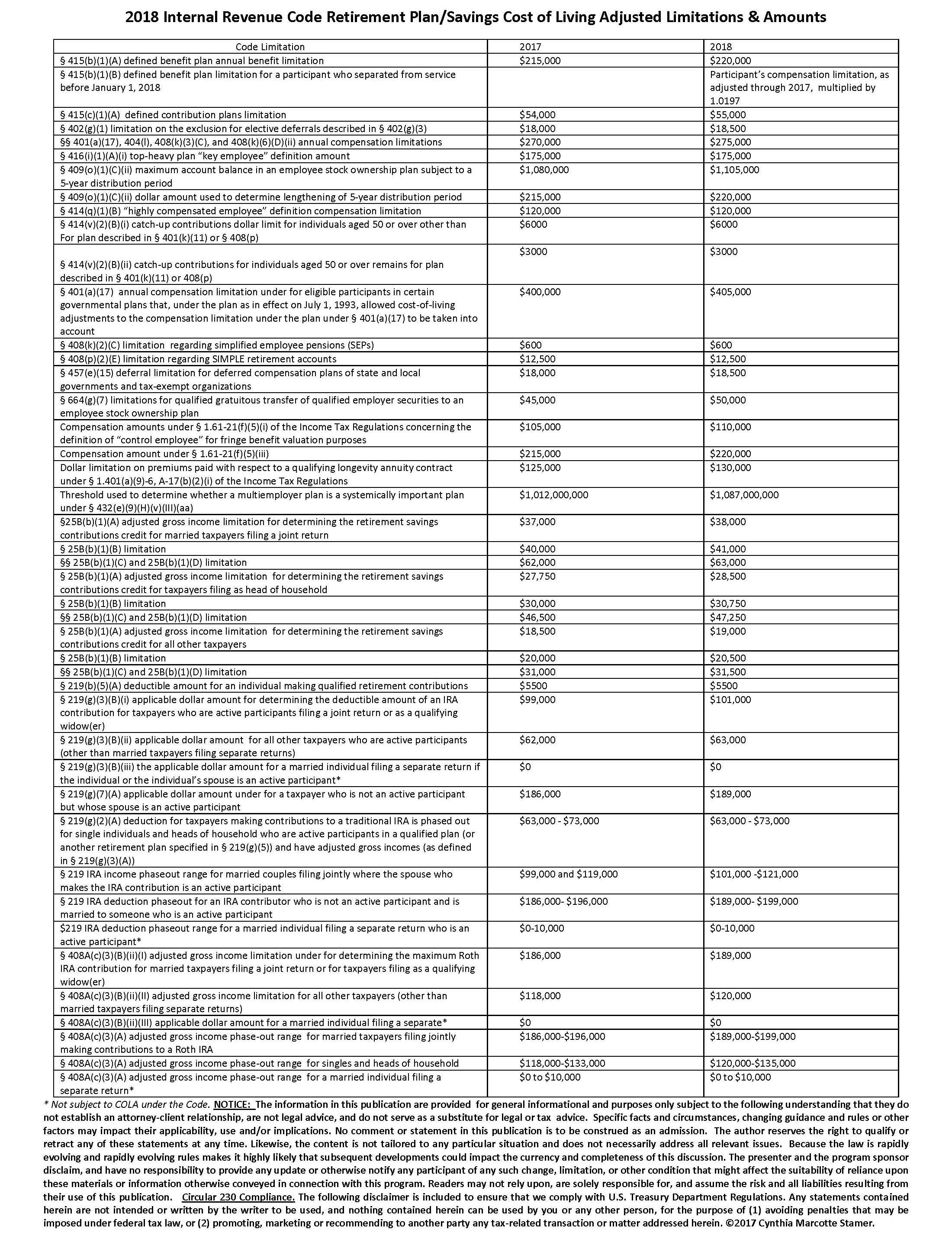
 Teamwork is a valuable and necessary to organizational performance in most workplaces. However management undermines team performance and effectiveness by giving participation trophies to team members that don’t give their best when working on teams.


You must be logged in to post a comment.