Recent fiduciary litigation clearly warns employer and other plan sponsors, plan committees and corporate officials, trustees and other service providers, and others involved in plan-related decision-making to ensure a well‑documented prudent fiduciary process for selecting and monitoring plan investments, selecting and overseeing service providers empowered to make or influence these decisions, and making other plan decisions.
The Employee, Retirement Income, Security Act (“ERISA”) requires “fiduciaries” to act prudently when making investment decisions, selecting and supervising parties to make investment decisions, or making any other fiduciary decision. See ERISA §404(a)(1)(B), 29 U.S.C. §1104(a)(1)(B).
Discount Tire Plan Litigation Illustrates Fiduciary Risks
The March 4, 2026 ruling in McGeathy v. Reinalt‑Thomas Corp., No. 2:25‑cv‑01439 (D. Ariz. Mar. 4, 2026), is the latest of a plethora of rulings highlighting the exposure of these and other parties with named or functional discretionary authority to make or select those responsible for making plan decisions risk from failing to recognize and appropriately manage their fiduciary status and responsibilities.
In McGeathy U.S. District Court for the District of Arizona refused to dismiss a fiduciary breach lawsuit alleging that the parent company of Discount Tire that sponsored the plan, various corporate officials and a trust company service provider were liable as plan fiduciaries for failing properly to monitor and replace underperforming target‑date funds in the company’s retirement plan.
The decision illustrates the willingness of courts to allow ERISA fiduciary claims to proceed against corporate plan sponsors and their officials or others who plaintiffs plausibly allege were fiduciaries and failed to follow a prudent process for reviewing investments or carrying out other discretionary decision-making. See ERISA §404(a)(1)(B), 29 U.S.C. §1104(a)(1)(B).
In McGeathy, a participant in the Discount Tire/America’s Tire Retirement Plan alleged that the defendants were plan fiduciaries and breached their duties under ERISA §404(a) by retaining a series of American Century target‑date funds that allegedly underperformed comparable funds for many years.
According to the complaint, the plan included approximately 16,000 participants and more than $1.2 billion in assets, with nearly 44% of plan assets invested in the challenged target‑date funds. The plaintiff alleges fiduciaries failed to prudently monitor and remove the investments despite long‑term underperformance relative to comparable funds.
The defendants argued that investment underperformance alone does not establish a fiduciary breach under ERISA. Some also disputed their fiduciary status relating to the challenged decisions.
The court rejected dismissal at the pleading stage, holding that the complaint plausibly alleged that the defendants were fiduciaries and as fiduciaries or co-fiduciaries may have failed to prudently monitor and replace the funds.
The court also allowed failure‑to‑monitor claims against company officials responsible for appointing and overseeing plan investment decision‑makers under the theory they acted as fiduciaries in selecting and retaining the trustee appointed to make those decisions for the plan. See ERISA §405(a), 29 U.S.C. §1105(a).
The courts ruling allows the case to proceed, requiring the plan sponsor, corporate officials, and trust company to continue to defend the case, pending a settlement or a determination on the facts. Regardless of how a case of merges, the litigation promises to be an expensive lesson, the outcome of which will depend on each defendant ability to demonstrate its prudence in the exercise of any discretion it possessed over the plan or it’s administration with regard to the disputed investments.
The Fiduciary Duty of Prudence
Under ERISA, the term “fiduciary” includes any person or entity that possesses named or functional discretionary authority over the administration or assets of a plan. ERISA §409. Since ERISA defines fiduciary status functionally, a party may not be a named fiduciary to bear fiduciary liability or responsibility. Consequently, many corporate officers and other parties often face fiduciary liability for their functional involvement and investment or other decisions regarding for the plan even though not official officially named as fiduciaries. A fiduciary generally is personally liable for breaches a fiduciary duties that it commits as well as liability as a co-fiduciary for fiduciary act or emissions of another fiduciary that the co-fiduciary through the exercise of prudence New, or should’ve known, was breaching its fiduciary duties and failed to appropriately act to protect the plan, including failure to monitor and manage a fiduciary that it appointed.
ERISA requires fiduciaries to act “with the care, skill, prudence, and diligence under the circumstances then prevailing that a prudent man acting in a like capacity and familiar with such matters would use.” ERISA §404(a)(1)(B), 29 U.S.C. §1104(a)(1)(B).
Courts consistently emphasize that ERISA liability focuses on the fiduciary process used to select and monitor investments, not simply on whether investments perform well or poorly.
The U.S. Supreme Court reinforced this principle in Tibble v. Edison International, 575 U.S. 523 (2015), holding that ERISA fiduciaries have a continuing duty to monitor plan investments and remove imprudent ones within a reasonable time.
Other Recent Cases Reinforce Monitoring Duties
Recent ERISA litigation continues to demonstrate that plan fiduciaries they cannot produce the necessary evidence to show that they acted prudently risk significant personal liability.
In Collins v. Northeast Grocery, Inc., 87 F.4th 125 (2d Cir. 2025), the Second Circuit allowed fiduciary breach claims to proceed based on allegations that plan fiduciaries failed to prudently evaluate investment performance and fees relative to comparable alternatives.
Similarly, in Cunningham v. Cornell University, 604 U.S. ___ (2025), the U.S. Supreme Court revived claims challenging allegedly excessive administrative and recordkeeping fees and clarified pleading standards applicable to ERISA fiduciary breach claims.
These decisions reflect continuing judicial scrutiny of fiduciary monitoring processes, benchmarking practices, and oversight of investment decisions and the selection, monitoring and management of plan sponsors and their corporate officers and other officials involved in the selection and retention of the service providers and pension investments or provide other services.
This liability often arises or is enhanced by the failure of individuals or entities possessing or exercising discretion over the plan’s assets or administration to appreciate their own fiduciary status and a resulting failure to use the necessary processes to prudently carry out these discretionary duties in a manner that captures the necessary evidence to defend the prudence of their actions.
Compliance Lessons for Plan Fiduciaries
Plan sponsors, fiduciary committees and corporate officers and directors with responsibility or involvement in managing plan, investments, or selection and management of the service providers or company officials responsible for management of investments should consider several risk‑reduction steps.
Plan an investment for other committees, trust companies, investment, advisory organizations, or individuals involved in the discretionary decision-making about the investment and management of plan assets should conduct their activities to create and maintain the necessary, documented evidence of their prudence in their oversight and management of the plans, investments and other activities. As part of these actions, for instance, they should:
• Maintain a structured investment monitoring process with periodic performance reviews.
• Adopt and consistently follow a written Investment Policy Statement.
• Benchmark investment performance and fees against appropriate peer funds.
• Document fiduciary committee meetings and deliberations.
• Monitor market or other conditions that could create a need for reconsideration of investment policies to meet market specific or other emerging conditions and document their decision-making.
Corporate Officers Be Liable as “Functional Fiduciaries” Even When Not Named in the Plan
Another important lesson from this modern ERISA fiduciary litigation is that corporate officers and others involved in making or appointing individuals or service providers to make plan investment or other decisions can become liable as fiduciaries even if not formally named as fiduciaries in plan documents.
ERISA defines fiduciary status based on functions performed, not titles held.
Under ERISA §3(21)(A), 29 U.S.C. §1002(21)(A), a person becomes a fiduciary to the extent he or she exercises discretionary authority or control over plan management, exercises authority or control over plan assets, or provides investment advice for a fee.
Because of this functional fiduciary rule, courts frequently hold that corporate officers, executives, and investment committee members can be personally liable when they exercise discretionary authority over plan investments or the selection or retention of the parties to make those decisions.
In Fifth Third Bancorp v. Dudenhoeffer, for instance, plan participants sued corporate officers responsible for administering the company’s retirement plan.
Participants alleged that corporate insiders knew the company’s stock was artificially inflated but continued allowing the plan to invest heavily in it. The Supreme Court held that corporate officers serving as plan administrators are subject to the same ERISA fiduciary duties as any other fiduciary, rejecting a special “presumption of prudence” for employer-stock investments.
The decision reinforced that officers who exercise discretionary control over plan investments can face fiduciary liability even when acting in dual corporate roles.
Also, in Donovan v. Bierwirth, the court held corporate officers responsible for managing a company pension plan liable for breach of fiduciary duty when they made investment decisions involving employer stock during a takeover battle.
The Second Circuit held that fiduciaries must act solely in the interests of plan participants and must take steps such as seeking independent advice when corporate conflicts arise.
The case remains one of the leading precedents establishing that corporate insiders who control plan investments can be personally liable under ERISA.
Likewise, federal courts have also imposed fiduciary liability on corporate insiders involved in employee stock ownership plan (ESOP) transactions.
For example, litigation brought by the U.S. Department of Labor against parties involved in ESOP stock transactions resulted in liability where insiders participated in transactions that caused the plan to pay inflated prices for employer stock. Courts held that individuals involved in the transaction could be jointly and severally liable as fiduciaries or knowing participants in prohibited transactions.
These cases demonstrate that ERISA liability can extend beyond named fiduciaries to individuals who exercise real control over investment decisions.
This functional fiduciary doctrine significantly expands potential liability exposure.
Corporate executives may become ERISA fiduciaries when they select or retain service providers or named plan fiduciaries, approve or influence plan investment menus, participate in investment committees, select or retain target-date funds or other plan investments or appoint or monitor plan fiduciaries or investment advisors or engage in of influence other plan decisions affecting plan assets or administration.
Even if plan documents designate a committee or outside fiduciary, individuals involved in decision-making may still face liability under ERISA’s co-fiduciary provisions if they knowingly participate in or fail to correct fiduciary breaches.
Acdditional Practical Compliance Lessons for Corporate Leadership
Corporate officers involved in retirement or other benefit plan oversight should take steps to manage their potential liability exposure. Among other things, these steps should include:
Ensure plan documents and contracts provide a clear fiduciary governance structure that clearly identifies l who is responsible for plan investment and other decisions.
Establish and prudently appoint an investment committe responsible for prudent investment of the plan investments;
Require investment committee independence with prudent periodic monitoring and oversight;
Investment Committees should meet regularly and prudently decide and review investment performance pursuant to prudent written investment policy.
Ensure documented monitoring of plan investments.
Maintain benchmarking reports, advisor analyses, and prudent fiduciary deliberations documentation;
Periodically review of investment advisors Confirm that advisors are providing objective and appropriate recommendations;
Train executives and committee members Ensure individuals understand when their activities may create fiduciary status and their responsibilities.
All parties should understand that ERISA fiduciary liability is determined by what individuals actually do, not by whether they are formally labeled fiduciaries.
Courts consistently hold that corporate officers who exercise discretionary authority over retirement plan investments may be treated as ERISA fiduciaries and held personally liable for imprudent investment decisions or failures to monitor plan investments.
Businesses sponsoring employee benefit plans, and the officers and directors that serve on retirement committees, or in other capacities involved in the selection and retention of committees or service providers appointed to manage plan investments and other operations should recognize their selection authority generally will be considered fiduciary action for purposes of ERISA. Parties involved in these selection and oversight activities should conduct carefully documented processes to demonstrate their prudence in the selection and monitoring of the committee members or service providers that will be performing investment or other fiduciary functions for the plan. hiring processes should include carefully, documented, vetting processes that verify the credentials, performance, processes, fees and other compensation, and other relevant factors necessary to make these engagement of a particular entity or individual to carry out these investment functions prudent. Subsequently, procedure should be implemented and used to periodically monitor and review investment advisors and other service providers.
To meet express requirements of a risk of concerning the parties and trusted with fiduciary responsibilities, all involve parties should affirm that any individual or entity involved in the selection of plan, service providers, or investments, or otherwise performing fiduciary activities, or providing services to the plan are properly vetted for eligibility to serve under the ERISA rules, properly bonded, and otherwise have the credentials and performance history that justifies and trust of these responsibilities under the rules of prudence.
Documentation of fiduciary decision‑making is often critical in defending ERISA fiduciary breach claims. Courts frequently examine committee minutes, benchmarking reports, and advisor recommendations when evaluating whether fiduciaries followed a prudent process. processes of all involved parties should not only seek to exercise and verify prudent decision-making, but also captured the necessary evidence and documentation to defend their determination and actions in the event of a Department of Labor investigation or participant lawsuit.
Bottom Line
The Discount Tire and other similar decisions reaffirm a central principle of ERISA fiduciary law: liability often turns on the quality and documentation of the fiduciary process used to monitor plan investments or other decision-making regarding the plan, it’s service providers and investments, or other aspects of the establishment and administration of the plan.
Plan sponsors and fiduciaries should ensure they maintain a disciplined vendor credentialing, selection and contracting process; investment selection, performance and review process; and retain documentation demonstrating prudent oversight of plan investments and advisors.
Corporations should seek guidance and training from qualified employee benefits counsel as prudently required to understand and perform these responsibilities.
Also since lawsuits and other challenges can arise, despite the most diligent efforts to act prudently, all parties involved also gently should consider the advisability of securing fiduciary liability insurance coverage and appropriate contractional role designation and indemnification to help mitigate potential liability and cost arising from challenges that may arise out of the performance of investment or other related activities.
For More Information
We hope this update is helpful. For more information about these or other employee benefits, human resources, or health care developments, please contact the author Cynthia Marcotte Stamer via e-mail or via telephone at (214) 452 -8297.
A Fellow in the American College of Employee Benefits Counsel and Board Certified in Labor and Employment Law by the Texas Board of Legal Certification, Cynthia Marcotte Stamer has more than 35 years experience, advising plan sponsors, fiduciaries, service providers and others about fiduciary responsibility and other employee benefit plan design, administration, risk management and compliance. i
Ms. Stamer is a Martindale-Hubble AV-Preeminent (highest/top 1%) practicing attorney recognized as a “Top Woman Lawyer,” “Top Rated Lawyer,” and “LEGAL LEADER™” in Health Care Law and Labor and Employment Law; among the “Best Lawyers In Dallas” in “Labor & Employment,” “Tax: ERISA & Employee Benefits,” “Health Care” and “Business and Commercial Law recognized for her experience, scholarship, thought leadership and advocacy on health and other employee benefits, insurance, healthcare, workforce, HIPAA and other data and technology and other compliance in connection with her work with health care and life sciences, employee benefits, insurance, education, technology and other highly regulated and performance-dependent clients.
Ms. Stamer has more than 35 plus years of experience advising and representing, employers, employee benefit plans and their fiduciaries and administrators, their administrative services, technology and other business associates and other vendors, managed care and insurance, health care and other clients about these and other workforce, employee benefits, internal controls and other operations and compliance concerns.
Ms. Stamer is nationally sought out for her decades of leading-edge experience in the design, sponsorship, administration, and defense of health, severance, savings retirement and other employee benefit, workforce, insurance, healthcare, data and technology, and other operations to promote legal and operational compliance, reduce regulatory and other liability, and advance other operational goals. This experience includes decades of work on ERISA, Internal Revenue Code and other related labor and employment, insurance, corporate and securities, data privacy and security, licensing and other laws. She also sought out for her extensive speaking and publications on these and related concerns.
Along with her decades of legal and strategic consulting experience, Ms. Stamer also contributes her leadership and experience to many professional, civic and community organizations including current or previous service as Employee Benefits Group Chair and a Substantive Groups Committee Member for the ABA Real Property Trusts and Estates (“RPTE”) Section and Chair of its Welfare Plan, Fiduciary Responsibility and Plan Terminations Committees; Chair of the ABA International Section International Employment Law Committee; Chair and Vice Chair of the ABA Tort Trial and Insurance (“TIPS”) Section Medicine and Law Committee, Vice Chair of its Employee Benefits and Worker’s Compensation Committees; and Chair of the ABA Intellectual Property Section Law Practice Management and Special Technologies Committees; ABA Joint Committee on Employee Benefits (“JCEB”) Council Representative and Scribe for its annual agency meetings with the Department of Health and Human Services; International Section Life Sciences Committee Chair; Health Law Section Managed Care & Insurance Interest Group Chair; Vice Chair, Tax Section Fringe Benefit Committee Chair, and in various other ABA leadership capacities. Ms. Stamer also is a former Southwest Benefits Association Board Member and Continuing Education Chair, SHRM National Consultant Board Chair and Region IV Chair, Dallas Bar Association Employee Benefits Committee Chair, former Texas Association of Business State, Regional and Dallas Chapter Chair, a founding board member and Past President of the Alliance for Healthcare Excellence, as well as in the leadership of many other professional, civic and community organizations. She also is valued and celebrated for her decades of policy advocacy and charitable, pro bono, community and other service and leadership to promote understanding and strengthening health care, workforce, saving, disability, aging and retirement and other key policies and challenges through her PROJECT COPE Coalition For Patient Empowerment initiative and many other pro bono service involvements locally, nationally and internationally.
Ms. Stamer is the author of many highly regarded works published by leading professional and business publishers, the ABA, the American Health Lawyers Association, and others. Ms. Stamer also often speaks and serves on the faculty and steering committee for many ABA and other professional and industry conferences and conducts leadership and industry training for a wide range of organizations.
For more information about Ms. Stamer or her health industry, health and other benefits, workforce and other experience and involvements, see the Cynthia Marcotte Stamer P.C. website or contact Ms. Stamer via telephone at (214) 452-8297 or via e-mail here.
About Solutions Law Press™
Solutions Law Press™ provides health care, insurance, human resources and employee benefit, data and technology, regulatory and operational performance, and other business risk management, legal compliance, management effectiveness and other coaching, tools and other resources, training and education. These include extensive resources on leadership, governance, human resources, employee benefits, data security and privacy, insurance, health care and other key compliance, risk management, internal controls and operational concerns. If you find this of interest, you also be interested reviewing some of our other Solutions Law Press™ resources or training.
If you or someone else you know would like to receive future updates about developments on these and other concerns, please be sure that we have your current contact information including your preferred e-mail by creating your profile here.
NOTICE: These statements and materials are for general information and purposes only. They do not establish an attorney-client relationship, are not legal advice or an offer or commitment to provide legal advice, and do not serve as a substitute for legal advice. Readers are urged to engage competent legal counsel for consultation and representation considering the specific facts and circumstances presented in their unique circumstances at the particular time. No comment or statement in this publication is to be construed as legal advice or admission. Solutions Law Press and its authors reserve the right to qualify or retract any of these statements at any time. Likewise, the content is not tailored to any particular situation and does not necessarily address all relevant issues. Because the law constantly and often evolves, subsequent developments that could change the currency and completeness of this discussion are likely. Solutions Law Press and its authors disclaim and have no responsibility to provide any update or otherwise notify anyone of any fact or law-specific nuance, change, limitation, or other condition that might affect the suitability of reliance upon these materials or information otherwise conveyed in connection with this program. Readers may not rely upon, are solely responsible for, and assume the risk and all liabilities resulting from their use of this publication.
Circular 230 Compliance. The following disclaimer is included to ensure that we comply with U.S. Treasury Department Regulations. Any statements contained herein are not intended or written by the writer to be used, and nothing contained herein can be used by you or any other person, for the purpose of (1) avoiding penalties that may be imposed under federal tax law, or (2) promoting, marketing or recommending to another party any tax-related transaction or matter addressed herein.
Solutions Law Press publisher and attorney Cynthia Marcotte Stamer will discuss tobacco cessation class actions, health plan PBM, excessive fee, antitrust and other selected emerging health and disability plan litigation trends to watch in 2025 as part of the Welfare Plan Update at the American Bar Association Real Property, Probate and Trust Section Employee Plans and Executive Compensation Group will host during its free committee call on January 17, 2025, at 11:30 AM Central Time.
Along with Ms. Stamer’s comments, the Update also will include updates on the mental health partiy final rules and implications of the January 1, 2025 expiration of high deductible health plan telemedicine relief by her fellow Welfare Benefit Committee Co-Chair Jacquelyn M. Abbott and Committee Vice Chair Julia Mader.
Members interested in the meeting are invited to use the following Zoom credentials to connect to the meeting:
Board Certified in Labor and Employment Law by the Texas Board of Legal Specialization and a Fellow in the American College of Employee Benefits Counsel, Stamer is recognized for her decades of work on leading edge employee benefits, employment, health care and insurance concerns with recognition as a Martindale Hubble “Top Rated Lawyer” and “Legal Leader” in Health Care and Labor and Employment Law; as among the D Magazine “Best Lawyers In Dallas” in Labor & Employment, Tax: ERISA & Employee Benefits, Health Care and Business and Commercial Law.
Stamer has more than 35 years of experience guiding employers, health and other employee benefit and insurance programs and their fiduciaries, managed care, TPAs, PBMs, health care clearinghouses and their service providers; and other managed care and other health and health plan industry clients on program, product, systems and process design, administration, and defense; government and regulatory investigations and affairs; HIPAA and other data and systems privacy, cybersecurity and other integrity; workforce and other service provider credentialing, contracting, and management; government and private investigations, disputes, audits and enforcement; and other compliance, risk management and operations concerns in a wide range of contexts. Her work, and the interests of her clients are enhanced by her continuous involvement in federal and state legislative advocacy, regulatory affairs and government relations on these and other related concerns throughout her career.
In the course of this work, Stamer frequently advises and represents and defends health and other employee benefit plans, their fiduciaries, third party administrators, brokers, insurers, trustees and other plan service providers, debtor plan sponsors and their leaders, auditors, creditors and creditor committees, bankruptcy trustees, on prevention and mitigation of claims, fiduciary, licensing, prompt pay and other contractual, regulatory and other risks and liabilities arising from underfunded or distressed companies and employee benefit plans. She also advises employers, their boards, investors and management, third party administrators, preferred provider organizations, insurers and other plan service providers and others in fiduciary, claims and other audits, investigations and enforcement actions by private litigants, the Department of Labor, Department of Health & Human Services, Internal Revenue Service, Department of Justice, Federal Trade Commission, state insurance, attorneys’ general or other regulator, contractual arising out of workforce and staffing, employee benefit and insurance practices and programs in ongoing operations, corporate or credit transactions, bankruptcy or other situations and serves as special or consulting counsel for bankruptcy and other human resources, benefits, insurance, health care and regulatory compliance and investigation concerns. Stamer also counsels, represents and defends third party administrators, preferred provider and other managed care organizations, brokers and other regulated parties in state insurance and other regulators notice and reporting, investigations, audits, discipline and other enforcement actions.
Past Chair of the ABA RPTE Employee Benefit and Other Compensation Group, the Health Law Section Managed Care and Insurance Interest Group, and the Tort Trial and Insurance Section Medicine and Law Committee, Stamer also contributes her experience and knowledge by serving as Scribe for the American Bar Association (“ABA) Joint Committee on Employee Benefits (“JCEB”) annual agency meeting with the Department of Health and Human Services as well as a leader of employee benefits, human resources, health as an industry thought leader, Stamer also publishes and speaks extensively on health and other employee benefits, compensation, workforce, health care and related regulatory compliance and risk management matters.Her insights on these and other matters appear in publications of the American Bar Association, Bloomberg/BNA, Modern Healthcare, Aging In Place, Spencer Publications, the Wall Street Journal, the Dallas Business Journal, the Houston Business Journal, and many other national and local publications. For additional information about Stamer, her speaking, legal, consulting and other experience and services, or to access other publications by Stamer see CynthiaStamer.comor contact Stamer directly via e-mailor telephone (214) 452-8287.
For more details about the Real Property Probate and Trust Section Employee Benefits and Other Compensation Committee or other employee benefits related committees and activities of the American Bar Association, see the American Bar Association website here.
To receive future updates about developments on these and other concerns, please be sure that we have your current contact information – including your preferred e-mail – by creating or updating your profile hereand connect with Stamer on Linkedin. For important information concerning this communication click here. If you do not wish to receive these updates in the future, unsubscribe by updating your profile here.
About Solutions Law Press, Inc.™
Solutions Law Press, Inc.™ provides health care, insurance, human resources and employee benefit, data and technology, regulatory and operational performance, and other business risk management, legal compliance, management effectiveness and other coaching, tools and other resources, training and education. These include extensive resources on leadership, governance, human resources, employee benefits, data security and privacy, insurance, health care and other key compliance, risk management, internal controls and operational concerns. If you find this of interest, you also be interested reviewing some of our other Solutions Law Press, Inc.™ resources.
If you or someone else you know would like to receive future updates about developments on these and other concerns, please be sure that we have your current contact information including your preferred e-mail by creating your profile here.
NOTICE: These statements and materials are for general information and purposes only. They do not establish an attorney-client relationship, are not legal advice or an offer or commitment to provide legal advice, and do not serve as a substitute for legal advice. Readers are urged to engage competent legal counsel for consultation and representation considering the specific facts and circumstances presented in their unique circumstances at the particular time. No comment or statement in this publication is to be construed as legal advice or an admission. The author reserves the right to qualify or retract any of these statements at any time. Likewise, the content is not tailored to any particular situation and does not necessarily address all relevant issues. Because the law constantly and often rapidly evolves, subsequent developments that could impact the currency and completeness of this discussion are likely. The author and Solutions Law Press, Inc. disclaim and have no responsibility to provide any update or otherwise notify anyone of any fact or law-specific nuance, change, limitation, or other condition that might affect the suitability of reliance upon these materials or information otherwise conveyed in connection with this program. Readers may not rely upon, are solely responsible for, and assume the risk and all liabilities resulting from their use of this publication.
THE FOLLOWING DISCLAIMER IS INCLUDED TO COMPLY WITH AND IN RESPONSE TO U.S. TREASURY DEPARTMENT CIRCULAR 230 REGULATIONS. ANY STATEMENTS CONTAINED HEREIN ARE NOT INTENDED OR WRITTEN BY THE WRITER TO BE USED, AND NOTHING CONTAINED HEREIN CAN BE USED BY YOU OR ANY OTHER PERSON, FOR THE PURPOSE OF (1) AVOIDING PENALTIES THAT MAY BE IMPOSED UNDER FEDERAL TAX LAW, OR (2) PROMOTING, MARKETING OR RECOMMENDING TO ANOTHER PARTY ANY TAX-RELATED TRANSACTION OR MATTER ADDRESSED HEREIN.
With this week’s Thanksgiving celebrations kicking off the 2024 year-end holiday festivities, wise businesses will proactively act to reduce the risk that their business will start 2025 with a post-holiday workforce liability hangover.
Responsibly managed, company-sponsored and other social celebrations and activities can promote team building, morale, goodwill and other rewards. However, holiday celebrations, staffing disruptions, behaviors and their fallout also can often create attendance, discipline, compliance, safety and other legal and operational responsibilities, risks and costs. Wise business leaders act proactively to mitigate these risks as the nation enters holiday season begins.
Health & Safety
Gatherings, food, game playing, toasting with alcohol, travel and other aspects of company-sponsored and off-duty celebrations can enhance usual or create new accident and illness risks. Holiday socialization, presentism, distractions, staffing disruptions, operational changes and other factors can increase illness and accident risks. Injuries and illnesses suffered on or off the job can create added occupational health and safety and worker’s compensation responsibilities, costs and liabilities, disrupt staffing and productivity, and fuel health care, medical leave, disability, worker’s compensation and other responsibilities and expenses long after the holiday season ends. To help workers enjoy the Holidays safely and avoid these business costs and disruptions, businesses should confirm that their occupational health, safety and injury policies, practices, and staffing fulfill applicable occupational health and safety and workplace accident and injury laws, as well as consider encouraging workers to follow good health and safety practices on and off the job throughout the holiday season.
Employers generally have a duty of care under the Occupational Safety and Health Act (“OSH Act”) and other occupational health and safety laws to provide a safe work environment. The OSH Act requires businesses to recognize and take appropriate steps to keep their workplaces safe. The OSH Act, worker’s compensation, leave and other laws. OSH Act and other workplace safety laws generally require employers to promptly report and investigate workplace accidents and injuries, ensure workers receive timely treatment, and trigger occupational injury and other leave and other duties.
Workplace injuries resulting from unsafe workplace conditions generally trigger expensive penalties and damages, in addition to worker’s compensation or other occupational injury coverage liabilities. The holiday season often exacerbates or adds to the ongoing challenges employers face in maintaining workplace safety and responding to workplace injuries and accidents. Some common sources of additional risks associated with the holiday season include decreased oversight from management holiday absences, heightened worker fatigue and distraction, demand-driven, vacation or illness-related understaffing, expanded use of temporary or contract staffing, and holiday season-associated intoxication. See Holiday Workplace Safety. OSHA offers various recommendations to aid employers in recognizing and managing heightened workplace safety risks during the holiday season. Keeping Workers Safe This Holiday Season. To mitigate their risks from workplace injuries and accidents caused by safety violations and associated violations of investigation, reporting, benefit and other requirements, business leaders should ensure that their organizations identify and manage these additional risks, as well as ensure appropriate staffing and other arrangements are in place to ensure timely response, investigation and reporting of any workplace accidents or injuries during the holiday season.
With outbreaks of the flu, respiratory illnesses and other communicable or infectious diseases that spread from person to person common during the holidays, and holiday gatherings heightening the potential for transmission of the flu or other contagious diseases, businesses also should consider their responsibilities under the OSH Act or other laws to manage contagious disease exposures and spread. For instance, health care and certain other industries may be subject to laws or regulations that impose specific requirements for preventing and responding to contagious diseases, many of which may have been added or changed since the COVID-19 pandemic. Businesses should verify their policies meet or exceed current federal, state, local and contractual requirements as well as are designed to meet their business’ need to manage other contagious disease costs, absences and other disruptions.
Whether or not a business is subject to specific contagious disease management mandates, all businesses generally will benefit from reviewing and communicating their existing contagious disease and related leave and other workforce policies to workers and management to help protect their operations against the costs, operational disruptions and liabilities that often result from contagious disease outbreaks within their workplace. To enhance efforts to deter worker injuries and illnesses, businesses should consider using free resources like the Centers for Disease Control’s Healthy Habits to Prevent Flu and 8 Tips for a Safe and Healthy Holiday Season flyers, workplace posters, payroll stuffers and other communications to remind workers and their families to follow best safety and contagious disease prevention practices during the holidays.
Along with encouraging workers to stay healthy and safe during the Holidays, businesses should also consider providing documented reminders and take other steps to encourage workers to provide timely notice of illnesses and injuries and verify appropriate management coverage and arrangements to ensure that management team absences don’t disrupt the business’ timely delivery of Family and Medical Leave Act, occupational injury and other notifications, coverage for absences, provision of benefits, and other performance of other responsibilities in response to injury and illness reports despite holiday associated absences or hours of operation impacting the employing business or its responsible vendors.
Businesses also should verify their workplace safety, contagious disease and leave policies are designed and administered to prevent and mitigate exposure for unlawful OSH Act and worker’s compensation retaliation, disability discrimination against legally protected employees with chronic or other disabilities under the Americans with Disabilities Act (“ADA”), denial of leave or other violations of the Family and Medical Leave Act leave, notice and other requirements; and ADA and other privacy and confidentiality laws.
Alcohol & Other Conscious Altering Substance Consumption
The increased prevalence of holiday season celebrations and vacations often fuels an increase in consumption of alcohol, marijuana, and other consciousness-altering substances. This consumption can fuel a host of risks and headaches for businesses. Businesses concerned about these risks should act proactively to mitigate these risks.
When addressing business-related alcohol consumption, many businesses will want to consider not only alcohol and other conscious altering consumption at business-related events as well as potential costs that may arise from off-duty excess alcohol consumption. Whether resulting from on or off-duty consumption, excess alcohol, marijuana or other conscious altering consumption, whether on or off duty, can undermine productivity, create attendance and discipline issues, and fuel a host of other risks even when it does not result in a specific accident or injury.
Impaired judgment from alcohol or other intoxication in the workplace or at other events often fuels or contributes to employees or others exhibiting or subjecting employees to inappropriate sexual advances or other discriminatory statements, violent behavior, suicidal behavior or other problematic conduct requiring workplace investigations and discipline.
Most businesses also recognize that accidents caused by alcohol or other intoxication at work or work-related functions create substantial liability exposures for the company under the OSH Act and other occupational safety laws, as well as to workers and any third parties injured by a drunken employee, business associate, client or guest.
Businesses risk “dram shop” or other claims or other liability if employees or guests impaired by alcohol or other substances consumed at company-sponsored or associated events or operating company vehicles or equipment injure others.
Beyond this third-party liability, businesses also may incur significant worker’s compensation, health or disability benefit-related benefit costs if an employee is injured or injures another worker in an alcohol-related accident.
The potential headaches are even greater where the business is a health care, education, automobile sales, trucking and other transportation, or another business subject to or that has voluntarily adopted specific drug and alcohol-free, drug and alcohol testing and other related regulatory or contractual requirements. Businesses subject to these requirements should ensure appropriate arrangements for timely drug and alcohol testing, reporting, and other compliance with these requirements during the holiday season to avoid regulatory or contractual penalties for noncompliance. Companies administering substance abuse testing must comply with applicable mandates while also ensuring that their processes incorporate appropriate protocols to comply with disability discrimination, accommodation and confidentiality requirements of the Americans With Disabilities Act (“ADA”). See, e.g., ADA May Require Employers To Accommodate Employees Testing Positive For Legally Prescribed Medications
Also, because workers engaged in these industries generally risk loss of licensure, certification or other credentials required to perform their jobs for engaging in or failing to report certain alcohol or substance-related offenses or conduct, even off-duty consumption can create staffing headaches for an employer if a worker becomes temporarily or permanently disqualified to work as a result of a substance-related infraction. Consequently, businesses in industries affected by these heightened requirements have a heightened interest in educating and reminding workers to behave legally and responsibly when deciding if and when to consume alcohol or other conscious-altering substances.
Accordingly, virtually all businesses can benefit from encouraging employees to be responsible when consuming alcohol in both business and non-business functions and in planning and hosting holiday functions.
Businesses that serve alcohol at company functions or anticipate that employees will attend other business functions where alcohol will be served need to consider the potential liability risks that may result if the alcohol-impaired judgment of an employee or other guest causes him to injure himself or someone else. A company anticipates an employee or guest might consume alcohol at a company-sponsored or another business event and should adopt and enforce clear policies to prohibit and prevent individuals from over-imbibing and from driving under the influence. Many businesses also find it beneficial to suggest, require or offer at company expense alternate transportation for employees to use when leaving a company or business-related event where the employee consumed alcohol.
Businesses concerned with these liability exposures should take steps to manage the potential risks that commonly arise when employees, clients or other guests consume alcohol at company-sponsored events or while attending other business-associated festivities. To minimize these risks at company-sponsored events, many companies elect not to serve or limit alcohol consumed by workers and served to guests at company sponsored events and other business functions.
To help prevent intoxication from fueling inappropriate behavior at company celebrations where alcohol might be consumed or present, businesses, at a minimum, should remind employees that company policies prohibiting intoxication apply to company-sponsored social and business events. Some practical tips for hosting safe holiday gatherings include:
Management and other leaders should communicate expectations and set a good example.
Reduce opportunities for intoxication by prohibiting or restricting and monitoring the amount of alcohol available and served.
Offer a plentiful supply of a variety of nonalcoholic drinks—water, juices, sparkling sodas. Nonalcoholic drinks provide guests with alternatives to alcohol. They also may help counteract the dehydrating effects of alcohol, slow the rate of alcohol absorption into the body and may reduce the peak alcohol concentration in the blood.
Provide a variety of healthy foods and snacks. Food consumption can slow the absorption of alcohol and reduce the peak level of alcohol in the body by about one-third. Food can also minimize stomach irritation and gastrointestinal distress the following day.
Encourage guests to help keep each other safe by monitoring and assign a team to monitor attendees for potential overconsumption or other signs of intoxication. With appropriate pre-consumption notification to attendees, some businesses even require or encourage attendees consuming alcohol to take a breathalyzer test before departure to minimize the risk that an intoxicated guest will be arrested or involved in an accident after departing the party.
Help your guests get home safely by arranging reliable transportation by using designated drivers and taxis. Anyone getting behind the wheel of a car should not have ingested any alcohol.
Because holiday-associated alcohol consumption and other stresses also tend to fuel increased depression, domestic violence and other stress-associated behaviors, many businesses also find it beneficial to redistribute information about employee assistance programs (EAPs).
Businesses also may want to review the adequacy of existing health, disability, accident and dismemberment, group legal services and other benefit programs, liability insurance coverage and employment policies to protect and promote the company’s risk management and workforce coverage objectives. Businesses can experience unfortunate surprises if they don’t anticipate the implications of these provisions on their employment policies, leave and benefit, safety and other workplace programs and liability insurance and indemnification obligations and costs. Maintaining and reminding workers about policies regarding alcohol consumption or intoxication, accident and traffic offense notifications, privacy waivers, or other policies enhancing accident investigation and response, or other strategic policies can help deter and facilitate investigation and response to on and off-duty accidents or other risk-creating events.
Many employee assistance (“EAP”) health and disability programs incorporate special provisions affecting injuries arising from inappropriate alcohol use as well as offer coverage and benefits to aid employees and family members affected by mental health or substance abuse-related conditions. Changes in regulatory mandates and expanded enforcement of federal group health plan mental health and substance abuse coverage mandates make it important to ensure that employment-based health coverage complies with these requirements. Similarly, many businesses increasingly qualify for preferential rates or discounts on liability policies based upon representations that the business has in effect certain alcohol and drug use or other risk management policies and practices. Reviewing these policies now to become familiar with any of these requirements and conditions can also be invaluable in helping a business respond effectively if an employee or guest is injured in an alcohol-related accident.
Discrimination & Harassment Liability Risks
Businesses should also manage exposures to religious, sex and other discrimination risks linked with the holiday season.
Businesses should critically review their scheduling and other holiday season plans and practices for potential prohibited discrimination or other insensitivity. Businesses should use care to handle carefully requests for religious-based scheduling changes, particularly in light of changes in judicial precedent and regulations in recent years. Leave policies should disclose policies for scheduling and holiday leave clearly and include appropriate, updated policies and procedures for requesting religious accommodation. Companies also should consider seeking advice from legal counsel before denying a faith-based request for a schedule change in light of the latest guidance or recent court decisions precedent.
Business-sponsored or connected holiday or year-end parties, communications, gifts, and other December festivities and observances should be designed to reflect appropriate sensitivity to sexual harassment and religious and other cultural diversity risks. Businesses should exhibit sensitivity and alert their workforce to their expectation that members of their workplace exhibit respect and sensitivity to differences in religious practices and observances among their employees, business associates and friends. Management and other workers should use care to plan social gatherings to be inclusive and to accommodate differences in cultural, religious and other differences. Businesses also should be sensitive to the potential that workers of alternative faiths may feel discriminated against if holiday observances focus unduly on a particular religion to exclude their faith. Businesses also should use care to manage other discrimination exposures in the planning of holiday festivities, gift exchanges, and other activities. Businesses also should be vigilant in watching for signs of inappropriate patterns of discrimination in the selection of employees invited to participate in company-connected social events and off-duty holiday gatherings sponsored by managers and supervisors.
A good starting point is reminding employees, business partners and customers that the company expects employees, business partners and other guests to adhere to company rules against sexual harassment, religious and cultural and other inappropriate discrimination at company-sponsored and other gatherings involving other employees or business associates. Businesses also should remind employees that the company does not expect or require that employees submit to unwelcome sexual, religious, or other inappropriate harassment or discrimination when participating in parties or other social engagements with fellow employees, customers or other business partners and of the procedures to follow to report any concerning events. Even a simple e-mail reminder to employees that the company expects them to be familiar with and comply with these policies and can help promote compliance and provide helpful evidence if an employee or other celebrant steps over the line.
To enhance the effectiveness of these reminders, a business should consider adopting and sharing specific guidance to educate workers about its policies, including examples to illustrate company-sponsored and other off-duty holiday-associated activities of particular concern.
Businesses also should recognize that whether or not company-sponsored, the fraternization inherent in holiday parties and other celebrations where employees celebrate with other employees, clients, suppliers or other business associates can lower inhibitions and obscure the line between appropriate and inappropriate social and business behavior. With or without alcohol, some employees, clients or business associates may misinterpret the festive social atmosphere of holiday celebrations. Some employees, clients or business associates make unwelcome sexual advances, make sexually suggestive or other inappropriate statements, or engage in other actions that expose the business to sexual harassment or other employment discrimination, harassment or retaliation liability. To help deter inappropriate or risky conduct, businesses should consider providing reminders that company prohibitions and rules about sexual harassment, discrimination, fraternization and other inappropriate conduct remain in effect during the holiday season, including when planning or attending holiday celebrations or other events hosted by the business, business partners and clients, and even private management sponsored events and observances.
Gift Giving, Gratuities & Social Entertainment
The exchange of social invitations, gifts and gratuities during the holiday season or at other times throughout the year also can raise various concerns. Businesses should adopt and communicate clear policies and procedures governing both giving and receiving social invitations, gifts, and other benefits. Businesses should review applicable governmental regulations, contractual requirements, and customer and vendor policies for requirements that could impact the offering, receipt, reporting or other handling of gifts, social invitations or other activities. Businesses also should design policies to ensure that they collect and retain sufficient documentation from employees, officers, consultants, customers, and vendors to monitor compliance and other legal and operational risks associated with social entertainment, gifts, and other similar benefits, to report tax deductions and income arising from these activities appropriately, and to meet other compliance obligations. Businesses should review and update current business policies affecting social entertainment, gifting and other similar activities for opportunities to promote compliance and mitigate risks.
As with other holiday observances, all gifts, gratuities and social entertainment must adhere to applicable laws, regulations and company policies regarding bribery, conflict of interest or other inappropriate inducements or rewards. Companies should implement and enforce appropriate policies for the offering and provision of and recordkeeping and reporting of these perks.
Gifts, gratuities and entertainment practices also must not discriminate inappropriately based on sex, religion or other protected status and must reflect appropriate sensitivity to potential religious, sex, race, or other protected status. A business that anticipates workplace or work-connected private festivities might include white elephant or other gift exchanges may wish to specifically include a reminder to exercise care to avoid selecting a gift that may be sexually suggestive, insensitive to religious, cultural or other differences or otherwise offensive.
Businesses also should confirm that all applicable tax implications arising from the giving or receiving of gifts are appropriately characterized, documented and reported in accordance with applicable tax, referral, conflict of interest and other requirements.
In addition to ensuring proper tax documentation and reporting, businesses also need to ensure and retain documentation of the propriety of invitations, gifts and other benefits. Social entertainment and gift-giving activities intended to show appreciation or support marketing efforts can create significant legal or relationship risks if not properly tailored to avoid regulatory or contractual prohibitions or appearances of impropriety. Government contractors, government officials, health care providers, nonprofits, public companies and an amazingly broad range of other entities often must comply with specific statutory, regulatory, contractual or ethical requirements affecting the giving or receiving of invitations, gifts or other preferences. An ill-conceived social invitation, gift, or other benefit that violates these restrictions may expose both givers and recipients to legal prosecution, program disqualification and other serious legal risks.
In addition to these externally imposed legal mandates, many businesses have established their own conflict of interest, social entertainment, gift giving or other policies to minimize the risk that employee loyalty or judgment will be comprised by gifts offered or received from business partners or other outsiders. Employees, officers and contractors of businesses maintaining these policies may face termination or other significant discipline for violating these requirements. Accordingly, businesses offering social invitations, gifts and other benefits to valued vendor or customer relationships risk must be sensitive to these organizationally imposed requirements.
Timekeeping, Performance, Attendance & Time Off
Businesses also commonly face a range of year-end timekeeping, attendance and time off, pay, compensation and productivity concerns. The winter cold and flu season and other post-celebration illnesses, vacations, and winter weather inevitably combine to fuel a rise in absenteeism and competing requests for time off during the holiday season. Improperly designed or out-of-date timekeeping and reporting, leave and attendance, investigations, privacy and other workplace policies can exacerbate management of these challenges and their costs. Further complications can arise when dealing with employees suspected of mischaracterizing the reason for their absence or otherwise gaming the company’s time off policies. Meanwhile, performance and productivity concerns also become more prevalent as workers allow holiday shopping, personal holiday preparations, and other personal distractions to distract their performance.
Managing staffing needs and tracking and administering timekeeping, overtime and other pay, paid and unpaid time off and other attendance, compensation and absence administration while maintaining compliance with legally protected or other legitimate requests for excused time off by employees can present major headaches for businesses and their management. Recent changes in federal, state and local paid and other protected leave mandates add additional traps for the unprepared. Businesses concerned with these challenges ideally will review their policies and practices to ensure their organizations have in place well-designed policies and practices concerning timekeeping, overtime and other pay, attendance and time off, productivity and performance that comply with the Fair Labor Standards Act and other compensation, timekeeping, leave, reporting, investigations, privacy and other federal, state and local laws. Businesses should exercise care when addressing productivity and attendance concerns to investigate and document their investigation before imposing discipline. Businesses also should ensure that their policies are appropriately and even-handedly administered. They also should exercise care to follow company policies, to maintain time records for non-exempt workers, to avoid inappropriately docking exempt worker pay, and to provide all required notifications and other legally mandated rights to employees taking medical, military or other legally protected leaves. In the event it becomes necessary to terminate an employee during December, careful documentation can help the business to defend this decision. The increasing prevalence of worker classification challenges by federal and state agencies and plaintiff’s attorneys also makes it important for businesses to take steps to require and preserve access to documentation be able to demonstrate compliance with these and other applicable legal obligations by staffing and other contract labor suppliers.
Timely Investigation, Notification & Reporting
Businesses faced with allegations of discrimination, sexual harassment or other misconduct or potential business liabilities arising during holiday seasons should also take steps to ensure that appropriate staffing and other arrangements to ensure their organization’s ability to promptly investigate, if necessary, take appropriate corrective action to address complaints or other concerns arising during the holiday season around management or other time off.
Delay in investigation or redress of accidents, discrimination or other concerns can increase the liability exposure of a business presented with a valid complaint and complicate the ability to defend charges that may arise against the business. Additionally, delay also increases the likelihood that a complaining party will seek the assistance of governmental officials, plaintiff’s lawyers or others outside the corporation in the redress of his concern.
If a report of an accident, act of discrimination or sexual harassment or other liability related event arises, businesses should take steps to ensure that management responsible for responding to these and other occurrences are property trained or otherwise supported to carry out these responsibilities in an appropriate, defensible manner as well as to provide timely notification as needed to any government entities, contract partners, insurers, agencies or other parties. Injuries occurring at company related functions often qualify as occupational injuries subject to worker’s compensation and occupational safety laws. Data breaches and various other events may trigger notification or other disclosure obligations to meet statutory, contractual or other requirements. Likewise, automobile, cyber, employment practices and other liability policies often require covered parties to notify the carrier promptly upon receipt of notice of an event or claim that may give rise to coverage, even though the carrier at that time may not be obligated to tender a defense or coverage at that time. Ensuring appropriate, timely response can play a critical role in promoting defensibility, mitigating liability or preserving coverage or indemnification rights.
For Help With Investigations, Policy Updates Or Other Needs
If your organization would like to learn more about the concerns discussed in this update or seeks assistance auditing, updating, administering or defending its human resources, compensation, benefits, corporate ethics and compliance practices, or other performance-related concerns, please contact management attorney and consultant Cynthia Marcotte Stamer.
An attorney Board-Certified in Labor and Employment Law by the Texas Board of Legal Specialization, Ms. Stamer’s work focuses on helping management manage performance, legal compliance and operational risks.
For more than 35 years, Ms. Stamer’s work has advised businesses and business leaders about enhancing the effectiveness and defensibility of their operations using employment and other workforce and services management, employee benefits, compensation, performance management, contracting, Federal Sentencing Guideline and other compliance and risk management, investigations, and other legal and operational tools and solutions. While helping businesses define and manage the conduct and performance of their employees, contractors and vendors, she also assists employers and others with compliance with federal and state equal employment, compensation, health and other employee benefits, workplace safety, leave, and other labor and employment, privacy and data security, and other laws, advises and defends businesses against labor and employment, employee benefit, compensation, fraud and other regulatory compliance and IRS, Department of Labor, Department of Justice, SEC, Federal Trade Commission, HUD, HHS, DOD, Departments of Insurance, Department of Health, Department of Agriculture and other federal and state regulators.
Ms. Stamer also speaks, coaches management and publishes extensively on these and other related matters.
Her work, thought leadership and scholarship on helping organizations manage people, operations and risk have earned her recognition as a Fellow in the American College of Employee Benefit Counsel, a “Top Woman Lawyer,” “Top Rated Lawyer,” and “LEGAL LEADER™” in Labor and Employment Law and Health Care Law; a “Best Lawyers” in “Labor & Employment,” “Tax: ERISA & Employee Benefits,” “Health Care” and “Business and Commercial Law.”
For additional information about Ms. Stamer and her experience or to access other publications by Ms. Stamer see hereor contact Ms. Stamer directly.
Other Helpful Resources & Information
If you found this article of interest, you also may be interested in reviewing other Breaking News, articles and other resources like:
If you or someone else you know would like to receive future updates about developments on these and other concerns, please be sure that we have your current contact information – including your preferred e-mail – by creating or updating your profile here. For important information concerning this communication, click here. If you do not wish to receive these updates in the future, unsubscribe by updating your profile here.
Employers should carefully scrutinize job reassignments for possible sex or other prohibited bias in light of the Supreme Court’s April 17th ruling holding job detriment suffered from a discriminatory reassignment need need not be significant to be actionable.
The Supreme Court’s Muldrow v. City of St. Louis decision resulted from a Title VII lawsuit brought by Sergeant Latonya Clayborn Muldrow, a police officer against the St. Louis Police Department, challenging her reassignment as sexually discriminatory.
Muldrow alleged that she was transferred from her position in the Intelligence Division to a uniformed job in another department because of her gender. Despite maintaining her rank and pay, Muldrow’s responsibilities, perks, and schedule were significantly altered. She filed a Title VII suit against the City of St. Louis, claiming that the transfer constituted sex discrimination with respect to her employment terms and conditions.
Muldrow appealed to the Supreme Court after both the District Court and the Eighth Circuit held that since the transfer did not result in a reduction to her title, salary, or benefits and only caused minor changes in working conditions, Muldrow’s lawsuit could not proceed. Those courts ruled Muldrow had to show that the transfer caused her a “materially significant disadvantage.”
The Supreme Court disagreed. It ruled that an employee challenging a job transfer under Title VII only needed to show some injury respecting her employment terms or conditions, not that the harm was significant.
The ruling that proof of significant job detriment is not required for a reassigned employee to prove a job assignment discriminatory allows reassigned employee’s significantly more latitude to challenge reassignments as discriminatory. Consequently, employers considering reassignments of employees should carefully scrutinize the proposed changes holistically for any potential detriment that affected employees might use to demonstrate discriminatory job detriment. Additionally, employers also should carefully identify and document valid business, discipline or other defensible justifications for planned job reassignment before taking action to make the job reassignment. Due to the potentially sensitive nature of reviews and discussions regarding this analysis, employers generally will want to conduct this analysis with the guidance of a qualified attorney and within the scope of attorney-client privilege.
For More Information
We hope this update is helpful. For more information about these or other health or other legal, management, or public policy developments, please get in touch with the author Cynthia Marcotte Stamer via e-mail or via telephone at (214) 452 -8297.
If you or someone else you know would like to receive future updates about developments on these and other concerns, please be sure that we have your current contact information including your preferred e-mail by creating your profile here.
About the Author
Recognized by her peers as a Martindale-Hubble “AV-Preeminent” (Top 1%) and “Top Rated Lawyer” with special recognition LexisNexis® Martindale-Hubbell® as “LEGAL LEADER™ Texas Top Rated Lawyer” in Health Care Law and Labor and Employment Law; as among the “Best Lawyers In Dallas” for her work in the fields of “Labor & Employment,” “Tax: ERISA & Employee Benefits,” “Health Care” and “Business and Commercial Law” by D Magazine, Cynthia Marcotte Stamer is a practicing attorney board certified in labor and employment law by the Texas Board of Legal Specialization and management consultant, author, public policy advocate and lecturer widely known for 35 plus years of health, employ benefits, insurance, hospitality, retail, construction and other industry management work, public policy leadership and advocacy, coaching, teachings, and publications.
A Fellow in the American College of Employee Benefit Counsel, Co-Chair of the American Bar Association (“ABA”) International Section Life Sciences and Health Committee and Vice-Chair Elect of its International Employment Law Committee, Chair-Elect of the ABA TIPS Section Medicine & Law Committee, Past Chair of the ABA Managed Care & Insurance Interest Group, Scribe for the ABA JCEB Annual Agency Meeting with HHS-OCR, past chair of the ABA RPTE Employee Benefits & Other Compensation Group and current co-Chair of its Welfare Benefit Committee, and Chair of the ABA Intellectual Property Section Law Practice Management Committee, Ms. Stamer has decades of experience advising and defending employers on wage and hour and other labor and employment laws.
Ms. Stamer’s work throughout her career has focused heavily on working with health care and managed care, life sciences, health and other employee benefit plan, insurance and financial services and other public and private organizations and their technology, data, and other service providers and advisors domestically and internationally with legal and operational compliance and risk management, performance and workforce management, regulatory and public policy and other legal and operational concerns. Her experience includes extensive involvement advising clients about preventing, investigating and defending EEOC, DOJ, OFCCP and other Civil Rights Act, Section 1557 and other HHS, HUD, banking, and other federal and state discrimination; EBSA, IRS, and PBGC employee benefit; WHD, CAS, Davis-Bacon and other federal and state wage and hour and other compensation; OSHA and other investigations, audits, lawsuits and other enforcement actions as well as advocacy before Congress and regulators regarding federal and state equal opportunity, equity and other laws.
For more information about Ms. Stamer or her health industry and other experience and involvements, see www.cynthiastamer.com or contact Ms. Stamer via telephone at (214) 452-8297 or via e-mail here.
About Solutions Laws Press, Inc.™
Solutions Law Press, Inc.™ provides human resources and employee benefit and other business risk management, legal compliance, management effectiveness and other coaching, tools and other resources, training and education on leadership, governance, human resources, employee benefits, data security and privacy, insurance, health care and other key compliance, risk management, internal controls and operational concerns. If you find this of interest, you also be interested in reviewing some of our other Solutions Law Press, Inc.™ resources available here, such as:
If you or someone else you know would like to receive future updates about developments on these and other concerns, please be sure that we have your current contact information including your preferred e-mail by creating your profile here.
NOTICE: These statements and materials are for general informational and educational purposes only. They do not establish an attorney-client relationship, are not legal advice or an offer or commitment to provide legal advice, and do not serve as a substitute for legal advice. Readers are urged to engage competent legal counsel for consultation and representation in light of the specific facts and circumstances presented in their unique circumstances at any particular time. No comment or statement in this publication is to be construed as legal advice or an admission. The author and Solutions Law Press, Inc.™ reserve the right to qualify or retract any of these statements at any time. Likewise, the content is not tailored to any particular situation and does not necessarily address all relevant issues. Because the law is rapidly evolving and rapidly evolving rules make it highly likely that subsequent developments could impact the currency and completeness of this discussion. The author and Solutions Law Press, Inc.™ disclaim, and have no responsibility to provide any update or otherwise notify anyone of any such change, limitation, or other condition that might affect the suitability of reliance upon these materials or information otherwise conveyed in connection with this program. Readers may not rely upon, are solely responsible for, and assume the risk and all liabilities resulting from their use of this publication. Readers acknowledge and agree to the conditions of this Notice as a condition of their access to this publication.
Circular 230 Compliance. The following disclaimer is included to ensure that we comply with U.S. Treasury Department Regulations. Any statements contained herein are not intended or written by the writer to be used, and nothing contained herein can be used by you or any other person, for the purpose of (1) avoiding penalties that may be imposed under federal tax law, or (2) promoting, marketing or recommending to another party any tax-related transaction or matter addressed herein.
Pandemic’s End Doesn’t End COVID-19 Employer Headaches
Children’s Healthcare of Atlanta, Inc. (“CHOA”) is paying $45,000 to settle a religious discrimination lawsuit arising from its failure to grant a religious exemption from its COVID-19 vaccination requirements for a maintenance worker. The lawsuit highlights the continuing importance of all employers to use care when handling request for religious accommodation to vaccine or other workplace requirements.
The lawsuit filed by the U.S. Equal Employment Opportunity Commission (“EEOC”) arises from the 2019 denial of a request for a religious exemption to CHOA’s COVID-19 vaccine mandate made by a maintenance worker. CHOA previously had granted the same employee a religious exemption for vaccine mandates in 2017 and 2018. In 2019, however, CHOA denied the employee’s request for a religious accommodation and fired him, despite the employee working primarily outside and his position requiring limited interaction with the public or staff the EEOC said.
The EEOC alleged the denial of the vaccine exemption violated Title VII of the Civil Rights Act of 1964, which prohibits firing an employee because of their religion and requires that employers reasonably accommodate the sincerely held religious beliefs of their employees.
Under the consent degree entered in Ciil Action No. 1:22-CV-04953-MLB-RDC in U.S. District Court for the Northern District of Georgia, CHOA will pay $45,000 in monetary damages to the former employee. CHOA will also adjust its influenza vaccine religious exemption policy to presume the exemption eligibility of employees with remote workstations or who otherwise work away from the presence of other employees or patients, and to protect the ability of such employees to seek alternative positions within CHOA if their religious exemption request is denied. The decree further provides that CHOA will train relevant employees on religious accommodation rights under Title VII.
The EEOC announcement of the consent degree alerts employers of the continuing need to use care when handling religious accommodation requests to vaccine or other workplace policies. “ It is the responsibility of an employer to accommodate its employees’ sincerely held religious beliefs,” the announcement quotes Marcus G. Keegan, the regional attorney for the EEOC’s Atlanta District Office. “Unless doing so would require more than a minimal cost, an employer may not deny requested religious accommodations, let alone revoke those previously granted without issue. The EEOC is pleased that the employee has been compensated and that CHOA has agreed to take steps to ensure that it meets its obligation to evaluate religious accommodation requests in a manner consistent with federal law.”
Likewise, the announcement quotes Darrell Graham, district director of the Atlanta office, as saying , “The arbitrary denial of religious accommodations drives religious discrimination in the workplace. The EEOC remains committed to enforcing the laws that protect employees’ religious practices.”
While the federal COVID-19 vaccine mandate is gone, many healthcare and other employers continue to impose mandate requirements with appropriate disability and religious exemptions as part of their workplace safety and patient safety protocols. Additionally, beyond the Covid – 19 vaccination protocols, many workplace vaccination and other rules also can create conflicts with certain religious beliefs that prompt religious accommodation requests.
Employers administering these vaccination, and other policies must keep in mind that the duty to offer religious accommodation and the EEOC emphasis on enforcing accommodation rights for workers whose deeply held religious beliefs conflict with workplace rules lives on. The perils remain, even if the requirement is supported by well, established patient or workplace safety protocols. Employers need to evaluate and be prepared to defend their inability to accommodate the safety and other concerns underlying the workplace mandate against a potential religious discrimination challenge.
Employers must remain diligent in their management of responses to request for accommodations keeping in mind that EEOC COVID-19 – era guidance imposes a heavy burden on an employer to justify its refusal of a request. For this reason, employers that receive a request for religious of accommodation from an employee should seek the advice of experienced legal counsel as soon as possible if any question exists about whether the employer will grant the request. Employers also should ensure their policies clearly communicate the availability of religious and disability accommodation from these other requirements, establish clear protocols for requesting and processing those requests and prohibit and prevent retaliation.
To promote defensibility, employers also should consult with experienced legal counsel about the use of attorney, client, privilege, and other protocols to prevent or minimize the risk that discussions and actions in response to, or following a request for accommodation creates evidence of discrimination or retaliation.
For More Information
We hope this update is helpful. For more information about these or other health or other legal, management or public policy developments, please contact the author Cynthia Marcotte Stamer via e-mail or via telephone at (214) 452 -8297.
If you or someone else you know would like to receive future updates about developments on these and other concerns, please be sure that we have your current contact information including your preferred e-mail by creating your profile here.
About the Author
Recognized by her peers as a Martindale-Hubble “AV-Preeminent” (Top 1%) and “Top Rated Lawyer” with special recognition LexisNexis® Martindale-Hubbell® as “LEGAL LEADER™ Texas Top Rated Lawyer” in Health Care Law and Labor and Employment Law; as among the “Best Lawyers In Dallas” for her work in the fields of “Labor & Employment,” “Tax: ERISA & Employee Benefits,” “Health Care” and “Business and Commercial Law” by D Magazine, Cynthia Marcotte Stamer is a practicing attorney board certified in labor and employment law by the Texas Board of Legal Specialization and management consultant, author, public policy advocate and lecturer widely known for 35 plus years of health industry and other management work, public policy leadership and advocacy, coaching, teachings, and publications.
A Fellow in the American College of Employee Benefit Counsel, Co-Chair of the American Bar Association (“ABA”) International Section Life Sciences and Health Committee and Vice-Chair Elect of its International Employment Law Committee, Chair-Elect of the ABA TIPS Section Medicine & Law Committee, Past Chair of the ABA Managed Care & Insurance Interest Group, Scribe for the ABA JCEB Annual Agency Meeting with HHS-OCR, past chair of the ABA RPTE Employee Benefits & Other Compensation Group and current co-Chair of its Welfare Benefit Committee, and Chair of the ABA Intellectual Property Section Law Practice Management Committee, Ms. Stamer is most widely recognized for her decades of pragmatic, leading-edge work, scholarship and thought leadership on heath benefit and other healthcare and life science, managed care and insurance and other workforce and staffing, employee benefits, safety, contracting, quality assurance, compliance and risk management, and other legal, public policy and operational concerns in the healthcare and life sciences, employee benefits, managed care and insurance, technology and other related industries. At her career, she has worked extensively with healthcare and other employers to manage discrimination and other workplace and employee benefit compliance and risks. She speaks and publishes extensively on these and other related compliance issues.
Ms. Stamer’s work throughout her career has focused heavily on working with health care and managed care, life sciences, health and other employee benefit plan, insurance and financial services and other public and private organizations and their technology, data, and other service providers and advisors domestically and internationally with legal and operational compliance and risk management, performance and workforce management, regulatory and public policy and other legal and operational concerns. Scribe for the ABA JCEB Annual Meeting with the HHS Office of Civil Rights, her experience includes extensive involvement throughout her career in advising health care and life sciences and other clients about preventing, investigating and defending EEOC, DOJ, OFCCP and other Civil Rights Act, Section 1557 and other HHS, HUD, banking, and other federal and state discrimination investigations, audits, lawsuits and other enforcement actions as well as advocacy before Congress and regulators regarding federal and state equal opportunity, equity and other laws.
For more information about Ms. Stamer or her health industry and other experience and involvements, see www.cynthiastamer.com or contact Ms. Stamer via telephone at (214) 452-8297 or via e-mail here.
About Solutions Law Press, Inc.™
Solutions Law Press, Inc.™ provides human resources and employee benefit and other business risk management, legal compliance, management effectiveness and other coaching, tools and other resources, training and education on leadership, governance, human resources, employee benefits, data security and privacy, insurance, health care and other key compliance, risk management, internal controls and operational concerns. If you find this of interest, you also be interested in reviewing some of our other Solutions Law Press, Inc.™ resources available here such as:
If you or someone else you know would like to receive future updates about developments on these and other concerns, please be sure that we have your current contact information including your preferred e-mail by creating your profile here.
NOTICE: These statements and materials are for general informational and educational purposes only. They do not establish an attorney-client relationship, are not legal advice or an offer or commitment to provide legal advice, and do not serve as a substitute for legal advice. Readers are urged to engage competent legal counsel for consultation and representation in light of the specific facts and circumstances presented in their unique circumstances at any particular time. No comment or statement in this publication is to be construed as legal advice or an admission. The author and Solutions Law Press, Inc.™ reserve the right to qualify or retract any of these statements at any time. Likewise, the content is not tailored to any particular situation and does not necessarily address all relevant issues. Because the law is rapidly evolving and rapidly evolving rules make it highly likely that subsequent developments could impact the currency and completeness of this discussion. The author and Solutions Law Press, Inc.™ disclaim, and have no responsibility to provide any update or otherwise notify anyone of any such change, limitation, or other condition that might affect the suitability of reliance upon these materials or information otherwise conveyed in connection with this program. Readers may not rely upon, are solely responsible for, and assume the risk and all liabilities resulting from their use of this publication. Readers acknowledge and agree to the conditions of this Notice as a condition of their access to this publication.
Circular 230 Compliance. The following disclaimer is included to ensure that we comply with U.S. Treasury Department Regulations. Any statements contained herein are not intended or written by the writer to be used, and nothing contained herein can be used by you or any other person, for the purpose of (1) avoiding penalties that may be imposed under federal tax law, or (2) promoting, marketing or recommending to another party any tax-related transaction or matter addressed herein.
The Internal Revenue Service (“IRS”) issued a series of updates and tips on the use of the Voluntary Correction Program (“VCP”) to correct eligible defects in qualified employee benefit plans.
Check the Status of your VCP Submission
VCP applicants frequently wonder about the status of their VCP Submission. Applicants may not check if their VCP submission has been assigned to a specialist by comparing the date of the submitter’s confirmation email to the date of the most recent VCP submissions that have been assigned to a specialist at at IRS.gov/VCPstatus.
Revised VCP Model Compliance Statement and Schedules
The IRS updated several fill-in VCP forms to revise outdated information, provide clarity, and make it easier to present some late amender failures that impact 401(a) and 403(b) retirement plans.
Plan sponsors can use the model compliance statement and schedules to make an IRS Voluntary Correction Program (VCP) submission. The model schedules (Forms 14568- A to 14568-I) contain standardized methods plan sponsors can use to correct common mistakes using VCP.
The IRS recently changed the following fill-in forms:
Form 14568, Model VCP Compliance Statement to update enforcement section language;
Form 14568-A, Model VCP Compliance Statement – Schedule 1: Plan Document Failures for 403(b) Plans for late amender failures only to provide a framework to present late amender failures that involve IRC 403 plans and standardized descriptions for some very common 403(b) plan document failures;
Form 14568-B, Model VCP Compliance Statement – Schedule 2: Nonamender Failures for 401(a) Plans for use only for late amendment failures to group failures pre-approved plans vs individually designed plans and failure descriptions for pre-approved plans to include the latest failures; to provide a framework to present failures involving individually designed plans not timely to comply with the Required Amendments List, or the Cumulative List (prior to 2017) and to allow for legit late interim amendment failures affecting a pre-approved plan to be presented as an “Other” failure in Section I C;
Form 14568-C, Model VCP Compliance Statement – Schedule 3: SEPs and SARSEPs is updated to include a direct link to the DOL VFCP calculator and increased to $250 the standardized narrative involving small excess amounts;
Form 14568-D, Model VCP Compliance Statement – Schedule 4: SIMPLE IRAs includes an pdated direct link to the DOL’s VFCP calculator and increased to $250 the standardized narrative involving small excess amounts.
No changes have been made to the other forms in the Form 14568 series (Form 14568-E through Form 14568-I).
Interim Guidance on EPCRS: Notice 2023-43
The IRS released guidance in the form of Q&A’s on changes made by the SECURE 2.0 Act to the Employee Plans Compliance Resolution System of voluntary correction programs for retirement plans. Notice 2023-43 provides interim guidance for taxpayers in advance of an update to EPCRS as outlined in Revenue Procedure 2021-30.
For more information on the correction programs available to correct mistakes in your retirement plan, go to IRS.gov/FixMyPlan.
If you or someone else you know would like to receive future updates about developments on these and other concerns, please be sure that we have your current contact information including your preferred e-mail by creating your profile here.
About Solutions Law Press, Inc.™
Solutions Law Press, Inc.™ provides human resources and employee benefit and other business risk management, legal compliance, management effectiveness and other coaching, tools and other resources, training and education on leadership, governance, human resources, employee benefits, data security and privacy, insurance, health care and other key compliance, risk management, internal controls and operational concerns. If you find this of interest, you also may be interested in reviewing some of our other Solutions Law Press, Inc.™ resources available here such as:
If you or someone else you know would like to receive future updates about developments on these and other concerns, please be sure that we have your current contact information including your preferred e-mail by creating your profile here.
Circular 230 Compliance. The following disclaimer is included to ensure that we comply with U.S. Treasury Department Regulations. Any statements contained herein are not intended or written by the writer to be used, and nothing contained herein can be used by you or any other person, for the purpose of (1) avoiding penalties that may be imposed under federal tax law, or (2) promoting, marketing or recommending to another party any tax-related transaction or matter addressed herein.
Employer and other plan sponsors, administrators, fiduciaries, and insurers of employment-based life and disability insurance programs requiring evidence of good health or other insurability should ensure their administrator or insurer timely makes and notifies participants of any insurability-based limitations or denials on eligibility or coverage in light of a new Department of Labor settlement with United of Omaha Life Insurance Co. (“United”) and United’s parent company — Mutual of Omaha Insurance Co. — and United’s subsidiary, Companion Life Insurance Co. (the “United Companies”) announced September 29, 2023. The settlement sends a strong message to insurers, fiduciaries, administrators and sponsors of life, disability of insurance plans and policies covered by the Employee Retirement Income Security Act of 1974 (“ERISA”) requiring evidence of insurability to ensure their own programs also timely decide and notify participants whether their plans’ insurability requirements are met after receiving enrollment applications.
While the Health Insurance Portability & Accountability Act (“HIPAA”) and Patient Protection & Affordable Care Act (“ACA”) generally prohibit insurability or other evidence of good health requirements in health plans, many ERISA-covered life, disability and other insurance programs continue to condition coverage on evidence of good health or other insurability requirements.
The United settlement requires the United Companies to revise their processes for administering requirements that participants in employer-sponsored life insurance plans provide proof of good health — referred to as evidence of insurability — before obtaining coverage in certain instances.
The settlement resolves a lawsuit filed by the Labor Department after an Employee Benefits Security Administration (“EBSA”) investigation into how United administered proof of good health eligibility requirements in ERISA-covered life insurance plans. The investigation found that United denied numerous claims based on a participant’s failure to provide evidence of insurability after accepting premiums for years without determining if insurability requirements were satisfied. The delayed determinations caused participants and their beneficiaries to believe they had coverage until after the participant died, United denied claims for benefits on the grounds United never received the participant’s evidence of insurability, leaving beneficiaries without life insurance benefits for which their loved one had paid.
United has advised the department that it has voluntarily reprocessed claims dating back to February 2018 to provide benefits for claims denied based solely on a participant’s failure to provide evidence of insurability. The settlement reached by the Labor Department’s Office of the Solicitor also requires the United Companies to decide insurability within 90 days after it receives a participant’s first premium payment. After the 90-day period expires, the United Companies cannot deny a claim for life insurance benefits for reasons related to evidence of insurability.
The Labor Department’s announcement of the settlement warns the Department stands ready to take similar enforcement action against other group plans that fail to decide insurability promptly and notify applicants promptly following enrollment. For instance, the announcement quotes Assistant Secretary for EBSA Lisa M. Gomez as saying, “The Employee Benefits Security Administration will take appropriate action against insurance companies that collect regular premium payments from plan participants without ensuring up front that participants have satisfied eligibility requirements like insurability, and later cite those requirements to deny benefits after the participant passes away.”
In light of this, and a prior similar enforcement action against another insurer in 2022, all sponsors, fiduciaries, administrators, and insurers of ERISA-covered group life, disability, or other insurance programs requiring insurability should verify the timeliness of insurability determinations made by their programs currently, and within the applicable statute of limitation period for claims.
If you or someone else you know would like to receive future updates about developments on these and other concerns, please be sure that we have your current contact information including your preferred e-mail by creating your profile here.
About Solutions Law Press, Inc.™
Solutions Law Press, Inc.™ provides human resources and employee benefit and other business risk management, legal compliance, management effectiveness and other coaching, tools and other resources, training and education on leadership, governance, human resources, employee benefits, data security and privacy, insurance, health care and other key compliance, risk management, internal controls and operational concerns. If you find this of interest, you also may be interested in reviewing some of our other Solutions Law Press, Inc.™ resources available here such as:
If you or someone else you know would like to receive future updates about developments on these and other concerns, please be sure that we have your current contact information including your preferred e-mail by creating your profile here.
Circular 230 Compliance. The following disclaimer is included to ensure that we comply with U.S. Treasury Department Regulations. Any statements contained herein are not intended or written by the writer to be used, and nothing contained herein can be used by you or any other person, for the purpose of (1) avoiding penalties that may be imposed under federal tax law, or (2) promoting, marketing or recommending to another party any tax-related transaction or matter addressed herein.
A cloud technology company is in hot water with the Equal Opportunity Commission (“EEOC”) for discriminating against a deaf applicant.
The EEOC sued Digital Arbitrage, Inc., doing business as Cloudbeds (“Cloudbeds”) an international, remote-first technology company, in U.S. District Court for the District of Massachusetts, charging it violated federal law by denying an applicant’s request for an accommodation in the interview process and by refusing to hire the applicant based on his disability. See, EEOC v. Digital Arbitrage, Inc. d/b/a Cloudbeds, Civil Action No. 1:23-cv-11856 (D. Mass., August 9, 2023).
According to the EEOC’s lawsuit, in January 2022, Peter St. John applied to work as a remote IT administrator at Cloudbeds, a position that involves providing internal IT assistance and support to Cloudbeds employees, and one for which St. John was well-qualified.
Upon review of St. John’s application, Cloudbeds advanced his candidacy to the interview stage. When St. John requested an accommodation based on his deafness and use of American Sign Language (ASL) to communicate, however, Cloudbeds simply denied his accommodation request and terminated his candidacy on the basis that verbal communication and hearing were job requirements for the position in a remote setting. Cloudbeds’ Chief Executive Officer (CEO) made the decision to deny St. John’s accommodation request based on his belief that due to the remote-first nature of the company, it would not extend an offer of employment for the position to a deaf candidate in any event.
The EEOC contends these actions violate the Americans with Disabilities Act (ADA), which requires employers engage with applicants to identify and provide reasonable accommodations and prohibits employers from discriminating against qualified applicants based on their disability.
The EEOC filed suit after first attempting to reach a pre-litigation settlement through its conciliation process. The EEOC seeks compensatory and punitive damages for the applicant and injunctive relief designed to remedy and prevent future disability discrimination.
“Companies are increasingly turning to remote work and are recruiting and hiring individuals remotely, said EEOC Regional Attorney Jeffrey Burstein. “The protections of the ADA apply with equal force to in-person and remote workplaces and their hiring processes.”
“The EEOC is committed to ensuring individuals who are deaf or hard of hearing enjoy equal employment opportunities in remote-first workplaces,” said Timothy Riera, acting director of the New York District Office. “This lawsuit seeks to vindicate the statutory rights of this applicant, who was denied the good faith interaction required by the ADA, as well as an employment opportunity on the basis of his deafness, and seeks to educate employers on the many available technologies that individuals who are deaf and hard of hearing utilize to effectively communicate via remote means.”
For More Information
We hope this update is helpful. For more information about these or other health or other legal, management or public policy developments, please contact the author Cynthia Marcotte Stamer via e-mail or via telephone at (214) 452 -8297.
If you or someone else you know would like to receive future updates about developments on these and other concerns, please be sure that we have your current contact information including your preferred e-mail by creating your profile here.
About the Author
Recognized by her peers as a Martindale-Hubble “AV-Preeminent” (Top 1%) and “Top Rated Lawyer” with special recognition LexisNexis® Martindale-Hubbell® as “LEGAL LEADER™ Texas Top Rated Lawyer” in Health Care Law and Labor and Employment Law; as among the “Best Lawyers In Dallas” for her work in the fields of “Labor & Employment,” “Tax: ERISA & Employee Benefits,” “Health Care” and “Business and Commercial Law” by D Magazine, Cynthia Marcotte Stamer is a practicing attorney board certified in labor and employment law by the Texas Board of Legal Specialization and management consultant, author, public policy advocate and lecturer widely known for 35+ years of health industry and other management work, public policy leadership and advocacy, coaching, teachings, and publications. As a significant part of her work, Ms. Stamer has worked extensively domestically and internationally with business, government and community leaders to prepare for and deal with pregnancy, disability and other discrimination, leave, health and safety, and other workforce, employee benefit, health care and other operations planning, preparedness and response for more than 35 years. As a part of this work, she regularly advises businesses and government leaders on an on-demand and ongoing basis about preparation of workforce, health care and other business and government policies and practices to deal with management in a wide range of contexts ranging from day to day operations, through times of change and in response to complaints, investigations and enforcement.
Author of a multitude of other highly regarded publications and presentations on MHPAEA and other and health and other benefits, workforce, compliance, workers’ compensation and occupational disease, business disaster and distress and many other topics, Ms. Stamer has worked with health plans, employers, insurers, government leaders and others on these and other health benefit, workforce and performance and other operational and tactical concerns throughout her adult life.
A former lead advisor to the Government of Bolivia on its pension privatization project, Ms. Stamer also has worked domestically and internationally as an advisor to business, community and government leaders on health, severance, disability, pension and other workforce, health care and other reform, as well as regularly advises and defends organizations about the design, administration and defense of their organization’s workforce, employee benefit and compensation, safety, discipline and other management practices and actions.
Board Certified in Labor and Employment Law By the Texas Board of Legal Specialization, Scribe for the ABA JCEB Annual Agency Meeting with OCR, Chair-Elect of the ABA TIPS Medicine and Law Committee, Chair of the ABA International Section Life Sciences Committee, and Past Group Chair and current Welfare Plan Committee Chair of the ABA RPTE Employee Benefits & Other Compensation Group, former Vice President and Executive Director of the North Texas Health Care Compliance Professionals Association, past Board President of Richardson Development Center (now Warren Center) for Children Early Childhood Intervention Agency, past North Texas United Way Long Range Planning Committee Member, and past Board Member and Compliance Chair of the National Kidney Foundation of North Texas, and a Fellow in the American College of Employee Benefit Counsel, the American Bar Foundation and the Texas Bar Foundation, Ms. Stamer also shares her extensive publications and thought leadership as well as leadership involvement in a broad range of other professional and civic organizations. For more information about Ms. Stamer or her health industry and other experience and involvements, see www.cynthiastamer.com or contact Ms. Stamer via telephone at (214) 452-8297 or via e-mail here.
About Solutions Law Press, Inc.™
Solutions Law Press, Inc.™ provides human resources and employee benefit and other business risk management, legal compliance, management effectiveness and other coaching, tools and other resources, training and education on leadership, governance, human resources, employee benefits, data security and privacy, insurance, health care and other key compliance, risk management, internal controls and operational concerns. If you find this of interest, you also be interested reviewing some of our other Solutions Law Press, Inc.™ resources available here such as:
If you or someone else you know would like to receive future updates about developments on these and other concerns, please be sure that we have your current contact information including your preferred e-mail by creating your profile here.
Circular 230 Compliance. The following disclaimer is included to ensure that we comply with U.S. Treasury Department Regulations. Any statements contained herein are not intended or written by the writer to be used, and nothing contained herein can be used by you or any other person, for the purpose of (1) avoiding penalties that may be imposed under federal tax law, or (2) promoting, marketing or recommending to another party any tax-related transaction or matter addressed herein.
Columbia, Mississippi-based Singley Construction Company, Inc., faces an Equal Employment Opportunity Commission (“EEOC”) lawsuit that charges the employer violated the Americans With Disabilities Act (“ADA”) by failing to accommodate an employee’s disability by allowed ng her to undergo dialysis in its workplace and then retaliating against her for requesting the accommodation and filing a charge with the EEOC.
The ADA requires covered employers to make reasonable accommodations for their employees’ disabilities unless the employer proves the accommodation is unreasonable, would impose an undue hardship, is prohibited by law or creates material safety threats to the employee or others. Additionally, the ADA prohibits disability discrimination and retaliation against employees for requesting accommodations, filing charges with the EEOC or Wang aging in other actions protected by the ADA.
In its suit filed in the U.S. District Court for the Southern District of Mississippi (Civil Action No. 2:23-cv-00106-KS-MTP) on July 31, 2023, the EEOC charges that Singley refused to accommodate its office manager’s end-stage renal disease by refusing the employee’s request to perform continuous ambulatory peritoneal dialysis (CAPD) on Singley’s premises so that she could maintain her full-time work schedule. According to the EEOC, this denial forced the office manager to lose around 50% of her work hours and pay as she had to regularly leave work to undergo her dialysis treatments. The EEOC further alleged that Singley constructively discharged the employee because of her disability and in retaliation for requesting a reasonable accommodation and for filing an EEOC charge.
The EEOC seeks monetary damages for the employee including back pay, compensatory damages, and punitive damages as well as injunctive relief designed to prevent such unlawful conduct in the future.
The EEOC contends the employer had a duty to allow her to undergo dialysis at work. “Employees on dialysis have rights under the ADA so that they can maintain their employment,” said Marsha Rucker, the regional attorney for the EEOC’s Birmingham District. “Employers would be well advised to recognize the right of workers to request reasonable accommodation for disabilities and to receive reasonable accommodation for disabilities absent undue hardship and direct threat. When businesses ignore these rights, the EEOC will hold them accountable.”
The lawsuit highlights the need for employers to use care when dealing with employees requesting accommodation in their workplaces.
For More Information
We hope this update is helpful. For more information about these or other health or other legal, management, or public policy developments, please contact the author Cynthia Marcotte Stamer via e-mail or via telephone at (214) 452 -8297.
Solutions Law Press, Inc. invites you to receive future updates by registering on our Solutions Law Press, Inc. Website and participating and contributing to the discussions in our Solutions Law Press, Inc. LinkedIn SLP Health Care Risk Management & Operations Group, HR & Benefits Update Compliance Group, and/or Coalition for Responsible Health Care Policy.
About the Author
Recognized by her peers as a Martindale-Hubble “AV-Preeminent” (Top 1%) and “Top Rated Lawyer” with special recognition LexisNexis® Martindale-Hubbell® as “LEGAL LEADER™ Texas Top Rated Lawyer” in Health Care Law and Labor and Employment Law; as among the “Best Lawyers In Dallas” for her work in the fields of “Labor & Employment,” “Tax: ERISA & Employee Benefits,” “Health Care” and “Business and Commercial Law” by D Magazine, Cynthia Marcotte Stamer is a practicing attorney board certified in labor and employment law by the Texas Board of Legal Specialization and management consultant, author, public policy advocate and lecturer widely known for 35+ years of health industry and other management work, public policy leadership and advocacy, coaching, teachings, and publications. As a significant part of her work, Ms. Stamer has worked extensively domestically and internationally with business, government, and community leaders to prepare for and deal with pregnancy, disability, and other discrimination, leave, health and safety, and other workforce, employee benefit, health care and other operations planning, preparedness and response for more than 35 years. As a part of this work, she regularly advises businesses and government leaders on an on-demand and ongoing basis about the preparation of workforce, health care, and other business and government policies and practices to deal with management in a wide range of contexts ranging from day-to-day operations, through times of crisis or change, and in response to complaints, investigations and enforcement.
Author of a multitude of other highly regarded publications and presentations on MHPAEA and other health and other benefits, workforce, compliance, workers’ compensation and occupational disease, business disaster and distress, and many other topics, Ms. Stamer has worked with health plans, employers, insurers, government leaders and others on these and other health benefit, workforce and performance and other operational and tactical concerns throughout her adult life.
A former lead advisor to the Government of Bolivia on its pension privatization project, Ms. Stamer also has worked domestically and internationally as an advisor to business, community, and government leaders on health, severance, disability, pension, and other workforce, health care and other reform, as well as regularly advises and defends organizations about the design, administration, and defense of their organization’s workforce, employee benefit and compensation, safety, discipline, and other management practices and actions.
Board Certified in Labor and Employment Law By the Texas Board of Legal Specialization, Scribe for the ABA JCEB Annual Agency Meeting with OCR, Chair-Elect of the ABA TIPS Medicine and Law Committee, Chair of the ABA International Section Life Sciences Committee, and Past Group Chair and current Welfare Plan Committee Chair of the ABA RPTE Employee Benefits & Other Compensation Group, former Vice President and Executive Director of the North Texas Health Care Compliance Professionals Association, past Board President of Richardson Development Center (now Warren Center) for Children Early Childhood Intervention Agency, past North Texas United Way Long Range Planning Committee Member, and past Board Member and Compliance Chair of the National Kidney Foundation of North Texas, and a Fellow in the American College of Employee Benefit Counsel, the American Bar Foundation and the Texas Bar Foundation, Ms. Stamer also shares her extensive publications and thought leadership as well as leadership involvement in a broad range of other professional and civic organizations. For more information about Ms. Stamer or her health industry and other experience and involvements, see www.cynthiastamer.com or contact Ms. Stamer via telephone at (214) 452-8297 or via e-mail here.
About Solutions Law Press, Inc.™
Solutions Law Press, Inc.™ provides human resources and employee benefit and other business risk management, legal compliance, management effectiveness and other coaching, tools and other resources, training, and education on leadership, governance, human resources, employee benefits, data security and privacy, insurance, health care and other key compliance, risk management, internal controls, and operational concerns. If you find this of interest, you also be interested in reviewing some of our other Solutions Law Press, Inc.™ resources available here such as:
If you or someone else you know would like to receive future updates about developments on these and other concerns, please be sure that we have your current contact information including your preferred e-mail by creating your profile here.
Circular 230 Compliance. The following disclaimer is included to ensure that we comply with U.S. Treasury Department Regulations. Any statements contained herein are not intended or written by the writer to be used, and nothing contained herein can be used by you or any other person, for the purpose of (1) avoiding penalties that may be imposed under federal tax law, or (2) promoting, marketing or recommending to another party any tax-related transaction or matter addressed herein.
Out-of-state employers, insurers, employee benefit plan vendors, and other businesses registered to do business in Pennsylvania, Georgia, Iowa, Kansas, Minnesota, or another state that requires that out-of-state businesses consent to jurisdiction as a condition of their registration to do business in the state face a heightened risk of getting hauled into court in the consent to jurisdiction state following last month’s Supreme Court decision in Mallory v. Norfolk Southern Railway Company, 600 U. S. ____ (2023) even if none of the events giving rise to the lawsuit took place in that state.
The Mallory ruling arose from a state lawsuit filed in Pennsylvania state court seeking damages by Robert Mallory (“Mallory”) to recover damages for cancer the argued was caused by the negligence of his former employer, Norfolk Southern Railroad (“Norfolk”) pursuant to the Federal Employers’ Liability Act workers’ compensation scheme that permits railroad employees to sue for injuries caused by employer negligence. Mallory filed the suit in Pennsylvania, a jurisdiction with no real connection to the claims but noted for its favorability to plaintiffs even though he never worked for Norfolk in Pennsylvania. Mallory only worked for Norfolk in Ohio and Virginia, was a Virginia resident at the time of the suit, and only briefly lived in Pennsylvania after leaving Norfolk’s employment before returning to live in Virginia. Given the lack of connection of Pennsylvania to the parties and events giving rise to the claim, Virginia-based Norfolk Southern moved for the dismissal of the Pennsylvania lawsuit for lack of the requisite “substantial minimum contacts” generally required to support personal jurisdiction.
While courts generally recognize and enforce contractual agreements by a party to consent to jurisdiction, mere registration of an out-of-state business to do business in a state historically has not been recognized as creating the necessary “substantial minimum contacts” that the Due Process clause of the United States Constitution generally requires exist to provide the general personal jurisdiction that must exist for a state court to possess jurisdiction to decide a lawsuit over the out-of-state business under the Supreme Court precedent first articulated in International Shoe Co. v. Washington, 326 U. S. 310 (1945)
Because Pennsylvania is one of five states that currently requires all out-of-state businesses registering to do business in the State to consent to be sued in the state as a condition of registration, however, Mallory argued and the Supreme Court agreed in Mallory that Norfolk waived its ability to object to personal jurisdiction when it registered to do business in the Commonwealth.
In Mallory, the Supreme Court Majority ruled that any corporation registered to do business in a state which requires out-of-state businesses to consent to general personal jurisdiction waives its right to assert a Due Process challenge to jurisdiction in that state. Accordingly, businesses registering to do business in a consent-to-jurisdiction registration state should anticipate that their mere registration with the state likely subjects the business to the jurisdiction of courts in that state even if the business has not entered into a contractual agreement to submit to that state’s jurisdiction or otherwise engage in other actions establishing the required substantial minimum contacts to satisfy the International Shoe Due Process standards even if none of the events underlying the lawsuit took place in that state.
Given the Supreme Court’s Mallory decision, businesses should take into account the potential risks of being subjected to out-of-state litigation and regulation anytime the business expands operations into, registers to do business as an out-of-state business or signs an agreement consenting to jurisdiction into a state other than their primary place of business. As evidenced by Mallory, businesses generally should consider and take steps to manage the risks of allowing the creation of jurisdiction against their business in states other than the primary location in which the business operates. Businesses subject to jurisdiction in a state generally become subject to laws, regulations, and lawsuits in that state. Aside from added obligations and costs associated with being subject to the laws of another state and conducting litigation in an unfamiliar state, businesses subject to the jurisdiction of laws in courts in multiple states open the door for opposing parties to strengthen their position by foreign shopping. Like Mallory, disgruntled current or former employees, plan members, or other opposing parties in disputes may choose to file their lawsuit in the state with the laws, rules, or precedent most favorable to their position even where the dispute does not arise out of events occurring in the chosen state. Along with assessing when their organization may be subject to liability in other states, businesses should review their insurance coverage and applications to ensure that their insurance and other risk management arrangements take into account the added risks and liabilities that could arise from the additional state law jurisdiction. Consequently, businesses choosing to operate, to register to do business in a consent-to-jurisdiction state, or contractually to agree to submit to jurisdiction in any states should be prepared for the possibility that their organization could subject themselves to regulations, lawsuits, investigations and enforcement actions in that state.
More Information
We hope this update is helpful. For more information about these or other health or other legal, management, or public policy developments, please contact the author Cynthia Marcotte Stamer via e-mail or via telephone at (214) 452 -8297.
Solutions Law Press, Inc. invites you to receive future updates by registering on our Solutions Law Press, Inc. Website and participating and contributing to the discussions in our Solutions Law Press, Inc. LinkedIn SLP Health Care Risk Management & Operations Group, HR & Benefits Update Compliance Group, and/or Coalition for Responsible Health Care Policy.
About the Author
Recognized by her peers as a Martindale-Hubble “AV-Preeminent” (Top 1%) and “Top Rated Lawyer” with special recognition LexisNexis® Martindale-Hubbell® as “LEGAL LEADER™ Texas Top Rated Lawyer” in Health Care Law and Labor and Employment Law; as among the “Best Lawyers In Dallas” for her work in the fields of “Labor & Employment,” “Tax: ERISA & Employee Benefits,” “Health Care” and “Business and Commercial Law” by D Magazine, Cynthia Marcotte Stamer is a practicing attorney board certified in labor and employment law by the Texas Board of Legal Specialization and management consultant, author, public policy advocate and lecturer widely known for 35+ years of health industry and other management work, public policy leadership and advocacy, coaching, teachings, and publications. As a significant part of her work, Ms. Stamer has worked extensively domestically and internationally with business, government, and community leaders to prepare for and deal with pregnancy, disability, and other discrimination, leave, health and safety, and other workforce, employee benefit, health care and other operations planning, preparedness and response for more than 35 years. As a part of this work, she regularly advises businesses and government leaders on an on-demand and ongoing basis about the preparation of workforce, health care, and other business and government policies and practices to deal with management in a wide range of contexts ranging from day-to-day operations, through times of crisis or change, and in response to complaints, investigations and enforcement.
Author of a multitude of other highly regarded publications and presentations on MHPAEA and other health and other benefits, workforce, compliance, workers’ compensation and occupational disease, business disaster and distress, and many other topics, Ms. Stamer has worked with health plans, employers, insurers, government leaders and others on these and other health benefit, workforce and performance and other operational and tactical concerns throughout her adult life.
A former lead advisor to the Government of Bolivia on its pension privatization project, Ms. Stamer also has worked domestically and internationally as an advisor to business, community, and government leaders on health, severance, disability, pension, and other workforce, health care and other reform, as well as regularly advises and defends organizations about the design, administration, and defense of their organization’s workforce, employee benefit and compensation, safety, discipline, and other management practices and actions.
Board Certified in Labor and Employment Law By the Texas Board of Legal Specialization, Scribe for the ABA JCEB Annual Agency Meeting with OCR, Chair-Elect of the ABA TIPS Medicine and Law Committee, Chair of the ABA International Section Life Sciences Committee, and Past Group Chair and current Welfare Plan Committee Chair of the ABA RPTE Employee Benefits & Other Compensation Group, former Vice President and Executive Director of the North Texas Health Care Compliance Professionals Association, past Board President of Richardson Development Center (now Warren Center) for Children Early Childhood Intervention Agency, past North Texas United Way Long Range Planning Committee Member, and past Board Member and Compliance Chair of the National Kidney Foundation of North Texas, and a Fellow in the American College of Employee Benefit Counsel, the American Bar Foundation and the Texas Bar Foundation, Ms. Stamer also shares her extensive publications and thought leadership as well as leadership involvement in a broad range of other professional and civic organizations. For more information about Ms. Stamer or her health industry and other experience and involvements, see www.cynthiastamer.com or contact Ms. Stamer via telephone at (214) 452-8297 or via e-mail here.
About Solutions Law Press, Inc.™
Solutions Law Press, Inc.™ provides human resources and employee benefit and other business risk management, legal compliance, management effectiveness and other coaching, tools and other resources, training, and education on leadership, governance, human resources, employee benefits, data security and privacy, insurance, health care and other key compliance, risk management, internal controls, and operational concerns. If you find this of interest, you also be interested in reviewing some of our other Solutions Law Press, Inc.™ resources available here such as:
If you or someone else you know would like to receive future updates about developments on these and other concerns, please be sure that we have your current contact information including your preferred e-mail by creating your profile here.
Circular 230 Compliance. The following disclaimer is included to ensure that we comply with U.S. Treasury Department Regulations. Any statements contained herein are not intended or written by the writer to be used, and nothing contained herein can be used by you or any other person, for the purpose of (1) avoiding penalties that may be imposed under federal tax law, or (2) promoting, marketing or recommending to another party any tax-related transaction or matter addressed herein.
A new race discrimination and retaliation lawsuit filed by the U.S. Equal Employment Opportunity Commission (“EEOC”) against commerce remanufacturer PRC Industries (PRC) warns other businesses of the increased need to use care to protect their own organizations against employment discrimination and retaliation charges under Title VII of the Civil Rights Act of 1964 and other federal laws given the heightened proactivity of the Biden Administration led EEOC in investigation and prosecuting these types of complaints.
PRC Race Suit
According to EEOC’s complaint in EEOC v PRC Industries, Inc. Corp, Case No. 3-27-2023 JJO-VSC, two Black workers, a married couple hired in January 2020 to work at PRC’s Reno, Nevada repair facility faced constant racial taunts and slurs, including the ‘n-word,’ from their supervisors, a brother and sister. The couple also observed the sibling supervisors routinely denigrating other Black employees due to their race. The complaint charges this conduct occurred openly, in front of co-workers and managers. Senior personnel, including a site manager and a vice president, failed to take adequate steps to curb the misconduct, despite being put on notice of the racial harassment. In late-May 2020, when the couple continued to report ongoing offensive treatment, they were fired via text message by one of the supervisors accused of harassment.
The EEOC charges this alleged conduct of tolerating racial harassment and firing the workers for complaining to the EEOC about it violated Title VII of the Civil Rights Act of 1964 which prohibits harassment due to race and requires employers to take prompt action to investigate and stop the misconduct after they receive notice of it.
The EEOC lawsuit in the U.S. District Court for the District of Nevada seeks compensatory and punitive damages, back pay and injunctive relief designed to prevent such discrimination in the future.
EEOC Enforcement Warn Other Businesses
The EEOC press release on the lawsuit warns other businesses and their leaders against committing or tolerating similar or other prohibited discrimination or retaliation.
“Leaders set company culture by the language and conduct they choose to tolerate as well as the behavior they model,” said EEOC San Francisco District Director Nancy Sienko. “Federal civil rights laws mandate that employers act promptly and effectively to stop race-based harassment, and the EEOC will hold employers accountable if they fail to meet their obligations.”
The PRC lawsuit is one of the latest in an accelerating civil rights and other employment discrimination and retaliation investigations, charges, and lawsuits the EEOC is taking in response to the proactive civil rights agenda of the Biden Administration.
In pursuit of its mission to advance equal employment opportunity, the EEOC focused on several major areas during FY 2022, including aggressive educational outreach, addressing systemic discrimination, advancing racial justice in the workplace, enforcing pay equity, and addressing the use of artificial intelligence in employment decisions.
Among other things, the EEOC 2022 Annual Performance Report (APR) (“2022 Data”) shows EEOC has seen an uptick in complaints filed by workers. In Fiscal Year (“FY”) 2022, the agency received 73,485 new discrimination charges, which represents an increase of almost 20% when compared to the previous fiscal year. The agency also handled more than 475,000 calls —an 18% increase from FY 2021—and managed 32% more emails from the public than the previous year.
To help manage the increased demand and strengthen the agency’s ability to prevent and remedy employment discrimination, the EEOC specifically focused on growing its workforce to meet growing requests for its assistance by filling 352 new positions and 500 total staff vacancies in FY 2022, the majority of which were in frontline positions.
The effects of this proactivity is confirmed by the 2022 EEOC enforcement data. The agency marked several significant accomplishments in FY 2022.
Obtained more than $513 million in monetary benefits for victims of discrimination, an increase from the previous fiscal year;
Resolved over 65,000 charges of discrimination.
Meanwhile in the federal sector, the EEOC:
Conducted more than 3,000 free outreach events reaching almost 220,000 individuals.
Resolved 9,336 hearings;
Recovered more than $132 million for federal workers and applicants; and
Significantly reduced the federal hearing inventory by 25% from FY 2021 to FY 2022
EEOC appears to be continuing its aggressive enforcement into 2023. In March, 2023 alone, for instance, the EEOC has announced the following discrimination and retaliation actions
These and other developments, send a strong message to businesses and business leaders to use their compliance and employment, discrimination and retaliation compliance, and risk management efforts. No b
In the face of these developments, businesses and their leaders should move quickly to audit, their current compliance and risk as well as manage their exposures.
In assessing pre-existing risk, businesses should take in to count the likelihood that compliance and operations may have been disrupted during the COVID healthcare emergency. Additional difficulties in investigating and defending risk also may arise because of turnover in management or other staffing. In light of these and other challenges, many businesses may wish to consider acquiring or increasing their employment practices liability as a backstop against these risks.
More Information
We hope this update is helpful. For more information about the these or other health or other legal, management or public policy developments, please contact the author Cynthia Marcotte Stamer via e-mail or via telephone at (214) 452 -8297.
Recognized by her peers as a Martindale-Hubble “AV-Preeminent” (Top 1%) and “Top Rated Lawyer” with special recognition LexisNexis® Martindale-Hubbell® as “LEGAL LEADER™ Texas Top Rated Lawyer” in Health Care Law and Labor and Employment Law; as among the “Best Lawyers In Dallas” for her work in the fields of “Labor & Employment,” “Tax: ERISA & Employee Benefits,” “Health Care” and “Business and Commercial Law” by D Magazine, Cynthia Marcotte Stamer is a practicing attorney board certified in labor and employment law by the Texas Board of Legal Specialization and management consultant, author, public policy advocate and lecturer widely known for 35+ years of workforce and other management work, public policy leadership and advocacy, coaching, teachings, scholarship and thought leadership.
A Fellow in the American College of Employee Benefit Counsel, Vice Chair of the American Bar Association (“ABA”) International Section Life Sciences and Health Committee, Past Chair of the ABA Managed Care & Insurance Interest Group, Scribe for the ABA JCEB Annual Agency Meeting with HHS-OCR, past chair of the ABA RPTE Employee Benefits & Other Compensation Group and current co-Chair of its Welfare Benefit Committee, Ms. Stamer’s work throughout her 35 year career has focused heavily on working with employer and other staffing and workforce organizations, health care and managed care, health and other employee benefit plan, insurance and financial services and other public and private organizations and their technology, data, and other service providers and advisors domestically and internationally with legal and operational compliance and risk management, performance and workforce management, regulatory and public policy and other legal and operational concerns. As an ongoing component of this work, she regularly advises, represents and defends employers, PEOs, staffing, employee leasing and other businesses about worker compensation, payroll and other tax, wage and hour and other compensation and employee benefit, occupational health and safety, contracting, compliance, risk management and other internal and external controls in a wide range of areas and has published and spoken extensively on these concerns. She also has decades of regulatory and other government affairs experience with these concerns including defending these and other businesses before the IRS, EBSA, WHD, EEOC, OCR, HHS, state labor, insurance, and other authorities, and evaluating and responding to federal, state and local statutory, regulatory and enforcement actions by federal and state legislators and regulators. A prolific author and popular speaker, Ms. Stamer also is widely recognized for her decades of pragmatic, leading edge work, scholarship and thought leadership on workforce, compensation, and other operations, risk management, compliance and regulatory and public affairs concerns.
For more information about Ms. Stamer or her health industry and other experience and involvements, see www.cynthiastamer.com or contact Ms. Stamer via telephone at (214) 452-8297 or via e-mail here.
About Solutions Law Press, Inc.™
Solutions Law Press, Inc.™ provides human resources and employee benefit and other business risk management, legal compliance, management effectiveness and other coaching, tools and other resources, training and education on leadership, governance, human resources, employee benefits, data security and privacy, insurance, health care and other key compliance, risk management, internal controls and operational concerns. If you find this of interest, you also be interested reviewing some of our other Solutions Law Press, Inc.™ resources available here.
IMPORTANT NOTICE ABOUT THIS COMMUNICATION
If you or someone else you know would like to receive future updates about developments on these and other concerns, please be sure that we have your current contact information including your preferred e-mail by creating your profile here.
NOTICE: These statements and materials are for general informational and purposes only. They do not establish an attorney-client relationship, are not legal advice or an offer or commitment to provide legal advice, and do not serve as a substitute for legal advice. Readers are urged to engage competent legal counsel for consultation and representation in light of the specific facts and circumstances presented in their unique circumstance at any particular time. No comment or statement in this publication is to be construed as legal advice or an admission. The author and Solutions Law Press, Inc.™ reserve the right to qualify or retract any of these statements at any time. Likewise, the content is not tailored to any particular situation and does not necessarily address all relevant issues. Because the law is rapidly evolving, and rapidly evolving rules makes it highly likely that subsequent developments could impact the currency and completeness of this discussion. The author and Solutions Law Press, Inc.™ disclaim, and have no responsibility to provide any update or otherwise notify anyone any such change, limitation, or other condition that might affect the suitability of reliance upon these materials or information otherwise conveyed in connection with this program. Readers may not rely upon, are solely responsible for, and assume the risk and all liabilities resulting from their use of this publication. Readers acknowledge and agree to the conditions of this Notice as a condition of their access of this publication.
Circular 230 Compliance. The following disclaimer is included to ensure that we comply with U.S. Treasury Department Regulations. Any statements contained herein are not intended or written by the writer to be used, and nothing contained herein can be used by you or any other person, for the purpose of (1) avoiding penalties that may be imposed under federal tax law, or (2) promoting, marketing or recommending to another party any tax-related transaction or matter addressed herein.
Employers whose policies disqualify applicants from employment based on past Marijuanna convictions need to prepare to respond to applicants presenting certificates of pardon of their prior federal conviction of simple Marijuanna conviction received under President Biden’s October 6, 2023 Presidential Proclamation on Marijuana Possession.
Biden Marijuanna Pardons
The Proclamation provided a blanket pardon for all prior federal and D.C. (but not state) offenses of simple possession of marijuana.
Those who were pardoned on October 6, 2022, are eligible for a certificate of pardon. Consistent with the proclamation, to be eligible for a certificate, an applicant must have been charged or convicted of simple possession of marijuana in either a federal court or D.C. Superior Court, and the applicant must have been lawfully within the United States at the time of the offense. Similarly, an individual must have been a U.S. citizen or lawful permanent resident on October 6, 2022. Those convicted of state marijuana offenses do not qualify for the pardon.
On March 3, 2023, the Justice Department announced the application process for issuing certificates of the pardons to pardoned individuals. This process allows pardoned individuals to get prof of their pardons to present to employers and others. Consequently health care and other businesses should prepare to respond to applicants presenting these certificates.
When he made the pardon proclamation, President Biden directed the Justice Department to develop a process for individuals to receive their certificate of pardon. On March 3, 2023, the Justice Department issued an application for eligible individuals to receive certificate of proof that they were pardoned under the Oct. 6, 2022, proclamation by President Biden.
The online application available on the Office of the Pardon Attorney’s website: Application for Certificate of Pardon allows eligible persons to submit documentation to the Office of the Pardon Attorney and receive a certificate indicating the person was pardoned on October 6, 2022, for simple possession of marijuana.
President Biden said when making his proclamation he intended the pardons to “help relieve the consequences arising from these convictions.” The President’s pardon, effective Oct. 6, 2022, may assist pardoned persons by removing civil or legal disabilities such as restrictions on the right to vote, to hold office or to sit on a jury that are imposed because of the pardoned conviction. Proofs of pardon also may help those pardoned to obtain licenses, bonding or employment.
Potential Employer Challenges
The pardons are likely to create concerns for health care and other employers who currently disqualify applicants from eligibility for employment based on drug related criminal conditions where the employer remains subject to statutory, regulatory, contractual or other requirements prohibiting employment of workers with prior or current history of drug offenses or use.
As a starting point, employers should carefully review their own existing policies as well as any statutory, regulatory contractual requirements applicable to their workforce to assess the implications of the pardons on the employment eligibility of a pardoned worker. Ambiguities are likely to arise under many policies, particularly where a hugyirunof drug use or possession is disqualifying without a requirement of a conviction.
Employers contemplating continuing to disqualify pardoned applicants for safety or other reasons probably should seek the advice of legal counsel. Some pardoned applicants might argue an employer’s reliance on a pardoned criminal drug conviction constitutes prohibited discrimination based on a history of prior drug dependence that violates the Americans With Disabilities Act or other discrimination laws. Statements made by President Biden and others within the Administration suggest the Equal Employmrnt Opportunity omission might support these or similar arguments in furtherance of promotion if President Biden’s policy of facilitating opportunities for employment for individuals recovering from substance abuse.
Employers also may struggle with equity questions raised by the pardoning of federal convicts but not those with state convictions.
Employers should monitor Equal Employment Opportunities Commission and other guidance and seek advice of experienced legal counsel to develop and administer hiring policies to mitigate potential exposures.
More Information
We hope this update is helpful. For more information about the these or other health or other legal, management or public policy developments, please contact the author Cynthia Marcotte Stamer via e-mail or via telephone at (214) 452 -8297.
Recognized by her peers as a Martindale-Hubble “AV-Preeminent” (Top 1%) and “Top Rated Lawyer” with special recognition LexisNexis® Martindale-Hubbell® as “LEGAL LEADER™ Texas Top Rated Lawyer” in Health Care Law and Labor and Employment Law; as among the “Best Lawyers In Dallas” for her work in the fields of “Labor & Employment,” “Tax: ERISA & Employee Benefits,” “Health Care” and “Business and Commercial Law” by D Magazine, Cynthia Marcotte Stamer is a practicing attorney board certified in labor and employment law by the Texas Board of Legal Specialization and management consultant, author, public policy advocate and lecturer widely known for 35+ years of workforce and other management work, public policy leadership and advocacy, coaching, teachings, scholarship and thought leadership.
A Fellow in the American College of Employee Benefit Counsel, Vice Chair of the American Bar Association (“ABA”) International Section Life Sciences and Health Committee, Past Chair of the ABA Managed Care & Insurance Interest Group, Scribe for the ABA JCEB Annual Agency Meeting with HHS-OCR, past chair of the ABA RPTE Employee Benefits & Other Compensation Group and current co-Chair of its Welfare Benefit Committee, Ms. Stamer’s work throughout her 35 year career has focused heavily on working with employer and other staffing and workforce organizations, health care and managed care, health and other employee benefit plan, insurance and financial services and other public and private organizations and their technology, data, and other service providers and advisors domestically and internationally with legal and operational compliance and risk management, performance and workforce management, regulatory and public policy and other legal and operational concerns. As an ongoing component of this work, she regularly advises, represents and defends health care, education, DOT, government contractors and a wide range of other employers about drug testing and drug free workplace, discrimination, safety and other employment, benefit and other Human Resources, Guideline Program and other compliance, risk management and other internal and external controls in a wide range of areas and has published and spoken extensively on these concerns.
Ms. Stamer also is widely recognized for her decades of pragmatic, leading edge work, scholarship and thought leadership on workforce, compensation, and other operations, risk management, compliance and regulatory and public affairs concerns.
For more information about Ms. Stamer or her health industry and other experience and involvements, see www.cynthiastamer.com or contact Ms. Stamer via telephone at (214) 452-8297 or via e-mail here.
About Solutions Law Press, Inc.™
Solutions Law Press, Inc.™ provides human resources and employee benefit and other business risk management, legal compliance, management effectiveness and other coaching, tools and other resources, training and education on leadership, governance, human resources, employee benefits, data security and privacy, insurance, health care and other key compliance, risk management, internal controls and operational concerns. If you find this of interest, you also be interested reviewing some of our other Solutions Law Press, Inc.™ resources available here.
IMPORTANT NOTICE ABOUT THIS COMMUNICATION
If you or someone else you know would like to receive future updates about developments on these and other concerns, please be sure that we have your current contact information including your preferred e-mail by creating your profile here.
NOTICE: These statements and materials are for general informational and purposes only. They do not establish an attorney-client relationship, are not legal advice or an offer or commitment to provide legal advice, and do not serve as a substitute for legal advice. Readers are urged to engage competent legal counsel for consultation and representation in light of the specific facts and circumstances presented in their unique circumstance at any particular time. No comment or statement in this publication is to be construed as legal advice or an admission. The author and Solutions Law Press, Inc.™ reserve the right to qualify or retract any of these statements at any time. Likewise, the content is not tailored to any particular situation and does not necessarily address all relevant issues. Because the law is rapidly evolving, and rapidly evolving rules makes it highly likely that subsequent developments could impact the currency and completeness of this discussion. The author and Solutions Law Press, Inc.™ disclaim, and have no responsibility to provide any update or otherwise notify anyone any such change, limitation, or other condition that might affect the suitability of reliance upon these materials or information otherwise conveyed in connection with this program. Readers may not rely upon, are solely responsible for, and assume the risk and all liabilities resulting from their use of this publication. Readers acknowledge and agree to the conditions of this Notice as a condition of their access of this publication.
Circular 230 Compliance. The following disclaimer is included to ensure that we comply with U.S. Treasury Department Regulations. Any statements contained herein are not intended or written by the writer to be used, and nothing contained herein can be used by you or any other person, for the purpose of (1) avoiding penalties that may be imposed under federal tax law, or (2) promoting, marketing or recommending to another party any tax-related transaction or matter addressed herein.
The Equal Employment Opportunity Commission (“EEOC”) is suing a nonprofit providing programs for people with disabilities and others to build self-reliance through educational, therapeutic, and employment services for violating the Americans With Disabilities Act (“ADA”) by refusing to accommodate an employee with a degenerative hip impairment and instead fired her.
The ADA prohibits employers from refusing to provide reasonable accommodations to employees or applicants with a disability unless doing so would constitute an undue hardship.
According to the EEOC’s suit filed today (March 3, 2023) against Innovative Services NW (ISNW),Carly Romero earned praise as a valued employee and strong performer by high level managers during the seven years she worked as a janitor in the Innovative Services NW (ISNW), Janitorial Services Program in Vancouver, Washington.
In November 2019, Romero attempted to return to work with a doctor’s release allowing her to resume janitorial activities, except for wearing a backpack vacuum. As a reasonable accommodation, Romero asked to use an upright vacuum instead. The EEOC’s investigation found that even though ISNW had permitted other janitors to use upright vacuums at some customer sites, ISNW refused Romero’s repeated requests to return to work. Claiming “there would be too much risk to return [Romero] to work without a 100% release,” ISNW placed Romero on unpaid leave, then fired her on January 21, 2020.
The EEOC charges these actions by ISNW violated the ADA. “Ms. Romero simply asked to return to work using an upright vacuum, equipment already used by other employees. Instead, ISNW chose to fire her,” said Elizabeth Cannon, director of EEOC’s Seattle Field Office. “Under the ADA, an employer cannot deny an employee with a disability the opportunity to work when there is a readily available accommodation that would allow her to perform her job.”
After attempting to negotiate a settlement failed, the EEOC filed its lawsuit, EEOC v. Innovative Services NW, Civil Number2:23-CV-00295, in U.S. District Court for the Western District of Washington seeking back pay, compensatory and punitive damages, and injunctive relief designed to prevent similar discrimination in the future. If the EEOC prevails ISNW can expect to be ordered to pay attorneys’s fees as well.
More Information
We hope this update is helpful. For more information about the these or other health or other legal, management or public policy developments, please contact the author Cynthia Marcotte Stamer via e-mail or via telephone at (214) 452 -8297.
Recognized by her peers as a Martindale-Hubble “AV-Preeminent” (Top 1%) and “Top Rated Lawyer” with special recognition LexisNexis® Martindale-Hubbell® as “LEGAL LEADER™ Texas Top Rated Lawyer” in Health Care Law and Labor and Employment Law; as among the “Best Lawyers In Dallas” for her work in the fields of “Labor & Employment,” “Tax: ERISA & Employee Benefits,” “Health Care” and “Business and Commercial Law” by D Magazine, Cynthia Marcotte Stamer is a practicing attorney board certified in labor and employment law by the Texas Board of Legal Specialization and management consultant, author, public policy advocate and lecturer widely known for 35+ years of workforce and other management work, public policy leadership and advocacy, coaching, teachings, scholarship and thought leadership.
A Fellow in the American College of Employee Benefit Counsel, Vice Chair of the American Bar Association (“ABA”) International Section Life Sciences and Health Committee, Past Chair of the ABA Managed Care & Insurance Interest Group, Scribe for the ABA JCEB Annual Agency Meeting with HHS-OCR, past chair of the ABA RPTE Employee Benefits & Other Compensation Group and current co-Chair of its Welfare Benefit Committee, Ms. Stamer’s work throughout her 35 year career has focused heavily on working with employer and other staffing and workforce organizations, health care and managed care, health and other employee benefit plan, insurance and financial services and other public and private organizations and their technology, data, and other service providers and advisors domestically and internationally with legal and operational compliance and risk management, performance and workforce management, regulatory and public policy and other legal and operational concerns. As an ongoing component of this work, she regularly advises, represents and defends businesses on FLSA, CAS, SCA, Davis-Bacon, Equal Pay Act and other wage and hour, compensation and benefit and other Human Resources, Guideline Program and other compliance, risk management and other internal and external controls in a wide range of areas and has published and spoken extensively on these concerns.
Ms. Stamer also is widely recognized for her decades of pragmatic, leading edge work, scholarship and thought leadership on workforce, compensation, and other operations, risk management, compliance and regulatory and public affairs concerns.
For more information about Ms. Stamer or her health industry and other experience and involvements, see www.cynthiastamer.com or contact Ms. Stamer via telephone at (214) 452-8297 or via e-mail here.
About Solutions Law Press, Inc.™
Solutions Law Press, Inc.™ provides human resources and employee benefit and other business risk management, legal compliance, management effectiveness and other coaching, tools and other resources, training and education on leadership, governance, human resources, employee benefits, data security and privacy, insurance, health care and other key compliance, risk management, internal controls and operational concerns. If you find this of interest, you also be interested reviewing some of our other Solutions Law Press, Inc.™ resources available here.
IMPORTANT NOTICE ABOUT THIS COMMUNICATION
If you or someone else you know would like to receive future updates about developments on these and other concerns, please be sure that we have your current contact information including your preferred e-mail by creating your profile here.
NOTICE: These statements and materials are for general informational and purposes only. They do not establish an attorney-client relationship, are not legal advice or an offer or commitment to provide legal advice, and do not serve as a substitute for legal advice. Readers are urged to engage competent legal counsel for consultation and representation in light of the specific facts and circumstances presented in their unique circumstance at any particular time. No comment or statement in this publication is to be construed as legal advice or an admission. The author and Solutions Law Press, Inc.™ reserve the right to qualify or retract any of these statements at any time. Likewise, the content is not tailored to any particular situation and does not necessarily address all relevant issues. Because the law is rapidly evolving, and rapidly evolving rules makes it highly likely that subsequent developments could impact the currency and completeness of this discussion. The author and Solutions Law Press, Inc.™ disclaim, and have no responsibility to provide any update or otherwise notify anyone any such change, limitation, or other condition that might affect the suitability of reliance upon these materials or information otherwise conveyed in connection with this program. Readers may not rely upon, are solely responsible for, and assume the risk and all liabilities resulting from their use of this publication. Readers acknowledge and agree to the conditions of this Notice as a condition of their access of this publication.
Circular 230 Compliance. The following disclaimer is included to ensure that we comply with U.S. Treasury Department Regulations. Any statements contained herein are not intended or written by the writer to be used, and nothing contained herein can be used by you or any other person, for the purpose of (1) avoiding penalties that may be imposed under federal tax law, or (2) promoting, marketing or recommending to another party any tax-related transaction or matter addressed herein.
New Jersey McDonald’s franchisee JDKD Enterprises, L.P will pay $100,000 to settle a disability discrimination lawsuit arising from its termination of an autistic employee filed by the U.S. Equal Employment Opportunity Commission (“EEOC”). The lawsuit warns other employers against failing to reasonably accommodate or otherwise discriminating against individuals with autism or other disorders who can perform essential job functions with or without reasonable accommodation.
The EEOC’s lawsuit charged JDKD Enterprises fired an employee who worked at several McDonald’s restaurants for 37 years because of his autism spectrum disorder. The employee’s per-formance remained excellent throughout his decade-long employment at the Deptford, New Jersey McDonald’s, receiving numerous awards and accolades acknowledging his excellent job performance. However, two months after JDKD Enterprises, L.P., assumed ownership of this McDonald’s, it abruptly terminated the grill cook.
The EEOC argued the termination of the employee due to his autism disorder violates the Americans with Disabilities Act (ADA), which requires employers to provide reasonable accommodations to employees with disabilities and prohibits employers from taking adverse employment actions based on an individual’s disability or need for accommodations. After first attempting to reach a pre-litigation settlement through its voluntary conciliation process, the EEOC filed suit (Civil Action No. 1:21-cv-16441) in U.S. District Court for the District of New Jersey,
In addition to paying the former employee $100,000 in monetary relief, the two-year consent decree settling the suit provides for systemic relief intended to prevent further disability discrimination, periodic reporting to the EEOC, and training for all management personnel in responding to reasonable accommodation requests.
“The ADA protects people with autism spectrum disorder, and the EEOC is absolutely committed to aggressively enforcing the ADA requirement that employers reasonably accommodate their workers with disabilities absent undue hardship,” said Debra Lawrence, regional attorney for the EEOC’s Philadelphia District Office in the EEOC announcement of the settlement.
In the EEOC announcement of the settlement, quotes EEOC Philadelphia District Director Jamie Williamson as saying, “Ensuring that all employees, especially management, are properly trained regarding their obligations under the ADA – including their duty to engage in good faith, diligent communications with their disabled employees about accommodation needs – is a smart business practice and the right thing to do. Leadership means stewardship of an organization’s most valuable asset – its people.”
The EEOC suit and statements warn other organizations dealing with employees with autistic spectrum or other disabilities not to discriminate and to be prepared to defend the adequacy of their actions regardless of whether choosing to allow or deny accommodation.
For Help With Comments, Investigations Or Other Needs
If your organization would like to learn more about the concerns discussed in this update or seeks assistance auditing, updating, administering or defending its human resources, compensation, benefits, corporate ethics and compliance practices, or other performance related concerns, contact management attorney and consultant Cynthia Marcotte Stamer.
An attorney Board Certified in Labor & Employment Law by Texas Board of Legal Specialization, Ms. Stamer is recognized for work helping organizations management people, operations and risk as a Fellow in the American College of Employee Benefit Counsel, a “Top Woman Lawyer,” “Top Rated Lawyer,” and “LEGAL LEADER™” in Labor and Employment Law and Health Care Law; a “Best Lawyers” in “Labor & Employment,” “Tax: ERISA & Employee Benefits,” “Health Care” and “Business and Commercial Law.”
For 35 years, Ms. Stamer’s work has focused on advising and assisting businesses and business leaders with these and other employment and other staffing, employee benefit, compensation, risk, performance and compliance management and other operational solutions and concerns. Her experience includes helping management both manage performance and manage legal risk and compliance. While helping businesses define and manage the conduct and performance of their employees, contractors and vendors, she also assists employers and others about compliance with federal and state equal employment opportunity, compensation, health and other employee benefit, workplace safety, leave, and other labor and employment laws, advises and defends businesses against labor and employment, employee benefit, compensation, fraud and other regulatory compliance and other related audits, investigations and litigation, charges, audits, claims and investigations by the IRS, Department of Labor, Department of Justice, SEC, Federal Trade Commission, HUD, HHS, DOD, Departments of Insurance, and other federal and state regulators. Ms. Stamer also speaks, coaches management and publishes extensively on these and other related matters. For additional information about Ms. Stamer and her experience or to access other publications by Ms. Stamer see hereor contact Ms. Stamer directly.
Other Helpful Resources & Information
If you found this article of interest, you also may be interested in reviewing other Breaking News, articles and other resources available including:
If you or someone else you know would like to receive future updates about developments on these and other concerns, please be sure that we have your current contact information – including your preferred e-mail – by creating or updating your profile here. For important information concerning this communication click here. If you do not wish to receive these updates in the future, unsubscribe by updating your profile here.
Travis Nicholson is taking over as the new Dallas District Director of the Equal Employment Opportunity Commission (“EEOC”). The EEOC announced Nicholson’s appointment to head up the Dallas District on August 30,2022.
As Director of the Dallas District Nicholson will oversee and manage the EEOC’s work in more than 200 counties in north, central, and west Texas, including the district office and its approximately 100 employees. He will also supervise the EEOC’s work with several of the agency’s state and local Fair Employment Practices Agencies that work with the EEOC on employment discrimination in Texas. A former compliance officer with the U.S. Department of Labor Office of Federal Contract Compliance Programs U.S. Army veteran, Nicholson began his career with the EEOC in 2009 as a bilingual investigator in its Detroit Field Office, investigating charges, including systemic and class matters, and conducting outreach to underserved communities and in line with the agency’s Youth at Work initiative. He then served as the Charlotte District Office’s outreach and education coordinator and a program analyst in the Office of Field Programs before becoming Houston’s deputy director in 2017. As the deputy district director in Houston, Nicholson was responsible for day-to-day operations and led process improvements and efficiencies in charge management, systemic investigations, and legal enforcement interaction
More Information
We hope this update is helpful. For more information about these or other health or other legal, management or public policy developments, please contact the author Cynthia Marcotte Stamer via e-mail or via telephone at (214) 452 -8297.
Board Certified in Labor and Employment Law by the Texas Board of Legal Specialization, a Fellow in the American College of Employee Benefits Counsel repeatedly recognized by her peers as a Martindale-Hubble “AV-Preeminent” (Top 1%) and “Top Rated Lawyer” by LexisNexis® Martindale-Hubbell® as “LEGAL LEADER™ Texas Top Rated Lawyer” in Health Care Law and Labor and Employment Law and among the “Best Lawyers In Dallas” in “Labor & Employment,” “Tax: ERISA & Employee Benefits,” “Health Care” and “Business and Commercial Law” by D Magazine, Cynthia Marcotte Stamer is a practicing attorney and management consultant, author, public policy advocate and lecturer widely known for 30+ years of advising, representing and defending domestic and international public, closely held and government organizations on workforce, employee benefits, internal controls and governance, and other risk management, compliance and government relations concerns as well as her coaching, scholarship, training and legislative and public affairs advocacy on these and related areas.
Ms. Stamer helps health industry and other organizations and their management manage. Ms. Stamer’s legal and management consulting work throughout her nearly 30+ year career has focused on helping organizations and their management use the law and process to manage people, process, compliance, operations and risk. Highly valued for her rare ability to find pragmatic client-centric solutions by combining her detailed legal and operational knowledge and experience with her talent for creative problem-solving, Ms. Stamer helps public and private, domestic and international businesses, governments, and other organizations and their leaders manage their employees, vendors and suppliers, and other workforce members, customers and other’ performance, compliance, compensation and benefits, operations, risks and liabilities, as well as to prevent, stabilize and cleanup workforce and other legal and operational crises large and small that arise in the course of operations.
Ms. Stamer works with businesses and their management, employee benefit plans, governments and other organizations deal with all aspects of human resources and workforce management operations and compliance. She supports her clients both on a real time, “on demand” basis and with longer term basis to deal with daily performance management and operations, emerging crises, strategic planning, process improvement and change management, investigations, defending litigation, audits, investigations or other enforcement challenges, government affairs and public policy. Well known for her extensive work with health care, insurance and other highly regulated entities on corporate compliance, internal controls and risk management, her clients range from highly regulated entities like employers, contractors and their employee benefit plans, their sponsors, management, administrators, insurers, fiduciaries and advisors, technology and data service providers, health care, managed care and insurance, financial services, government contractors and government entities, as well as retail, manufacturing, construction, consulting and a host of other domestic and international businesses of all types and sizes. Common engagements include internal and external workforce hiring, management, training, performance management, compliance and administration, discipline and termination, and other aspects of workforce management including employment and outsourced services contracting and enforcement, sentencing guidelines and other compliance plan, policy and program development, administration, and defense, performance management, wage and hour and other compensation and benefits, reengineering and other change management, internal controls, compliance and risk management, communications and training, worker classification, tax and payroll, investigations, crisis preparedness and response, government relations, safety, government contracting and audits, litigation and other enforcement, and other concerns. She also represents and defends clients in investigations, audits, enforcement actions and other dealings with the the Department of Labor, IRS, HHS, DOD, FTC, SEC, CDC and other public health, Department of Justice and a multitude of federal, state, and locate agencies, state attorneys’ general and other federal and state agencies, public and private credentialing, licensing and accreditation bodies, as well as conducts and counsels clients on private litigation, employment and other services disputes, regulatory and public policy advocacy, training and discipline, enforcement and other strategic and operational concerns.
Ms. Stamer uses her deep and highly specialized health, insurance, labor and employment and other knowledge and experience to help employers and other employee benefit plan sponsors; health, pension and other employee benefit plans, their fiduciaries, administrators and service providers, insurers, and others design legally compliant, effective compensation, health and other welfare benefit and insurance, severance, pension and deferred compensation, private exchanges, cafeteria plan and other employee benefit, fringe benefit, salary and hourly compensation, bonus and other incentive compensation and related programs, products and arrangements. She is particularly recognized for her leading edge work, thought leadership and knowledgeable advice and representation on the design, documentation, administration, regulation and defense of a diverse range of self-insured and insured health and welfare benefit plans including private exchange and other health benefit choices, health care reimbursement and other “defined contribution” limited benefit, 24-hour and other occupational and non-occupational injury and accident, expat and medical tourism, onsite medical, wellness and other medical plans and insurance benefit programs as well as a diverse range of other qualified and nonqualified retirement and deferred compensation, severance and other employee benefits and compensation, insurance and savings plans, programs, products, services and activities. As a key element of this work, Ms. Stamer works closely with employer and other plan sponsors, insurance and financial services companies, plan fiduciaries, administrators, and vendors and others to design, administer and defend effective legally defensible employee benefits and compensation practices, programs, products and technology. She also continuously helps employers, insurers, administrative and other service providers, their officers, directors and others to manage fiduciary and other risks of sponsorship or involvement with these and other benefit and compensation arrangements and to defend and mitigate liability and other risks from benefit and liability claims including fiduciary, benefit and other claims, audits, and litigation brought by the Labor Department, IRS, HHS, participants and beneficiaries, service providers, and others. She also assists debtors, creditors, bankruptcy trustees and others assess, manage and resolve labor and employment, employee benefits and insurance, payroll and other compensation related concerns arising from reductions in force or other terminations, mergers, acquisitions, bankruptcies and other business transactions including extensive experience with multiple, high-profile large scale bankruptcies resulting in ERISA, tax, corporate and securities and other litigation or enforcement actions.
Ms. Stamer also is deeply involved in helping to influence workforce, health care, pension, social security, insurance and other policies critical to the workforce, benefits, and compensation practices and other key aspects of a broad range of businesses and their operations. She both helps her clients respond to and resolve emerging regulations and laws, government investigations and enforcement actions and helps them shape the rules through dealings with Congress and other legislatures, regulators and government officials domestically and internationally. A former lead consultant to the Government of Bolivia on its Social Security reform law and most recognized for her leadership on U.S. health and pension, wage and hour, tax, education and immigration policy reform, Ms. Stamer works with U.S. and foreign businesses, governments, trade associations, and others on workforce, social security and severance, health care, immigration, privacy and data security, tax, ethics and other laws and regulations. Founder and Executive Director of the Coalition for Responsible Healthcare Policy and its PROJECT COPE: the Coalition on Patient Empowerment and a Fellow in the American Bar Foundation and State Bar of Texas, Ms. Stamer annually leads the Joint Committee on Employee Benefits (JCEB) HHS Office of Civil Rights agency meeting and other JCEB agency meetings. She also works as a policy advisor and advocate to many business, professional and civic organizations.
Author of the thousands of publications and workshops these and other employment, employee benefits, health care, insurance, workforce and other management matters, Ms. Stamer also is a highly sought out speaker and industry thought leader known for empowering audiences and readers. Ms. Stamer’s insights on employee benefits, insurance, health care and workforce matters in Atlantic Information Services, The Bureau of National Affairs (BNA), InsuranceThoughtLeaders.com, Benefits Magazine, Employee Benefit News, Texas CEO Magazine, HealthLeaders, Modern Healthcare, Business Insurance, Employee Benefits News, World At Work, Benefits Magazine, the Wall Street Journal, the Dallas Morning News, the Dallas Business Journal, the Houston Business Journal, and many other publications. She also has served as an Editorial Advisory Board Member for human resources, employee benefit and other management focused publications of BNA, HR.com, Employee Benefit News, InsuranceThoughtLeadership.com and many other prominent publications. Ms. Stamer also regularly serves on the faculty and planning committees for symposia of LexisNexis, the American Bar Association, ALIABA, the Society of Employee Benefits Administrators, the American Law Institute, ISSA, HIMMs, and many other prominent educational and training organizations and conducts training and speaks on these and other management, compliance and public policy concerns.
Ms. Stamer also shares her leadership through her extensive involvement in many professional, community and civic organizations. Currently, she serves as Scribe for the ABA JCEB Annual Agency Meeting with HHS-OCR and a representative for its Annual Agency Meeting with the EEOC, Chair of the ABA Intellectual Property Section Law Practice Management Committee, Vice Chair of the ABA International Section Life Sciences Committee, Chair-Elect of the ABA Tort & Insurance Section (TIPS) Medicine and Law Committee, RPTE Section Employee Benefits Committee Welfare Plan Chair, and in various other projects and capacities. She also previously has served as an ABA Joint Committee on Employee Benefits Council Representative, Chair of the ABA Health Law Section Managed Care & Insurance Interest Group and the ABA RPTE Employee Benefits & Other Compensation Group, the Society for Human Resources Management Region IV Board Chair and National Consultant’s Board Member; am Editorial Advisory Board Member and author for HR.com, Insurance ThoughtLeaders, BNA CD-Rolm, and Employee Benefits News; the Alliance for Healthcare Excellence Board President, Vice President and Executive Director of the North Texas Health Care Compliance Professionals Association, Board President of Richardson Development Center (now Warren Center) for Children Early Childhood Intervention Agency, on the North Texas United Way Long Range Planning Committee Member, as a Board Member and Compliance Chair of the National Kidney Foundation of North Texas and many others.
Ms. Stamer also shares her extensive publications and thought leadership as well as leadership involvement in a broad range of other professional and civic organizations. These include hundreds of highly regarded articles and workshops on health and other benefits, workforce, health care and insurance concerns.
For more information about these requirements, Ms. Stamer or her experience and involvements, see www.cynthiastamer.com or contact Ms. Stamer via telephone at (214) 452-8297 or via e-mail here.
About Solutions Law Press, Inc.™
Solutions Law Press, Inc.™ provides human resources and employee benefit and other business risk management, legal compliance, management effectiveness and other coaching, tools and other resources, training and education on leadership, governance, human resources, employee benefits, data security and privacy, insurance, health care and other key compliance, risk management, internal controls and operational concerns. If you find this of interest, you also be interested reviewing some of our other Solutions Law Press, Inc.™ resources available here.
IMPORTANT NOTICE ABOUT THIS COMMUNICATION
If you or someone else you know would like to receive future updates about developments on these and other concerns, please be sure that we have your current contact information including your preferred e-mail by creating your profile here.
NOTICE: These statements and materials are for general informational and purposes only. They do not establish an attorney-client relationship, are not legal advice or an offer or commitment to provide legal advice, and do not serve as a substitute for legal advice. Readers are urged to engage competent legal counsel for consultation and representation in light of the specific facts and circumstances presented in their unique circumstance at any particular time. No comment or statement in this publication is to be construed as legal advice or an admission. The author and Solutions Law Press, Inc.™ reserve the right to qualify or retract any of these statements at any time. Likewise, the content is not tailored to any particular situation and does not necessarily address all relevant issues. Because the law is rapidly evolving and rapidly evolving rules makes it highly likely that subsequent developments could impact the currency and completeness of this discussion. The author and Solutions Law Press, Inc.™ disclaim, and have no responsibility to provide any update or otherwise notify anyone any such change, limitation, or other condition that might affect the suitability of reliance upon these materials or information otherwise conveyed in connection with this program. Readers may not rely upon, are solely responsible for, and assume the risk and all liabilities resulting from their use of this publication. Readers acknowledge and agree to the conditions of this Notice as a condition of their access of this publication. Circular 230 Compliance. The following disclaimer is included to ensure that we comply with U.S. Treasury Department Regulations. Any statements contained herein are not intended or written by the writer to be used, and nothing contained herein can be used by you or any other person, for the purpose of (1) avoiding penalties that may be imposed under federal tax law, or (2) promoting, marketing or recommending to another party any tax-related transaction or matter addressed herein.
Employers should put managing legal and operational demands for mental health accommodation for youth and other workers and their risk management agenda this year.
The Surgeon General’s recent release of an advisory report, “Protecting Young People’s Mental Health,” is one of a series of studies and guidance that the federal government has released in recent months on the impacts of the pandemic on mental health issues. The recently released Surgeon General report discusses impacts of the pandemic on mental health needs of young people. In connection with these findings, the United States Department of Labor is inviting employers and other interested persons to respond to a brief questionnaire from the National Youth Employment Coalition to help understand how workforce providers are grappling with this crisis. The DOL says this input will provide insight into the youth employment field’s current capacity to screen, connect, and serve youth with mental health needs. however, employers contemplating responding should note that the survey template requests that they respond it be identified by providing their name and other information. It is not clear whether the provision of this information may be used to target the employer for subsequent scrutiny.
The deadline for responding to the survey is March 11, 2022. To learn more, see here.
More Information
Want to know more? The author of this update, employment lawyer Cynthia Marcotte Stamer, conducted a briefing on these and other federal COVID-19 vaccination and other workforce requirements as a panelist on the “COVID-19 Vaccination Mandates & Incentives” virtual seminar the American Bar Association Joint Committee on Employee Benefits hosted on November 12, 2021. To purchase a recording of the program, see here. For information about obtaining Ms. Stamer’s slides, email here.
Solutions Law Press, Inc. also invites you to receive future updates by registering here and participating and contributing to the discussions in our Solutions Law Press, Inc. LinkedIn SLP Health Care Risk Management & Operations Group, HR & Benefits Update Compliance Group, and/or Coalition for Responsible Health Care Policy. If you or someone else you know would like to receive future updates about developments on these and other concerns, please be sure that we have your current contact information including your preferred e-mail by creating your profile here. For specific information about the these or other legal, management or public policy developments, please contact the author Cynthia Marcotte Stamer via e-mail or via telephone at (214) 452 -8297.
About the Author
For help developing, administering or defending your organization’s workforce, employee benefits, compensation or compliance practices, contact the author. Recognized by her peers as a Martindale-Hubble “AV-Preeminent” (Top 1%) and “Top Rated Lawyer” with special recognition LexisNexis® Martindale-Hubbell® as “LEGAL LEADER™ Texas Top Rated Lawyer” in Health Care Law and Labor and Employment Law; as among the “Best Lawyers In Dallas” for her work in the fields of “Labor & Employment,” “Tax: Erisa & Employee Benefits,” “Health Care” and “Business and Commercial Law” by D Magazine, Cynthia Marcotte Stamer is a practicing attorney board certified in labor and employment law by the Texas Board of Legal Specialization and management consultant, author, public policy advocate and lecturer widely known for management work, coaching, teachings, and publications.
Ms. Stamer works with businesses and their management, employee benefit plans, governments and other organizations deal with all aspects of human resources and workforce, internal controls and regulatory compliance, change management and other performance and operations management and compliance. Her day-to-day work encompasses both labor and employment issues, as well as independent contractor, outsourcing, employee leasing, management services and other nontraditional service relationships. She supports her clients both on a real-time, “on demand” basis and with longer term basis to deal with all aspects for workforce and human resources management, including, recruitment, hiring, firing, compensation and benefits, promotion, discipline, compliance, trade secret and confidentiality, noncompetition, privacy and data security, safety, daily performance and operations management, emerging crises, strategic planning, process improvement and change management, investigations, defending litigation, audits, investigations or other enforcement challenges, government affairs and public policy.
Well-known for her extensive work with health, insurance, financial services, technology, energy, manufacturing, retail, hospitality, governmental and other highly regulated employers, her nearly 30 years’ of experience encompasses domestic and international businesses of all types and sizes.
A Fellow in the American College of Employee Benefit Counsel, the American Bar Foundation and the Texas Bar Foundation, Ms. Stamer also shares her thought leadership, experience and advocacy on these and other concerns by her service as a management consultant, business coach and consultant and policy strategist as well through her leadership participation in professional and civic organizations such her involvement as the Vice Chair of the North Texas Healthcare Compliance Association; Executive Director of the Coalition on Responsible Health Policy and its PROJECT COPE: Coalition on Patient Empowerment; former Board President of the early childhood development intervention agency, The Richardson Development Center for Children; former Gulf Coast TEGE Council Exempt Organization Coordinator; a founding Board Member and past President of the Alliance for Healthcare Excellence; former board member and Vice President of the Managed Care Association; past Board Member and Board Compliance Committee Chair for the National Kidney Foundation of North Texas; a member and policy adviser to the National Physicians’ Council for Healthcare Policy; current Vice Chair of the ABA Tort & Insurance Practice Section Employee Benefits Committee; current Vice Chair of Policy for the Life Sciences Committee of the ABA International Section; Past Chair of the ABA Health Law Section Managed Care & Insurance Section; ABA Real Property Probate and Trust (RPTE) Section former Employee Benefits Group Chair, immediate past RPTE Representative to ABA Joint Committee on Employee Benefits Council Representative, and Defined Contribution Committee Co-Chair, past Welfare Benefit Committee Chair and current Employee Benefits Group Fiduciary Responsibility Committee Co-Chair, Substantive and Group Committee member, Membership Committee member and RPTE Representative to the ABA Health Law Coordinating Council; past Chair of the Dallas Bar Association Employee Benefits & Executive Compensation Committee; a former member of the Board of Directors, Treasurer, Member and Continuing Education Chair of the Southwest Benefits Association and others.
Ms. Stamer also is a widely published author, highly popular lecturer, and serial symposia chair, who publishes and speaks extensively on human resources, labor and employment, employee benefits, compensation, occupational safety and health, and other leadership, performance, regulatory and operational risk management, public policy and community service concerns for the American Bar Association, ALI-ABA, American Health Lawyers, Society of Human Resources Professionals, the Southwest Benefits Association, the Society of Employee Benefits Administrators, the American Law Institute, Lexis-Nexis, Atlantic Information Services, The Bureau of National Affairs (BNA), InsuranceThoughtLeaders.com, Benefits Magazine, Employee Benefit News, Texas CEO Magazine, HealthLeaders, the HCCA, ISSA, HIMSS, Modern Healthcare, Managed Healthcare, Institute of Internal Auditors, Society of CPAs, Business Insurance, Employee Benefits News, World At Work, Benefits Magazine, the Wall Street Journal, the Dallas Morning News, the Dallas Business Journal, the Houston Business Journal, and many other symposia and publications. She also has served as an Editorial Advisory Board Member for human resources, employee benefit and other management focused publications of BNA, HR.com, Employee Benefit News, InsuranceThoughtLeadership.com and many other prominent publications and speaks and conducts training for a broad range of professional organizations and for clients on the Advisory Boards of InsuranceThoughtLeadership.com, HR.com, Employee Benefit News, and many other publications.
About Solutions Law Press, Inc.™
Solutions Law Press, Inc.™ provides human resources and employee benefit and other business risk management, legal compliance, management effectiveness and other coaching, tools and other resources, training and education on leadership, governance, human resources, employee benefits, data security and privacy, insurance, health care and other key compliance, risk management, internal controls and operational concerns. If you find this of interest, you also be interested reviewing some of our other Solutions Law Press, Inc.™ resources at SolutionsLawPress.com.
If you or someone else you know would like to receive future updates about developments on these and other concerns, please provide your current contact information and preferences including your preferred e-mail by creating or updating your profile here.
NOTICE: These statements and materials are for general informational and purposes only. They do not establish an attorney-client relationship, are not legal advice, and do not serve as a substitute for legal advice. Readers are urged to engage competent legal counsel for consultation and representation in light of the specific facts and circumstances presented in their unique circumstance at any particular time. No comment or statement in this publication is to be construed as an admission. The author reserves the right to qualify or retract any of these statements at any time. Likewise, the content is not tailored to any particular situation and does not necessarily address all relevant issues. Because the law is rapidly evolving and rapidly evolving rules makes it highly likely that subsequent developments could impact the currency and completeness of this discussion. The presenter and the program sponsor disclaim, and have no responsibility to provide any update or otherwise notify any participant of any such change, limitation, or other condition that might affect the suitability of reliance upon these materials or information otherwise conveyed in connection with this program. Readers may not rely upon, are solely responsible for, and assume the risk and all liabilities resulting from their use of this publication.
Circular 230 Compliance. The following disclaimer is included to ensure that we comply with U.S. Treasury Department Regulations. Any statements contained herein are not intended or written by the writer to be used, and nothing contained herein can be used by you or any other person, for the purpose of (1) avoiding penalties that may be imposed under federal tax law, or (2) promoting, marketing or recommending to another party any tax-related transaction or matter addressed herein.
Earlier this week, the Internal Revenue Service (“IRS”) announced that employee benefit plan participants that already took a required minimum distribution (RMD) in 2020 from certain retirement accounts now has the opportunity through August 31, 2020 to roll those funds back into a retirement account following the Coronavirus Aid, Relief, and Economic Security (CARES) Act RMD waiver for 2020. The announcement of this relief covers one of a long and growing list of special tax and other COVID-19 responsive special rules and requirements that may change requirements, provide special relief or both for businesses and individuals that every business leader and individual should carefully monitor and respond to appropriately.
Retirement Plan Rollover Relief
On July 23, 2020, the IRS announced its extension of the 60-day rollover period for any RMDs already taken this year to August 31, 2020 to give taxpayers time to take advantage of this opportunity in Notice 2020-51 (PDF). The Notice also answers questions regarding the waiver of RMDs for 2020 under the Coronavirus Aid, Relief, and Economic Security Act, known as the CARES Act.
The CARES Act enabled any taxpayer with an RMD due in 2020 from a defined-contribution retirement plan, including a 401(k) or 403(b) plan, or an IRA, to skip those RMDs this year. This includes anyone who turned age 70 1/2 in 2019 and would have had to take the first RMD by April 1, 2020. This waiver does not apply to defined-benefit plans.
In addition to the rollover opportunity, an IRA owner or beneficiary who has already received a distribution from an IRA of an amount that would have been an RMD in 2020 can repay the distribution to the IRA by August 31, 2020. The notice provides that this repayment is not subject to the one rollover per 12-month period limitation and the restriction on rollovers for inherited IRAs.
The notice provides two sample amendments that employers may adopt to give plan participants and beneficiaries whose RMDs are waived a choice as to whether or not to receive the waived RMD.
Other COVID-19 Tax Rules & Relief
The guidance and relief in Notice 2020-51 highlights only one of a long list of special COVID-19 associated tax rules and relief that could apply to a business, its employees or employee benefit plan participants or both including the following:
Along with these tax rules, businesses and their employees also may be impacted by a broad range of special federal and state labor and employment and other rules adopted in response to the continuing COVID-19 health care emergency and its fallout. Businesses and their leaders should carefully review and monitor these and other COVID-19 specific rules to ensure that their businesses don’t trigger unanticipated liability by failing to meet critical requirements or to ensure that they take full advantage of all available relief.
More Information
We hope this update is helpful. For more information about the these or other health or other legal, management or public policy developments, please contact the author Cynthia Marcotte Stamer via e-mail or via telephone at (214) 452 -8297.
Recognized by her peers as a Martindale-Hubble “AV-Preeminent” (Top 1%) and “Top Rated Lawyer” with special recognition LexisNexis® Martindale-Hubbell® as “LEGAL LEADER™ Texas Top Rated Lawyer” in Health Care Law and Labor and Employment Law; as among the “Best Lawyers In Dallas” for her work in the fields of “Labor & Employment,” “Tax: ERISA & Employee Benefits,” “Health Care” and “Business and Commercial Law” by D Magazine, Cynthia Marcotte Stamer is a practicing attorney board certified in labor and employment law by the Texas Board of Legal Specialization and management consultant, author, public policy advocate and lecturer widely known for 30+ years legal and operational management work, coaching, public policy and regulatory affairs leadership and advocacy, training and public speaking and publications. As a significant part of her work, Ms. Stamer has worked extensively domestically and internationally on an demand, special project and ongoing basis with health industry, health plan and insurance and other businesses of all types, government and community organizations and their leaders, spoken and published extensively on workforce and other services, compensation and benefits, and related tax; insurance; workers’ compensation and occupational disease; business reengineering, disaster and distress; and many other management concerns.
Board Certified in Labor and Employment Law By the Texas Board of Legal Specialization, Scribe for the ABA JCEB Annual Agency Meeting with OCR, Vice Chair of the ABA International Section Life Sciences Committee, and the ABA RPTE Employee Benefits & Other Compensation Group and a former Council Representative, Past Chair of the ABA Managed Care & Insurance Interest Group, former Vice President and Executive Director of the North Texas Health Care Compliance Professionals Association, past Board President of Richardson Development Center (now Warren Center) for Children Early Childhood Intervention Agency, past North Texas United Way Long Range Planning Committee Member, and past Board Member and Compliance Chair of the National Kidney Foundation of North Texas, and a Fellow in the American College of Employee Benefit Counsel, the American Bar Foundation and the Texas Bar Foundation, Ms. Stamer has extensive experience advising, representing, defending and training health care providers, health plans and insurers, employers, community organizations and others about HIPAA and other privacy concerns and has published and spoken extensively on these concerns.
Her involvement with HIPAA and other privacy and data concerns has taken place as part of her more than 30 years involvement working with with public and private health industry, health insurance and other employers and organizations of all sizes, employee benefit plans, insurance and financial services, health industry and a broad range of public and private domestic and international business, community and government organizations and leaders on pandemic and other health and safety, workforce and performance preparedness, risks and change management, disaster preparedness and response and other operational and tactical concerns throughout her adult life. A former lead advisor to the Government of Bolivia on its pension project, Ms. Stamer also has worked internationally and domestically as an advisor to business, community and government leaders on crisis preparedness and response, privacy and data security, workforce, health care and other policy and enforcement, as well as regularly advises and defends organizations about the design, administration and defense of their organizations workforce, employee benefit and compensation, safety, discipline and other management practices and actions.
Ms. Stamer also serves in leadership of a broad range of professional and civic organizations and shares insights and thought leadership through her extensive publications and public speaking. For more information about Ms. Stamer or her health industry and other experience and involvements, see www.cynthiastamer.com or contact Ms. Stamer via telephone at (214) 452-8297 or via e-mail here.
About Solutions Law Press, Inc.™
Solutions Law Press, Inc.™ provides human resources and employee benefit and other business risk management, legal compliance, management effectiveness and other coaching, tools and other resources, training and education on leadership, governance, human resources, employee benefits, data security and privacy, insurance, health care and other key compliance, risk management, internal controls and operational concerns. If you find this of interest, you also be interested reviewing some of our other Solutions Law Press, Inc.™ resources available here such as:
While most COVID-19 test results won’t draw the widespread coverage and public interest that Elliott’s diagnosis did, businesses generally and health care providers, health plans, health care clearinghouses specifically need to recognize that coverage of the Elliott outrage will heighten awareness and therefore their need to properly handle and protect COVID-19 or other infectious disease and other testing, diagnosis, treatment and other medical and disability information collected or encountered in the course of their operation through the current COVID-19 health care emergency and otherwise in their own organizations.
ADA Responsibilities of Employers In Handling Medical Information
Protecting COVID-19 testing and other medical information isn’t just a concern for covered entities and their business associates, however. Businesses that are not covered entities also generally should use care in their collection, use, protection and disclosure of COVID-19 testing and other medical information to mitigate their potential liability under the disability discrimination requirements of the ADA, the Rehabilitation Act and other laws. For instance, along with prohibiting employers covered by the ADA from discriminating against qualified individuals with disabilities and requiring those employers to provide reasonable accommodations to such employees, the ADA also regulates the ability of covered employers to perform or require medical testing and imposes specific medical confidentiality requirements on all covered employers. See e.g., What You Should Know About COVID-19 and the ADA, the Rehabilitation Act, and Other EEO Laws.
The ADA’s medical confidentiality requirements dictate that covered employers maintain medical information and records about employees and applicants in separate, confidential files. Covered employers are responsible for maintaining the confidentiality of medical information and records and cannot disclose it without authorization from the subject employee except under the specific conditions allowed by the ADA.
EEOC guidance provided in its publication entitled Pandemic Preparedness in the Workplace and the Americans With Disabilities Act as updated as of March 19, 2020 emphasizes that covered employers remain accountable for complying with the requirements of the ADA and Rehabilitation Act during the current COVID-19 health care emergency and other pandemics.
While the EEOC Technical Assistance Questions and Answers in its publication What You Should Know About COVID-19 and the ADA, the Rehabilitation Act, and Other EEO Laws
Technical Assistance Questions and Answers as updated on June 11, 2020 recognizes temperature checks and certain other COVID-19 inquiries to screen for COVID-19 exposure or infection might be permitted under the safety exception to the ADA during the current COVID-19 health care emergency, that and other EEOC guidance makes clear that covered employers remain responsible for ensuring that the ADA medical confidentiality requirements are met with regarding to testing and related medical information. As a result, all ADA-covered employers generally and health care employers specifically are urged to use care both in the administration and collection of information regarding COVID-19 testing and diagnosis, and the protection of the confidentiality of COVID-19 and other medical information and records collected in the course of administering employment, safety, medical leave or other absence or other operations throughout the COVID-19 health care emergency.
Added HIPAA & Texas HIPAA Concerns For Health Plans & Other HIPAA Covered Entities
Assuming that the disclosure of Elliott’s information is traced to a testing provider, laboratory or other health care provider, health plan or insurer, health care clearing house subject to HIPAA (“covered entity”), a service provider acting as a business associate to a covered entity, or a member of their workforce, the unauthorized release of Elliott’s test results, that he underwent the testing, or other medical information, Elliott’s complaint about a possible HIPAA violation could be well-founded as both HIPAA and the somewhat broader provisions of the Texas Medical Privacy Act (“Tex-HIPAA”) (hereafter collectively the “HIPAA Laws”) both generally prohibit unauthorized disclosure of protected medical information such as his COVID-19 test or test results to the media.
The COVID-19 test results and of “individually identifiable personal health information” about Elliott and his encounter created, used, access or disclosed by the testing facility or other health care provider, a health plan, health care clearinghouse (“covered entity”) or a member of its workforce or a subcontractor acting as a business associated qualify as “protected health information subject to HIPAA’s privacy, security, breach and privacy rights protections of HIPAA and Tex-HIPAA.
The HIPAA and Tex-HIPAA prohibition against unauthorized disclosure of protected health information to the media stem from the HIPAA Laws’ broader requirement that covered entities and business associates affirmatively safeguard protected health information against unauthorized use, access or disclosure and sweeping prohibition against their disclosing or allowing the disclosure of protected health information without a HIPAA-compliant authorization except under the narrow and specifically delineated exceptions identified in the rule, none of which appear relevant to the media disclosure objected to by Elliott from the currently available public information.
Both HIPAA Laws expressly prohibit unauthorized disclosure of protected health information by covered entities or their business associates except under the specifically detailed conditions specified in one or more exceptions to this general rule. Assuming all relevant conditions to qualify for the exception are met, HIPAA does allow covered entities and business associates treatment, payment, operations, public health activities or another situation meeting all applicable requirements of an express exception to the HIPAA prohibition against disclosure.
The federal agency primarily responsible for the implementation and enforcement of HIPAA, the Department of Health & Human Services Office of Civil Rights (“OCR”) regulatory guidance and enforcement history clearly communicates OCR’s view that covered entities or business associates violate HIPAA by disclosing protected health information to the media or other third parties without first obtaining a HIPAA-compliant authorization from the subject of the information except under the specific circumstances described in an applicable Privacy Rule exception.
In its May 5, 2020 Guidance on Covered Health Care Providers and Restrictions on Media Access to Protected Health Information about Individuals in Their Facilities (“5/5 Guidance”), for instance, OCR specifically reminded HIPAA covered health care providers that the HIPAA Privacy Rule does not permit them to give media and film crews access to protected health information including access to facilities where patients’ protected health information will be accessible without the patients’ prior authorization. has made clear that testing facilities and other health care providers generally remain accountable for complying with the HIPAA Privacy Rule that prohibits unauthorized use, access or disclosure of test results and other protected health information except as specifically allowed in the applicable HIPAA Law.
The 5/5 Guidance specifically states, “The COVID-19 public health emergency does not alter the HIPAA Privacy Rule’s existing restrictions on disclosures of protected health information (PHI) to the media.’ Additionally, it states confirmed that even during the current COVID-19 public health emergency, covered health care providers remain required to obtain a valid HIPAA authorization from each patient whose PHI will be accessible to the media before the media is given access to that PHI. In this regard, the 5/5 Guidance states, As explained in prior guidance,1 HIPAA does not permit covered health care providers to give the media, including film crews, access to any areas of their facilities where patients’ PHI will be accessible in any form (e.g., written, electronic, oral, or other visual or audio form), without first obtaining a written HIPAA authorization from each patient whose PHI would be accessible to the media. 2 Additionally, covered health care providers may not require a patient to sign a HIPAA authorization as a condition of receiving treatment. The guidance clarifies that masking or obscuring patients’ faces or identifying information before broadcasting a recording of a patient is not sufficient, as a valid HIPAA authorization is still required before giving the media such access. Additionally, the guidance describes reasonable safeguards that should be used to protect the privacy of patients whenever the media is granted access to facilities.
OCR’s positions on disclosures to the media in the 5/5 Guidance reaffirm OCR’s longstanding interpretation and enforcement of HIPAA as prohibiting disclosures of PHI and media access to areas where patients or their protected health information might be visible or accessible is long standing.
In June, 2013, for instance, OCR sent a clear message to covered entities and business associates not to make unconsented disclosures of protected health information to or allow media access to areas where patients or their protected health information could be accessed or observed when it required Shasta Regional Medical Center (SRMC) to pay $275,000 to resolve OCR HIPAA charges stemming from SRMC’s unauthorized disclosure of protected health information to multiple media outlets as part of a public relations effort to mitigate damage from fraud and misconduct allegations made against it by the patient. See HIPAA Sanctions Triggered From Covered Entity Statements To Media, Workforce.
OCR subsequently reinforced its warning to covered entities and business associates about unauthorized disclosures of protected health information in a 2016 Frequently Asked Question (Media FAQ) that discussed covered entities HIPAA responsibilities when dealing with the media. The Media FAQ was issued in conjunction with OCR’s collection of its $2.2 million settlement with New York-Presbyterian Hospital and a series of other settlements totaling $999,000 from three other health care providers accused of violating HIPAA by allowing media personnel into treatment or other areas where patients or patient protected health information was accessible without first obtaining a HIPAA compliant written authorization from each patient or other subject present or whose protected health information otherwise would be accessible to the media. See $999K Price Hospitals Pay To Settle HIPAA Privacy Charges From Allowing ABC To Film Patients Without Authorization.
In the Media FAQ, OCR stated HIPAA required covered entities to obtain prior written authorization before disclosing protected health information to the media or allowing media to film or access exam rooms or other areas where patients or protected health information could be observed or accessed. The Media FAQ also stated that masking or blurring the identity of the patient or their specific information was not an adequate substitute for written authorization and that covered entities also were responsible for ensuring that reasonable safeguards were in place to protect against impermissible disclosures or to limit incidental disclosures of other PHI in areas where media is allowed access where prior authorization has not been obtained. While stressing the importance of compliance with these requirements, however, the Media FAQ clarified that the HIPAA Privacy Rule does not require health care providers to prevent members of the media from entering areas of their facilities that are otherwise generally accessible to the public like public waiting areas or areas where the public enters or exits the facility In addition, the Media FAQ states a health care provider or other Covered Entity also highlighted certain other limited circumstances where HIPAA might allow limited disclosure of protected health information to the media in accordance with specific provisions of the Privacy Rule about an incapacitated patient when in the patient’s best interest; or disclose a patient’s location in the facility and condition in general terms that do not communicate specific medical information about the individual to the media or any other person any person where the individual has not objected to his information being included in the facility directory and the media representative or other person asks for the individual by name.
In the intervening years, OCR periodically has issued additional reminders to covered entities about HIPAA’s general prohibition against unconsented disclosures to the media as well as sanctioned harshly various covered entities for violating these prohibitions. In 2017, OCR required the largest not-for-profit health system in Southeast Texas, Memorial Hermann Health System (MHHS), to pay OCR $2.4 million to settle charges it violated HIPAA by issuing a press release to the media that shared the name and other protected health information about a patient suspected of using a fraudulent insurance card to obtain care at a clinic without the patient’s prior HIPAA-compliant authorization. While OCR concluded a report made MHHS made to law enforcement about the patient was allowable under the Privacy Rule, OCR found MHHS violated the Privacy Rule by issuing the press release disclosing the patient’s name and other PHI without authorization from the patient and also by failing to timely document the sanctioning of its workforce members for impermissibly disclosing the patient’s information. See $2.4M HIPAA Settlement Warns Providers About Media Disclosures Of PHI.
Minimize Exposures By Preventing Unauthorized Media & Other Disclosures
Even without Mr. Elliott’s outrage heightening awareness about HIPAA’s prohibitions against unauthorized disclosures of protected health information to the media, the recent warning about HIPAA’s restrictions on media disclosure and access to protected health information and patient treatment areas in OCR’s 5/5 Guidance alone should serve as a strong incentive for covered entities and business associate promptly to reverify that the adequacy of their current policies, practices and training to prevent inappropriate media disclosures of protected health information and otherwise defend their compliance with OCR’s interpretation of HIPAA’s requirements for dealing with the media. Predictable heightened patient and public awareness and expectations about these and other HIPAA responsibilities fueled by the widespread media coverage of Mr. Elliott’s COVID-19 test results and his outrage about the unauthorized disclosure of his test results makes it more important than ever that health care providers and other covered entities and business associates take steps to prepare to respond to foreseeable complaints and questions by other patients, their families and others.
As part of these efforts, most covered entities and business associates may want to consider, at minimum, reconfirming the adequacy and understanding of their current media and other disclosure policies and practices, as well as sending strategic communications to their business associates and members of their workforce reminding them of the covered entity’s policies regarding media access and disclosures.
As part of these activities, covered entities should consider conducting a well-documented assessment of their current policies, practices and workforce training on disclosure of information to the media and other parties generally, as well as policies on allowing media or other parties to enter, film, photograph or record within their facilities or otherwise disclosing or allowing media access to their facilities. Along with these efforts, most covered entities also may want to consider also reminding workforce members that their patient privacy responsibilities also requires that they not share or discuss patient protected health information, film, photograph, or otherwise record, patients or areas where patients or patient protected health information is or might be present without prior written consent of the patient and the consent of their organization.
Since covered entities and members of their workforce also are likely to be subject to other statutory, ethical, contractual or other privacy or confidentiality requirements beyond those imposed by the HIPAA Laws such as medical confidentiality duties applicable to physicians and other health care providers under medical ethics, professional licensure or other similar rules, contractual responsibilities, as well as common law or statutory privacy, theft of likeness or other statutory or common law tort claims and exposures. Covered entities and business associates generally should consider whether other steps are advisable to manage these exposures along with managing their HIPAA Law compliance.
Given the high incidence of COVID-19 exposure and infection within their workplace, covered entities, business associates and other employers should use care fulfill their HIPAA Law relevant employment law confidentiality responsibilities when dealing with testing or other medical information about employees. In this respect, along with any HIPAA Law obligations that a covered entity or business associate has in handling medical information about a patient who also is an employee or family member of an employee, covered entities also should use care to ensure that medical confidentiality requirements of the Americans With Disabilities Act (“ADA”) and other applicable employment laws are met.
Since this analysis and review in most cases will result in the uncovering or discussion of potentially legally or politically sensitive information, Covered Entities should consider consulting with or engaging experienced legal counsel for assistance in structuring and executing these activities to maximize their ability to claim attorney-client privilege or other evidentiary protections against discovery or disclosure of certain aspects of these activities.
Finally, covered entities should keep in mind that HIPAA and other medical privacy compliance and risk management is an ongoing process requiring constant awareness and diligence. Consequently, covered entities and business associates also should use care both to monitor OCR and other regulatory and enforcement developments as well as exercise ongoing vigilance to monitor and maintain compliance within their organizations.
More Information
We hope this update is helpful. For more information about the these or other health or other legal, management or public policy developments, please contact the author Cynthia Marcotte Stamer via e-mail or via telephone at (214) 452 -8297.
Recognized by her peers as a Martindale-Hubble “AV-Preeminent” (Top 1%) and “Top Rated Lawyer” with special recognition LexisNexis® Martindale-Hubbell® as “LEGAL LEADER™ Texas Top Rated Lawyer” in Health Care Law and Labor and Employment Law; as among the “Best Lawyers In Dallas” for her work in the fields of “Labor & Employment,” “Tax: ERISA & Employee Benefits,” “Health Care” and “Business and Commercial Law” by D Magazine, Cynthia Marcotte Stamer is a practicing attorney board certified in labor and employment law by the Texas Board of Legal Specialization and management consultant, author, public policy advocate and lecturer widely known for 30+ years legal and operational management work, coaching, public policy and regulatory affairs leadership and advocacy, training and public speaking and publications. As a significant part of her work, Ms. Stamer has worked extensively domestically and internationally on an demand, special project and ongoing basis with health industry, health plan and insurance and other business, government and community organizations and their leaders, spoken and published extensively on HIPAA and other privacy and data security concerns, as well as other health care and health benefits; human resources, employee benefits and other workforce and services; insurance; workers’ compensation and occupational disease; business reengineering, disaster and distress; and many other management concerns.
Board Certified in Labor and Employment Law By the Texas Board of Legal Specialization, Scribe for the ABA JCEB Annual Agency Meeting with OCR, Vice Chair of the ABA International Section Life Sciences Committee, and the ABA RPTE Employee Benefits & Other Compensation Group and a former Council Representative, Past Chair of the ABA Managed Care & Insurance Interest Group, former Vice President and Executive Director of the North Texas Health Care Compliance Professionals Association, past Board President of Richardson Development Center (now Warren Center) for Children Early Childhood Intervention Agency, past North Texas United Way Long Range Planning Committee Member, and past Board Member and Compliance Chair of the National Kidney Foundation of North Texas, and a Fellow in the American College of Employee Benefit Counsel, the American Bar Foundation and the Texas Bar Foundation, Ms. Stamer has extensive experience advising, representing, defending and training health care providers, health plans and insurers, employers, community organizations and others about HIPAA and other privacy concerns and has published and spoken extensively on these concerns.
Her involvement with HIPAA and other privacy and data concerns has taken place as part of her more than 30 years involvement working with with public and private health industry, health insurance and other employers and organizations of all sizes, employee benefit plans, insurance and financial services, health industry and a broad range of public and private domestic and international business, community and government organizations and leaders on pandemic and other health and safety, workforce and performance preparedness, risks and change management, disaster preparedness and response and other operational and tactical concerns throughout her adult life. A former lead advisor to the Government of Bolivia on its pension project, Ms. Stamer also has worked internationally and domestically as an advisor to business, community and government leaders on crisis preparedness and response, privacy and data security, workforce, health care and other policy and enforcement, as well as regularly advises and defends organizations about the design, administration and defense of their organizations workforce, employee benefit and compensation, safety, discipline and other management practices and actions.
Ms. Stamer also serves in leadership of a broad range of professional and civic organizations and shares insights and thought leadership through her extensive publications and public speaking. For more information about Ms. Stamer or her health industry and other experience and involvements, see www.cynthiastamer.com or contact Ms. Stamer via telephone at (214) 452-8297 or via e-mail here.
About Solutions Law Press, Inc.™
Solutions Law Press, Inc.™ provides human resources and employee benefit and other business risk management, legal compliance, management effectiveness and other coaching, tools and other resources, training and education on leadership, governance, human resources, employee benefits, data security and privacy, insurance, health care and other key compliance, risk management, internal controls and operational concerns. If you find this of interest, you also be interested reviewing some of our other Solutions Law Press, Inc.™ resources available here such as:
Lanier Technical College, a unit of the Technical College System of Georgia, will pay $53,000 in back pay and compensatory damages and revise its policies and procedures to settle a Justice Department lawsuit alleging the College violated the Americans with Disabilities Act (ADA) by terminating along-time College employee based on her multiple sclerosis filed in the Northern District Of Georgia on November 4, 2019. In addition to this disability discrimination allegation, the Justice Department complaint also alleges the removed the employee from the teaching schedule for an entire school semester, thus reducing her hours and pay to zero, due to her multiple sclerosis after the employee took three days of sick leave one summer. The lawsuit and its settlement reminds academic health care and other public and private employers about the need to use appropriate care to avoid inappropriate discrimination against individuals with disabilities in employment and other operations.
The College had employed the terminated employee as a part-time emergency medical technician (EMT) lab assistant for over three years before the events prompting the lawsuit took place. The essential functions of her job involved assisting instructors in the classroom and in the lab, and perform “check offs” to authorize and certify that the students mastered particular technical competencies (e.g., properly taking blood pressure, starting a patient’s I.V., assessing a patient’s vital signs). In addition to her employment with the College, the former employee also worked as a paramedic for an unrelated employer. She continued to work as a full-time paramedic for nearly three years after the College terminated her employment as a part-time lab assistant.
Less than a year into her employment at the College, the former employee was diagnosed with multiple sclerosis (MS) in 2010. Shortly after her diagnosis the former employee notified among others, notified the Director of the Lanier Paramedicine Technology (PMT) Department, Sam Stone, of her condition and Mr. Stone subsequently discussed her MS and treatment with her over the course of her employment with the College. According to the Justice Department complaint, the former employee did not require any reasonable accommodations for her disability, remained qualified to perform the essential functions of the part-time lab assistant job, and did so successfully until College discharged her or otherwise altered her compensation, terms, conditions, or privileges of employment.
In 2012, the former employee assisted with classes and labs taught by Instructor Andy Booth. Instructor Booth managed the work schedule for all the part-time EMT lab assistants who assisted with his classes, including that of the former employee. This included the ability to remove lab assistants from any shifts they requested. Director Stone then completed a final review of the semester and approved the schedule and any changes to it.
During the summer of 2012, the former employee had to miss her assigned workdays on two or three occasions due to her MS and its treatment. She also was on disability leave from her paramedic job for a period during that summer, returning to work full-time in early August. Following these absences, Instructor Booth on August 30, 2012 sent an email to lab assistants, including the former employee requesting that lab assistants sign up for open shifts on the work schedule, as he was “still short on help.” The schedule with available shifts was posted for September through December 2012. The former employee signed up for seven or eight four-hour shifts over the course of the fall semester that same day and emailed Instructor Booth the evening of August 30 to inform him of this. In her email, she indicated that she was no longer on disability leave from her other job.
Two weeks later, on September 12, 2012, the College removed the former employee from the work schedule for the entire fall semester schedule on the written instructions of Instructor Booth with the approval of Director Stone. Instructor Booth’s September 12 email instructions to his assistant provided a link to the online work schedule for the lab assistants and stated: “Any day you see [the former employee], just take her off.” Director Stone was copied on this email. That same day, Director Stone replied to Instructor Booth’s email, stating that he had reviewed all of the dates up to December and approved the schedule. The College knew that, by removing the former employee from the schedule, it was terminating her employment with Lanier.
When the former employee realized that someone removed her from the schedule for the entire semester, she contacted Instructor Booth. He told the former employee, by text message, that it was Director Stone’s decision and that Director Stone wanted to give the former employee “some time to heal.” Instructor Booth also stated that Director Stone seemed upset about the former employee missing a few days in the summer due to her MS. Instructor Booth then directed the former employee to speak to Director Stone. He did not offer to reinstate her for any of the days she signed up for or for any future dates.
Thereafter, on September 26, 2012, the former employee contacted Director Stone by email. After telling Director Stone i her email that Instructor Booth said Director Stone was managing the schedule and had wanted to give her “some time to heal,” she reassured him that she appreciated his concern but that she felt she was “OK.” When Director Stone responded on September 23, he confirmed the correctness of Director Stone’s email and also confirmed that he was concerned with the former employee’s health. He offered to discuss these concerns further with her in private. He did not offer to reinstate her for any of the days she signed up for or for any future dates.
Later that day, the former employee called Director Stone. On the call, Director Stone expressed concern about legal and liability issues and whether the former employee was fit to work because of her MS. He said that he, as the Department Director, had to be concerned about her health and medical issues, because a student could challenge a grade on the basis that her MS made her unfit to evaluate students. Director Stone also referenced a couple days that the former employee missed work due to her MS during the summer, and stated that she was less reliable than other lab assistants were at that point. He did not offer to reinstate her for any of the days she signed up for or for any future dates.
Approximately six months later, College removed the former employee from the payroll and changed her payroll status to “terminated.”
On September 26, 2012, the former employee filed a timely charge of discrimination with the United States Equal Employment Opportunity Commission (EEOC), alleging that College terminated her because of her disability in violation of the ADA. The Justice Department filed the lawsuit after the EEOC referred the former employee’s complaint to it.
Title I of the ADA prohibits covered entities including the College from discriminating against a qualified individual on the basis of disability in regard to job application procedures, the hiring, advancement, or discharge of employees, employee compensation, job training, and other terms, conditions, and privileges of employment. 42 U.S.C. § 12112(a); 29 C.F.R. § 1630.4.
The Justice Department complaint against the College charged that the College violated the ADA by discriminating against her on the basis of her disability by:
Removing her from the lab assistant work schedule for a semester and reducing her work hours and compensation to zero; and
Terminating her on the basis of her disability
As a consequence of these discriminatory actions, the complaint charged the former employee suffered lost earnings, benefits and job advancement opportunities, as well as substantial emotional distress, pain and suffering and other nonpecuniary losses. The complaint asked the District Court to redress these injuries by:
Declaring the College in violation of the Title I of the ADA and its accompanying regulation;
Enjoining the College and its agents, employees, successors, and all persons in active concert or participation with it, from engaging in discriminatory employment policies and practices that violate Title I of the ADA;
Requiring the College to modify its policies, practices, and procedures as necessary to bring its employment practices into compliance with Title I of the ADA and its implementing regulation;
Ordering the College to train its supervisors and human resource staff regarding the requirements of Title I of the ADA; and
Awarding the former employee back pay with interest; the value of any lost benefits with interest; and compensatory damages, including damages for emotional distress, for injuries suffered as a result of Defendant’s failure to comply with the requirements of the ADA;
Under the settlement agreement announced November 7, 2019 by the Justice Department, the College must pay the former employee $53,000 in back pay and compensatory damages, revise its policies and training staff on the ADA to ensure compliance with the ADA, train staff on the ADA, and report to the Justice Department on implementation of the settlement agreement.
Reaching this settlement allowed the College to eliminate its exposure to potentially much greater liability. In addition to actual lost compensation and benefit damages, a loss at trial could have resulted in a jury award that also ordered the College to pay attorneys’ fees and other costs, interest and exemplary damages of up to $300,000.
For More Information
We hope this update is helpful. For more information about employment discrimination or other labor and employment, compensation, benefits or other related management and compliance concerns or developments, please contact the author Cynthia Marcotte Stamer via e-mail or via telephone at (214) 452 -8297.
Solutions Law Press, Inc. invites you receive future updates and join discussions about these and other human resources, health and other employee benefit and patient empowerment concerns by participating and contributing to the discussions in our Solutions Law Press HR & Benefits Update Compliance Update Group and registering for updates on our Solutions Law Press Website..
About the Author
Recognized by her peers as a Martindale-Hubble “AV-Preeminent” (Top 1%) and “Top Rated Lawyer” with special recognition LexisNexis® Martindale-Hubbell® as “LEGAL LEADER™ Texas Top Rated Lawyer” in Health Care Law and Labor and Employment Law; as among the “Best Lawyers In Dallas” for her work in the fields of “Labor & Employment,” “Tax: ERISA & Employee Benefits,” “Health Care” and “Business and Commercial Law” by D Magazine, Cynthia Marcotte Stamer is a practicing attorney board certified in labor and employment law by the Texas Board of Legal Specialization and management consultant, author, public policy advocate and lecturer widely known for 30+ years of management focused employment, health care, employee benefit and insurance, workforce and other management work, public policy leadership and advocacy, coaching, teachings, and publications including extensive work with businesses on compliance, risk management and defense.
Author of numerous highly regarding publications on disability and other discrimination and other employment, employee benefit, compensation, regulatory compliance and internal controls and other management concerns affecting health care, education, insurance, housing and other operations, Ms. Stamer’s clients include health care, insurance and financial services, educational and other employer and services organizations; employer, union, association, government and other insured and self-insured health and other employee benefit plan sponsors, benefit plans, fiduciaries, administrators, and other plan vendors; domestic and international public and private health care, education and other community service and care organizations; managed care organizations; insurers, third-party administrative services organizations and other payer organizations; and other private and government organizations and their management leaders. In addition to her legal and management operations work. Ms. Stamer’s experience includes 30 plus years’ of legislative and regulatory policy advocacy and drafting, design, compliance and enforcement including testifying to the EBSA Advisory Council on Employee Welfare and Pension Benefit Plans in on the effectiveness of employee benefit plan disclosures during 2017 hearings on on reducing the burdens and increasing the effectiveness of ERISA mandated disclosures as well as advice, representation, advocacy and testimony to and before and other work with various foreign governments, Congress, state legislatures, and a multitude of federal, state and local agencies.
Throughout her 30 plus year career, Ms. Stamer has continuously worked with these and other management clients to design, implement, document, administer and defend hiring, performance management, compensation, promotion, demotion, discipline, reduction in force and other workforce, employee benefit, insurance and risk management, health and safety, and other programs, products and solutions, and practices; establish and administer compliance and risk management policies; manage labor-management relations, comply with requirements, investigate and respond to government, accreditation and quality organizations, regulatory and contractual audits, private litigation and other federal and state reviews, investigations and enforcement actions; evaluate and influence legislative and regulatory reforms and other regulatory and public policy advocacy; prepare and present training and discipline; handle workforce and related change management associated with mergers, acquisitions, reductions in force, re-engineering, and other change management; and a host of other workforce related concerns. Ms. Stamer’s experience in these matters includes supporting these organizations and their leaders on both a real-time, “on demand” basis with crisis preparedness, intervention and response as well as consulting and representing clients on ongoing compliance and risk management; plan and program design; vendor and employee credentialing, selection, contracting, performance management and other dealings; strategic planning; policy, program, product and services development and innovation; mergers, acquisitions, bankruptcy and other crisis and change management; management, and other opportunities and challenges arising in the course of workforce and other operations management to improve performance while managing workforce, compensation and benefits and other legal and operational liability and performance.
A Fellow in the American College of Employee Benefit Counsel and Past Chair of both the ABA Managed Care & Insurance Interest Group and it’s RPTE Employee Benefits and Other Compensation Group, Ms. Stamer also has leading edge experience in health benefit, health care, health, financial and other plan, program and process design, administration, documentation, contracting, risk management, compliance and related process and systems development, policy and operations; training; legislative and regulatory affairs, and other legal and operational concerns.
A former lead consultant to the Government of Bolivia on its Pension Privatization Project with extensive domestic and international public policy concerns in pensions, healthcare, workforce, immigration, tax, education and other areas, Ms. Stamer has been extensively involved in U.S. federal, state and local health care and other legislative and regulatory reform impacting these concerns throughout her career. Her public policy and regulatory affairs experience encompasses advising and representing domestic and multinational private sector health, insurance, employee benefit, employer, staffing and other outsourced service providers, and other clients in dealings with Congress, state legislatures, and federal, state and local regulators and government entities, as well as providing advice and input to U.S. and foreign government leaders on these and other policy concerns.
Author of leading works on a multitude of labor and employment, compensation and benefits, internal controls and compliance, and risk management matters and a Fellow in the American College of Employee Benefit Counsel, the American Bar Foundation and the Texas Bar Foundation, Ms. Stamer also shares her thought leadership, experience and advocacy on these and other related concerns by her service in the leadership of the Solutions Law Press, Inc. Coalition for Responsible Health Policy, its PROJECT COPE: Coalition on Patient Empowerment, and a broad range of other professional and civic organizations including North Texas Healthcare Compliance Association, a founding Board Member and past President of the Alliance for Healthcare Excellence, past Board Member and Board Compliance Committee Chair for the National Kidney Foundation of North Texas; former Board President of the early childhood development intervention agency, The Richardson Development Center for Children (now Warren Center For Children); current Vice Chair of the ABA Tort & Insurance Practice Section Employee Benefits Committee, current Vice Chair of Policy for the Life Sciences Committee of the ABA International Section, Past Chair of the ABA Health Law Section Managed Care & Insurance Section, a current Defined Contribution Plan Committee Co-Chair, former Group Chair and Co-Chair of the ABA RPTE Section Employee Benefits Group, past Representative and chair of various committees of ABA Joint Committee on Employee Benefits; an ABA Health Law Coordinating Council representative, former Coordinator and a Vice-Chair of the Gulf Coast TEGE Council TE Division, past Chair of the Dallas Bar Association Employee Benefits & Executive Compensation Committee, a former member of the Board of Directors of the Southwest Benefits Association and others.
For more information about Ms. Stamer or her work, services, experience and involvements, see here or contact Ms. Stamer via telephone at (214) 452-8297 or via e-mail here.
About Solutions Law Press, Inc.™
Solutions Law Press, Inc.™ provides human resources and employee benefit and other business risk management, legal compliance, management effectiveness and other coaching, tools and other resources, training and education on leadership, governance, human resources, employee benefits, data security and privacy, insurance, health care and other key compliance, risk management, internal controls and operational concerns. If you find this of interest, you also be interested reviewing some of our other Solutions Law Press, Inc.™ resources here.
If you or someone else you know would like to receive future updates about developments on these and other concerns, please be sure that we have your current contact information including your preferred e-mail by creating your profile here. We also invite you to join the discussion of these and other human resources, health and other employee benefit and patient empowerment concerns by participating and contributing to the discussions in our Health Plan Compliance Group or COPE: Coalition On Patient Empowerment Groupon LinkedIn or Project COPE: Coalition on Patient Empowerment Facebook Page.
NOTICE: These statements and materials are for general informational and purposes only. They do not establish an attorney-client relationship, are not legal advice or an offer or commitment to provide legal advice, and do not serve as a substitute for legal advice. Readers are urged to engage competent legal counsel for consultation and representation in light of the specific facts and circumstances presented in their unique circumstance at any particular time. No comment or statement in this publication is to be construed as legal advice or an admission and its content is not tailored to any particular situation and does not necessarily address all relevant issues. Because the law is rapidly evolving and rapidly evolving rules makes it highly likely that subsequent developments could impact the currency and completeness of this discussion.otherwise notify any participant of any such change, limitation, or other condition that might affect the suitability of reliance upon these materials or information otherwise conveyed in connection with this program. Readers may not rely upon, are solely responsible for, and assume the risk and all liabilities resulting from their use of this publication.
Circular 230 Compliance. The following disclaimer is included to ensure that we comply with U.S. Treasury Department Regulations. Any statements contained herein are not intended or written by the writer to be used, and nothing contained herein can be used by you or any other person, for the purpose of (1) avoiding penalties that may be imposed under federal tax law, or (2) promoting, marketing or recommending to another party any tax-related transaction or matter addressed herein.
Adding employee recess to the workday schedule could be a cost effective wellness tool based on health research recently reported by the National Institutes on Health (“NIH”).
Sedentary work and lifestyles fuel many of the heath risks and costs targeted by employer and health benefit employee wellness programs.
With most American adults now spending an average of 11 to 12 hours a day sitting, sedentary work and life styles present leading disease and health cost drivers. Research showing long periods of sitting increase the risk of heart disease and death overall make finding ways to counteract the negative health effects of sedentary lifestyles a key objective of many wellness and public health initiatives. However questions exist about the effectiveness and return on investment of many of the wellness program strategies and tools in the marketplace in producing meaningful changes in employee health or health related behavior.
Findings of research recently announced by NIH suggests giving employees movement breaks for as little as 30 minutes a day could counteract the adverse health effects of their sedentary work. See Light activity may lower harmful effects of sitting.
According to NIH, a study of nearly 8000 people aged 45 or older found as little as 30 minutes of light activity per day may reduce the risk of death incurred by sitting. Replacing sitting with just a few minutes of movement at a time provided health benefits.
NIH reports researchers found that any amount of activity was better than sitting. People who swap 30 minutes of sitting for 30 minutes of light-intensity activity per day would have a 17% lower risk of death. Light-intensity activities include walking and doing chores that require moving around.
People who swap 30 minutes of sitting for 30 minutes of moderate to vigorous physical activity per day would have a 35% lower risk of death from any cause. These types of activities can include jogging, bicycling, and playing sports.
But people didn’t have to move for a full 30 minutes in a row to benefit. Even smaller intervals to break up periods of sitting—including from just 1 to 5 minutes of activity—reduced the risk of death.
NIH also reports positive effects of movement were seen regardless of age, race, weight, smoking and drinking patterns, or existing health problems.
Small amounts of movement mainly benefitted people who didn’t already have an active lifestyle. For people who had a low activity level overall, taking modest activity breaks made a big difference in the risk of death. For people who already had a high level of activity during the day, however, no additional benefit was seen from a little extra movement.
The findings of the health benefit of movement breaks is consistent with findings of a growing series of other recent health studies showing getting adults and children moving during the day even for short periods during the day can produce major heath benefits. See, e.g. Brief Activity Breaks May Benefit Children’s Health; Physical Activity Program Helps Maintain Mobility; Moderate Exercise May Improve Memory in Older Adults. The message is clear: Even modest increases in activity can reduce risk for many serious conditions, including heart disease, diabetes,certain kinds of cancer, and some types of depression and cognitive disorders.
The research also shows that the health benefits can come from engaging in light or moderate movement activities as little as 30 minutes a day even if these activities are broken up and not participation in traditional exercise. Healthful physical activity includes exercise as well as many everyday activities, such as doing active chores around the house, yard work, or walking the dog.
Aerobic activities that make heart and blood vessels by healthier by causing individuals to breathe harder can include brisk walking, dancing, swimming, and playing basketball. Strengthening activities, like push-ups and lifting weights, help make your muscles and bones stronger and can also improve balance.
While the benefits of movement are clear, too many employees fail to do it. Although most people know that physical activity is a good thing, most adults nationwide don’t meet even the minimum recommended amounts of physical activity of at least 30 minutes of brisk walking or other moderate activity, 5 days a week.
NIH-funded research has found that environment—where people live, work, or go to school—can have a big impact on how much individuals move and even how much they weigh. These findings suggest employers and communities can do many things to encourage their people to fit movement into their sedentary lifestyles.
To create a work or other environment that encourages employees to get moving, NIH suggests looking for opportunities to change the environment so activity is an easier choice for workers to make.
Some suggestions include:
Structuring meetings, job duties and other activities to require or encourage sedentary workers to stand up, walk and move around periodically throughout the day;
Providing access to walking sidewalks, trails and other places workers can walk and encouraging workers to use them;
Encouraging workers to walk or take public transportation to lunch or other meetings when feasible rather than drive;
Encouraging people to walk and talk rather than sitting while holding discussions;
Encouraging workers to find waking buddies to walk to lunch or share other exercise breaks or activities with in and outside the workplace;
Encouraging management and employees to incorporate stretching or other movement breaks into meetings and other gatherings; and
Encouraging people to take the stairs and walk to meet fellow employees in person rather than communicating by phone or e-mail when practical.
While each workplace presents different opportunities and challenges, the message from the research is clear: Getting your people moving can produce meaningful health and health and disability cost savings. Maybe it’s time for your company to add short movement recesses to its employees’ day to capitalize on these benefits.
Want to learn, share or discuss other human resources, benefits and compensation, or health and wellness management developments and ideas? We invite you to share your own best practices ideas and resources and join the discussions about these and other human resources, health and other employee benefit and patient empowerment concerns by participating in and contributing to the discussions in our Health Plan Compliance Group or COPE: Coalition On Patient Empowerment Groupon LinkedIn or Project COPE: Coalition on Patient Empowerment Facebook Page.
About the Author
Recognized by her peers as a Martindale-Hubble “AV-Preeminent” (Top 1%) and “Top Rated Lawyer” with special recognition LexisNexis® Martindale-Hubbell® as “LEGAL LEADER™ Texas Top Rated Lawyer” in Health Care Law and Labor and Employment Law; as among the “Best Lawyers In Dallas” for her work in the fields of “Labor & Employment,” “Tax: ERISA & Employee Benefits,” “Health Care” and “Business and Commercial Law” by D Magazine, Cynthia Marcotte Stamer is a practicing attorney board certified in labor and employment law by the Texas Board of Legal Specialization and management consultant, author, public policy advocate and lecturer widely known for 30+ years of management focused employment, employee benefit and insurance, workforce and other management work, public policy leadership and advocacy, coaching, teachings, and publications.
Highly valued for her rare ability to find pragmatic client-centric solutions by combining her detailed legal and operational knowledge and experience with her talent for creative problem-solving, she is nationally recognized for her leading edge work, publications, advocacy and programs on making compliant wellness and disease management programs that work and other health and disability plans and management strategies and concerns.
Ms. Stamer’s clients include employers and other workforce management organizations; employer, union, association, government and other insured and self-insured health and other employee benefit plan sponsors, benefit plans, fiduciaries, administrators, and other plan vendors; domestic and international public and private health care, education and other community service and care organizations; managed care organizations; insurers, third-party administrative services organizations and other payer organizations; and other private and government organizations and their management leaders.
Throughout her 30 plus year career, Ms. Stamer has continuously worked with these and other management clients to design, implement, document, administer and defend hiring, performance management, compensation, promotion, demotion, discipline, reduction in force and other workforce, employee benefit, insurance and risk management, health and safety, and other programs, products and solutions, and practices; establish and administer compliance and risk management policies; comply with requirements, investigate and respond to government, accreditation and quality organizations, regulatory and contractual audits, private litigation and other federal and state reviews, investigations and enforcement actions; evaluate and influence legislative and regulatory reforms and other regulatory and public policy advocacy; prepare and present training and discipline; handle workforce and related change management associated with mergers, acquisitions, reductions in force, re-engineering, and other change management; and a host of other workforce related concerns. Ms. Stamer’s experience in these matters includes supporting these organizations and their leaders on both a real-time, “on demand” basis with crisis preparedness, intervention and response as well as consulting and representing clients on ongoing compliance and risk management; plan and program design; vendor and employee credentialing, selection, contracting, performance management and other dealings; strategic planning; policy, program, product and services development and innovation; mergers, acquisitions, bankruptcy and other crisis and change management; management, and other opportunities and challenges arising in the course of workforce and other operations management to improve performance while managing workforce, compensation and benefits and other legal and operational liability and performance.
Past Chair of the ABA Managed Care & Insurance Interest Group and, a Fellow in the American College of Employee Benefit Counsel, the American Bar Foundation and the Texas Bar Foundation, heavily involved in health benefit, health care, health, financial and other information technology, data and related process and systems development, policy and operations throughout her career, and scribe of the ABA JCEB annual Office of Civil Rights agency meeting, Ms. Stamer also is widely recognized for her extensive work and leadership on leading edge health care and benefit policy and operational issues. She regularly helps employer and other health benefit plan sponsors and vendors, health industry, insurers, health IT, life sciences and other health and insurance industry clients design, document and enforce plans, practices, policies, systems and solutions; manage regulatory, contractual and other legal and operational compliance; vendors and suppliers; deal with Medicare, Medicaid, CHIP, Medicare/Medicaid Advantage, ERISA, state insurance law and other private payer rules and requirements; contracting; licensing; terms of participation; medical billing, reimbursement, claims administration and coordination, and other provider-payer relations; reporting and disclosure, government investigations and enforcement, privacy and data security; and other compliance and enforcement; Form 990 and other nonprofit and tax-exemption; fundraising, investors, joint venture, and other business partners; quality and other performance measurement, management, discipline and reporting; physician and other workforce recruiting, performance management, peer review and other investigations and discipline, wage and hour, payroll, gain-sharing and other pay-for performance and other compensation, training, outsourcing and other human resources and workforce matters; board, medical staff and other governance; strategic planning, process and quality improvement; HIPAA administrative simplification, meaningful use, EMR, HIPAA and other technology, data security and breach and other health IT and data; STARK, antikickback, insurance, and other fraud prevention, investigation, defense and enforcement; audits, investigations, and enforcement actions; trade secrets and other intellectual property; crisis preparedness and response; internal, government and third-party licensure, credentialing, accreditation, HCQIA, HEDIS and other peer review and quality reporting, audits, investigations, enforcement and defense; patient relations and care; internal controls and regulatory compliance; payer-provider, provider-provider, vendor, patient, governmental and community relations; facilities, practice, products and other sales, mergers, acquisitions and other business and commercial transactions; government procurement and contracting; grants; tax-exemption and not-for-profit; 1557 and other Civil Rights; privacy and data security; training; risk and change management; regulatory affairs and public policy; process, product and service improvement, development and innovation, and other legal and operational compliance and risk management, government and regulatory affairs and operations concerns.
A former lead consultant to the Government of Bolivia on its Pension Privatization Project with extensive domestic and international public policy concerns in pensions, healthcare, workforce, immigration, tax, education and other areas, Ms. Stamer has been extensively involved in U.S. federal, state and local health care and other legislative and regulatory reform impacting these concerns throughout her career. Her public policy and regulatory affairs experience encompasses advising and representing domestic and multinational private sector health, insurance, employee benefit, employer, staffing and other outsourced service providers, and other clients in dealings with Congress, state legislatures, and federal, state and local regulators and government entities, as well as providing advice and input to U.S. and foreign government leaders on these and other policy concerns.
Author of leading works on a multitude of labor and employment, compensation and benefits, internal controls and compliance, and risk management matters and a Fellow in the American College of Employee Benefit Counsel, the American Bar Foundation and the Texas Bar Foundation, Ms. Stamer also shares her thought leadership, experience and advocacy on these and other related concerns by her service in the leadership of the Solutions Law Press, Inc. Coalition for Responsible Health Policy, its PROJECT COPE: Coalition on Patient Empowerment, and a broad range of other professional and civic organizations including North Texas Healthcare Compliance Association, a founding Board Member and past President of the Alliance for Healthcare Excellence, past Board Member and Board Compliance Committee Chair for the National Kidney Foundation of North Texas; former Board President of the early childhood development intervention agency, The Richardson Development Center for Children (now Warren Center For Children); current Vice Chair of the ABA Tort & Insurance Practice Section Employee Benefits Committee, current Vice Chair of Policy for the Life Sciences Committee of the ABA International Section, Past Chair of the ABA Health Law Section Managed Care & Insurance Section, a current Defined Contribution Plan Committee Co-Chair, former Group Chair and Co-Chair of the ABA RPTE Section Employee Benefits Group, past Representative and chair of various committees of ABA Joint Committee on Employee Benefits; an ABA Health Law Coordinating Council representative, former Coordinator and a Vice-Chair of the Gulf Coast TEGE Council TE Division, past Chair of the Dallas Bar Association Employee Benefits & Executive Compensation Committee, a former member of the Board of Directors of the Southwest Benefits Association and others.
For more information about Ms. Stamer or her health industry and other experience and involvements, see here or contact Ms. Stamer via telephone at (214) 452-8297 or via e-mail here.
About Solutions Law Press, Inc.™
Solutions Law Press, Inc.™ provides human resources and employee benefit and other business risk management, legal compliance, management effectiveness and other coaching, tools and other resources, training and education on leadership, governance, human resources, employee benefits, data security and privacy, insurance, health care and other key compliance, risk management, internal controls and operational concerns. If you find this of interest, you also be interested reviewing some of our other Solutions Law Press, Inc.™ resources here such as the following:
If you or someone else you know would like to receive future updates about developments on these and other concerns, please be sure that we have your current contact information including your preferred e-mail by creating your profile here. We also invite you to join the discussion of these and other human resources, health and other employee benefit and patient empowerment concerns by participating and contributing to the discussions in our Health Plan Compliance Group or COPE: Coalition On Patient Empowerment Groupon LinkedIn or Project COPE: Coalition on Patient Empowerment Facebook Page.
NOTICE: These statements and materials are for general informational and purposes only. They do not establish an attorney-client relationship, are not legal advice or an offer or commitment to provide legal advice, and do not serve as a substitute for legal advice. Readers are urged to engage competent legal counsel for consultation and representation in light of the specific facts and circumstances presented in their unique circumstance at any particular time. No comment or statement in this publication is to be construed as legal advise or an admission. The author reserves the right to qualify or retract any of these statements at any time. Likewise, the content is not tailored to any particular situation and does not necessarily address all relevant issues. Because the law is rapidly evolving and rapidly evolving rules makes it highly likely that subsequent developments could impact the currency and completeness of this discussion. The presenter and the program sponsor disclaim, and have no responsibility to provide any update or otherwise notify any participant of any such change, limitation, or other condition that might affect the suitability of reliance upon these materials or information otherwise conveyed in connection with this program. Readers may not rely upon, are solely responsible for, and assume the risk and all liabilities resulting from their use of this publication.
Circular 230 Compliance. The following disclaimer is included to ensure that we comply with U.S. Treasury Department Regulations. Any statements contained herein are not intended or written by the writer to be used, and nothing contained herein can be used by you or any other person, for the purpose of (1) avoiding penalties that may be imposed under federal tax law, or (2) promoting, marketing or recommending to another party any tax-related transaction or matter addressed herein.
Employers, health plans and others concerned about managing the high medical, disability and other costs of Type 2 Diabetes should use today’s annual Diabetes Awareness Day observances and resources to beef up their efforts and tools.
With 1 in 3 adult Americans at risk for Type 2 diabetes, the Centers for Disease Control (“CDC”) and other public and private organizations partnering in The National Diabetes Prevention Program are urging all Americans, their health plans, state and local agencies and communities to protect themselves and join their fight to prevent or delay Type 2 diabetes.
Celebrated every year on the fourth Tuesday in March, Diabetes Alert Day promotes awareness of the prevalence and risks of undiagnosed or unmanaged Type 2 Diabetes to Americans, American taxpayers, health benefit programs and their communities.
More than 30 million people in the United States have diabetes and an additional 84 million adults—over a third—have prediabetes, and 90% of them don’t know they have it.
Diabetes is the 7th leading cause of death in the United States (and may be underreported).
Type 2 diabetes accounts for about 90% to 95% of all diagnosed cases of diabetes; type 1 diabetes accounts for about 5%.
In the last 20 years, the number of adults diagnosed with diabetes has more than tripled as the American population has aged and become more overweight or obese
Undiagnosed or unmanaged Type 2 diabetes threatens serious and disabling medical risks for afflicted individuals that also are financially costly for patients and their families, their health plans, taxpayers and communities.
Type 2 diabetes usually starts during adulthood; however, children, teens, and young adults increasingly also are developing it. Since Type 2 diabetes symptoms often develop over several years and can go on for a long time without being noticed it’s important individuals know the factors for Type 2 Diabetes and that people with these symptoms visit their doctor promptly.
Fortunately, Type 2 Diabetes and its costs often can be prevented or minimized through appropriate diagnosis and treatment. That’s why the CDC and its partners are urging all Americans, the employers, health plans, health care providers and communities to join the fight against Type 2 Diabetes.
To start with, the CDC and its partners ask every American to learn their risk for diabetes by taking the online Type 2 Diabetes Risk and promote use of CDC-recognized lifestyle change programs to individuals suffering or at risk for Type 2 diabetes.
The CDC and its partners also are asking American families, health care providers, employers and their health benefit programs, federal, local and state governments and communities to help identify and get people at risk or suffering from Type 2 diabetes involved in making appropriate lifestyle changes and other activities to help manage their Type 2 Diabetes and offers a multitude of free tools and resources to help promote Type 2 Diabetes Awareness and assist in its prevention and treatment.
Employers and their health plans and insurers should consider participating in Diabetes Alert Day and using some of the resources provided by CDC and other partners to beef up their Type 2 and other Diabetes prevention, screening and management efforts. Appropriate use of these resources could help mitigate exposure to the high medical, disability, productivity and other costs that employers and their health plans generally incur when employees or their family members suffer from undiagnosed or unmanaged diabetes. When utilizing these resources, however, employers and their health plan fiduciaries, insurers and administrators are reminded to use care to implement and administer these wellness and other programs in a manner that complies with the Americans With Disabilities Act (“ADA”), Health Insurance Portability & Accountability Act, Internal Revenue Code and other federal and state requirements concerning the design and administration of wellness and disease management programs including recent updates in the Equal Employment Opportunity Commission’s regulations and enforcement positions under the ADA.
Recognized by her peers as a Martindale-Hubble “AV-Preeminent” (Top 1%) and “Top Rated Lawyer” with special recognition LexisNexis® Martindale-Hubbell® as “LEGAL LEADER™ Texas Top Rated Lawyer” in Health Care Law and Labor and Employment Law; as among the “Best Lawyers In Dallas” for her work in the fields of “Labor & Employment,” “Tax: ERISA & Employee Benefits,” “Health Care” and “Business and Commercial Law” by D Magazine, Cynthia Marcotte Stamer is a practicing attorney board certified in labor and employment law by the Texas Board of Legal Specialization and management consultant, author, public policy advocate and lecturer widely known for 30+ years of management focused employment, employee benefit and insurance, workforce and other management work, public policy leadership and advocacy, coaching, teachings, and publications.
Highly valued for her rare ability to find pragmatic client-centric solutions by combining her detailed legal and operational knowledge and experience with her talent for creative problem-solving, Ms. Stamer’s clients include employers and other workforce management organizations; employer, union, association, government and other insured and self-insured health and other employee benefit plan sponsors, benefit plans, fiduciaries, administrators, and other plan vendors; domestic and international public and private health care, education and other community service and care organizations; managed care organizations; insurers, third-party administrative services organizations and other payer organizations; and other private and government organizations and their management leaders.
Throughout her 30 plus year career, Ms. Stamer has continuously worked with these and other management clients to design, implement, document, administer and defend hiring, performance management, compensation, promotion, demotion, discipline, FMLA and other leave, reduction in force and other workforce, employee benefit, insurance and risk management, health and safety, and other programs, products and solutions, and practices; establish and administer compliance and risk management policies; comply with requirements, investigate and respond to government, accreditation and quality organizations, regulatory and contractual audits, private litigation and other federal and state reviews, investigations and enforcement actions; evaluate and influence legislative and regulatory reforms and other regulatory and public policy advocacy; prepare and present training and discipline; handle workforce and related change management associated with mergers, acquisitions, reductions in force, re-engineering, and other change management; and a host of other workforce related concerns. Ms. Stamer’s experience in these matters includes supporting these organizations and their leaders on both a real-time, “on demand” basis with crisis preparedness, intervention and response as well as consulting and representing clients on ongoing compliance and risk management; plan and program design; vendor and employee credentialing, selection, contracting, performance management and other dealings; strategic planning; policy, program, product and services development and innovation; mergers, acquisitions, bankruptcy and other crisis and change management; management, and other opportunities and challenges arising in the course of workforce and other operations management to improve performance while managing workforce, compensation and benefits and other legal and operational liability and performance.
Past Chair of the ABA Managed Care & Insurance Interest Group and, a Fellow in the American College of Employee Benefit Counsel, the American Bar Foundation and the Texas Bar Foundation, heavily involved in health benefit, health care, health, financial and other information technology, data and related process and systems development, policy and operations throughout her career, and scribe of the ABA JCEB annual Office of Civil Rights agency meeting, Ms. Stamer also is widely recognized for her extensive work and leadership on leading edge health care and benefit policy and operational issues. She regularly helps employer and other health benefit plan sponsors and vendors, health industry, insurers, health IT, life sciences and other health and insurance industry clients design, document and enforce plans, practices, policies, systems and solutions; manage regulatory, contractual and other legal and operational compliance; vendors and suppliers; deal with Medicare, Medicaid, CHIP, Medicare/Medicaid Advantage, ERISA, state insurance law and other private payer rules and requirements; contracting; licensing; terms of participation; medical billing, reimbursement, claims administration and coordination, and other provider-payer relations; reporting and disclosure, government investigations and enforcement, privacy and data security; and other compliance and enforcement; Form 990 and other nonprofit and tax-exemption; fundraising, investors, joint venture, and other business partners; quality and other performance measurement, management, discipline and reporting; physician and other workforce recruiting, performance management, peer review and other investigations and discipline, wage and hour, payroll, gain-sharing and other pay-for performance and other compensation, training, outsourcing and other human resources and workforce matters; audits, investigations, enforcement and defense; Civil Rights; privacy and data security; training; risk and change management; regulatory affairs and public policy; process, product and service improvement, development and innovation, and other legal and operational compliance and risk management, government and regulatory affairs and operations concerns.
A former lead consultant to the Government of Bolivia on its Pension Privatization Project with extensive domestic and international public policy concerns in pensions, healthcare, workforce, immigration, tax, education and other areas, Ms. Stamer has been extensively involved in U.S. federal, state and local health care and other legislative and regulatory reform impacting these concerns throughout her career. Her public policy and regulatory affairs experience encompasses advising and representing domestic and multinational private sector health, insurance, employee benefit, employer, staffing and other outsourced service providers, and other clients in dealings with Congress, state legislatures, and federal, state and local regulators and government entities, as well as providing advice and input to U.S. and foreign government leaders on these and other policy concerns.
Author of leading works on a multitude of labor and employment, compensation and benefits, internal controls and compliance, and risk management matters and a Fellow in the American College of Employee Benefit Counsel, the American Bar Foundation and the Texas Bar Foundation, Ms. Stamer also shares her thought leadership, experience and advocacy on these and other related concerns by her service in the leadership of the Solutions Law Press, Inc. Coalition for Responsible Health Policy, its PROJECT COPE: Coalition on Patient Empowerment, and a broad range of other professional and civic organizations including North Texas Healthcare Compliance Association, a founding Board Member and past President of the Alliance for Healthcare Excellence, past Board Member and Board Compliance Committee Chair for the National Kidney Foundation of North Texas; former Board President of the early childhood development intervention agency, The Richardson Development Center for Children (now Warren Center For Children); current Vice Chair of the ABA Tort & Insurance Practice Section Employee Benefits Committee, current Vice Chair of Policy for the Life Sciences Committee of the ABA International Section, Past Chair of the ABA Health Law Section Managed Care & Insurance Section, a current Defined Contribution Plan Committee Co-Chair, former Group Chair and Co-Chair of the ABA RPTE Section Employee Benefits Group, past Representative and chair of various committees of ABA Joint Committee on Employee Benefits; an ABA Health Law Coordinating Council representative, former Coordinator and a Vice-Chair of the Gulf Coast TEGE Council TE Division, past Chair of the Dallas Bar Association Employee Benefits & Executive Compensation Committee, a former member of the Board of Directors of the Southwest Benefits Association and others.
For more information about Ms. Stamer or her experience and involvements, see here or contact Ms. Stamer via telephone at (214) 452-8297 or via e-mail here.
About Solutions Law Press, Inc.™
Solutions Law Press, Inc.™ provides human resources and employee benefit and other business risk management, legal compliance, management effectiveness and other coaching, tools and other resources, training and education on leadership, governance, human resources, employee benefits, data security and privacy, insurance, health care and other key compliance, risk management, internal controls and operational concerns. If you find this of interest, you also be interested reviewing some of our other Solutions Law Press, Inc.™ resources here such as the following:
If you or someone else you know would like to receive future updates about developments on these and other concerns, please be sure that we have your current contact information including your preferred e-mail by creating your profile here.
NOTICE: These statements and materials are for general informational and purposes only. They do not establish an attorney-client relationship, are not legal advice or an offer or commitment to provide legal advice, and do not serve as a substitute for legal advice. Readers are urged to engage competent legal counsel for consultation and representation in light of the specific facts and circumstances presented in their unique circumstance at any particular time. No comment or statement in this publication is to be construed as legal advise or an admission. The author reserves the right to qualify or retract any of these statements at any time. Likewise, the content is not tailored to any particular situation and does not necessarily address all relevant issues. Because the law is rapidly evolving and rapidly evolving rules makes it highly likely that subsequent developments could impact the currency and completeness of this discussion. The presenter and the program sponsor disclaim, and have no responsibility to provide any update or otherwise notify any participant of any such change, limitation, or other condition that might affect the suitability of reliance upon these materials or information otherwise conveyed in connection with this program. Readers may not rely upon, are solely responsible for, and assume the risk and all liabilities resulting from their use of this publication.
Circular 230 Compliance. The following disclaimer is included to ensure that we comply with U.S. Treasury Department Regulations. Any statements contained herein are not intended or written by the writer to be used, and nothing contained herein can be used by you or any other person, for the purpose of (1) avoiding penalties that may be imposed under federal tax law, or (2) promoting, marketing or recommending to another party any tax-related transaction or matter addressed herein.
A new U.S. Department of Labor’s Wage and Hour Division (WHD) Family and Medical Leave Act (“FMLA”)opinion letter says warns employers not to delay providing FMLA notice or designating a leave as FMLA-covered when coordinating FMLA protected leave with otherwise available paid or unpaid leave.
FMLA Opinion 2019-1-A states that a FMLA-covered employer must designate as FMLA protected and, absent extenuating circumstances, must provide notice of the designation of the leave as FMLA protected within five business days of the date the employer has enough information to determine an employee has experienced a FMLA qualifying event. The Opinion says this designation and notice must happen even if the employee would prefer that the employer delay the designation of the absence as a FMLA protected leave until the employee exhausts other available leave.
According to WHD, its FMLA regulations require employers to provide a written “designation notice” to an employee within five business days—absent extenuating circumstances—after the employer “has enough information to determine whether the leave is being taken for a FMLA-qualifying reason.” Failure to provide timely notice requirement may constitute an interference with, restraint on, or denial of the exercise of an employee’s FMLA rights. 29 C.F.R. §§ 825.300(e), 825.301(e). Consequently, the Opinion concludes that the employer is responsible in all circumstances for designating leave as FMLA-qualifying and giving notice of the designation to the employee within five days of learning if events triggering the FMLA eligibility. 29 C.F.R. § 825.300(d).
The Opinion also emphasizes that employers cannot delay the designation of a leave as FMLA protected and provision of notice while a FMLA-eligible employee uses otherwise available leave. While acknowledging that the FMLA permits an employer to require, or to permit an employee to elect, to “substitute” accrued paid leave (e.g., paid vacation, paid sick leave, etc.) to cover any part of the unpaid FMLA entitlement period,the Opinion states that “[t]he term substitute means that the paid leave provided by the employer … will run concurrently with the unpaid FMLA leave.” 29 C.F.R. § 825.207(a) (emphasis added). While acknowledging that the FMLA allows employers to adopt leave policies more generous than those required by the FMLA. 29 U.S.C. § 2653; see 29 C.F.R. § 825.700, the Opinion also says an employer may not designate more than 12 weeks of leave—or more than 26 weeks of military caregiver leave—as FMLA-protected. See, e.g., Weidner v. Unity Health Plans Ins. Corp., 606 F. Supp. 2d 949, 956 (W.D. Wis. 2009) (citing cases for the principle that “a plaintiff cannot maintain a cause of action under the FMLA for an employer’s violation of its more-generous leave policy”).
Furthermore, the Opinion also openly rejects and disagrees with the Ninth Circuit’s holding in Escriba v. Foster Poultry Farms, Inc., 743 F.3d 1236, 1244 (9th Cir. 2014) that an employee may use non-FMLA leave for an FMLA-qualifying reason and decline to use FMLA leave in order to preserve FMLA leave for future use. Instead, the Opinion adopts the position that once an eligible employee communicates a need to take leave for an FMLA-qualifying reason, neither the employee nor the employer may decline FMLA protection for that leave. See 29 C.F.R. § 825.220(d) (“Employees cannot waive, nor may employers induce employees to waive, their prospective rights under FMLA.”); Strickland v. Water Works and Sewer Bd. of City of Birmingham, 239 F.3d 1199, 1204 (11th Cir. 2001) (noting that the employer may not “choose whether an employee’s FMLA-qualifying absence” is protected or unprotected by the FMLA). Accordingly, the Opinion concludes that when an employer determines that leave is for an FMLA-qualifying reason, the qualifying leave is FMLA-protected and counts toward the employee’s FMLA leave entitlement. Once the employer has enough information to make this determination, the employer must, absent extenuating circumstances, provide notice of the designation within five business days. Therefore, the employer may not delay designating leave as FMLA-qualifying or providing notification, even if the employee would prefer that the employer delay the designation.
The Opinion also clarifies the WHD’s interpretation of the FMLA limits the protection of the FMLA to the statutory period set by the FMLA. In this respect, the Opinion states, “An employer is also prohibited from designating more than 12 weeks of leave (or 26 weeks of military caregiver leave) as FMLA leave.” Thus, while acknowledging that “[a]n employer must observe any employment benefit program or plan that provides greater family or medical leave rights to employees than the rights established by the FMLA.” under 29 C.F.R. § 825.700, the Opinion also states that “providing such additional leave outside of the FMLA cannot expand the employee’s 12-week (or 26-week) entitlement under the FMLA.” Therefore, the Opinion states that if an employee substitutes paid leave for unpaid FMLA leave, the employee’s paid leave counts toward his or her 12-week (or 26-week) FMLA entitlement and does not expand that entitlement.
As many employers currently coordinate and administer their FMLA and other leaves inconsistently with the positions stated in the Opinion, employers generally should consult with experienced legal counsel within the scope of attorney client privilege about the implications of the guidance set forth in the Opinion on their existing practices and about whether any corrective action or modifications are advisable in light of the Opinion to minimize potential exposure to FMLA liability. In connection with this review, employers also generally will want to evaluate their other paid and unpaid military, medical, maternity/paternity, adoption and other absence and leave policies and associated employee benefit plans to confirm that these designs continue to operate as intended and that current coordination practices comport with existing guidance.
About the Author
Recognized by her peers as a Martindale-Hubble “AV-Preeminent” (Top 1%) and “Top Rated Lawyer” with special recognition LexisNexis® Martindale-Hubbell® as “LEGAL LEADER™ Texas Top Rated Lawyer” in Health Care Law and Labor and Employment Law; as among the “Best Lawyers In Dallas” for her work in the fields of “Labor & Employment,” “Tax: ERISA & Employee Benefits,” “Health Care” and “Business and Commercial Law” by D Magazine, Cynthia Marcotte Stamer is a practicing attorney board certified in labor and employment law by the Texas Board of Legal Specialization and management consultant, author, public policy advocate and lecturer widely known for 30+ years of management focused employment, employee benefit and insurance, workforce and other management work, public policy leadership and advocacy, coaching, teachings, and publications.
Highly valued for her rare ability to find pragmatic client-centric solutions by combining her detailed legal and operational knowledge and experience with her talent for creative problem-solving, Ms. Stamer’s clients include employers and other workforce management organizations; employer, union, association, government and other insured and self-insured health and other employee benefit plan sponsors, benefit plans, fiduciaries, administrators, and other plan vendors; domestic and international public and private health care, education and other community service and care organizations; managed care organizations; insurers, third-party administrative services organizations and other payer organizations; and other private and government organizations and their management leaders.
Throughout her 30 plus year career, Ms. Stamer has continuously worked with these and other management clients to design, implement, document, administer and defend hiring, performance management, compensation, promotion, demotion, discipline, FMLA and other leave, reduction in force and other workforce, employee benefit, insurance and risk management, health and safety, and other programs, products and solutions, and practices; establish and administer compliance and risk management policies; comply with requirements, investigate and respond to government, accreditation and quality organizations, regulatory and contractual audits, private litigation and other federal and state reviews, investigations and enforcement actions; evaluate and influence legislative and regulatory reforms and other regulatory and public policy advocacy; prepare and present training and discipline; handle workforce and related change management associated with mergers, acquisitions, reductions in force, re-engineering, and other change management; and a host of other workforce related concerns. Ms. Stamer’s experience in these matters includes supporting these organizations and their leaders on both a real-time, “on demand” basis with crisis preparedness, intervention and response as well as consulting and representing clients on ongoing compliance and risk management; plan and program design; vendor and employee credentialing, selection, contracting, performance management and other dealings; strategic planning; policy, program, product and services development and innovation; mergers, acquisitions, bankruptcy and other crisis and change management; management, and other opportunities and challenges arising in the course of workforce and other operations management to improve performance while managing workforce, compensation and benefits and other legal and operational liability and performance.
Past Chair of the ABA Managed Care & Insurance Interest Group and, a Fellow in the American College of Employee Benefit Counsel, the American Bar Foundation and the Texas Bar Foundation, heavily involved in health benefit, health care, health, financial and other information technology, data and related process and systems development, policy and operations throughout her career, and scribe of the ABA JCEB annual Office of Civil Rights agency meeting, Ms. Stamer also is widely recognized for her extensive work and leadership on leading edge health care and benefit policy and operational issues. She regularly helps employer and other health benefit plan sponsors and vendors, health industry, insurers, health IT, life sciences and other health and insurance industry clients design, document and enforce plans, practices, policies, systems and solutions; manage regulatory, contractual and other legal and operational compliance; vendors and suppliers; deal with Medicare, Medicaid, CHIP, Medicare/Medicaid Advantage, ERISA, state insurance law and other private payer rules and requirements; contracting; licensing; terms of participation; medical billing, reimbursement, claims administration and coordination, and other provider-payer relations; reporting and disclosure, government investigations and enforcement, privacy and data security; and other compliance and enforcement; Form 990 and other nonprofit and tax-exemption; fundraising, investors, joint venture, and other business partners; quality and other performance measurement, management, discipline and reporting; physician and other workforce recruiting, performance management, peer review and other investigations and discipline, wage and hour, payroll, gain-sharing and other pay-for performance and other compensation, training, outsourcing and other human resources and workforce matters; audits, investigations, enforcement and defense; Civil Rights; privacy and data security; training; risk and change management; regulatory affairs and public policy; process, product and service improvement, development and innovation, and other legal and operational compliance and risk management, government and regulatory affairs and operations concerns.
A former lead consultant to the Government of Bolivia on its Pension Privatization Project with extensive domestic and international public policy concerns in pensions, healthcare, workforce, immigration, tax, education and other areas, Ms. Stamer has been extensively involved in U.S. federal, state and local health care and other legislative and regulatory reform impacting these concerns throughout her career. Her public policy and regulatory affairs experience encompasses advising and representing domestic and multinational private sector health, insurance, employee benefit, employer, staffing and other outsourced service providers, and other clients in dealings with Congress, state legislatures, and federal, state and local regulators and government entities, as well as providing advice and input to U.S. and foreign government leaders on these and other policy concerns.
Author of leading works on a multitude of labor and employment, compensation and benefits, internal controls and compliance, and risk management matters and a Fellow in the American College of Employee Benefit Counsel, the American Bar Foundation and the Texas Bar Foundation, Ms. Stamer also shares her thought leadership, experience and advocacy on these and other related concerns by her service in the leadership of the Solutions Law Press, Inc. Coalition for Responsible Health Policy, its PROJECT COPE: Coalition on Patient Empowerment, and a broad range of other professional and civic organizations including North Texas Healthcare Compliance Association, a founding Board Member and past President of the Alliance for Healthcare Excellence, past Board Member and Board Compliance Committee Chair for the National Kidney Foundation of North Texas; former Board President of the early childhood development intervention agency, The Richardson Development Center for Children (now Warren Center For Children); current Vice Chair of the ABA Tort & Insurance Practice Section Employee Benefits Committee, current Vice Chair of Policy for the Life Sciences Committee of the ABA International Section, Past Chair of the ABA Health Law Section Managed Care & Insurance Section, a current Defined Contribution Plan Committee Co-Chair, former Group Chair and Co-Chair of the ABA RPTE Section Employee Benefits Group, past Representative and chair of various committees of ABA Joint Committee on Employee Benefits; an ABA Health Law Coordinating Council representative, former Coordinator and a Vice-Chair of the Gulf Coast TEGE Council TE Division, past Chair of the Dallas Bar Association Employee Benefits & Executive Compensation Committee, a former member of the Board of Directors of the Southwest Benefits Association and others.
For more information about Ms. Stamer or her experience and involvements, see here or contact Ms. Stamer via telephone at (214) 452-8297 or via e-mail here.
About Solutions Law Press, Inc.™
Solutions Law Press, Inc.™ provides human resources and employee benefit and other business risk management, legal compliance, management effectiveness and other coaching, tools and other resources, training and education on leadership, governance, human resources, employee benefits, data security and privacy, insurance, health care and other key compliance, risk management, internal controls and operational concerns. If you find this of interest, you also be interested reviewing some of our other Solutions Law Press, Inc.™ resources here such as the following:
If you or someone else you know would like to receive future updates about developments on these and other concerns, please be sure that we have your current contact information including your preferred e-mail by creating your profile here.
NOTICE: These statements and materials are for general informational and purposes only. They do not establish an attorney-client relationship, are not legal advice or an offer or commitment to provide legal advice, and do not serve as a substitute for legal advice. Readers are urged to engage competent legal counsel for consultation and representation in light of the specific facts and circumstances presented in their unique circumstance at any particular time. No comment or statement in this publication is to be construed as legal advise or an admission. The author reserves the right to qualify or retract any of these statements at any time. Likewise, the content is not tailored to any particular situation and does not necessarily address all relevant issues. Because the law is rapidly evolving and rapidly evolving rules makes it highly likely that subsequent developments could impact the currency and completeness of this discussion. The presenter and the program sponsor disclaim, and have no responsibility to provide any update or otherwise notify any participant of any such change, limitation, or other condition that might affect the suitability of reliance upon these materials or information otherwise conveyed in connection with this program. Readers may not rely upon, are solely responsible for, and assume the risk and all liabilities resulting from their use of this publication.
Circular 230 Compliance. The following disclaimer is included to ensure that we comply with U.S. Treasury Department Regulations. Any statements contained herein are not intended or written by the writer to be used, and nothing contained herein can be used by you or any other person, for the purpose of (1) avoiding penalties that may be imposed under federal tax law, or (2) promoting, marketing or recommending to another party any tax-related transaction or matter addressed herein.
The Internal Revenue Service is warning human resources and other business leaders about a growing wave of identity theft and W-2 scams targeting sensitive tax data employers collect on their employees. The warning highlights one of the many growing data breach exposures businesses must manage as identity thieves become ever more sophisticated.
Such data like Form W-2 data – is highly valued by identity thieves. While identity thieves use a variety of tactics to steal this information including hacking into the IRS’ own systems, the IRS this week is warning about one scheme that the IRS says has become one of the more dangerous email scams.
All employers are targets for the W-2 scam, according to the IRS.
Here’s how it works:
These emails appear to be from an executive or organization leader to a payroll or human resources employee.
The message usually starts with a simple greeting, like: “Hey, you in today?”
By the end of the email exchange, all of an organization’s Forms W-2 for their employees may be in the hands of cybercriminals.
Because payroll officials believe they are corresponding with an executive, it may take weeks for someone to realize a data theft has occurred.
Generally, the criminals are trying to quickly take advantage of their theft, sometimes filing fraudulent tax returns a day or two.
The IRS warns this scam is such a threat to taxpayers that a special IRS reporting process has been established. The IRS says employers victimized should:
Emaildataloss@irs.govto notify the IRS of a W-2 data loss and provide contact information. In the subject line, type “W2 Data Loss” so that the email can be routed properly. The business should not attach any employee personally identifiable information data.
Email the Federation of Tax Administrators atStateAlert@taxadmin.orgto get information on how to report victim information to the states.
File a complaint with theFBI’s Internet Crime Complaint Center. Businesses and payroll service providers may be asked to file a report with their local law enforcement agency.
Notify employees. The employee may then take steps to protect themselves from identity theft. The Federal Trade Commission’swww.identitytheft.govprovides guidance on general steps employees should take.
The IRS alert reminds businesses again about the growing challenges they face guarding sensitive tax, health and other employee benefit plan and other data about employees, customers, business partners and others. Aside from the disruptions businesses incur to organizations and relationships with employees, customers, business partners or others and often tremendous costs of investigation and mitigation, breaches also commonly trigger substantial legal liability under a myriad of federal and state laws and regulations, contracts, and common law tort claims. Businesses generally and Human Resources, tax and other systems and operations should take well documented steps to prevent and prepare for a potential breach.
About the Author
Recognized by her peers as a Martindale-Hubble “AV-Preeminent” (Top 1%) and “Top Rated Lawyer” with special recognition LexisNexis® Martindale-Hubbell® as “LEGAL LEADER™ Texas Top Rated Lawyer” in Health Care Law and Labor and Employment Law; as among the “Best Lawyers In Dallas” for her work in the fields of “Labor & Employment,” “Tax: ERISA & Employee Benefits,” “Health Care” and “Business and Commercial Law” by D Magazine, Cynthia Marcotte Stamer is a practicing attorney board certified in labor and employment law by the Texas Board of Legal Specialization and management consultant, author, public policy advocate and lecturer widely known for 30+ years of management focused employment, employee benefit and insurance, workforce and other management work, public policy leadership and advocacy, coaching, teachings, and publications.
Highly valued for her rare ability to find pragmatic client-centric solutions by combining her detailed legal and operational knowledge and experience with her talent for creative problem-solving and author of “What To Do When Your Employee’s Personal Life Becomes Your Business@ and a multitude of other highly regarded works on data protection and breach, her work includes career-long, leading edge involvement counseling and representing human resources, employee benefit, insurance and financial, tax, healthcare and other businesses about data and other sensitive information privacy and breach.
Ms. Stamer’s clients include employers and other workforce management organizations; employer, union, association, government and other insured and self-insured health and other employee benefit plan sponsors, benefit plans, fiduciaries, administrators, and other plan vendors; domestic and international public and private health care, education and other community service and care organizations; managed care organizations; insurers, third-party administrative services organizations and other payer organizations; and other private and government organizations and their management leaders.
Throughout her 30 plus year career, Ms. Stamer has continuously worked with these and other management clients to design, implement, document, administer and defend hiring, performance management, compensation, promotion, demotion, discipline, reduction in force and other workforce, employee benefit, insurance and risk management, health and safety, and other programs, products and solutions, and practices; establish and administer compliance and risk management policies; comply with requirements, investigate and respond to government, accreditation and quality organizations, regulatory and contractual audits, private litigation and other federal and state reviews, investigations and enforcement actions; evaluate and influence legislative and regulatory reforms and other regulatory and public policy advocacy; prepare and present training and discipline; handle workforce and related change management associated with mergers, acquisitions, reductions in force, re-engineering, and other change management; and a host of other workforce related concerns. Ms. Stamer’s experience in these matters includes supporting these organizations and their leaders on both a real-time, “on demand” basis with crisis preparedness, intervention and response as well as consulting and representing clients on ongoing compliance and risk management; plan and program design; vendor and employee credentialing, selection, contracting, performance management and other dealings; strategic planning; policy, program, product and services development and innovation; mergers, acquisitions, bankruptcy and other crisis and change management; management, and other opportunities and challenges arising in the course of workforce and other operations management to improve performance while managing workforce, compensation and benefits and other legal and operational liability and performance.
Past Chair of the ABA Managed Care & Insurance Interest Group and, a Fellow in the American College of Employee Benefit Counsel, the American Bar Foundation and the Texas Bar Foundation, heavily involved in health benefit, health care, health, financial and other information technology, data and related process and systems development, policy and operations throughout her career, and scribe of the ABA JCEB annual Office of Civil Rights agency meeting, Ms. Stamer also is widely recognized for her extensive work and leadership on leading edge health care and benefit policy and operational issues. She regularly helps employer and other health benefit plan sponsors and vendors, health industry, insurers, health IT, life sciences and other health and insurance industry clients design, document and enforce plans, practices, policies, systems and solutions; manage regulatory, contractual and other legal and operational compliance; vendors and suppliers; deal with Medicare, Medicaid, CHIP, Medicare/Medicaid Advantage, ERISA, state insurance law and other private payer rules and requirements; contracting; licensing; terms of participation; medical billing, reimbursement, claims administration and coordination, and other provider-payer relations; reporting and disclosure, government investigations and enforcement, privacy and data security; and other compliance and enforcement; Form 990 and other nonprofit and tax-exemption; fundraising, investors, joint venture, and other business partners; quality and other performance measurement, management, discipline and reporting; physician and other workforce recruiting, performance management, peer review and other investigations and discipline, wage and hour, payroll, gain-sharing and other pay-for performance and other compensation, training, outsourcing and other human resources and workforce matters; board, medical staff and other governance; strategic planning, process and quality improvement; HIPAA administrative simplification, meaningful use, EMR, HIPAA and other technology, data security and breach and other health IT and data; STARK, antikickback, insurance, and other fraud prevention, investigation, defense and enforcement; audits, investigations, and enforcement actions; trade secrets and other intellectual property; crisis preparedness and response; internal, government and third-party licensure, credentialing, accreditation, HCQIA, HEDIS and other peer review and quality reporting, audits, investigations, enforcement and defense; patient relations and care; internal controls and regulatory compliance; payer-provider, provider-provider, vendor, patient, governmental and community relations; facilities, practice, products and other sales, mergers, acquisitions and other business and commercial transactions; government procurement and contracting; grants; tax-exemption and not-for-profit; 1557 and other Civil Rights; privacy and data security; training; risk and change management; regulatory affairs and public policy; process, product and service improvement, development and innovation, and other legal and operational compliance and risk management, government and regulatory affairs and operations concerns.
A former lead consultant to the Government of Bolivia on its Pension Privatization Project with extensive domestic and international public policy concerns in pensions, healthcare, workforce, immigration, tax, education and other areas, Ms. Stamer has been extensively involved in U.S. federal, state and local health care and other legislative and regulatory reform impacting these concerns throughout her career. Her public policy and regulatory affairs experience encompasses advising and representing domestic and multinational private sector health, insurance, employee benefit, employer, staffing and other outsourced service providers, and other clients in dealings with Congress, state legislatures, and federal, state and local regulators and government entities, as well as providing advice and input to U.S. and foreign government leaders on these and other policy concerns.
Author of leading works on a multitude of labor and employment, compensation and benefits, internal controls and compliance, and risk management matters and a Fellow in the American College of Employee Benefit Counsel, the American Bar Foundation and the Texas Bar Foundation, Ms. Stamer also shares her thought leadership, experience and advocacy on these and other related concerns by her service in the leadership of the Solutions Law Press, Inc. Coalition for Responsible Health Policy, its PROJECT COPE: Coalition on Patient Empowerment, and a broad range of other professional and civic organizations including North Texas Healthcare Compliance Association, a founding Board Member and past President of the Alliance for Healthcare Excellence, past Board Member and Board Compliance Committee Chair for the National Kidney Foundation of North Texas; former Board President of the early childhood development intervention agency, The Richardson Development Center for Children (now Warren Center For Children); current Vice Chair of the ABA Tort & Insurance Practice Section Employee Benefits Committee, current Vice Chair of Policy for the Life Sciences Committee of the ABA International Section, Past Chair of the ABA Health Law Section Managed Care & Insurance Section, a current Defined Contribution Plan Committee Co-Chair, former Group Chair and Co-Chair of the ABA RPTE Section Employee Benefits Group, past Representative and chair of various committees of ABA Joint Committee on Employee Benefits; an ABA Health Law Coordinating Council representative, former Coordinator and a Vice-Chair of the Gulf Coast TEGE Council TE Division, past Chair of the Dallas Bar Association Employee Benefits & Executive Compensation Committee, a former member of the Board of Directors of the Southwest Benefits Association and others.
For more information about Ms. Stamer or her health industry and other experience and involvements, see here or contact Ms. Stamer via telephone at (214) 452-8297 or via e-mail here.
About Solutions Law Press, Inc.™
Solutions Law Press, Inc.™ provides human resources and employee benefit and other business risk management, legal compliance, management effectiveness and other coaching, tools and other resources, training and education on leadership, governance, human resources, employee benefits, data security and privacy, insurance, health care and other key compliance, risk management, internal controls and operational concerns. If you find this of interest, you also be interested reviewing some of our other Solutions Law Press, Inc.™ resources here such as the following:
If you or someone else you know would like to receive future updates about developments on these and other concerns, please be sure that we have your current contact information including your preferred e-mail by creating your profile here.
NOTICE: These statements and materials are for general informational and purposes only. They do not establish an attorney-client relationship, are not legal advice or an offer or commitment to provide legal advice, and do not serve as a substitute for legal advice. Readers are urged to engage competent legal counsel for consultation and representation in light of the specific facts and circumstances presented in their unique circumstance at any particular time. No comment or statement in this publication is to be construed as legal advise or an admission. The author reserves the right to qualify or retract any of these statements at any time. Likewise, the content is not tailored to any particular situation and does not necessarily address all relevant issues. Because the law is rapidly evolving and rapidly evolving rules makes it highly likely that subsequent developments could impact the currency and completeness of this discussion. The presenter and the program sponsor disclaim, and have no responsibility to provide any update or otherwise notify any participant of any such change, limitation, or other condition that might affect the suitability of reliance upon these materials or information otherwise conveyed in connection with this program. Readers may not rely upon, are solely responsible for, and assume the risk and all liabilities resulting from their use of this publication.
Circular 230 Compliance. The following disclaimer is included to ensure that we comply with U.S. Treasury Department Regulations. Any statements contained herein are not intended or written by the writer to be used, and nothing contained herein can be used by you or any other person, for the purpose of (1) avoiding penalties that may be imposed under federal tax law, or (2) promoting, marketing or recommending to another party any tax-related transaction or matter addressed herein.
The official poster for the upcoming National Disability Employment Awareness Month 2018 in October is now available in both English and Spanish. You can download the free poster from the Office of Disability Employment (ODEP) website hereor order it in hard copy here.
Observed each October, NDEAM celebrates the contributions of workers with disabilities and educates about the value of a workforce inclusive of their skills and talents.
The 2018 National Disability Employment Awareness Month (NDEAM) theme is “America’s Workforce: Empowering All.”
In keeping with this theme, the 2018 poster features an office scene of coworkers with and without disabilities, and highlights the theme of “America’s Workforce: Empowering All.”
Today the U.S. Department of Labor issued a press release about the publication of a new OFCCP Directive extending the enforcement moratorium relating to the affirmative obligations of TRICARE providers for two years. This moratorium has been in effect for four years, and will now expire on May 7, 2021; it will also now apply to Veterans Affairs Health Benefits Program providers.
This extension will provide OFCCP time to receive feedback from stakeholders, relieve uncertainty, and give OFCCP an opportunity to evaluate and address legislation that may be enacted on this issue.
About The Author
A Fellow in the American College of Employee Benefit Counsel, the American Bar Foundation and the Texas Bar Foundation; Former Chair of the RPTE Employee Benefits and Compensation Committee, a current Co-Chair of the Committee, and the former Chair of its Welfare Benefit and its Defined Compensation Plan Committees and former RPTE Joint Committee on Employee Benefits Council (JCEB) Representative, Cynthia Marcotte Stamer is a Martindale-Hubble “AV-Preeminent” practicing attorney and management consultant, author, public policy advocate, author and lecturer repeatedly recognized for her 30 plus years’ of work and pragmatic thought leadership, publications and training on health, pension and other employee benefit, insurance, labor and employment, and health care fiduciary responsibility, payment, investment, contracting and other design, administration and compliance concerns as among the “Top Rated Labor & Employment Lawyers in Texas,” a “Legal Leader,” a “Top Woman Lawyer” and with other awards by LexisNexis® Martindale-Hubbell®; as among the “Best Lawyers In Dallas” for her work in the field of “Labor & Employment,” “Tax: ERISA & Employee Benefits,” “Health Care” and “Business and Commercial Law” by D Magazine, in International Who’s Who of Professionals and with numerous other awards and distinctions.
Highly valued for her ability to meld her extensive legal and industry knowledge and experience with her talents as an insightful innovator and pragmatic problem solver, Ms. Stamer advises, represents and defends employer, union, multi-employer, association and other employee benefit plan sponsors, insurers and managed care organizations, fiduciaries, plan administrators, technology and other service providers, government and community leaders and others about health and other employee benefit and insurance program and policy design and innovation, funding, documentation, administration, communication, data security and use, contracting, plan, public and regulatory reforms and enforcement, and other risk management, compliance and operations matters. Her experience encompasses leading and supporting the development and defense of innovative new policies, programs, practices and solutions; advising and representing clients on routine plan establishment, plan documentation and contract drafting and review, administration, change and other compliance and operations; crisis prevention and response, compliance and risk management audits and investigations, enforcement actions and other dealings with the US Congress, Departments of Labor, Treasury, Health & Human Services, Federal Trade Commission, Justice, Securities and Exchange Commission, Education and other federal agencies, state legislatures, attorneys general, insurance, labor, worker’s compensation, and other agencies and regulators, and various other foreign and domestic governmental bodies and agencies. She also provides strategic and other supports clients in defending litigation as lead strategy counsel, special counsel and as an expert witness. Alongside her extensive legal and operational experience, Ms. Stamer also is recognized for her work as a public and regulatory policy advocate and community leader with a gift for finding pragmatic solutions and helping to forge the common ground necessary to build consensus. Best known for her domestic public policy and community leadership on health care and insurance reform, Ms. Stamer’s lifelong public policy and community service involvement includes service as a lead consultant to the Government of Bolivia on its pension privatization project, as well as extensive legislative and regulatory reform, advocacy and input workforce, worker classification, employee benefit, public health and healthcare, social security and other disability and aging in place, education, migration reforms domestically and internationally throughout her adult life. In addition to her public and regulatory policy involvement, Ms. Stamer also contributes her service and leadership to a professional and civic organizations and efforts including her involvement as the Founder and Executive Director of the Coalition on Responsible Health Policy and its PROJECT COPE; Coalition on Patient Empowerment, a founding Board Member and past President of the Alliance for Healthcare Excellence; Vice Chair of the ABA Tort & Insurance Practice Section Employee Benefits Committee; Vice Chair, Policy for the Life Sciences Committee of the ABA International Section, Past Chair of the ABA Health Law Section Managed Care & Insurance Interest Group; current Fiduciary Responsibility Committee Co-Chair and Membership Committee member of the ABA RPTE Section; former RPTE Employee Benefits and Other Compensation Group Chair, former Chair and Co-Chair of its Welfare Plans Committee, and Defined Contribution Plans Committee; former RPTE Representative to ABA Joint Committee on Employee Benefits Council; former RPTE Representative to the ABA Health Law Coordinating Counsel; former Coordinator and a Vice-Chair of the Gulf Coast TEGE Council TE Division, past Chair of the Dallas Bar Association Employee Benefits & Executive Compensation Committee, former Board Member, Continuing Education Chair and Treasurer of the Southwest Benefits Association; Vice President of the North Texas Healthcare Compliance Professionals Association; past Board Member and Board Compliance Committee Chair for the National Kidney Foundation of North Texas; former Board President of the early childhood development intervention agency, The Richardson Development Center for Children; past Dallas World Affairs Council Board Member, and in leadership of many other professional, civic and community organizations. Ms. Stamer also is a highly popular lecturer, symposia chair and author, who publishes and speaks extensively on health and managed care industry, human resources, employment and other privacy, data security and other technology, regulatory and operational risk management for the American Bar Association, ALI-ABA, American Health Lawyers, Society of Human Resources Professionals, the Southwest Benefits Association, the Society of Employee Benefits Administrators, the American Law Institute, Lexis-Nexis, Atlantic Information Services, The Bureau of National Affairs (BNA), InsuranceThoughtLeaders.com, the Society of Professional Benefits Administrators, Benefits Magazine, Employee Benefit News, Texas CEO Magazine, HealthLeaders, the HCCA, ISSA, HIMSS, Modern Healthcare, Managed Healthcare, Institute of Internal Auditors, Society of CPAs, Business Insurance, Employee Benefits News, World At Work, Benefits Magazine, the Wall Street Journal, the Dallas Morning News, the Dallas Business Journal, the Houston Business Journal, and many other symposia and publications. She also has served as an Editorial Advisory Board Member for human resources, employee benefit and other management focused publications of BNA, HR.com, Employee Benefit News, InsuranceThoughtLeadership.com and many other prominent publications and speaks and conducts training for a broad range of professional organizations and for clients, serves on the faculty and planning committee of many workshops, seminars, and symposia, and on the Advisory Boards of InsuranceThoughtLeadership.com, HR.com, Employee Benefit News, and many other publications.
Beyond these involvements, Ms. Stamer also is active in the leadership of a broad range of other public policy advocacy and other professional and civic organizations and involvements. Through these and other involvements, she helps develop and build solutions, build consensus, garner funding and other resources, manage compliance and other operations, and take other actions to identify promote tangible improvements in health care and other policy and operational areas.
Before founding her current law firm, Cynthia Marcotte Stamer, P.C., Ms. Stamer practiced law as a partner with several prominent national and international law firms for more than 10 years before founding Cynthia Marcotte Stamer, P.C. to practice her unique brand of “Solutions law™” and to devote more time to the pragmatic policy and system reform, community education and innovation, and other health system improvement efforts of her PROJECT COPE: the Coalition on Patient Empowerment initiative.
About Solutions Law Press, Inc.™
Solutions Law Press, Inc.™ provides human resources and employee benefit and other business risk management, legal compliance, management effectiveness and other coaching, tools and other resources, training and education on leadership, governance, human resources, employee benefits, data security and privacy, insurance, health care and other key compliance, risk management, internal controls and operational concerns. If you find this of interest, you also be interested reviewing some of our other Solutions Law Press, Inc.™ resources at SolutionsLawPress.com such as the following
If you or someone else you know would like to receive future updates about developments on these and other concerns, please provide your current contact information and preferences including your preferred e-mail by creating or updating your profile here.
NOTICE: These statements and materials are for general informational and purposes only. They do not establish an attorney-client relationship, are not legal advice, and do not serve as a substitute for legal advice. Readers are urged to engage competent legal counsel for consultation and representation in light of the specific facts and circumstances presented in their unique circumstance at any particular time. No comment or statement in this publication is to be construed as an admission. The author reserves the right to qualify or retract any of these statements at any time. Likewise, the content is not tailored to any particular situation and does not necessarily address all relevant issues. Because the law is rapidly evolving and rapidly evolving rules makes it highly likely that subsequent developments could impact the currency and completeness of this discussion. The presenter and the program sponsor disclaim, and have no responsibility to provide any update or otherwise notify any participant of any such change, limitation, or other condition that might affect the suitability of reliance upon these materials or information otherwise conveyed in connection with this program. Readers may not rely upon, are solely responsible for, and assume the risk and all liabilities resulting from their use of this publication.
Circular 230 Compliance. The following disclaimer is included to ensure that we comply with U.S. Treasury Department Regulations. Any statements contained herein are not intended or written by the writer to be used, and nothing contained herein can be used by you or any other person, for the purpose of (1) avoiding penalties that may be imposed under federal tax law, or (2) promoting, marketing or recommending to another party any tax-related transaction or matter addressed herein.
Employers should consider inviting their workers to conduct a Paycheck Checkup to review their withholding elections to confirm they have the right amount of tax deducted from their paychecks in response to tax law changes enacted by the Tax Cuts and Jobs Act (Trump Tax) and other recent legislation. Helping workers properly to take into account tax relief or other changes reducing their income tax liability can help boost workers’ take home pay, helping them to see more benefit from the wages paid by the employer at payday.
The amount of withholding that an employer withholds from an employee’s pay generally depends upon two factors:
The amount the employee can earn; and
The accuracy of the personal information the employee uses to complete the Form W-4 to notify the employer of his withholding elections; and
The tax rules that decide how much tax the employee ultimately will owe when their personal income tax returns become due on April 15, 2018.
Although most employees don’t think about the potential need to re-evaluate the withholding elections on their current Form W-4 unless reminded by an employer or professional advisor, it’s generally a good idea for workers to periodically review and update their withholding elections since these often change from time to time. Encouraging workers to periodically review and update their W-4 elections can help workers maximize their take home pay while minimizing the risk of being surprised with an unexpected income tax or even under withholding penalty when they file their annual income tax return.
A number of recent events make it particularly likely that employees will benefit from re-evaluating their W-4 withholding now. For one thing, the Tax Cuts and Jobs Act recently changed the way income tax is calculated for most individual taxpayers. As many of these changes were enacted to provide individual tax relief for many taxpayers, workers qualifying for this relief that do not review and update their withholding elections likely are having the employer withhold more tax than necessary from their paychecks. Beyond these tax rule changes, many workers also may need to update their withholding elections in response to changes in their income, marital or other family status or other changes in their personal situation that also can affect the income tax withholding of the individual worker.
The Internal Revenue Service recently updated the Withholding Calculator the IRS provides on its website to help individuals estimate their annual income tax for purposes of deciding the withholding they should enter on their Form W-4 in light of the Tax Cuts and Jobs Act changes. Individuals can use the Withholding Calculator to estimate their 2018 and to compare their current tax withholding to help the individual decide if the individual needs to change his withholding with an employer.
More details about the Withholding Calculator and the new 2018 withholding tables can be found using the following internet links on the IRS’ Frequently Asked Question pages:
Employers should consider sending a reminder to workers to review their Form W-4 using these tools to determine if they can increase their take home pay by changing their withholding to take into account any potential income tax and withholding reductions they qualify for, if any, as a result of the Tax Cuts and Jobs Act or other changes in factors that impact their withholding and income tax liability or if other changes are warranted. Because most employees just completed their annual tax returns and likely have not considered the potential need to change their elections for tax reform or other changes, employees are likely to be particularly receptive and responsive to these reminders now. Employers and benefit plan administrators also may wish to consider helping employees remember to review and update their Form W-4 withholding when sending benefit enrollment packages, processing benefit enrollment elections when announcing pay increases or bonuses, in employee handbooks or payroll stuffers, at annual enrollment times or in response to mid-year election or beneficiary change notifications and at other times when the employer or their benefit plans deal with life event or benefit election events that could impact an employee’s withholding.
About The Author
Recognized by her peers as a Martindale-Hubble “AV-Preeminent” (Top 1%) and “Top Rated Lawyer” with special recognition LexisNexis® Martindale-Hubbell® as “LEGAL LEADER™ Texas Top Rated Lawyer” in Health Care Law and Labor and Employment Law; as among the “Best Lawyers In Dallas” for her work in the fields of “Labor & Employment,” “Tax: Erisa & Employee Benefits,” “Health Care” and “Business and Commercial Law” by D Magazine, Cynthia Marcotte Stamer is a practicing attorney board certified in labor and employment law by the Texas Board of Legal Specialization and management consultant, author, public policy advocate and lecturer widely known for management work, coaching, teachings, and publications.
Ms. Stamer works with businesses and their management, employee benefit plans, governments and other organizations deal with all aspects of human resources and workforce, internal controls and regulatory compliance, change management and other performance and operations management and compliance. Her day-to-day work encompasses both labor and employment issues, as well as independent contractor, outsourcing, employee leasing, management services and other nontraditional service relationships. She supports her clients both on a real-time, “on demand” basis and with longer term basis to deal with all aspects for workforce and human resources management, including, recruitment, hiring, firing, compensation and benefits, promotion, discipline, compliance, trade secret and confidentiality, noncompetition, privacy and data security, safety, daily performance and operations management, emerging crises, strategic planning, process improvement and change management, investigations, defending litigation, audits, investigations or other enforcement challenges, government affairs and public policy.
The author of the “Texas Payday Act,” and numerous other highly regarded publications on wage and hour and other human resources, employee benefits and compensation publications, Ms. Stamer is well-known for her 30 years of extensive wage and hour, compensation and other management advice and representation of restaurant and other hospitality, health, insurance, financial services, technology, energy, manufacturing, retail, governmental and other domestic and international businesses of all types and sizes.
A Fellow in the American College of Employee Benefit Counsel, the American Bar Foundation and the Texas Bar Foundation, Ms. Stamer also shares her thought leadership, experience and advocacy on these and other concerns by her service as a management consultant, business coach and consultant and policy strategist as well through her leadership participation in professional and civic organizations such her involvement as the Vice Chair of the North Texas Healthcare Compliance Association; Executive Director of the Coalition on Responsible Health Policy and its PROJECT COPE: Coalition on Patient Empowerment; former Board President of the early childhood development intervention agency, The Richardson Development Center for Children; former Gulf Coast TEGE Council Exempt Organization Coordinator; a founding Board Member and past President of the Alliance for Healthcare Excellence; former board member and Vice President of the Managed Care Association; past Board Member and Board Compliance Committee Chair for the National Kidney Foundation of North Texas; a member and policy adviser to the National Physicians’ Council for Healthcare Policy; current Vice Chair of the ABA Tort & Insurance Practice Section Employee Benefits Committee; current Vice Chair of Policy for the Life Sciences Committee of the ABA International Section; Past Chair of the ABA Health Law Section Managed Care & Insurance Section; ABA Real Property Probate and Trust (RPTE) Section former Employee Benefits Group Chair, immediate past RPTE Representative to ABA Joint Committee on Employee Benefits Council Representative, and Defined Contribution Committee Co-Chair, past Welfare Benefit Committee Chair and current Employee Benefits Group Fiduciary Responsibility Committee Co-Chair, Substantive and Group Committee member, Membership Committee member and RPTE Representative to the ABA Health Law Coordinating Council; past Chair of the Dallas Bar Association Employee Benefits & Executive Compensation Committee; a former member of the Board of Directors, Treasurer, Member and Continuing Education Chair of the Southwest Benefits Association and others.
Ms. Stamer also is a widely published author, highly popular lecturer, and serial symposia chair, who publishes and speaks extensively on human resources, labor and employment, employee benefits, compensation, occupational safety and health, and other leadership, performance, regulatory and operational risk management, public policy and community service concerns for the American Bar Association, ALI-ABA, American Health Lawyers, Society of Human Resources Professionals, the Southwest Benefits Association, the Society of Employee Benefits Administrators, the American Law Institute, Lexis-Nexis, Atlantic Information Services, The Bureau of National Affairs (BNA), InsuranceThoughtLeaders.com, Benefits Magazine, Employee Benefit News, Texas CEO Magazine, HealthLeaders, the HCCA, ISSA, HIMSS, Modern Healthcare, Managed Healthcare, Institute of Internal Auditors, Society of CPAs, Business Insurance, Employee Benefits News, World At Work, Benefits Magazine, the Wall Street Journal, the Dallas Morning News, the Dallas Business Journal, the Houston Business Journal, and many other symposia and publications. She also has served as an Editorial Advisory Board Member for human resources, employee benefit and other management focused publications of BNA, HR.com, Employee Benefit News, InsuranceThoughtLeadership.com and many other prominent publications and speaks and conducts training for a broad range of professional organizations and for clients on the Advisory Boards of InsuranceThoughtLeadership.com, HR.com, Employee Benefit News, and many other publications.
Want to know more? See here for details about the author of this update, attorney Cynthia Marcotte Stamer, e-mail her here or telephone Ms. Stamer at (469) 767-8872.
About Solutions Law Press, Inc.™
Solutions Law Press, Inc.™ provides human resources and employee benefit and other business risk management, legal compliance, management effectiveness and other coaching, tools and other resources, training and education on leadership, governance, human resources, employee benefits, data security and privacy, insurance, health care and other key compliance, risk management, internal controls and operational concerns. If you find this of interest, you also be interested reviewing some of our other Solutions Law Press, Inc.™ resources here including:
If you or someone else you know would like to receive future updates about developments on these and other concerns, please be sure that we have your current contact information including your preferred e-mail by creating your profile here.
NOTICE: These statements and materials are for general informational and purposes only. They do not establish an attorney-client relationship, are not legal advice or an offer or commitment to provide legal advice, and do not serve as a substitute for legal advice. Readers are urged to engage competent legal counsel for consultation and representation in light of the specific facts and circumstances presented in their unique circumstance at any particular time. No comment or statement in this publication is to be construed as legal advice or an admission. The author reserves the right to qualify or retract any of these statements at any time. Likewise, the content is not tailored to any particular situation and does not necessarily address all relevant issues. Because the law is rapidly evolving and rapidly evolving rules makes it highly likely that subsequent developments could impact the currency and completeness of this discussion. The presenter and the program sponsor disclaim, and have no responsibility to provide any update or otherwise notify any participant of any such change, limitation, or other condition that might affect the suitability of reliance upon these materials or information otherwise conveyed in connection with this program. Readers may not rely upon, are solely responsible for, and assume the risk and all liabilities resulting from their use of this publication.
Circular 230 Compliance. The following disclaimer is included to ensure that we comply with U.S. Treasury Department Regulations. Any statements contained herein are not intended or written by the writer to be used, and nothing contained herein can be used by you or any other person, for the purpose of (1) avoiding penalties that may be imposed under federal tax law, or (2) promoting, marketing or recommending to another party any tax-related transaction or matter addressed herein.
Employer and sponsors, fiduciaries, administrators and insurers of employee benefitplansof any type covered by the Employee Retirement Income Security Act (ERISA) making any disability based determinations now have until April 1, 2018 to bring their plans’ claims and appeals procedures for disability-based decisions and related notices and communications into compliance with substantially more complicated requirements in new Department of Labor Employee Benefit Security Administration (EBSA) regulations.
The EBSA announced on January 5, 2018 the extension of the effective date of new requirements for benefit plan processing and providing notification about claims or appeals involving disability determinations from their originally scheduled effective date of January 1, 2018 to April 1, 2018.
While the extension gives employer and other sponsors, fiduciaries, administrators and insurers of employee benefit plans making disability-based benefit determinations a few extra months to review and update their plan documents, summary plan descriptions, procedures, processes and claims and appeals notices to meet tightened new federal rules on disability-based benefit determinations applicable to all post December 31, 2017 claims under the restated Final Rule on Claims Procedure for Plans Providing Disability Benefits (“Disability Claims Rule”), the nature and scope of these new requirements will require updates to virtually all ERISA-covered benefit plans with any disability dependent provisions. These updates are likely to include changes to plan documents, summary plan descriptions, notices, contracts, processes and procedures for a broad range of plans. Consequently, employer and other plan sponsors, fiduciaries, administrators, insurers and others responsible for any benefit plan not already reviewed and updated to comply should get moving to complete the necessary review and update to meet the April 1, 2018 deadline.
Cynthia Marcotte Stamer and others will lead a free telephone study group discussion of “Claims Regulations and Other Developments Affecting Plan Fiduciaries” on January 26, 2018 beginning at 1 PM (Eastern), Noon (Central), 11 AM (Mountain), and 10 AM (Pacific). For more details about the Study Group, see here.
New Disability Claims Rule Overview
Originally published in final form by the EBSA on December 16, 2016, the Disability Claims Rule generally require all ERISA-covered employee benefit plans making any disability benefit or other determination conditioned upon a finding of disability to comply with the new Disability Claims Rule for any claim received after March 31, 2018.
Based on EBSA’s previously adopted Patient Protection and Affordable Care Act (“ACA”) group health plan claims and appeals rules, the new Final Disability Claims Rule will apply to all disability determinations made under any ERISA-covered plan after March 31, 2018, regardless of how the plan characterizes the benefit or whether the plan is a health or other welfare, pension, 401(k) plan or other savings plan.
The new Disability Claims Rule will apply to a broad range of plans, most of which historically have not followed the detailed claims and appeals notification, independent and impartial decision-making, rescission, deemed exhaustion, “culturally and linguistically appropriate” and other procedural protections and safeguards that the Disability Claims Rule extends from the current group health plan rules to all ERISA-covered plans making benefit determinations based on disability. Consequently covered plans making disability-based benefit or other covered determinations are likely to require updates to plan documents, insurance or administrative services contracts, summary plan descriptions and other plan communications, claims and appeals notices, and other related processes, procedures and documentation to meet these new requirements. Since certain requirements of the Disability Claims Rules like the summary plan description advance disclosure requirements are required to be provided before the claim is received, plans and their sponsors, fiduciaries, insurers and administrators risk being accused of violating these requirements by waiting to update plans, their processes and materials until after claim involving a disability based determination arises.
Ensuring that impacted plans are updated before the April 1, 2018 deadline is important because the Disability Claims Rule, like the group health plan claims and appeals rules upon which it is based, also states that noncompliance with any of its requirements empowers a participant to immediately sue the plan for enforcement if his rights without further complying the the plan’s administrative procedures. Moreover, failing to comply with summary plan disclosure or claims or appeal adverse benefit determination notification requirements also may subject the plan administrator to administrative penalties under ERISA section 514(c); fiduciaries to ERISA fiduciary liability, and compromise the ability to defend otherwise defensible decisions. Consequently, employers and other plan sponsors, fiduciaries, administrators and insurers will want to act quickly to ensure that their plans, their summary plan descriptions and other communications, notices, processes, contracts and procedures are updated appropriately before April 1, 218.
About The Author
A Fellow in the American College of Employee Benefit Counsel, the American Bar Foundation and the Texas Bar Foundation; Former Chair of the RPTE Employee Benefits and Compensation Committee, a current Co-Chair of the Committee, and the former Chair of its Welfare Benefit and its Defined Compensation Plan Committees and former RPTE Joint Committee on Employee Benefits Council (JCEB) Representative, Cynthia Marcotte Stamer is a Martindale-Hubble “AV-Preeminent” practicing attorney and management consultant, author, public policy advocate, author and lecturer repeatedly recognized for her 30 plus years’ of work and pragmatic thought leadership, publications and training on health, pension and other employee benefit, insurance, labor and employment, and health care fiduciary responsibility, payment, investment, contracting and other design, administration and compliance concerns as among the “Top Rated Labor & Employment Lawyers in Texas,” a “Legal Leader,” a “Top Woman Lawyer” and with other awards by LexisNexis® Martindale-Hubbell®; as among the “Best Lawyers In Dallas” for her work in the field of “Labor & Employment,” “Tax: ERISA & Employee Benefits,” “Health Care” and “Business and Commercial Law” by D Magazine, in International Who’s Who of Professionals and with numerous other awards and distinctions.
Highly valued for her ability to meld her extensive legal and industry knowledge and experience with her talents as an insightful innovator and pragmatic problem solver, Ms. Stamer advises, represents and defends employer, union, multi-employer, association and other employee benefit plan sponsors, insurers and managed care organizations, fiduciaries, plan administrators, technology and other service providers, government and community leaders and others about health and other employee benefit and insurance program and policy design and innovation, funding, documentation, administration, communication, data security and use, contracting, plan, public and regulatory reforms and enforcement, and other risk management, compliance and operations matters. Her experience encompasses leading and supporting the development and defense of innovative new policies, programs, practices and solutions; advising and representing clients on routine plan establishment, plan documentation and contract drafting and review, administration, change and other compliance and operations; crisis prevention and response, compliance and risk management audits and investigations, enforcement actions and other dealings with the US Congress, Departments of Labor, Treasury, Health & Human Services, Federal Trade Commission, Justice, Securities and Exchange Commission, Education and other federal agencies, state legislatures, attorneys general, insurance, labor, worker’s compensation, and other agencies and regulators, and various other foreign and domestic governmental bodies and agencies. She also provides strategic and other supports clients in defending litigation as lead strategy counsel, special counsel and as an expert witness. Alongside her extensive legal and operational experience, Ms. Stamer also is recognized for her work as a public and regulatory policy advocate and community leader with a gift for finding pragmatic solutions and helping to forge the common ground necessary to build consensus. Best known for her domestic public policy and community leadership on health care and insurance reform, Ms. Stamer’s lifelong public policy and community service involvement includes service as a lead consultant to the Government of Bolivia on its pension privatization project, as well as extensive legislative and regulatory reform, advocacy and input workforce, worker classification, employee benefit, public health and healthcare, social security and other disability and aging in place, education, migration reforms domestically and internationally throughout her adult life. In addition to her public and regulatory policy involvement, Ms. Stamer also contributes her service and leadership to a professional and civic organizations and efforts including her involvement as the Founder and Executive Director of the Coalition on Responsible Health Policy and its PROJECT COPE; Coalition on Patient Empowerment, a founding Board Member and past President of the Alliance for Healthcare Excellence; Vice Chair of the ABA Tort & Insurance Practice Section Employee Benefits Committee; Vice Chair, Policy for the Life Sciences Committee of the ABA International Section, Past Chair of the ABA Health Law Section Managed Care & Insurance Interest Group; current Fiduciary Responsibility Committee Co-Chair and Membership Committee member of the ABA RPTE Section; former RPTE Employee Benefits and Other Compensation Group Chair, former Chair and Co-Chair of its Welfare Plans Committee, and Defined Contribution Plans Committee; former RPTE Representative to ABA Joint Committee on Employee Benefits Council; former RPTE Representative to the ABA Health Law Coordinating Counsel; former Coordinator and a Vice-Chair of the Gulf Coast TEGE Council TE Division, past Chair of the Dallas Bar Association Employee Benefits & Executive Compensation Committee, former Board Member, Continuing Education Chair and Treasurer of the Southwest Benefits Association; Vice President of the North Texas Healthcare Compliance Professionals Association; past Board Member and Board Compliance Committee Chair for the National Kidney Foundation of North Texas; former Board President of the early childhood development intervention agency, The Richardson Development Center for Children; past Dallas World Affairs Council Board Member, and in leadership of many other professional, civic and community organizations. Ms. Stamer also is a highly popular lecturer, symposia chair and author, who publishes and speaks extensively on health and managed care industry, human resources, employment and other privacy, data security and other technology, regulatory and operational risk management for the American Bar Association, ALI-ABA, American Health Lawyers, Society of Human Resources Professionals, the Southwest Benefits Association, the Society of Employee Benefits Administrators, the American Law Institute, Lexis-Nexis, Atlantic Information Services, The Bureau of National Affairs (BNA), InsuranceThoughtLeaders.com, the Society of Professional Benefits Administrators, Benefits Magazine, Employee Benefit News, Texas CEO Magazine, HealthLeaders, the HCCA, ISSA, HIMSS, Modern Healthcare, Managed Healthcare, Institute of Internal Auditors, Society of CPAs, Business Insurance, Employee Benefits News, World At Work, Benefits Magazine, the Wall Street Journal, the Dallas Morning News, the Dallas Business Journal, the Houston Business Journal, and many other symposia and publications. She also has served as an Editorial Advisory Board Member for human resources, employee benefit and other management focused publications of BNA, HR.com, Employee Benefit News, InsuranceThoughtLeadership.com and many other prominent publications and speaks and conducts training for a broad range of professional organizations and for clients, serves on the faculty and planning committee of many workshops, seminars, and symposia, and on the Advisory Boards of InsuranceThoughtLeadership.com, HR.com, Employee Benefit News, and many other publications.
Beyond these involvements, Ms. Stamer also is active in the leadership of a broad range of other public policy advocacy and other professional and civic organizations and involvements. Through these and other involvements, she helps develop and build solutions, build consensus, garner funding and other resources, manage compliance and other operations, and take other actions to identify promote tangible improvements in health care and other policy and operational areas.
Before founding her current law firm, Cynthia Marcotte Stamer, P.C., Ms. Stamer practiced law as a partner with several prominent national and international law firms for more than 10 years before founding Cynthia Marcotte Stamer, P.C. to practice her unique brand of “Solutions law™” and to devote more time to the pragmatic policy and system reform, community education and innovation, and other health system improvement efforts of her PROJECT COPE: the Coalition on Patient Empowerment initiative.
About Solutions Law Press, Inc.™
Solutions Law Press, Inc.™ provides human resources and employee benefit and other business risk management, legal compliance, management effectiveness and other coaching, tools and other resources, training and education on leadership, governance, human resources, employee benefits, data security and privacy, insurance, health care and other key compliance, risk management, internal controls and operational concerns. If you find this of interest, you also be interested reviewing some of our other Solutions Law Press, Inc.™ resources at SolutionsLawPress.com such as the following:
If you or someone else you know would like to receive future updates about developments on these and other concerns, please provide your current contact information and preferences including your preferred e-mail by creating or updating your profile here.
NOTICE: These statements and materials are for general informational and purposes only. They do not establish an attorney-client relationship, are not legal advice, and do not serve as a substitute for legal advice. Readers are urged to engage competent legal counsel for consultation and representation in light of the specific facts and circumstances presented in their unique circumstance at any particular time. No comment or statement in this publication is to be construed as an admission. The author reserves the right to qualify or retract any of these statements at any time. Likewise, the content is not tailored to any particular situation and does not necessarily address all relevant issues. Because the law is rapidly evolving and rapidly evolving rules makes it highly likely that subsequent developments could impact the currency and completeness of this discussion. The presenter and the program sponsor disclaim, and have no responsibility to provide any update or otherwise notify any participant of any such change, limitation, or other condition that might affect the suitability of reliance upon these materials or information otherwise conveyed in connection with this program. Readers may not rely upon, are solely responsible for, and assume the risk and all liabilities resulting from their use of this publication.
Circular 230 Compliance. The following disclaimer is included to ensure that we comply with U.S. Treasury Department Regulations. Any statements contained herein are not intended or written by the writer to be used, and nothing contained herein can be used by you or any other person, for the purpose of (1) avoiding penalties that may be imposed under federal tax law, or (2) promoting, marketing or recommending to another party any tax-related transaction or matter addressed herein.
Employers, employee benefit plan sponsors and administrators, vendors and their advisors and service providers should re-evaluate their existing payroll and other settings and elections, planning, testing and related strategies and assumptions in light of the 2018 annual cost-of-living adjustments (COLAs) to the dollar limitations applicable to the Internal Revenue Code Section 415 qualified retirement plans benefit and contribution limits announced by the Internal Revenue Service (IRS) in Notice 2017-64, IRB 2017-45 on November 6, 2017.
H.R. 1, Tax Cuts and Jobs Act (Tax Refirm Bill) reported out of the Conference Committee last week and scheduled for a vote before Congress tomorrow leaves these limits substantially unchanged.
Notice 2017-64 adjusts the dollar limitations applicable to the Internal Revenue Code Section 415 qualified retirement plans benefit and contribution limits. The Section 415 limitations COLAs are made and published annually to comply with Section 415(d)’s requirement that the Treasury Security annually adjust these limits for cost-of-living increases. Other limitations applicable to deferred compensation plans are also affected by these adjustments under § 415. Under § 415(d), the adjustments are to be made under adjustment procedures similar to those used to adjust benefit amounts under § 215(i)(2)(A) of the Social Security Act.
In addition to impacting contribution limits permitted to defined benefit, 401(k) and other defined contribution and other plans, the changes can impact the definition of highly compensated employees, discrimination testing, plan funding and a broad range of employee benefit, compensation, tax, payroll, union or other contracting and other concerns for employers, employee benefit plan sponsors, fiduciaries, administrators, payroll, plan and other vendors, participants and beneficiaries and others.
The following is a chart of the adjusted limits compared to the currently applicable 2017 limitations. (Download chart)
Employers, employee benefit plan sponsors, fiduciaries, administrators and other vendors, participants and beneficiaries and others working with employee benefit plans or compensation contributed to these arrangements should review these new 2018 COLA limitations to assess their potential impact and make appropriate adjustments to avoid compliance challenges or other unfortunate surprises in 2018. If they already have not already done so, reviewing the 2018 Social Security Act COLAs also would be wise. See 2018 Social Security COLAs Set.
About The Author
Recognized by her peers as a Martindale-Hubble “AV-Preeminent” (Top 1%) and “Top Rated Lawyer” with special recognition LexisNexis® Martindale-Hubbell® as “LEGAL LEADER™ Texas Top Rated Lawyer” in Health Care Law and Labor and Employment Law; as among the “Best Lawyers In Dallas” for her work in the fields of “Labor & Employment,” “Tax: Erisa & Employee Benefits,” “Health Care” and “Business and Commercial Law” by D Magazine, Cynthia Marcotte Stamer is a practicing attorney board certified in labor and employment law by the Texas Board of Legal Specialization and management consultant, author, public policy advocate and lecturer widely known for management work, coaching, teachings, and publications.
Ms. Stamer works with businesses and their management, employee benefit plans, governments and other organizations deal with all aspects of human resources and workforce, internal controls and regulatory compliance, change management and other performance and operations management and compliance. Her day-to-day work encompasses both labor and employment issues, as well as independent contractor, outsourcing, employee leasing, management services and other nontraditional service relationships. She supports her clients both on a real-time, “on demand” basis and with longer term basis to deal with all aspects for workforce and human resources management, including, recruitment, hiring, firing, compensation and benefits, promotion, discipline, compliance, trade secret and confidentiality, noncompetition, privacy and data security, safety, daily performance and operations management, emerging crises, strategic planning, process improvement and change management, investigations, defending litigation, audits, investigations or other enforcement challenges, government affairs and public policy.
Well-known for her extensive work with health, insurance, financial services, technology, energy, manufacturing, retail, hospitality, governmental and other highly regulated employers, her nearly 30 years’ of experience encompasses domestic and international businesses of all types and sizes.
A Fellow in the American College of Employee Benefit Counsel, the American Bar Foundation and the Texas Bar Foundation, Ms. Stamer also shares her thought leadership, experience and advocacy on these and other concerns by her service as a management consultant, business coach and consultant and policy strategist as well through her leadership participation in professional and civic organizations such her involvement as the Vice Chair of the North Texas Healthcare Compliance Association; Executive Director of the Coalition on Responsible Health Policy and its PROJECT COPE: Coalition on Patient Empowerment; former Board President of the early childhood development intervention agency, The Richardson Development Center for Children; former Gulf Coast TEGE Council Exempt Organization Coordinator; a founding Board Member and past President of the Alliance for Healthcare Excellence; former board member and Vice President of the Managed Care Association; past Board Member and Board Compliance Committee Chair for the National Kidney Foundation of North Texas; a member and policy adviser to the National Physicians’ Council for Healthcare Policy; current Vice Chair of the ABA Tort & Insurance Practice Section Employee Benefits Committee; current Vice Chair of Policy for the Life Sciences Committee of the ABA International Section; Past Chair of the ABA Health Law Section Managed Care & Insurance Section; ABA Real Property Probate and Trust (RPTE) Section former Employee Benefits Group Chair, immediate past RPTE Representative to ABA Joint Committee on Employee Benefits Council Representative, and Defined Contribution Committee Co-Chair, past Welfare Benefit Committee Chair and current Employee Benefits Group Fiduciary Responsibility Committee Co-Chair, Substantive and Group Committee member, Membership Committee member and RPTE Representative to the ABA Health Law Coordinating Council; past Chair of the Dallas Bar Association Employee Benefits & Executive Compensation Committee; a former member of the Board of Directors, Treasurer, Member and Continuing Education Chair of the Southwest Benefits Association and others.
Ms. Stamer also is a widely published author, highly popular lecturer, and serial symposia chair, who publishes and speaks extensively on human resources, labor and employment, employee benefits, compensation, occupational safety and health, and other leadership, performance, regulatory and operational risk management, public policy and community service concerns for the American Bar Association, ALI-ABA, American Health Lawyers, Society of Human Resources Professionals, the Southwest Benefits Association, the Society of Employee Benefits Administrators, the American Law Institute, Lexis-Nexis, Atlantic Information Services, The Bureau of National Affairs (BNA), InsuranceThoughtLeaders.com, Benefits Magazine, Employee Benefit News, Texas CEO Magazine, HealthLeaders, the HCCA, ISSA, HIMSS, Modern Healthcare, Managed Healthcare, Institute of Internal Auditors, Society of CPAs, Business Insurance, Employee Benefits News, World At Work, Benefits Magazine, the Wall Street Journal, the Dallas Morning News, the Dallas Business Journal, the Houston Business Journal, and many other symposia and publications. She also has served as an Editorial Advisory Board Member for human resources, employee benefit and other management focused publications of BNA, HR.com, Employee Benefit News, InsuranceThoughtLeadership.com and many other prominent publications and speaks and conducts training for a broad range of professional organizations and for clients on the Advisory Boards of InsuranceThoughtLeadership.com, HR.com, Employee Benefit News, and many other publications.
Want to know more? See here for details about the author of this update, attorney Cynthia Marcotte Stamer, e-mail her here or telephone Ms. Stamer at (469) 767-8872.
About Solutions Law Press, Inc.™
Solutions Law Press, Inc.™ provides human resources and employee benefit and other business risk management, legal compliance, management effectiveness and other coaching, tools and other resources, training and education on leadership, governance, human resources, employee benefits, data security and privacy, insurance, health care and other key compliance, risk management, internal controls and operational concerns. If you find this of interest, you also be interested reviewing some of our other Solutions Law Press, Inc.™ resources at SolutionsLawPress.com such as the following:
If you or someone else you know would like to receive future updates about developments on these and other concerns, please provide your current contact information and preferences including your preferred e-mail by creating or updating your profile here.
NOTICE: These statements and materials are for general informational and purposes only. They do not establish an attorney-client relationship, are not legal advice, and do not serve as a substitute for legal advice. Readers are urged to engage competent legal counsel for consultation and representation in light of the specific facts and circumstances presented in their unique circumstance at any particular time. No comment or statement in this publication is to be construed as an admission. The author reserves the right to qualify or retract any of these statements at any time. Likewise, the content is not tailored to any particular situation and does not necessarily address all relevant issues. Because the law is rapidly evolving and rapidly evolving rules makes it highly likely that subsequent developments could impact the currency and completeness of this discussion. The presenter and the program sponsor disclaim, and have no responsibility to provide any update or otherwise notify any participant of any such change, limitation, or other condition that might affect the suitability of reliance upon these materials or information otherwise conveyed in connection with this program. Readers may not rely upon, are solely responsible for, and assume the risk and all liabilities resulting from their use of this publication.
Circular 230 Compliance. The following disclaimer is included to ensure that we comply with U.S. Treasury Department Regulations. Any statements contained herein are not intended or written by the writer to be used, and nothing contained herein can be used by you or any other person, for the purpose of (1) avoiding penalties that may be imposed under federal tax law, or (2) promoting, marketing or recommending to another party any tax-related transaction or matter addressed herein.
Employer and other sponsors, fiduciaries, administrators and insurers of the Employee Retirement Income Security Act (ERISA)-covered employee benefit plans making disability-based benefit determinations should confirm that their plan documents, summary plan descriptions, procedures and claims and appeals notices are updated and ready to meet tightened new federal rules on disability-based benefit determinations applicable to all post December 31, 2017 claims under the restated Final Rule on Claims Procedure for Plans Providing Disability Benefits (“Disability Claims Rule”). Given the nature and scope of these new requirements, most covered plans will require specific action be taken before the new rules take effect to update plan documents, summary plan descriptions, notices, contracts, processes and procedures to meet the January 1, 2018 deadline.
The Disability Claims Rule published by the Department of Labor Employee Benefit Security Administration (“EBSA”) on December 19, 2016 generally require all ERISA-covered employee benefit plans making any disability benefit or other determination conditioned upon a finding of disability to comply with the new Disability Claims Rule for any claim received after December 31, 2017.
The new Final Disability Claims Rule will apply to all disability determinations made under any ERISA-covered plan after December 31, 2017, regardless of how the plan characterizes the benefit or whether the plan is a health or other welfare, pension, 401(k) plan or other savings plan.
Significant affirmative action is likely required to prepare covered plans to meet these requirements since most plans historically have not followed the detailed claims and appeals notification, independent and impartial decision-making, rescission, deemed exhaustion, “culturally and linguistically appropriate” and other procedural protections and safeguards based on EBSA’s previously adopted Patient Protection and Affordable Care Act (“ACA”) group health plan claims and appeals rules, which the Disability Claims Rules extend and make applicable to all ERISA-covered plans making benefit determinations based on disability. Covered plans making disability-based benefit or other covered determinations are likely to require updates to plan documents, insurance or administrative services contracts, summary plan descriptions and other plan communications, claims and appeals notices, and other related processes, procedures and documentation to meet these new requirements. Since certain requirements of the Disability Claims Rules like the summary plan description advance disclosure requirements are required to be provided before the claim is received, plans and their sponsors risk being accused of violating these requirements by waiting to update plans, their processes and materials until after claim involving a disability based determination arises.
Ensuring that impacted plans are updated before the January 1, 2018 deadline is important because the Disability Claims Rule, like the group health plan claims and appeals rules upon which it is based, also states that noncompliance with any of its requirements empowers a participant to immediately sue the plan for enforcement if his rights without further complying the the plan’s administrative procedures. Moreover, failing to comply with summary plan disclosure or claims or appeal adverse benefit determination notification requirements also may subject the plan administrator to administrative penalties under ERISA section 514(c). Consequently, employers and other plan sponsors, fiduciaries, administrators and insurers will want to act quickly to ensure that their plans, their summary plan descriptions and other communications, notices, processes, contracts and procedures are updated appropriately before January 1, 2018.
About The Author
Recognized by her peers as a Martindale-Hubble “AV-Preeminent” (Top 1%) and “Top Rated Lawyer” with special recognition LexisNexis® Martindale-Hubbell® as “LEGAL LEADER™ Texas Top Rated Lawyer” in Health Care Law and Labor and Employment Law; as among the “Best Lawyers In Dallas” for her work in the fields of “Labor & Employment,” “Tax: Erisa & Employee Benefits,” “Health Care” and “Business and Commercial Law” by D Magazine, Cynthia Marcotte Stamer is a practicing attorney board certified in labor and employment law by the Texas Board of Legal Specialization and management consultant, author, public policy advocate and lecturer widely known for management work, coaching, teachings, and publications.
Ms. Stamer works with businesses and their management, employee benefit plans, governments and other organizations deal with all aspects of human resources and workforce, internal controls and regulatory compliance, change management and other performance and operations management and compliance. Her day-to-day work encompasses both labor and employment issues, as well as independent contractor, outsourcing, employee leasing, management services and other nontraditional service relationships. She supports her clients both on a real-time, “on demand” basis and with longer term basis to deal with all aspects for workforce and human resources management, including, recruitment, hiring, firing, compensation and benefits, promotion, discipline, compliance, trade secret and confidentiality, noncompetition, privacy and data security, safety, daily performance and operations management, emerging crises, strategic planning, process improvement and change management, investigations, defending litigation, audits, investigations or other enforcement challenges, government affairs and public policy.
Well-known for her extensive work with health, insurance, financial services, technology, energy, manufacturing, retail, hospitality, governmental and other highly regulated employers, her nearly 30 years’ of experience encompasses domestic and international businesses of all types and sizes.
A Fellow in the American College of Employee Benefit Counsel, the American Bar Foundation and the Texas Bar Foundation, Ms. Stamer also shares her thought leadership, experience and advocacy on these and other concerns by her service as a management consultant, business coach and consultant and policy strategist as well through her leadership participation in professional and civic organizations such her involvement as the Vice Chair of the North Texas Healthcare Compliance Association; Executive Director of the Coalition on Responsible Health Policy and its PROJECT COPE: Coalition on Patient Empowerment; former Board President of the early childhood development intervention agency, The Richardson Development Center for Children; former Gulf Coast TEGE Council Exempt Organization Coordinator; a founding Board Member and past President of the Alliance for Healthcare Excellence; former board member and Vice President of the Managed Care Association; past Board Member and Board Compliance Committee Chair for the National Kidney Foundation of North Texas; a member and policy adviser to the National Physicians’ Council for Healthcare Policy; current Vice Chair of the ABA Tort & Insurance Practice Section Employee Benefits Committee; current Vice Chair of Policy for the Life Sciences Committee of the ABA International Section; Past Chair of the ABA Health Law Section Managed Care & Insurance Section; ABA Real Property Probate and Trust (RPTE) Section former Employee Benefits Group Chair, immediatepast RPTE Representative to ABA Joint Committee on Employee Benefits Council Representative, and Defined Contribution Committee Co-Chair, past Welfare Benefit Committee Chair and current Employee Benefits Group Fiduciary Responsibility Committee Co-Chair, Substantive and Group Committee member, Membership Committee member and RPTE Representative to the ABA Health Law Coordinating Council; past Chair of the Dallas Bar Association Employee Benefits & Executive Compensation Committee; a former member of the Board of Directors, Treasurer, Member and Continuing Education Chair of the Southwest Benefits Association and others.
Ms. Stamer also is a widely published author, highly popular lecturer, and serial symposia chair, who publishes and speaks extensively on human resources, labor and employment, employee benefits, compensation, occupational safety and health, and other leadership, performance, regulatory and operational risk management, public policy and community service concerns for the American Bar Association, ALI-ABA, American Health Lawyers, Society of Human Resources Professionals, the Southwest Benefits Association, the Society of Employee Benefits Administrators, the American Law Institute, Lexis-Nexis, Atlantic Information Services, The Bureau of National Affairs (BNA), InsuranceThoughtLeaders.com, Benefits Magazine, Employee Benefit News, Texas CEO Magazine, HealthLeaders, the HCCA, ISSA, HIMSS, Modern Healthcare, Managed Healthcare, Institute of Internal Auditors, Society of CPAs, Business Insurance, Employee Benefits News, World At Work, BenefitsMagazine, the Wall Street Journal, the Dallas Morning News, the Dallas Business Journal, the Houston Business Journal, and many other symposia and publications. She also has served as an Editorial Advisory Board Member for human resources, employee benefit and other management focused publications of BNA, HR.com, Employee Benefit News, InsuranceThoughtLeadership.com and many other prominent publications and speaks and conducts training for a broad range of professional organizations and for clients on the Advisory Boards of InsuranceThoughtLeadership.com, HR.com, Employee Benefit News, and many other publications.
Want to know more? See here for details about the author of this update, attorney Cynthia Marcotte Stamer, e-mail her here or telephone Ms. Stamer at (469) 767-8872.
About Solutions Law Press, Inc.™
Solutions Law Press, Inc.™ provides human resources and employee benefit and other business risk management, legal compliance, management effectiveness and other coaching, tools and other resources, training and education on leadership, governance, human resources, employee benefits, data security and privacy, insurance, health care and other key compliance, risk management, internal controls and operational concerns. If you find this of interest, you also be interested reviewing some of our other Solutions Law Press, Inc.™ resources at SolutionsLawPress.com such as the following:
If you or someone else you know would like to receive future updates about developments on these and other concerns, please provide your current contact information and preferences including your preferred e-mail by creating or updating your profile here.
NOTICE: These statements and materials are for general informational and purposes only. They do not establish an attorney-client relationship, are not legal advice, and do not serve as a substitute for legal advice. Readers are urged to engage competent legal counsel for consultation and representation in light of the specific facts and circumstances presented in their unique circumstance at any particular time. No comment or statement in this publication is to be construed as an admission. The author reserves the right to qualify or retract any of these statements at any time. Likewise, the content is not tailored to any particular situation and does not necessarily address all relevant issues. Because the law is rapidly evolving and rapidly evolving rules makes it highly likely that subsequent developments could impact the currency and completeness of this discussion. The presenter and the program sponsor disclaim, and have no responsibility to provide any update or otherwise notify any participant of any such change, limitation, or other condition that might affect the suitability of reliance upon these materials or information otherwise conveyed in connection with this program. Readers may not rely upon, are solely responsible for, and assume the risk and all liabilities resulting from their use of this publication.
Circular 230 Compliance. The following disclaimer is included to ensure that we comply with U.S. Treasury Department Regulations. Any statements contained herein are not intended or written by the writer to be used, and nothing contained herein can be used by you or any other person, for the purpose of (1) avoiding penalties that may be imposed under federal tax law, or (2) promoting, marketing or recommending to another party any tax-related transaction or matter addressed herein.
This month’s annual October Stop Bullying Month observances are a great time for employers to deter sexual, racial, religious, national Origin, disability discrimination and harassment, retaliation and other illegal or otherwise counterproductive bullying in their workplaces.
Aside from obvious legal exposures that often attend from many versions of workplaces bullying, unfair or heavy handed tactics of workplace bullies often pervasively disrupt workplace productivity and operations by undermining performance, feedback, initiative, employee retention and a host of other ways.
Seize the opportunity to boost your organization’s legal and operational exposures non discrimination, anti-harassment, and other workplace bullying policies by leveraging the visibility and resources of this month’s anti-bullying activities.
Checkout StopBullying.gov for more information and free resources.
About The Author
Recognized by her peers as a Martindale-Hubble “AV-Preeminent” (Top 1%) and “Top Rated Lawyer” with special recognition LexisNexis® Martindale-Hubbell® as “LEGAL LEADER™ Texas Top Rated Lawyer” in Health Care Law and Labor and Employment Law; as among the “Best Lawyers In Dallas” for her work in the fields of “Labor & Employment,” “Tax: Erisa & Employee Benefits,” “Health Care” and “Business and Commercial Law” by D Magazine, Cynthia Marcotte Stamer is a practicing attorney board certified in labor and employment law by the Texas Board of Legal Specialization and management consultant, author, public policy advocate and lecturer widely known for management work, coaching, teachings, and publications.
Ms. Stamer works with businesses and their management, employee benefit plans, governments and other organizations deal with all aspects of human resources and workforce, internal controls and regulatory compliance, change management and other performance and operations management and compliance. Her day-to-day work encompasses both labor and employment issues, as well as independent contractor, outsourcing, employee leasing, management services and other nontraditional service relationships. She supports her clients both on a real-time, “on demand” basis and with longer term basis to deal with all aspects for workforce and human resources management, including, recruitment, hiring, firing, compensation and benefits, promotion, discipline, compliance, trade secret and confidentiality, noncompetition, privacy and data security, safety, daily performance and operations management, emerging crises, strategic planning, process improvement and change management, investigations, defending litigation, audits, investigations or other enforcement challenges, government affairs and public policy.
Well-known for her extensive work with health, insurance, financial services, technology, energy, manufacturing, retail, hospitality, governmental and other highly regulated employers, her nearly 30 years’ of experience encompasses domestic and international businesses of all types and sizes.
A Fellow in the American College of Employee Benefit Counsel, the American Bar Foundation and the Texas Bar Foundation, Ms. Stamer also shares her thought leadership, experience and advocacy on these and other concerns by her service as a management consultant, business coach and consultant and policy strategist as well through her leadership participation in professional and civic organizations such her involvement as the Vice Chair of the North Texas Healthcare Compliance Association; Executive Director of the Coalition on Responsible Health Policy and its PROJECT COPE: Coalition on Patient Empowerment; former Board President of the early childhood development intervention agency, The Richardson Development Center for Children; former Gulf Coast TEGE Council Exempt Organization Coordinator; a founding Board Member and past President of the Alliance for Healthcare Excellence; former board member and Vice President of the Managed Care Association; past Board Member and Board Compliance Committee Chair for the National Kidney Foundation of North Texas; a member and policy adviser to the National Physicians’ Council for Healthcare Policy; current Vice Chair of the ABA Tort & Insurance Practice Section Employee Benefits Committee; current Vice Chair of Policy for the Life Sciences Committee of the ABA International Section; Past Chair of the ABA Health Law Section Managed Care & Insurance Section; ABA Real Property Probate and Trust (RPTE) Section former Employee Benefits Group Chair, immediate past RPTE Representative to ABA Joint Committee on Employee Benefits Council Representative, and Defined Contribution Committee Co-Chair, past Welfare Benefit Committee Chair and current Employee Benefits Group Fiduciary Responsibility Committee Co-Chair, Substantive and Group Committee member, Membership Committee member and RPTE Representative to the ABA Health Law Coordinating Council; past Chair of the Dallas Bar Association Employee Benefits & Executive Compensation Committee; a former member of the Board of Directors, Treasurer, Member and Continuing Education Chair of the Southwest Benefits Association and others.
Ms. Stamer also is a widely published author, highly popular lecturer, and serial symposia chair, who publishes and speaks extensively on human resources, labor and employment, employee benefits, compensation, occupational safety and health, and other leadership, performance, regulatory and operational risk management, public policy and community service concerns for the American Bar Association, ALI-ABA, American Health Lawyers, Society of Human Resources Professionals, the Southwest Benefits Association, the Society of Employee Benefits Administrators, the American Law Institute, Lexis-Nexis, Atlantic Information Services, The Bureau of National Affairs (BNA), InsuranceThoughtLeaders.com, Benefits Magazine, Employee Benefit News, Texas CEO Magazine, HealthLeaders, the HCCA, ISSA, HIMSS, Modern Healthcare, Managed Healthcare, Institute of Internal Auditors, Society of CPAs, Business Insurance, Employee Benefits News, World At Work, Benefits Magazine, the Wall Street Journal, the Dallas Morning News, the Dallas Business Journal, the Houston Business Journal, and many other symposia and publications. She also has served as an Editorial Advisory Board Member for human resources, employee benefit and other management focused publications of BNA, HR.com, Employee Benefit News, InsuranceThoughtLeadership.com and many other prominent publications and speaks and conducts training for a broad range of professional organizations and for clients on the Advisory Boards of InsuranceThoughtLeadership.com, HR.com, Employee Benefit News, and many other publications.
Want to know more? See here for details about the author of this update, attorney Cynthia Marcotte Stamer, e-mail her here or telephone Ms. Stamer at (469) 767-8872.
About Solutions Law Press, Inc.™
Solutions Law Press, Inc.™ provides human resources and employee benefit and other business risk management, legal compliance, management effectiveness and other coaching, tools and other resources, training and education on leadership, governance, human resources, employee benefits, data security and privacy, insurance, health care and other key compliance, risk management, internal controls and operational concerns. If you find this of interest, you also be interested reviewing some of our other Solutions Law Press, Inc.™ resources at SolutionsLawPress.com such as the following:
If you or someone else you know would like to receive future updates about developments on these and other concerns, please provide your current contact information and preferences including your preferred e-mail by creating or updating your profile here.
NOTICE: These statements and materials are for general informational and purposes only. They do not establish an attorney-client relationship, are not legal advice, and do not serve as a substitute for legal advice. Readers are urged to engage competent legal counsel for consultation and representation in light of the specific facts and circumstances presented in their unique circumstance at any particular time. No comment or statement in this publication is to be construed as an admission. The author reserves the right to qualify or retract any of these statements at any time. Likewise, the content is not tailored to any particular situation and does not necessarily address all relevant issues. Because the law is rapidly evolving and rapidly evolving rules makes it highly likely that subsequent developments could impact the currency and completeness of this discussion. The presenter and the program sponsor disclaim, and have no responsibility to provide any update or otherwise notify any participant of any such change, limitation, or other condition that might affect the suitability of reliance upon these materials or information otherwise conveyed in connection with this program. Readers may not rely upon, are solely responsible for, and assume the risk and all liabilities resulting from their use of this publication.
Circular 230 Compliance. The following disclaimer is included to ensure that we comply with U.S. Treasury Department Regulations. Any statements contained herein are not intended or written by the writer to be used, and nothing contained herein can be used by you or any other person, for the purpose of (1) avoiding penalties that may be imposed under federal tax law, or (2) promoting, marketing or recommending to another party any tax-related transaction or matter addressed herein.
Monthly Social Security and Supplemental Security Income (SSI) benefits for more than 66 million Americans will increase 2.0 percent in 2018.
The Social Security Administration announced the 2.0 cost of living adjustment (COLA) Friday announced a 2% increase in benefits for 2018.
The largest COLA increase since 2012 will increase the benefits payable to more than 61 million Social Security beneficiaries in January 2018. Increased payments to more than 8 million SSI beneficiaries will begin on December 29, 2017. The Social Security Administration deducts $1 from benefits for each $3 earned over $45,360 until the month the worker turns age 66.)
There is no limit on earnings for workers who are “full” retirement age or older for the entire year.
The slight increase in benefits also may result in a corresponding decrease in disability benefits under plans that integrate or otherwise offset plan benefits with Social Security.
Information about Medicare COLAs for 2018, when announced, will be available at www.Medicare.gov.
About The Author
Recognized by her peers as a Martindale-Hubble “AV-Preeminent” (Top 1%) and “Top Rated Lawyer” with special recognition LexisNexis® Martindale-Hubbell® as “LEGAL LEADER™ Texas Top Rated Lawyer” in Health Care Law and Labor and Employment Law; as among the “Best Lawyers In Dallas” for her work in the fields of “Labor & Employment,” “Tax: Erisa & Employee Benefits,” “Health Care” and “Business and Commercial Law” by D Magazine, Cynthia Marcotte Stamer is a practicing attorney board certified in labor and employment law by the Texas Board of Legal Specialization and management consultant, author, public policy advocate and lecturer widely known for management work, coaching, teachings, and publications.
Ms. Stamer works with businesses and their management, employee benefit plans, governments and other organizations deal with all aspects of human resources and workforce, internal controls and regulatory compliance, change management and other performance and operations management and compliance. Her day-to-day work encompasses both labor and employment issues, as well as independent contractor, outsourcing, employee leasing, management services and other nontraditional service relationships. She supports her clients both on a real-time, “on demand” basis and with longer term basis to deal with all aspects for workforce and human resources management, including, recruitment, hiring, firing, compensation and benefits, promotion, discipline, compliance, trade secret and confidentiality, noncompetition, privacy and data security, safety, daily performance and operations management, emerging crises, strategic planning, process improvement and change management, investigations, defending litigation, audits, investigations or other enforcement challenges, government affairs and public policy.
Well-known for her extensive work with health, insurance, financial services, technology, energy, manufacturing, retail, hospitality, governmental and other highly regulated employers, her nearly 30 years’ of experience encompasses domestic and international businesses of all types and sizes.
A Fellow in the American College of Employee Benefit Counsel, the American Bar Foundation and the Texas Bar Foundation, Ms. Stamer also shares her thought leadership, experience and advocacy on these and other concerns by her service as a management consultant, business coach and consultant and policy strategist as well through her leadership participation in professional and civic organizations such her involvement as the Vice Chair of the North Texas Healthcare Compliance Association; Executive Director of the Coalition on Responsible Health Policy and its PROJECT COPE: Coalition on Patient Empowerment; former Board President of the early childhood development intervention agency, The Richardson Development Center for Children; former Gulf Coast TEGE Council Exempt Organization Coordinator; a founding Board Member and past President of the Alliance for Healthcare Excellence; former board member and Vice President of the Managed Care Association; past Board Member and Board Compliance Committee Chair for the National Kidney Foundation of North Texas; a member and policy adviser to the National Physicians’ Council for Healthcare Policy; current Vice Chair of the ABA Tort & Insurance Practice Section Employee Benefits Committee; current Vice Chair of Policy for the Life Sciences Committee of the ABA International Section; Past Chair of the ABA Health Law Section Managed Care & Insurance Section; ABA Real Property Probate and Trust (RPTE) Section former Employee Benefits Group Chair, immediate past RPTE Representative to ABA Joint Committee on Employee Benefits Council Representative, and Defined Contribution Committee Co-Chair, past Welfare Benefit Committee Chair and current Employee Benefits Group Fiduciary Responsibility Committee Co-Chair, Substantive and Group Committee member, Membership Committee member and RPTE Representative to the ABA Health Law Coordinating Council; past Chair of the Dallas Bar Association Employee Benefits & Executive Compensation Committee; a former member of the Board of Directors, Treasurer, Member and Continuing Education Chair of the Southwest Benefits Association and others.
Ms. Stamer also is a widely published author, highly popular lecturer, and serial symposia chair, who publishes and speaks extensively on human resources, labor and employment, employee benefits, compensation, occupational safety and health, and other leadership, performance, regulatory and operational risk management, public policy and community service concerns for the American Bar Association, ALI-ABA, American Health Lawyers, Society of Human Resources Professionals, the Southwest Benefits Association, the Society of Employee Benefits Administrators, the American Law Institute, Lexis-Nexis, Atlantic Information Services, The Bureau of National Affairs (BNA), InsuranceThoughtLeaders.com, Benefits Magazine, Employee Benefit News, Texas CEO Magazine, HealthLeaders, the HCCA, ISSA, HIMSS, Modern Healthcare, Managed Healthcare, Institute of Internal Auditors, Society of CPAs, Business Insurance, Employee Benefits News, World At Work, Benefits Magazine, the Wall Street Journal, the Dallas Morning News, the Dallas Business Journal, the Houston Business Journal, and many other symposia and publications. She also has served as an Editorial Advisory Board Member for human resources, employee benefit and other management focused publications of BNA, HR.com, Employee Benefit News, InsuranceThoughtLeadership.com and many other prominent publications and speaks and conducts training for a broad range of professional organizations and for clients on the Advisory Boards of InsuranceThoughtLeadership.com, HR.com, Employee Benefit News, and many other publications.
Want to know more? See here for details about the author of this update, attorney Cynthia Marcotte Stamer, e-mail her here or telephone Ms. Stamer at (469) 767-8872.
About Solutions Law Press, Inc.™
Solutions Law Press, Inc.™ provides human resources and employee benefit and other business risk management, legal compliance, management effectiveness and other coaching, tools and other resources, training and education on leadership, governance, human resources, employee benefits, data security and privacy, insurance, health care and other key compliance, risk management, internal controls and operational concerns. If you find this of interest, you also be interested reviewing some of our other Solutions Law Press, Inc.™ resources at SolutionsLawPress.com such as the following:
If you or someone else you know would like to receive future updates about developments on these and other concerns, please provide your current contact information and preferences including your preferred e-mail by creating or updating your profile here.
NOTICE: These statements and materials are for general informational and purposes only. They do not establish an attorney-client relationship, are not legal advice, and do not serve as a substitute for legal advice. Readers are urged to engage competent legal counsel for consultation and representation in light of the specific facts and circumstances presented in their unique circumstance at any particular time. No comment or statement in this publication is to be construed as an admission. The author reserves the right to qualify or retract any of these statements at any time. Likewise, the content is not tailored to any particular situation and does not necessarily address all relevant issues. Because the law is rapidly evolving and rapidly evolving rules makes it highly likely that subsequent developments could impact the currency and completeness of this discussion. The presenter and the program sponsor disclaim, and have no responsibility to provide any update or otherwise notify any participant of any such change, limitation, or other condition that might affect the suitability of reliance upon these materials or information otherwise conveyed in connection with this program. Readers may not rely upon, are solely responsible for, and assume the risk and all liabilities resulting from their use of this publication.
Circular 230 Compliance. The following disclaimer is included to ensure that we comply with U.S. Treasury Department Regulations. Any statements contained herein are not intended or written by the writer to be used, and nothing contained herein can be used by you or any other person, for the purpose of (1) avoiding penalties that may be imposed under federal tax law, or (2) promoting, marketing or recommending to another party any tax-related transaction or matter addressed herein.
Employers and employee benefit plan fiduciaries and administrators should consider sharing the free IRS Withholding Calculator resource offered in English, Spanish, and ASL formats with workers in annual employee benefit enrollment packages, new hire paperwork, bonus announcement and other wage related materials and other employee communications to help workers better understand and manage the tax and other effects of their annual employee benefit elections on their take-home pay. Including reminders to re-evaluate withholding and if necessary, change their W-4 withholding elections also helps employees and their families ensure that withholding elections that workers complete as part of new hire documentation are updated in response to changing taxable income and other relevant events.
Communicating the availability of these free government-resource tools to workers during the annual employee benefit plan enrollment period, year-end, raise or bonus time or other strategic times throughout the year could help employees better appreciate the tax-preferred benefit offerings provided by the employer as well as provide significant financial education benefits many workers need for little or no employer cost.
While enrollment packages typically tout the potential “tax savings” that employees can enjoy from participating in tax-favored, employer-sponsored health, group term life, qualified pension or profit-sharing, and other tax-preferred employee benefit or fringe benefit programs offered by their employers, few employees truly understand how to determine properly their necessary wage withholding on taxable wages, much less the specific effects of their employee benefit elections on their income or employment tax liability or withholding.
A better understanding of the relative tax benefits and savings of enrollment in tax-preferred benefits offered by an employer and their potential implications on the income tax withholding elected by the workers can benefit both employees and their employer. Aside from illustrating in real, meaningful terms specific to the worker the tax benefits of his election of employer-offered, tax preferred benefits, proper tax withholding helps employees avoid unnecessary over withholding that can reduce employees’ take-home pay as well as helps protect employees from unexpectedly higher year-end tax bills that often surprise workers when an employee sets his withholding too low.
While few employers or plans want to incur the potential financial costs or liability of estimating savings for individual workers, sharing information about free government-provided resources like the IRS calculator or using vendor-provided solutions that incorporate tools in employee enrollment and other communications can help employees appreciate the benefits of tax-preferred employee benefits and make more informed choices about their benefits and their withholding.
Educating employees about the availability of these free resources also is a low-cost way of providing valuable information to workers whether or not the employer or plan has a vendor offered solution that includes the same or similar tool. However, educating workers about the availability of the withholding calculator and other tools can be a particularly attractive option for an employer when the employer doesn’t have a vendor-provided option that includes that information or can only access the tool for added charges.
While many vendors offer similar tools and materials sold to employers and employee benefit plans, employers or benefit plan fiduciaries generally must pay fees, share promotional materials or meet at the requirements to deliver those resources as part of a vendor-supplied package. Utilizing these vendor supplied resources without fulfilling these preconditions could expose the employer or plan to potential copyright, trademark or other contractual or intellectual property claims from the vendor. In contrast, IRS withholding calculator and many other government tools can be used or shared freely without these concerns. Moreover, employers and plans are less likely to face challenges for sharing an unfiltered government resource than a similar tool packaged within a vendor communication package promoting other options.
Of course, regardless of whether these or other tools or information are shared as a free-standing tool or as part of a broader communication package, employers, plans and others sharing these government tools and other similar resources generally will want to ensure that the materials are distributed along with and subject to general tax advice and other disclaimers of reliance as well as statements encouraging users to consult with their own qualified tax or other qualified professionals about the users’ specific circumstance.
About The Author
Recognized by her peers as a Martindale-Hubble “AV-Preeminent” (Top 1%) and “Top Rated Lawyer” with special recognition LexisNexis® Martindale-Hubbell® as “LEGAL LEADER™ Texas Top Rated Lawyer” in Health Care Law and Labor and Employment Law; as among the “Best Lawyers In Dallas” for her work in the fields of “Labor & Employment,” “Tax: Erisa & Employee Benefits,” “Health Care” and “Business and Commercial Law” by D Magazine, Cynthia Marcotte Stamer is a practicing attorney board certified in labor and employment law by the Texas Board of Legal Specialization and management consultant, author, public policy advocate and lecturer widely known for management work, coaching, teachings, and publications.
Ms. Stamer works with businesses and their management, employee benefit plans, governments and other organizations deal with all aspects of human resources and workforce, internal controls and regulatory compliance, change management and other performance and operations management and compliance. Her day-to-day work encompasses both labor and employment issues, as well as independent contractor, outsourcing, employee leasing, management services and other nontraditional service relationships. She supports her clients both on a real-time, “on demand” basis and with longer term basis to deal with all aspects for workforce and human resources management, including, recruitment, hiring, firing, compensation and benefits, promotion, discipline, compliance, trade secret and confidentiality, noncompetition, privacy and data security, safety, daily performance and operations management, emerging crises, strategic planning, process improvement and change management, investigations, defending litigation, audits, investigations or other enforcement challenges, government affairs and public policy.
Well-known for her extensive work with health, insurance, financial services, technology, energy, manufacturing, retail, hospitality, governmental and other highly regulated employers, her nearly 30 years’ of experience encompasses domestic and international businesses of all types and sizes.
A Fellow in the American College of Employee Benefit Counsel, the American Bar Foundation and the Texas Bar Foundation, Ms. Stamer also shares her thought leadership, experience and advocacy on these and other concerns by her service as a management consultant, business coach and consultant and policy strategist as well through her leadership participation in professional and civic organizations such her involvement as the Vice Chair of the North Texas Healthcare Compliance Association; Executive Director of the Coalition on Responsible Health Policy and its PROJECT COPE: Coalition on Patient Empowerment; former Board President of the early childhood development intervention agency, The Richardson Development Center for Children; former Gulf Coast TEGE Council Exempt Organization Coordinator; a founding Board Member and past President of the Alliance for Healthcare Excellence; former board member and Vice President of the Managed Care Association; past Board Member and Board Compliance Committee Chair for the National Kidney Foundation of North Texas; a member and policy adviser to the National Physicians’ Council for Healthcare Policy; current Vice Chair of the ABA Tort & Insurance Practice Section Employee Benefits Committee; current Vice Chair of Policy for the Life Sciences Committee of the ABA International Section; Past Chair of the ABA Health Law Section Managed Care & Insurance Section; ABA Real Property Probate and Trust (RPTE) Section former Employee Benefits Group Chair, immediate past RPTE Representative to ABA Joint Committee on Employee Benefits Council Representative, and Defined Contribution Committee Co-Chair, past Welfare Benefit Committee Chair and current Employee Benefits Group Fiduciary Responsibility Committee Co-Chair, Substantive and Group Committee member, Membership Committee member and RPTE Representative to the ABA Health Law Coordinating Council; past Chair of the Dallas Bar Association Employee Benefits & Executive Compensation Committee; a former member of the Board of Directors, Treasurer, Member and Continuing Education Chair of the Southwest Benefits Association and others.
Ms. Stamer also is a widely published author, highly popular lecturer, and serial symposia chair, who publishes and speaks extensively on human resources, labor and employment, employee benefits, compensation, occupational safety and health, and other leadership, performance, regulatory and operational risk management, public policy and community service concerns for the American Bar Association, ALI-ABA, American Health Lawyers, Society of Human Resources Professionals, the Southwest Benefits Association, the Society of Employee Benefits Administrators, the American Law Institute, Lexis-Nexis, Atlantic Information Services, The Bureau of National Affairs (BNA), InsuranceThoughtLeaders.com, Benefits Magazine, Employee Benefit News, Texas CEO Magazine, HealthLeaders, the HCCA, ISSA, HIMSS, Modern Healthcare, Managed Healthcare, Institute of Internal Auditors, Society of CPAs, Business Insurance, Employee Benefits News, World At Work, Benefits Magazine, the Wall Street Journal, the Dallas Morning News, the Dallas Business Journal, the Houston Business Journal, and many other symposia and publications. She also has served as an Editorial Advisory Board Member for human resources, employee benefit and other management focused publications of BNA, HR.com, Employee Benefit News, InsuranceThoughtLeadership.com and many other prominent publications and speaks and conducts training for a broad range of professional organizations and for clients on the Advisory Boards of InsuranceThoughtLeadership.com, HR.com, Employee Benefit News, and many other publications.
Want to know more? See here for details about the author of this update, attorney Cynthia Marcotte Stamer, e-mail her here or telephone Ms. Stamer at (469) 767-8872.
About Solutions Law Press, Inc.™
Solutions Law Press, Inc.™ provides human resources and employee benefit and other business risk management, legal compliance, management effectiveness and other coaching, tools and other resources, training and education on leadership, governance, human resources, employee benefits, data security and privacy, insurance, health care and other key compliance, risk management, internal controls and operational concerns. If you find this of interest, you also be interested reviewing some of our other Solutions Law Press, Inc.™ resources at SolutionsLawPress.com.
If you or someone else you know would like to receive future updates about developments on these and other concerns, please provide your current contact information and preferences including your preferred e-mail by creating or updating your profile here.
NOTICE: These statements and materials are for general informational and purposes only. They do not establish an attorney-client relationship, are not legal advice, and do not serve as a substitute for legal advice. Readers are urged to engage competent legal counsel for consultation and representation in light of the specific facts and circumstances presented in their unique circumstance at any particular time. No comment or statement in this publication is to be construed as an admission. The author reserves the right to qualify or retract any of these statements at any time. Likewise, the content is not tailored to any particular situation and does not necessarily address all relevant issues. Because the law is rapidly evolving and rapidly evolving rules makes it highly likely that subsequent developments could impact the currency and completeness of this discussion. The presenter and the program sponsor disclaim, and have no responsibility to provide any update or otherwise notify any participant of any such change, limitation, or other condition that might affect the suitability of reliance upon these materials or information otherwise conveyed in connection with this program. Readers may not rely upon, are solely responsible for, and assume the risk and all liabilities resulting from their use of this publication.
Circular 230 Compliance. The following disclaimer is included to ensure that we comply with U.S. Treasury Department Regulations. Any statements contained herein are not intended or written by the writer to be used, and nothing contained herein can be used by you or any other person, for the purpose of (1) avoiding penalties that may be imposed under federal tax law, or (2) promoting, marketing or recommending to another party any tax-related transaction or matter addressed herein.
Cyber and other bullying usually is discussed as a child protection concern. However bullying of adults in the workplace also can be a big employment issue.
Applying the term “harassment” to adult bullying in the workplace allows most businesses to rapidly recognize need to prevent bullying and harassment in the workplace.
The connection between bullying and harassment is rapidly apparent from the definition of bullying. The government website stopbullying.gov defines “bullying” as unwanted, aggressive behavior among school aged children that involves a real or perceived power imbalance. The behavior is repeated, or has the potential to be repeated, over time. Bullying includes actions such as making threats, spreading rumors, attacking someone physically or verbally, and excluding someone from a group on purpose.”
In employment or other adult environments, the word “harassment” typically is used instead of bullying to refer to aggressive unwarranted behavior against an adult. Regardless of which term is used, bullying and harassment in workplaces and other communities is disruptive for the victims, co-workers, the employment or other community and those who interact with them.
Of course by now, all businesses and their leaders are legally accountable to know that the law generally requires businesses to prevent and protect their employees against harassment by management or other employees, customers, vendors and others with whom they do business on account of sex, sexual preference, race, age, disability, National origin, religion, whistleblower status, worker’s compensation or certain other benefit claims and the exercise of a host of other protected types of conduct.
Beyond the substantial legal exposures that businesses risk from harassment in the workplace, harassment or other pulling in the work place also inevitably creates other substantial operation costs for businesses by undermining job performance of bullying victims and others, undermining morale, increasing employee turnover, creating distractions, increasing management demands, eroding trust and team work, and more.
To reduce their exposure to these legal and operational risks, most US businesses have policies, conduct training and investigations, and engage in a host of other anti-harassment activities. Even with these efforts, however, effective prevention, detection and management of bullying and other harassment behaviors in most workplaces remains a challenge. For this reason businesses and their management should constantly be on the watch for tips and tools ate them in this endeavor.
The United States government’s annual Stop Bullying Month observances each October provide an excellent opportunity for US businesses and employers to strengthen their anti-harassment risks and compliance by joining in the celebration in October and using the resources available in their anti-harassment efforts throughout the year.
Businesses also may want to take advantage of resources like stopbullying.gov that provide tips and training for identifying and addressing bullying of children and others requiring special protection.
Stopbullying.gov, for instance includes a multitude of resources for Parents, Educators, Communities, and others that can be reworked and applied and workplace and other business contexts. Beyond these generally applicable tips, The website also includes videos and other materials addressing special topics like Cyberbullying and what to do about it, Sexual Preference Harassment and many others.
Human resources and other business leaders should check out these resources and leverage them to expand their tools and strengthen their anti-harassment efforts and risk management.
About The Author
Recognized by her peers as a Martindale-Hubble “AV-Preeminent” (Top 1%) and “Top Rated Lawyer” with special recognition LexisNexis® Martindale-Hubbell® as “LEGAL LEADER™ Texas Top Rated Lawyer” in Health Care Law and Labor and Employment Law; as among the “Best Lawyers In Dallas” for her work in the fields of “Labor & Employment,” “Tax: Erisa & Employee Benefits,” “Health Care” and “Business and Commercial Law” by D Magazine, Cynthia Marcotte Stamer is a practicing attorney and management consultant, author, public policy advocate and lecturer widely known for work, teachings and publications.
Ms. Stamer works with businesses and their management, employee benefit plans, governments and other organizations deal with all aspects of human resources and workforce, internal controls and regulatory compliance, change management and other performance and operations management and compliance. She supports her clients both on a real time, “on demand” basis and with longer term basis to deal with daily performance management and operations, emerging crises, strategic planning, process improvement and change management, investigations, defending litigation, audits, investigations or other enforcement challenges, government affairs and public policy.
A Fellow in the American College of Employee Benefit Counsel, the American Bar Foundation and the Texas Bar Foundation, Ms. Stamer also shares shared her thought leadership, experience and advocacy on these and other concerns by her service in the leadership of a broad range of other professional and civic organization including her involvement as the Vice Chair of the North Texas Healthcare Compliance Association, Executive Director of the Coalition on Responsible Health Policy and its PROJECT COPE: Coalition on Patient Empowerment, a founding Board Member and past President of the Alliance for Healthcare Excellence, past Board Member and Board Compliance Committee Chair for the National Kidney Foundation of North Texas; former Board President of the early childhood development intervention agency, The Richardson Development Center for Children; former Board Compliance Chair and Board member of the National Kidney Foundation of North Texas, current Vice Chair of the ABA Tort & Insurance Practice Section Employee Benefits Committee, current Vice Chair of Policy for the Life Sciences Committee of the ABA International Section, Past Chair of the ABA Health Law Section Managed Care & Insurance Section, a current Defined Contribution Plan Committee Co-Chair, former Group Chair and Co-Chair of the ABA RPTE Section Employee Benefits Group, immediate past RPTE Representative to ABA Joint Committee on Employee Benefits Council Representative and current RPTE Representative to the ABA Health Law Coordinating Council, former Coordinator and a Vice-Chair of the Gulf Coast TEGE Council TE Division, past Chair of the Dallas Bar Association Employee Benefits & Executive Compensation Committee, a former member of the Board of Directors of the Southwest Benefits Association and others.
Ms. Stamer also is a highly popular lecturer, symposia chair and author, who publishes and speaks extensively on health and managed care industry, human resources, employment and other privacy, data security and other technology, regulatory and operational risk management for the American Bar Association, ALI-ABA, American Health Lawyers, Society of Human Resources Professionals, the Southwest Benefits Association, the Society of Employee Benefits Administrators, the American Law Institute, Lexis-Nexis, Atlantic Information Services, The Bureau of National Affairs (BNA), InsuranceThoughtLeaders.com, Benefits Magazine, Employee Benefit News, Texas CEO Magazine, HealthLeaders, the HCCA, ISSA, HIMSS, Modern Healthcare, Managed Healthcare, Institute of Internal Auditors, Society of CPAs, Business Insurance, Employee Benefits News, World At Work, Benefits Magazine, the Wall Street Journal, the Dallas Morning News, the Dallas Business Journal, the Houston Business Journal, and many other symposia and publications. She also has served as an Editorial Advisory Board Member for human resources, employee benefit and other management focused publications of BNA, HR.com, Employee Benefit News, InsuranceThoughtLeadership.com and many other prominent publications and speaks and conducts training for a broad range of professional organizations and for clients on the Advisory Boards of InsuranceThoughtLeadership.com, HR.com, Employee Benefit News, and many other publications. For additional information about Ms. Stamer, see www.CynthiaStamer.com or contact Ms. Stamer via email here or via telephone to (469) 767-8872.
About Solutions Law Press, Inc.™
Solutions Law Press, Inc.™ provides human resources and employee benefit and other business risk management, legal compliance, management effectiveness and other coaching, tools and other resources, training and education on leadership, governance, human resources, employee benefits, data security and privacy, insurance, health care and other key compliance, risk management, internal controls and operational concerns. If you find this of interest, you also be interested reviewing some of our other Solutions Law Press, Inc.™ resources at http://www.solutionslawpress.com such as:
If you or someone else you know would like to receive future updates about developments on these and other concerns, please be sure that we have your current contact information including your preferred e-mail by creating or updating your profile here.
U.S. employers, employment agencies, unions, their benefit plans and fiduciaries, and their management and service providers should move quickly to review and strengthen their employment and other practices to guard against a foreseeable surge in employee retaliation claims and judgements likely to follow the August 30, 2016 issuance by the Equal Employment Opportunity Commission (EEOC) of its new final EEOC Enforcement Guidance on Retaliation and Related Issues and concurrently published Question and Answer Guidance(Guidance).
Updating and superceding 2008 guidance previously set forth in the Retaliation Chapter of the EEOC Enforcement Manual, the Guidance details the EEOC’s current policy for investigating and enforcing the retaliation prohibitions under each of the equal employment opportunity (EEO) laws enforced by EEOC, including Title VII of the Civil Rights Act of 1964, the Age Discrimination in Employment Act (ADEA), Title V of the Americans with Disabilities Act (ADA), Section 501 of the Rehabilitation Act, the Equal Pay Act (EPA) and Title II of the Genetic Information Nondiscrimination Act (GINA) as well as the ADA’s separate “interference” prohibitions, which prohibit coercion, threats, or other acts that interfere with the exercise of ADA rights. Among other things, the Guidance discusses :
What “retaliation means” and the scope of employee activity protected by the prohibitions against retaliation included in all laws enforced by the EEOC as well as the interference prohibitions of the ADA;
Legal analysis the EEOC will use to determine if evidence supports a claim of retaliation against an employer or other party;
Detailed examples of employer actions that the EEOC says may constitute prohibited retaliation; and
Remedies available for retaliation.
Understanding and properly responding to the Guidance is critically important for employers and other subject to the EEO laws because in light of the substantial and growing liability exposures retaliation claims present and the likely that the issuance of the Guidance will further fuel these risks.
Even before the EEOC published the Guidance, retaliation and interference exposures were a substantial source of concern for most employers. Employers, employment agencies and unions caught engaging in prohibited retaliation or intimidation in violation of EEO laws can incur compensatory and (except for governmental employers) punitive damage awards, back pay, front pay, reinstatement into a job or other equitable remedies, injunctive or administrative orders requiring changes in employer policies and procedures, managerial training, reporting to the EEOC and other corrective measures, as well as substantial investigation and defense costs.
These substantial liability exposures have become particularly concerning as retaliation and interference claims also have become increasingly common over the past decade. According to the EEOC, for example, EEO law retaliation charges have remained the most frequently alleged basis of charges filed with the EEOC since 2009 and in Fiscal Year 2015 accounted for 44.5 percent of all employment discrimination charges received by EEOC.
Since the EEOC’s issuance of the Retaliation Regs are likely to encourage additional retaliation or interference claims, employers, employment agencies, unions and their management, service providers and agents should quickly to evaluate the updated guidance provided in the Retaliation Reg and act to mitigate their exposure to retaliation retaliation and interference claims under these EEO laws.
Retaliation Risks Under EEO Laws
Federal EEO laws generally prohibit employers, employment agencies, or unions from punishing or taking other adverse actions against job applicants or employees for “asserting their rights” (often referred to as “protected activity”) to be free from harassment or other prohibited employment discrimination as well as certain other conduct. Such claims generally are referred to as “retaliation claims.”
Prohibited retaliation in violation of EEO laws occurs when an employer, employment agency or union takes a materially adverse action because an applicant or employee asserts rights or engages in certain other activities protected by the EEO laws.
To prevail in a retaliation claim, an applicant, employee or other individual generally must show that:
The individual engaged in prior protected activity;
The employer, employment agency or union took a materially adverse action; and
More likely than not, retaliation caused the adverse action by the employer, employment agency or union.
Persons Protected By EEO Retaliation Rules
EEO retaliation prohibitions protect both applicants and current and former employees (full-time, part-time, probationary, seasonal, and temporary) against retaliation under the EEO laws. The retaliation prohibitions bar an employer from refusing to hire or otherwise taking adverse action against any current or former applicant or employee because of his EEO complaint or other protected activity under applicable EEO laws. The EEOC interprets the retaliation rules as prohibiting an employer from giving a false negative job reference to punish a former employee for making an EEO complaint or engaging in other protected activity as well as as prohibiting an employer from refusing to hire or otherwise retaliating or discriminating against an applicant or employee based on a complaint made or other protected activity engaged against any a prior employer. The Guidance also makes clear that the retaliation prohibitions apply regardless of an applicant or employee’s citizenship or work authorization status.
Protected Activity
“Protected activity” generally means either participating in an EEO process or reasonably opposing conduct made unlawful by an EEO law.
The prohibition against an employer retaliating against an individual for “participating” in an EEO process means that an employer cannot punish an applicant or employee for filing an EEO complaint, serving as a witness, or participating in any other way in an EEO matter, even if the underlying discrimination allegation is unsuccessful or untimely. As a part of these prohibitions, the EEOC says that an employer, employment agency or union is not allowed to do anything in response to EEO activity that would discourage someone from resisting or complaining about future discrimination. For example, depending on the facts of the particular case, it could be retaliation because of the employee’s EEO activity for an employer to:
Reprimand an employee or give a performance evaluation that is lower than it should be;
Transfer the employee to a less desirable position;
Engage in verbal or physical abuse;
Threaten to make, or actually make reports to authorities (such as reporting immigration status or contacting the police);
Increase scrutiny;
Spread false rumors, treat a family member negatively (for example, cancel a contract with the person’s spouse); or
Take action that makes the person’s work more difficult (for example, punishing an employee for an EEO complaint by purposefully changing his work schedule to conflict with family responsibilities).
The Guidance clearly states that the EEOC views participating in any capacity in a complaint process or other protected equal employment opportunity as protected activity which is protected from retaliation under all circumstances. The EEOC views other acts to oppose discrimination also as protected as long as the employee was acting on a reasonable belief that something in the workplace may violate EEO laws, even if he or she did not use legal terminology to describe the issue. EEOC’s view is that protections against retaliation extend to participation in an employer’s internal EEO complaint process, even if a charge of discrimination has not yet been filed with the EEOC. The EEOC also takes the position that participation in the EEO process is protected whether or not the EEO allegation is based on a reasonable, good faith belief that a violation occurred. While an employer is free to bring these to light in the EEO matter where it may rightly affect the outcome, the Retaliation Regs state it is unlawful retaliation for an employer to take matters into its own hands and impose consequences for participating in an EEO matter.
In addition to prohibition for participation in protected activities, EEO law also prohibits retaliation against an individual for “opposing” a perceived unlawful EEO practice. The EEOC construes prohibition against retaliation for opposition as prohibiting an employer or other covered entity from punishing an applicant or employee for communicating or taking other action in opposition of a perceived EEO violation if the individual acted reasonably and based on a reasonable good faith belief that the conduct opposed is or could become unlawful if repeated.
According to the EEOC, opposition also can be protected even if it is informal or does not include the words “harassment,” “discrimination,” or other legal terminology. A communication or act may be protected opposition as long as the circumstances show that the individual is conveying resistance to a perceived potential EEO violation such as, for example:
Complaining or threatening to complain about alleged discrimination against oneself or others;
Taking part in an internal or external investigation of employment discrimination, including harassment;
Filing or being a witness in a charge, complaint, or lawsuit alleging discrimination;
Communicating with a supervisor or manager about employment discrimination, including harassment;
Answering questions during an employer investigation of alleged harassment;
Refusing to follow orders that would result in discrimination;
Resisting sexual advances, or intervening to protect others;
Reporting an instance of harassment to a supervisor;
Requesting accommodation of a disability or for a religious practice;
Asking managers or co-workers about salary information to uncover potentially discriminatory wages;
Providing information in an employer’s internal investigation of an EEO matter;
Refusing to obey an order reasonably believed to be discriminatory;
Advising an employer on EEO compliance;
Resisting sexual advances or intervening to protect others;
Passive resistance (allowing others to express opposition);
Requesting reasonable accommodation for disability or religion;
Complaining to management about EEO-related compensation disparities;
Talking to coworkers to gather information or evidence in support of a potential EEO claim; or
Other acts of opposition.
In order for the protection against opposition to apply, however, the individual must act with a reasonable good faith belief that the conduct opposed is unlawful or could become unlawful if repeated. Opposition not based on such a good faith belief is not protected. Employers should note that the EEOC takes the position that opposition by an employee could qualify as reasonable opposition protected against retaliation when an employee or applicant complains about behavior that is not yet legally harassment (i.e., even if the mistreatment has not yet become severe or pervasive) or to complain about conduct the employee believes violates the EEO laws if the EEOC has adopted that interpretation, even if some courts disagree with the EEOC on the issue.
Furthermore, an individual opposing a perceived violation of an EEO law is disqualified for protection against retaliation for his opposition unless the individual behaves in a reasonable manner when expressing his opposition. For example, threats of violence, or badgering a subordinate employee to give a witness statement, are not protected opposition.
Subject to these conditions, however, the Guidance states that retaliation for opposing perceived unlawful EEOC practices need not be applied directly to the employee to qualify for protection. If an employer, employment agency or union takes an action against someone else, such as a family member or close friend, in order to retaliate against an employee, the EEOC says both individuals would have a legal claim against the employer.
Moreover, according to the EEOC, the prohibitions against retaliation for participation and opposition apply regardless of whether the person is suffers the retaliation for acting as a witness or otherwise participating in the investigation of a prohibited practice regarding an EEO complaint brought by others, or for complaining of conduct that directly affects himself.
Materially Adverse Action
To fall within EEO law prohibitions against retaliation, the retaliatory actions must be “materially adverse,” which the Guidance defines to include any action that under the facts and circumstances might deter a reasonable person from engaging in protected activity. This definition of “materially adverse” sweeps broadly to include more than employment actions such as denial of promotion, non-hire, denial of job benefits, demotion, suspension, discharge, or other actions that can be challenged directly as employment discrimination. It also encompasses within the scope of retaliation employer action that is work-related, as well as other actions with no tangible effect on employment, or even an action that takes place exclusively outside of work, as long as it may well dissuade a reasonable person from engaging in protected activity.
Whether an action is materially adverse depends on the facts and circumstances of the particular case. The U.S. Supreme Court has held that transferring a worker to a harder, dirtier job within the same pay grade, and suspending her without pay for more than a month (even though the pay was later reimbursed) were both “materially adverse actions” that could be challenged as retaliation. The Supreme Court has also said that actionable retaliation includes: the FBI’s refusing to investigate death threats against an agent; the filing of false criminal charges against a former employee; changing the work schedule of a parent who has caretaking responsibilities for school-age children; and excluding an employee from a weekly training lunch that contributes to professional advancement.
In contrast, a petty slight, minor annoyance, trivial punishment, or any other action that is not likely to dissuade an employee from engaging in protected activity in the circumstances is not “materially adverse.” For example, courts have concluded on the facts of given cases that temporarily transferring an employee from an office to a cubicle was not a materially adverse action and that occasional brief delays by an employer in issuing refund checks to an employee that involved small amounts of money were not materially adverse.
The facts and circumstances of each case determine whether a particular action is retaliatory in that context. For this reason, the same action may be retaliatory in one case but not in another. Depending on the facts, other examples of “materially adverse” actions may include:
Work-related threats, warnings, or reprimands;
Negative or lowered evaluations;
Transfers to less prestigious or desirable work or work locations;
Making false reports to government authorities or in the media;
Filing a civil action;
Threatening reassignment;
Scrutinizing work or attendance more closely than that of other employees, without justification;
Removing supervisory responsibilities;
Engaging in abusive verbal or physical behavior that is reasonably likely to deter protected activity, even if it is not yet “severe or pervasive” as required for a hostile work environment;
Requiring re-verification of work status, making threats of deportation, or initiating other action with immigration authorities because of protected activity;
Terminating a union grievance process or other action to block access to otherwise available remedial mechanisms; or
Taking (or threatening to take) a materially adverse action against a close family member (who would then also have a retaliation claim, even if not an employee).
ADA Interference Claims
In addition to the need to manage potential exposures for prohibited retaliation, employers, employment agencies and unions also should be careful to manage their exposure to potential liability arising from claims for wrongful interference and individual’s exercise of the disability rights or protections granted under the ADA.
The ADA generally prohibits disability discrimination, limits an employer’s ability to ask for medical information, requires confidentiality of medical information, and gives employees who have disabilities the right to reasonable accommodations at work absent undue hardship and like other EEO laws, prohibits retaliation. In addition to its prohibitions against retaliation, however, the ADA also more broadly prohibits “interference” with statutory rights under the ADA.
Interference is broader than retaliation. The ADA’s interference provision makes it unlawful to coerce, intimidate, threaten, or otherwise interfere with an individual’s exercise of ADA rights, or with an individual who is assisting another to exercise ADA rights.
In addition, the ADA also prohibits employers from interfering with ADA rights by doing anything that makes it more difficult for an applicant or employee to assert any of these rights such as using threats or other actions to discourage someone from asking for, or keeping, a reasonable accommodation; intimidating an applicant or employee into undergoing an unlawful medical examination; or pressuring an applicant or employee not to file a disability discrimination complaint.
Prohibited interference may be actionable under the ADA even if ineffective and even if the person subjected to intimidation goes on to exercise his ADA rights.
While acknowledging that some employer actions may be both retaliation and interference, or may overlap with unlawful denial of accommodation, the Guidance identifies the following actions as examples of interference prohibited under the ADA:
Coercing an individual to relinquish or forgo an accommodation to which he or she is otherwise entitled;
Intimidating an applicant from requesting accommodation for the application process by indicating that such a request will result in the applicant not being hired;
Threatening an employee with loss of employment or other adverse treatment if he does not “voluntarily” submit to a medical examination or inquiry that is otherwise prohibited under the statute;
Issuing a policy or requirement that purports to limit an employee’s rights to invoke ADA protections (e.g., a fixed leave policy that states “no exceptions will be made for any reason”);
Interfering with a former employee’s right to file an ADA lawsuit against the former employer by stating that a negative job reference will be given to prospective employers if the suit is filed; and
Subjecting an employee to unwarranted discipline, demotion, or other adverse treatment because he assisted a coworker in requesting reasonable accommodation.
According to the EEOC, a threat does not have to be carried out in order to violate the interference provision, and an individual does not actually have to be deterred from exercising or enjoying ADA rights in order for the interference to be actionable.
Strategies To Help Deter Or Rebut Retaliation Charges
Even though individuals claiming retaliation technically bear the burden of proving more likely than not that he suffered an adverse employment action more probably than not as a result of retaliation, an employer, employment agency or union charged with illegal retaliation frequently need to rebut or undermine a claimant’s evidence of retaliation by having and introducing admissible evidence that it a non-retaliatory reason for taking the challenged action such as evidence that:
The employer was not, in fact, aware of the protected activity;
There was a legitimate non-retaliatory motive for the challenged action, that the employer can demonstrate, such as poor performance; inadequate qualifications for position sought; qualifications, application, or interview performance inferior to the selectee; negative job references (provided they set forth legitimate reasons for not hiring or promoting an individual); misconduct (e.g., threats, insubordination, unexcused absences, employee dishonesty, abusive or threatening conduct, or theft); or reduction in force or other downsizing;
Similarly-situated applicants or employees who did not engage in protected activity were similarly treated;
Where the “but-for” causation standard applies, there is evidence that the challenged adverse action would have occurred anyway, despite the existence of a retaliatory motive; or
Other credible evidence showing a legitimate, non-discriminatory and non-retalitory motive behind the action.
It is important that employer other other potential defendants in retaliation actions recognize and take appropriate steps to create and retain evidence documenting these or other legitimate business reasons justifying the action prior to taking adverse action. Many employer or other defendants charged with discrimination or retaliation discover too late that a rule of evidence commonly referred to as the “After Acquired Evidence Doctrine” often prevents an employer or other defendant from using documentation or other evidence of motive created after the adverse action occurs. Consequently, employer and other potential targets of retaliation claims before taking the adverse action would be wise to carefully collect, document and retain the evidence and analysis showing their adverse action was taken for a legitimate, nonretalitory, nondiscriminatory reason rather than for any retaliatory purpose.
Other Defensive Actions & Strategies
Beyond taking care to document and retain evidence of its legitimate motivations for taking an adverse employment action, employers, employment agencies and unions interested in avoiding or enhancing their defenses against retaliation or interference claims also may find it helpful to:
Maintain a written, plain-language anti-retaliation and anti-interference policy that provides practical guidance on the employer’s expectations with user-friendly examples of what to do and not to do;
Send a message from top management that retaliation and interference are prohibited and will not be tolerated;
Ensure that top management understands and complies with policies against prohibited discrimination, retaliation and interference;
Consistently and fairly administer all equal employment opportunity and other policies and procedures in accordance with applicable laws in a documented, defensible manner;
Post and provide all required posters or other equal employment opportunity notices;
Timely and accurately complete and file all required EEO reports;
Clearly communicate orally and in writing the policy against prohibited retaliation and interference, as well as procedures for reporting, investigating and addressing concerns about potential violations of these policies in corporate policies as well as to employees complaining or participating in investigations or other protected activities;
Conduct documented training for all managers, supervisors and other employees and agents of the employer about policies against prohibited discrimination, retaliation, and interference including, as necessary, specific education about specific behaviors or situations that could raise retaliation or interference concerns, when and how to report or respond to such concerns and other actions to take to prevent or stop potential retaliation and interference;
Establish and administer clear policies and procedures for reporting and investigating claims or other indicators of potential prohibited employment discrimination, retaliation, interference including appropriate procedures for monitoring and protecting applicants and workers who have made claims of discrimination or have a record of involvement in activities that might qualify for corrective action;
Review performance, compensation and other criteria for potential evidence of overt or hidden bias or other evidence of potential prohibited retaliation or interference and take documented corrective action as needed to prevent improper bias from adversely corrupting decision-making process;
Conduct timely, well-documented investigations of all reports or other evidence of suspected discrimination, retaliation, and interference including any disciplinary, remedial or corrective action taken or foregone and the justification underlying these actions;
Obtain and enforce contractual reassurances from recruiting, staffing and other contractors to adhere to, and cooperate with the employer in its investigation and redress of the nondiscrimination, data collection and reporting, anti-retaliation and anti-interference requirements of equal employment opportunity and other laws;
Incorporate appropriate inquiries and other procedures for documented evaluating and monitoring that hiring, staffing, performance review, promotion, demotion, discipline, termination and other employment decisions and actions for evidence or other indicators of potential prohibited discrimination, retaliation, interference or other prohibited conduct and take corrective action as necessary based on the evidence developed; and
Designate appropriately empowered and trained members of the management of the employer to receive and investigate complaints and other potential concerns;
Arrange for an unbiased third party review of the adverse action or the performance or other decision criteria, processes and analysis that the employer or other defendant contemplates relying on to decide and implement employment decisions for indicators of potential discriminatory, retaliatory or other illegal or undesirable biasand take corrective action as needed to address those concerns before undertaking employment actions;
Evaluate and allocate appropriate funds within the employer’s budget to support the employer’s compliance efforts as well as to provide for the availability of sufficient funds to investigate and defend potential charges or public or private charges of illegal discrimination, retaliation or interference through the purchase of employment practices liablity or other insurance coverages or otherwise;
If a manager or other party recommends an adverse action in the wake of an employee’s filing of an EEOC charge or participation in other protected activity, conducting or arranging for an another party to ndependently evaluate whether the adverse action is appropriate;
Proactively seek assistance from qualified legal counsel with the design and review of policies, practices and operations, investigation and analysis of internal or external complaints or other concerns about potential prohibited discrimination, retaliation or interference, review and execution of termination, discipline or other workforce events to mitigate discrimination, retaliation or interference risks as well as the defense of EEOC or private enforcement actions; and
Be ever diligent in your efforts to prevent, detect and redress actions or situations that could be a basis for retaliation or interference claims.
About The Author
Cynthia Marcotte Stamer is a noted Texas-based management lawyer and consultant, author, lecture and policy advocate, recognized for her nearly 30-years of cutting edge management work as among the “Top Rated Labor & Employment Lawyers in Texas” by LexisNexis® Martindale-Hubbell® and as among the “Best Lawyers In Dallas” for her work in the field of “Labor & Employment,”“Tax: Erisa & Employee Benefits” “Health Care” and “Business and Commercial Law” by D Magazine.
Board Certified in Labor & Employment Law by the Texas Board of Legal Specialization, a Fellow in the American College of Employee Benefit Counsel, past Chair and current committee Co-Chair of the American Bar Association (ABA) RPTE Section Employee Benefits Group, Vice Chair of the ABA Tort & Insurance Practice Section Employee Benefits Committee, former Chair of the ABA Health Law Section Managed Care & Insurance Interest Group, a former ABA Joint Committee on Employee Benefits Council Representative and , Ms. Stamer helps management manage.
Ms. Stamer’s legal and management consulting work throughout her nearly 30-year career has focused on helping organizations and their management use the law and process to manage people, process, compliance, operations and risk. Highly valued for her rare ability to find pragmatic client-centric solutions by combining her detailed legal and operational knowledge and experience with her talent for creative problem-solving, Ms. Stamer helps public and private, domestic and international businesses, governments, and other organizations and their leaders manage their employees, vendors and suppliers, and other workforce members, customers and other’ performance, compliance, compensation and benefits, operations, risks and liabilities, as well as to prevent, stabilize and cleanup workforce and other legal and operational crises large and small that arise in the course of operations.
Ms. Stamer works with businesses and their management, employee benefit plans, governments and other organizations deal with all aspects of human resources and workforce, internal controls and regulatory compliance, change management and other performance and operations management and compliance. She supports her clients both on a real time, “on demand” basis and with longer term basis to deal with daily performance management and operations, emerging crises, strategic planning, process improvement and change management, investigations, defending litigation, audits, investigations or other enforcement challenges, government affairs and public policy.
For additional information about Ms. Stamer, see CynthiaStamer.com or contact Ms. Stamer via email here or via telephone to (469) 767-8872.
About Solutions Law Press, Inc.™
Solutions Law Press, Inc.™ provides human resources and employee benefit and other business risk management, legal compliance, management effectiveness and other coaching, tools and other resources, training and education on leadership, governance, human resources, employee benefits, data security and privacy, insurance, health care and other key compliance, risk management, internal control and operational concerns. If you find this of interest, you also be interested reviewing some of our other Solutions Law Press, Inc.™ resources at www.Solutionslawpress.com.
In keeping with President Obama’s administration long agenda of expanding equal employment and discrimination protections and enforcement, the Obama Administration now is proposing new regulations that if adopted as proposed, would expand the equal employment and nondiscrimination protections applicable for individuals receiving services through federal apprenticeships and other programs or activities provided by partners at American Job Centers and other key workforce programs that aid jobseekers administered by the U.S. Department of Labor’s Civil Rights Center (CRC).
In a Notice of Proposed Rulemaking released by CRC on January 25, 2016, CRC proposed to revise its current regulations, which were originally adopted in 1999 both:
To implement the expanded nondiscrimination and equal opportunity obligations made under Section 188 of the Workforce Innovation and Opportunity Act (WIOA) signed into law in July 2014; and
To reflect the Obama Administration’s expansive interpretation, enforcement and other practices of protections for transgender, gender identity, pregnancy, limited English proficiency (LEP) and other individuals against discrimination implemented by the Obama Administration in its enforcement of other federal equal employment and other nondiscrimination laws.
WIOA Implementation Identified As Reason For Proposed Regulations
In the cases of the CRC’s proposed regulations, the CRC identifies its need to adopt regulations to implement the WIOA as the reason for its restatement of its equal opportunity regulations at this time.
The Obama Administration is using its adoption of implementing regulations for WIOA Section 188 to revise and update the CRC’s equal opportunity rules generally to reflect changes in the interpretation of federal employment and other nondiscrimination rules already adopted during Mr. Obama’s presidency in other federal equal rights and nondiscrimination laws and regulations.
WIOA Section 188 prohibits discrimination against individuals participating in any job training for adults and youth, apprenticeships, and programs or activities provided by partners at American Job Centers or other covered program or activity that receives financial assistance under Title I of WIOA because of the race, color, religion, sex, national origin, age, disability, or political affiliation or belief of the individual participating in the program and, for beneficiaries only, because of their citizenship status. The WIOA discrimination and equal opportunity rules apply to recipients of financial assistance under Title I of WIOA and to program partners at American Job Centers that offer programs or activities through the workforce development system including partners that conduct related programs or activities through the One-Stop delivery system such as Unemployment Insurance, Temporary Assistance for Needy Families, adult education, Trade Adjustment Assistance, and others. The CRC’s proposed regulations are the latest of the growing responsibilities and risks that private businesses and state and local government agencies increasingly face to lawsuits, agency audits and sanctions, program disqualification, and other enforcement actions under federal equal employment opportunity and nondiscrimination requirements, particularly in light of the expanded scope and applicability of disability and various other federal nondiscrimination laws implemented during the Obama Administration by statutory, regulatory, executive order or other federal action. The extension of these changes into the CRC regulations reflects the continuing commitment of the Obama Administration to implement and enforce these expansions as fully as possible before Mr. Obama leaves office.
Highlights of Proposed CRC Regulations
If adopted as proposed by the CRC, the proposed rule would update the equal opportunity and nondiscrimination requirements applicable to American Job Centers and other WIOA partners working within the workforce development system to:
Align the equal opportunity and nondiscrimination protections for individuals in WIOA programs with current regulations and guidance issued by the Departments of Justice and Education, the Equal Employment Opportunity Commission and other federal agencies regarding the following equal opportunity and discrimination laws:
Title VI and Title VII of the Civil Rights Act of 1964;
Title IX of the Education Amendments of 1972;
The Americans with Disabilities Act of 1990 and the ADA Amendments Act of 2008; and
Section 504 of the Rehabilitation Act of 1973.
Clarify that sex discrimination under the WIOA, as under the Pregnancy Discrimination Act of 1978, which amended Title VII of the Civil Rights Act of 1964, and Title IX of the Education Amendments of 1972, includes discrimination based on transgender status, gender identity, or sex-stereotyping as well as pregnancy, childbirth, and related medical conditions.
Clarify that discrimination based on national origin may include discrimination because someone has limited English proficiency (LEP) and strengthen the ability of the Labor Department and private plaintiffs to enforce this expectation by requiring recipients and partners to:
Record the primary language of applicants, participants and beneficiaries in their programs;
Take “reasonable steps” to ensure that LEP individuals have meaningful access to aid, benefits, services, and training;
Notify participants about these rights, including offering oral interpretation and written translation of both hard-copy and electronic materials in non-English languages.
The Proposed Rule also would clarify which CRC views as “vital” documents required to be translated and include an appendix describing promising practices to help recipients comply with their legal obligations and includes the components of a plan to facilitate meaningful access for individuals with limited English proficiency.
Change the equal opportunity notice or poster that the Labor Department requires recipients and partners to post to inform individuals participating in their programs and activities about their equal employment opportunity protections and rights to reflect these expanded rights and responsibilities by among other things, clearly state that “sex,” as a prohibited basis for discrimination, includes pregnancy, childbirth, and related medical conditions, transgender status, gender identity, and sex stereotyping and that discrimination against LEP persons may be a form of national origin discrimination.
Promote the ability of the Labor Department and private plaintiffs to enforce compliance by among other things:
Implementing clearer and broader descriptions of recipient and partner responsibilities, more effective Equal Opportunity Officers, and enhanced data collection;
Expanding recipient and partner recordkeeping and requiring other actions that will make proof of violations easier;
Requiring annual monitoring, instead of the current “periodic” monitoring and other increased enforcement in accord with the Pregnancy Discrimination Act of 1978, which amended Title VII of the Civil Rights Act of 1964, and in accord with Title IX of the Education Amendments of 1972.
CRC Proposal Reflects Broader Agency Regulatory & Enforcement Agenda For All U.S. Businesses & State & Local Agencies
While the CRC’s proposed regulations most directly impact those providing services or programs to jobseekers and other assistance under CRC administered programs, the proposed regulations also are yet another strong sign for private businesses and state and local government agencies alike of the need to step up their compliance and risk management in light of expanded responsibilities and enforcement of federal equal employment opportunity laws under the Obama Administration. As a result, all U.S. businesses as well as state and local government agencies should exercise special care to prepare to defend their actions against potential disability or other Civil Rights discrimination challenges. All organizations, whether public or private need to make sure both that their organizations, their policies, and people in form and in action understand and comply with current disability and other nondiscrimination laws. When reviewing these responsibilities, many state and local governments and private businesses may need to update their understanding of current requirements as well as strengthen oversight and investigation practices, tighten vendor contracts, explore insurance or other options for planning for funding costs of defending investigations, litigation or other enforcement actions, and other heightened compliance and risk management strategies and practices.
About The Author
Recognized as a “Top” attorney in employee benefits, labor and employment and health care law extensively involved in health and other employee benefit and human resources policy and program design and administration representation and advocacy throughout her career, Cynthia Marcotte Stamer is a practicing attorney and Managing Shareholder of Cynthia Marcotte Stamer, P.C., a member of Stamer│Chadwick│Soefje PLLC, author, pubic speaker, management policy advocate and industry thought leader with more than 27 years’ experience practicing at the forefront of employee benefits and human resources law.
A Fellow in the American College of Employee Benefit Counsel, past Chair and current Welfare Benefit Committee Co-Chair of the American Bar Association (ABA) RPTE Section Employee Benefits Group, Vice Chair of the ABA Tort & Insurance Practice Section Employee Benefits Committee, former Chair of the ABA Health Law Section Managed Care & Insurance Interest Group, an ABA Joint Committee on Employee Benefits Council Representative and Board Certified in Labor & Employment Law by the Texas Board of Legal Specialization, Ms. Stamer is recognized nationally and internationally for her practical and creative insights and leadership on health and other employee benefit, human resources and insurance matters and policy.
Ms. Stamer helps management manage. Ms. Stamer’s legal and management consulting work throughout her nearly 30- year career has focused on helping organizations and their management use the law and process to manage people, process, compliance, operations and risk. Highly valued for her rare ability to find pragmatic client-centric solutions by combining her detailed legal and operational knowledge and experience with her talent for creative problem-solving, Ms. Stamer helps public and private, domestic and international businesses, governments, and other organizations and their leaders manage their employees, vendors and suppliers, and other workforce members, customers and other’ performance, compliance, compensation and benefits, operations, risks and liabilities, as well as to prevent, stabilize and cleanup workforce and other legal and operational crises large and small that arise in the course of operations.
Ms. Stamer works with businesses and their management, employee benefit plans, governments and other organizations deal with all aspects of human resources and workforce management operations and compliance. She supports her clients both on a real time, “on demand” basis and with longer term basis to deal with daily performance management and operations, emerging crises, strategic planning, process improvement and change management, investigations, defending litigation, audits, investigations or other enforcement challenges, government affairs and public policy. Well known for her extensive work with health care, insurance and other highly regulated entities on corporate compliance, internal controls and risk management, her clients range from highly regulated entities like employers, contractors and their employee benefit plans, their sponsors, management, administrators, insurers, fiduciaries and advisors, technology and data service providers, health care, managed care and insurance, financial services, government contractors and government entities, as well as retail, manufacturing, construction, consulting and a host of other domestic and international businesses of all types and sizes. Common engagements include internal and external workforce hiring, management, training, performance management, compliance and administration, discipline and termination, and other aspects of workforce management including employment and outsourced services contracting and enforcement, sentencing guidelines and other compliance plan, policy and program development, administration, and defense, performance management, wage and hour and other compensation and benefits, reengineering and other change management, internal controls, compliance and risk management, communications and training, worker classification, tax and payroll, investigations, crisis preparedness and response, government relations, safety, government contracting and audits, litigation and other enforcement, and other concerns.
Ms. Stamer uses her deep and highly specialized health, insurance, labor and employment and other knowledge and experience to help employers and other employee benefit plan sponsors; health, pension and other employee benefit plans, their fiduciaries, administrators and service providers, insurers, and others design legally compliant, effective compensation, health and other welfare benefit and insurance, severance, pension and deferred compensation, private exchanges, cafeteria plan and other employee benefit, fringe benefit, salary and hourly compensation, bonus and other incentive compensation and related programs, products and arrangements. She is particularly recognized for her leading edge work, thought leadership and knowledgeable advice and representation on the design, documentation, administration, regulation and defense of a diverse range of self-insured and insured health and welfare benefit plans including private exchange and other health benefit choices, health care reimbursement and other “defined contribution” limited benefit, 24-hour and other occupational and non-occupational injury and accident, expat and medical tourism, onsite medical, wellness and other medical plans and insurance benefit programs as well as a diverse range of other qualified and nonqualified retirement and deferred compensation, severance and other employee benefits and compensation, insurance and savings plans, programs, products, services and activities. As a key element of this work, Ms. Stamer works closely with employer and other plan sponsors, insurance and financial services companies, plan fiduciaries, administrators, and vendors and others to design, administer and defend effective legally defensible employee benefits and compensation practices, programs, products and technology. She also continuously helps employers, insurers, administrative and other service providers, their officers, directors and others to manage fiduciary and other risks of sponsorship or involvement with these and other benefit and compensation arrangements and to defend and mitigate liability and other risks from benefit and liability claims including fiduciary, benefit and other claims, audits, and litigation brought by the Labor Department, IRS, HHS, participants and beneficiaries, service providers, and others. She also assists debtors, creditors, bankruptcy trustees and others assess, manage and resolve labor and employment, employee benefits and insurance, payroll and other compensation related concerns arising from reductions in force or other terminations, mergers, acquisitions, bankruptcies and other business transactions including extensive experience with multiple, high-profile large scale bankruptcies resulting in ERISA, tax, corporate and securities and other litigation or enforcement actions.
Ms. Stamer also is deeply involved in helping to influence the Affordable Care Act and other health care, pension, social security, workforce, insurance and other policies critical to the workforce, benefits, and compensation practices and other key aspects of a broad range of businesses and their operations. She both helps her clients respond to and resolve emerging regulations and laws, government investigations and enforcement actions and helps them shape the rules through dealings with Congress and other legislatures, regulators and government officials domestically and internationally. A former lead consultant to the Government of Bolivia on its Social Security reform law and most recognized for her leadership on U.S. health and pension, wage and hour, tax, education and immigration policy reform, Ms. Stamer works with U.S. and foreign businesses, governments, trade associations, and others on workforce, social security and severance, health care, immigration, privacy and data security, tax, ethics and other laws and regulations. Founder and Executive Director of the Coalition for Responsible Healthcare Policy and its PROJECT COPE: the Coalition on Patient Empowerment and a Fellow in the American Bar Foundation and State Bar of Texas, Ms. Stamer annually leads the Joint Committee on Employee Benefits (JCEB) HHS Office of Civil Rights agency meeting and other JCEB agency meetings. She also works as a policy advisor and advocate to many business, professional and civic organizations.
Author of the thousands of publications and workshops these and other employment, employee benefits, health care, insurance, workforce and other management matters, Ms. Stamer also is a highly sought out speaker and industry thought leader known for empowering audiences and readers. Ms. Stamer’s insights on employee benefits, insurance, health care and workforce matters in Atlantic Information Services, The Bureau of National Affairs (BNA), InsuranceThoughtLeaders.com, Benefits Magazine, Employee Benefit News, Texas CEO Magazine, HealthLeaders, Modern Healthcare, Business Insurance, Employee Benefits News, World At Work, Benefits Magazine, the Wall Street Journal, the Dallas Morning News, the Dallas Business Journal, the Houston Business Journal, and many other publications. She also has served as an Editorial Advisory Board Member for human resources, employee benefit and other management focused publications of BNA, HR.com, Employee Benefit News, InsuranceThoughtLeadership.com and many other prominent publications. Ms. Stamer also regularly serves on the faculty and planning committees for symposia of LexisNexis, the American Bar Association, ALIABA, the Society of Employee Benefits Administrators, the American Law Institute, ISSA, HIMMs, and many other prominent educational and training organizations and conducts training and speaks on these and other management, compliance and public policy concerns.
Ms. Stamer also is active in the leadership of a broad range of other professional and civic organizations. For instance, Ms. Stamer presently serves on an American Bar Association (ABA) Joint Committee on Employee Benefits Council representative; Vice President of the North Texas Healthcare Compliance Professionals Association; Immediate Past Chair of the ABA RPTE Employee Benefits & Other Compensation Committee, its current Welfare Benefit Plans Committee Co-Chair, on its Substantive Groups & Committee and its incoming Defined Contribution Plan Committee Chair and Practice Management Vice Chair; Past Chair of the ABA Health Law Section Managed Care & Insurance Interest Group and a current member of its Healthcare Coordinating Council; current Vice Chair of the ABA TIPS Employee Benefit Committee; the former Coordinator and a Vice-Chair of the Gulf Coast TEGE Council TE Division; on the Advisory Boards of InsuranceThoughtLeadership.com, HR.com, Employee Benefit News, and many other publications. She also previously served as a founding Board Member and President of the Alliance for Healthcare Excellence, as a Board Member and Board Compliance Committee Chair for the National Kidney Foundation of North Texas; the Board President of the early childhood development intervention agency, The Richardson Development Center for Children; Chair of the Dallas Bar Association Employee Benefits & Executive Compensation Committee; a member of the Board of Directors of the Southwest Benefits Association. For additional information about Ms. Stamer, see CynthiaStamer.com or StamerChadwickSoefje.com or contact Ms. Stamer via email here or via telephone to (469) 767-8872.
About Solutions Law Press, Inc.™
Solutions Law Press, Inc.™ provides human resources and employee benefit and other business risk management, legal compliance, management effectiveness and other coaching, tools and other resources, training and education on leadership, governance, human resources, employee benefits, data security and privacy, insurance, health care and other key compliance, risk management, internal controls and operational concerns. If you find this of interest, you also be interested reviewing some of our other Solutions Law Press, Inc. ™ resources at SolutuonsLawPress.com such as:
If you or someone else you know would like to receive future updates about developments on these and other concerns, please be sure that we have your current contact information including your preferred e-mail by creating or updating your profile here.
While most Americans are familiar with the well-publicized issues and higher than projected premium costs of coverage offered to Americans enrolling in health care coverage through the federal healthcare marketplace Healthcare.gov created under the health care reforms of the Patient Protection & Affordable Care Act (ACA), many Americans are just beginning to recognize the growing problems and concerns emerging with state exchanges in those states that elected to enact their own exchange. As the Supreme Court prepares to hear arguments in the challenge to the payment of ACA subsidies to individuals in states that elected not to adopt a state-run health care exchange to pay for coverage purchased through the federal healthcare.gov marketplace in King v. Burwell on Wednesday, March 4, 2015, the growing evidence of rapidly emerging funding and other challenges affecting state-run exchanges raise concerns about the solvency and reliability of coverage promised and purchased through those state-run exchanges.
During the Congressional debates leading up to the enactment of ACA, for instance, ACA advocates touted the Massachusetts health care mandates and reform law of Massachusetts as part of the model for ACA and evidence of the potential benefits offered by enactment of ACA. Now Massachusetts officials are blaming ACA for serious underfunding and other problems in their state’s health care connector.
Massachusetts Governor Charlie Baker recently cited the Health Connector and its challenges in enrolling Massachusetts residents in health insurance plans as part of the Affordable Care Act that forced the state to temporarily transition hundreds of thousands of state residents into the commonwealth’s Medicaid program as a primary reason for the state’s projected $1.5 billion budget deficit. He now has asked for the resignations of four Massachusetts Health Connector board members: MIT professor Jonathan Gruber, Covered California actuarial consultant John Bertko; Massachusetts Nonprofit Network CEO Rick Jakious and Spring Insurance Group CEO George Conser.
This mounting evidence of serious cost, financing and other concerns in state-run exchanges creates new reason for concern about the future of ACA’s health care reforms even for those citizens of states whose eligibility for subsidies is not challenged by the King v. Burwell Supreme Court challenge. These and other budget overruns and operational challenges raise serious questions about the ability of the federal government or the states to fund the promises currently made by ACA in its present form. Congress and state governments almost certainly will be forced to deal with these broader challenges regardless of the outcome of King v. Burwell. As American leaders continue to struggle to deal with these and other mounting problems impacting the U.S. health care system, the input of individual Americans and businesses and community leaders is more critical than ever. Get involved in helping to shape improvements and solutions to the U.S. health care system and the Americans it cares for by sharing your ideas and input through the Coalition For Responsible Health Care Policyand exchanging information and ideas for helping American families deal with their family member’s illnesses, disabilities and other healthcare challenges through Project COPE: Coalition for Patient Empowermenthere.
About Project COPE: The Coalition On Patient Empowerment & Coalition on Responsible Health Policy
Do you have ideas or experiences to share about medical debit, ACA or other health care challenges? Have ideas for helping improve ACA and other health care policies impacting the US health care system, helping Americans cope with these and other health care challenges or other health care matters? Know other helpful resources or experiences that you are willing to share? Are you concerned about health care coverage or other health care and disability issues or policy concerns? Join the discussion and share your input by joining Project COPE: Coalition for Patient Empowermenthere.
Sharing and promoting the use of practical practices, tools, information and ideas that patients and their families, health care providers, employers, health plans, communities and policymakers can share and offer to help patients, their families and others in their care communities to understand and work together to better help the patients, their family and their professional and private care community plan for and manage these needs is the purpose of
The Coalition and its Project COPE arise and operate on the belief that health care reform and policy must be patient focused, patient centric and patient empowering. The best opportunity to improve access to quality, affordable health care for all Americans is for every American, and every employer, insurer, and community organization to seize the opportunity to be good Samaritans. The government, health care providers, insurers and community organizations can help by providing education and resources to make understanding and dealing with the realities of illness, disability or aging easier for a patient and their family, the affected employers and others. At the end of the day, however, caring for people requires the human touch. Americans can best improve health care by not waiting for someone else to step up: Step up and help bridge the gap when you or your organization can. Speak up to help communicate and facilitate when you can. Building health care neighborhoods filled with good neighbors throughout the community is the key.
The outcome of this latest health care reform push is only a small part of a continuing process. Whether or not the Affordable Care Act makes financing care better or worse, the same challenges exist. The real meaning of the enacted reforms will be determined largely by the shaping and implementation of regulations and enforcement actions which generally are conducted outside the public eye. Americans individually and collectively clearly should monitor and continue to provide input through this critical time to help shape constructive rather than obstructive policy. Regardless of how the policy ultimately evolves, however, Americans, American businesses, and American communities still will need to roll up their sleeves and work to deal with the realities of dealing with ill, aging and disabled people and their families. While the reimbursement and coverage map will change and new government mandates will confine providers, payers and patients, the practical needs and challenges of patients and families will be the same and confusion about the new configuration will create new challenges as patients, providers and payers work through the changes.
We also encourage you and others to help develop real meaningful improvements by joining Project COPE: Coalition for Patient Empowermenthereby sharing ideas, tools and other solutions and other resources. The Coalition For Responsible Health Care Policyprovides a resource that concerned Americans can use to share, monitor and discuss the Health Care Reform law and other health care, insurance and related laws, regulations, policies and practices and options for promoting access to quality, affordable healthcare through the design, administration and enforcement of these regulations.
You also may be interested in one or more of the following other recent articles published on the Coalition for Responsible Health Care Reform electronic publication available here, our electronic Solutions Law Press Health Care Update publication availablehere, or our HR & Benefits Update electronic publication available heresuch as:
You also can find out about how you can arrange for training for you, your employees or other communities to participate in training on “Building Your Family’s Health Care Toolkit,” using the “PlayForLife” resources to organize low-cost wellness programs in your workplace, school, church or other communities, and other process improvement, compliance and other training and other resources for health care providers, employers, health plans, community leaders and others here.
For Advice, Training & Other Resources
Should your business need legal advice about the taxability of or other requirements on tips, gratuities or other compensation, assistance assessing or resolving potential past or existing compliance exposures, or monitoring and responding to these or other workforce, benefits and compensation, performance and risk management, compliance, enforcement or management concerns, the author of this update, attorney Cynthia Marcotte Stamer may be able to help.
Board Certified in Labor & Employment Law, Past Chair of the ABA RPTE Employee Benefit & Other Compensation Arrangements Group, Co-Chair and Past Chair of the ABA RPTE Welfare Plan Committee, Vice Chair of the ABA TIPS Employee Benefit Plans Committee, an ABA Joint Committee On Employee Benefits Council representative, Past Chair of the ABA Health Law Section Managed Care & Insurance Section, a Fellow in the American College of Employee Benefit Counsel, ABA, and State Bar of Texas, Ms. Stamer has more than 25 years’ experience advising health plan and employee benefit, insurance, financial services, employer and health industry clients about these and other matters. Ms. Stamer has extensive experience advising and assisting health plans and insurers about ACA, and a wide range of other plan design, administration, data security and privacy and other compliance risk management policies. Ms. Stamer also regularly represents clients and works with Congress and state legislatures, EBSA, IRS, EEOC, OCR and other HHS agencies, state insurance and other regulators, and others. She also publishes and speaks extensively on health and other employee benefit plan and insurance, staffing and human resources, compensation and benefits, technology, public policy, privacy, regulatory and public policy and other operations and risk management concerns. Her publications and insights appear in the Health Care Compliance Association, Atlantic Information Service, Bureau of National Affairs, World At Work, The Wall Street Journal, Business Insurance, the Dallas Morning News, Modern Health Care, Managed Healthcare, Health Leaders, and a many other national and local publications.
You can review other recent human resources, employee benefits and internal controls publications and resources and additional information about the employment, employee benefits and other experience of the Cynthia Marcotte Stamer, PC here. If you or someone else you know would like to receive future updates about developments on these and other concerns, please be sure that we have your current contact information – including your preferred e-mail – by creating or updating your profile www.cynthiastamer.comor byregistering to receive these and other updates here. Recent examples of these updates include:
If you or someone else you know would like to receive future updates about developments on these and other concerns, please be sure that we have your current contact information including your preferred e-mail by creating or updating your profile here. For important information about this communication click here.
NOTE: This article is provided for educational purposes. It is does not establish any attorney-client relationship nor provide or serve as a substitute for legal advice to any individual or organization. Readers must engage properly qualified legal counsel to secure legal advice about the rules discussed in light of specific circumstances.
The following disclaimer is included to ensure that we comply with U.S. Treasury Department Regulations. The Regulations now require that either we (1) include the following disclaimer in most written Federal tax correspondence or (2) undertake significant due diligence that we have not performed (but can perform on request).
ANY STATEMENTS CONTAINED HEREIN ARE NOT INTENDED OR WRITTEN BY THE WRITER TO BE USED, AND NOTHING CONTAINED HEREIN CAN BE USED BY YOU OR ANY OTHER PERSON, FOR THE PURPOSE OF (1) AVOIDING PENALTIES THAT MAY BE IMPOSED UNDER FEDERAL TAX LAW, or (2) PROMOTING, MARKETING OR RECOMMENDING TO ANOTHER PARTY ANY TAX-RELATED TRANSACTION OR MATTER ADDRESSED HEREIN.
Employers considering terminating the employment of employees not ready to resume their usual duties when their eligibility for medical leave ends under the Family & Medical Leave Act (FMLA) or other leave policies should first consider whether the employee qualifies for accommodation under the Americans With Disabilities Act. That’s the message transmitted by a new Employment Opportunity Commission (EEOC) Americans With Disabilities Act (ADA) lawsuit against ValleyLife of Phoenix, Arizona.
In EEOC v. ValleyLife, the EEOC charges that ValleyLife engaged in illegal disability discrimination in violation of the ADA when it allegedly fired employees with disabilities instead of providing them with reasonable accommodations when their eligibility for family leave ended under the FMLA and allegedly failed to keep employees’ medical records confidential. See EEOC v. ValleyLife, Civil Action No. 2:15-cv-00340-GMS (N.Az).
According to the lawsuit, ValleyLife fired employees with disabilities rather than provide them with reasonable accommodations due to its inflexible leave policy. The policy compelled the termination of employees who had exhausted their paid time off and/or any unpaid leave to which they were eligible under the FMLA. In its complaint, for instance, the EEOC alleges that ValleyLife fired supervisor, Glenn Stephens, due to his need for further surgery when his FMLA leave was exhausted. EEOC claims this termination violated the ADA because ValleyLife did not engage in any interactive process to determine whether any accommodations (including additional leave) were possible. Stephens had worked for ValleyLife for over ten years at the time of his termination. The EEOC contends that ValleyLife’s failure to offer extended leave or other accommodation to Stephens when his leave eligibility ended violated the ADA, which protects workers from discrimination based upon disability and requires employers to provide reasonable accommodations to the known physical or mental impairments of disabled employees unless doing so would cause an undue hardship.
The suit also alleges that ValleyLife commingled medical records in employee personnel files and failed to maintain these medical records confidential in violation of the medical record confidentiality requirements of the ADA, which requires employees’ to keep medical documents confidential and separate from other personnel records.
The lawsuit seeks lost wages and compensatory and punitive damages for the alleged victims, as well as appropriate injunctive relief to prevent discriminatory practices in the future.
Prepare Employment Discrimination Defenses
The EEOC suit against ValleyLife sends a message to employers of the need to use care to monitor and manage ADA and other disability discrimination risks at the end of a FMLA or other medical leave. Employers assume at their own peril that their responsibility to an employee ends when an employee is unable to or fails to return to work following a FMLA or other medical leave. Instead, the employer should evaluate whether the affected employee qualifies as disabled under the ADA and if so, whether the employer has any responsibility to offer the employee an extended leave or other accommodations before terminating the employee.
Employers also should consider reviewing and updating their current FMLA and other leave policies and communications to incorporate appropriate accommodation offer and administration procedures and notices, as well as other processes to ensure that these practices are operationalized in a manner to create and keep appropriate documentation to defend staffing decisions against potential claims of illegal discrimination under the ADA, Civil Rights, or other laws that could trigger ADA or other discrimination charges. Employers should keep in mind that an evidentiary doctrine known as the “after acquired evidence rule” makes it important to properly document analysis and decision-making before an employment action is taken to help ensure that critical evidence of employer intention necessary to defend discrimination claims will not be excluded or compromised in the event of litigation.
For Advice, Training & Other Resources
Should your business need legal advice about the taxability of or other requirements on tips, gratuities or other compensation, assistance assessing or resolving potential past or existing compliance exposures, or monitoring and responding to these or other workforce, benefits and compensation, performance and risk management, compliance, enforcement or management concerns, the author of this update, attorney Cynthia Marcotte Stamer may be able to help.
Board Certified in Labor & Employment Law, Past Chair of the ABA RPTE Employee Benefit & Other Compensation Arrangements Group, Co-Chair and Past Chair of the ABA RPTE Welfare Plan Committee, Vice Chair of the ABA TIPS Employee Benefit Plans Committee, an ABA Joint Committee On Employee Benefits Council representative, Past Chair of the ABA Health Law Section Managed Care & Insurance Section, a Fellow in the American College of Employee Benefit Counsel, ABA, and State Bar of Texas, Ms. Stamer has more than 25 years’ experience advising health plan and employee benefit, insurance, financial services, employer and health industry clients about these and other matters. Ms. Stamer has extensive experience advising and assisting health plans and insurers about ACA, and a wide range of other plan design, administration, data security and privacy and other compliance risk management policies. Ms. Stamer also regularly represents clients and works with Congress and state legislatures, EBSA, IRS, EEOC, OCR and other HHS agencies, state insurance and other regulators, and others. She also publishes and speaks extensively on health and other employee benefit plan and insurance, staffing and human resources, compensation and benefits, technology, public policy, privacy, regulatory and public policy and other operations and risk management concerns. Her publications and insights appear in the Health Care Compliance Association, Atlantic Information Service, Bureau of National Affairs, World At Work, The Wall Street Journal, Business Insurance, the Dallas Morning News, Modern Health Care, Managed Healthcare, Health Leaders, and a many other national and local publications.
You can review other recent human resources, employee benefits and internal controls publications and resources and additional information about the employment, employee benefits and other experience of the Cynthia Marcotte Stamer, PC here. If you or someone else you know would like to receive future updates about developments on these and other concerns, please be sure that we have your current contact information – including your preferred e-mail – by creating or updating your profile www.cynthiastamer.comor byregistering to receive these and other updates here. Recent examples of these updates include:
If you or someone else you know would like to receive future updates about developments on these and other concerns, please be sure that we have your current contact information including your preferred e-mail by creating or updating your profile here. For important information about this communication click here.
NOTE: This article is provided for educational purposes. It is does not establish any attorney-client relationship nor provide or serve as a substitute for legal advice to any individual or organization. Readers must engage properly qualified legal counsel to secure legal advice about the rules discussed in light of specific circumstances.
The following disclaimer is included to ensure that we comply with U.S. Treasury Department Regulations. The Regulations now require that either we (1) include the following disclaimer in most written Federal tax correspondence or (2) undertake significant due diligence that we have not performed (but can perform on request).
ANY STATEMENTS CONTAINED HEREIN ARE NOT INTENDED OR WRITTEN BY THE WRITER TO BE USED, AND NOTHING CONTAINED HEREIN CAN BE USED BY YOU OR ANY OTHER PERSON, FOR THE PURPOSE OF (1) AVOIDING PENALTIES THAT MAY BE IMPOSED UNDER FEDERAL TAX LAW, or (2) PROMOTING, MARKETING OR RECOMMENDING TO ANOTHER PARTY ANY TAX-RELATED TRANSACTION OR MATTER ADDRESSED HEREIN.
The EEOC has declared war on many employer sponsored wellness programs. The Senate Health, Education, Labor, and Pensions Committee will hold a hearing about how to improve employer wellness programs on Thursday, January 29. Employers and others should urge the Committee and other Congressional leaders to overrule the EEOC’s attacks on wellness programs as illegal disability discrimination under the Americans with Disabilities Act.
Human resources and other management leaders are watching Washington to see if the change in Congressional control resulting from the November 4, 2014 mid-term election ushers in a more management friendly federal legal environment. Since President Obama took office, the Democrats aggressive pursuit of health care, minimum wage and other federal pro-labor legislation, regulations and enforcement has increased management responsibilities, costs and liabilities.
Nationally recognized management attorney, public policy advisor and advocate, author and lecturer Cynthia Marcotte Stamer will help human resources and other management leaders prepare for 2015 when she speaks on “2015 Federal Legislative, Regulatory & Enforcement Update: What HR & Benefit Leaders Should Expect & Do Now” at the 2015 Dallas HR monthly luncheon series kickoff meeting on January 13, 2014.
About The Program
While November 4, 2014 Republican election victories gave Republicans a narrow majority in both the House and Senate when the new Congress takes office January 3, 2015, the new Republican Majority may face significant challenges delivering on their promises to move quickly to enact more business-friendly health care, guest worker, tax and other key reforms Republicans say will boost the employment and the economy.
While President Obama and Democrat Congressional leaders say they plan to work with the new majority, President Obama already is threatening to use vetoes, regulations and executive orders to block Republicans from obstructing or rolling back his pro-labor policy and enforcement agenda. When the new Congress takes office, the narrowness of the Republican Majority in the Senate means Republicans can’t block a Democratic filibuster or override a Presidential veto without recruiting some Democratic support.
As the Democrats and Republicans head into battle again, Board Certified Labor & Employment attorney and public policy advocate Cynthia Marcotte Stamer will help human resources and other management leaders get oriented for the year ahead by sharing her insights and predictions on the legislative, regulatory and enforcement agendas that HR, benefit and other business leaders need to plan for and watch in 2015. Among other things, Ms. Stamer will:
Discuss how management can benefit from monitoring and working to influence potential legislative, regulatory and enforcement developments when planning and administering HR and related workforce policies;
Discuss the key workforce and other legislative, regulatory and enforcement priorities and proposals Democrats and Republicans plan to pursue during 2015;
Share her insights and predictions about how the narrow Republican majority, Mr. Obama’s lame duck presidency and other factors could impact each Party’s ability to pursue its agenda
Share tips management leaders can use to help monitor developments and to help shape legislation, regulation and enforcement through Dallas HR, SHRM and other organizations as well as individually;
Learn tips for anticipating and maintaining flexibility to respond to legislative, regulatory and enforcement developments; and
More
To register or get more details about the program, DallasHR, or both, see http://www.dallashr.org.
About Ms. Stamer
Board certified labor and employment attorney, public policy leader, author, speaker Cynthia Marcotte Stamer is nationally and internationally recognized and valued for her more than 25 years of work advising and representing employers, insurers, employee benefit plans, their fiduciaries and advisors, business and community leaders and governments about workforce, employee benefits, social security and pension, health and insurance, immigration and other performance and risk management, public policy and related regulatory and public policy, management and other operational concerns.
Throughout her career, Ms. Stamer continuously both has helped businesses and their management to monitor and respond to federal and state legislative, regulatory and enforcement concerns and to anticipate and shape federal, state and other laws, regulations, and enforcement in the United States and internationally.
Well known for her leadership on workforce, health and pension policy through her extensive work with clients as well as through her high profile involvements as the Founder and Executive Director of the Coalition for Responsible Healthcare Policy and its PROJECT COPE: the Coalition on Patient Empowerment, a founding Board member of the Alliance for Health Care Excellence, a Fellow in the American College of Employee Benefit Counsel, the American Bar Association (ABA), and the State Bar of Texas leadership and other involvements with the ABA including her annual service leading the annual agency meeting of Joint Committee on Employee Benefits (JCEB) representatives with the HHS Office of Civil Rights and participation in other JCEB agency meetings, past involvements with legislative affairs for the Texas Association of Business and Dallas HR and others, and many speeches, publications, and other educational outreach efforts, Ms. Stamer has worked closely with Congress and federal and state regulators on the Patient Protection & Affordable Care Act and other health care, pension, immigration, tax and other workforce-related legislative and regulatory reforms for more than 30 years. One of the primary drafters of the Bolivian Social Security reform law and a highly involved leader on U.S. workforce, benefits, immigration and health care policy reform, Ms. Stamer’s experience also includes working with U.S. and foreign government, trade association, private business and other organizations to help reform other countries’ and U.S. workforce, social security and severance, health care, immigration, privacy and data security, tax, ethics and other laws and regulations. Ms. Stamer also contributes her policy, regulatory and other leadership to many professional and civic organizations including as Vice President of the North Texas Healthcare Compliance Professionals Association; Immediate Past Chair of the American Bar Association RPTE Employee Benefits & Other Compensation Committee and its current Welfare Benefit Plans Committee Co-Chair, a Substantive Groups & Committee Member; a member of the leadership council of the ABA Joint Committee on Employee Benefits; Past Chair of the ABA Health Law Section Managed Care & Insurance Interest Group and a current member of its Healthcare Coordinating Council; the current Vice Chair of the ABA TIPS Employee Benefit Committee, and the past Coordinator of the Gulf Coast TEGE Council TE Division.
The publisher and editor of Solutions Law Press, Inc. who serves on the Editorial Advisory Boards of Employee Benefit News, HR.com, InsuranceThoughtLeadership.com and many other publications, Ms. Stamer also is a prolific and highly respected author and speaker, National Public Radio, CBS, NBC, and other national and regional news organization, Atlantic Information Services, The Bureau of National Affairs, HealthLeaders, Telemundo, Modern Healthcare, Business Insurance, Employee Benefit News, the Employee Benefits News, World At Work, Benefits Magazine, InsuranceThoughtLeadership.com, the Wall Street Journal, the Dallas Morning News, the Dallas Business Journal, CEO Magazine, CFO Magazine, CIO Magazine, the Houston Business Journal, and many other prominent news and publications. She also serves as a planning faculty member and regularly conducts training and speaks on these and other management, compliance and public policy concerns for these and a diverse range of other organizations. For additional information about Ms. Stamer, see www.cynthiastamer.com.
For Added Information and Other Resources
If you found this update of interest, you also may be interested in reviewing some of the other updates and publications authored by Ms. Stamer available including:
If you need assistance in auditing or assessing, updating or defending your organization’s compliance, risk manage or other internal controls practices or actions, please contact the author of this update, attorney Cynthia Marcotte Stamer here or at (469)767-8872.
Board Certified in Labor & Employment Law by the Texas Board of Legal Specialization, management attorney and consultant Ms. Stamer is nationally and internationally recognized for more than 24 years of work helping employers and other management; employee benefit plans and their sponsors, administrators, fiduciaries; employee leasing, recruiting, staffing and other professional employment organizations; and others design, administer and defend innovative workforce, compensation, employee benefit and management policies and practices. Her experience includes extensive work helping employers implement, audit, manage and defend union-management relations, wage and hour, discrimination and other labor and employment laws, privacy and data security, internal investigation and discipline and other workforce and internal controls policies, procedures and actions. The Chair of the American Bar Association (ABA) RPTE Employee Benefits & Other Compensation Committee, a Council Representative on the ABA Joint Committee on Employee Benefits, Government Affairs Committee Legislative Chair for the Dallas Human Resources Management Association, and past Chair of the ABA Health Law Section Managed Care & Insurance Interest Group, Ms. Stamer works, publishes and speaks extensively on management, reengineering, investigations, human resources and workforce, employee benefits, compensation, internal controls and risk management, federal sentencing guideline and other enforcement resolution actions, and related matters.She also is recognized for her publications, industry leadership, workshops and presentations on these and other human resources concerns and regularly speaks and conducts training on these matters.Her insights on these and other matters appear in the Bureau of National Affairs, Spencer Publications, the Wall Street Journal, the Dallas Business Journal, the Houston Business Journal, and many other national and local publications. For additional information about Ms. Stamer and her experience or to access other publications by Ms. Stamer see hereor contact Ms. Stamer directly.
About Solutions Law Press
Solutions Law Press™ provides business risk management, legal compliance, management effectiveness and other resources, training and education on human resources, employee benefits, data security and privacy, insurance, health care and other key compliance, risk management, internal controls and operational concerns. If you find this of interest, you also be interested reviewing some of our other Solutions Law Press resources at www.solutionslawpress.com.
If you or someone else you know would like to receive future updates about developments on these and other concerns, please be sure that we have your current contact information – including your preferred e-mail – by creating or updating your profile at here or e-mailing this information here.


 Posted by Cynthia Marcotte Stamer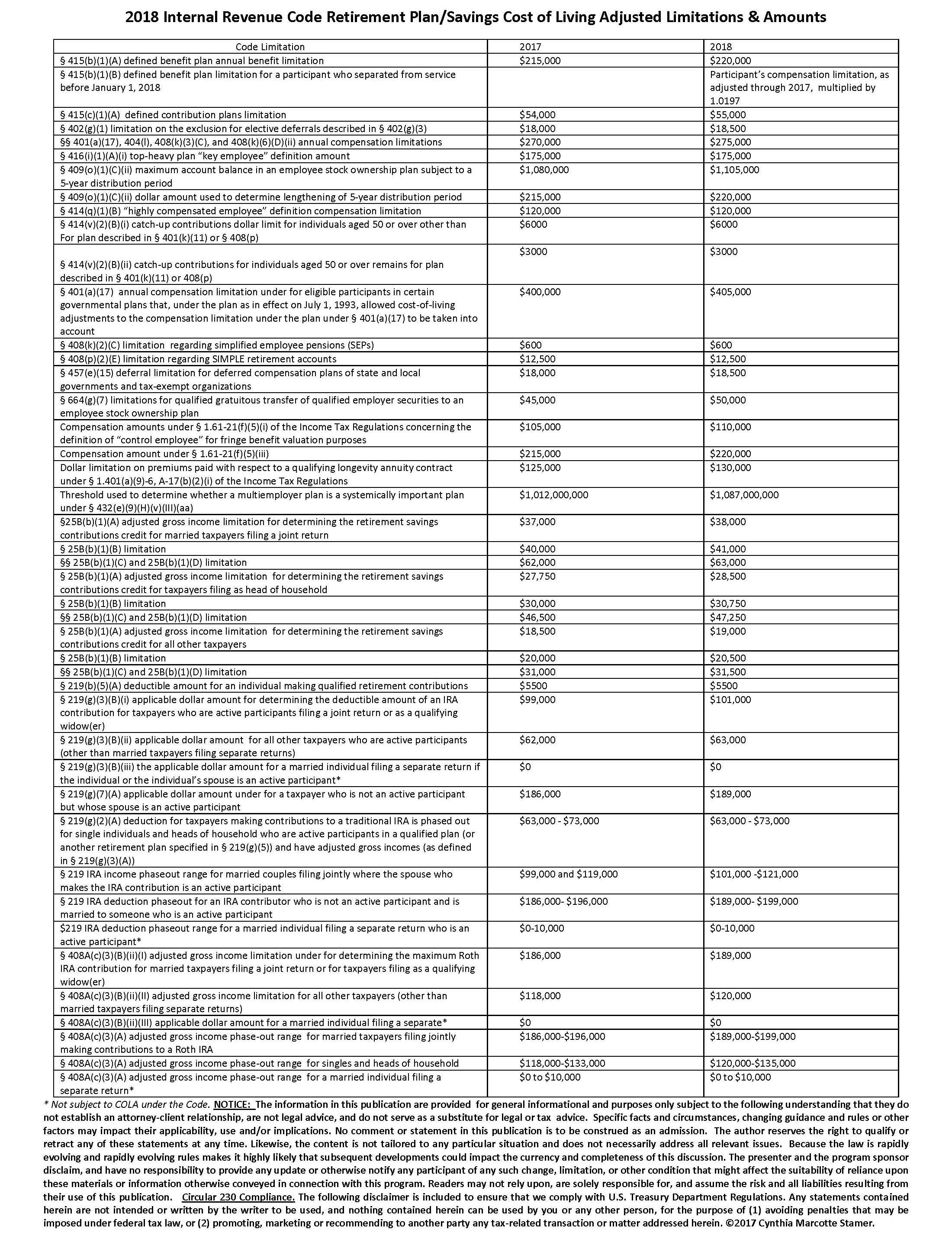


 slphrbenefitsupdate.com
You must be logged in to post a comment.